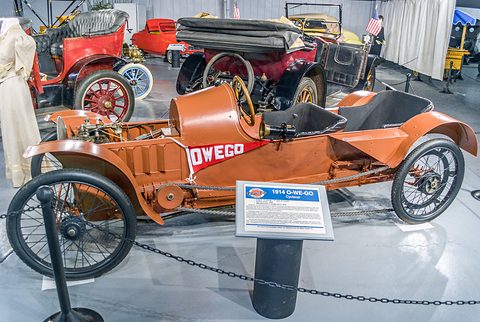
The craze it outlived
American cyclecars and small-car experiments
1913–1932 · United States · 10 makers
Also known as Smith Flyer, Auto Red Bug, Red Bug
No springs, no gearbox and no reverse: a platform of wooden slats on four small wire wheels, pushed along by a fifth wheel with its own engine. Guinness lists this American cyclecar as the cheapest car ever sold, and its engine led Briggs & Stratton to garden machinery.
The spec plate
Briggs & Stratton Flyer
Smith Flyer to Red Bug · Milwaukee
True proportion
2.34 m
It is 633 mm shorter than a Fiat 500, about 1.3 adults laid end to end.
History
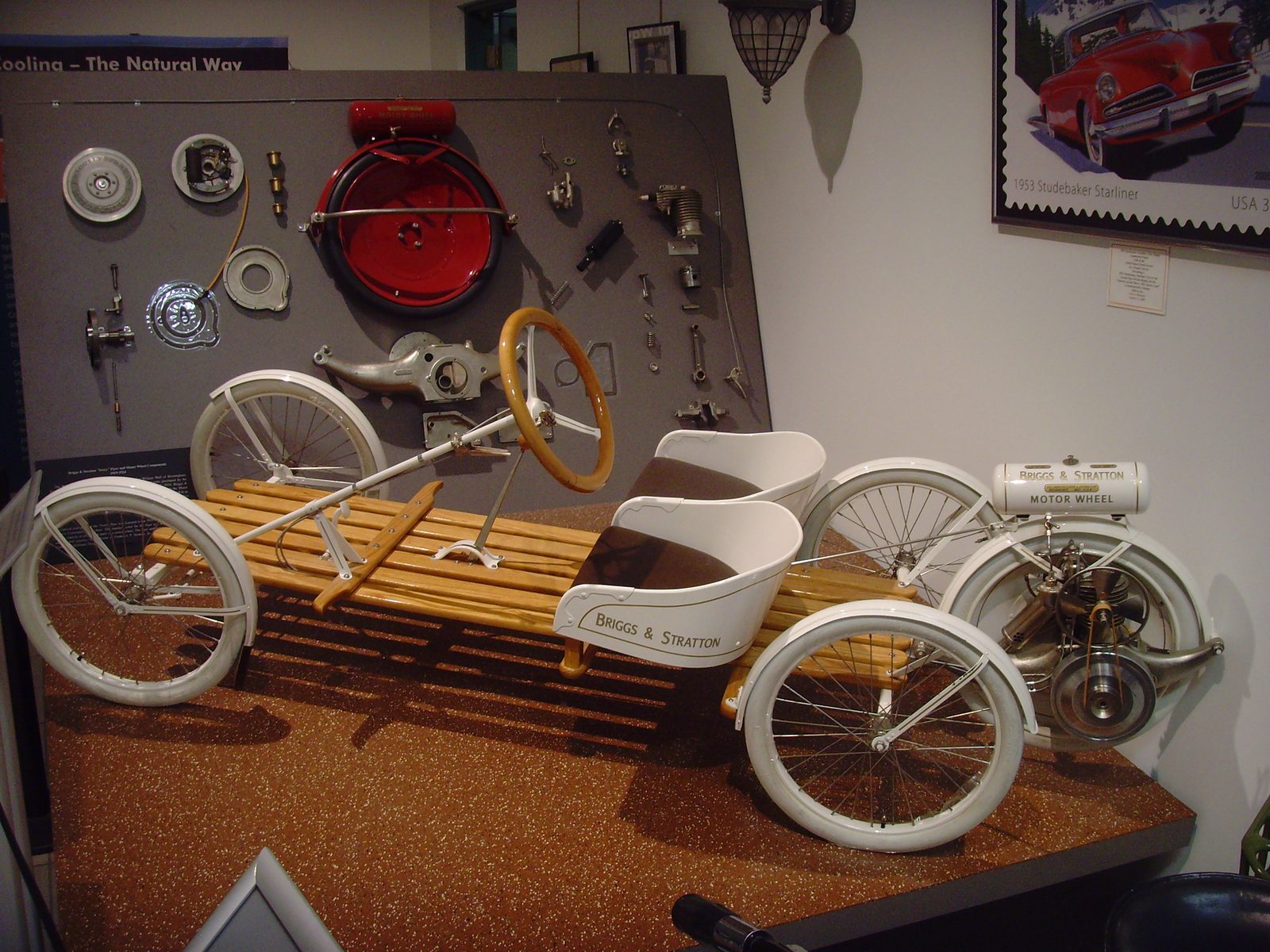
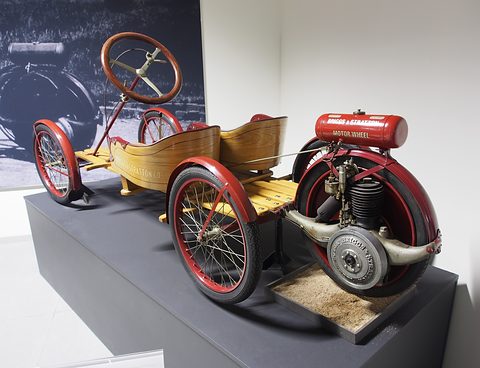
To drive off in a Flyer, you first lifted the fifth wheel clear of the road with a lever, spun it by hand to start its engine, then lowered it onto the ground and let it push. The lever was the whole transmission: lift the wheel and the car stopped driving.source 5source 1source 6 Reverse was a matter for the driver’s feet.source 6
Reverse? Dig in a heel and push.
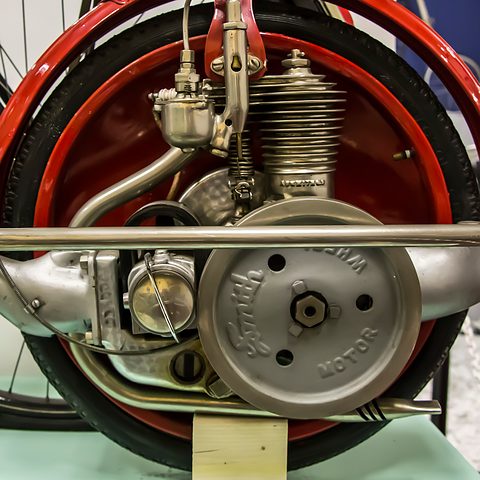
The Flyer was a car built around a bicycle accessory. About 1910 the Englishman Arthur William Wall, of Birmingham, devised a self-contained wheel with its own engine, to push a bicycle along.source 7source 2 In Britain it was sold as the Wall Auto-Wheel, built, one source says, by BSA.source 8 In 1914 the A. O. Smith Company of Milwaukee bought the American rights; AutoWeek says Smith saw the wheel on holiday in England.source 7source 2source 6 Smith changed the drive: where Wall’s wheel was spoked and driven through a 4:1 chain, Smith’s was a 508 mm (20 in) disc driven straight off a four-lobe camshaft turning at one-eighth of engine speed, and its inlet valve was atmospheric, sucked open by the piston. The bright red Smith Motor Wheel went on sale in October 1914 and sold well enough for Smith to open a new plant; AutoWeek puts its sales in the thousands by 1918.source 6
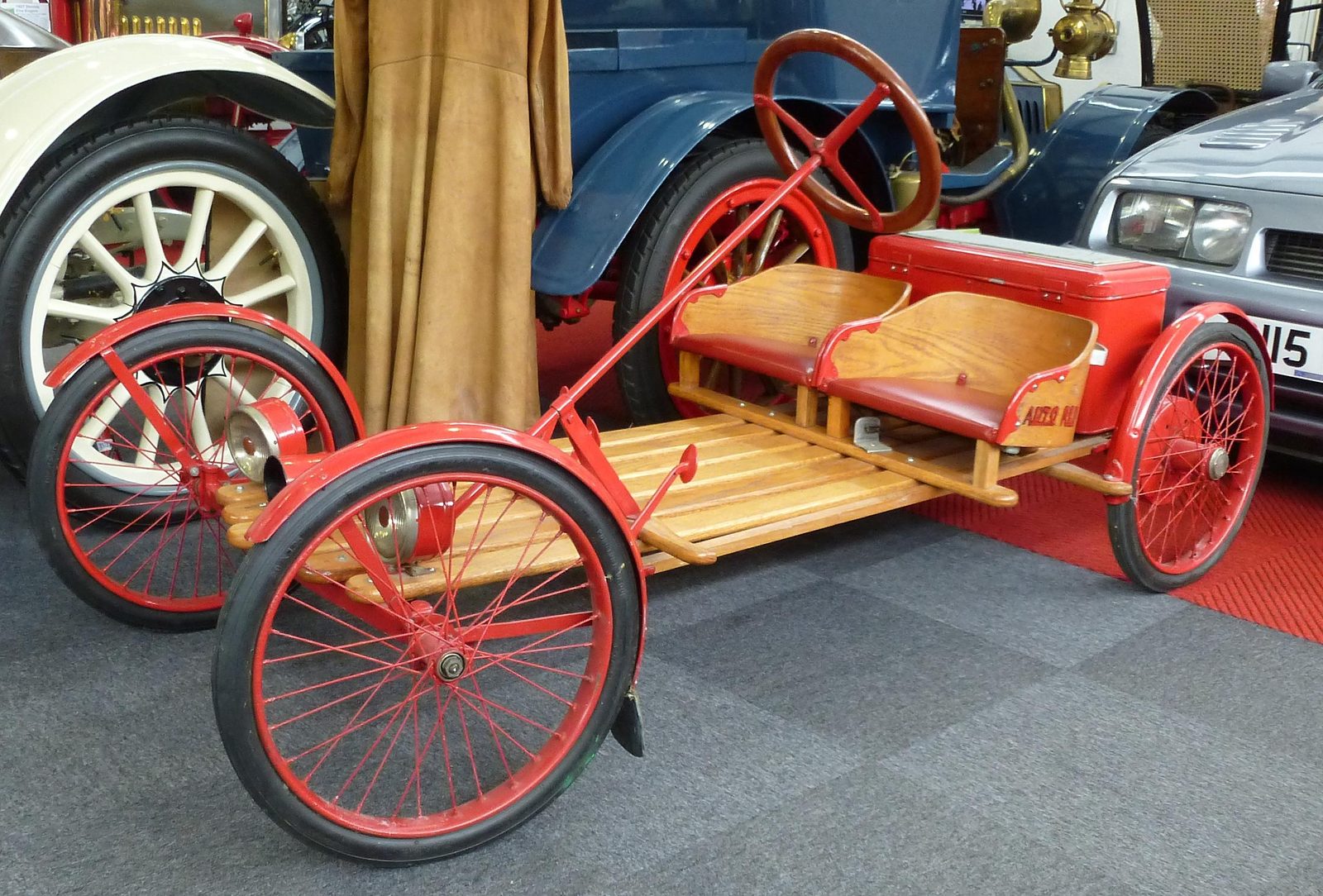
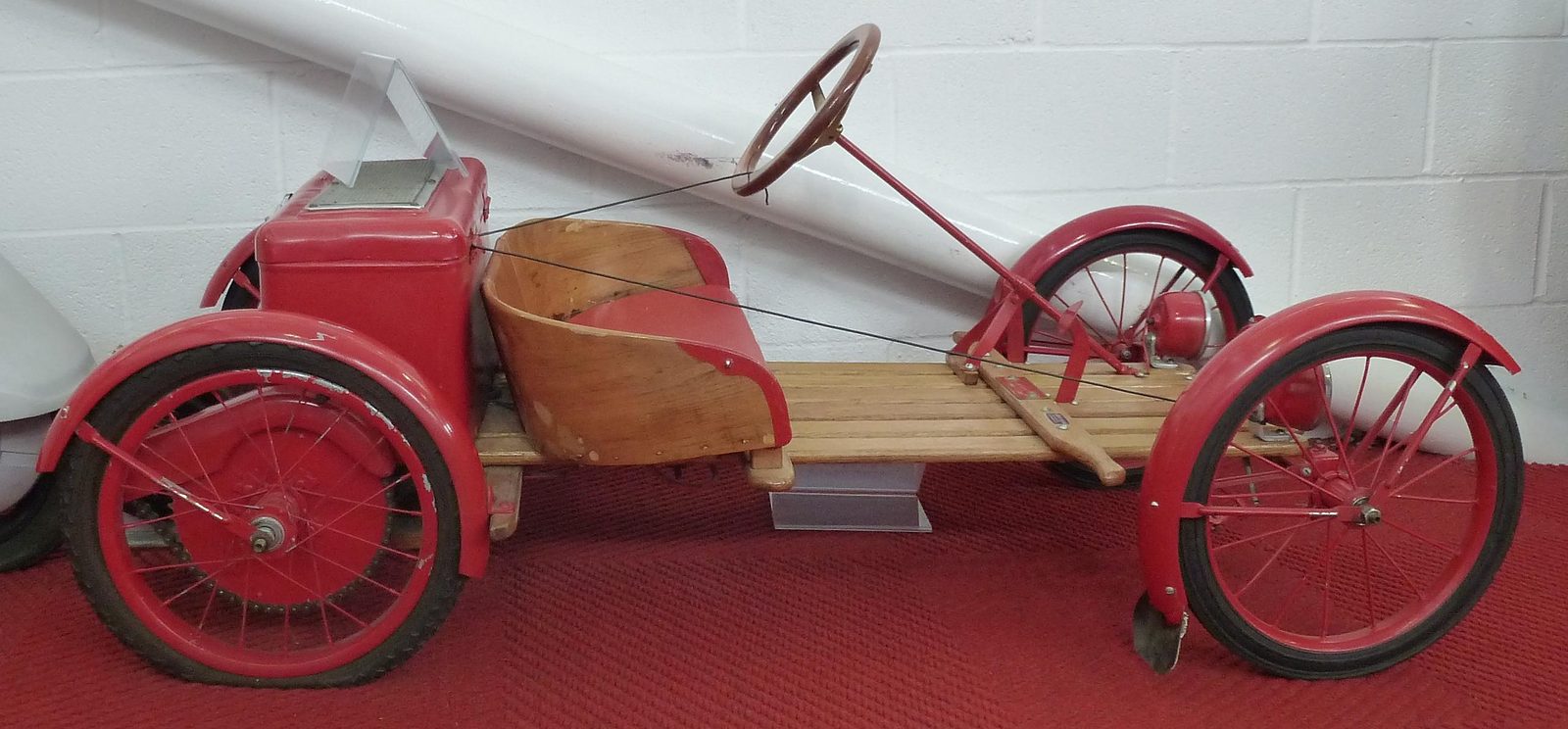
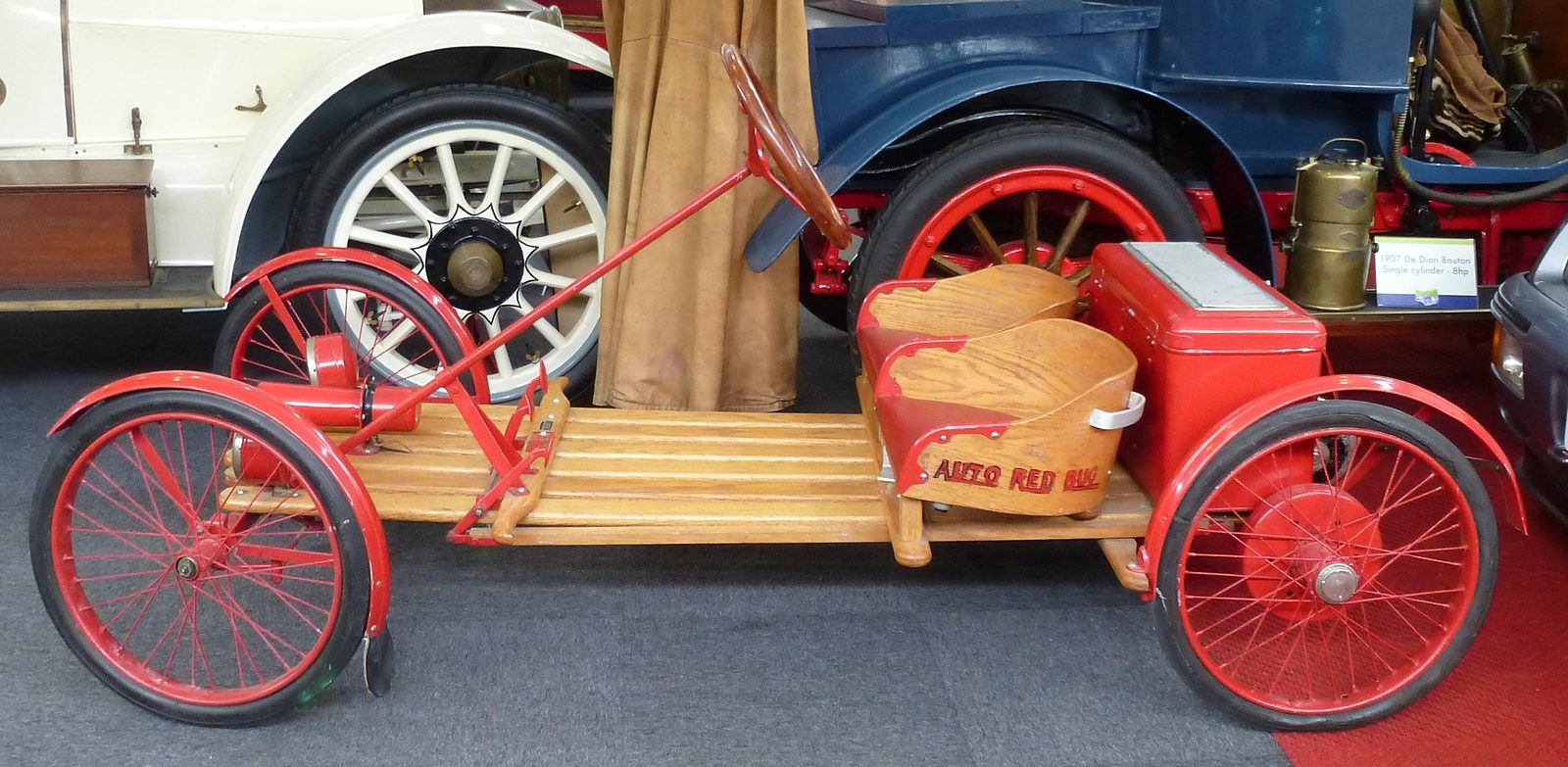
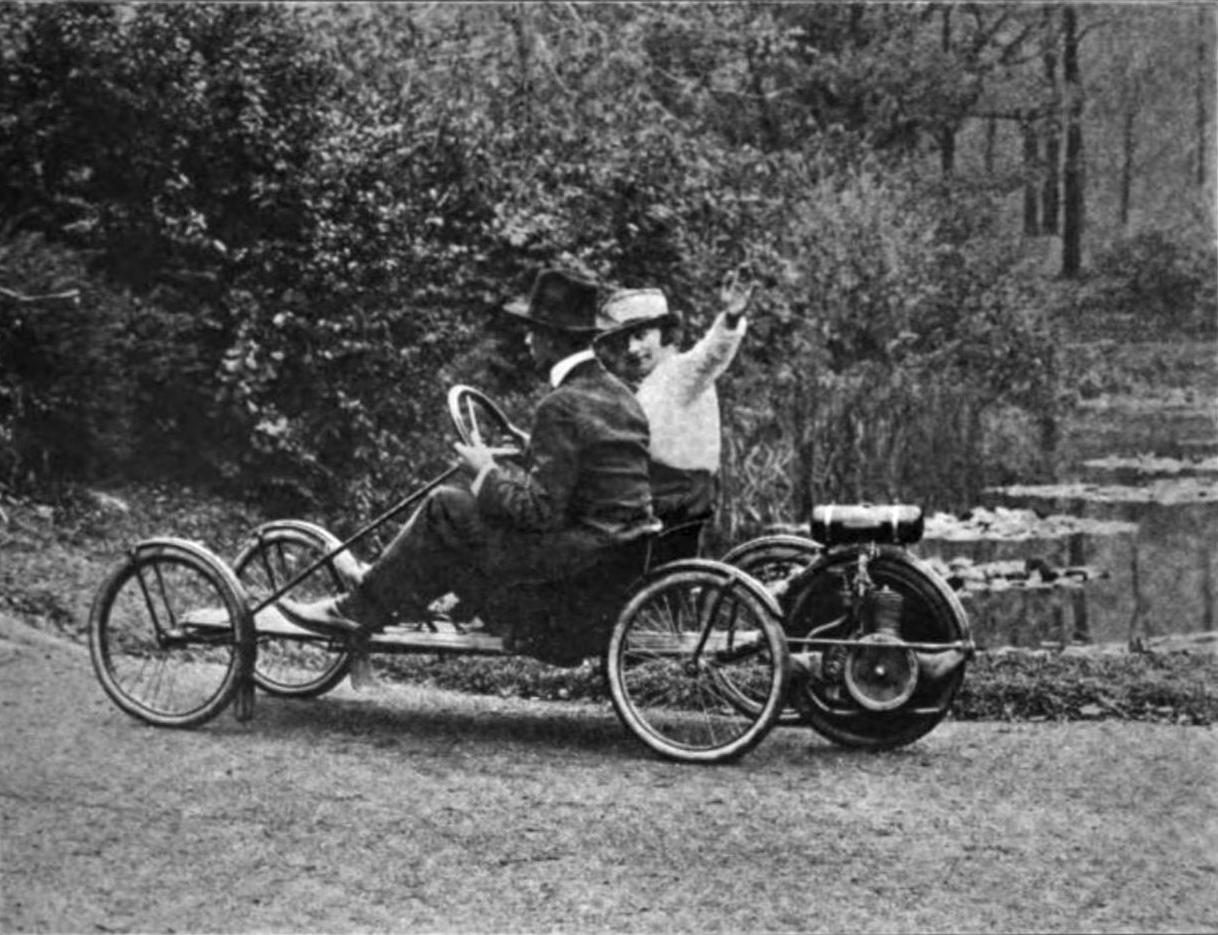
In 1916 the wheel was hitched to the back of a wooden buckboard.source 5source 1 The platform of hardwood slats was chassis, body and suspension at once: there were no springs, the slats flexed over the bumps, and the only padding was in the two bucket seats.source 6source 2 The fifth wheel trailed between the rear wheels, carrying its engine and its fuel tank with it.source 5source 1source 3 Popular Science later noticed that it steered like a child’s coaster wagon, the whole front axle pivoting on a single bolt.source 3
The A. O. Smith Company, Milwaukee, Wis., has recently perfected a light, economical, two-passenger motor vehicle known as the Smith ‘Flyer.’ In summer it can be run on wheels as a comfortable and easy-riding buckboard and on runners in winter as a safe, speedy motor sled.
The trade press gave the details in the maker’s own terms. The car weighed 61 kg (135 lb) complete, ran on wire wheels of 508 mm (20 in) with double-tube clincher tyres, reached 32–40 km/h (20–25 mph) and covered 80 to 90 miles on a US gallon, about 2.6–2.9 litres per 100 km. There was a thumb throttle on the steering wheel, one control lever, a clutch and a foot brake, and the clutch lifted the motor wheel about 25 mm (an inch) off the road. The seats were upholstered in tan, the body left in natural wood, and the fittings nickel-plated. It cost $125, free on board at Milwaukee.source 5source 1 Other advertisements of 1917 asked $130 or $135.source 7source 9
Who first built the buckboard is not settled. The trade press of 1916–17 names only Smith. AutoWeek says the Automotive Electric Service Corporation of North Bergen, New Jersey, first fitted a Smith wheel to a buckboard in 1916, and that Smith then supplied the wheels while the New Jersey firm built the rest. Kimes says it began that year as the Red Bug of the American Motor Vehicle Company of Lafayette, Indiana.source 5source 1source 6source 4 Some accounts date the Flyer to 1915, others to 1917; the trade press shows it new in November 1916.source 7source 10source 5 Notices for Smith Flyers appeared in Shanghai and Hong Kong newspapers in 1918–19, and an owner in South Perth, Western Australia, registered one in 1925–26.source 11source 12
In 1919 Stephen F. Briggs and Harold M. Stratton’s company bought the rights to the Motor Wheel and the Flyer.source 6source 4source 2 It gave the engine a larger bore, 63.5 × 63.5 mm (2½ × 2½ in) or 201 cc, an all-steel connecting rod and a flywheel magneto, raising the power from about 1.5 hp to 2 hp.source 6source 2source 13source 3 In 1919 the firm made automotive electrical parts; the lawn-mower engines came after the Flyer, so the popular caption calling it a car from a lawn-mower maker gets the order backwards.source 6source 13
Briggs & Stratton sold the Flyer across the country, and pitched it at boys.source 2source 14 In Youth’s Companion in April 1920 an advertisement headed “His Own Car” offered a free booklet, Motor Wheel and Flyer.source 14
The Briggs & Stratton Flyer is the boy’s car, created for red-blooded youngsters whose greatest hope is to sit behind the wheel and GO.
Another advertisement, as AutoWeek quotes it, had older customers in mind.source 6
Just imagine riding over 80 miles on one gallon of gasoline, at a rate of between four and 25 miles an hour, along some delightful boulevard or over a picturesque country road with a charming young lady for a companion.
Every car was red, and around 1920, by AutoWeek’s account, the name became the Auto Red Bug; Kimes lists the 1921–23 model as the Red Bug, Model D Buckboard.source 6source 4 By 1923 the Ford Model T was closing in. A new Model T roadster cost $260 in 1925, and a used one much less; the Lane Motor Museum notes that a 1924 Model T, at $265, cost more than twice as much as the Flyer.source 6source 15 Briggs & Stratton dropped the motor wheel, cut the “horns” off its engine and fitted it to a garden cultivator. AutoWeek and Wikipedia treat that as the start of the company’s small-engine business.source 6source 2 It sold the buckboard rights to the Automotive Electric Service Corporation in 1924 by Kimes’s and RM Sotheby’s account, in 1925 by Wikipedia’s.source 4source 16source 2
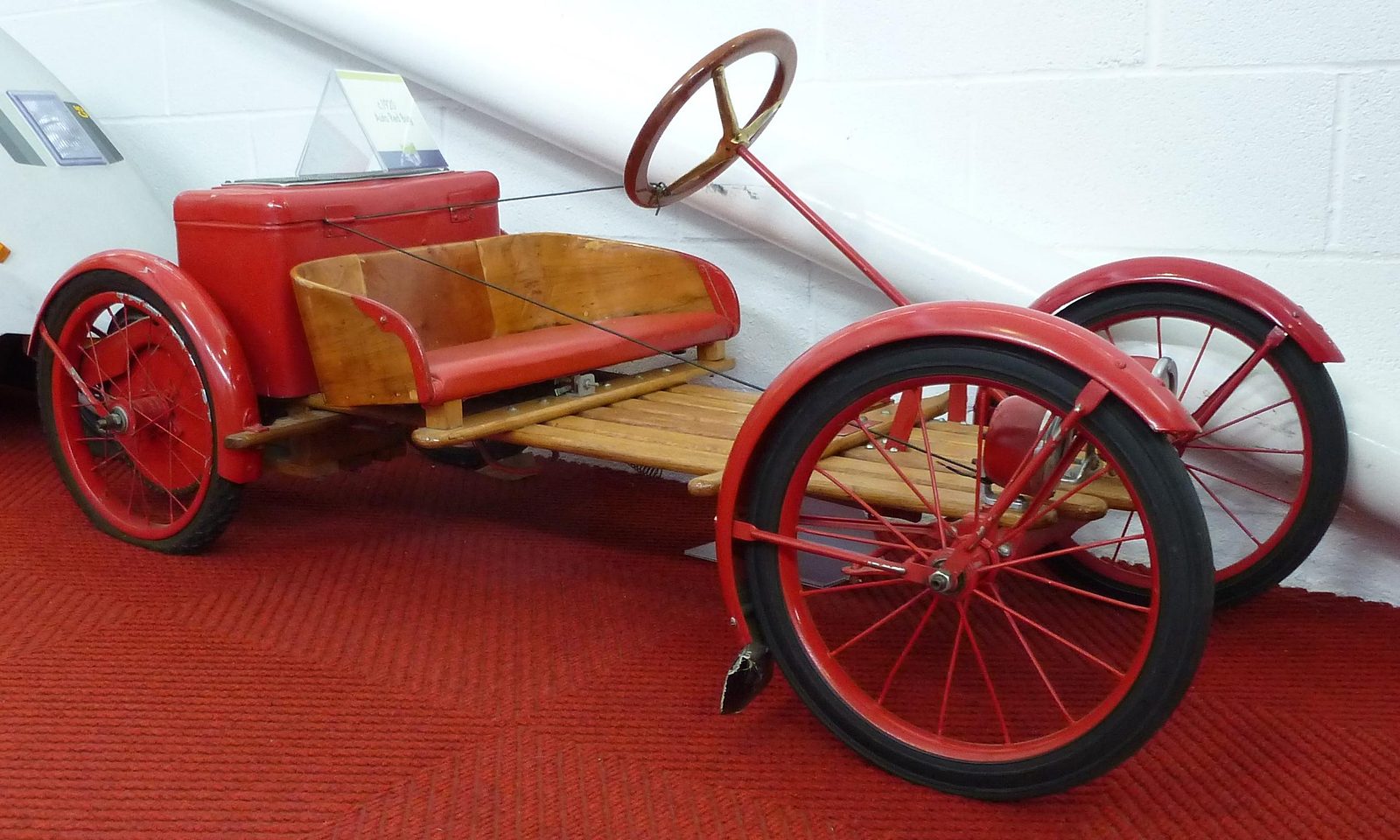
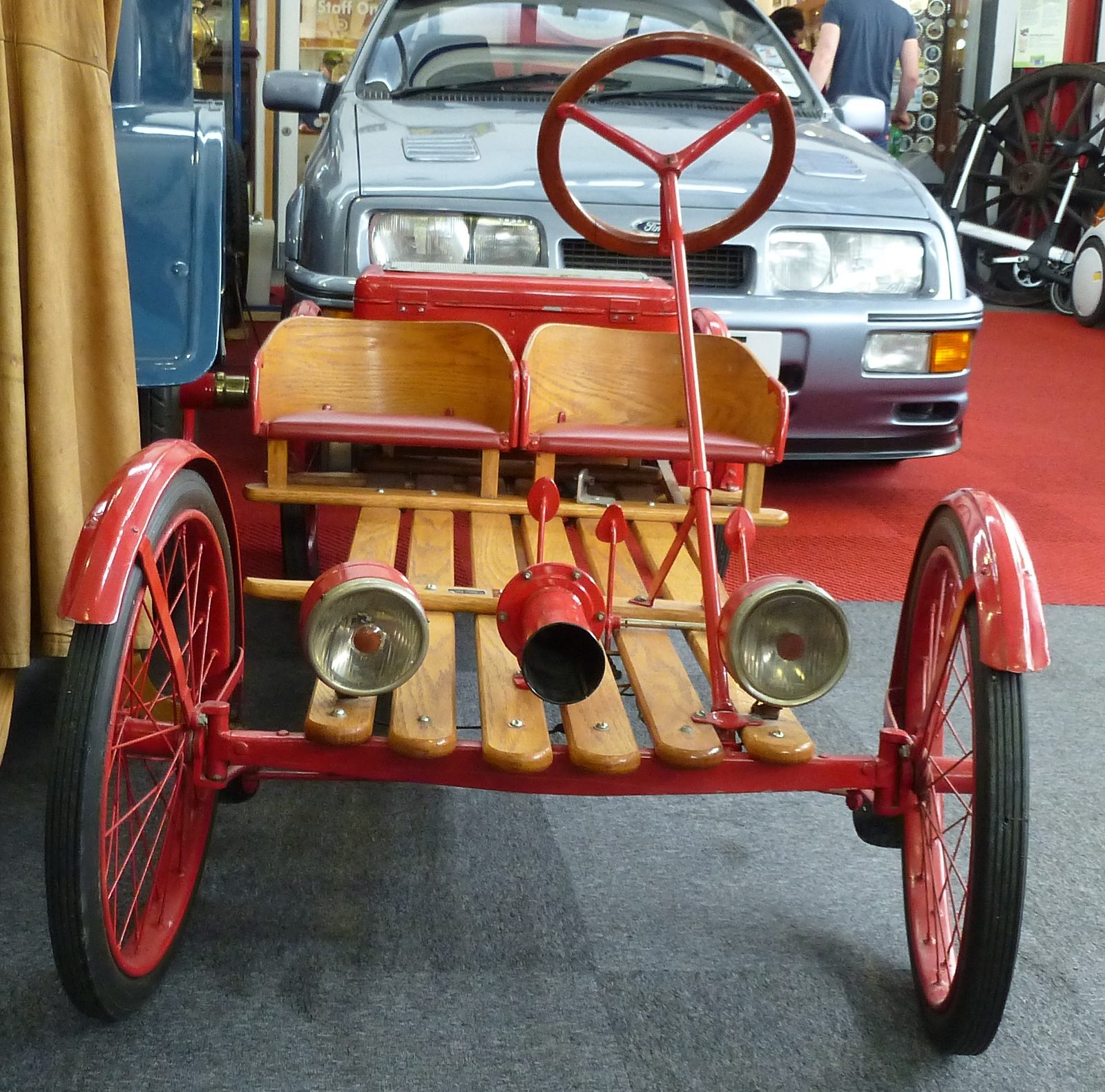
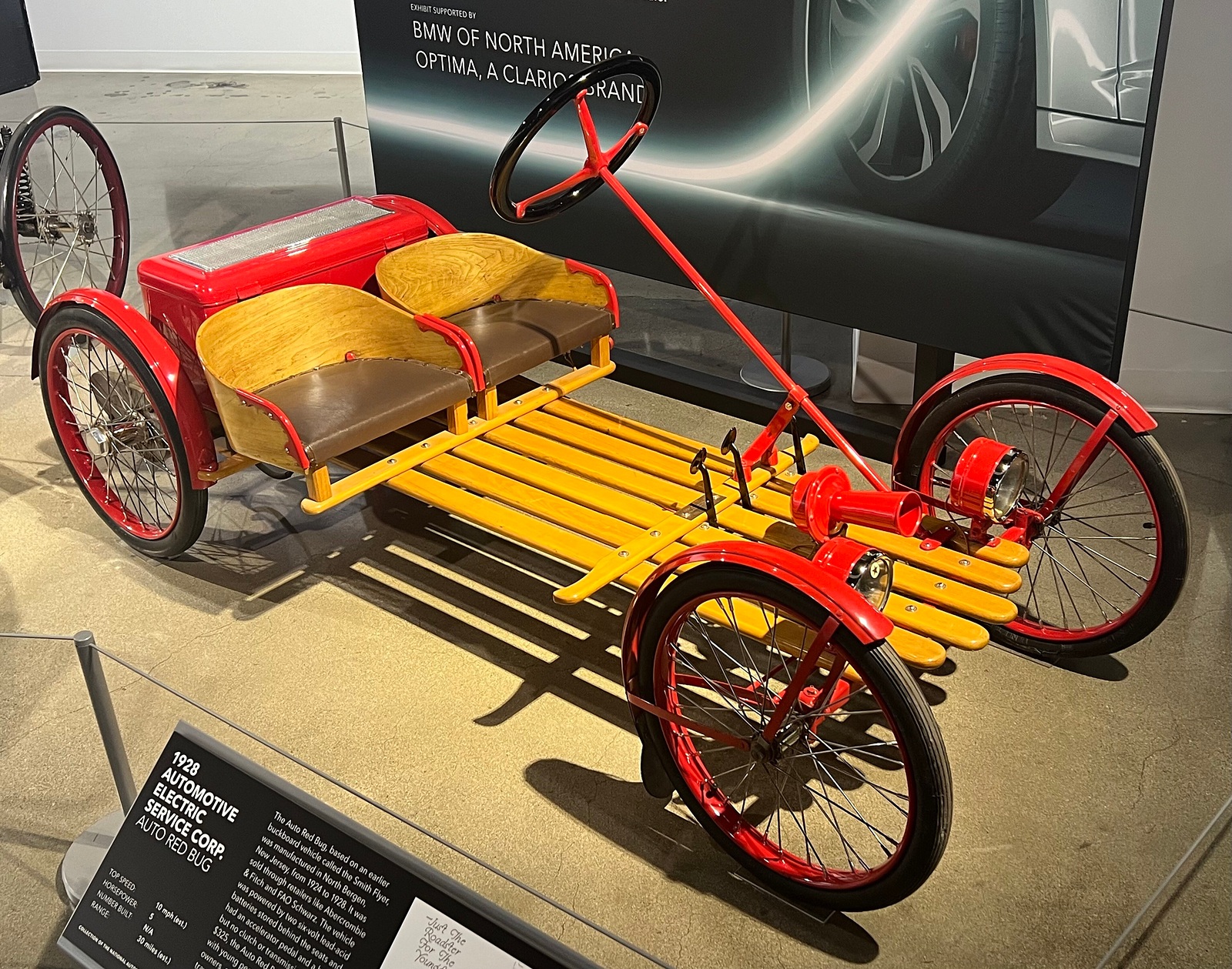
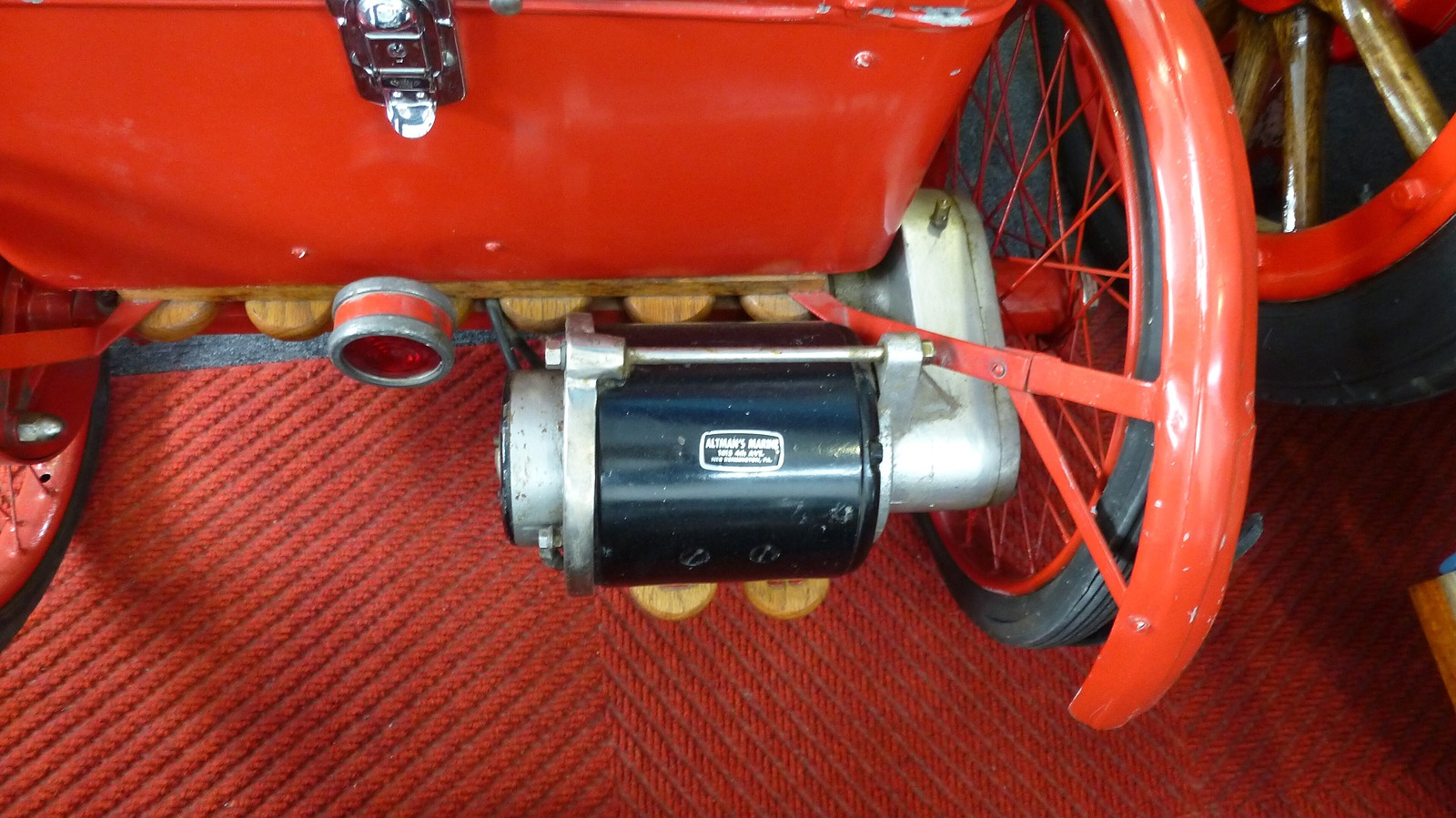
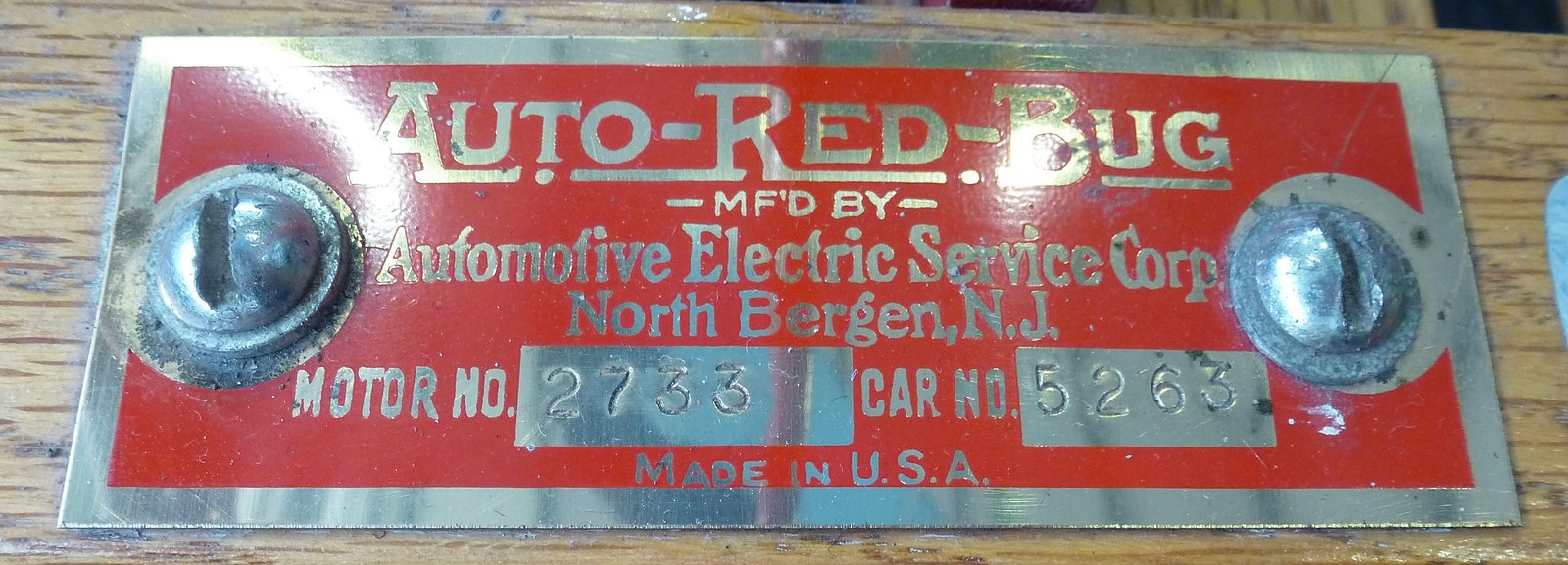
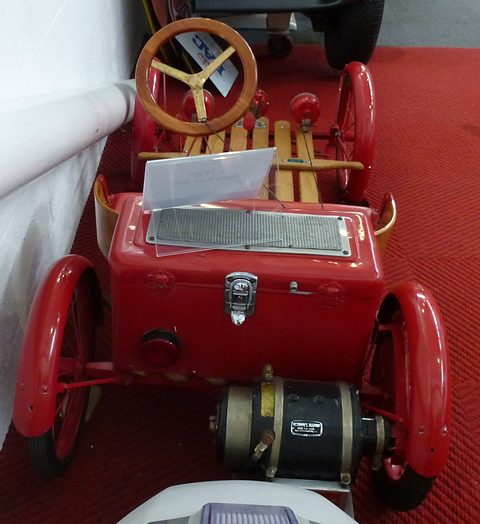
At North Bergen the buckboard carried on as the Red Bug, or Auto Red Bug. It was built with petrol motor wheels until the supply ran out, and then as an electric car, on four wheels only, with a Northeast motor driving one rear wheel; Wikipedia says it was the motor that started contemporary Dodge Brothers cars.source 4source 2source 17 Motor Age described it in May 1927, sold by Automotive Standards, Inc. of New York from the factory at North Bergen: two 6-volt batteries and a series-wound motor geared to the right rear wheel, 13–16 km/h (8–10 mph) and a range of 32–48 km (20–30 miles), or 26–29 km/h (16–18 mph) with an optional 16-volt battery. It had an electric horn, two headlamps and a tail lamp, red wheels and mudguards on varnished wood, and it cost $300.source 18 The Lane Motor Museum gives the rights-holder the same name, Automotive Standards.source 15
Abercrombie & Fitch sold Red Bugs in the United States, and they were also sold in Britain and France, mostly as novelties for the wealthy and as transport at resorts and amusement parks.source 17source 15 The Lane Motor Museum says Ettore Bugatti bought one for his son Roland.source 15 In 1930 the Indian Motocycle Company was reported to be taking it over, but did not.source 17 When production ended is uncertain: 1927, 1928 and 1930 are all given.source 15source 19source 4
How many Flyers and Red Bugs were made is not known. Thousands of motor wheels were sold, for bicycles as well as for cars, but no count of the cars themselves has been found; in 1960 Popular Science found the records vague, though it thought the number must have been substantial.source 6source 3
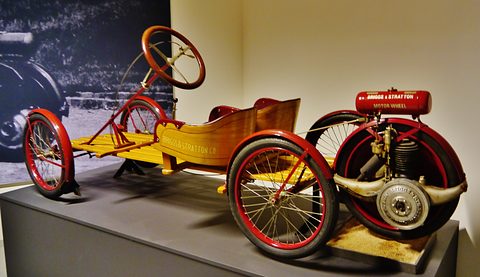
More photographs, old and new
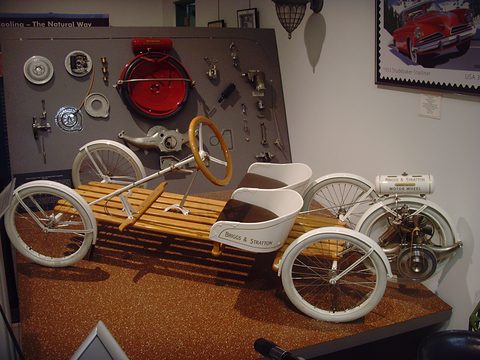
1 A white Briggs & Stratton Flyer of about 1920 in the AACA Museum, Hershey, Pennsylvania, in December 2010.
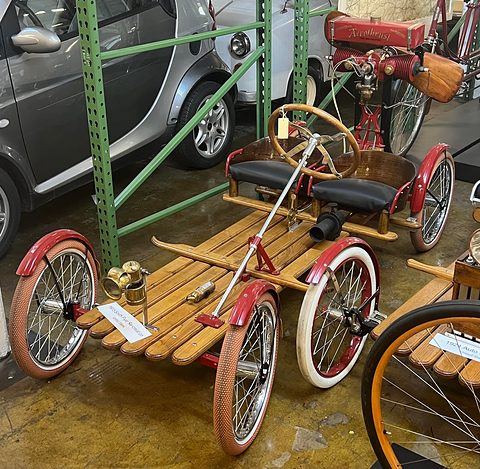
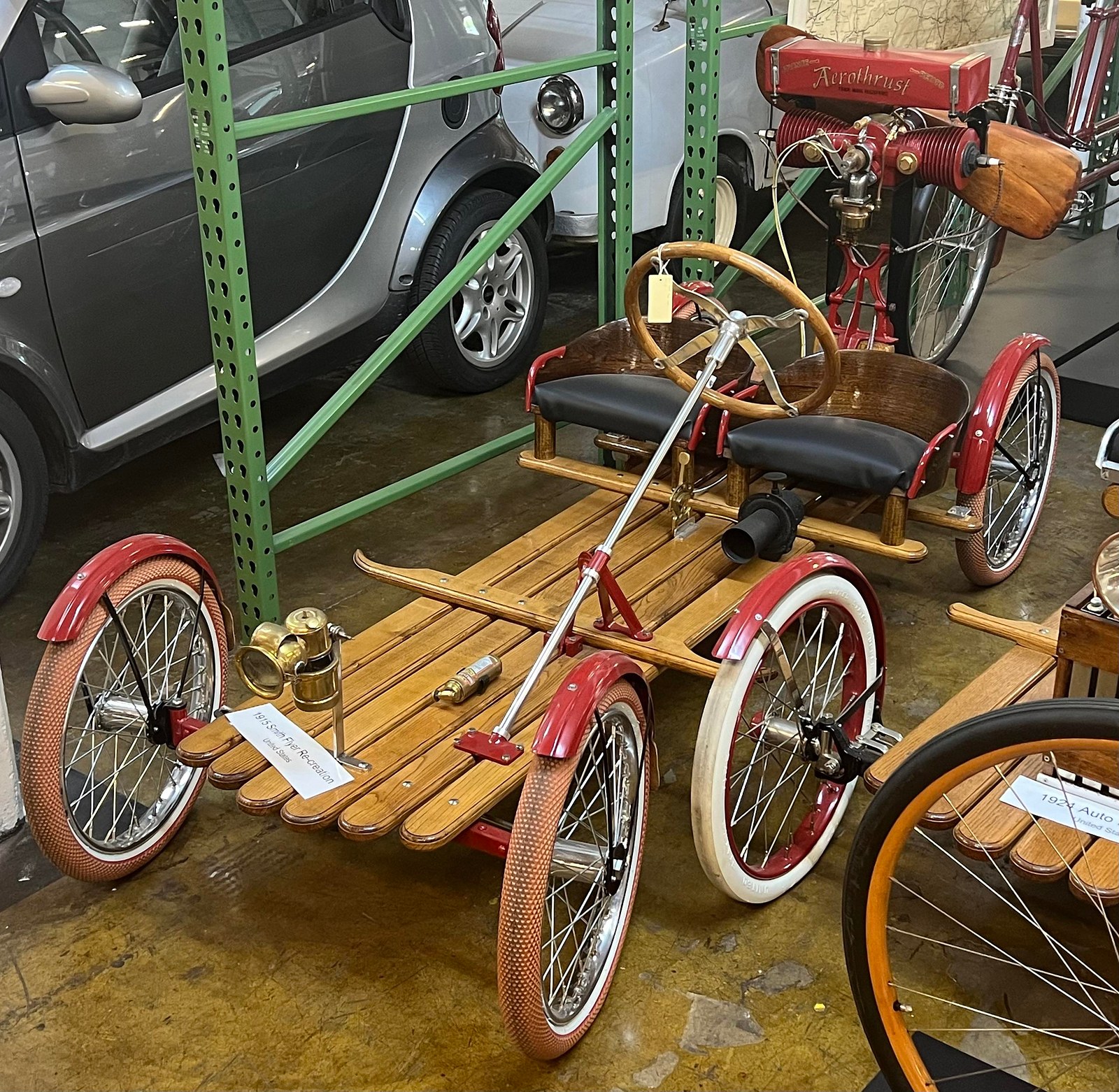
2 Replica of the 1915 Smith Flyer fitted with an Aerothrust engine, at the Lane Motor Museum, Nashville, in July 2024.
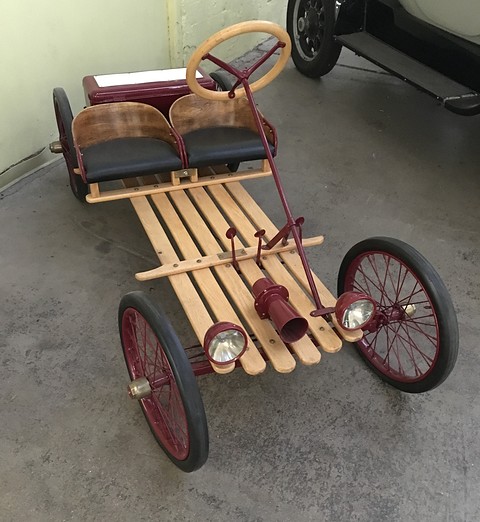
3 Electric Auto Red Bug in the Route 66 Electric Vehicle Museum, Powerhouse Visitor Center, Kingman, Arizona, in May 2016.
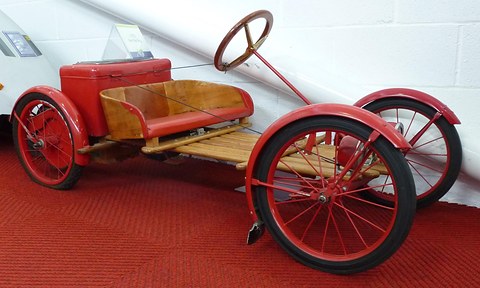
4 Red Bug buckboard of 1924–30 with its red battery box, in the Lakeland Motor Museum, Cumbria, in 2016.
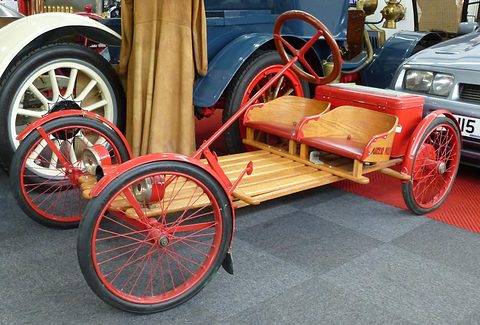
5 An Auto Red Bug buckboard of 1924–30 among veteran cars in a museum, photographed in 2016.
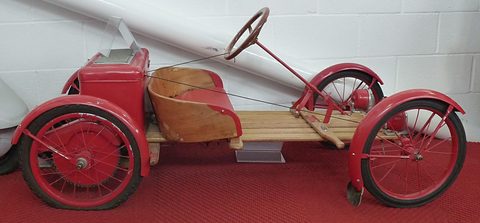
6 Side view of the Red Bug buckboard of 1924–30 in the Lakeland Motor Museum, Cumbria, in 2016.
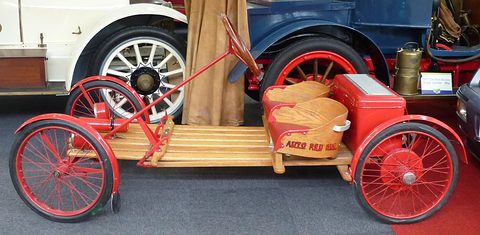
7 Side view of an Auto Red Bug buckboard of 1924–30 in a museum, photographed in 2016.
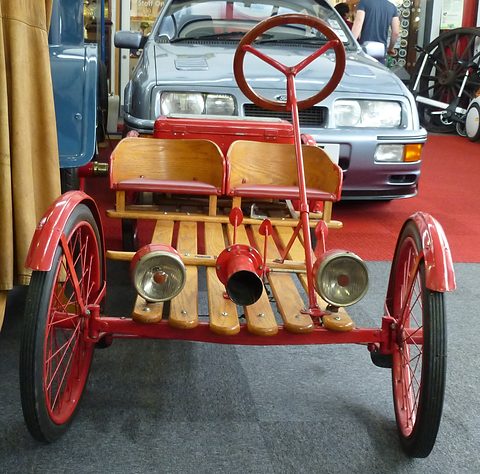
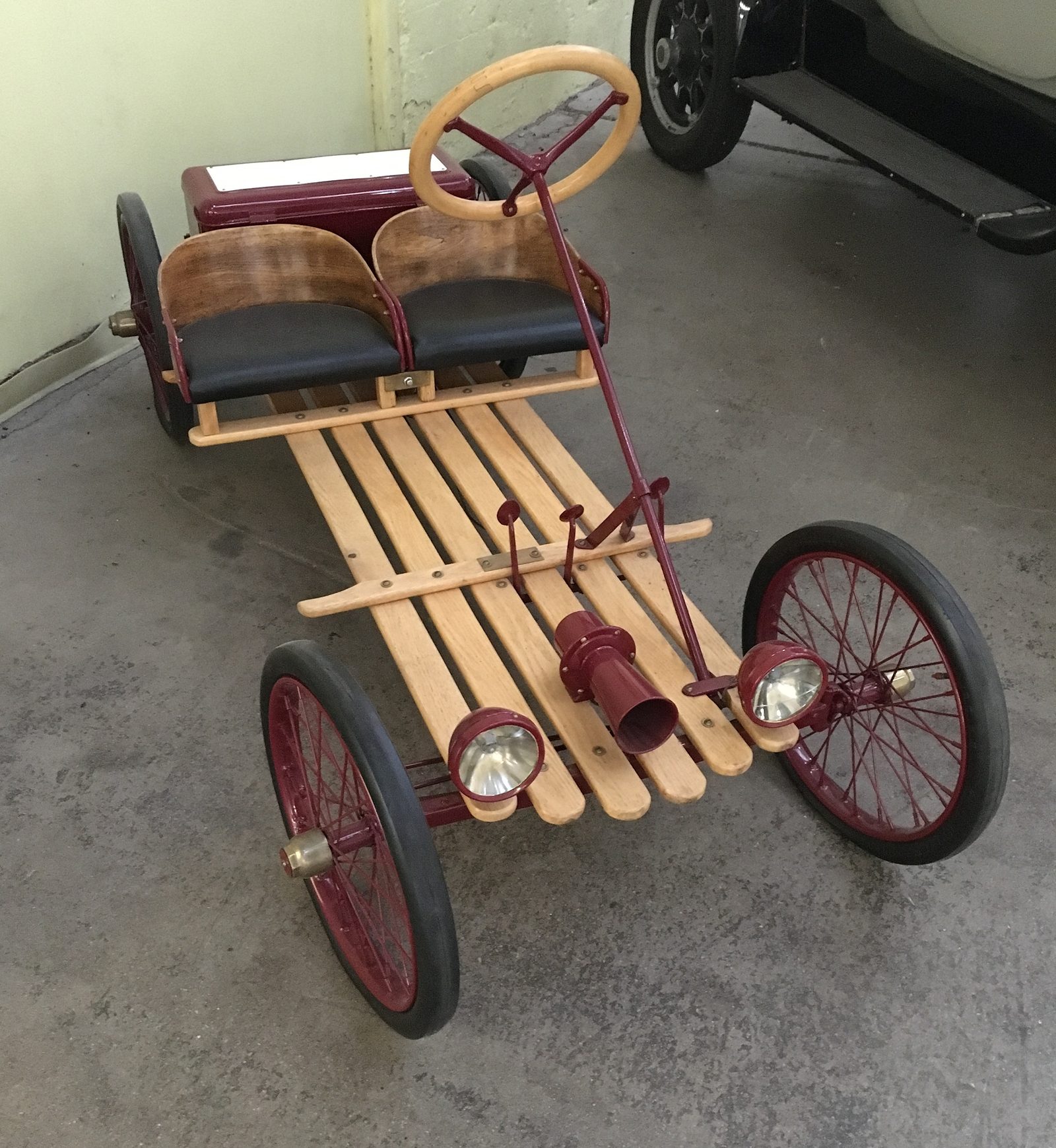
8 Head-on view of an Auto Red Bug buckboard of 1924–30 with its twin lamps and horn, in a museum in 2016.
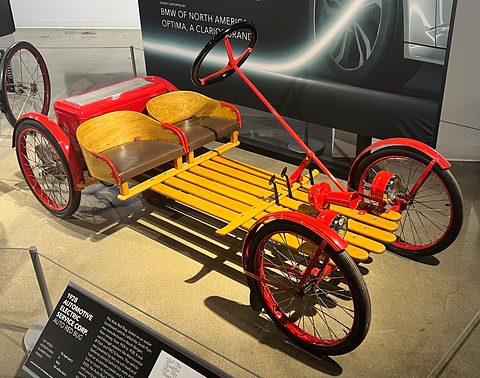
9 1928 Auto Red Bug electric buckboard of the Automotive Electric Service Corporation in the Petersen Automotive Museum, Los Angeles, in August 2024.
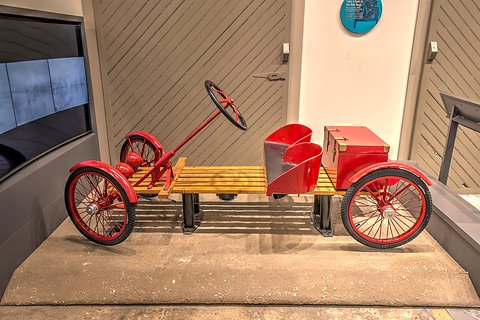
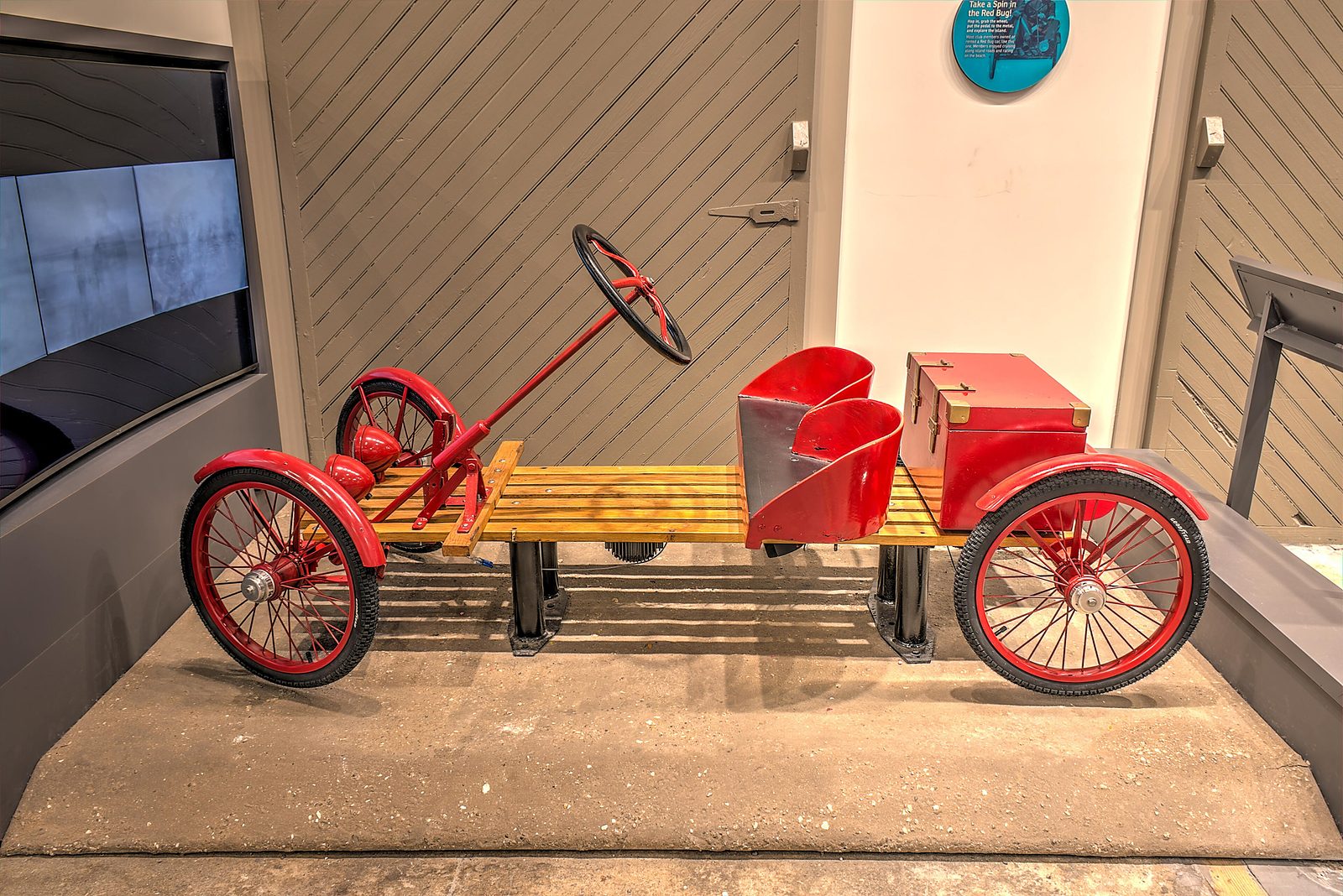
10 Auto Red Bug buckboard on a museum plinth at Mosaic, the Jekyll Island Museum, Georgia, in May 2021.
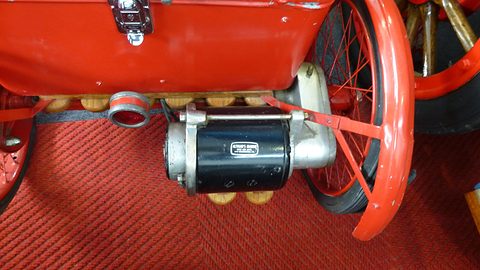
11 The electric motor at the rear axle of an Auto Red Bug of 1924–30, photographed in 2016.
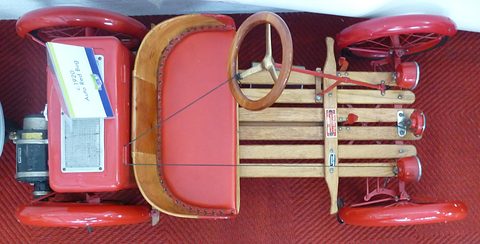
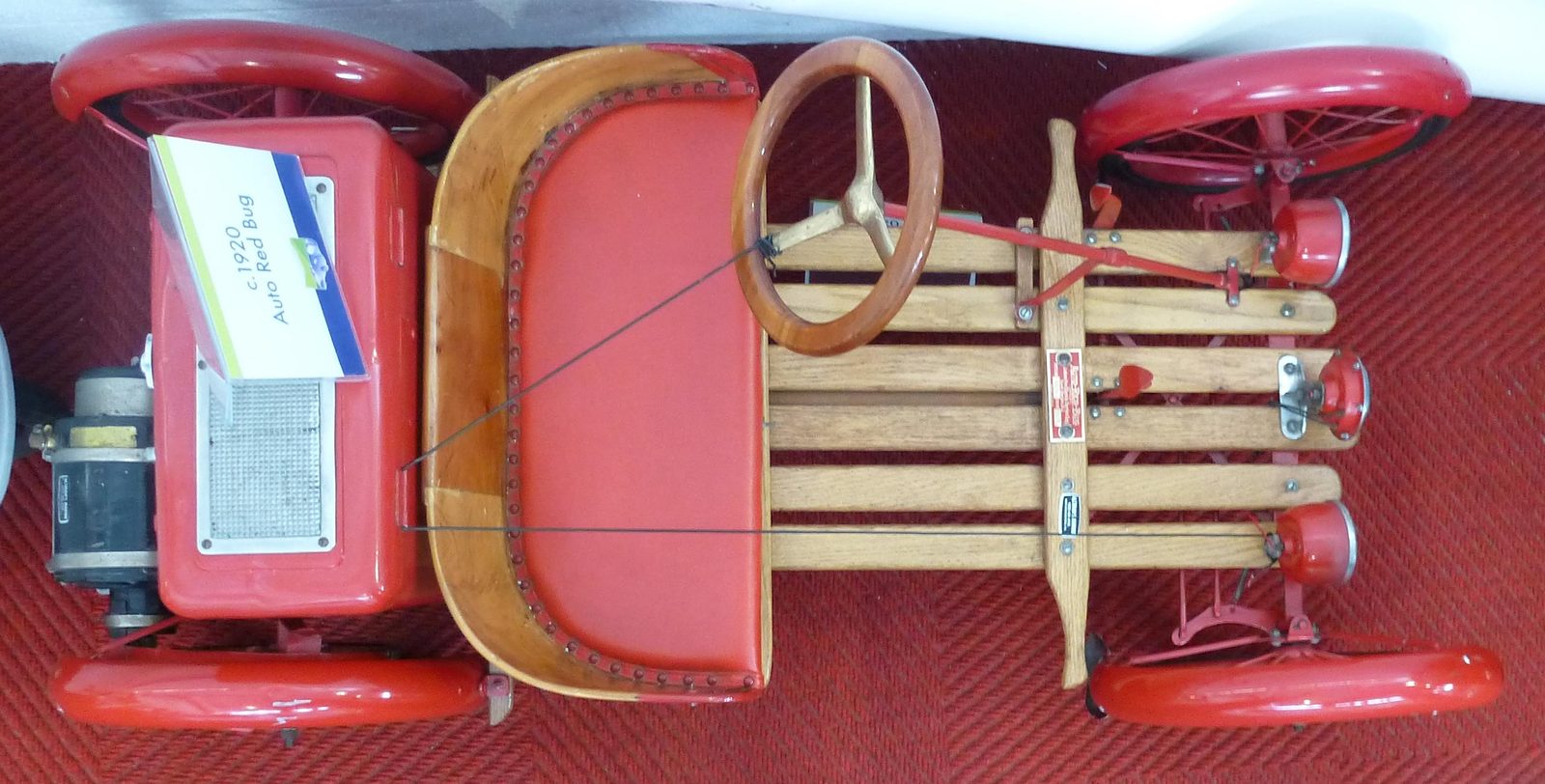
12 The Red Bug of 1924–30 seen from above in the Lakeland Motor Museum, Cumbria, in 2016.
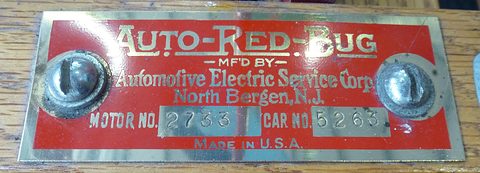
13 Maker’s plate of an Auto Red Bug, made by the Automotive Electric Service Corporation, North Bergen, New Jersey, photographed in 2016.
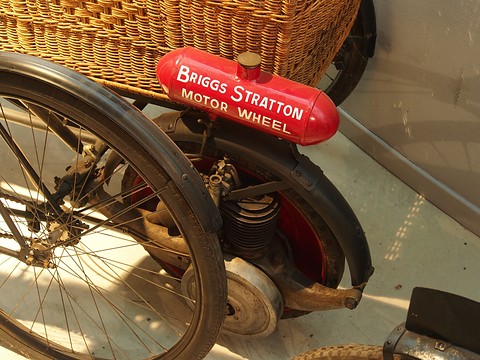
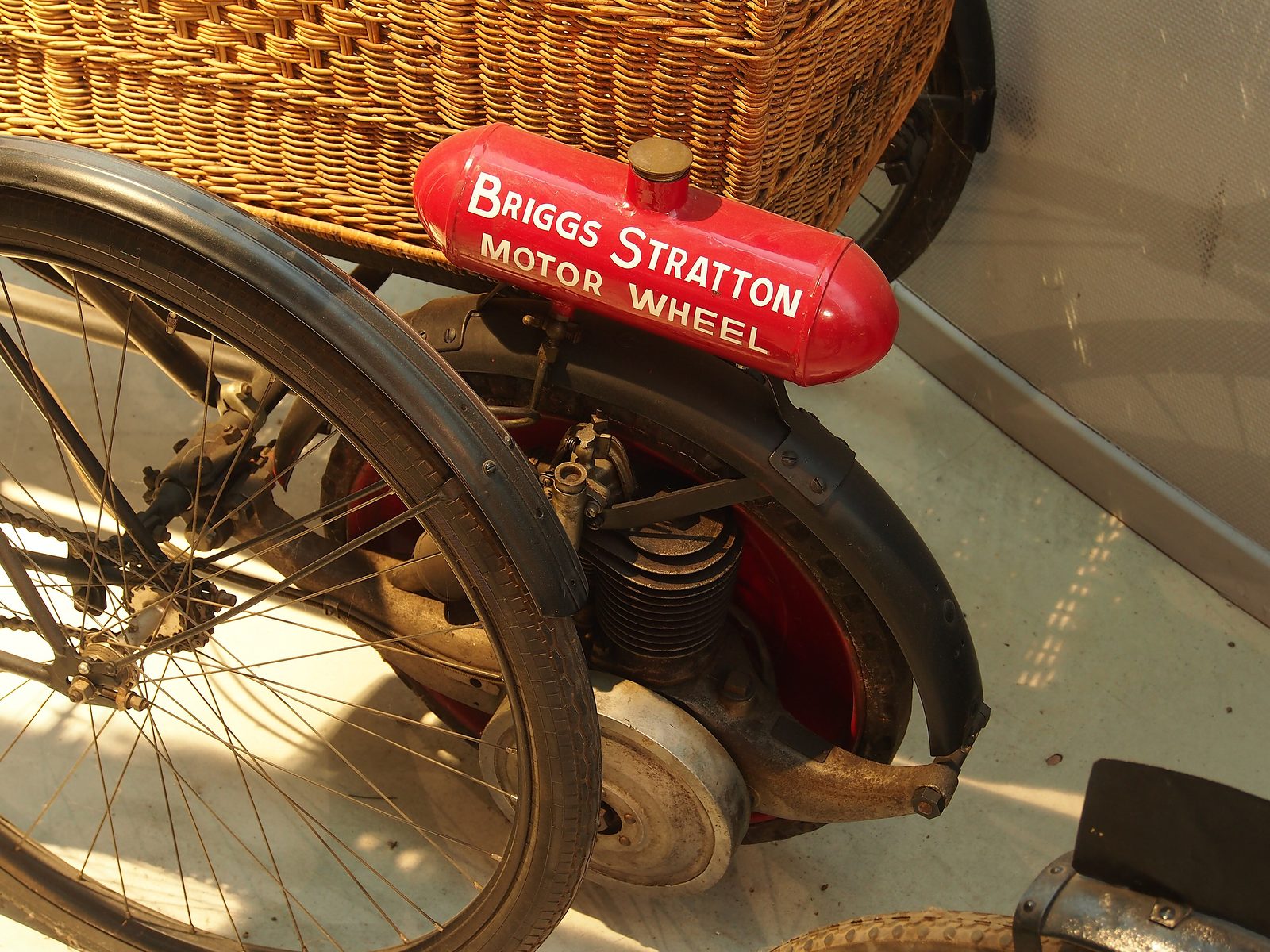
14 A Briggs & Stratton Motor Wheel fitted to a bicycle in the Musée de la Moto et du Vélo, Amnéville, France, in August 2013.
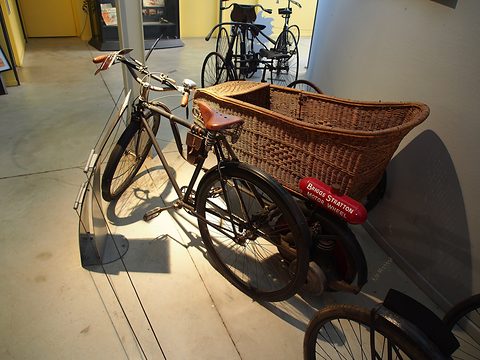
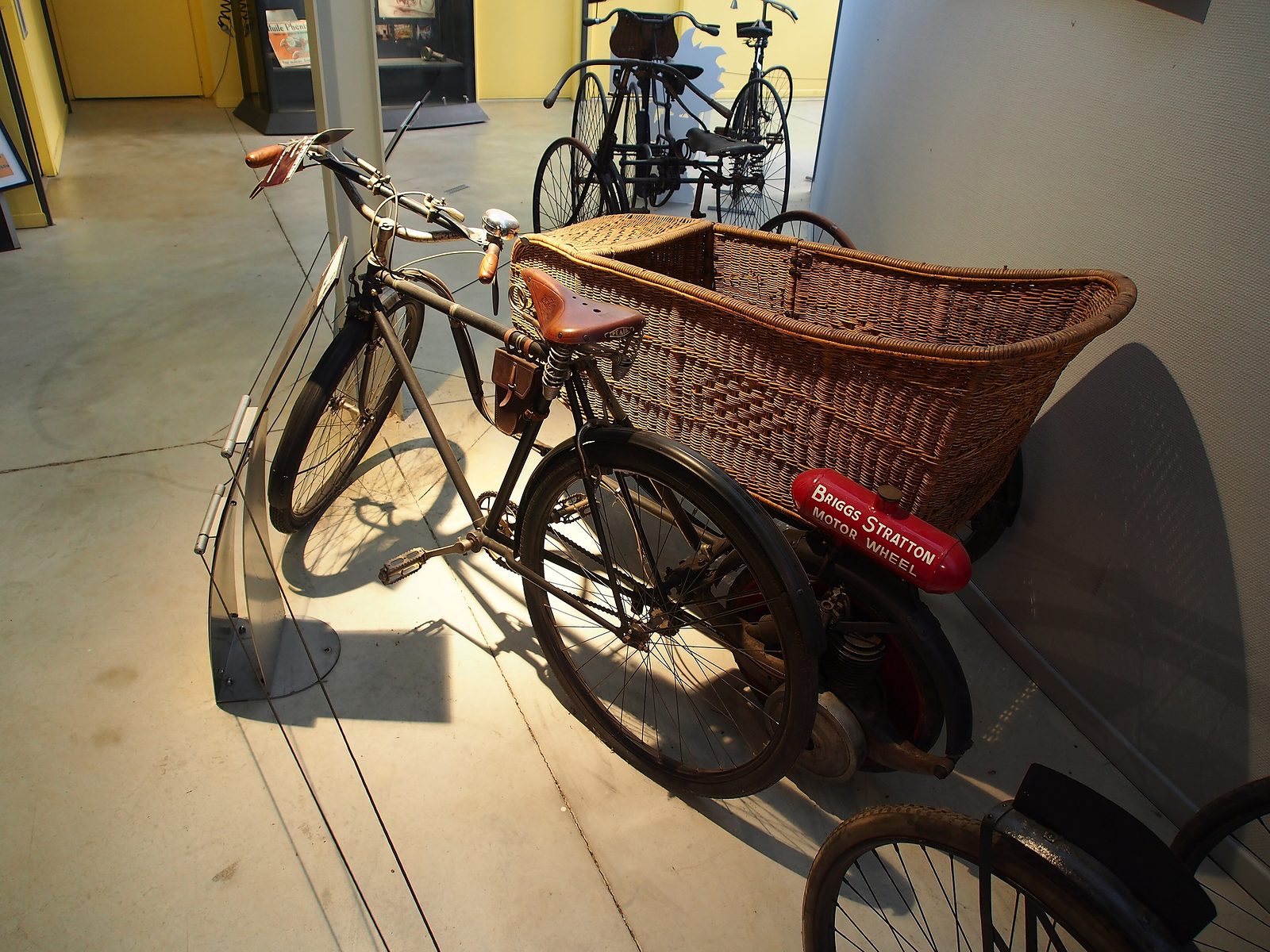
15 Bicycle with a wicker carrier and a Briggs & Stratton Motor Wheel in the Musée de la Moto et du Vélo, Amnéville, France, in August 2013.
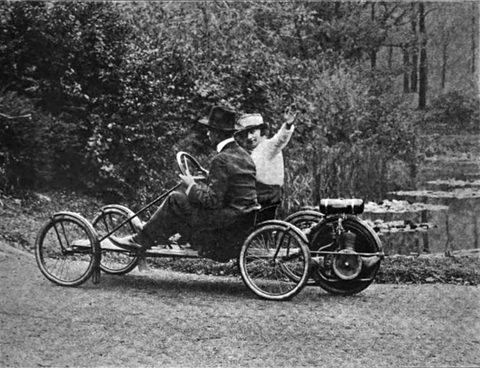
16 Smith Flyer buckboard, by A. O. Smith, with its motor wheel at the rear, driven in a park in the United States, 1916.
From bicycle wheel to electric toy
| Variant | Years | What differs | How many |
|---|---|---|---|
| Smith Motor Wheel | 1914–18/19 | The forerunner, not a car: a bolt-on power wheel for a bicycle; about 1.5 hp | “Thousands” |
| Smith Flyer | 1916–19 | The slatted buckboard and the fifth wheel; sled runners for winter | Not found |
| Briggs & Stratton Flyer | 1919–c. 1923/25 | Larger bore, 201 cc and 2 hp, flywheel magneto; later called the Red Bug, or Model D Buckboard | Not found |
| Red Bug, petrol | From 1924 | Built at North Bergen with Briggs & Stratton motor wheels until the supply ran out | Not found |
| Red Bug, electric | c. 1924–27/30 | No fifth wheel: a motor geared to the right rear wheel, two 6-volt batteries | Not found |
| Aerothrust conversions | After 1918 | An aftermarket 3 bhp propeller kit at the back, not a factory model | Two at the Lane Motor Museum |
From the makers’ releases and later accounts
| Engine | Air-cooled four-stroke single in the fifth wheel, with an atmospheric inlet valvesource 6source 3 |
|---|---|
| Power | 1.5 hp (1.1 kW)source 7source 2 |
| Drive | A 508 mm (20 in) disc wheel driven off the camshaft, at one-eighth of engine speedsource 6 |
| Clutch | The lever that lifts the fifth wheel off the road; no gearbox and no reversesource 1source 6 |
| Brakes | Foot brake: shoes in the rear mudguards pressed on the tyressource 5source 6source 3 |
| Suspension | None: the flex of the wooden slats, and the seat paddingsource 6source 2 |
| Wheels | Wire, 508 mm (20 in), with double-tube clincher tyressource 5source 1source 2 |
| Engine | Air-cooled single, 63.5 × 63.5 mm (2½ × 2½ in), 201 cc, flywheel magnetosource 13source 3source 2source 16 |
|---|---|
| Power | 2 hp (1.5 kW)source 6source 2source 3 |
| Fuel | “Over 80 miles on one gallon”, the maker’s claimsource 6 |
| Price | $125–150 in 1922, by Guinnesssource 2$125 until 1925, by the DK Car book |
| Length | 2,337 mm (92 in) with the drive wheelsource 3 |
|---|---|
| Wheelbase | 1,575 mm (62 in)source 4source 2source 3The Automobile gave 1,778 mm (70 in) in January 1917; the early frame may have been longer, or the figure wrong |
| Track | 762 mm (30 in)source 1source 2source 3 |
| Weight | 61 kg (135 lb) completesource 5source 1source 3AutoWeek: the motor wheel 29 kg (65 lb), the buckboard 23 kg (50 lb) |
| Top speed | 32–40 km/h (20–25 mph)source 5source 1source 3 |
| Fuel | 80–90 miles per US gallon, about 2.6–2.9 litres per 100 kmsource 5source 180–100 by Popular Science |
| Fuel tank | About 1.9 litres (half a US gallon), on the motor wheel: about 72 km (45 miles)source 3 |
| Motor | Series-wound, geared to the right rear wheel through two stages in an oil-tight casesource 180.58 hp (0.43 kW) by the Lane Motor Museum |
|---|---|
| Batteries | Two of 6 volts; a 16-volt battery optionalsource 18 |
| Speed and range | 13–16 km/h (8–10 mph), 32–48 km (20–30 miles); 26–29 km/h (16–18 mph) on 16 voltssource 18 |
| Weight | 156 kg (344 lb) with the batteriessource 18 |
| Price | $300source 18Other accounts give $150 from 1924, or $125 |
Three points
Four to carry it and a fifth, with its own engine, to push; lifting it was the clutch.
The slatted wooden platform was chassis, body and suspension; the seats had the only padding.
When the car trade faded, Briggs & Stratton put the motor-wheel engine on garden machines.
In the record books
No race entry for the Flyer is known; its records are entries in the Guinness books (more in records and feats).
Today
In 1960 Popular Science spent a year looking for Flyers and found only seven, fully or partly restored, nearly half of them hybrids of Smith and Briggs & Stratton parts. Many bodies and wheels survived separately, because the wheel had also been sold for bicycles. That year F. P. Stratton owned one himself; the company had none. The singer James Melton showed one at his “Autorama” in Florida, then sold it to a collector in Reno, Nevada, and built a replica. A New Jersey family had used theirs for daily transport under petrol rationing in the Second World War.source 3
A Smith Flyer replica, dated 1915, and an Auto Red Bug of 1924 are in the Lane Motor Museum’s collection, both fitted with period Aerothrust propeller engines.source 7source 15 A 1920 Briggs & Stratton Flyer was pictured in Harrah’s Automobile Collection, and one appears in a museum directory of 1992.source 20source 21 Kimes’s guide of 1996 valued the Flyer and the Red Bug at $1,500 to $11,000 by condition.source 4
Small, cheap and early
The craze it outlived
1913–1932 · United States · 10 makers
The buckboard revived in the 1950s
1944–1964 · United States · 22 makers
Numbered as in the text
The two trade-press items of 1916–17 are the maker’s own releases, not road tests. The driving impression comes from one article, John Matras’s in AutoWeek in 1989, and the census of survivors from Popular Science in 1960. Who first built the buckboard, and the dates of the Red Bug, are unsettled. Sources are given as plain text; the links are on the Credits page.