microcarfan
  • Cyclecar
  • France
  • Tandem seats
  • No differential

Peugeot Quadrilette

Also known as Peugeot Type 161 and 161 E, Peugeot Type 172, “The Quad”

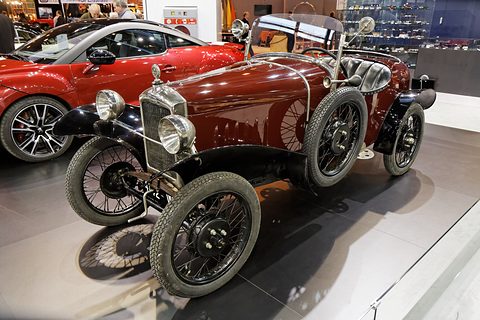
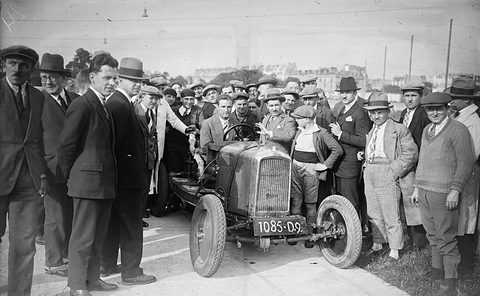
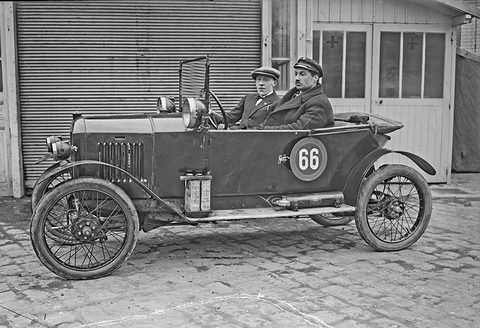
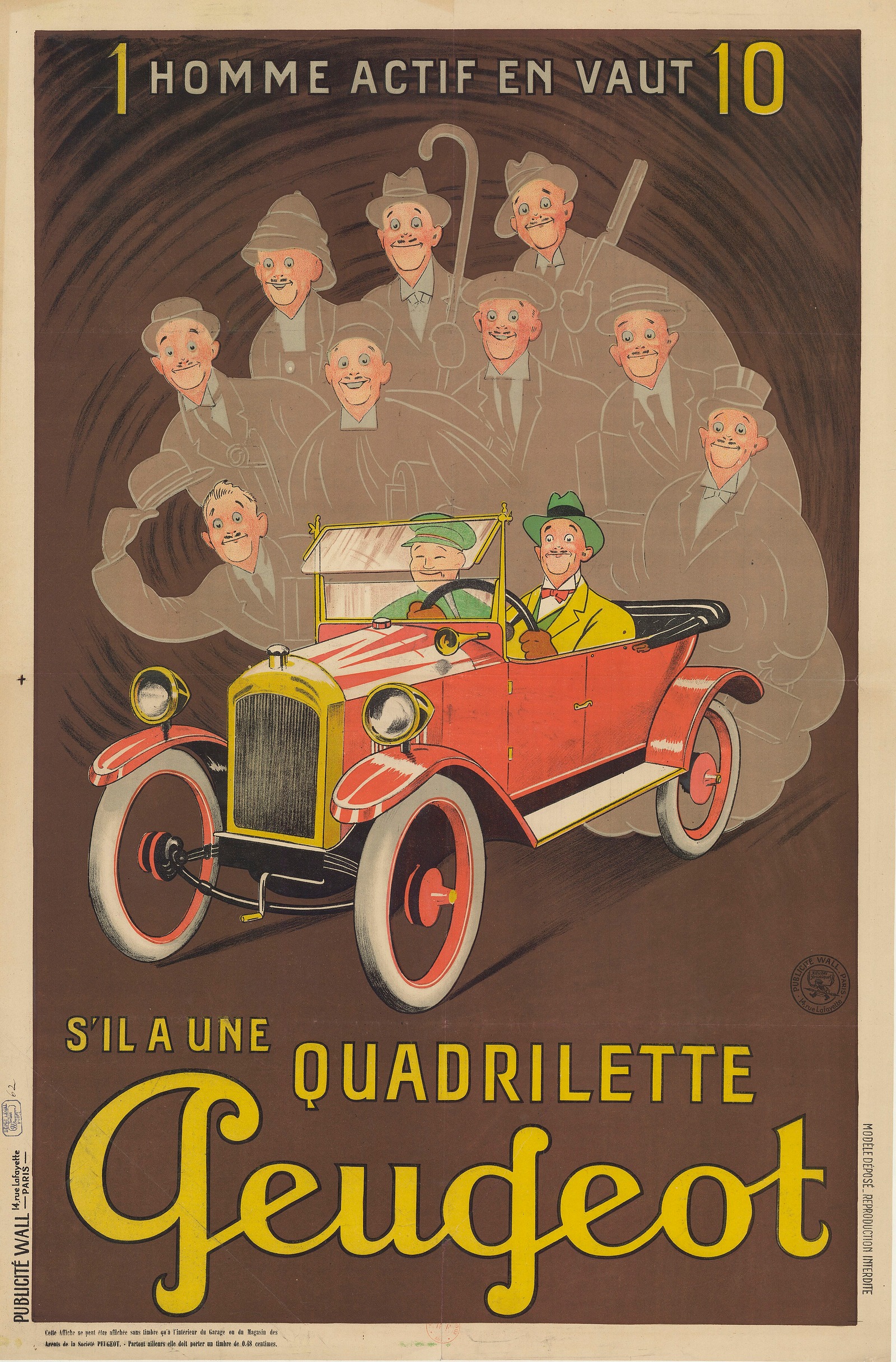
An engine the size of a tin of bully beef, a back axle so narrow it needed no differential, and the passenger sitting behind the driver: Peugeot’s answer to the French cyclecar tax of 1920 was a real car, made very small.

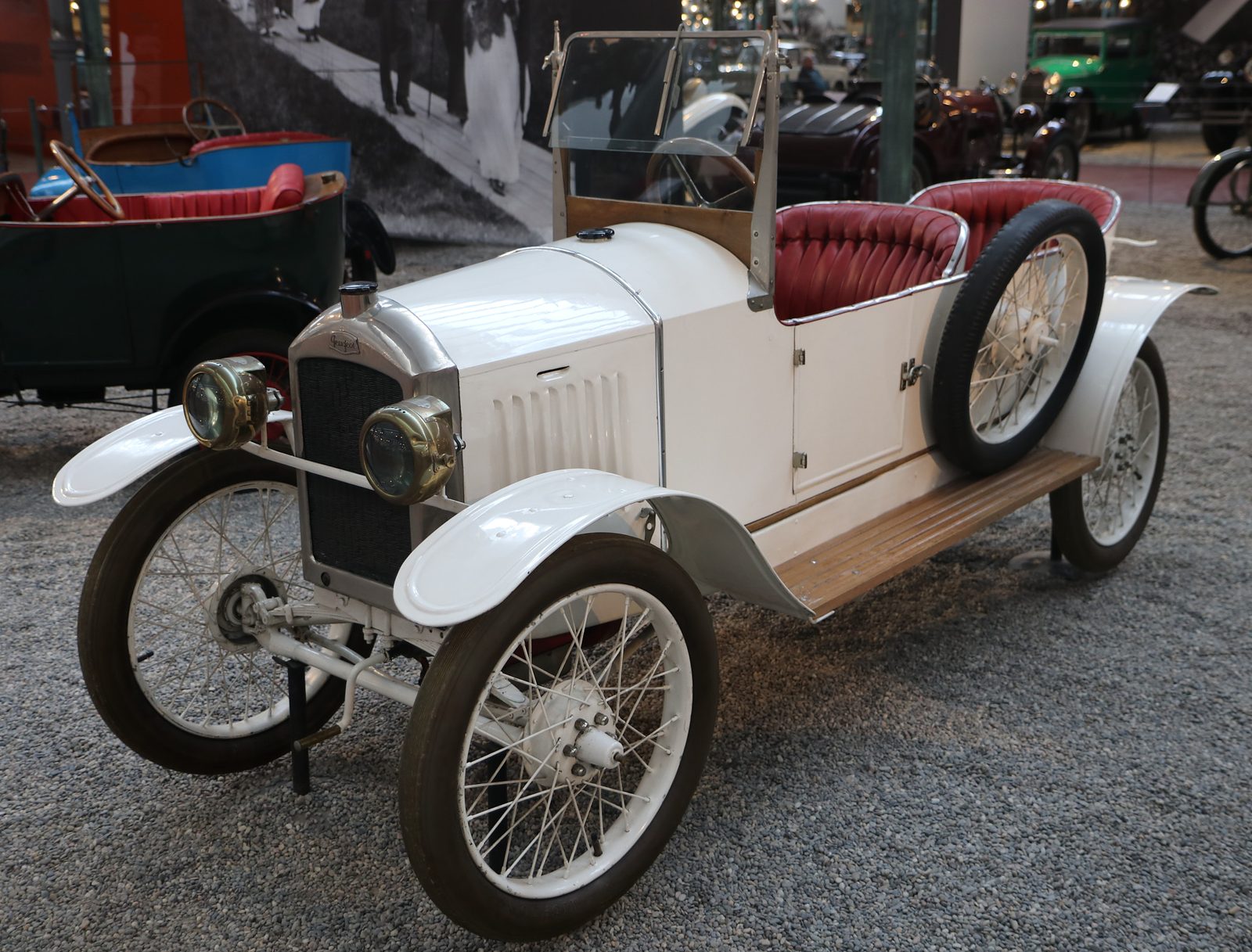
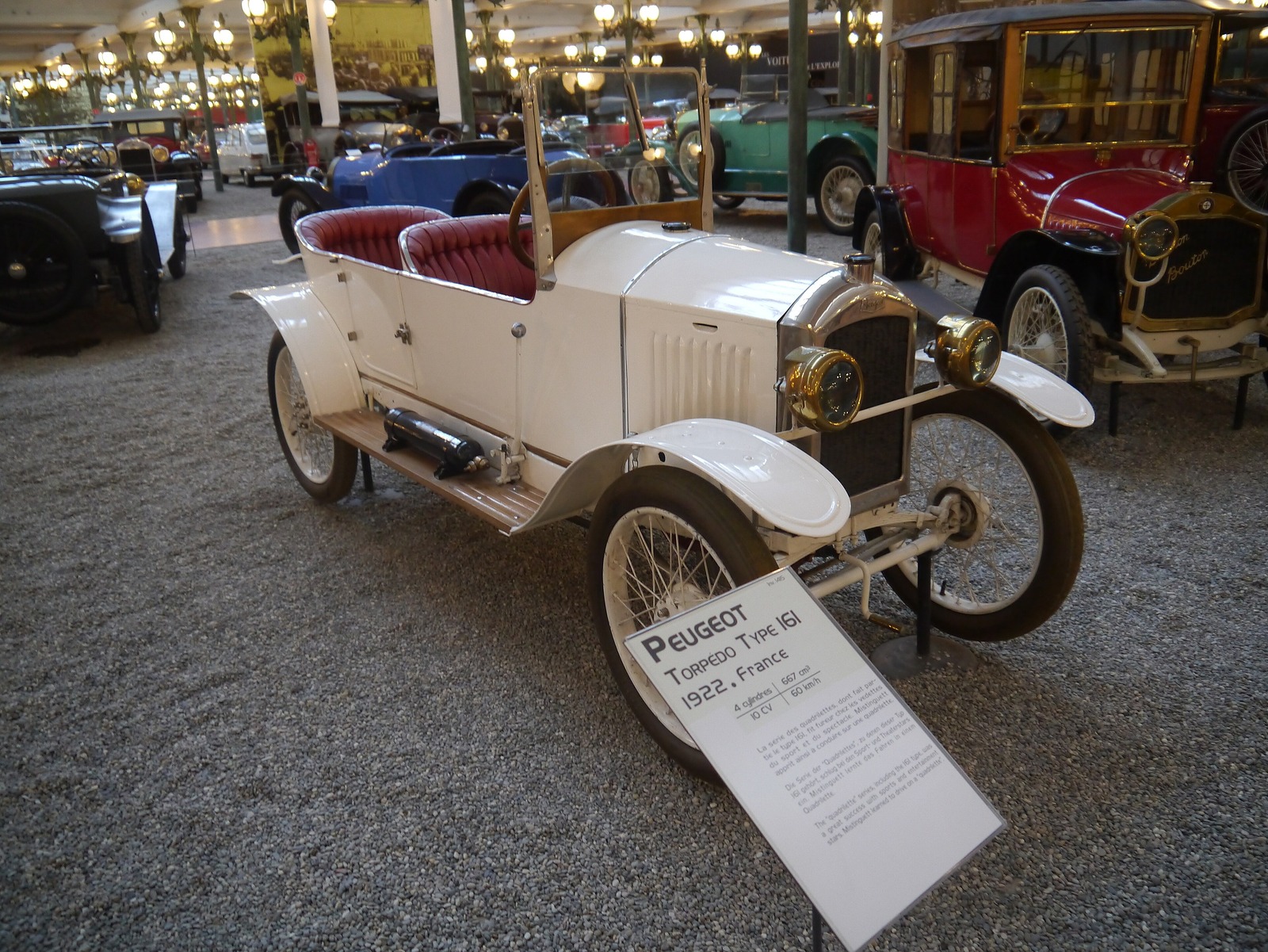
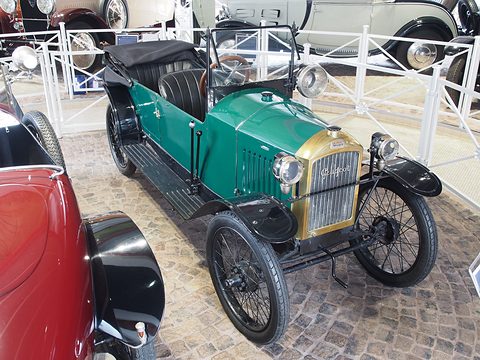
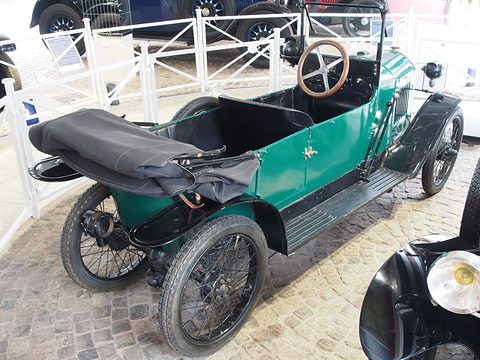
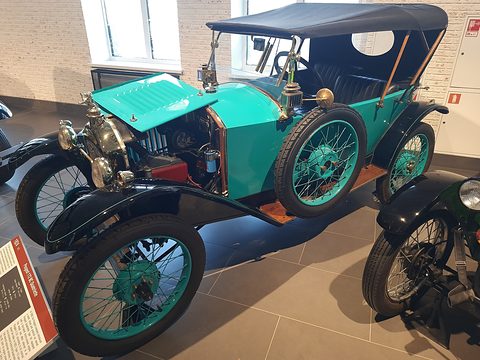
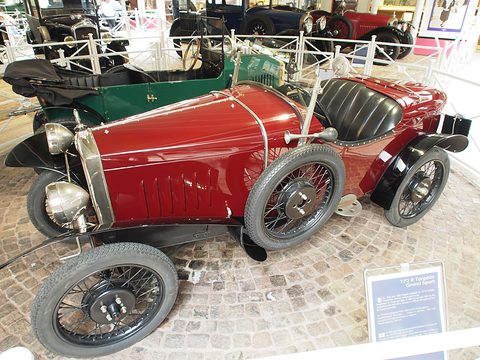
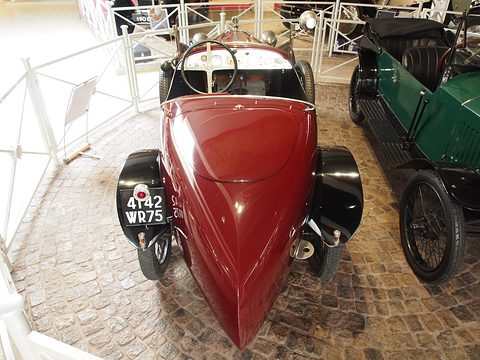
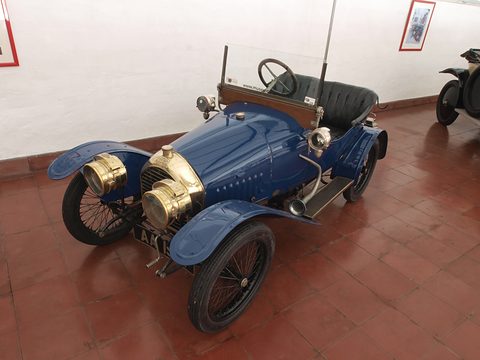
Looking down on a narrow green two-seater with a brass radiator, two seats one behind the other and a folded hood.
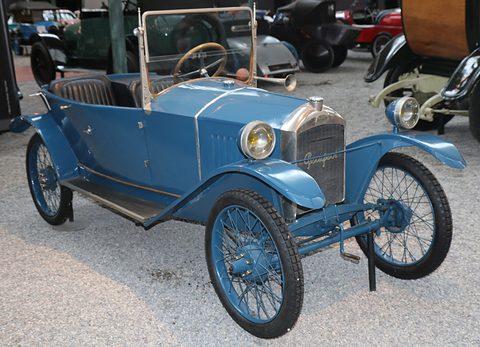
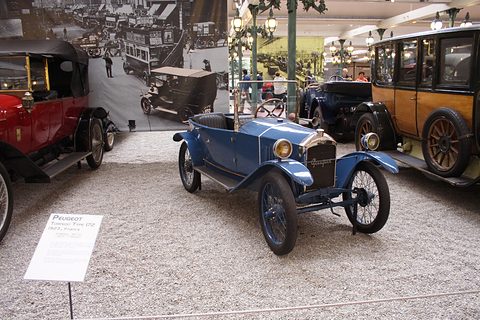
Green 1921 Peugeot Type 161 Quadrilette from the front quarter, its tandem seats visible, at the Musée de l’Aventure Peugeot, Sochaux, France, in April 2016.Photo: Alf van Beem, CC0, via Wikimedia Commons

At a glance

The spec plate

Peugeot Quadrilette

Type 161 and Type 172 · Beaulieu

Built
1920–⁠1924Shown at Brussels in 1920 and on sale from 1921; the name was dropped during 1924 for the 5 CV
Country
FrancePeugeot’s Beaulieu works, in the Doubs
Maker
Automobiles PeugeotBuilt at the Beaulieu works, in the Doubs
Engine
Water-cooled side-valve four, 667 cc50 × 85 mm; 720 cc in the sporting 172 BC and BS
Power
9.5–10 hp9.5 ch at 2,450 rpm, about 7.1 kW
Length
2,954 mm1,166 mm wide, 1,450 mm high
Weight
345 kgBy French Wikipedia; under the cyclecar limit of 350 kg
Seats
2In tandem in the Type 161; staggered in the 161 E; side by side in the Type 172
Wheels
4The rear two driven by shaft and worm, with no differential
Price new
9,900 francsWith hood, acetylene lamps and spare wheel, 1921; in Britain £275 in September 1921 and £250 from December
Production
12,305Types 161 and 172 over three years, by English Wikipedia
Top speed
60km/h60 km/h37 mph; German Wikipedia gives 40 km/h, perhaps a cruising speed

How big is it?

True proportion

2.95 m

It is 16 mm shorter than a Fiat 500, about 1.7 adults laid end to end.

  • 1.17 m wide
  • 345 kg: about five adults
  • A rear track of only 750 mm, against 926 mm at the frontsource 1
  • Two seats one behind the other in the first carssource 2source 3source 1
Drawn at true proportion. The track is 3.6 metres long; the adult stands at the same scale. The Peel P50 is the smallest production car, on every page for comparison.

The story

History

In July 1921 The Motor-Owner published its test of a tandem Quadrilette, driven for about a hundred miles, and its tester admitted that he had set off with some trepidation. The car looked curious, its track was very narrow, and his route crossed a great many tramlines. The worry, he found, vanished within minutes at the wheel.source 2

The tiny four-cylinder water-cooled engine is as lively as a cricket and wonderfully responsive, having in view its microscopic dimensions. The whole power unit… is about as big as a 7 lb. bully beef tin.

The Motor-Owner, “An Interesting Alternative”, July 1921.source 2

A car for a tax class

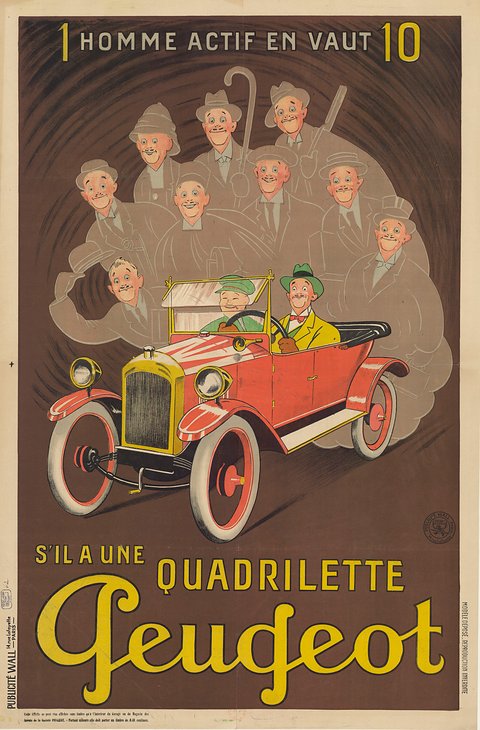
After the First World War Peugeot needed a cheap car to mend its finances.source 3 The French finance law of 30 July 1920 gave it a target: a cyclecar class for vehicles of three or four wheels, at most two seats, at most 350 kg bare and at most 1,100 cc, taxed at only 100 francs a year. The class grew fast: 814 cyclecars paid the tax in 1920, 3,191 in 1921, 9,621 in 1922, 20,426 in 1923 and 29,542 in 1924.source 4 Peugeot was one of the few makers that built its cyclecars entirely itself instead of assembling bought-in parts.source 4

The car was shown at the Brussels motor show in 1920, where it was nicknamed the Quadrilette, and went on sale in 1921.source 3source 1 It succeeded the Bébé that Ettore Bugatti had designed for Peugeot in 1913, and was smaller still.source 5source 3

The Type 161

The Type 161 had a water-cooled side-valve four of only 667 cc, 50 × 85 mm, giving 9.5 hp at 2,450 rpm, with three speeds and a shaft to a worm-driven rear axle.source 2source 6source 1 It was 2,954 mm long and 1,166 mm wide, and its rear track was only 750 mm, against 926 mm at the front: so narrow that the axle needed no differential, and the two seats had to go one behind the other.source 1source 6 It weighed 345 kg, inside the limit, and was frugal, at roughly 5 litres to the 100 km (56 mpg).source 6source 3 In France it cost 9,900 francs with a hood, acetylene lamps and a spare wheel, or 9,400 francs without; the Amilcar CC, its rival in the class, cost 9,200 francs in October 1921.source 3source 7source 8 Later in 1921 came the 161 E, with the seats staggered side by side, the passenger set slightly back to give the driver room for the pedals.source 3
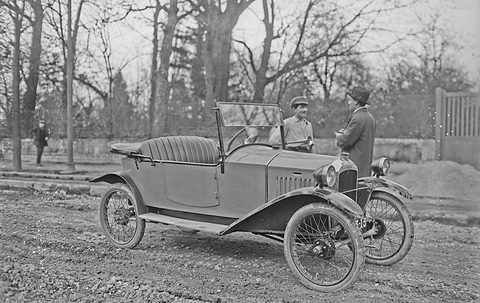
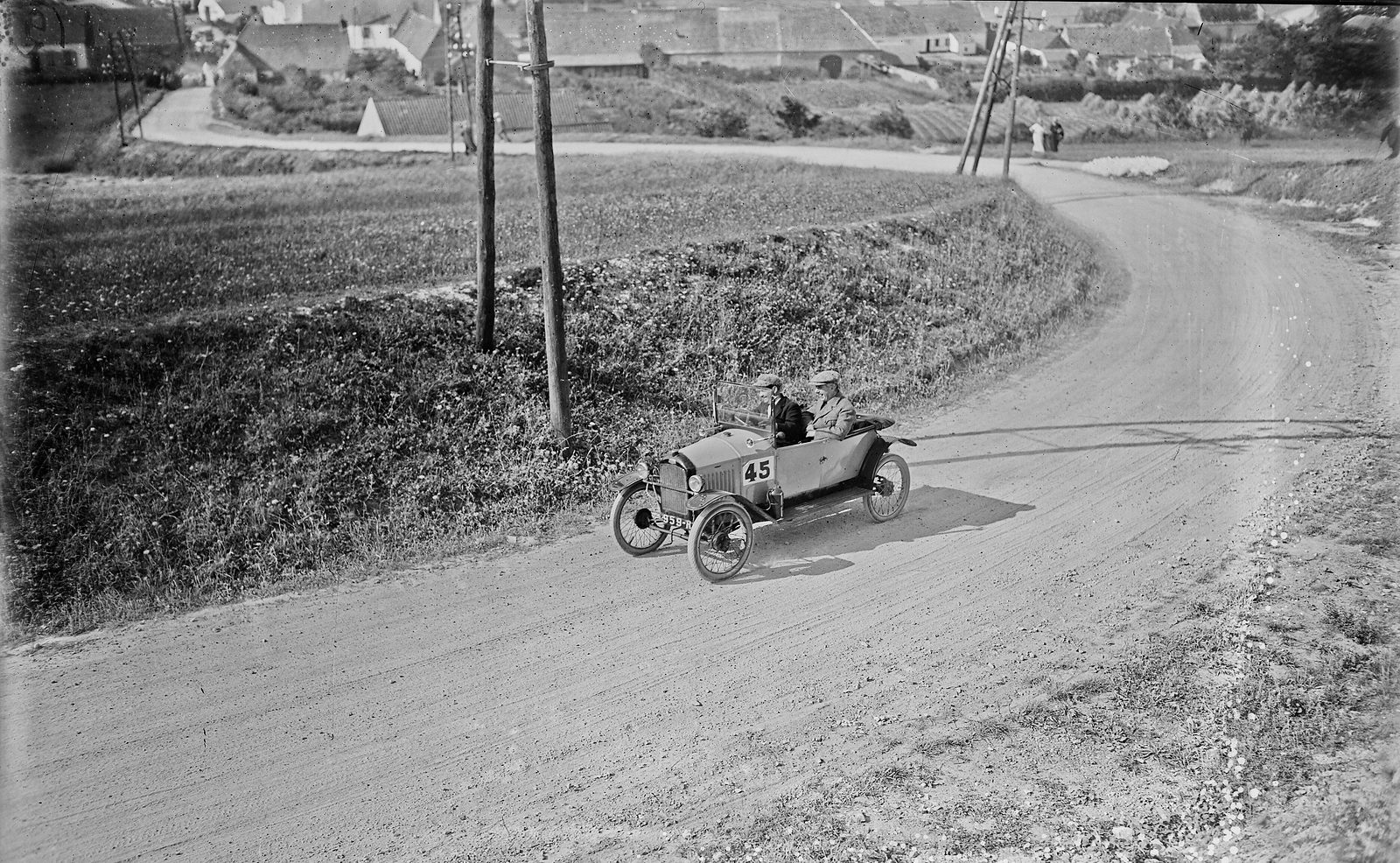
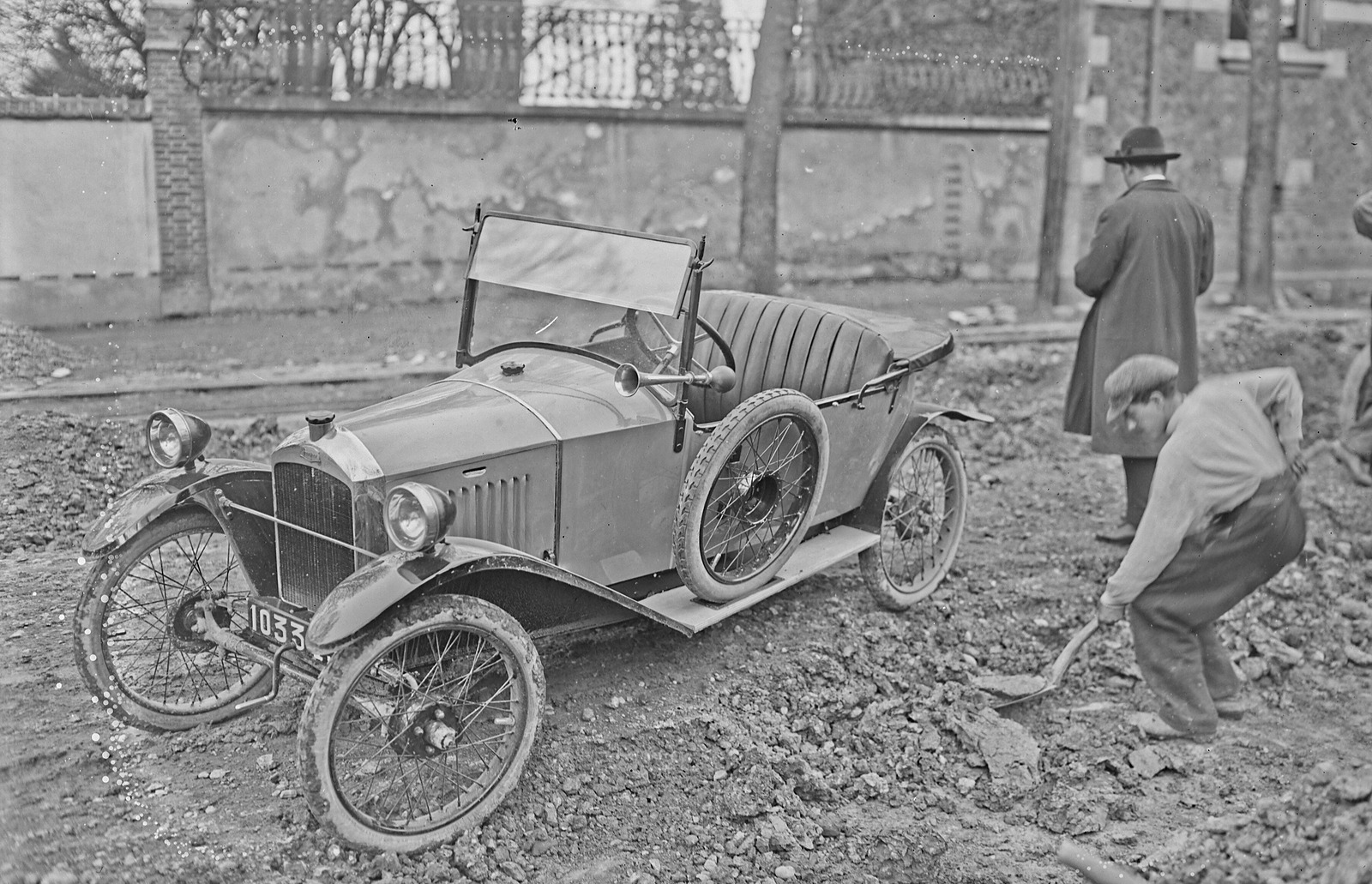
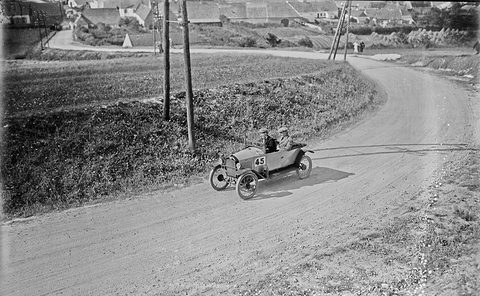
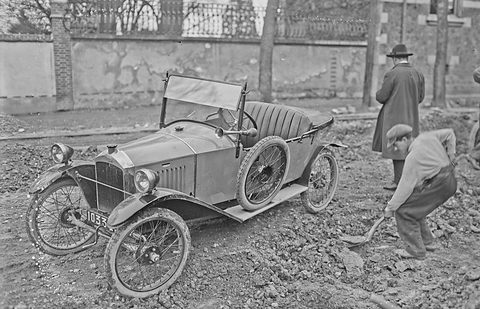
A small open two-seater with its windscreen up on muddy ground, two men in caps by the bonnet, bare trees behind.
Plate II · 1923 A Peugeot Quadrilette with two men beside it among bare trees near Paris, in April 1923.Photo: Agence Rol, Public domain, via Wikimedia Commons

“An Interesting Alternative”

Britain had it too. Peugeot (England) Ltd of Brompton Road advertised it to country residents at £275 in September 1921, and at a reduced £250 from December.source 9 In April 1921 The Motor-Owner reported that the head of Peugeot’s London business drove one between his home in Putney and Brompton Road, and found it remarkably nippy.source 10 Its tester of July saw it less as a small car than as something better than a motorcycle and sidecar. The seat was remarkably comfortable, the quadrant gear change simpler than many gate changes, and the hood and windscreen kept the weather off far better than a sidecar did. It was not a car to stay in top gear: a halt in traffic or a steep hill meant second, where the little engine would rev and pull splendidly. It ran, he said, smoothly and silently all day at 40–48 km/h (25–30 mph).source 2

Taken all in all, the Peugeot is an honest, sound attempt to provide something superior in the way of comfort to the usual unmechanical motor-cycle combination, and as such we recommend it.

The Motor-Owner, “An Interesting Alternative”, July 1921.source 2

In Belgium, the magazine Moto wrote on “La quadrilette Peugeot” on 1 September 1921.source 11 The flat-out speed is given as 60 km/h (37 mph); German Wikipedia’s 40 km/h is perhaps the cruising speed.source 3source 6source 1

The Type 172, and the 5 CV

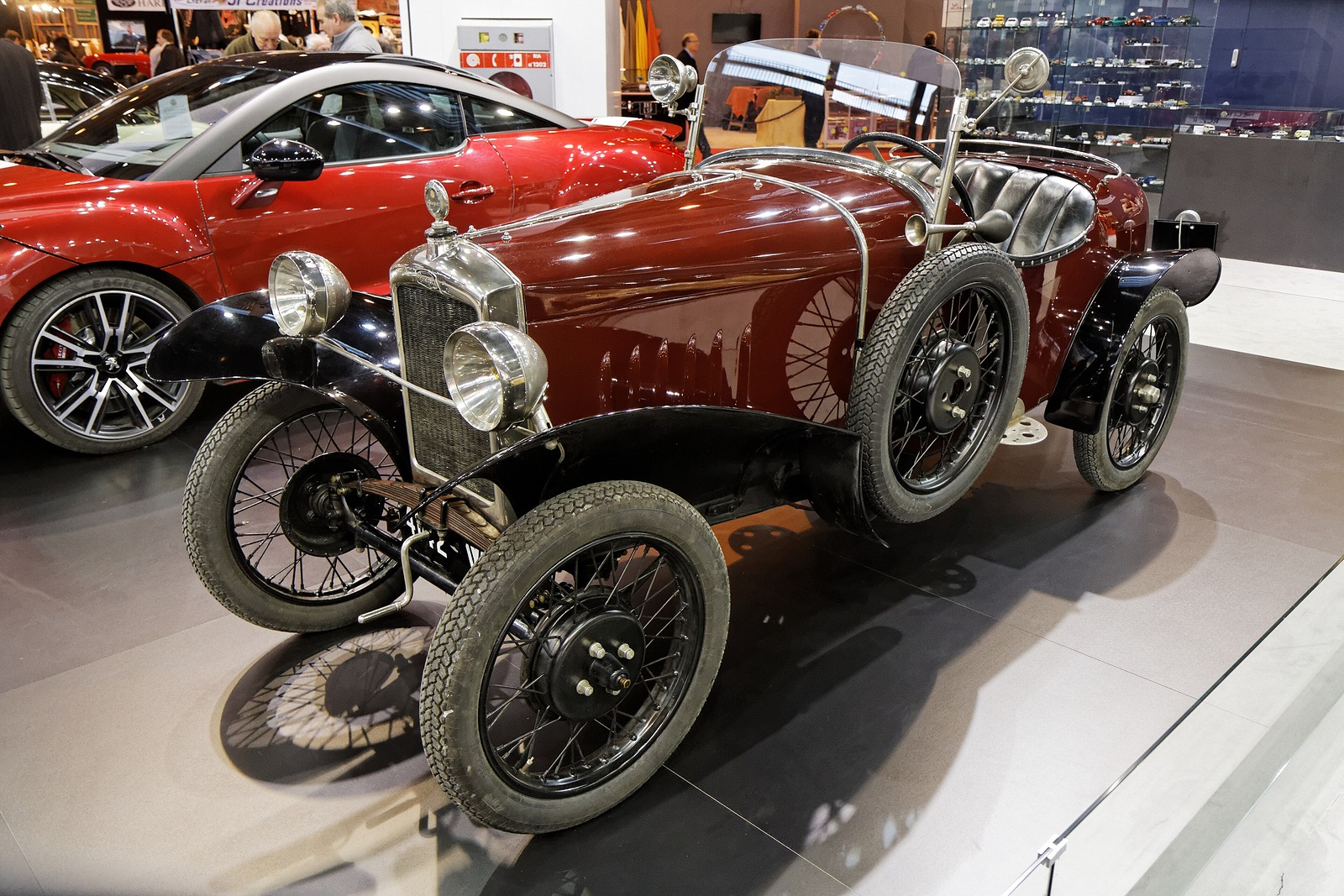
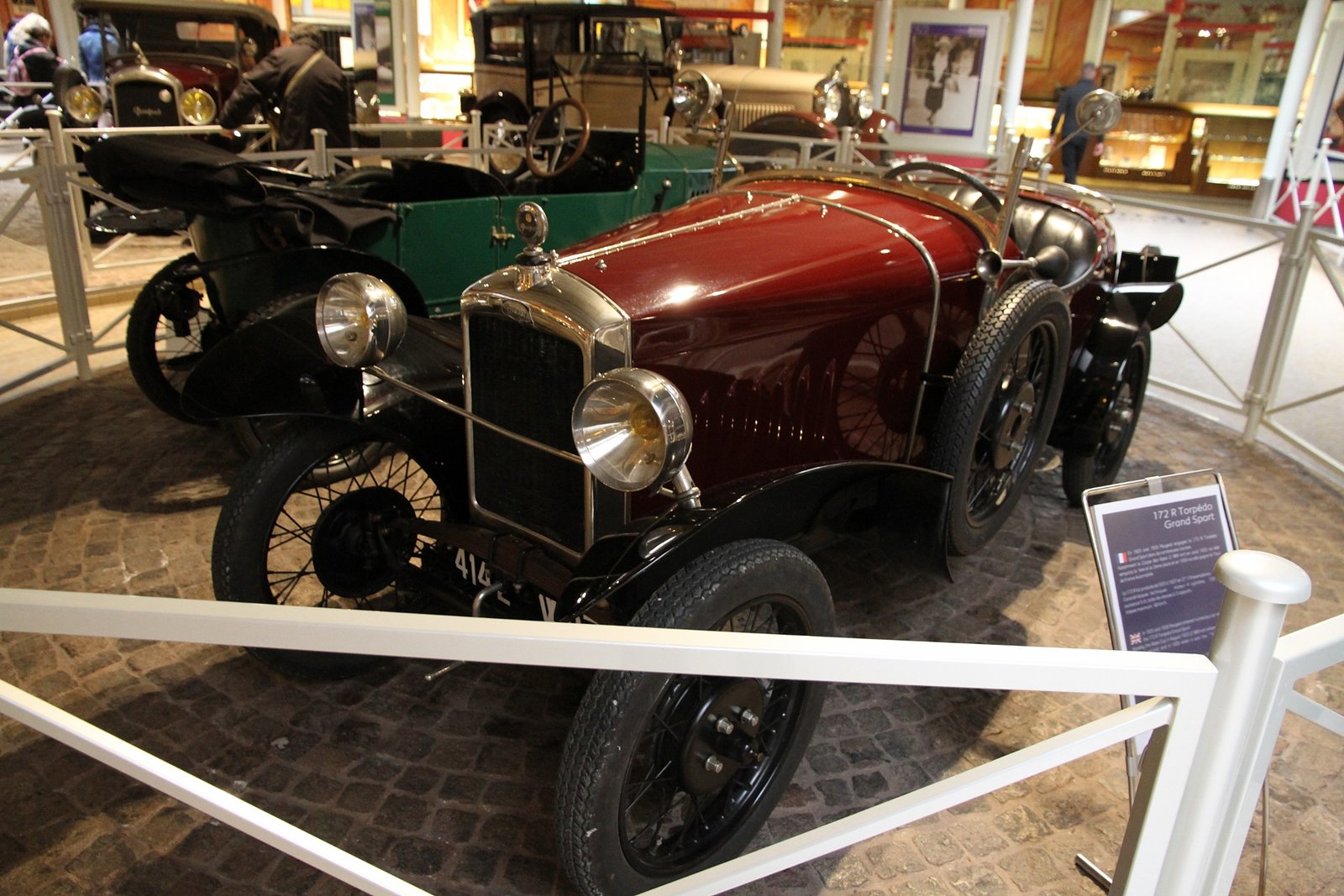
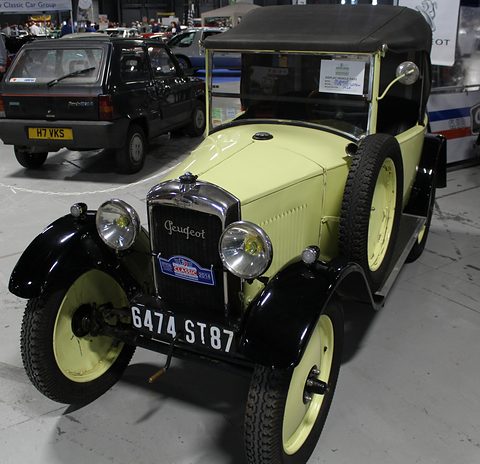
The Type 172 followed with few changes, still with three speeds and a worm-driven rear axle without a differential, and with brakes on the rear axle only, the right worked by the pedal and the left by a hand lever.source 6 French Wikipedia dates it to 1922; English Wikipedia says the changes came in 1923 and the car was launched during 1924, with a wider track for side-by-side seats, a shorter wheelbase and more room for luggage.source 6source 3 The sporting 172 BC and 172 BS, the Quadrilette Grand Sport, came in 1924 with a 720 cc engine.source 3 Confusingly, the Type 172 carried both the Quadrilette name and that of its successor, the 5 CV; the two were sold side by side in 1924, and then the Quadrilette name ended.source 3 Pierre Dumont notes that its platform chassis took well to conversion into racing cars.source 12

English Wikipedia counts 12,305 Quadrilettes over three years, 31 per cent of Peugeot’s output.source 3 The 5 CV, as the Type 172 R and then the 190 S, ran on to 1929–⁠30, and the whole family came to 94,948 cars by Georgano’s count. It was the line that made Peugeot France’s maker of small, cheap cars in the 1920s.source 13source 3

The Austin Seven story

The Quadrilette is sometimes called an ancestor of the Austin Seven. Clutton and Stanford linked the Bébé and the Quadrilette to the Austin design in 1959, but Georgano calls the Quadrilette only an alleged ancestor, and writes that the car said to have been inspired by it had little in common with it. It is best treated as a story, not a fact.source 5source 14source 13
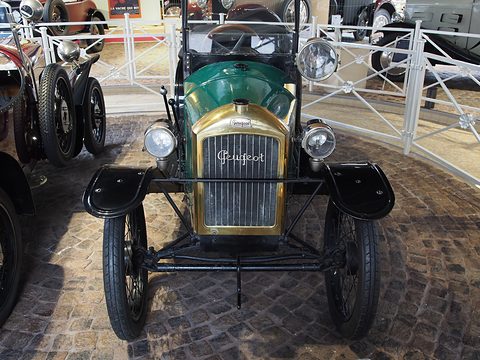
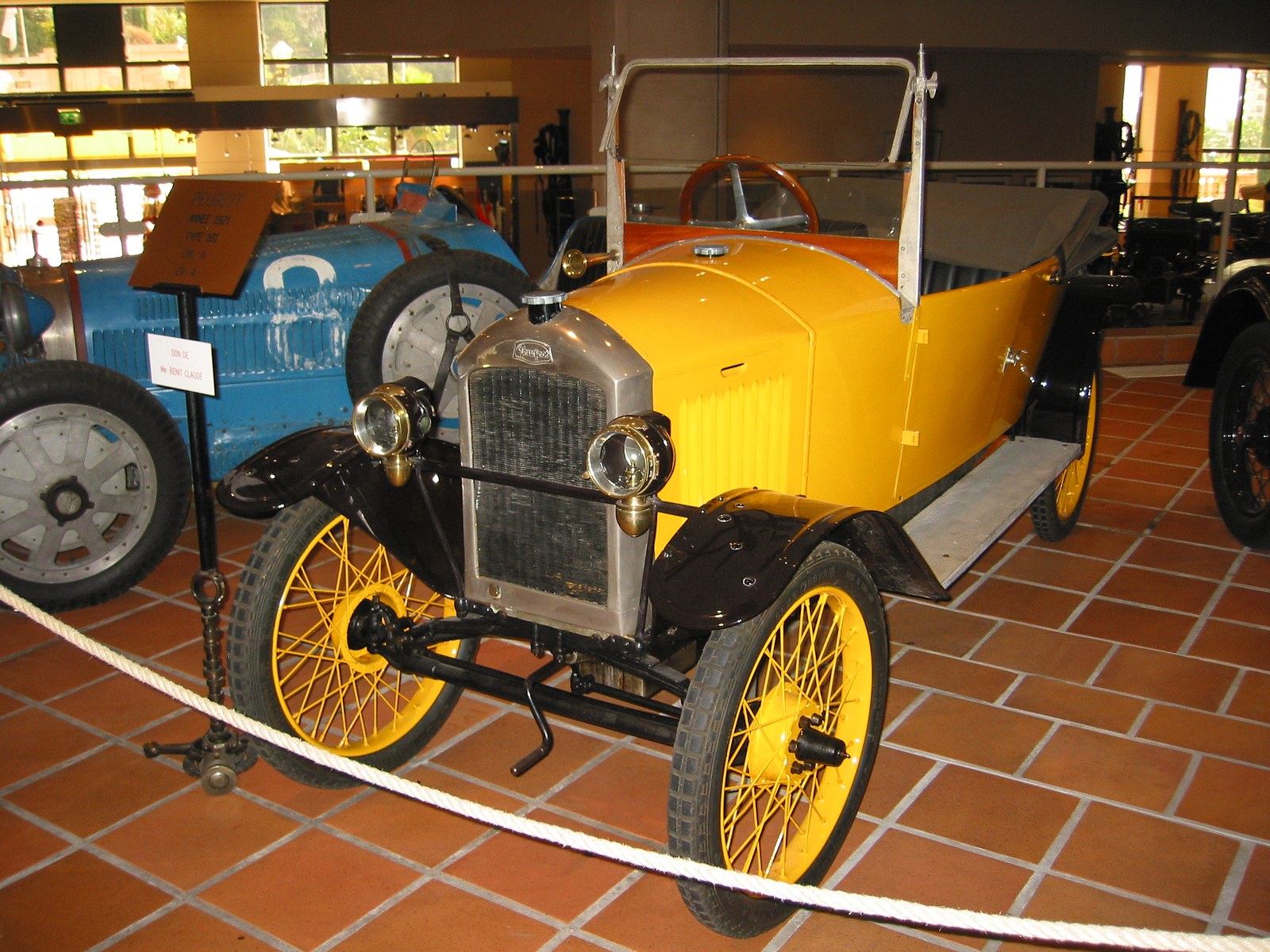
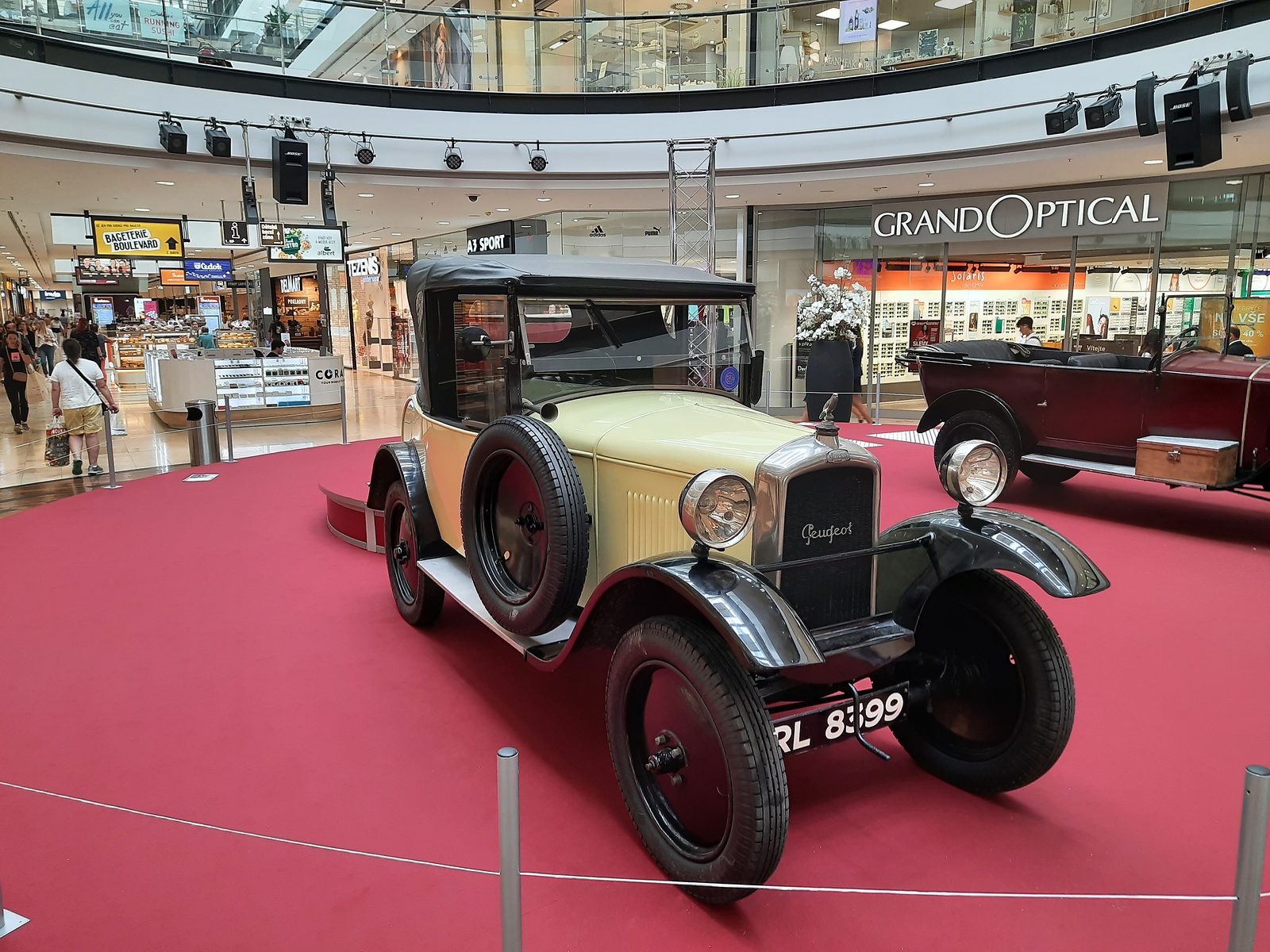
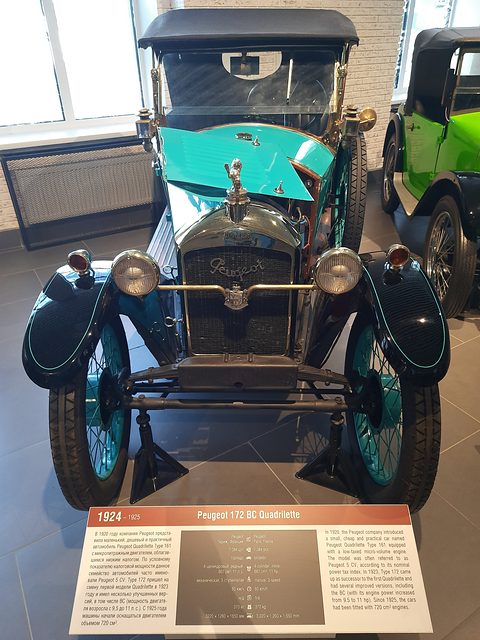
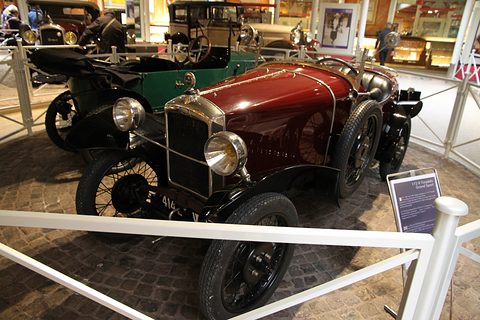
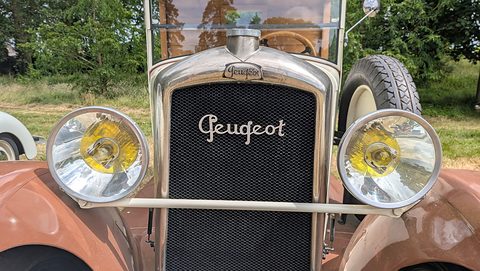
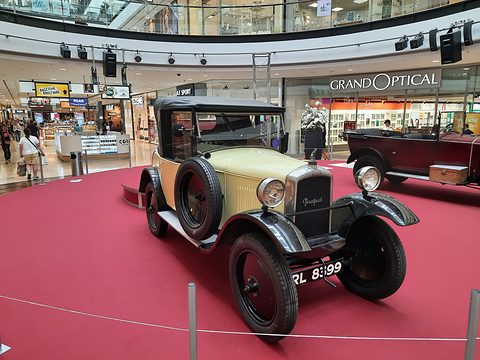
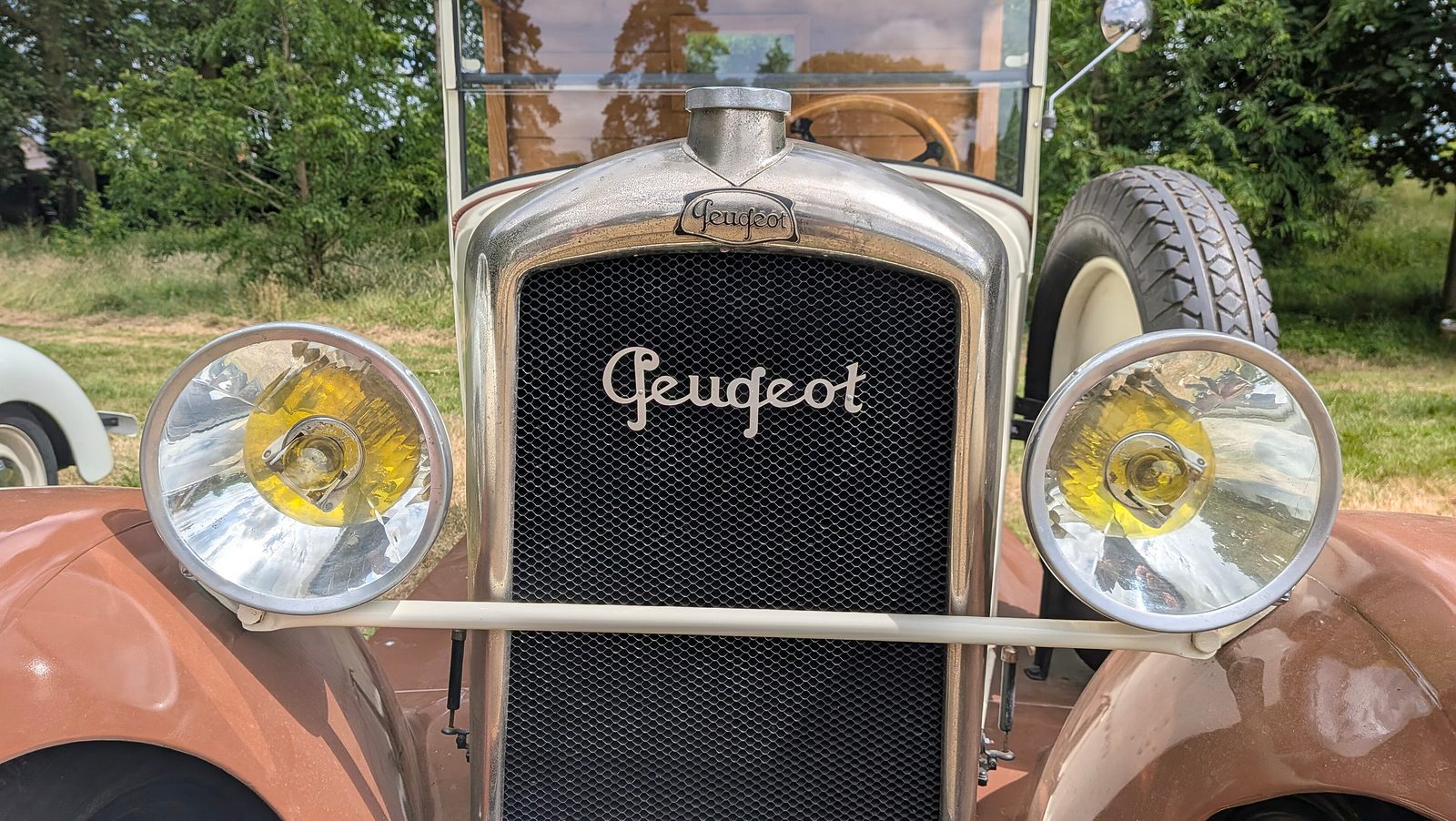
Front view of a very narrow green car with a brass radiator lettered Peugeot, two lamps and black wings on cobbles.
A green 1921 Type 161 head-on in the Musée de l’Aventure Peugeot at Sochaux in April 2016, its narrow track plain to see.Photo: Alf van Beem, CC0, via Wikimedia Commons
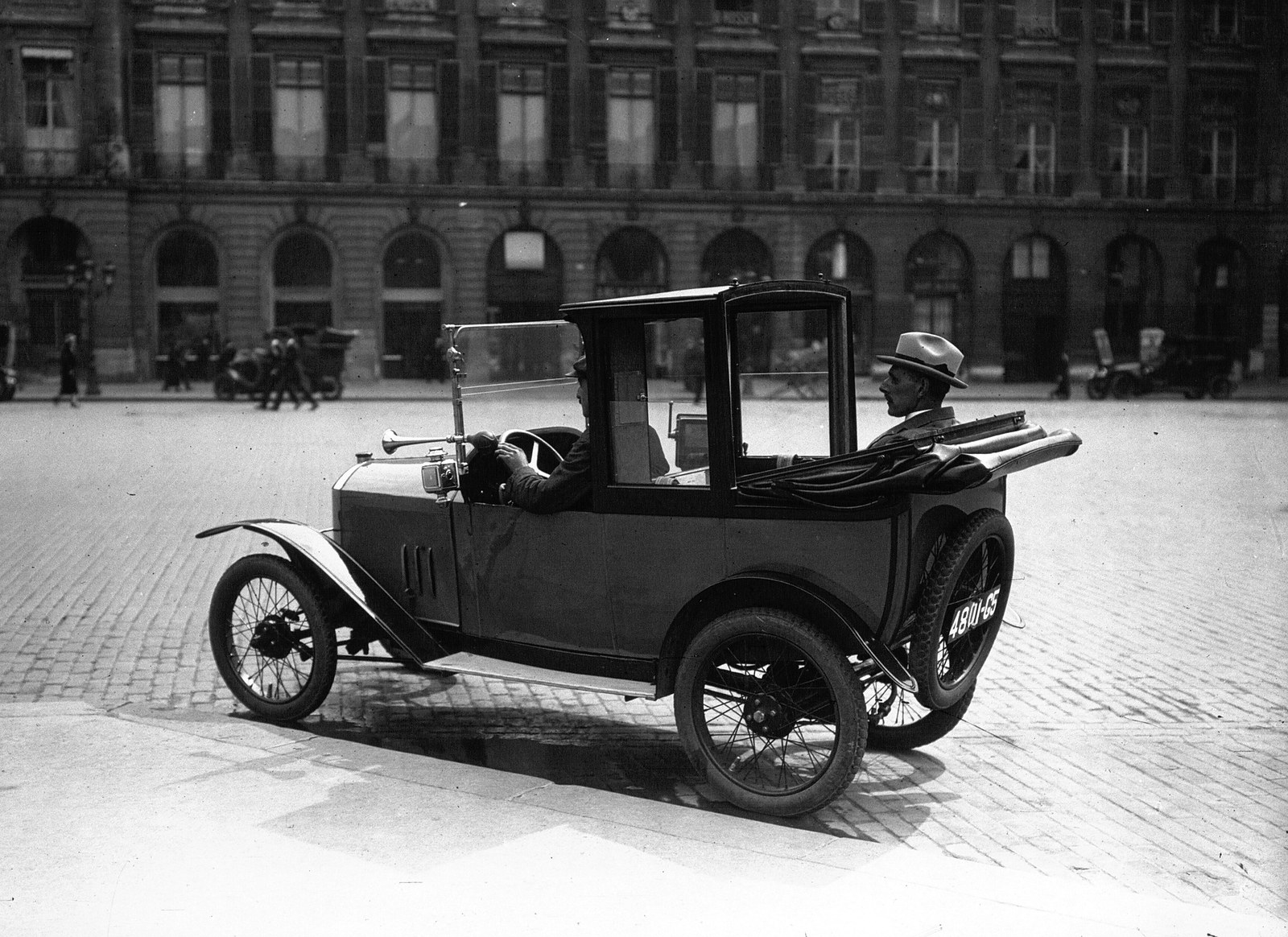
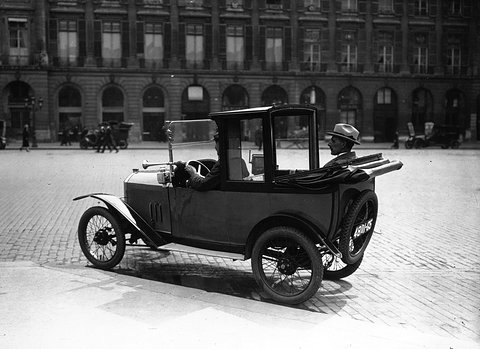
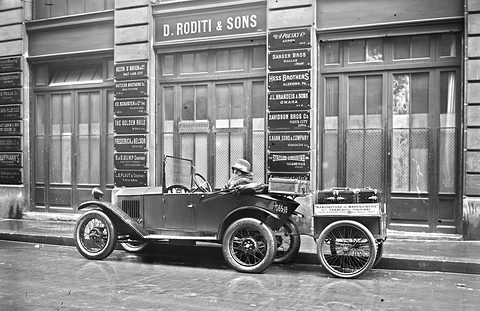
A small open car with a two-wheeled box trailer at the kerb before an office front hung with company name plates.
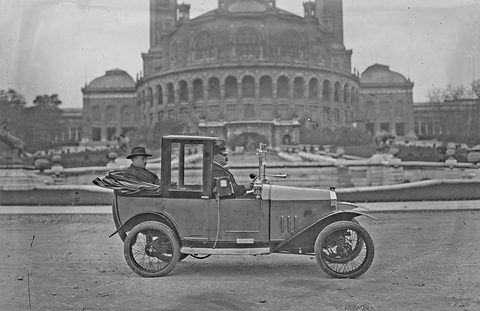
Plate I · 1924 A Quadrilette towing a small trailer outside D. Roditi & Sons in a Paris street, in November 1924.Photo: Agence Rol, Public domain, via Wikimedia Commons
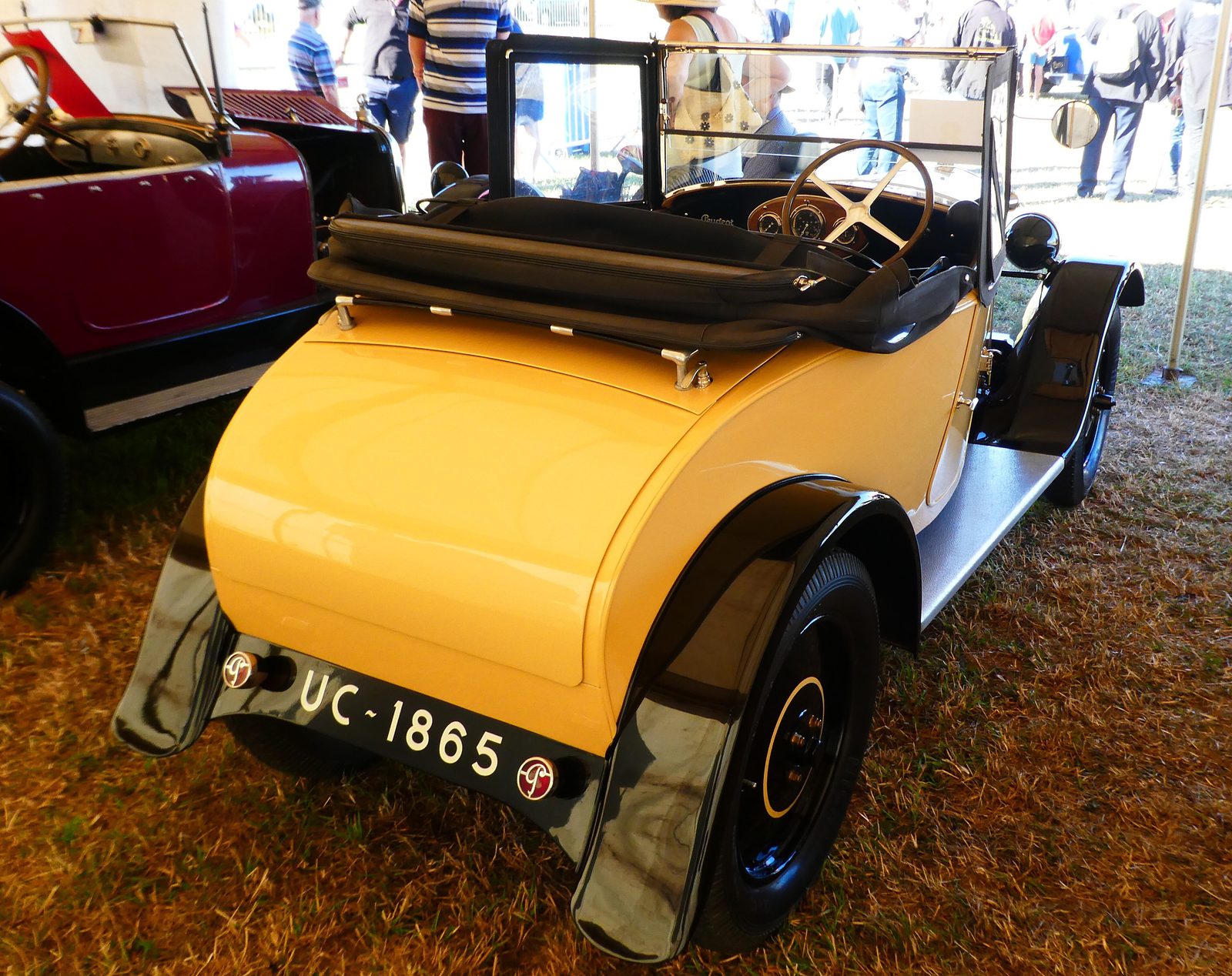
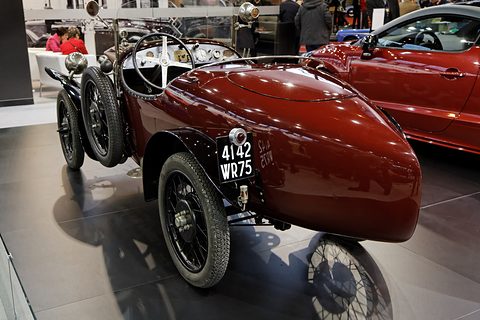
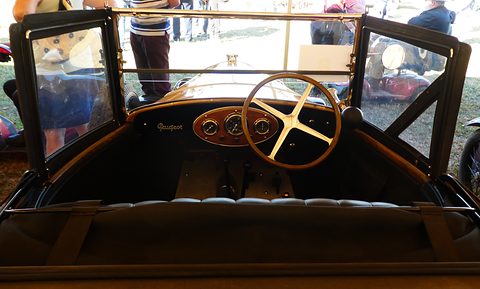
A narrow green open car with a black folded hood on its tail, a long wooden-rimmed steering wheel and tandem seats.
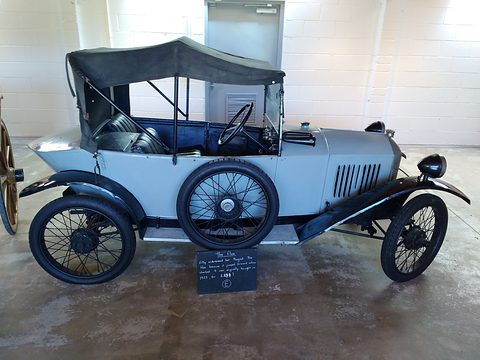
A green 1921 Type 161 from the rear quarter, in the Musée de l’Aventure Peugeot at Sochaux in April 2016, its hood folded over the tail.Photo: Alf van Beem, CC0, via Wikimedia Commons

Pictures

More photographs, old and new

Variants

From tandem to side by side

The Quadrilette family
VariantYearsWhat differsHow many
Type 1611920–⁠22Tandem seats; track 926 mm at the front and 750 mm at the back; acetylene lighting3,500 at Beaulieu
Type 161 E1921–⁠22Staggered seats side by side, the passenger set slightly backIncluded above
Type 1721922 or 1923 to 1924A wider track and side-by-side seats, a shorter wheelbase and more room for luggage12,305 with the Type 161
Type 172 BC and BS1924The sporting Quadrilette Grand Sport, with a 720 cc engineNot separated
5 CV1924 to 1929–⁠30The successor, as the Type 172 R and then the 190 S; the Quadrilette name dropped94,948 for the whole family

Specification

The Type 161 of 1921

Engine and drive

Engine and drive
EngineWater-cooled four in line, monobloc, side valves, at the front; 50 × 85 mm, 667 ccsource 2source 6source 1
Power9.5 ch at 2,450 rpm; 10 PS by German Wikipediasource 6source 1
Fiscal rating4 CVsource 1
GearboxThree speeds and reverse, with a quadrant change, in unit with the enginesource 2source 6
Final driveShaft to a worm-gear rear axle, with no differentialsource 6source 1

Body and chassis

Body and chassis
BodyOpen two-seater with a folding hood and windscreen; no closed bodies at firstsource 2source 3source 13
LightingAcetylene on the earliest carssource 3source 13
BrakesOn the rear axle only, the right by pedal and the left by hand leversource 6Described for the Type 172

Dimensions

Dimensions
Length × width × height2,954 × 1,166 × 1,450 mm (116 × 46 × 57 in)source 1
Wheelbase2,304 mm (91 in)source 1
Track926 mm at the front, 750 mm at the backsource 1
Weight345 kg (761 lb)source 6Under 350 kg by English and German Wikipedia

Performance and running

Performance and running
Top speed60 km/h (37 mph)source 3source 640 km/h by German Wikipedia; French Wikipedia gives 40 km/h, or 60 at the most
FuelAbout 5 litres per 100 km (56 mpg)source 3
Annual tax100 francs, in the cyclecar classsource 3source 4
Price new9,900 francs with hood, lamps and spare wheel, 9,400 withoutsource 3; £275, then £250, in Britainsource 9

How many were built?

Three figures that count different things

About 12,300 QuadrilettesEnglish Wikipedia gives 12,305 Quadrilettes of both types over three years, 31 per cent of Peugeot’s output; German Wikipedia, 3,500 of the Type 161 at Beaulieu; Georgano, 94,948 for the whole family to the end of the 5 CV. They measure different things and do not contradict one another. We state about 12,300, though the source of that figure has not been seen.

  1. 94,948the whole Quadrilette, Type 172 and Type 190 family, to about 1930One source

    G. N. Georgano, Vintage Years 1920–⁠1930source 13
  2. 12,305Quadrilettes, Types 161 and 172, over three yearsOne source

    English Wikipedia, with no source given in the text readsource 3
  3. 3,500Type 161 built at BeaulieuOne source

    German Wikipedia, citing Schmarbecksource 1

  • Two sources agreetwo good sources give the figure
  • One sourcea good source, alone
  • Unconfirmeda lead only, not yet checked

Famous for

Three points

  1. A real four of 667 cc

    A water-cooled four-cylinder engine the size of a tin of bully beef.

  2. 750 mm at the back

    The rear track was so narrow that the car needed no differential.

  3. One behind the other

    Tandem seating, in a car from one of France’s major makers.

Survivors and collecting

Today

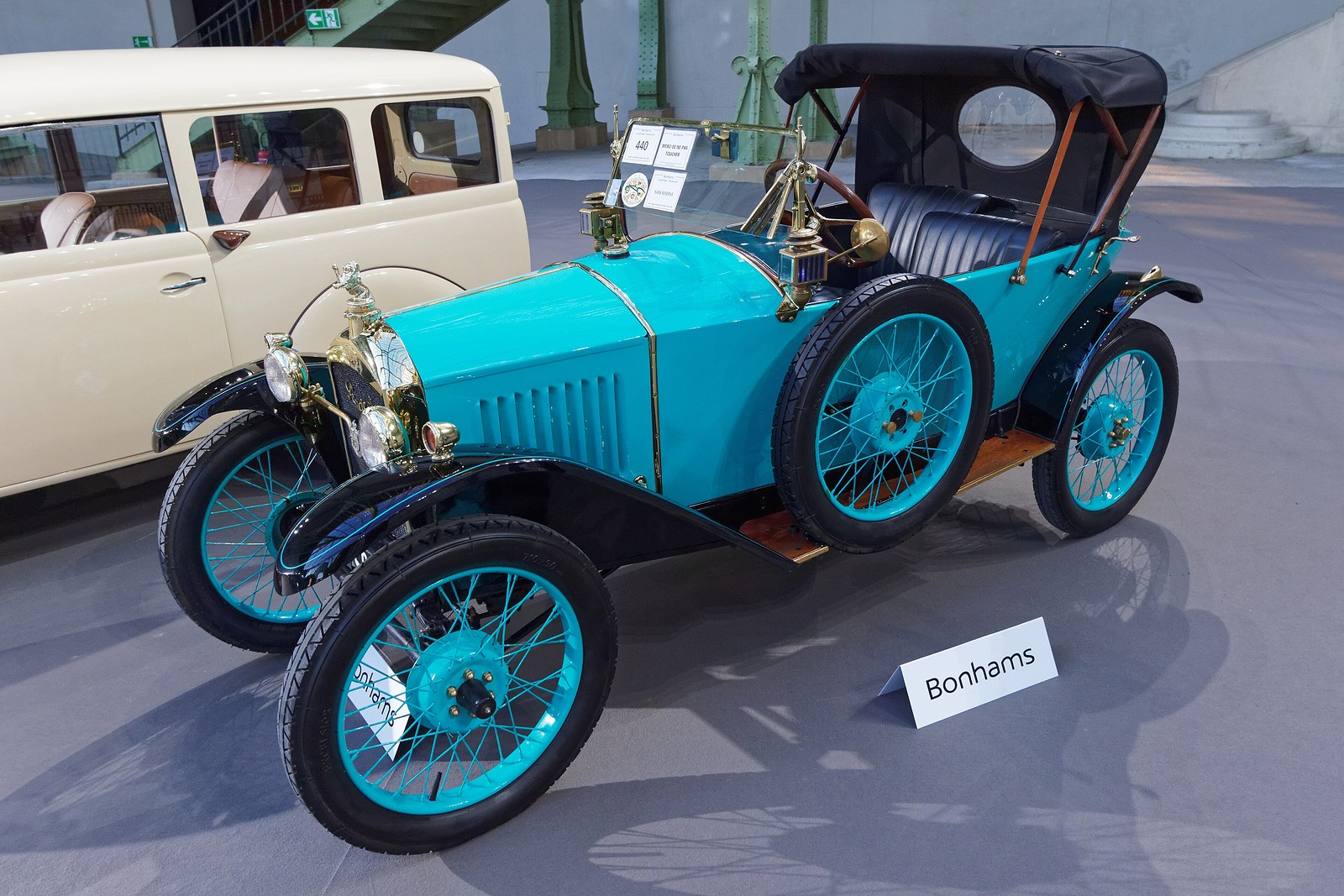
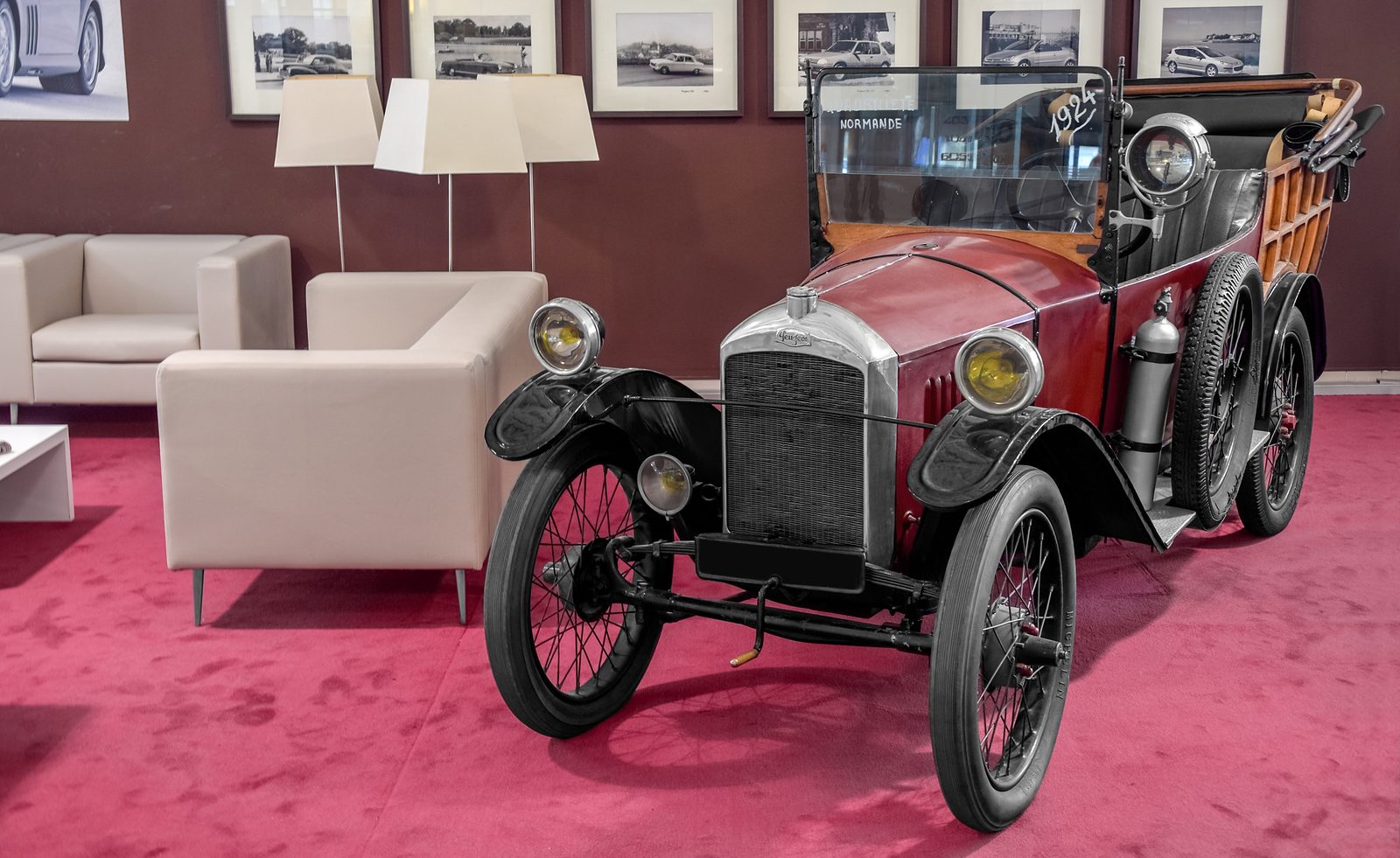
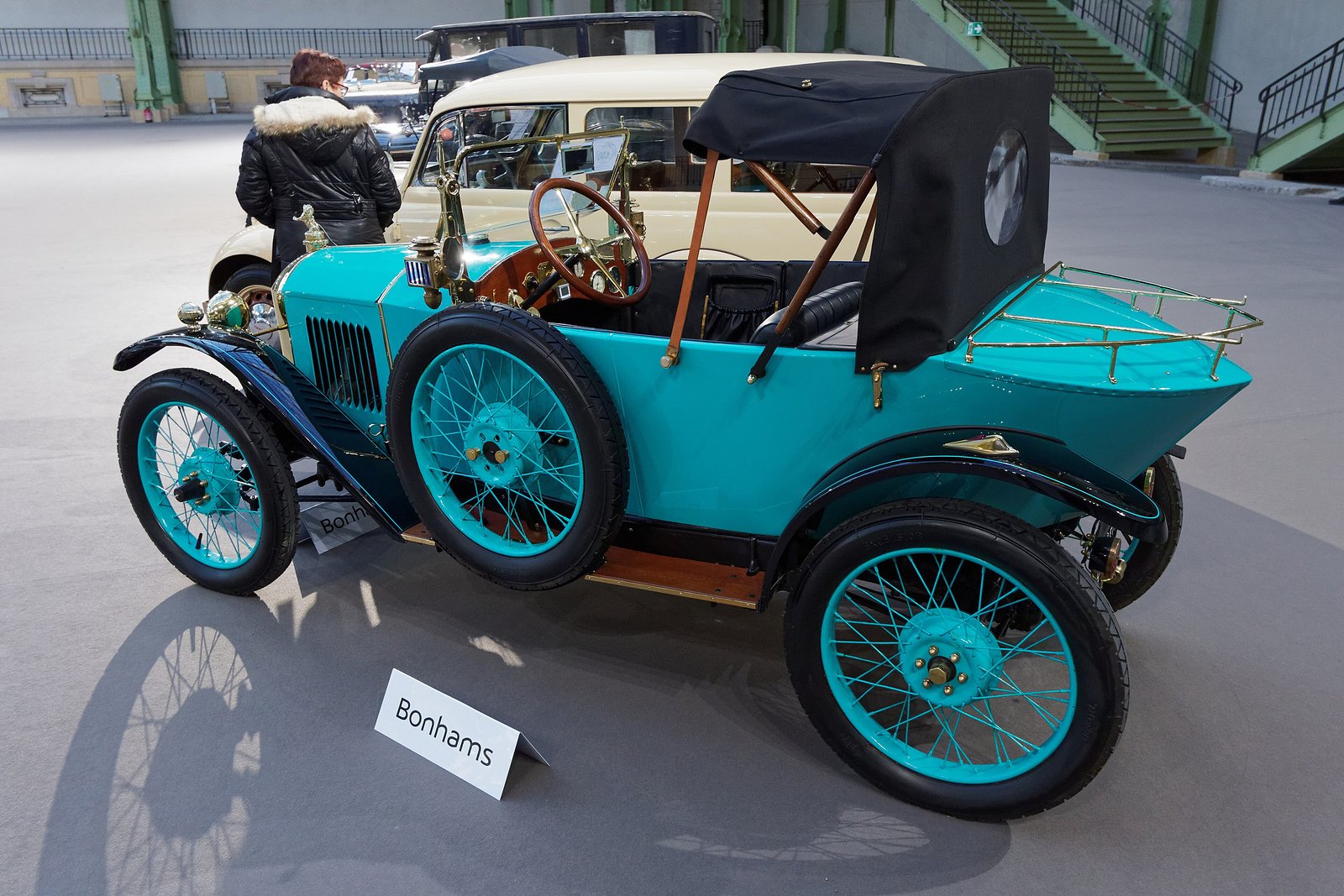
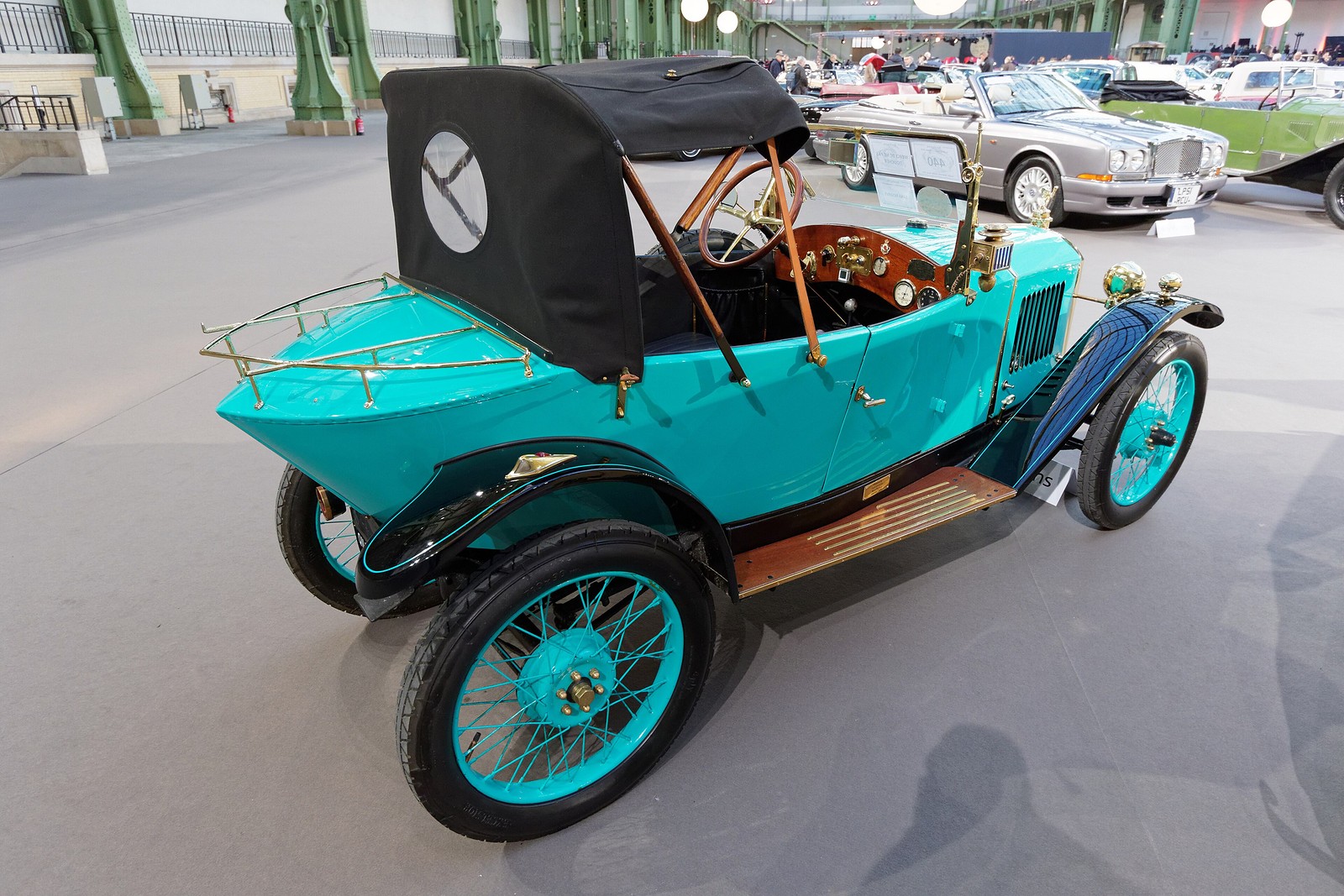
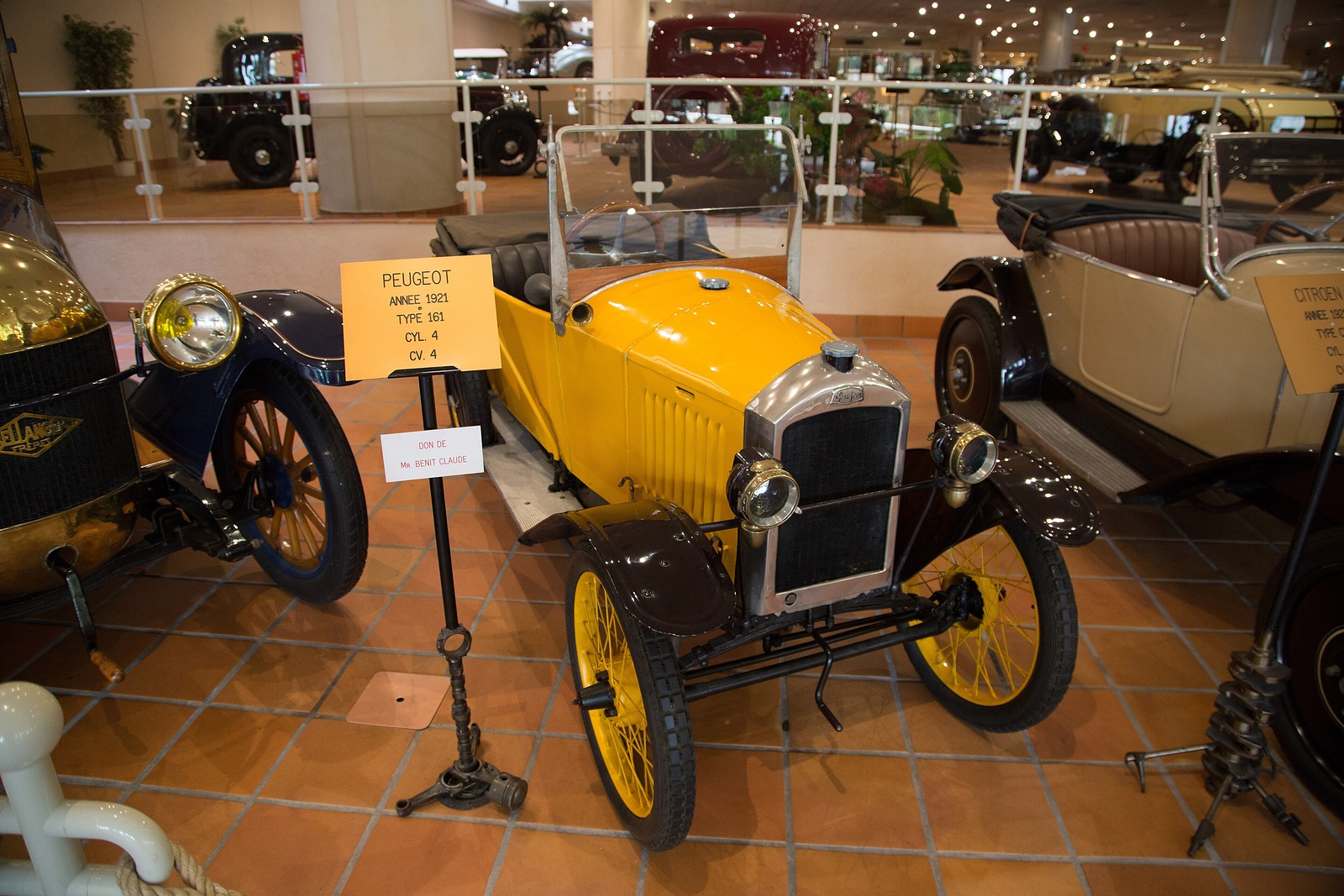
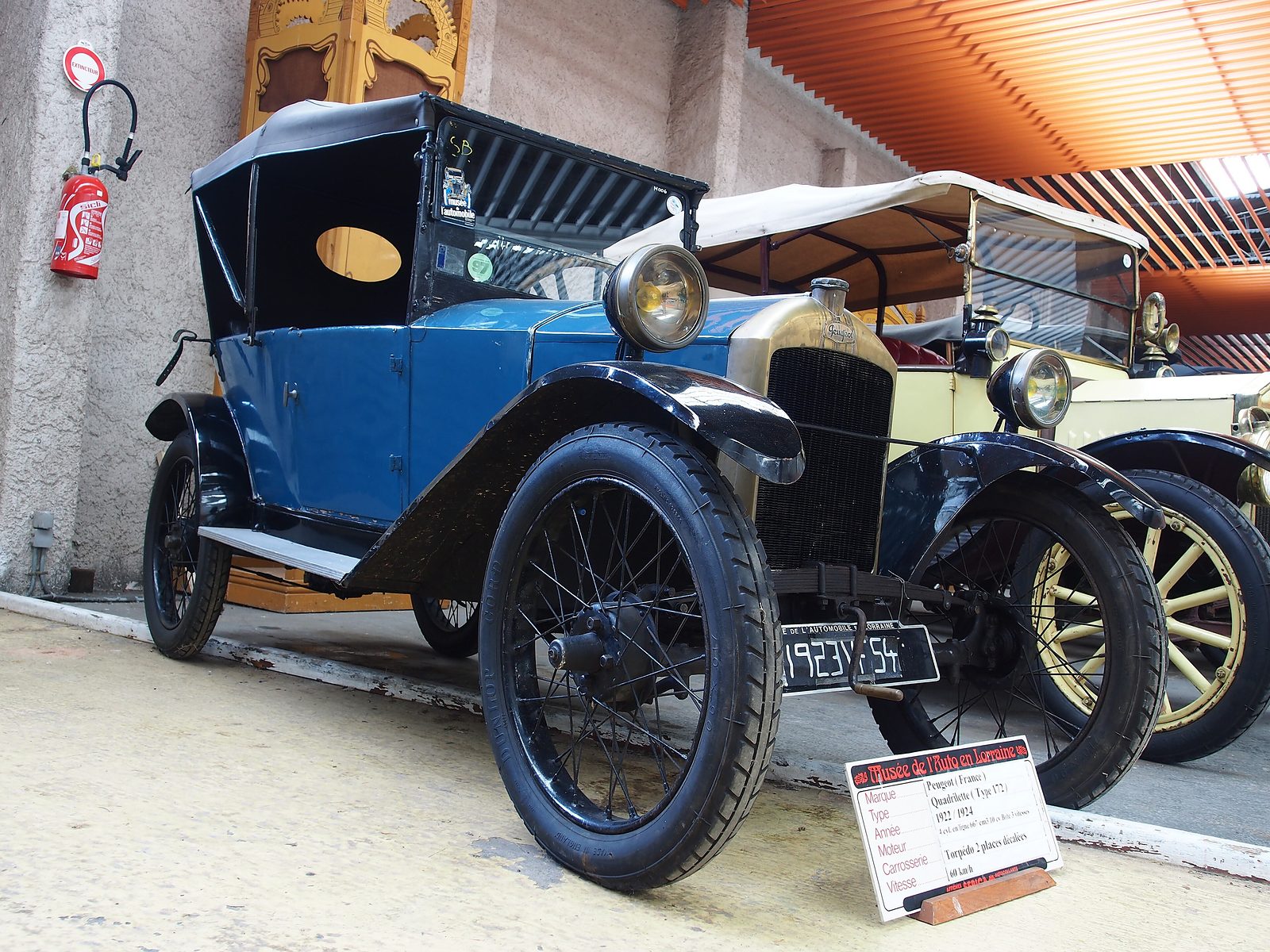
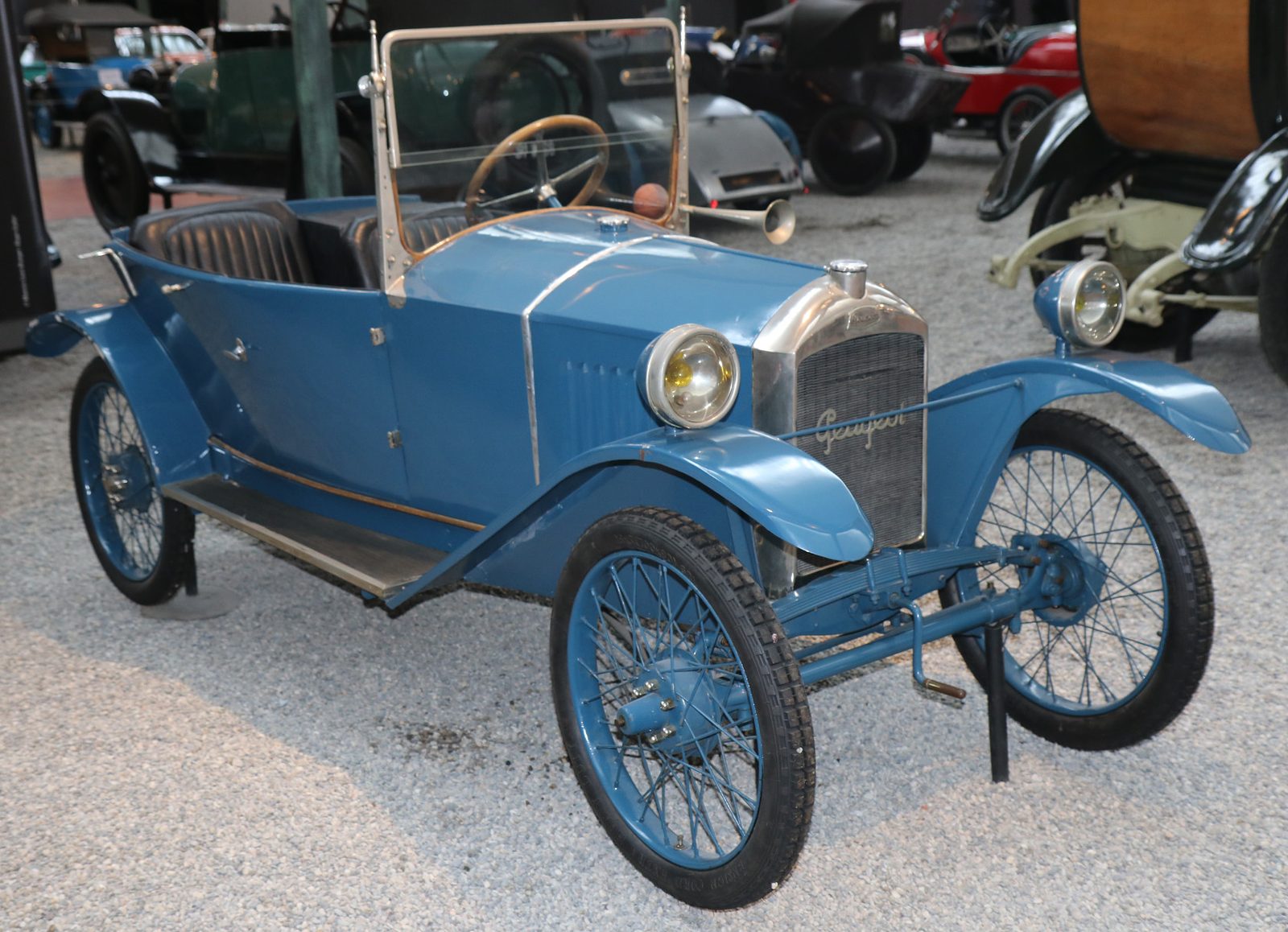
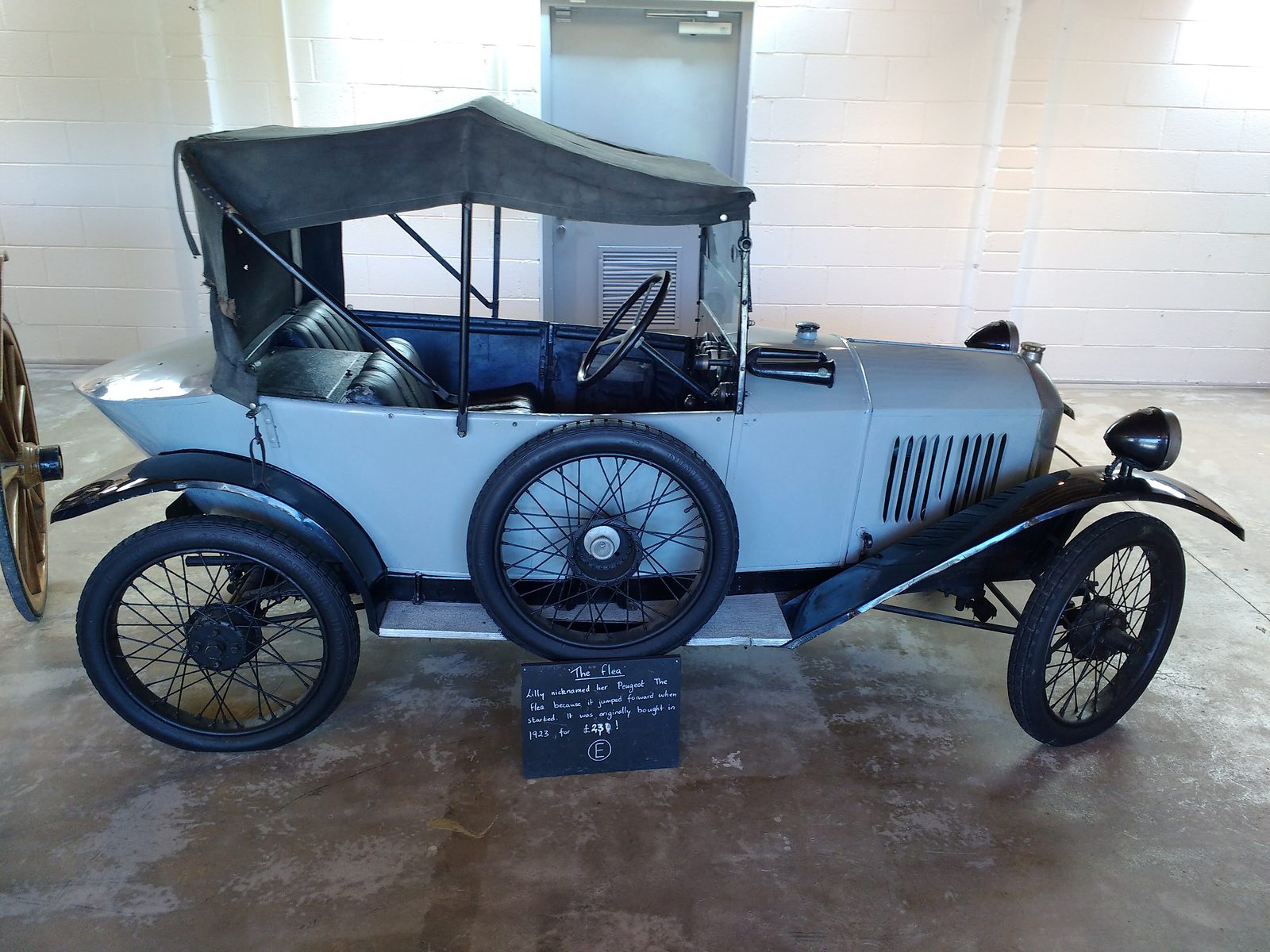
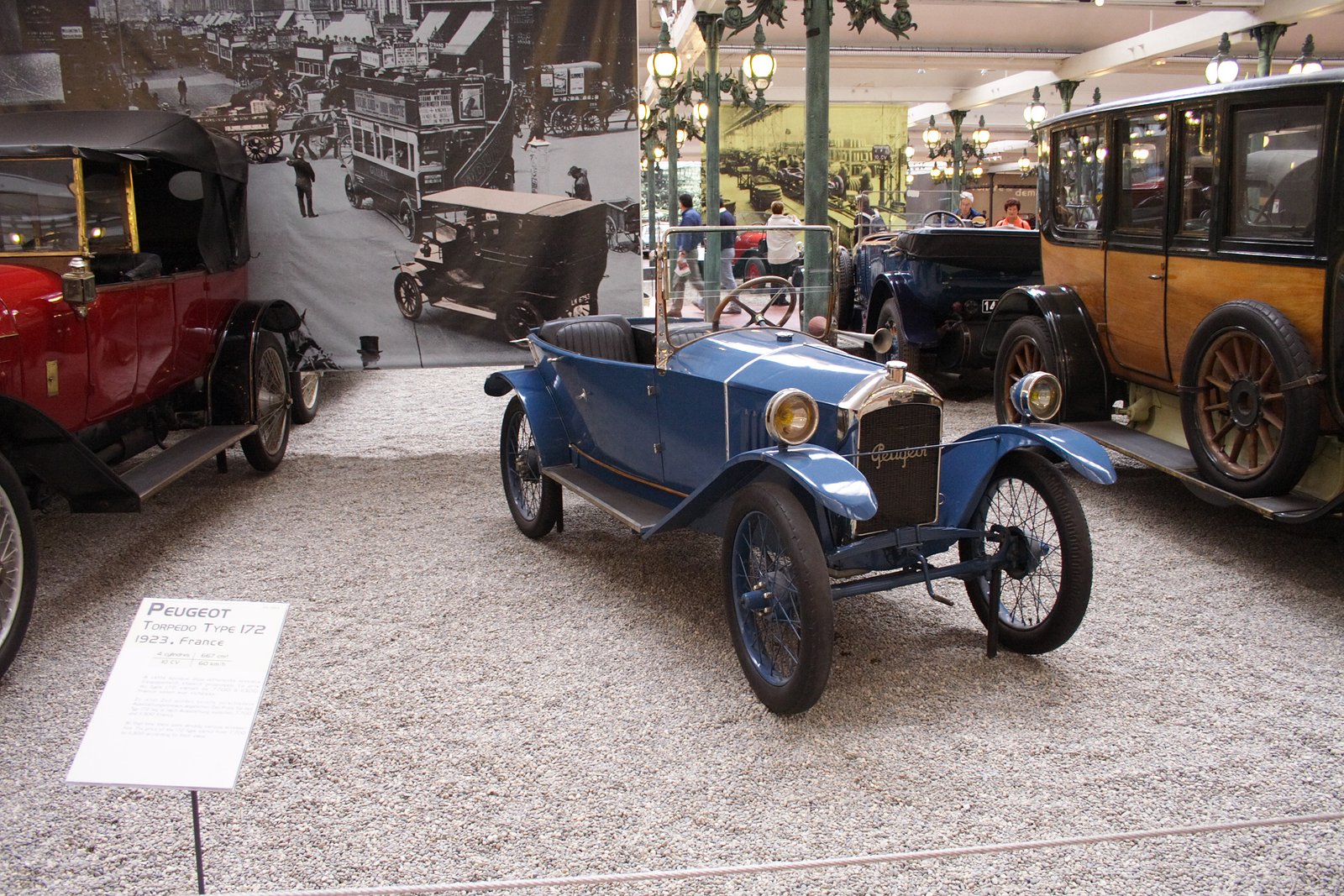
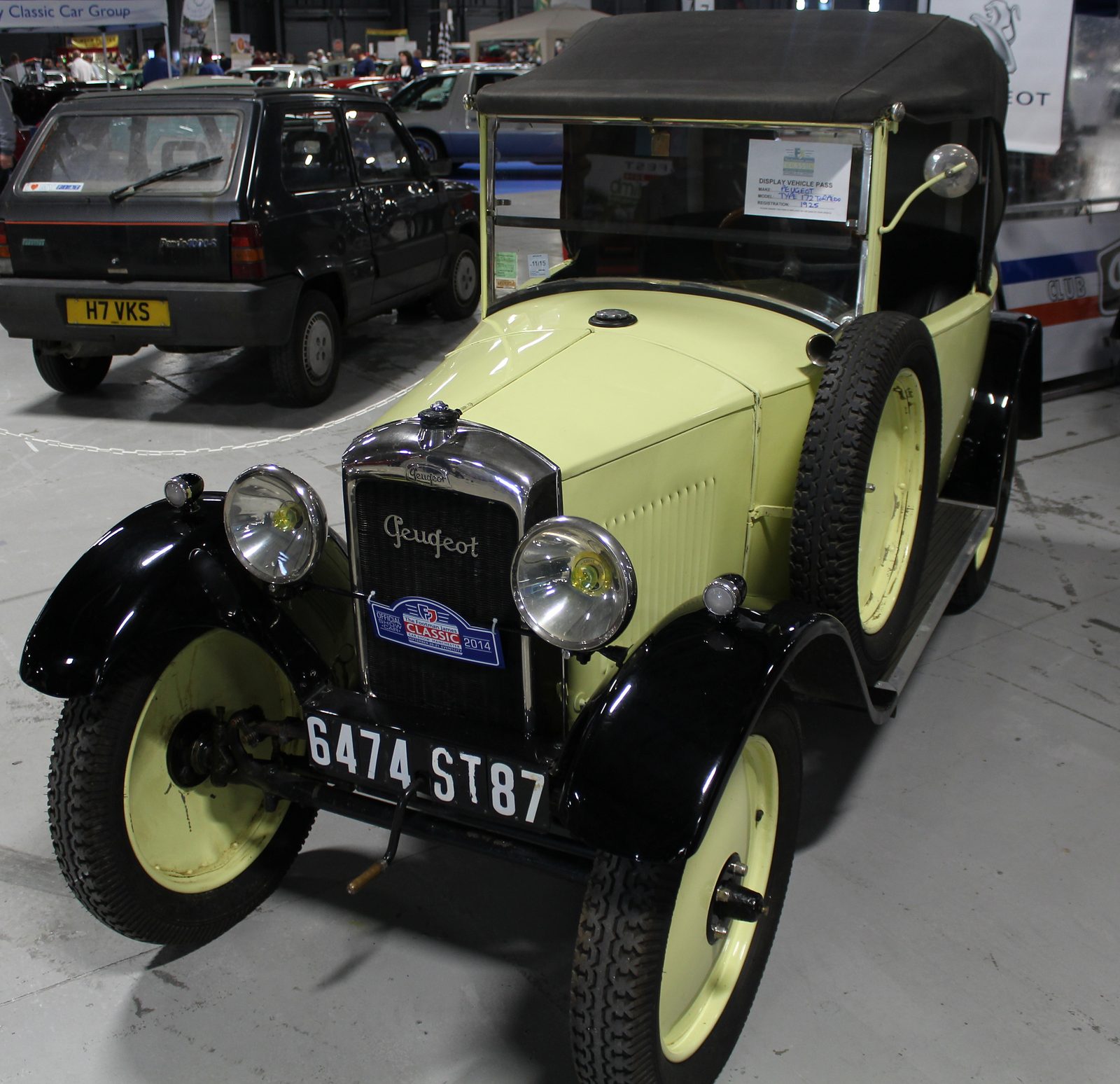
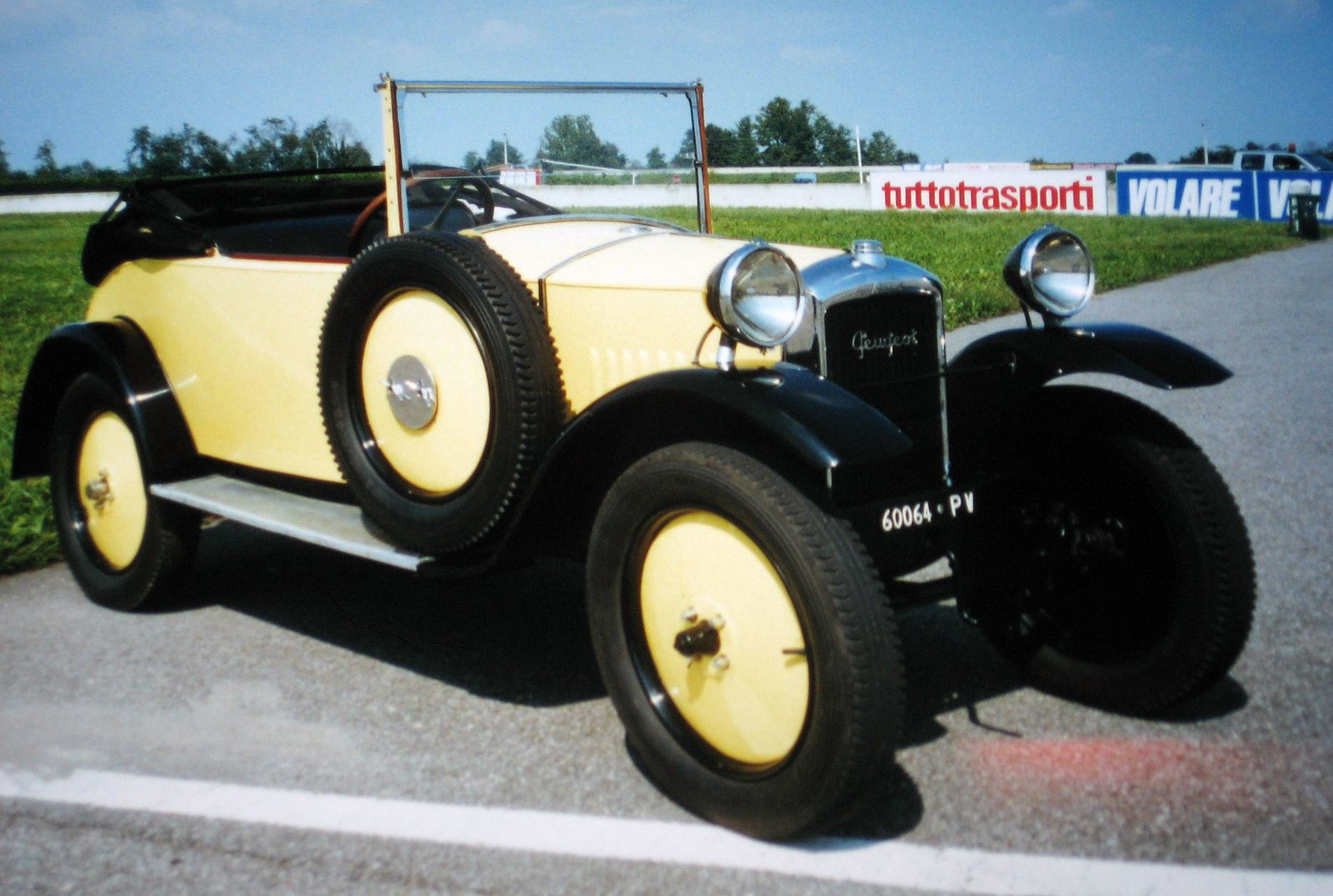
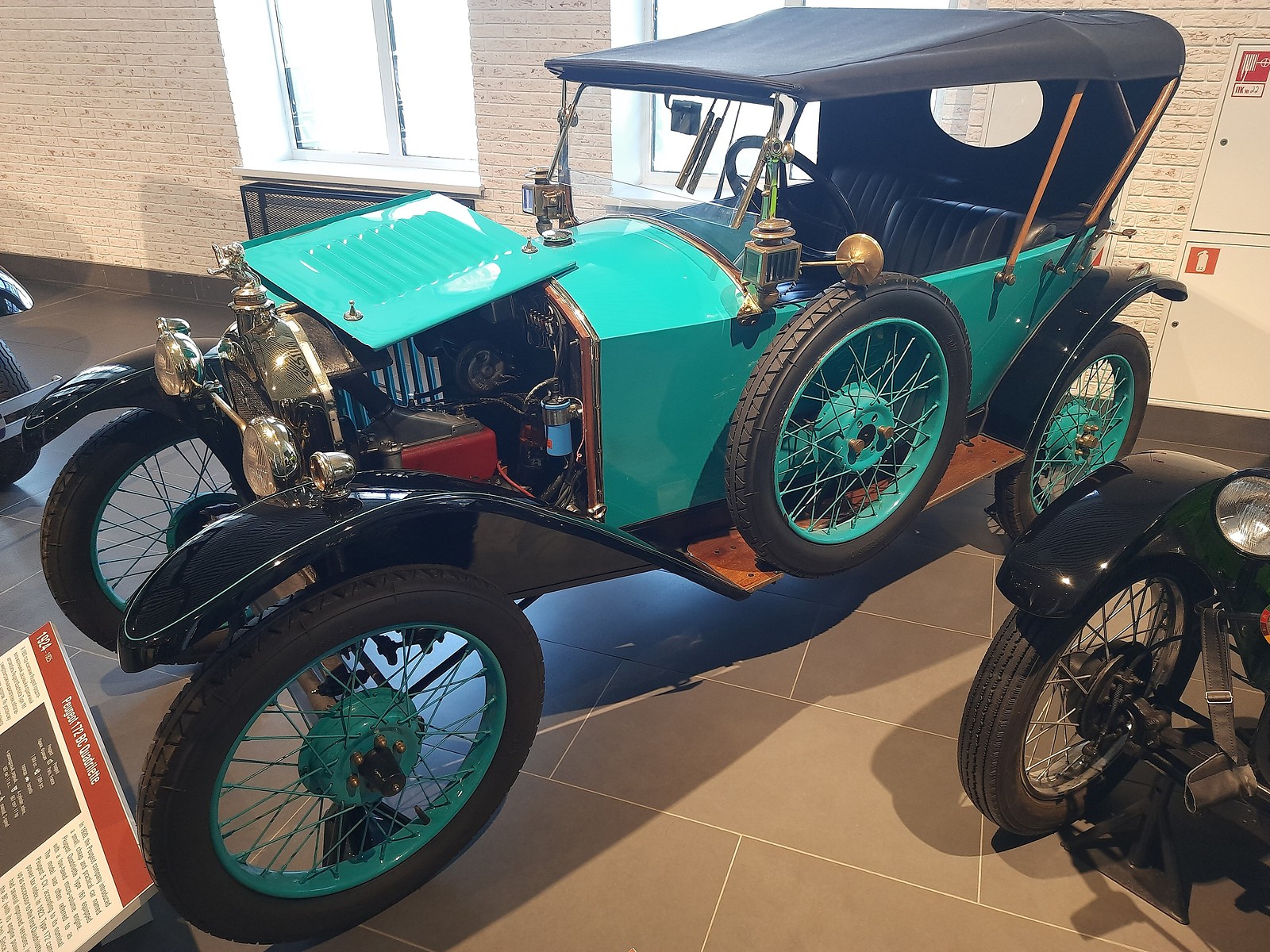
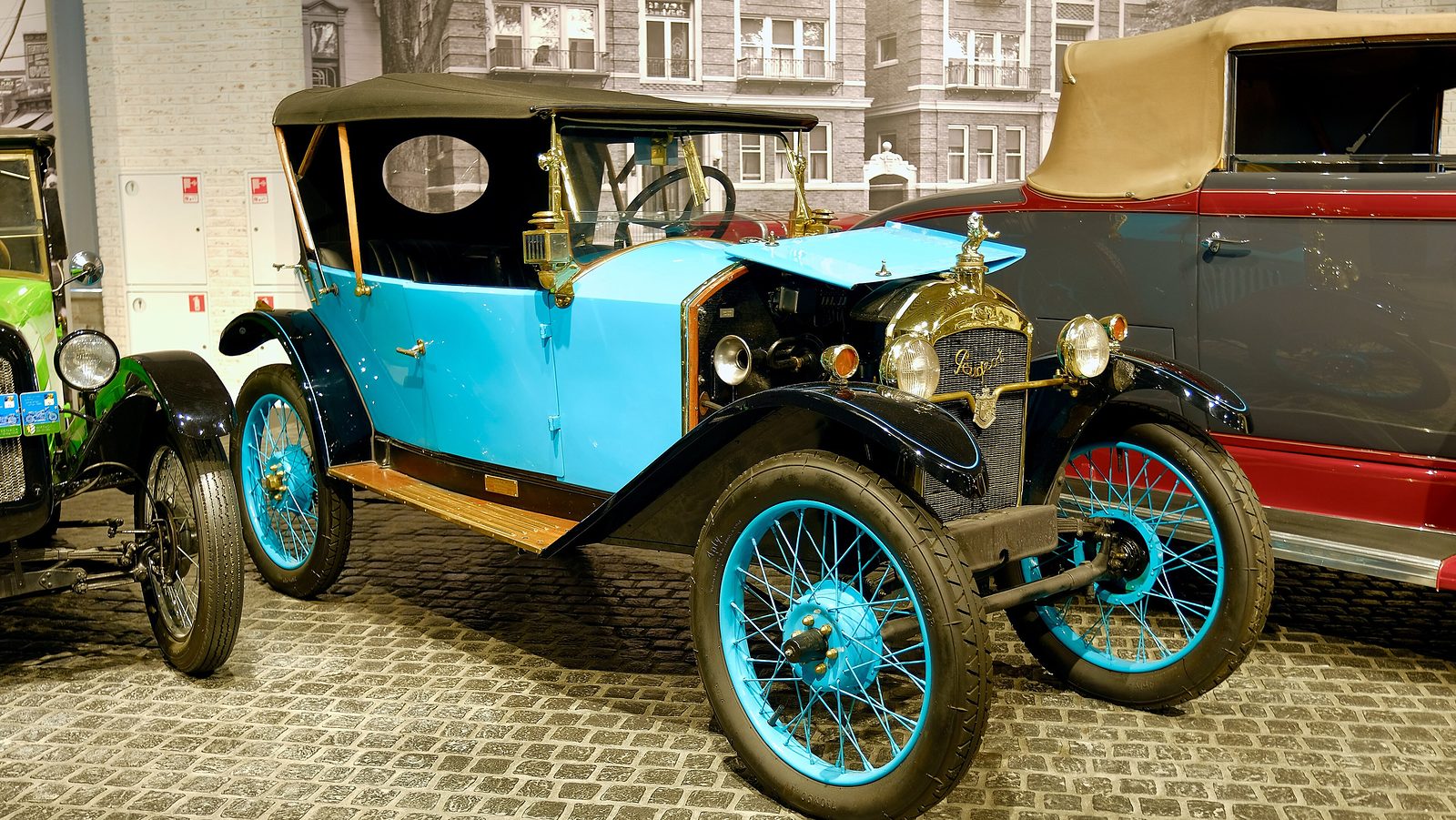
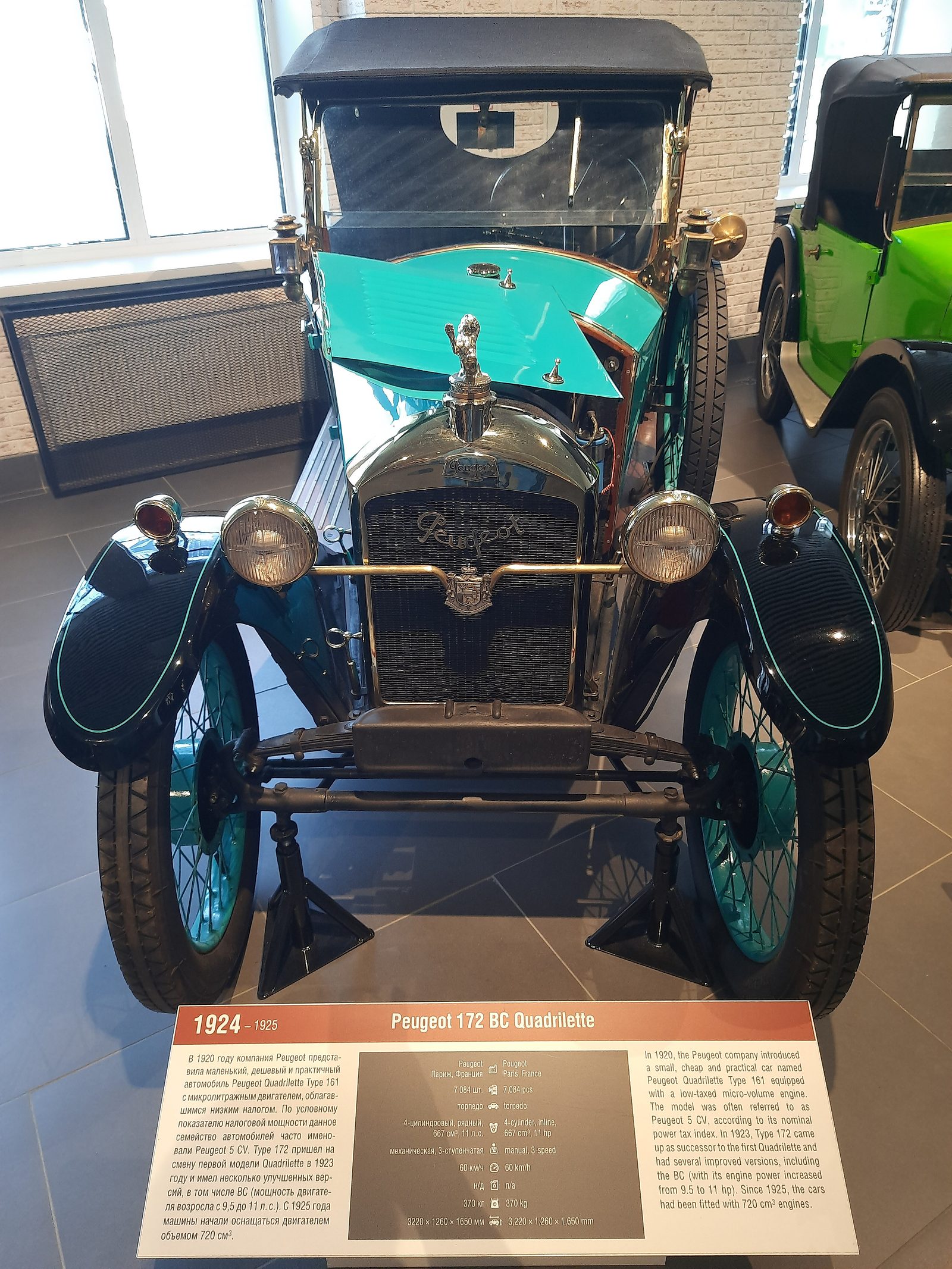
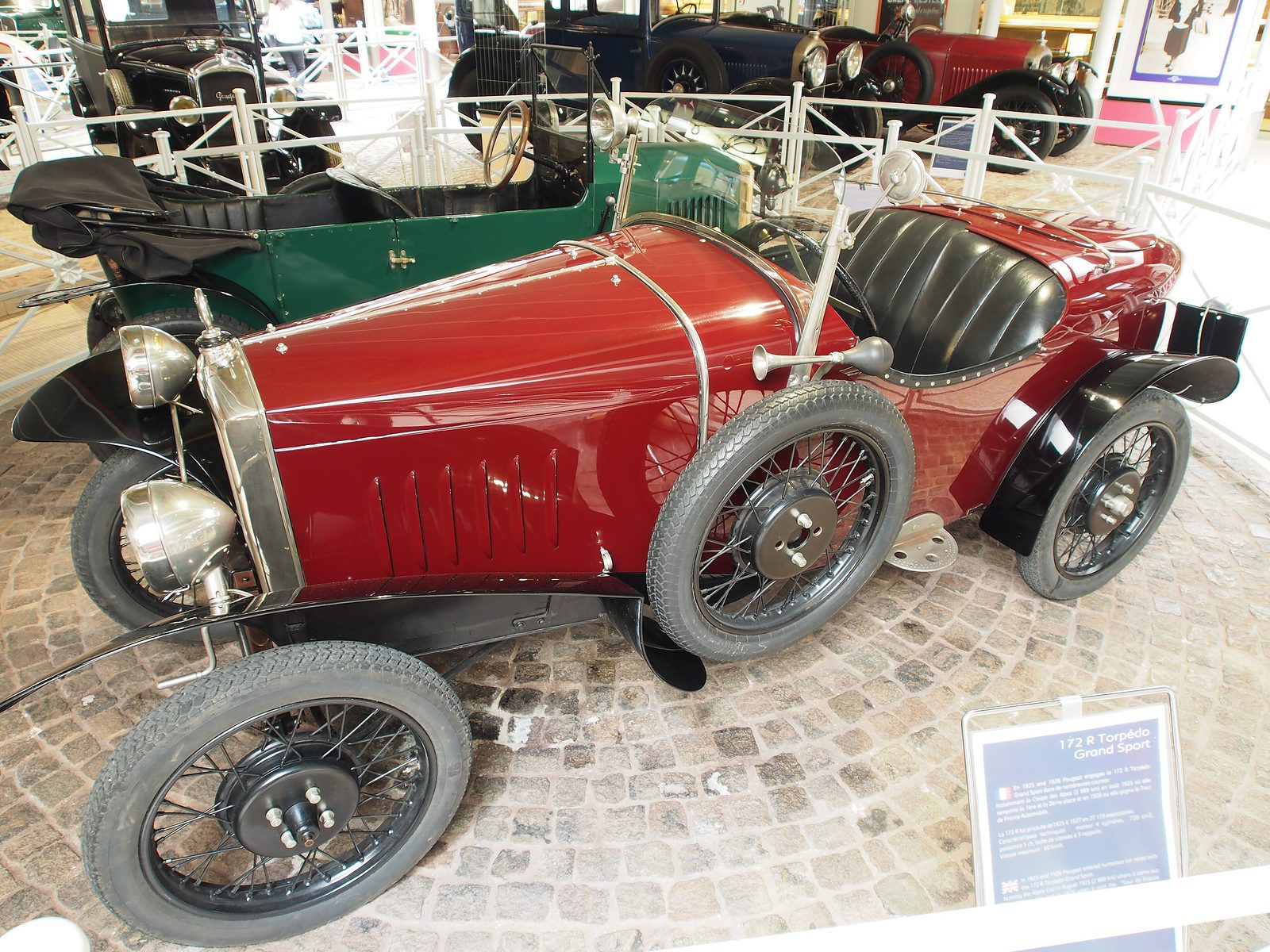
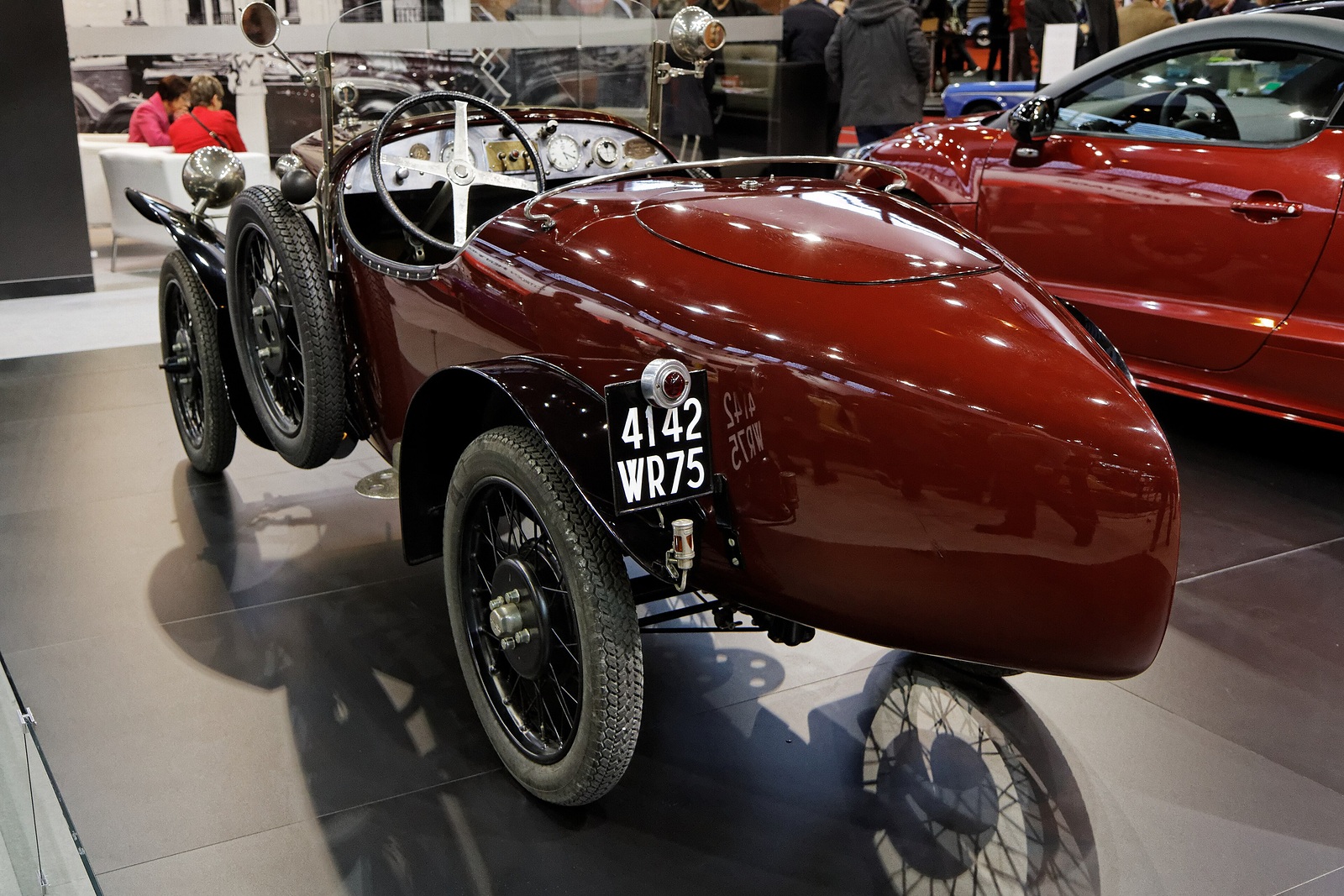
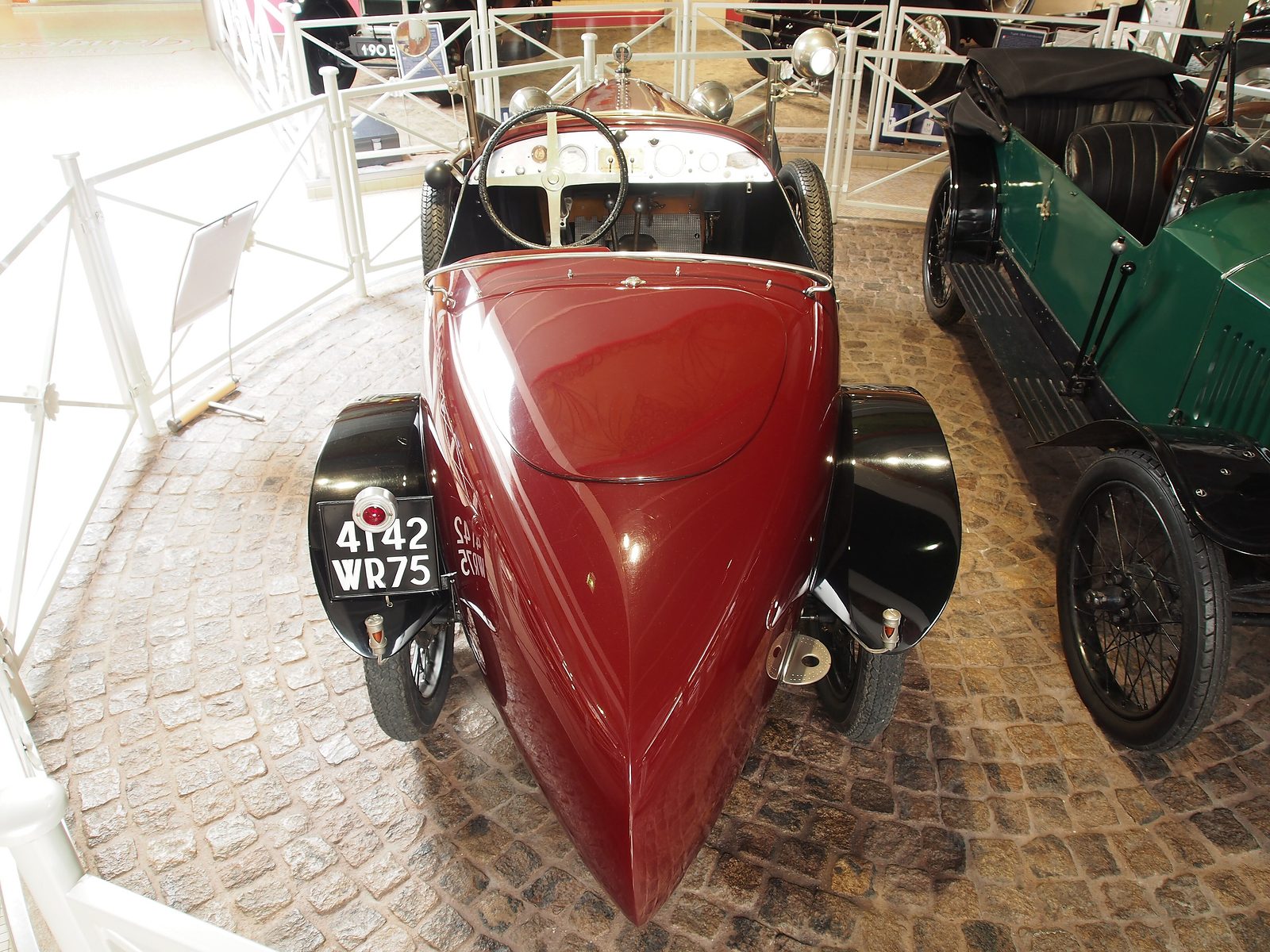
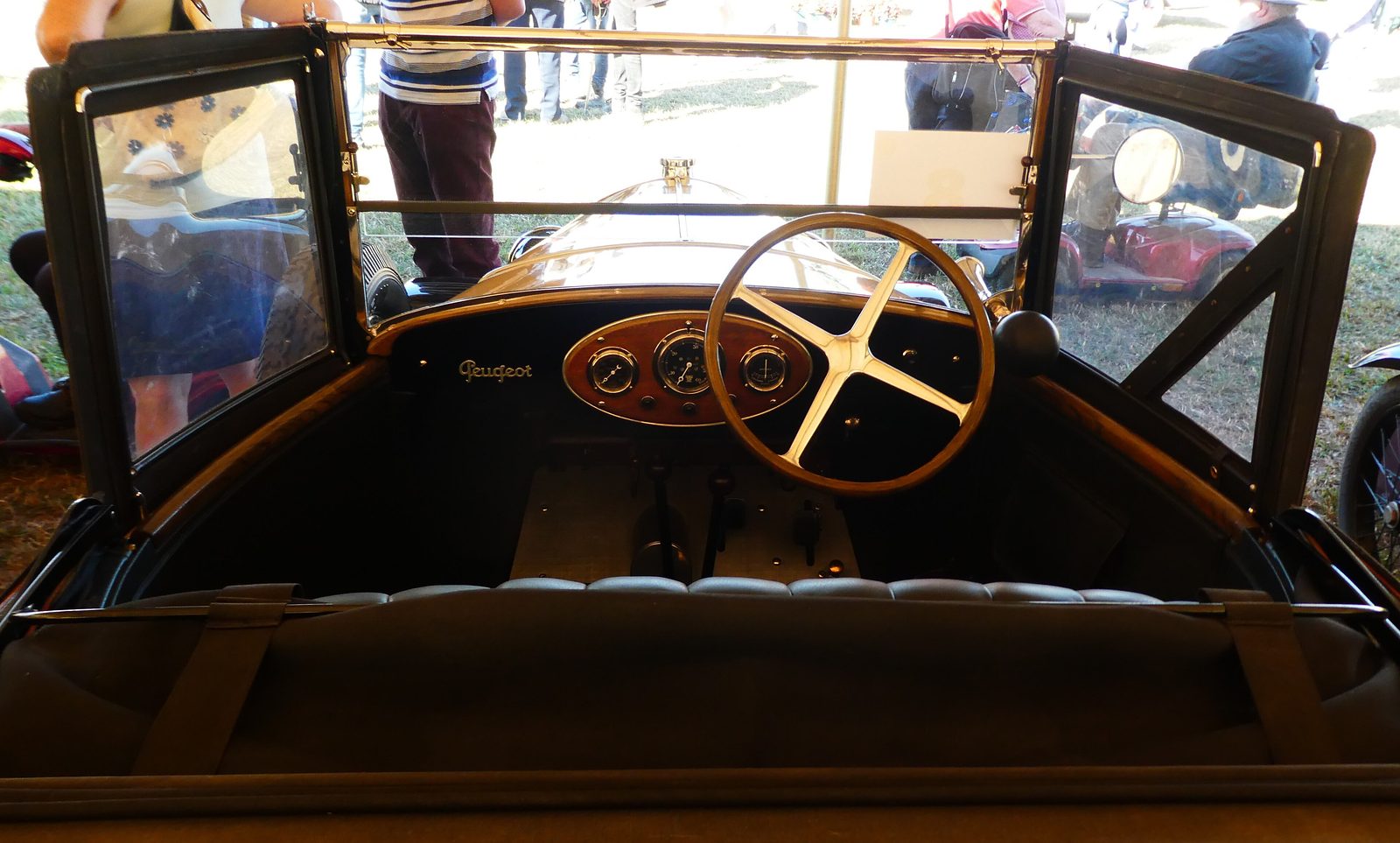
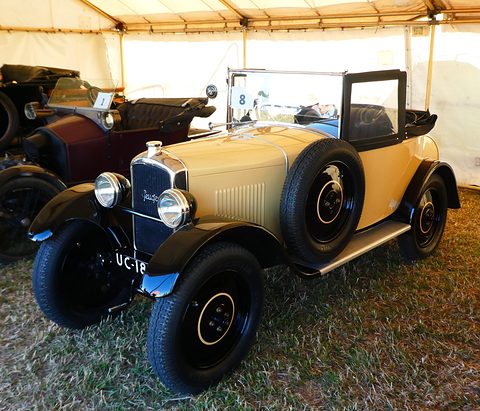
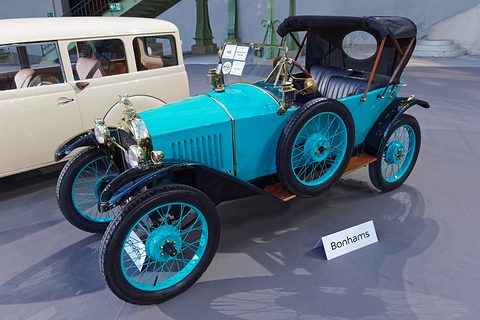
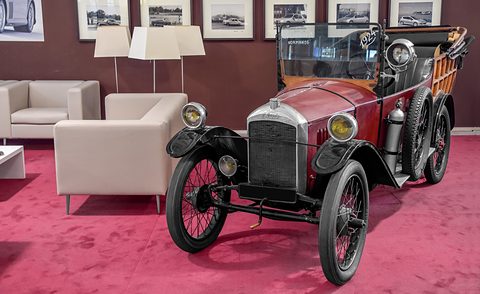
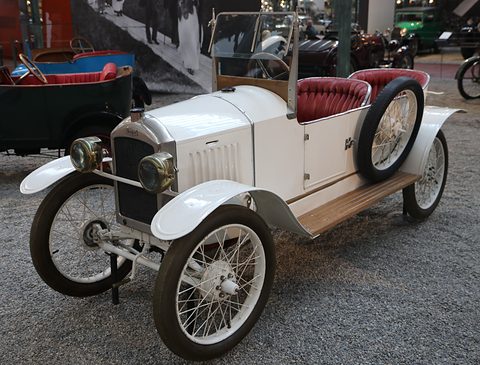
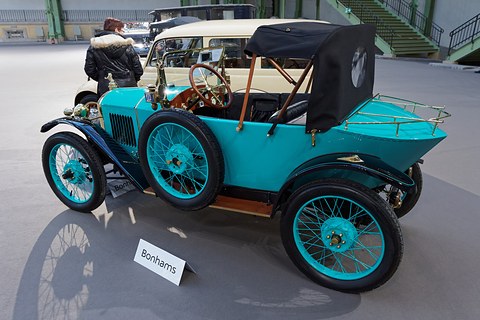
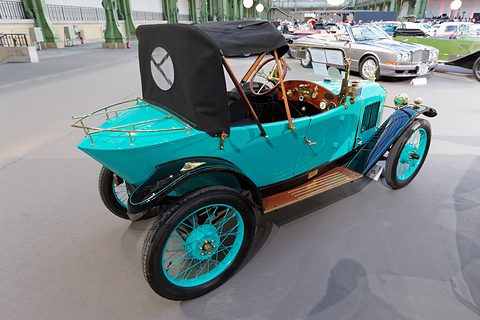
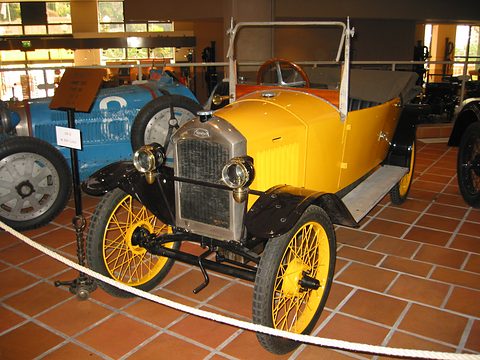
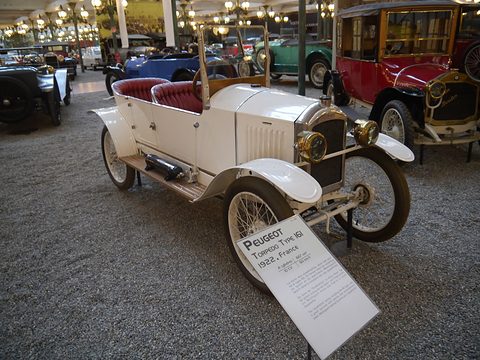
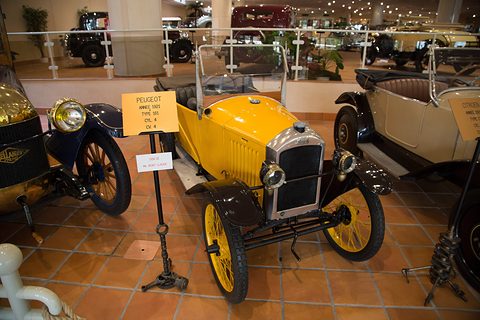
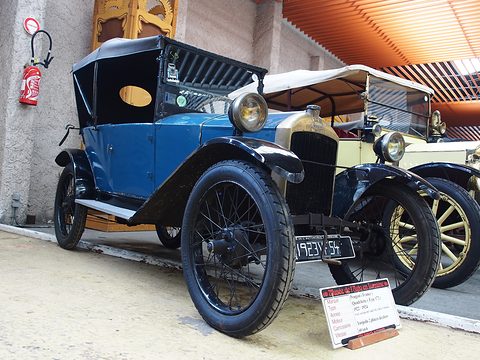
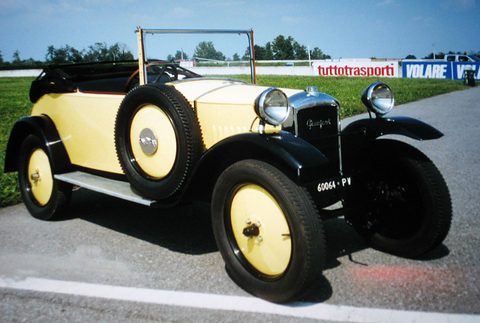
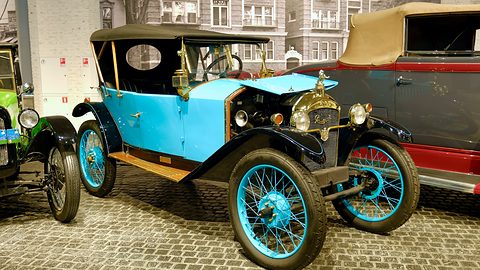
Where the surviving Quadrilettes are has not been researched, and no auction result has been traced. The pictures on this page show Type 161s at the Musée de l’Aventure Peugeot at Sochaux, at the Cité de l’Automobile in Mulhouse and in Monaco, Type 172s at Mulhouse and in Russia, and a 1924 car at a Bonhams sale in Paris in 2015, but none of the sources read describes them. One later book has been kind to it, calling it “the pretty little Peugeot Quadrilette” and a successor to “the delightful little Bébé”.source 15

Sources

Numbered as in the text

The best witness is The Motor-Owner, whose road test of July 1921 and items of 1921–⁠22 were read in full. The French and German histories come from Wikipedia articles used as leads; no French period road test was found. The production figures each rest on one reference. Sources are given as plain text; the links are on the Credits page.

  1. German Wikipedia, Peugeot Typ 161, read in full. Used as a lead; it cites Wolfgang Schmarbeck, Alle Peugeot Automobile 1890–⁠1990 (1990).
  2. “An Interesting Alternative”, The Motor-Owner, vol. 3 no. 26, July 1921, p. 25, read in full.
  3. English Wikipedia, Peugeot Quadrilette, read in full. Used as a lead.
  4. Cercle Pégase Amilcar, “Histoire”: the cyclecar law of 30 July 1920 and the yearly count of cyclecars taxed, read in full.
  5. Cecil Clutton and John Stanford, The Vintage Motor Car Pocketbook (1959), snippet only.
  6. French Wikipedia, Peugeot Quadrilette, read in full. Used as a lead.
  7. Cercle Pégase Amilcar, “Amilcar CC”, read in full.
  8. German Wikipedia, Amilcar Type CC, read in full. Used as a lead.
  9. Peugeot (England) Ltd, advertisements, The Motor-Owner, September 1921 to January 1922, read.
  10. The Motor-Owner, April 1921, an item on Peugeot’s London business, read.
  11. Bibliographie de Belgique, September 1921, citing “La quadrilette Peugeot”, Moto, 1 September 1921, snippet only.
  12. Pierre Dumont, La Vie des pilotes de course de 1919 à 1939 (1983), snippets only.
  13. G. N. Georgano, Vintage Years 1920–⁠1930 (2002), snippets only.
  14. G. N. Georgano (ed.), The New Encyclopedia of Motorcars 1885 to the Present (1982), entry Peugeot, snippet only.
  15. Vintage Cars: motoring in the 1920s (1973), pp. 21–22, snippets only.