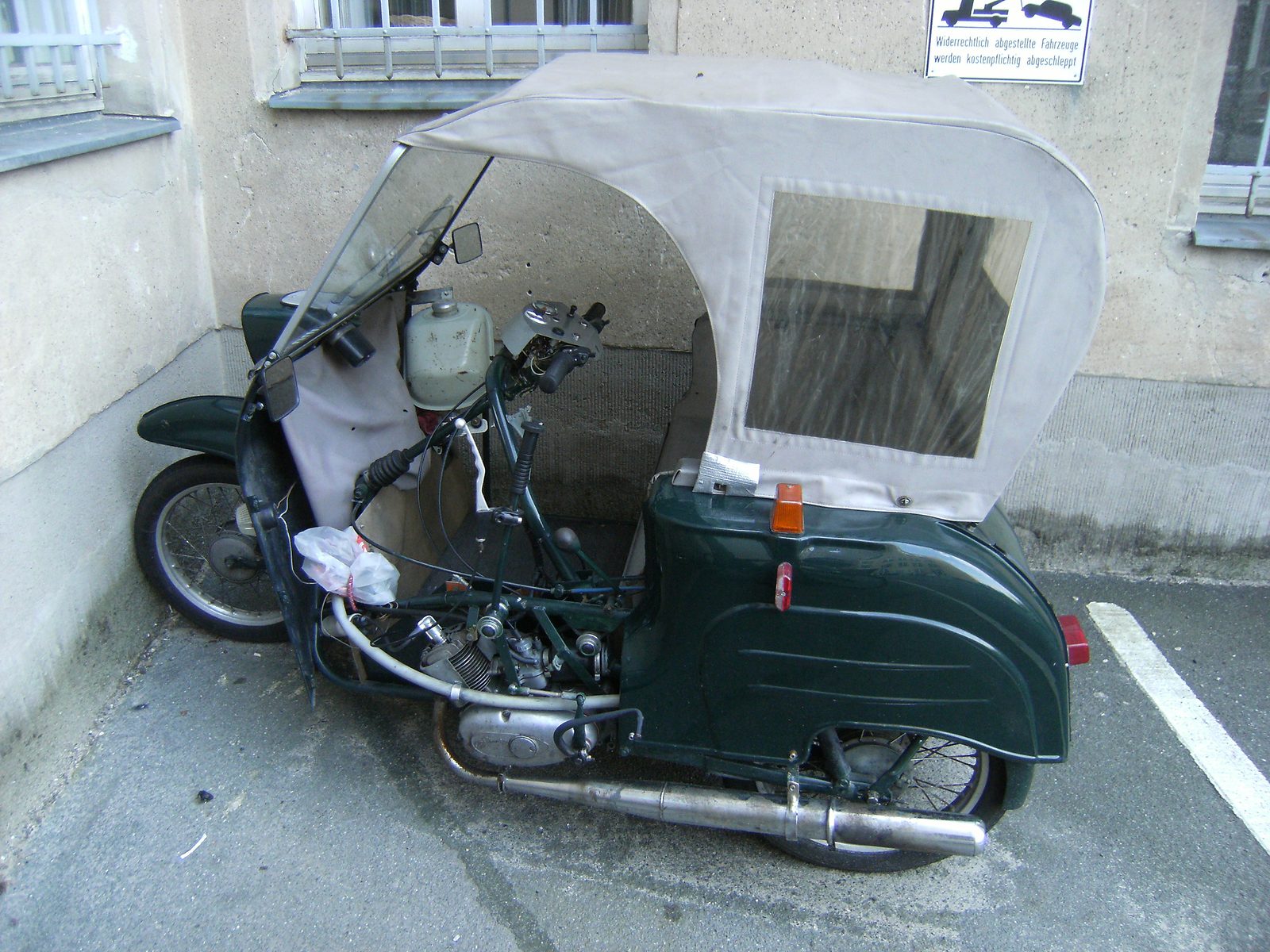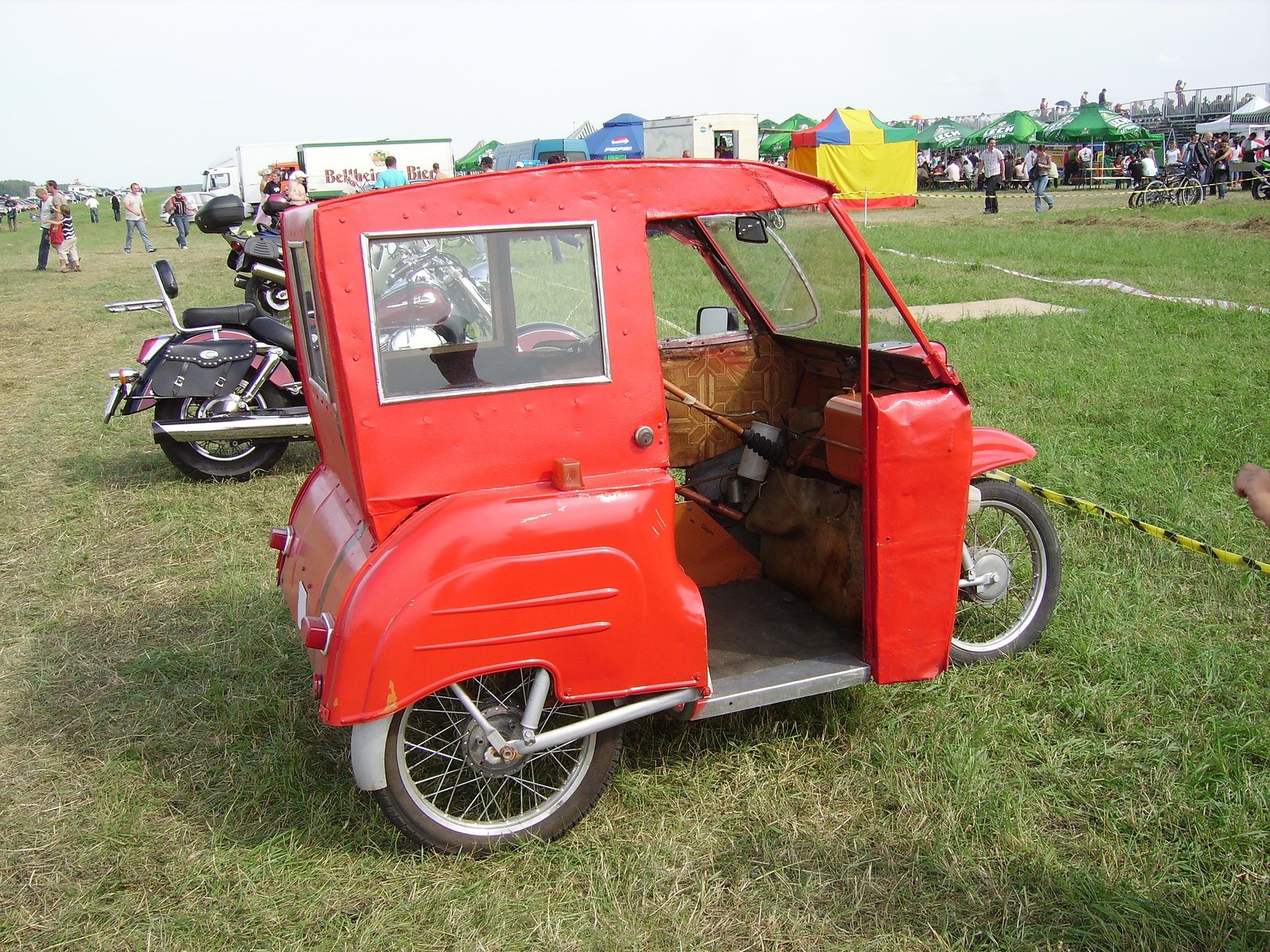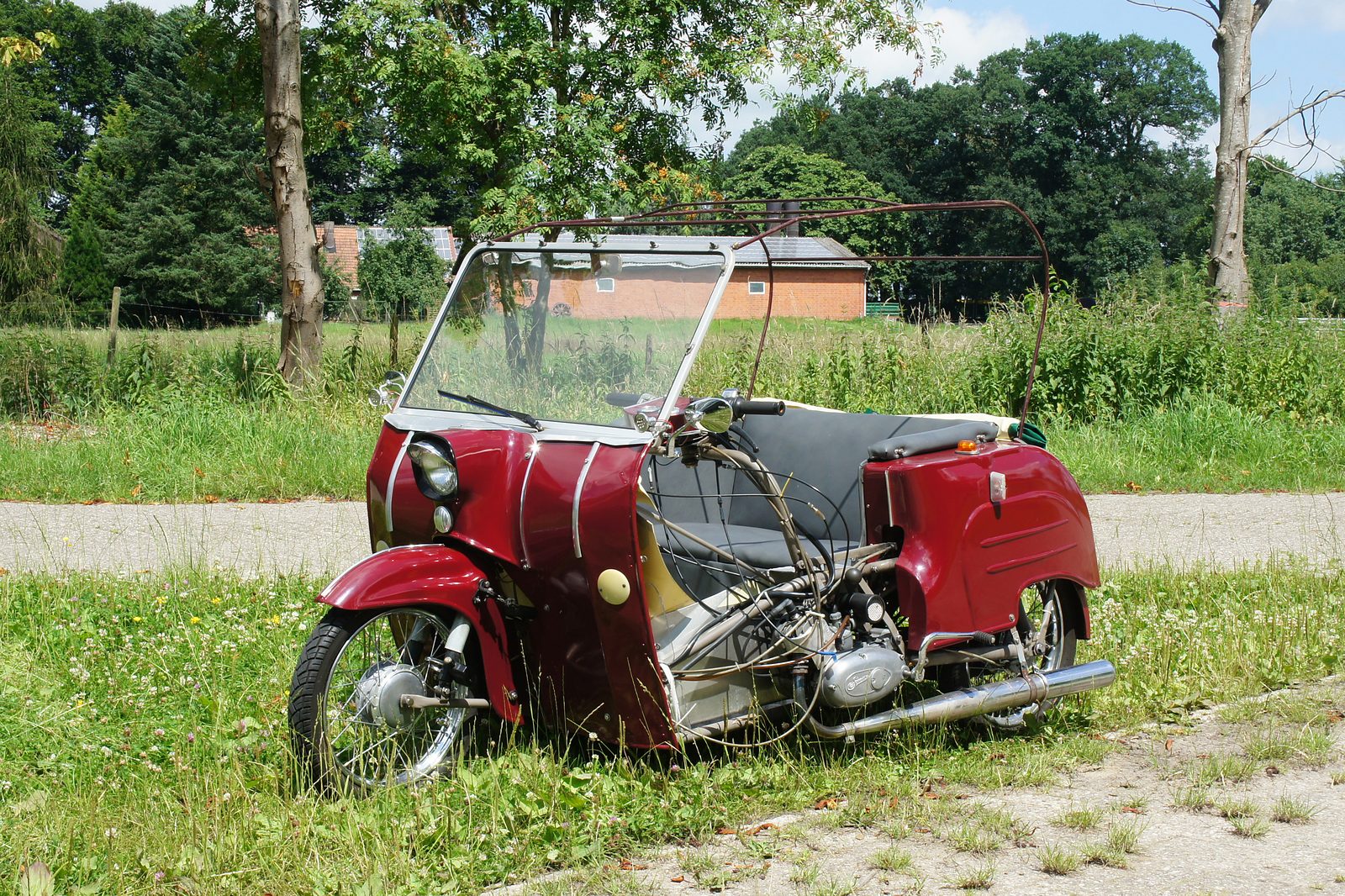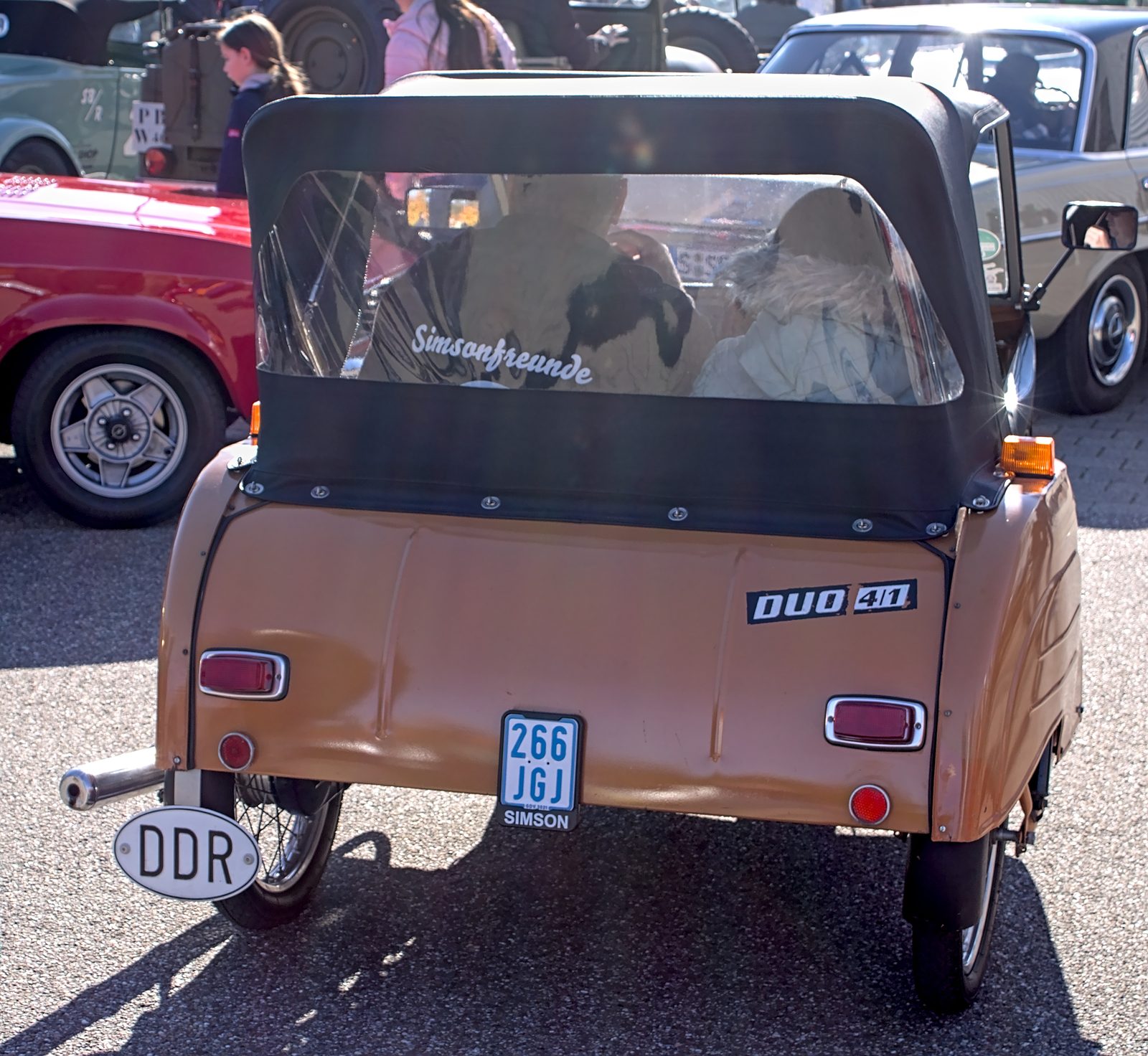
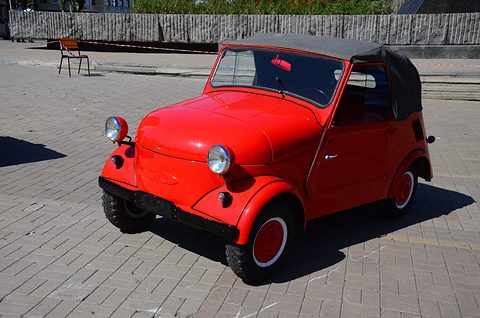
The story
History
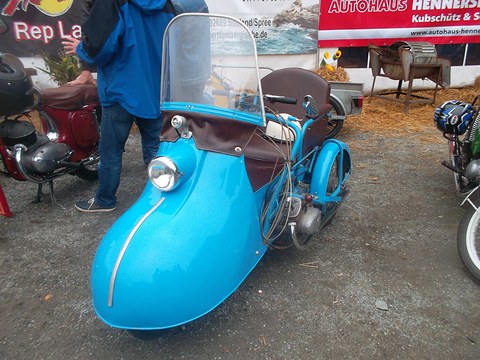
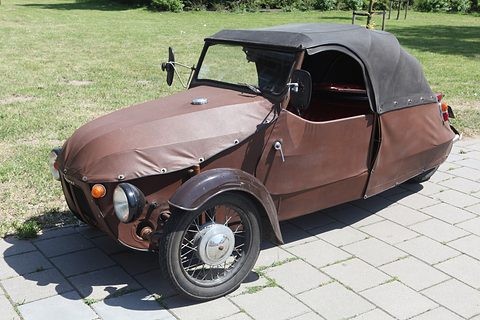
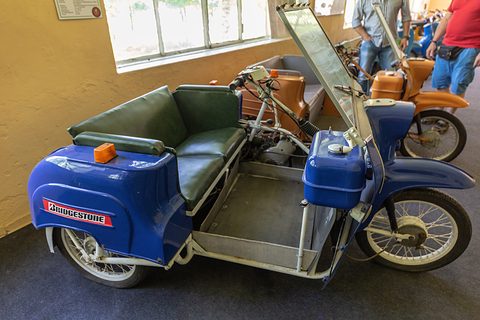
Firma Louis Krause of Leipzig was founded in 1880, and at the end of the 1940s it began building vehicles for disabled people.source 1source 2 At the Leipzig autumn fair of 1954 it showed several, with clip-on engines or a modified IFA engine.source 1 The foundation of the line was laid in 1955 by the Piccolo Trumpf, a single-seater with a Simson SR1 moped engine on the right, driving the right rear wheel, and the front of an IWL Pitty scooter. About 3,000 were built to 1958; a second Trumpf, with the engine on the left driving the left rear wheel, followed until 1965, at about 4,500, and the Trumpf 7, with a Schwalbe front, until 1975.source 2source 1
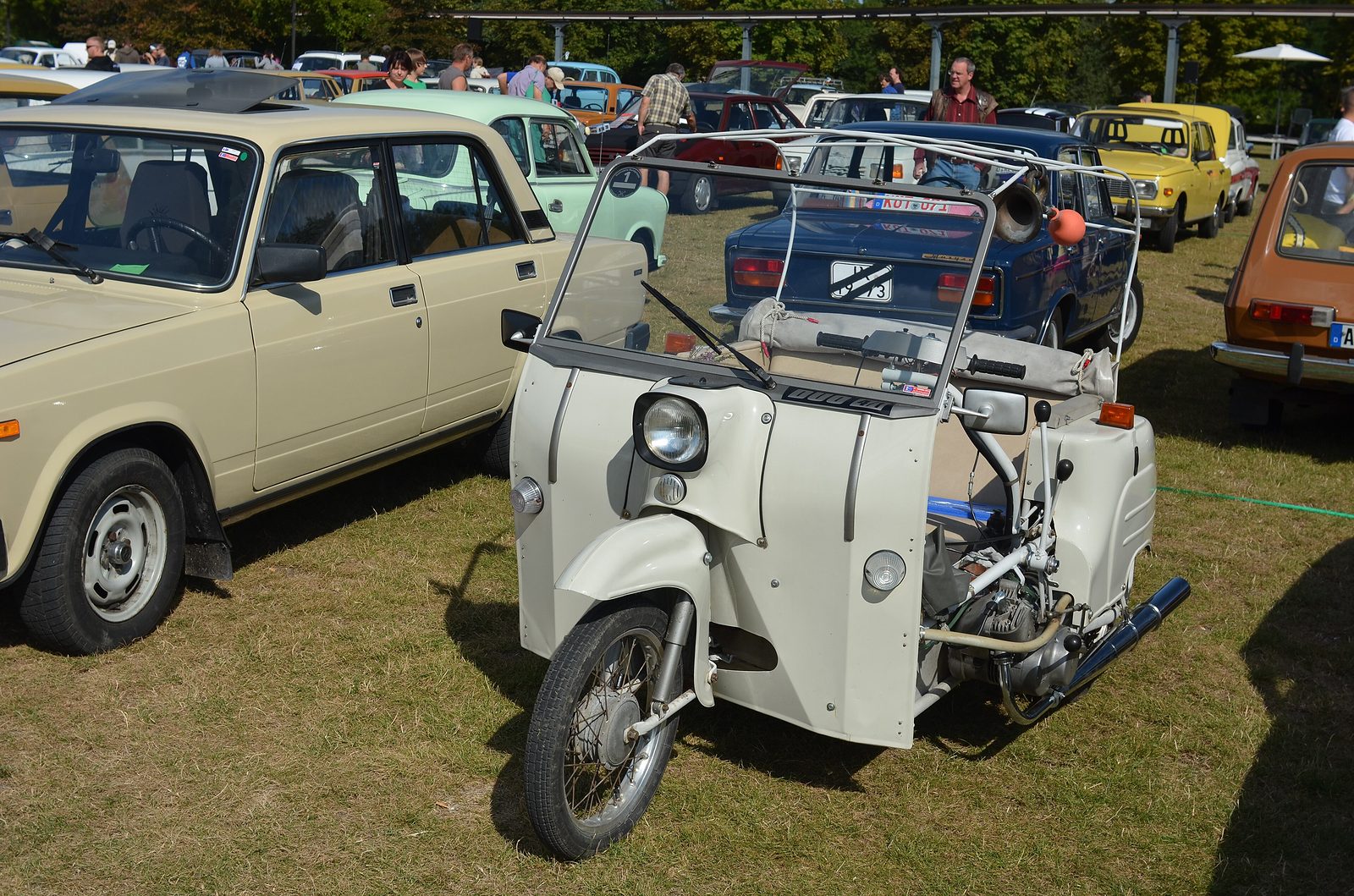
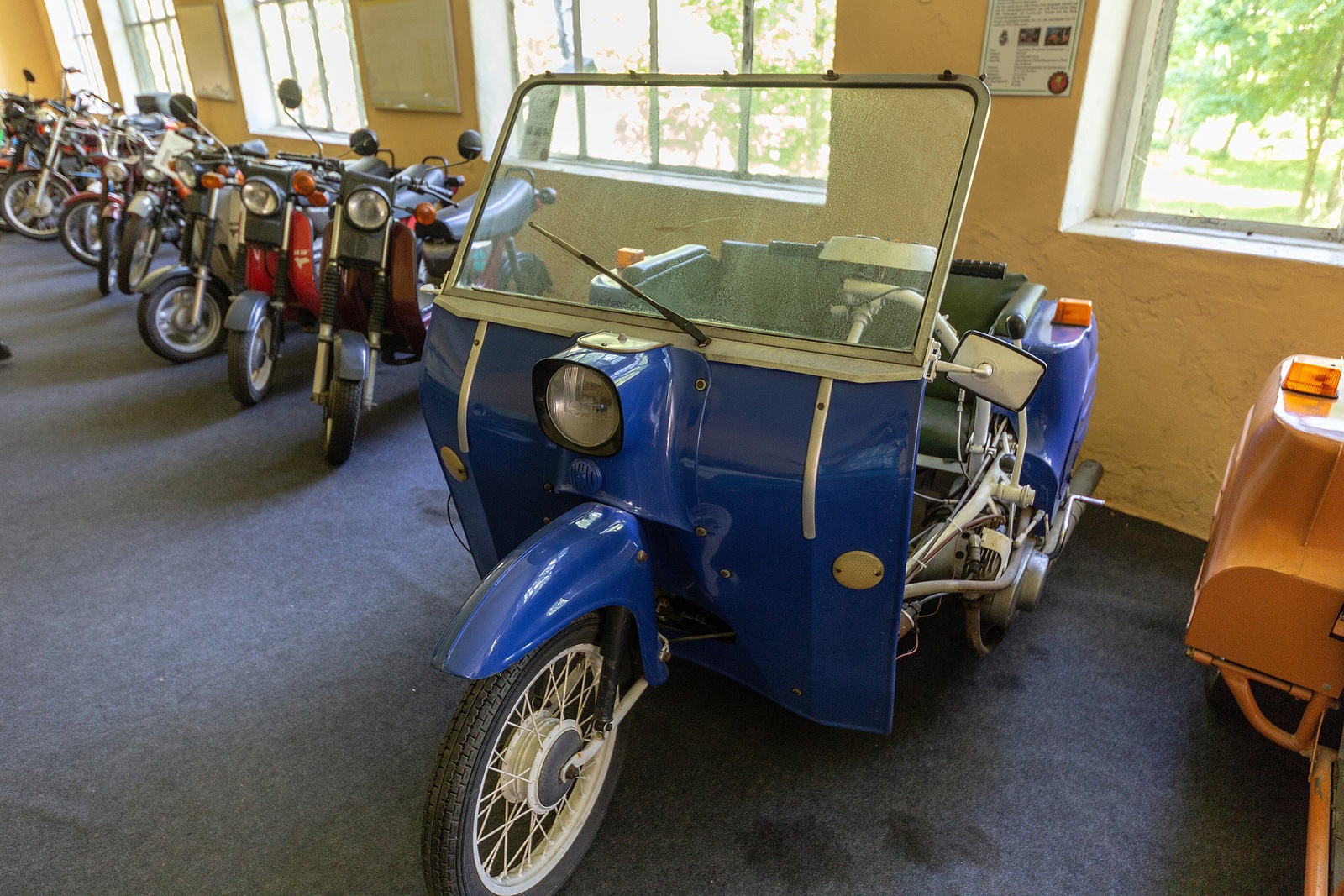
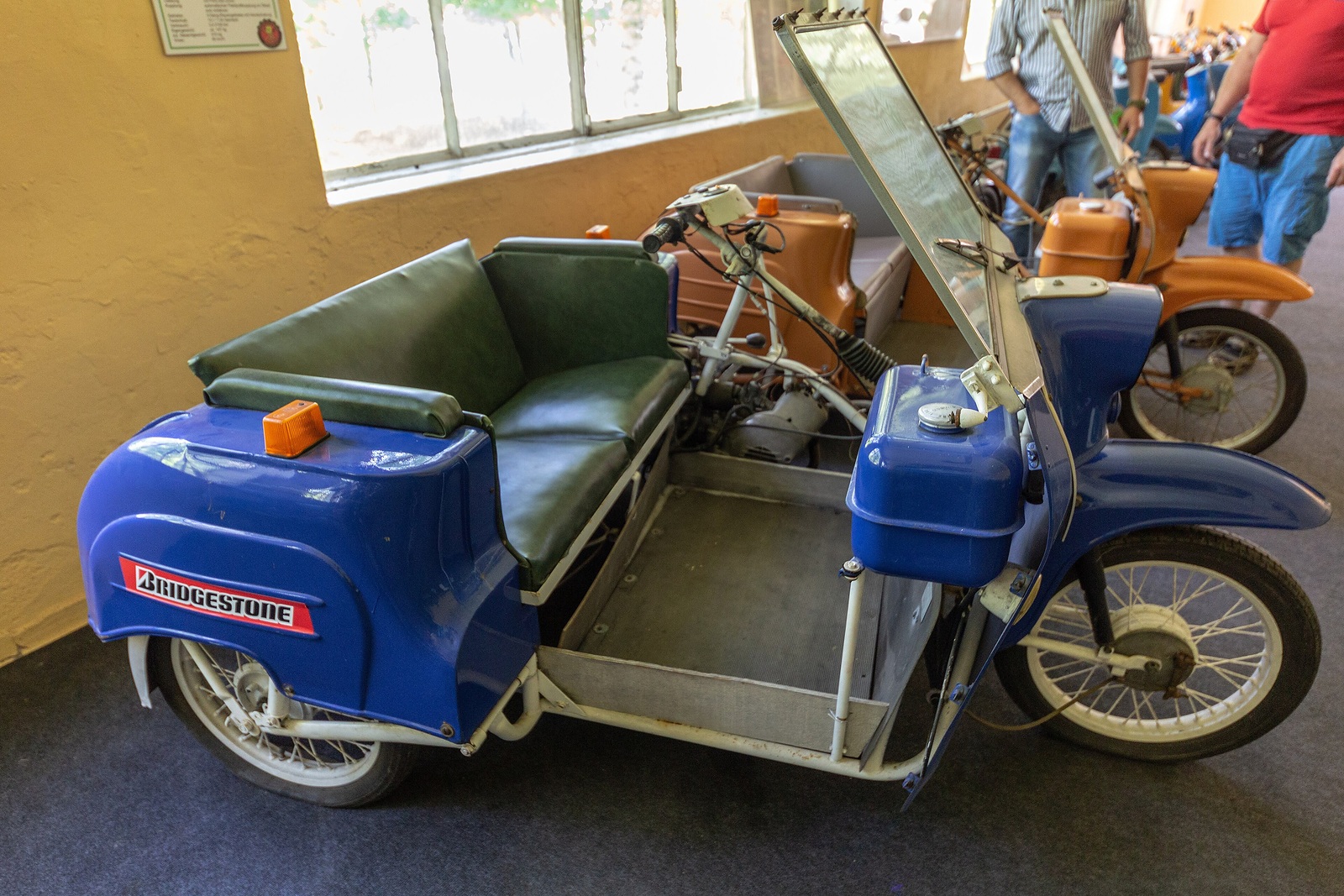
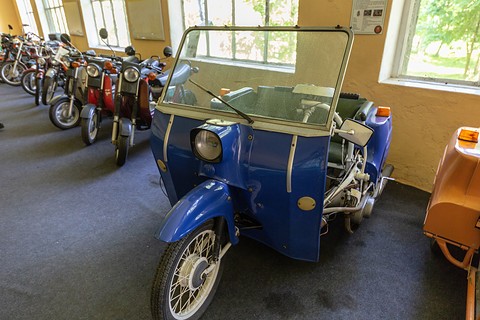
The two-seat Piccolo Duo came in 1961, derived from the Trumpf, the same year that a light-alloy two-seater with a 150 cc engine was shown at the Leipzig spring fair but did not go into series production.source 1 The Piccolo Duo/2 followed, probably from 1964 and certainly from 1965, on parts from Simson’s “bird” series: a widened Pitty fairing, aluminium panels front and back, steering by cables and a 3.2 PS Schwalbe engine with a three-speed twist-grip change on the handlebar. German Wikipedia reports, from unnamed online sources, that only about 60 were made.source 1 The Duo/3 of mid-1968 to mid-1970 had better electrics, a central yellow brake light and a taller hood frame, and reached 55 km/h (34 mph).source 1
The Duo 4
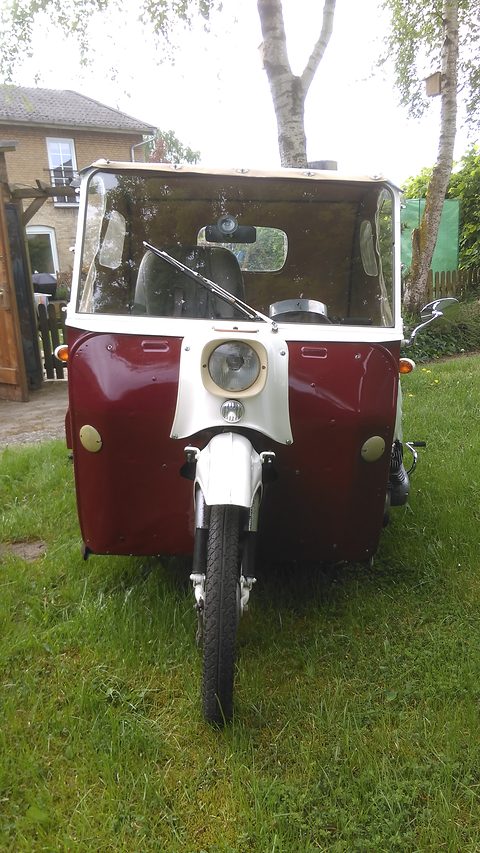
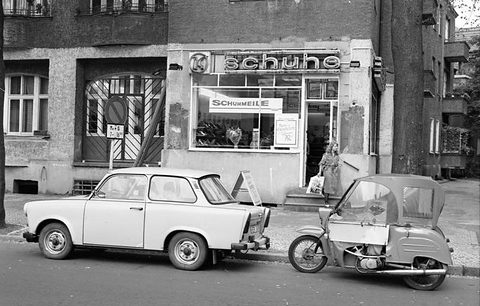
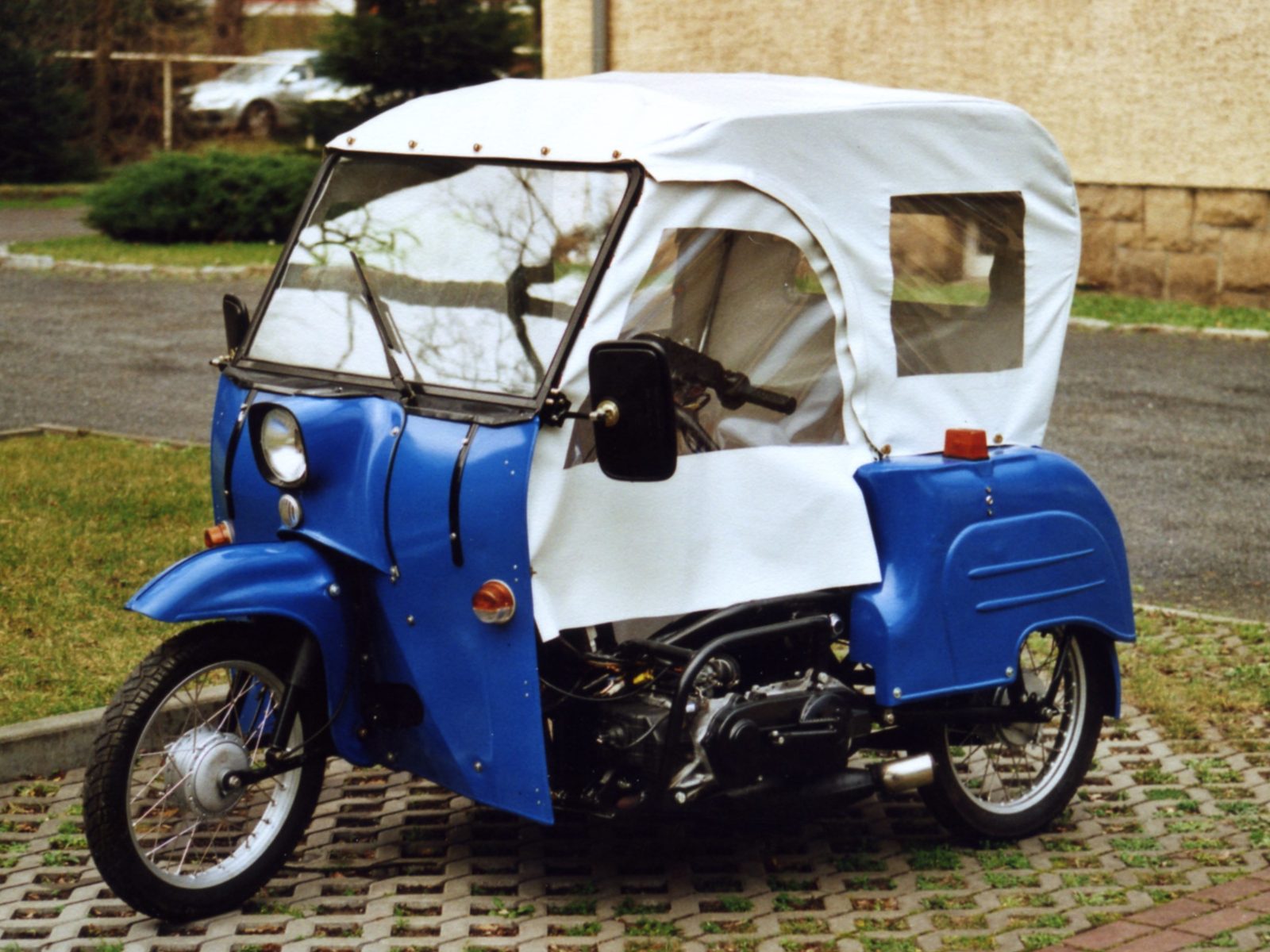
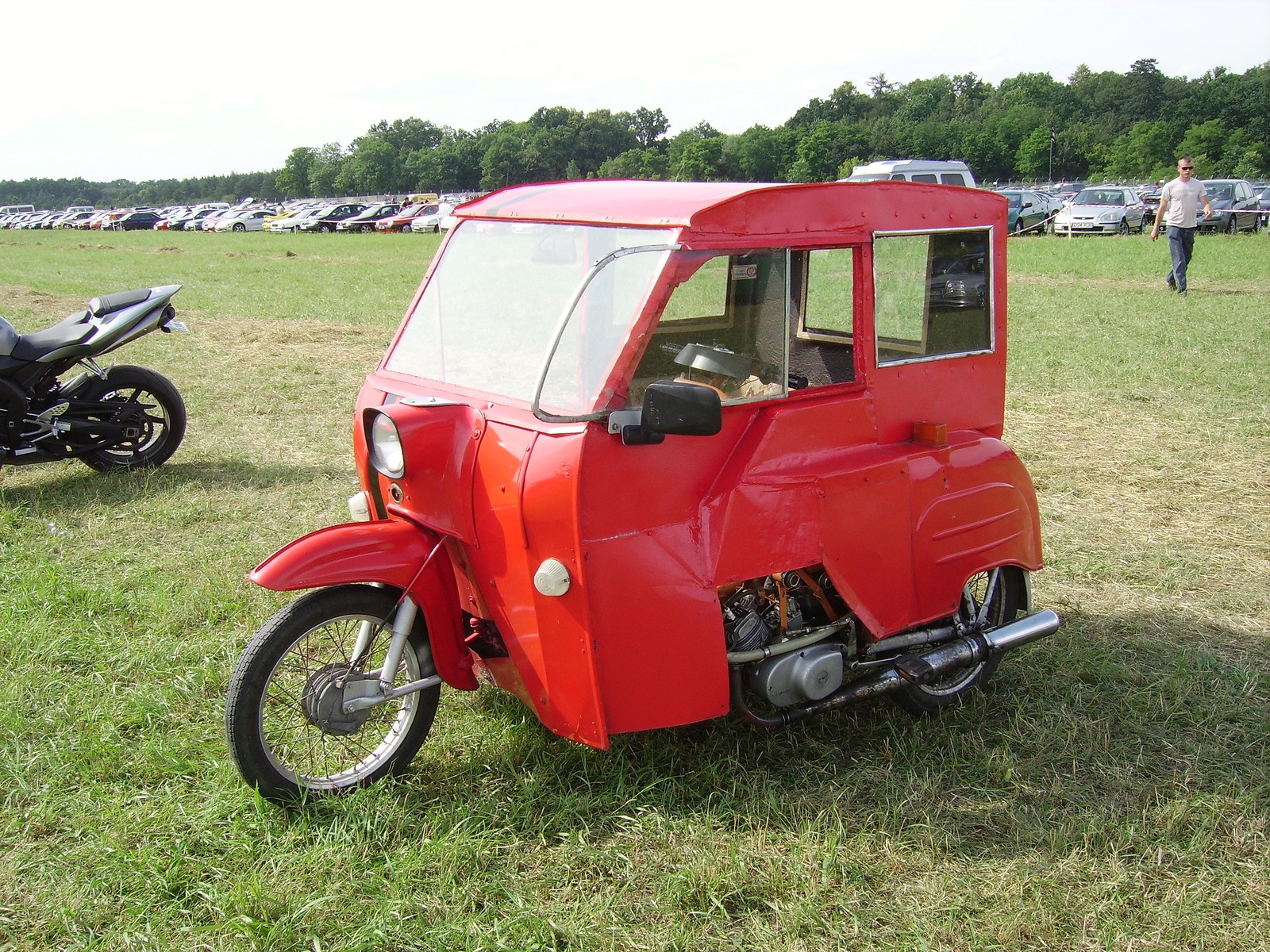
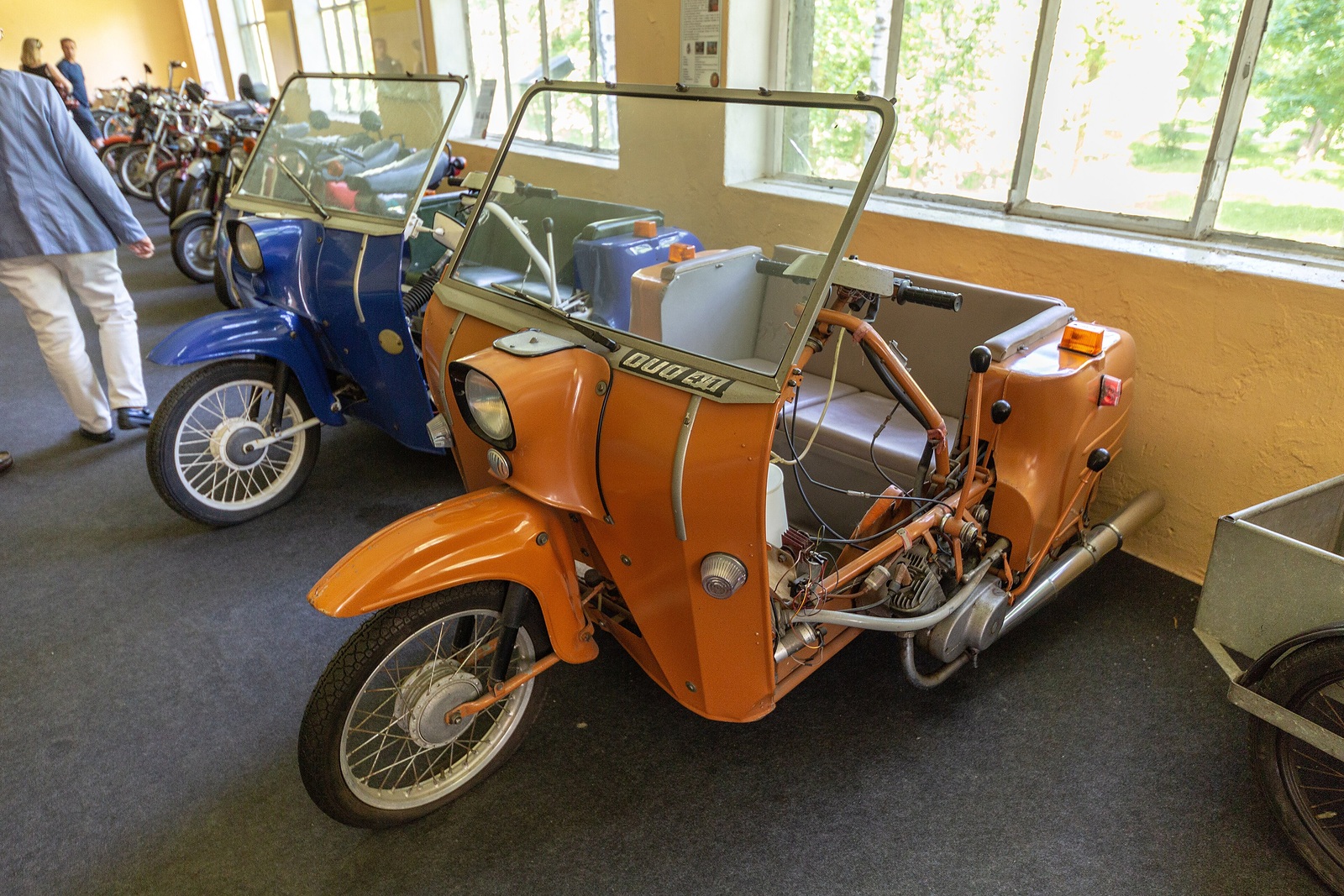
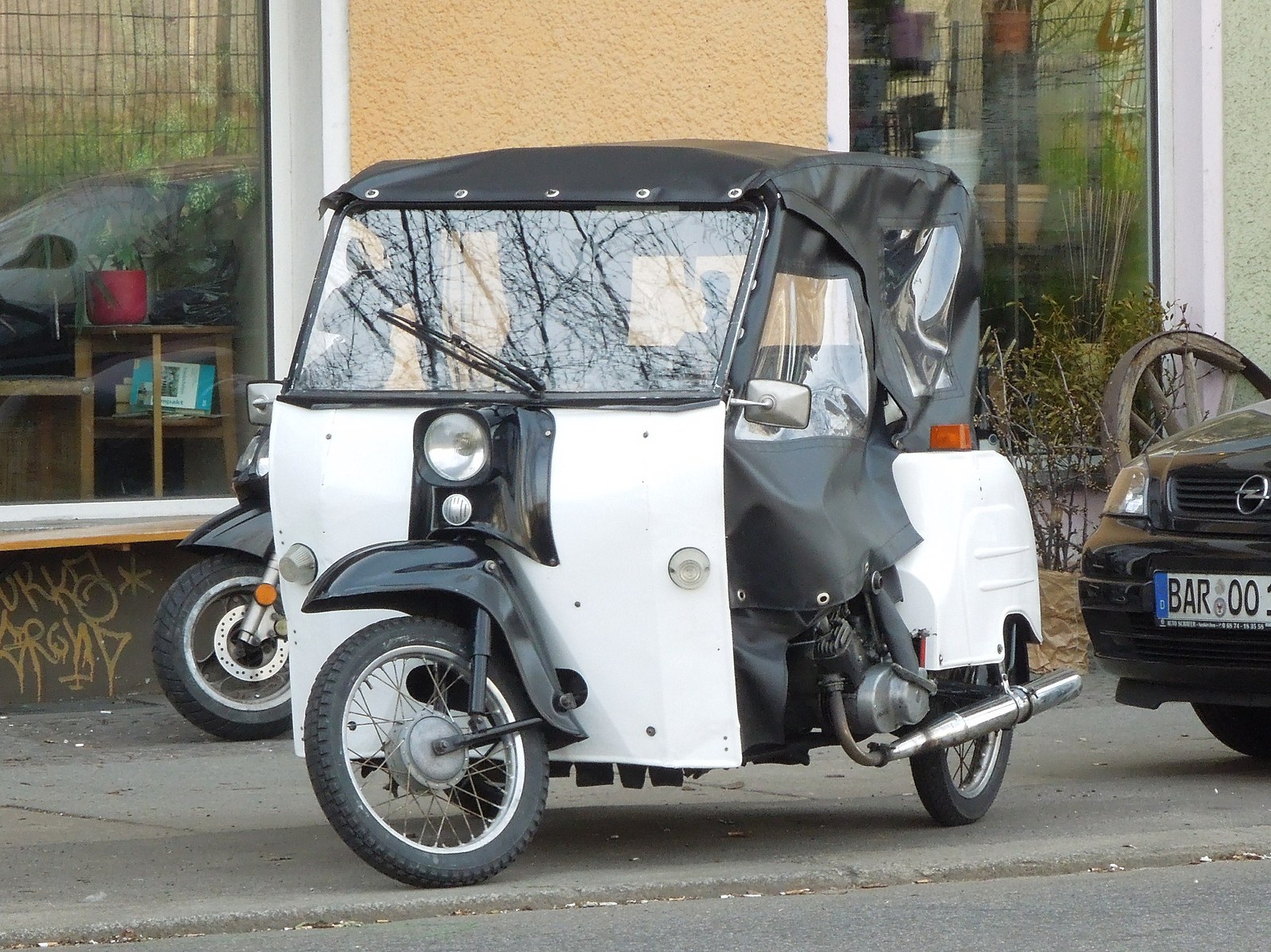
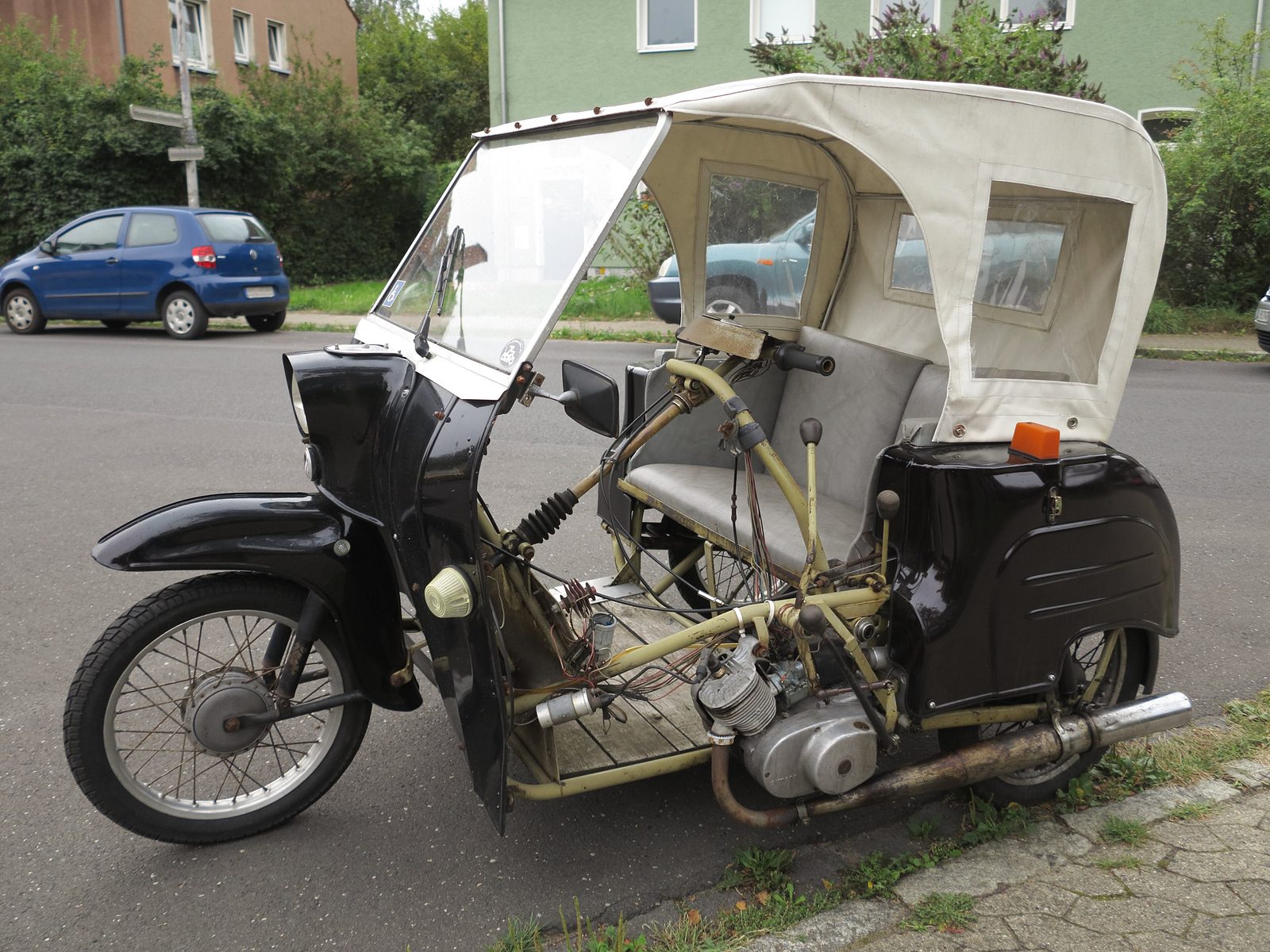
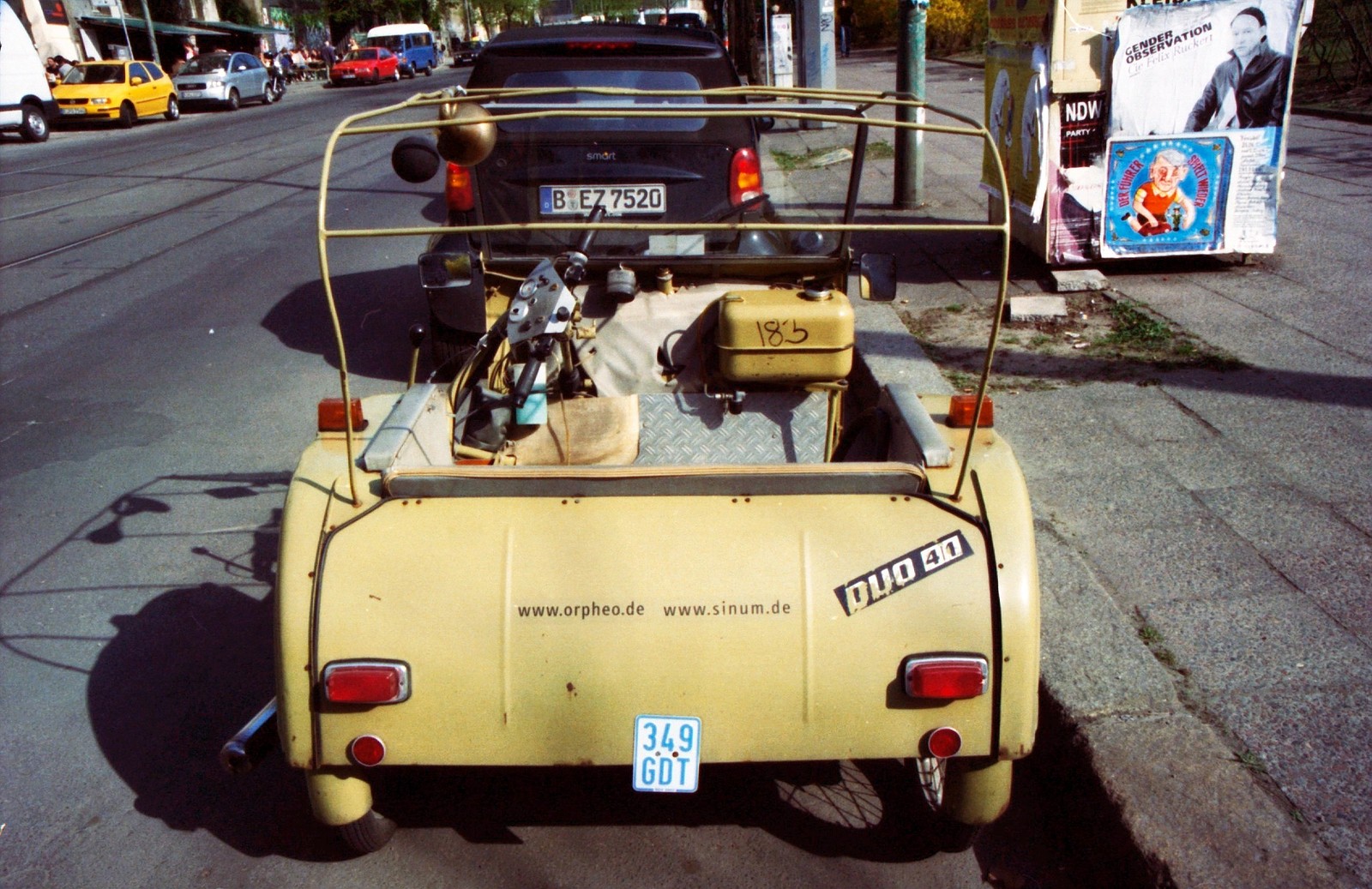
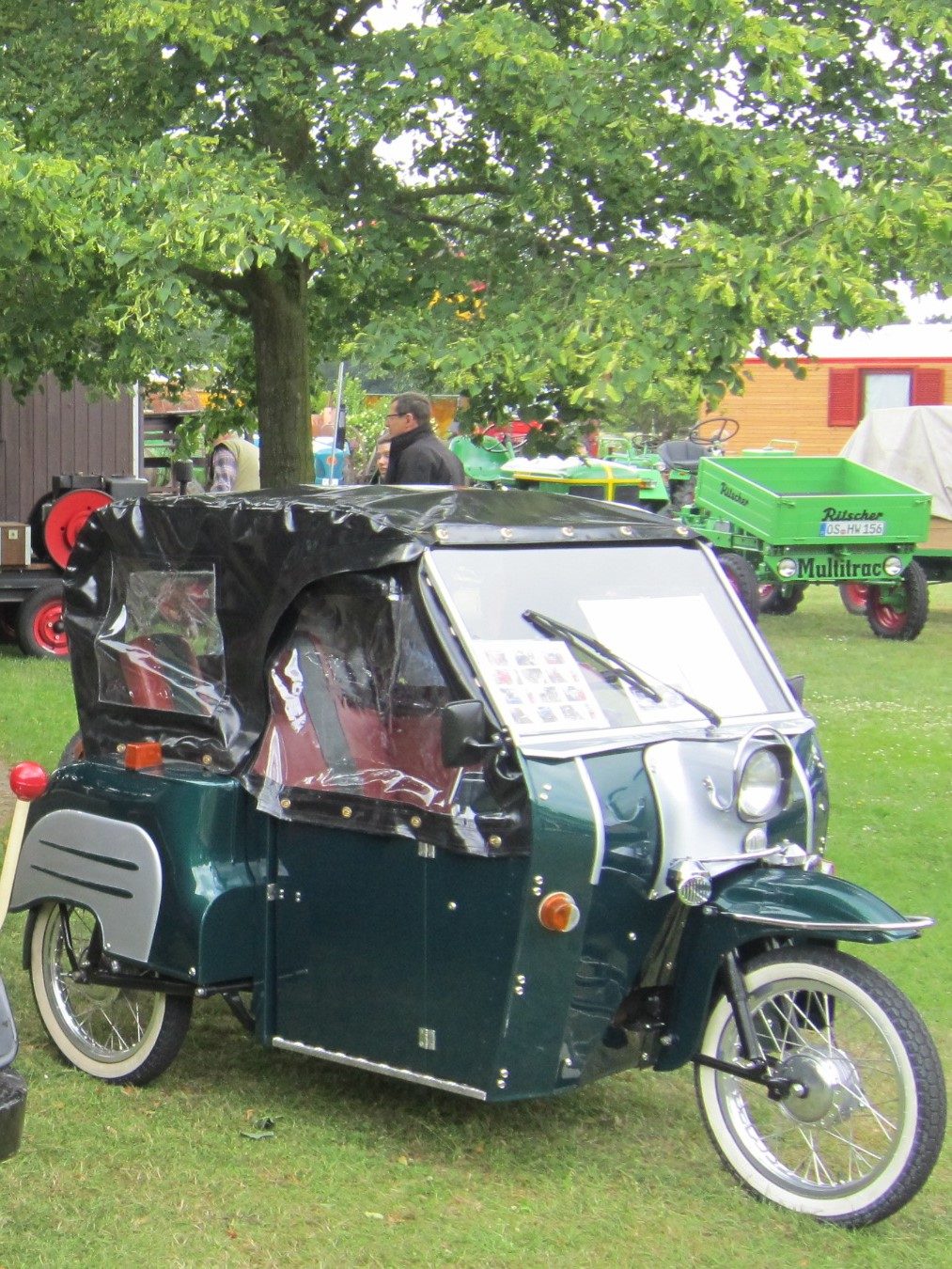
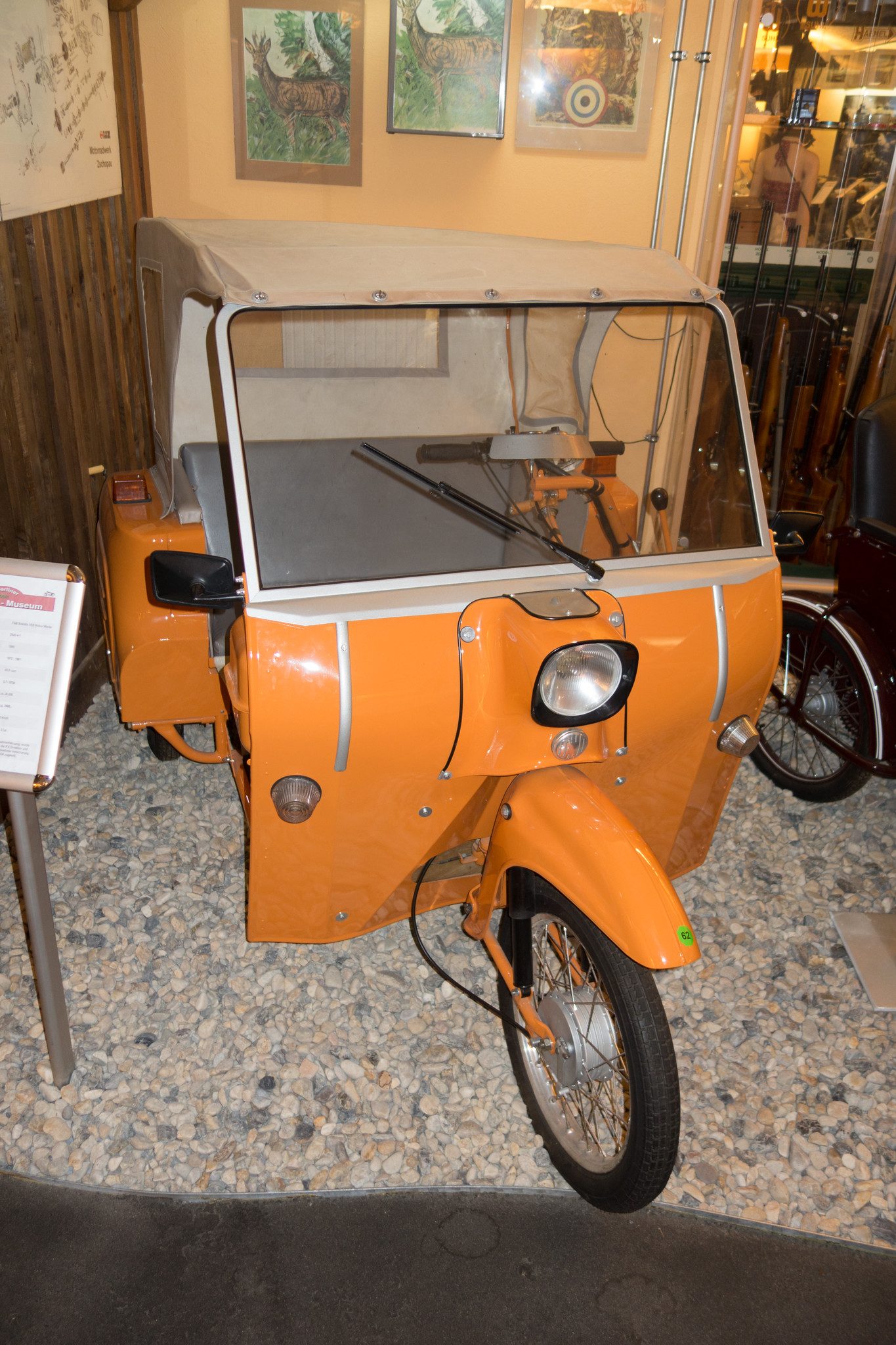
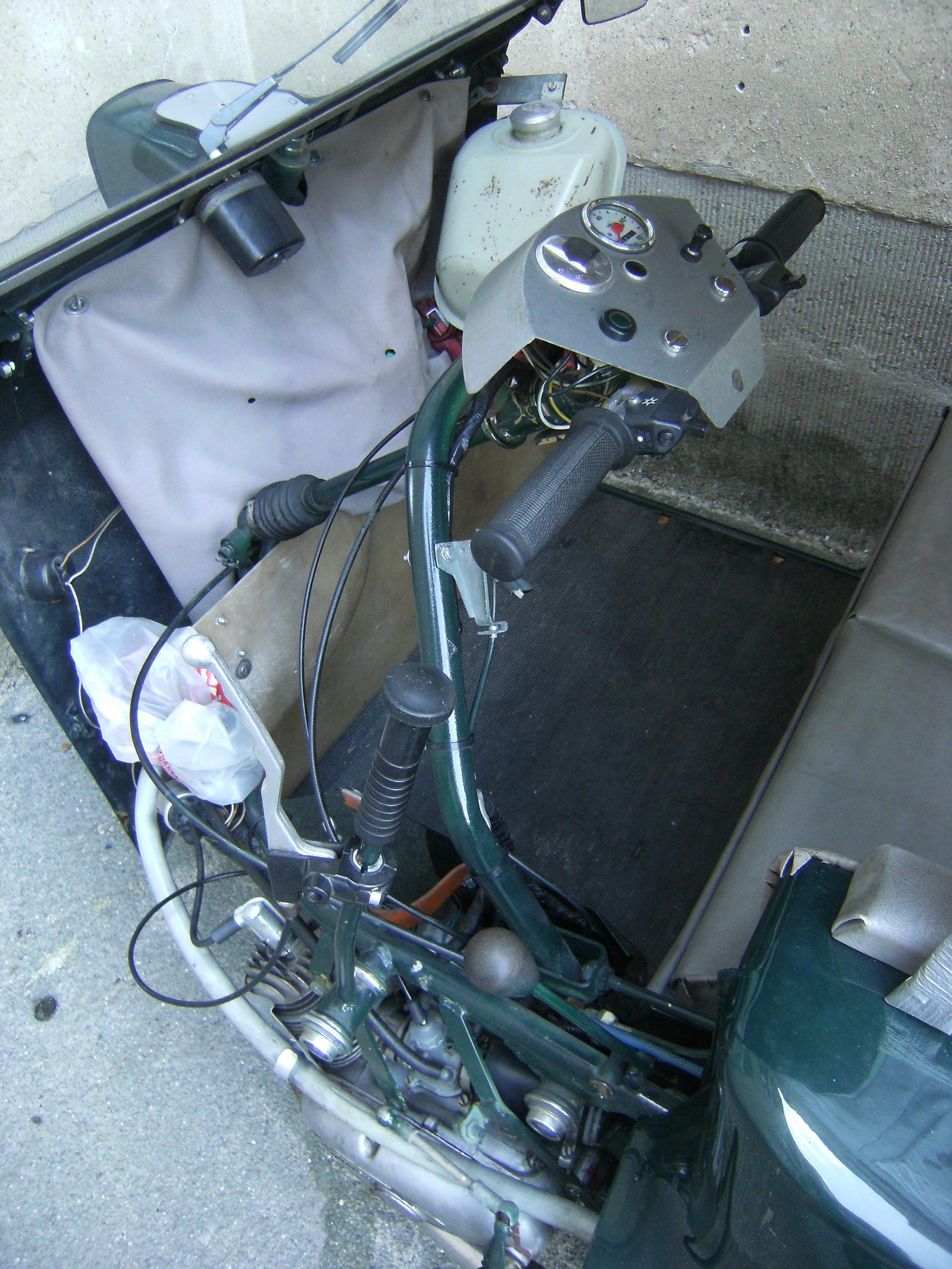
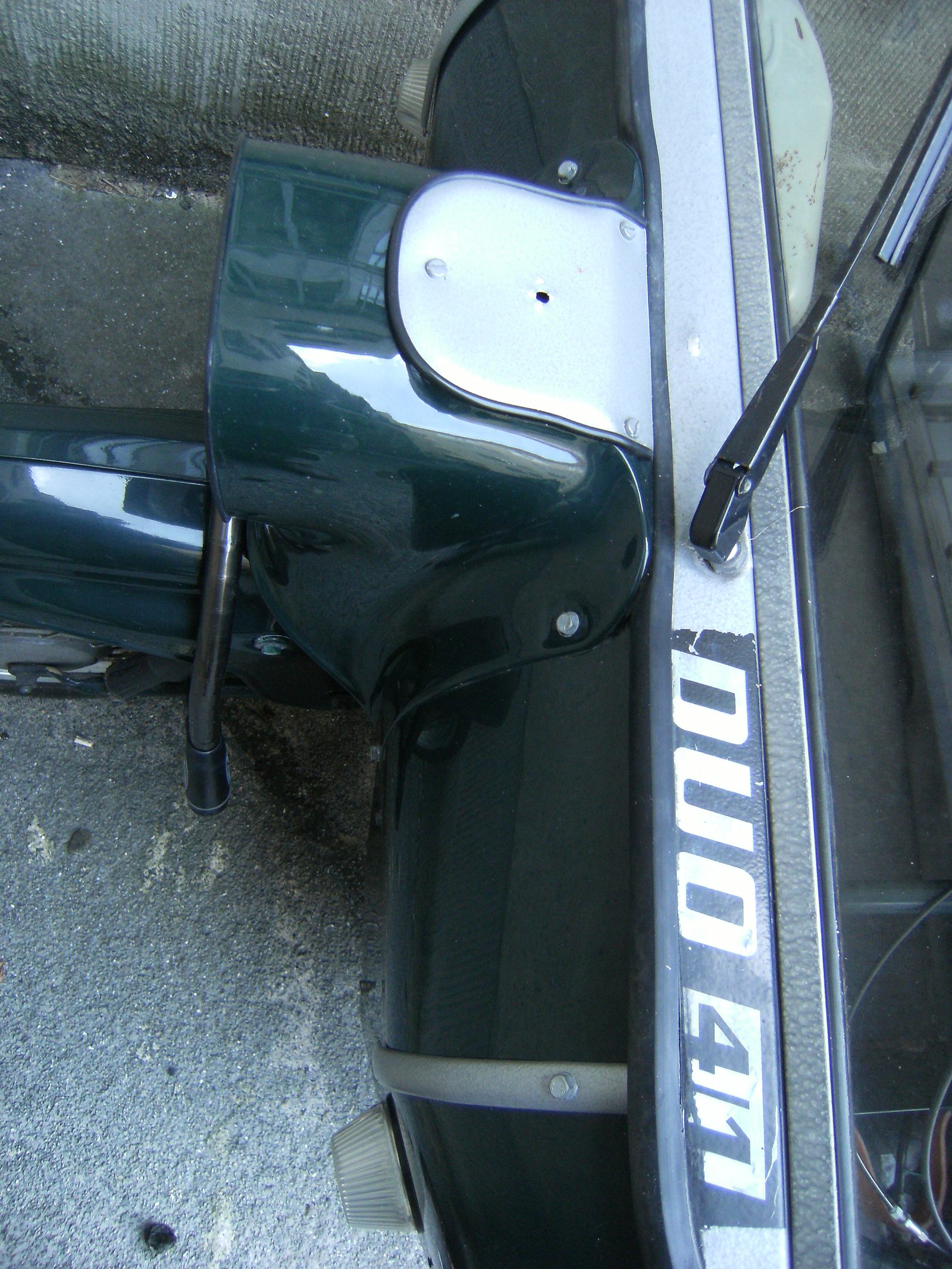
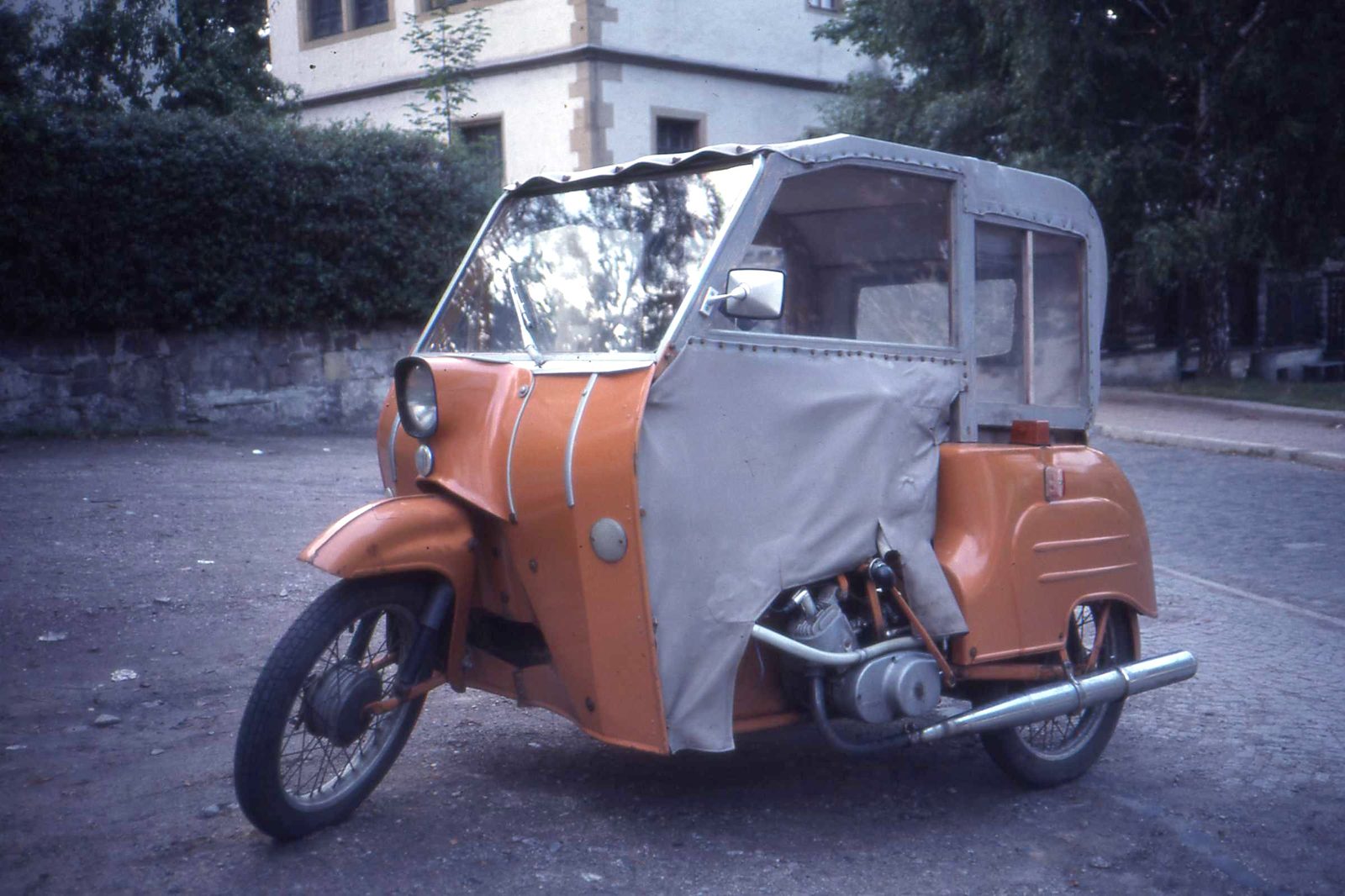
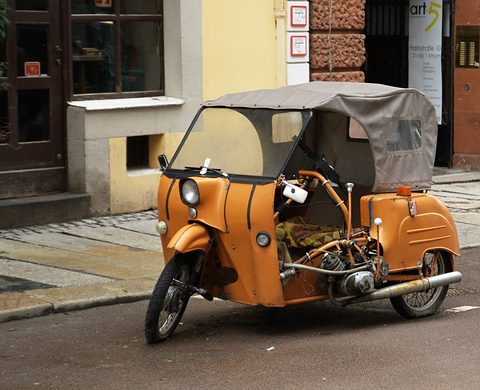
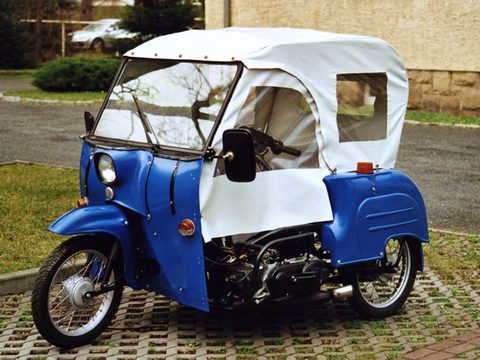
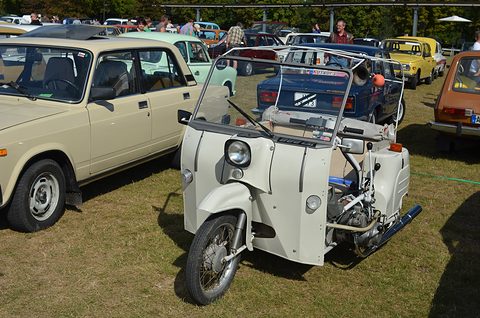
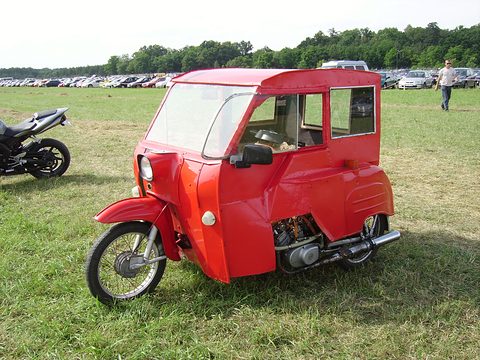
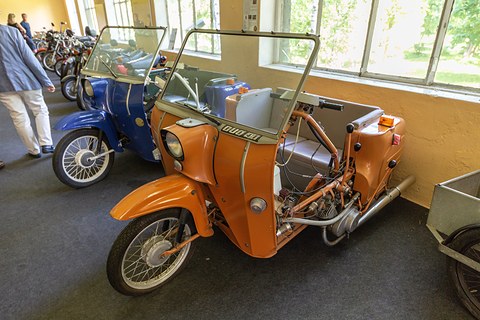
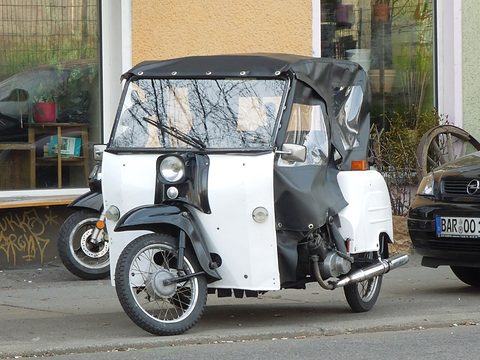
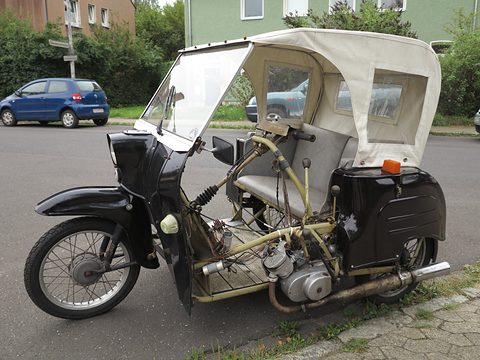
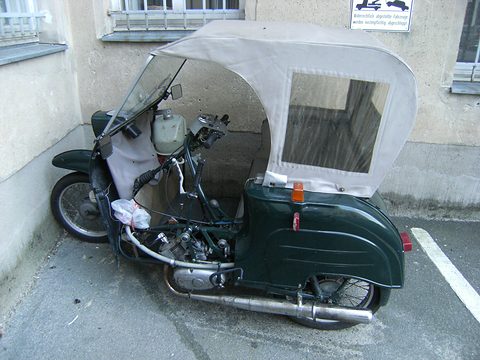
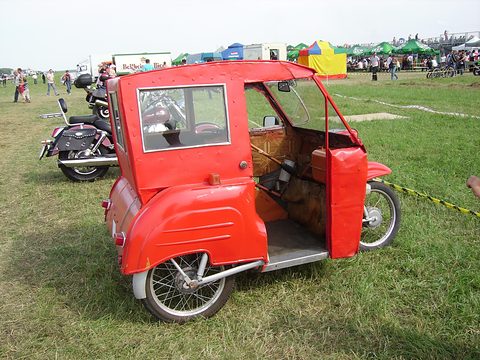
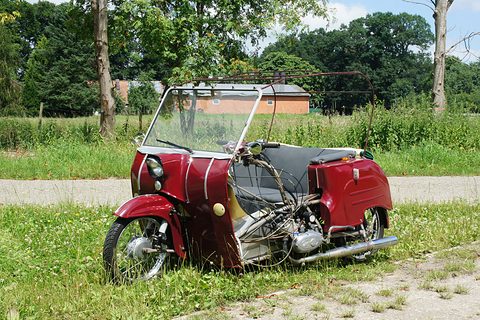
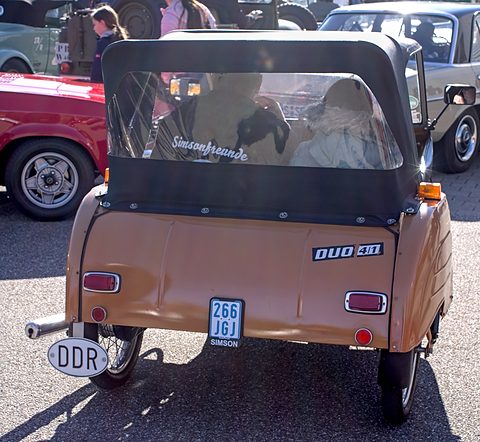
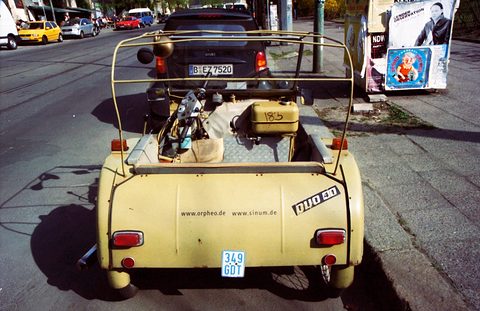
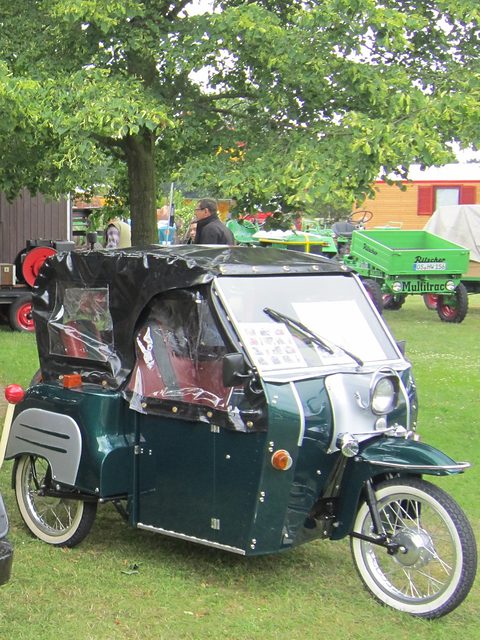
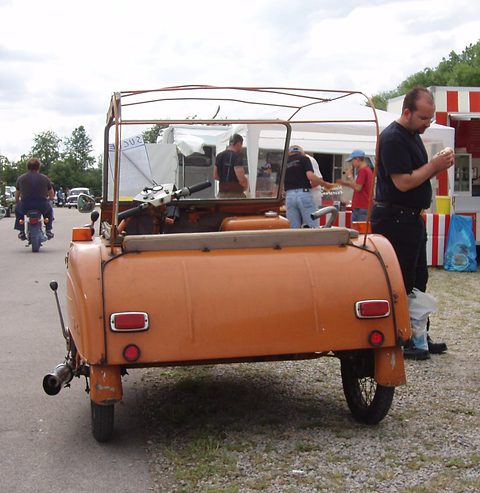
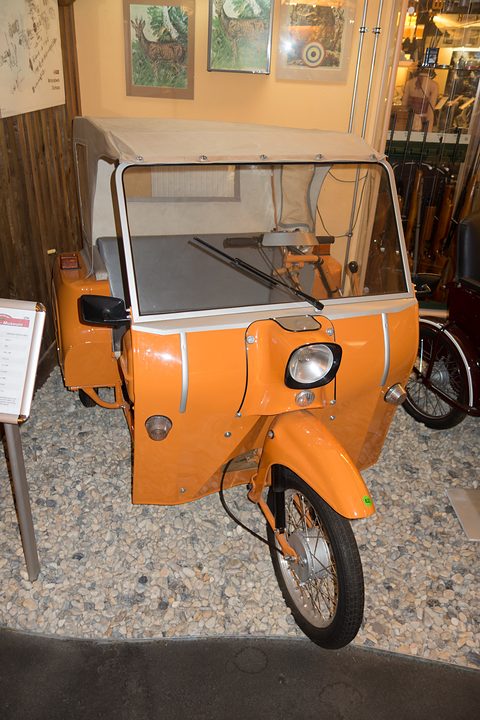
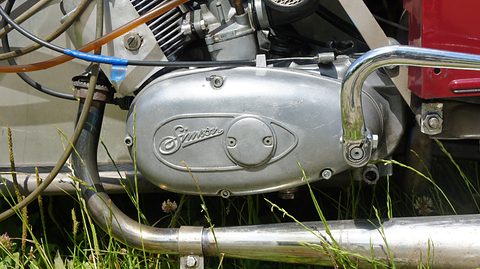
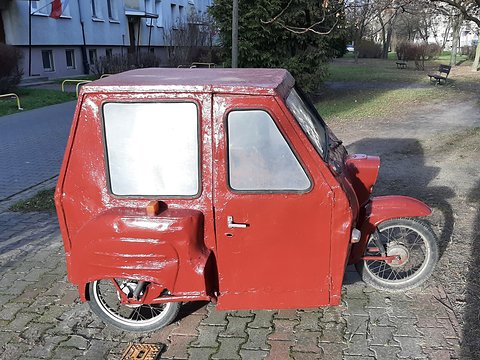
In 1970 the Duo took its final form.source 3source 1 The Duo 4 had the 49.6 cc Schwalbe engine, three gears changed by hand and an automatic centrifugal clutch, so there was no clutch lever at all; it had square tail lamps, steering by rods instead of cables, steel front and rear panels and a larger rear window in the hood. It was the first Duo built in larger numbers.source 1 Its single wheel leads and two follow, the layout of many three-wheelers; whether the engine drives one rear wheel or both, no source read says.source 4source 1
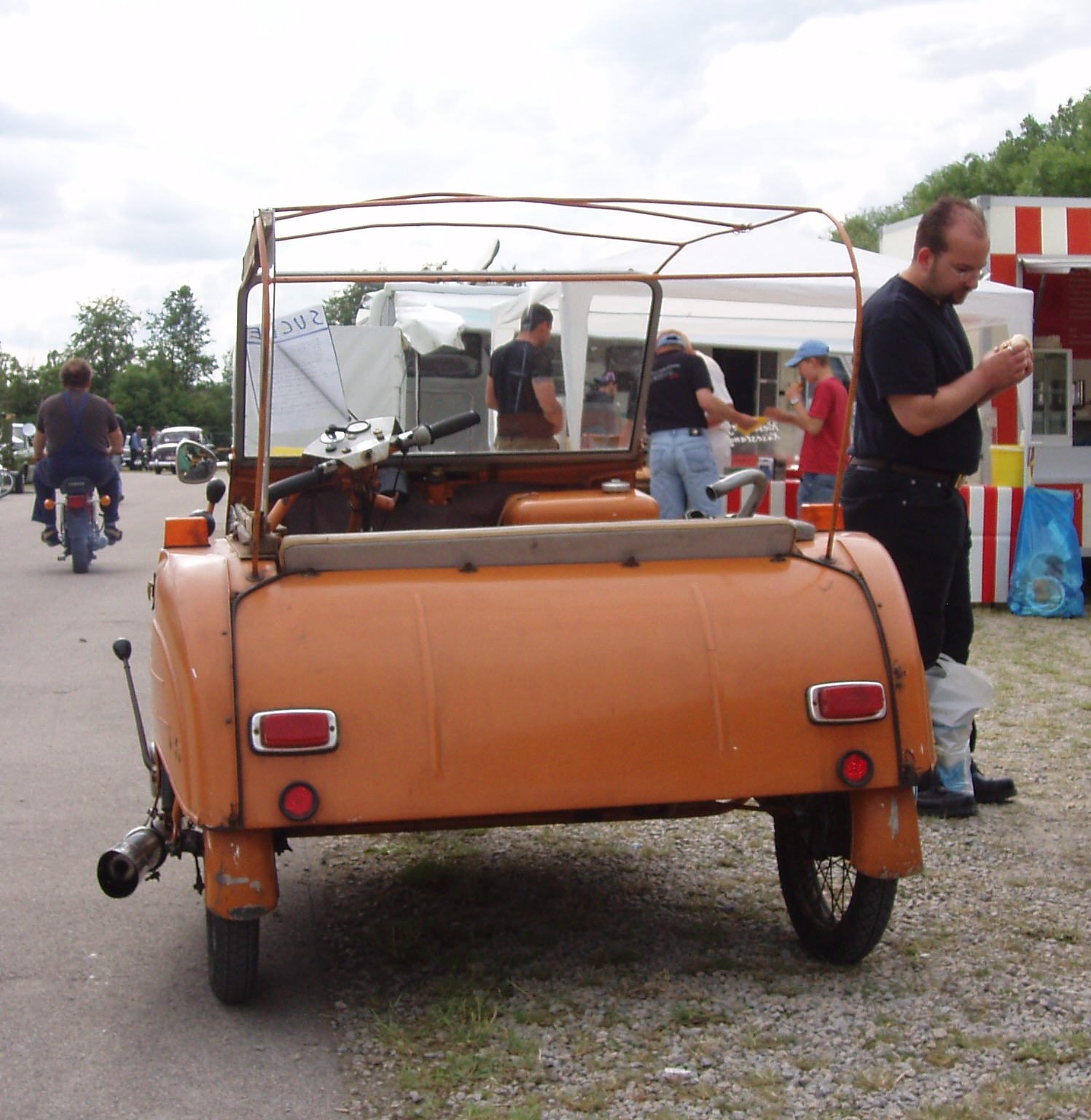
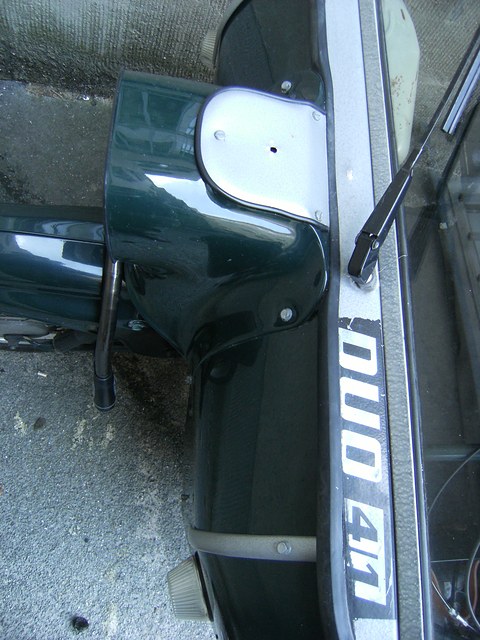
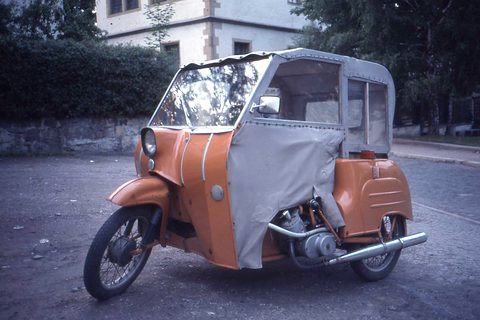
Krause was partly nationalised in 1972 and from then on made only wheelchairs without engines. The Duo went to VEB Fahrzeugbau und Ausrüstungen Brandis, near Leipzig, which brought out the Duo 4/1 with a bigger tank and a right-hand mirror.source 1source 5source 3 It was built at about 1,100 a year, first in olive green and later only in orange.source 1 In 1981 Brandis became Werk 5 of VEB Robur-Werke Zittau, and in 1989 the Duo 4/2 brought 12-volt electrics, an electric starter, a gear lever moved from the far left to in front of the right hand, and an exhaust run under the floor.source 1source 3source 5
Driving with the hands
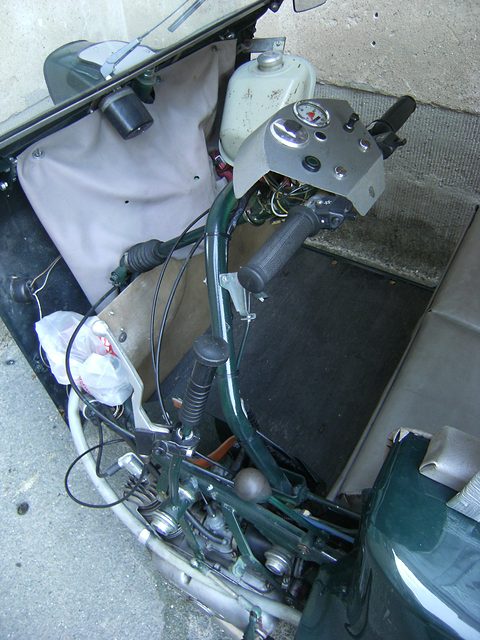
Everything is done with the hands. The right works the throttle; the left works the pull-start lever and the gear lever; and to brake, the driver pushes the whole handlebar forward, which works drums on all three wheels.source 1source 6source 4 There is no reverse gear, which German Wikipedia calls a considerable shortcoming in a vehicle for disabled drivers.source 1 The details were cheap and clever: a clear fuel hose up the side of the tank served as the fuel gauge, the windscreen washer was a pull pump from the Trabant, and the lights could be switched on with the engine stopped, which a Simson’s could not.source 1 German Wikipedia, without a source, adds that the screen flutters at speed, that a vehicle of about 140 kg is very sensitive to crosswinds, and that its weather protection was so poor that many owners built closed bodies.source 1
In the GDR a new Duo could be bought only by a disabled person with a permit from the social insurance office, the SVK, but such a buyer got one without the usual long wait, for about 2,900 Mark. The insurer paid for the workshop, and after six years there was a new Duo; the old one could then pass to an owner who was not disabled.source 1 Half of all the Duos went to Poland, and some to Albania.source 1
After the Wall
In 1990 the Brandis works left the IFA combine and became a limited company under the Treuhand. Production ended in March 1991, when the Duo’s type approval from the Kraftfahrt-Bundesamt ran out, and spare parts on 31 December 1991. A Duo 5 was built as a prototype, but the Bundesamt’s conditions blocked it.source 1source 3 In 1992 the Treuhand sold the tooling to a firm in Bohmte, near Osnabrück, which was still making small numbers of the 4/1 and 4/2 in 2002, from €5,500 each.source 1
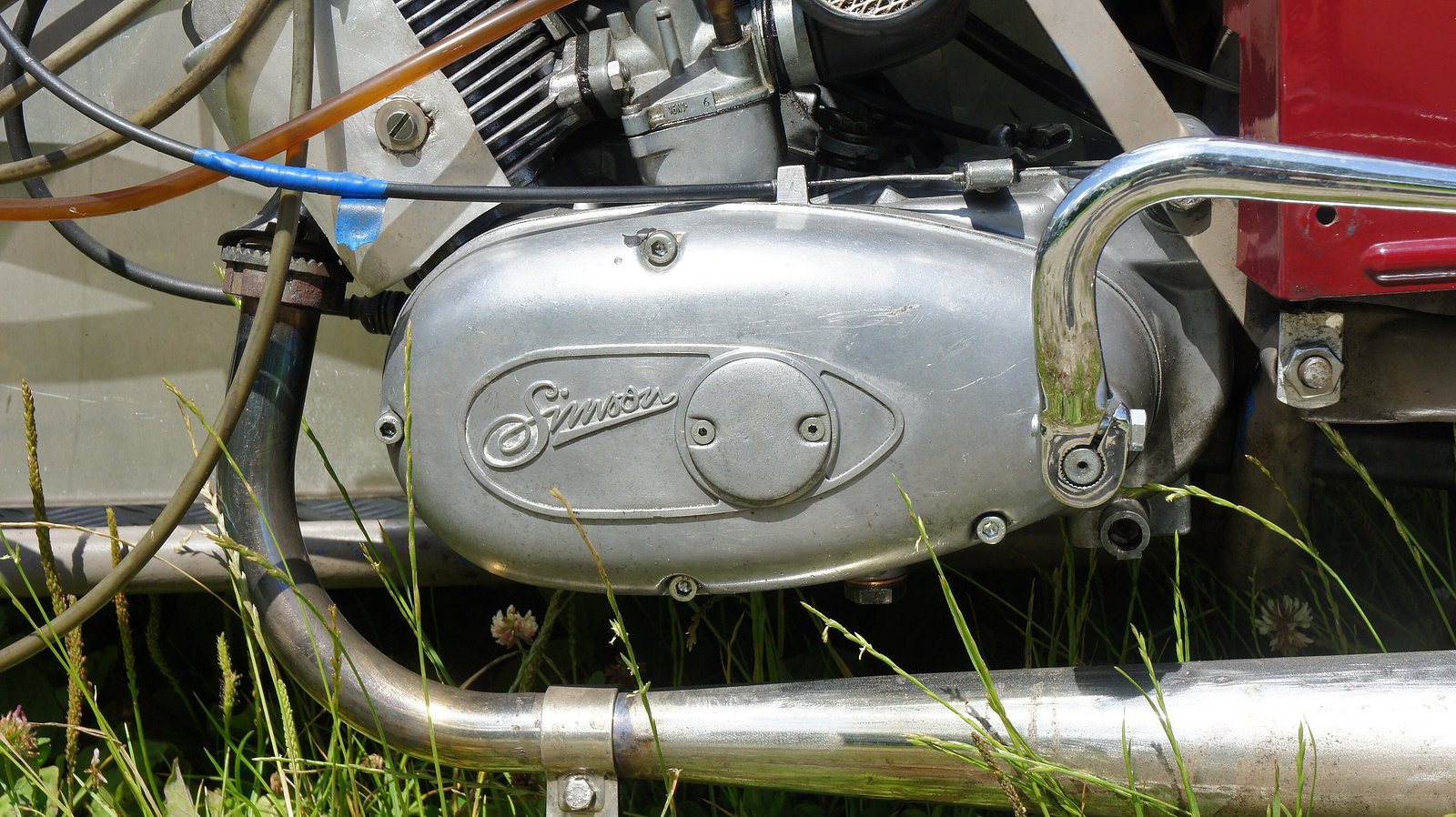
It was never a Simson. Simson made the engine, the gearbox and the lamps; Krause, then Brandis and Robur, made the Duo. The name “Simson Duo” has stuck all the same.source 1source 3