The story
History
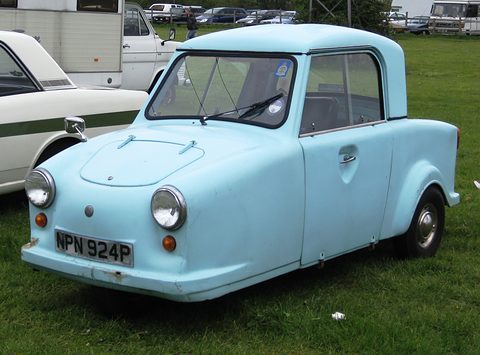
AC Cars of Thames Ditton, in Surrey, is remembered for the Ace and the Cobra, but its first product had been a three-wheeled car, the Sociable, and after the Second World War it became a major maker of invalid carriages.source 1source 2 From 1947 it built purpose-made carriages for the Ministry of Pensions (see the Invacar).source 3 The Petite was its answer to the post-war demand for cheap motoring, and it drew on the same know-how. Peter Frost found its styling in many ways like that of the invalid carriages, only scaled up all round.source 2
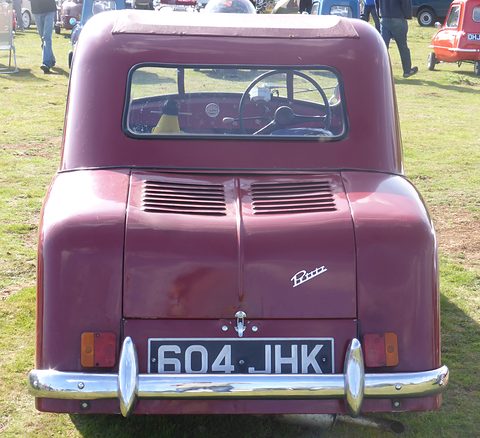
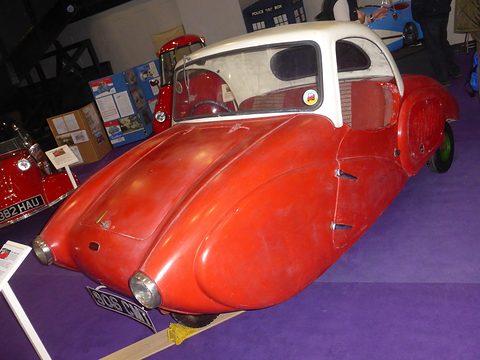
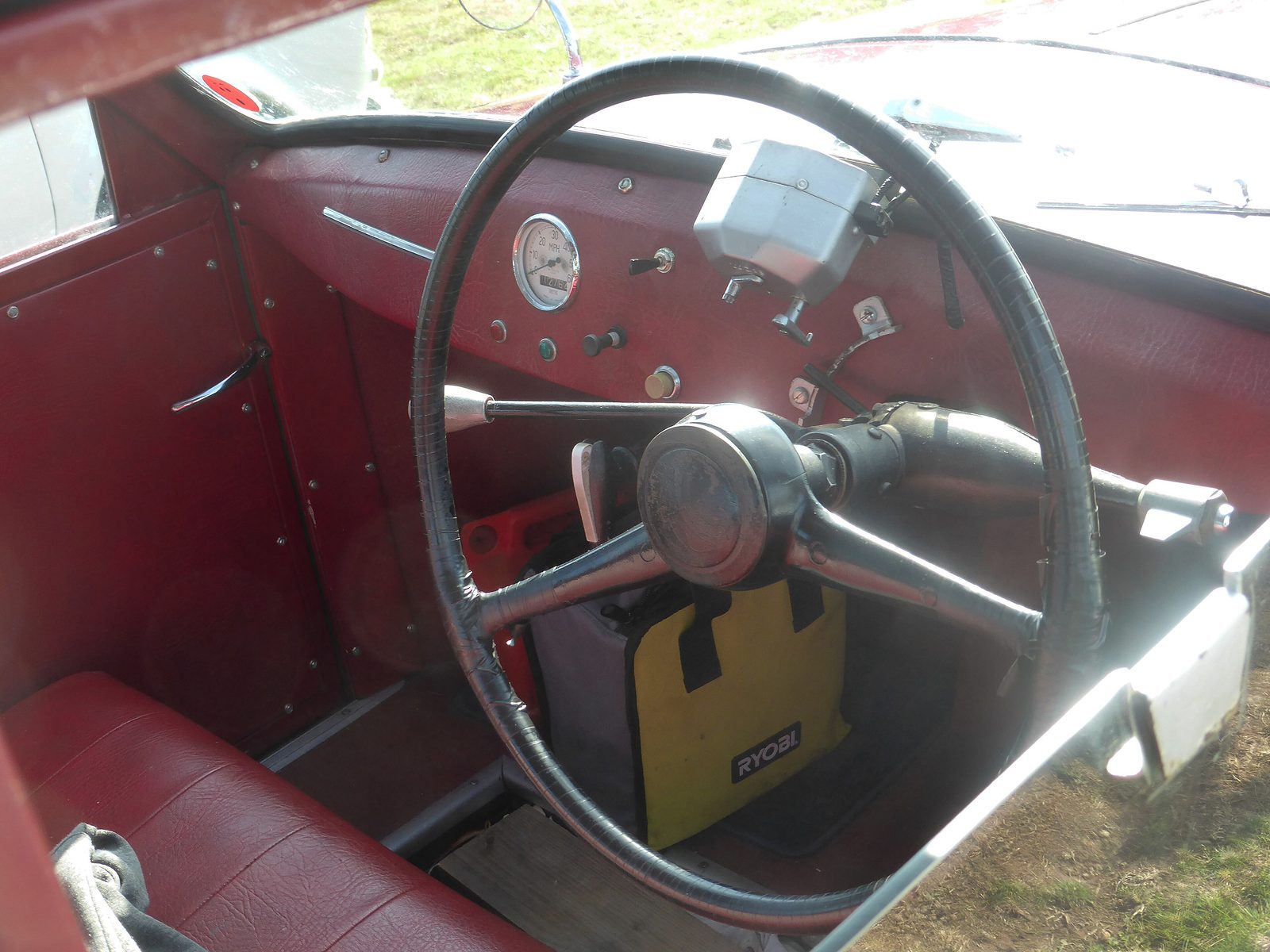
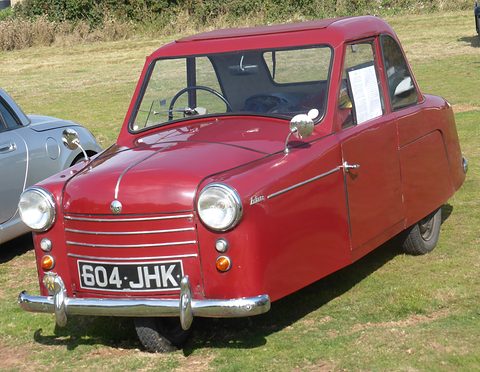
It was a three-wheeler, its single wheel in front and its pair behind, with a closed aluminium body, two doors and a single bench for two adults.source 1source 2 At the back sat a Villiers single-cylinder two-stroke, a 27B of 346 cc giving 8.0 bhp (5.9 kW) at 3,500 rpm.source 4 It drove the rear wheels; Frost says three rubber belts took the drive to the gearbox, while German Wikipedia describes a three-speed belt gearbox and a differential.source 2source 4 The wheels of the first cars were odd: an 8-inch disc at the front and 18-inch spoked wheels at the back.source 1source 4source 2 By German Wikipedia’s figures, taken from a car catalogue, the Petite was 3,120 mm (123 in) long and 1,320 mm (52 in) wide.source 4
When it was launched is not clear. Peter Frost and German Wikipedia give 1953 to 1958; English Wikipedia, citing Chris Rees, gives 1952 to 1957.source 4source 2source 1 The American magazine Popular Science reported the car in January 1953, under the headline “Three-Wheeler Eats Up the Miles on One Gallon of Gas”, with about 64 km/h (40 mph) and 60 to 70 miles per gallon (4.0–4.7 litres per 100 km).source 1source 4 That suggests an announcement in 1952 at the latest and production from 1953, but that is a reading of the dates, not a recorded fact. No price new has been found. The Petite soon became a yardstick: Allard tested its Clipper prototype against a Bond and a Petite before deciding to put it into production.source 5
The Mk II
In 1955 the Mk II brought 12-inch disc wheels on all three corners, slightly changed chrome on the outside, and a Villiers 28B of 353 cc and 8.2 bhp (6.0 kW).source 1source 4source 2
Production ended in 1957 or 1958, by different accounts, and the sources read do not say why.source 1source 4source 2 Chris Rees puts the total at about 4,000; Frost says several thousand.source 1source 2 AC carried on with its invalid carriages, among them the Model 70 of the 1970s.source 3 In the early 1970s it also built a prototype four-seat three-wheeler in glass fibre, with a 500 cc Steyr-Puch twin at the back; it did not go into production.source 2