microcarfan
  • Microcar
  • West Germany
  • 9 makers

German Kabinenroller small makers

For every Messerschmitt there was a scooter maker, a wheelchair maker or a suspension maker who tried a car of their own. These built a handful, or a few dozen, and stopped.

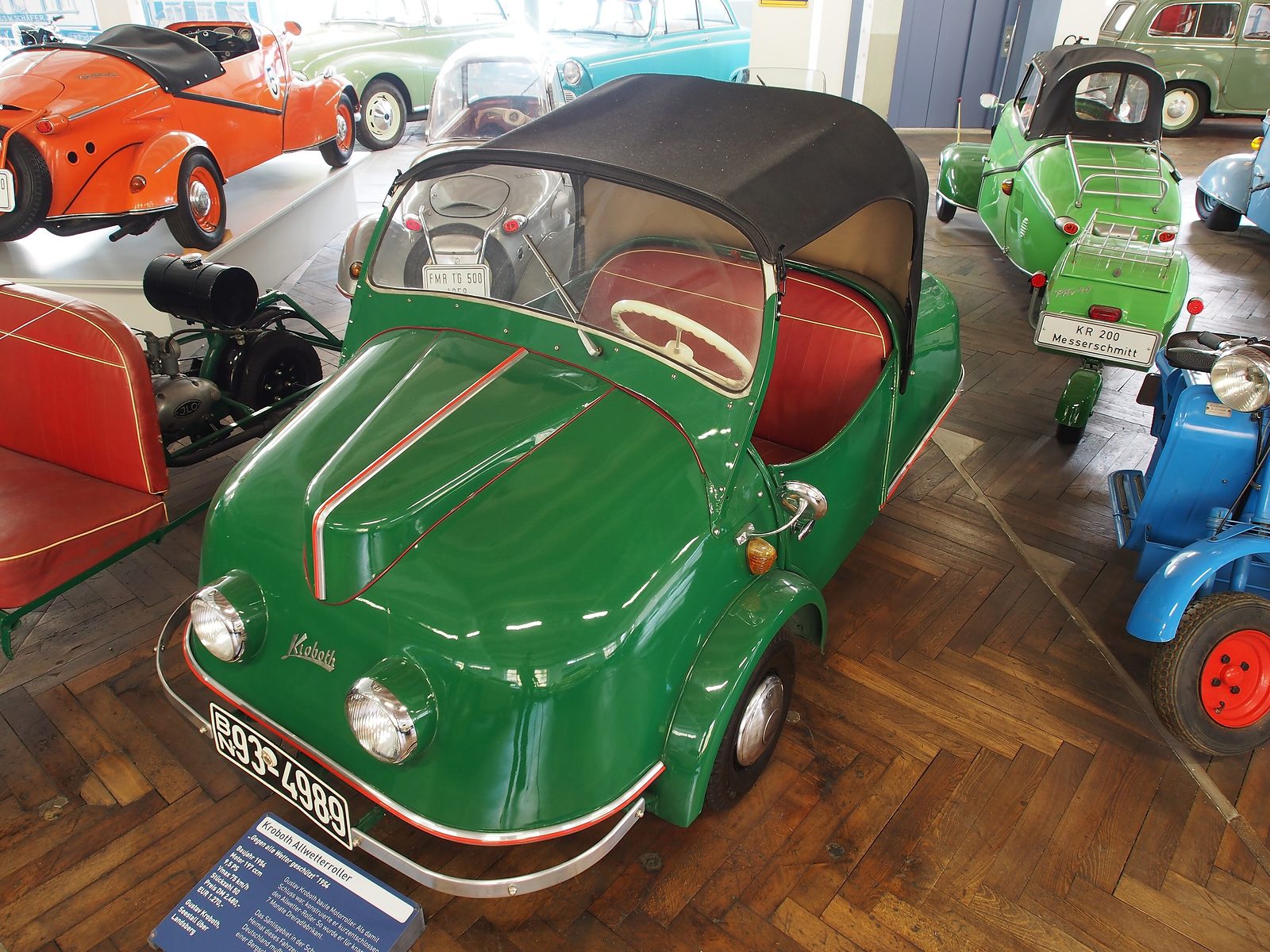
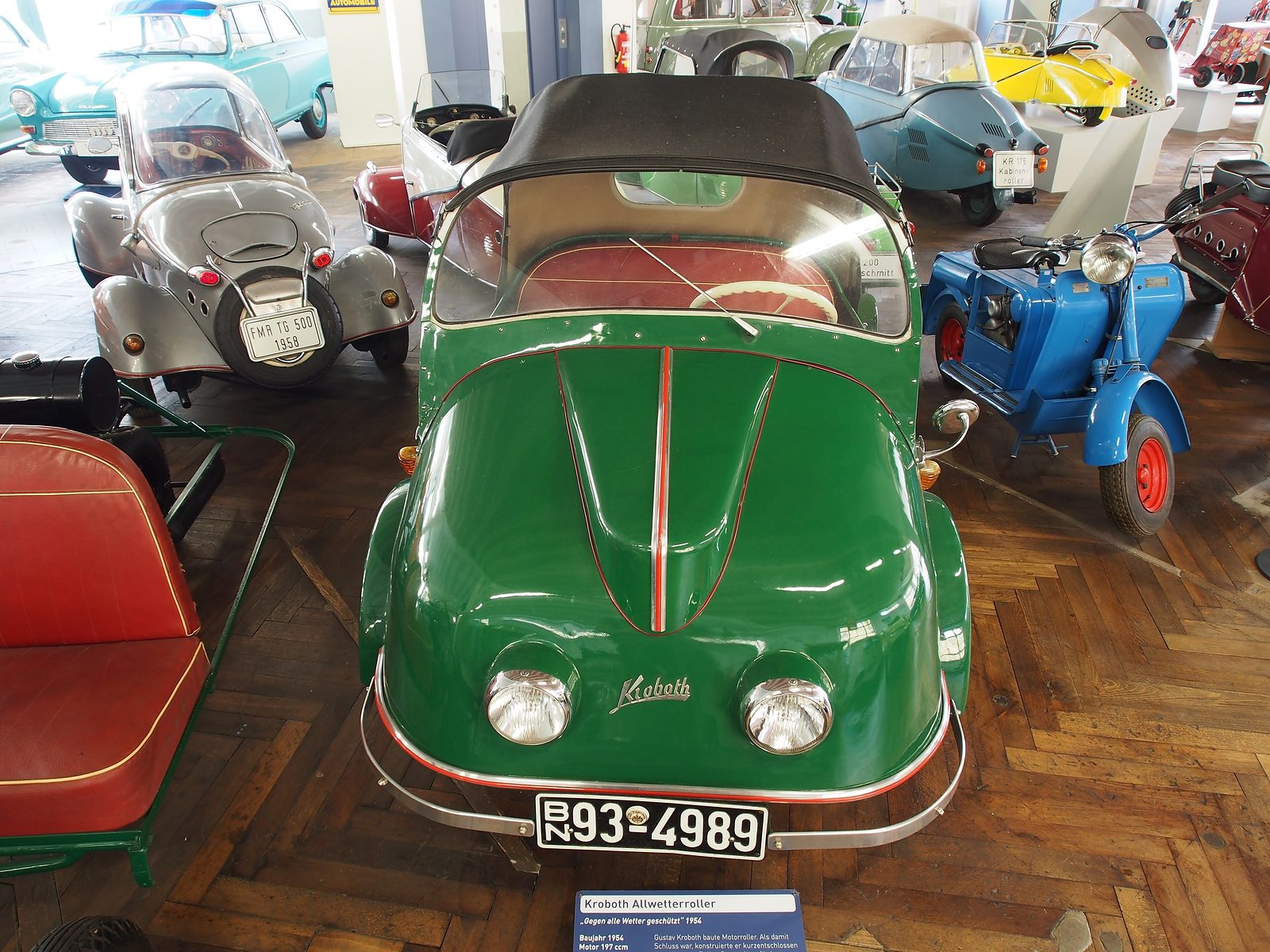
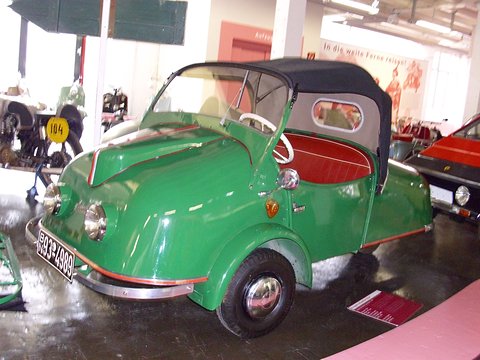
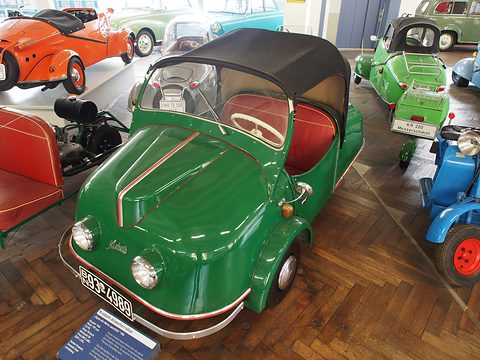
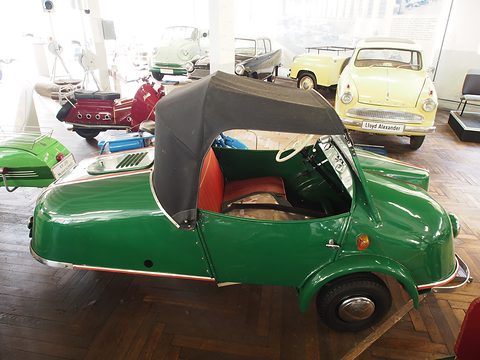
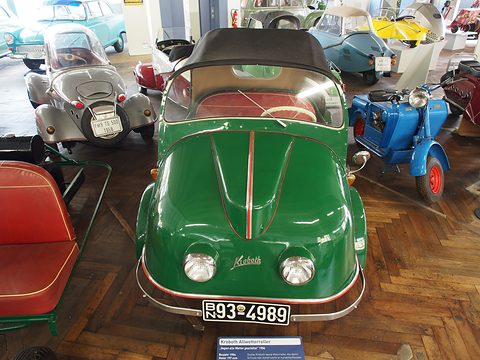
Green three-wheeled scooter-car with a black fabric hood, red seat and plate BN 93-4989 on a dark floor.
A green 1954 Kroboth Allwetterroller with its hood up, in a museum in 2010.Photo: Buch-t, Public domain, via Wikimedia Commons

At a glance

The spec plate

German Kabinenroller small makers

Small makers · West Germany

Built
1949–⁠1959From the Econom Teddy of 1949 to the last Jurisch dates, given as late as 1959
Country
West GermanyFrom West Berlin to Bavaria
Engine
146 cc to 597 ccFrom the 146 cc given for Cuno Bistram’s car by one account, through Sachs, ILO and Heinkel singles and the Lloyd twin, to the 597 cc Horex and Zündapp engines of the Trippel SK 10 and the C.A.M.
Seats
1 to 3One in the Jurisch, and in the Bistram by one account; three in the Trippel; one source calls the Meyra 200 a four-seater
Wheels
Three, two in front, on the Kroboth, the Meyra and the Jurisch; four on the Trippel, the Econom and the C.A.M.
Production
a little over 50 at mostThe Kroboth’s; most of the others were built in single figures or a couple of dozen
Top speed
80km/h80 km/h75 or 80 km/h by engine; the four-wheeled Trippel SK 10 Sport is credited with 140 km/h

Not yet recordedpower.

The story

History

In the first years after the war a West German class IV driving licence, which needed no practical test, covered vehicles of up to 250 cc. That made room for the Rollermobil or Kabinenroller, the cabin scooter, and for the smallest cars of all, the Kleinstwagen. Most of them had an air-cooled single-cylinder two-stroke driving a single rear wheel by chain.source 1 The makers who sold them in thousands, Messerschmitt, BMW with the Isetta, Heinkel, Goggomobil and Fuldamobil, have pages of their own, and these bubble cars and their kin are told there. So are the Fend Flitzer, the Champion, the Kleinschnittger F125 and Egon Brütsch’s cars.

This page gathers the rest, in the order they began. They came from every corner of West German industry: a Ford dealer in Berlin, a maker of wartime amphibians, a locksmith in Munich, a wheelchair maker, a Sudeten German scooter builder and a maker of motorcycle suspension. Two names on the list, Daus and Hillers, are known only as names. A third, the Weidner 70 S of 1957–⁠58, which began as a Trippel design, was a sports coupé 3,850 mm (152 in) long, and is left out.source 2
Econom Teddy

1949–⁠1950 · a record on this page

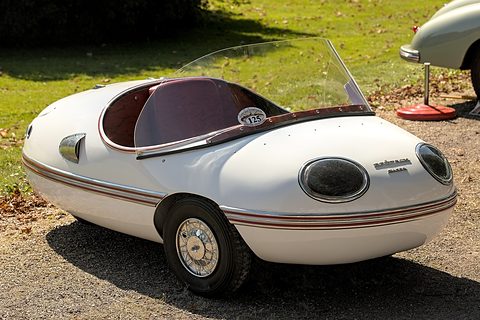
Econom was founded in 1948 at Berlin-Spandau by Hellmuth Butenuth, once Hanomag’s technical director and from 1937 Berlin’s main Ford dealer; his wartime workshop had used foreign forced labourers, 100 Soviet and 40 French workers in company camps by 1942. German Wikipedia calls Econom the first new car maker founded in Germany after the war, a claim that is unconfirmed: Fend’s workshop at Rosenheim dates from 1946–⁠47.source 3 Its four-wheeled Teddy of 1949, nicknamed the Krabbe, the crab, was stylish and modern inside, and was planned as a saloon and a cabriolet; it was built in small numbers until June 1950.source 3 English Wikipedia’s list gives it an ILO 245 cc engine and two seats plus a dickey seat, and counts three.source 4 Econom turned to lorries and closed in 1956, by German Wikipedia’s article on the firm; its article on Butenuth dates the lorry firm 1948–⁠54.source 3source 5

Trippel SK 10

1950–⁠1953 · a record on this page

Hans Trippel (1908–⁠2001) had run the wartime Trippelwerk, which made amphibious cars. In 1949 he founded Protek in Stuttgart, moved it to Tuttlingen in 1950 and back to Stuttgart in 1951.source 6 The first SK 10, shown on 5 May 1950, was a coupé with a single door that folded open on the right, three seats and a Horex 597 cc single of 18 PS (13 kW) at the back. Three were built, each 3,000 mm (118 in) long and 300 kg (661 lb) in weight.source 7 The SK 10 of 1951–⁠52 had two doors and a Zündapp 498 cc flat twin, came as a coupé or, from March 1952, a cabriolet, and about 20 were built; two SK 10 Sports of 1953, with a 597 cc Zündapp of 26 PS (19 kW), were credited with 140 km/h (87 mph).source 8source 9 About 25 SK 10s were made in all; Protek’s later designs were built in Paris and licensed to firms in Germany and Belgium.source 6

C.A.M.

1951–⁠1956 · a record on this page

Carl Amesmaier, a structural locksmith born in 1921, took over his father’s Munich business in 1945. His C.A.M. cars were open steel two-seaters with the engine in front driving the front wheels. The first prototype of 1951 had the 293 cc Lloyd twin of 10 PS (7.4 kW); the series roadster had a 597 cc Zündapp flat twin of 28 PS (21 kW), VW Beetle headlamps and door handles, and 125 km/h.source 10 At 3,600 mm long it is no Kabinenroller. Four were sold, or two one-offs and four, by different accounts.source 10

Meyra 200

1953–⁠1955 · a record on this page

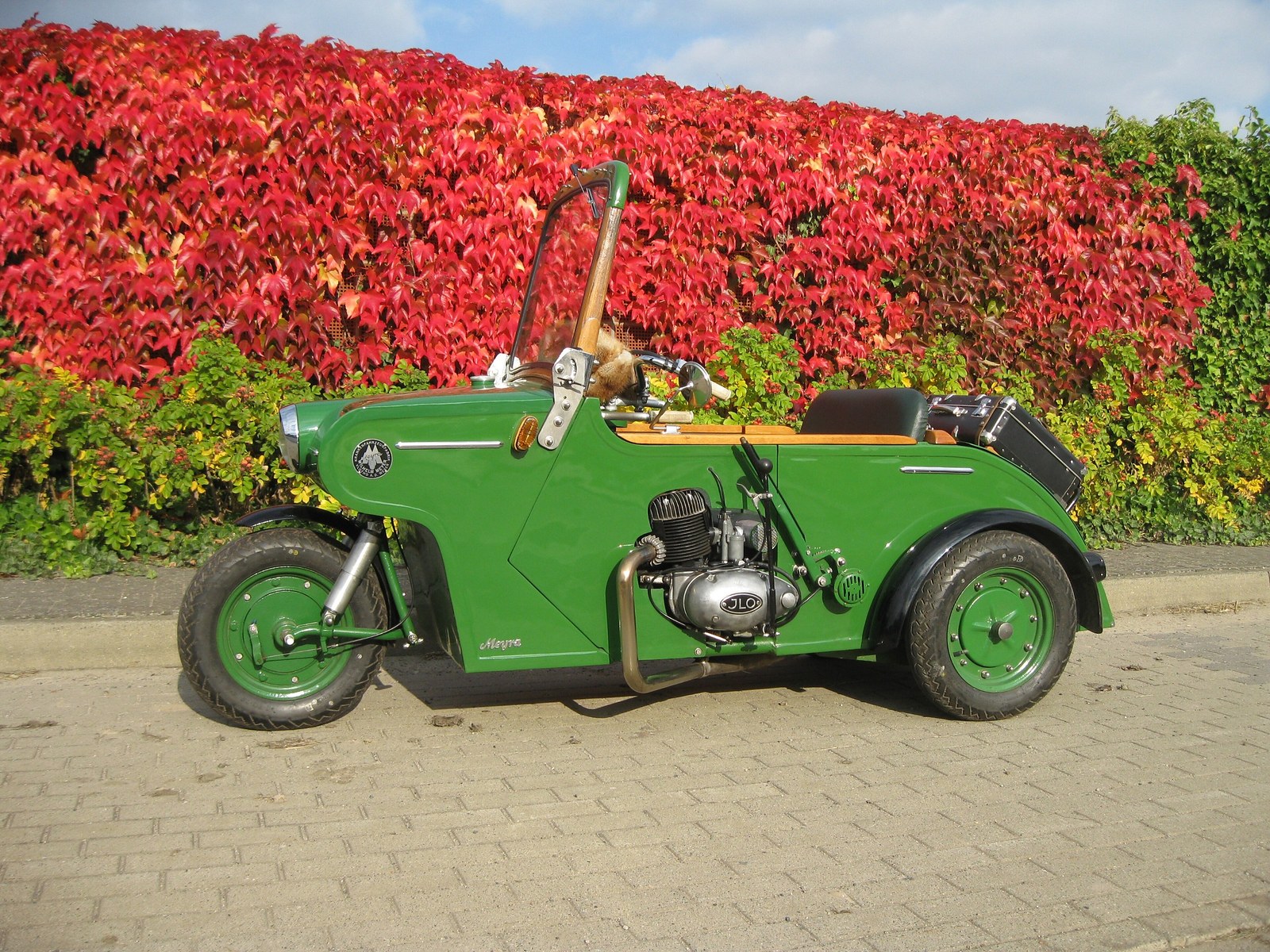
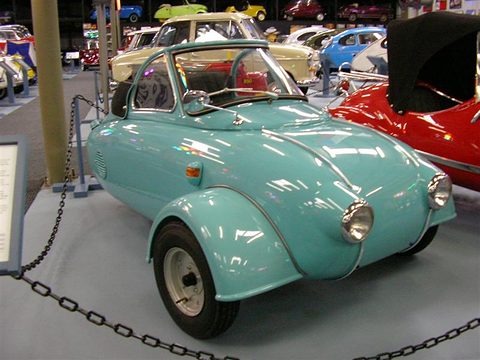
Wilhelm Meyer founded Meyra at Vlotho in 1936 to make invalid carriages, motorised ones from 1937.source 11 In the 1950s it built small cars with polyester bodies. The Bayer works of Leverkusen presented the Meyra 200 at the Hanover Fair, and German Wikipedia calls it Germany’s first series-produced plastic car, an unverified claim; the 200-2 drew crowds at shows but failed in the market.source 11 An enthusiasts’ history describes Meyra three-wheelers, two wheels in front, built both as invalid cars and as cheap two-seaters with ILO and Sachs engines of 50 to 250 cc; it dates the 200 to 1953–⁠55, and one source calls it a four-seater.source 12 The engine, size and production of the 200 have not been found.

Kroboth Allwetterroller

1954–⁠1955 · a record on this page

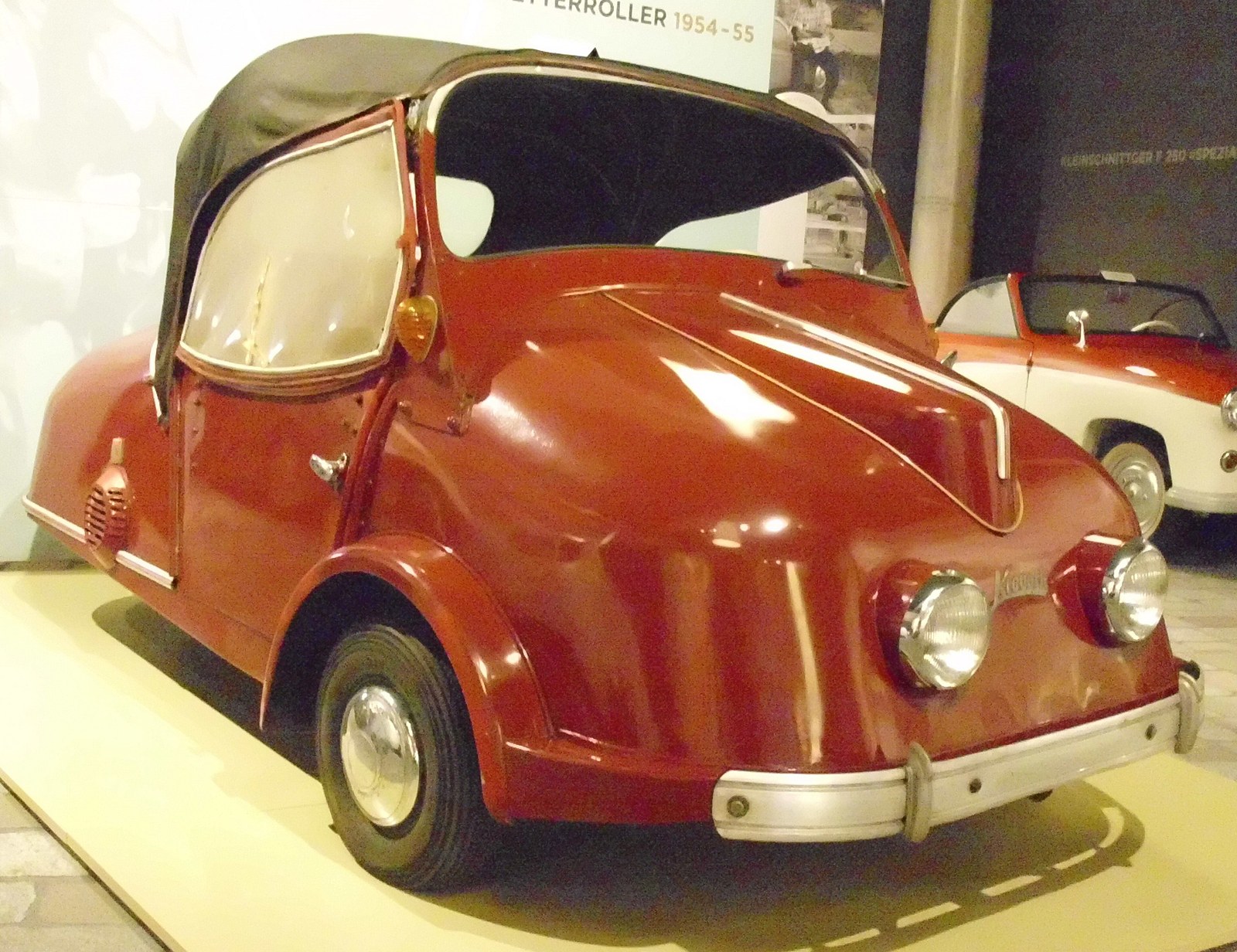
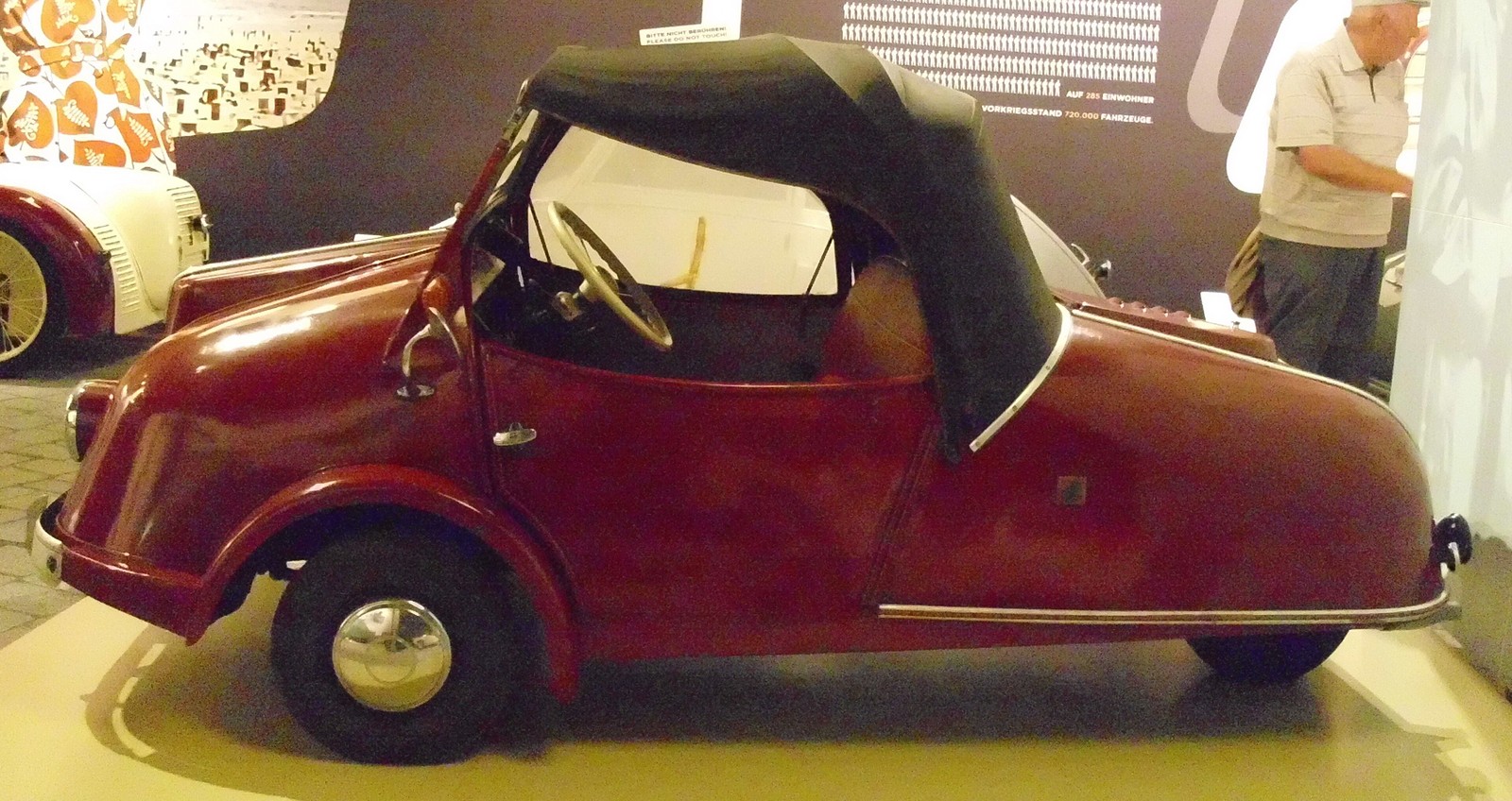
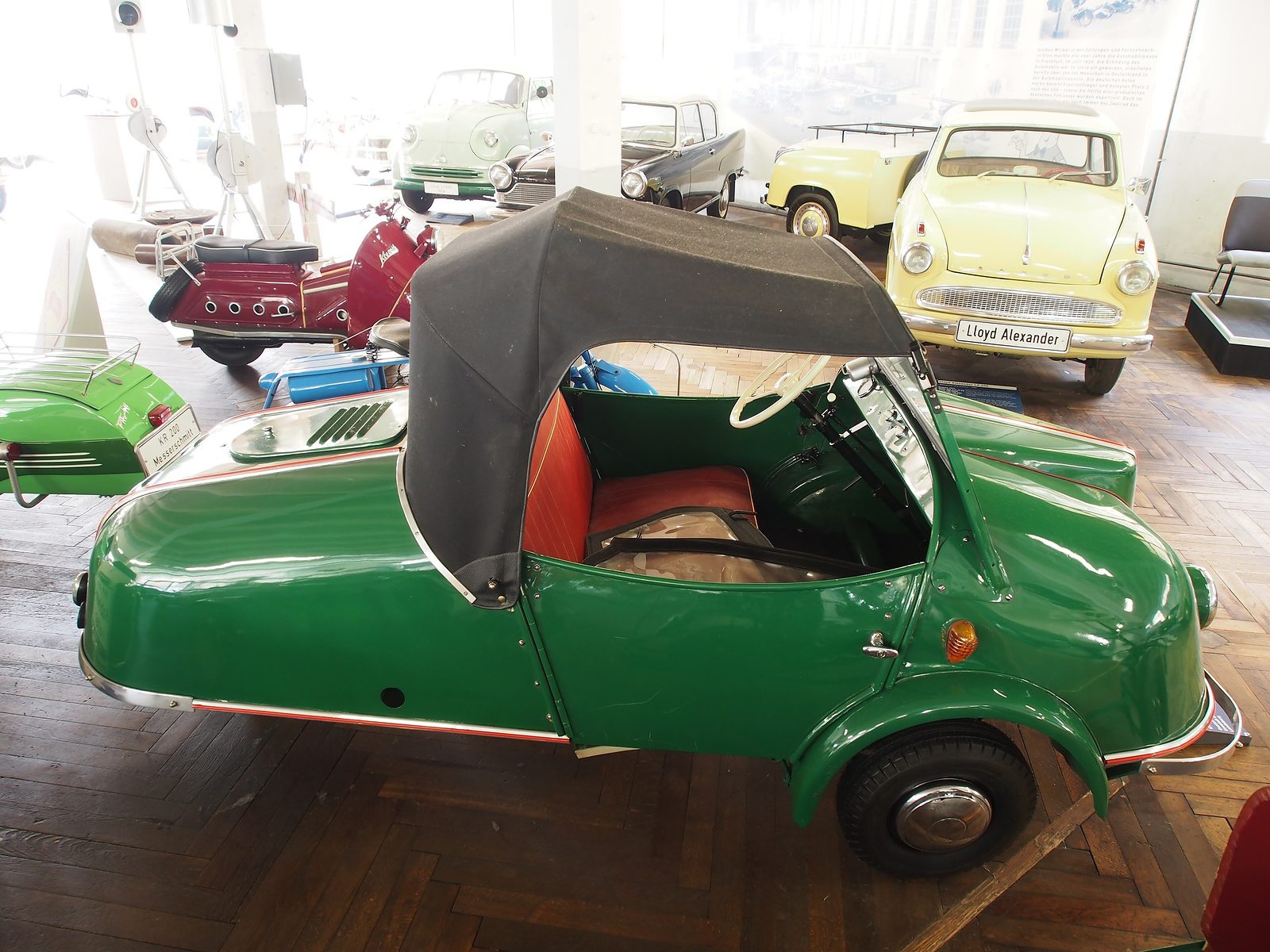
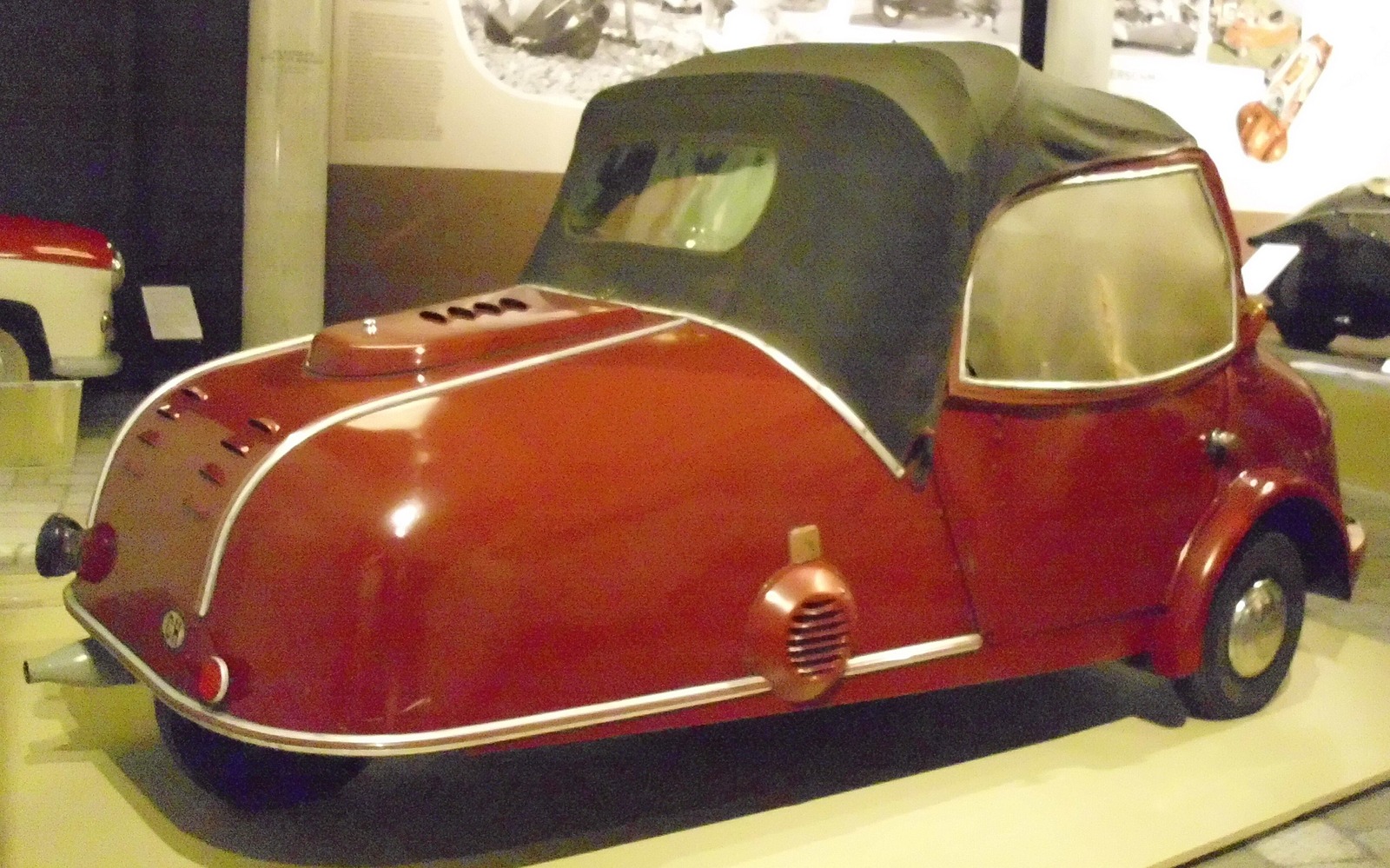
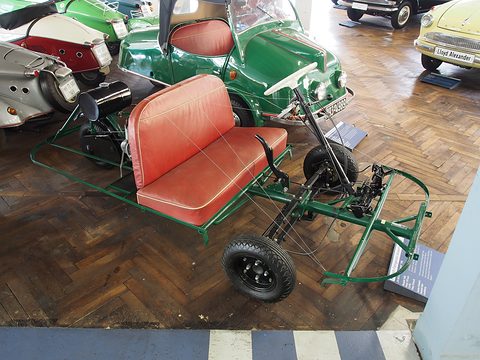
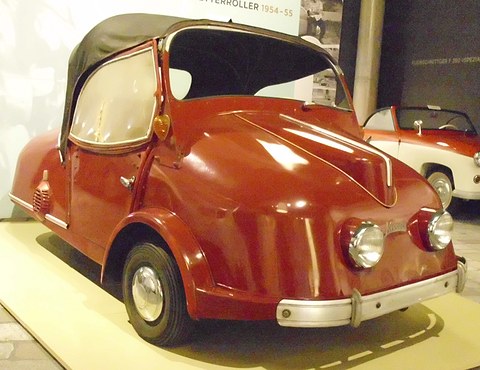
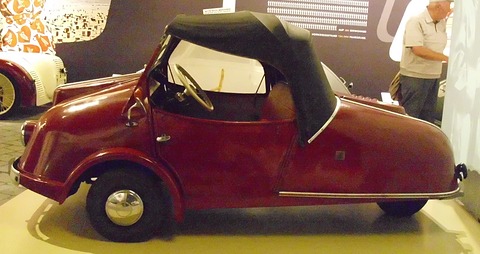
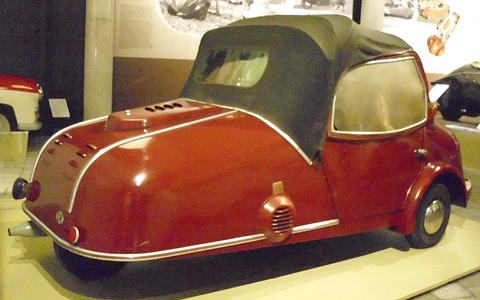
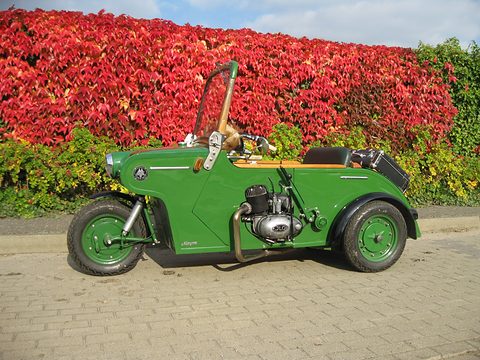
Gustav Kroboth (1903–⁠1984) had built vehicles before the war at Šternberk, in the Sudetenland. After it his firm at Seestall in Bavaria, founded in 1949, made Sachs-engined scooters, and when the scooter trade fell off it added a three-wheeler, in 1954.source 13source 14 It was an open two-seater with a hood and plug-in side windows, hence Allwetterroller, the all-weather scooter: two wheels in front, one behind, and a bench 1,140 mm wide for two adults and a child.source 13 At the back was a 175 cc Sachs of 9 PS (6.6 kW) or a 197 cc ILO of 9.5 PS (7 kW), for 75 or 80 km/h by engine, with three gears and reverse, and an electric starter and warm-air heating could be ordered. In Switzerland it cost 3,450 Swiss francs in 1955, and a Kroboth won a medal in the second Lechtal mountain-and-lakes run.source 13 A little over 50 were built in two years before the firm went bankrupt in the summer of 1955.source 13source 14

Green tubular frame on three small wheels carrying a red bench seat, steering column and engine.
A bare Kroboth chassis, with its bench, steering column and engine, at Schramberg in 2015.Photo: Alf van Beem, CC0, via Wikimedia Commons

Cuno Bistram

1954 · a record on this page

Two accounts, and no description of the car. German Wikipedia’s list of makes, after Linz and Schrader, says Cuno Bistram of Hamburg built six prototypes in 1954 for the Hagenbeck zoo.source 15 English Wikipedia’s list, after Georgano, gives a one-seater of 146 cc, and says about 50 were made.source 4 Which is right has not been settled.

Daus

years not recorded · a record on this page

No account of a German maker or car called Daus has been found.

Jurisch Motoplan

years not recorded · a record on this page

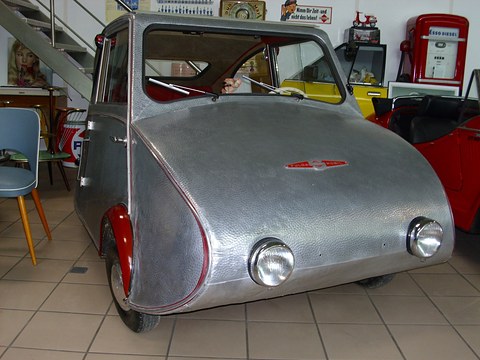
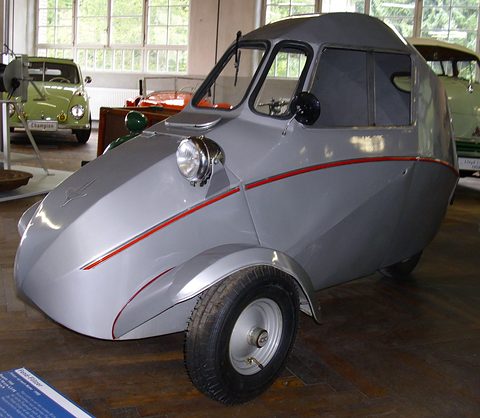
Carl Jurisch (1904–⁠1967), a Nuremberg designer, made plunger rear suspension for motorcycles: about a million sets for 48 European firms.source 16 His car was a single-seat three-wheeler with one wheel behind and a body made from the shell of a Steib sidecar. Instead of doors, the whole top tilted back. It had the 175 cc Heinkel four-stroke of the Heinkel Kabine, 9.3 PS (6.8 kW), an electric starter and four gears, and was 2,286 mm (90 in) long and 165 or 173 kg.source 16 Four sources call it the Motoplan, and its date is given as anything from 1954 to 1959. Three were built, one with bigger wheels and a taller hood and one with a lockable load box, and none was sold.source 16

Hillers

years not recorded · a record on this page

No account of a maker or car called Hillers has been found.

Pictures

More photographs, old and new

Variants

In date order

The small makers
VariantYearsWhat differsHow many
Econom Teddy1949–⁠50West Berlin; four wheels, two seats and a dickey seat; ILO 245 ccAbout 3source 4
Trippel SK 101950–⁠53Hans Trippel’s coupé, one door then two, three seats; Horex or Zündapp enginesAbout 25source 6
C.A.M.1951–⁠56Munich; an open front-drive two-seater; Lloyd, then Zündapp engines4, or 2 one-offs and 4source 10
Meyra 200About 1953–⁠55A wheelchair maker’s plastic-bodied carNot found
Kroboth Allwetterroller1954–⁠55An open three-wheeler with hood and side screens; Sachs 175 cc or ILO 197 ccA little over 50source 13
Cuno Bistram1954Hamburg; by one account a one-seater of 146 cc6, or about 50source 15source 4
Daus—Not foundNot found
Jurisch MotoplanMid-1950sA single-seat three-wheeler with a sidecar body; Heinkel 175 cc3source 16
Hillers—Not foundNot found

How many were built?

Maker by maker

A few dozen at most, eachThe Kroboth’s “a little over 50” is the largest credible figure. Most of the others were built in single figures or a couple of dozen, and three makers have no figure at all.

  1. about 50 or 56Kroboth Allwetterrollers, 1954–⁠55One source

    German Wikipedia’s Kroboth articlessource 13source 14

  2. about 50Cuno Bistram carsUnconfirmed

    English Wikipedia’s list, citing Georganosource 4

  3. about 25Trippel SK 10s of all kindsOne source

    German Wikipediasource 6

  4. 6Cuno Bistram prototypes for the Hagenbeck zooOne source

    German Wikipedia’s list of makes, citing Linz and Schradersource 15

  5. 4C.A.M. roadsters soldOne source

    German Wikipediasource 10

  6. 3Econom TeddysOne source

    English Wikipedia’s list, citing Rosellensource 4

  7. 3Jurisch MotoplansOne source

    German Wikipediasource 16

  • Two sources agreetwo good sources give the figure
  • One sourcea good source, alone
  • Unconfirmeda lead only, not yet checked

Famous for

Three points

  1. An all-weather scooter

    The Kroboth was a scooter maker’s three-wheeler, with a hood and side screens for the rain.

  2. A sidecar with a roof

    The Jurisch Motoplan’s body was a Steib sidecar, and its only survivor made US$103,500 in 2013.

  3. From amphibians to coupés

    Hans Trippel went from wartime amphibious cars to three-seat coupés with a single folding door.

Survivors and collecting

Today

Three Kroboths and a bare chassis are in German museums: a red 1955 car at the PS.Speicher in Einbeck, a white 1954 car at Grafs Oldtimertenne in Vilgertshofen, and a green 1954 car and the chassis at Schramberg.source 13 No Meyra 200 or 201 survives, by the enthusiasts’ history, though other Meyra microcars are in museums at St. Ingbert, Brisbane and Eppelheim.source 12 And one Jurisch made the long journey to America, to the Bruce Weiner Microcar Museum; when RM Auctions sold that collection in February 2013, the sidecar on three wheels made US$103,500 (see museums and meets).source 16

Sources

Numbered as in the text

Almost every member rests on one German Wikipedia article, most of them drawing on the same reference books by Rosellen, and by Linz and Schrader; Daus and Hillers are described in no source used for this page. Sources are given as plain text; the links are on the Credits page.

  1. German Wikipedia, Rollermobil, read in full.
  2. German Wikipedia, Weidner 70 S, read in full.
  3. German Wikipedia, Econom, read in full. It cites Linz and Schrader and Automobil und Motorrad Chronik 10/1978.
  4. English Wikipedia, List of microcars by country of origin: G, the German rows, citing Georgano’s Complete Encyclopedia of Motorcars (1982) and Rosellen.
  5. German Wikipedia, Hellmuth Butenuth, read in full; used as a lead.
  6. German Wikipedia, Protek Gesellschaft für Industrieentwicklungen, read in full.
  7. German Wikipedia, Trippel SK 10 (TE 106), read in full.
  8. German Wikipedia, Trippel SK 10 (TE 107), read in full.
  9. German Wikipedia, Trippel SK 10 Sport, read in full.
  10. German Wikipedia, Carl Amesmaier München, read in full; it cites Eckermann in Automobil- und Motorrad-Chronik 5/1973.
  11. German Wikipedia, Meyra, read in full.
  12. cybermotorcycle.com, “Meyra – A Brief History of the Marque”, an enthusiasts’ page, read in full.
  13. German Wikipedia, Kroboth Allwetterroller, read in full; it cites Rosellen (1991) and Thyssen-Bornemissza, Deutsche Kleinwagen 1945–⁠1974 (2012).
  14. German Wikipedia, Fahrzeug- und Maschinenbau Gustav Kroboth, read in full.
  15. German Wikipedia, Liste von Pkw-Marken, the Cuno Bistram row, citing Linz and Schrader.
  16. German Wikipedia, Jurisch (Unternehmen), read in full. It cites Linz and Schrader, Rees’s Three Wheelers A–Z (2013) and Thyssen-Bornemissza and Walenta (1996).