microcarfan
  • Three-wheeler
  • Spain
  • Three wheels
  • 2 + 2 seats

David Torpedo 2S

Also known as David, David microcar

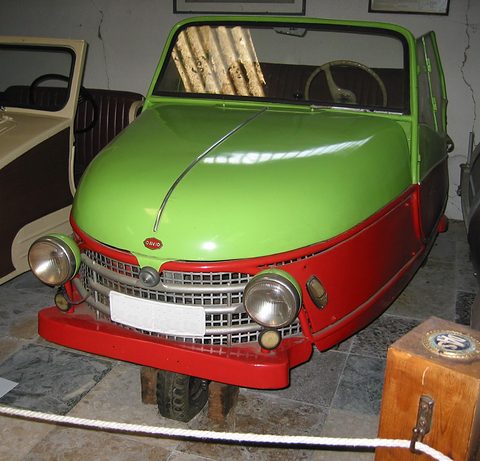
Barcelona’s taxi company built a three-wheeler whose engine, gearbox and single front wheel turned together every time the driver steered, with a gear lever on the dashboard that worked through the kingpin.

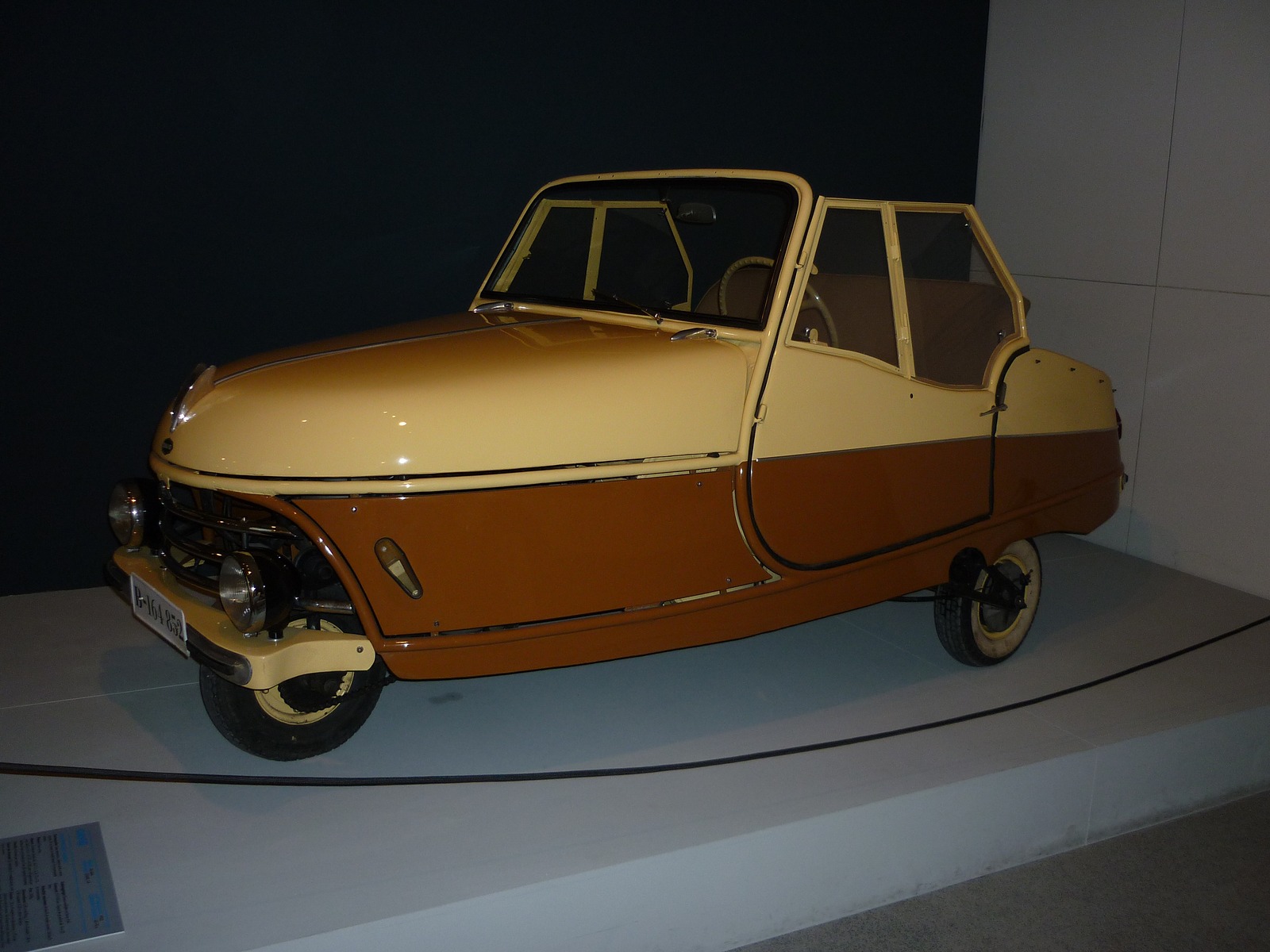
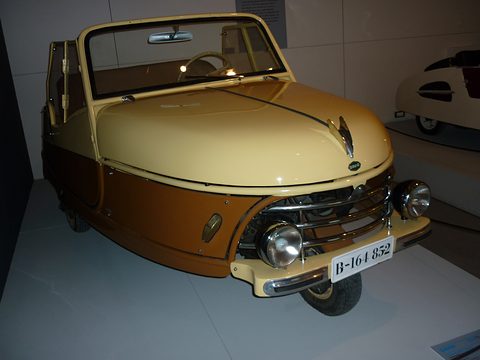
Front quarter of a cream and brown three-wheeler with a chrome bar grille, twin headlamps and plate B-164852.
A cream and brown 1955 David Torpedo 2S from the front at the Microcotxes de Barcelona exhibition in 2013, its engine unit over the single front wheel.Photo: Peprovira, CC BY-SA 3.0, via Wikimedia Commons

At a glance

The spec plate

David Torpedo 2S

Torpedo 2S · Barcelona

Built
1951–⁠19571951 or 1952 to 1957; a delivery three-wheeler was shown in 1950
Country
SpainDavid, S.A., Barcelona
Maker
David, S.A., BarcelonaDesigned by José María Moré Comas
Engine
345 cc David two-stroke singleOver the front wheel, turning with it
Power
10 CVAt 4,000 rpm
Length
2,800 mm1,400 mm wide, 1,400 mm high
Weight
280 kg215 kg for the early cars
Seats
2 + 2
Wheels
3One at the front, steered and driven, with the engine turning with it
Production
about 60–70Torpedos and tricamionetas together
Survives
YesFew, by the Weiner museum
Top speed
68km/h68 km/h58 km/h for the five-wheeled tricamioneta

How big is it?

True proportion

2.80 m

It is 170 mm shorter than a Fiat 500, about 1.6 adults laid end to end, and twice the length of a Peel P50.

  • 1.40 m wide
  • 280 kg: about four adults
  • Two seats in front and two behind
  • Height with the hood up
Drawn at true proportion. The track is 3.6 metres long; the adult stands at the same scale. The Peel P50 is the smallest production car, on every page for comparison.

The story

History

By the 1950s David was known in Barcelona for its taxis, not its cars. The firm dates from 1913, when José María Armangué, his brothers Luis and Federico and the Moré brothers set it up, and its first products were the David cyclecars.source 1source 2 Armangué was killed in an accident in 1917, the Moré brothers took control, and the business turned to vehicles for public service.source 1 By 1929–⁠31 some 1,000 David cabs were working in the city, and the black and yellow of Barcelona’s taxis comes from them; the David building opened in 1931.source 2source 1 It also sold Citroëns as an agent, and ran garages, parking and towing.source 2 When fuel ran short in the 1940s, it put grand “haiga” bodies on about ten electric cars, built on Citroën chassis.source 3source 4

es el vehículo digno de la ceremonia nupcial

David’s advertising for its electric cars, 1940s, as quoted by grupo7. In English: “it is the vehicle worthy of the wedding ceremony.”source 3

In 1950 David presented a three-wheeler of its own design for deliveries in town, a “triscooter”, and several versions followed, among them a two-seat passenger car.source 2 Its designer was José María Moré Comas.source 3 The Weiner museum credits Armangué, who had died more than 30 years before, and the museum booklet names a “Josep M. Muné”, perhaps a misprint for Moré; the company’s own history confirms that the Moré family ran David after 1917.source 4source 2source 1 Moré Comas had a line for what he had made.

No se trata de un coche con una rueda menos, sino una moto con una rueda más.

José María Moré Comas, the designer, as quoted by grupo7 and Spanish Wikipedia; date and occasion unknown. In English: “It isn’t a car with one wheel less, but a motorbike with one wheel more.”source 3

Steering the engine

The heart of it was a single unit: a 345 cc two-stroke single of David’s own, its gearbox and the front wheel, which all turned together when the car steered, and the engine drove that wheel.source 3source 4 The Weiner museum lists the oddities that followed. The gear lever moved in a large H-gate on the dashboard and selected the gears through fingers running down the middle of the front kingpin; the steering worked through an open crown wheel and pinion and a constant-velocity joint patented by Voisin, the designer of the Biscúter; the front wheel hung on a three-quarter-elliptic leaf spring; and the big white steering wheel came from a supplier to Auto Union.source 4 grupo7 gives the gearbox three speeds and a two-ratio multiplier, six forward speeds in all, where the museum lists three; we read that as the museum leaving the multiplier out.source 3source 4

The Torpedo 2S was an open steel monocoque, 2,800 mm (110 in) long, with two seats in front and two behind, and grupo7 doubts the safety of the rear ones in a family photograph.source 3source 4 It made 10 CV, weighed 280 kg (617 lb), or 215 kg in its early form, reached 68 km/h (42 mph) and covered about 100 km on 5 litres of fuel (56 mpg).source 3source 4 It came with or without a hood, and there were a closed model, an estate in the woody style and a light truck, the tricamioneta, on five wheels.source 3 The Weiner museum found its restored 1957 car great fun to drive, with an odd feel to its steering.source 4

Dozens, not thousands

The dates vary with the source: production from 1951 to 1957 for grupo7, from 1952 to 1957 for the museum booklet, and from 1954 to 1958 for the Weiner museum, which calls the car a success.source 3source 2source 4 David’s own history records the invention of the motor tricycle in 1954, patented and shown at motor shows at home and abroad as a new concept of transport.source 1 That year Brangulí photographed a hall of the works lined with dozens of finished bodies, complete with hoods and white steering wheels.source 2 About 60 to 70 were built in all, few beside the Biscúter, yet the Weiner museum counted David with the Biscúter, Kapi and the PTV 250 among the four wholly Spanish firms that made microcars in significant numbers.source 3source 4

Production ended in 1957, or in 1958 by the Weiner museum’s date.source 3source 2source 4 David kept its taxis, parking and tow trucks, later ran car parks and let offices and shops, and the company still exists.source 2source 1
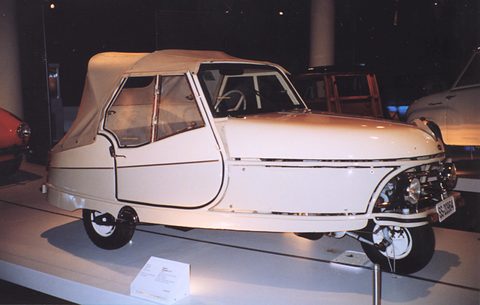
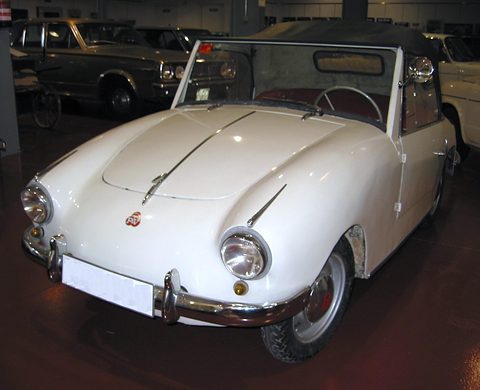
White three-wheeler with a beige hood and side screens on a museum plinth, lit against a dark background.
A white David Torpedo 2S with its hood up at Alcobendas, Madrid, in 2004; the engine sits in the nose over the single front wheel.Photo: Error, CC BY-SA 3.0, via Wikimedia Commons
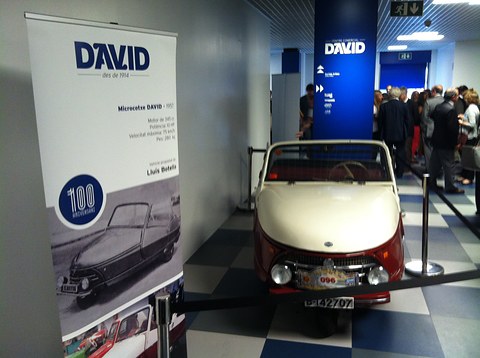
Cream and red three-wheeler behind a rope beside a banner reading DAVID with a 100 roundel, visitors in the hall.
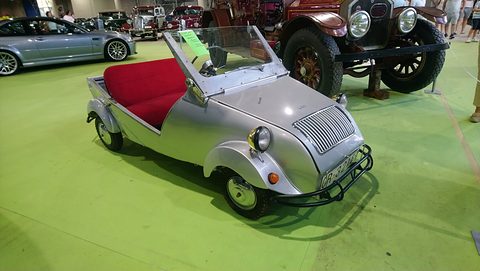
A David three-wheeler on show in the Edifici David, Barcelona, beside a banner marking the firm’s hundred years, 2014.Photo: Kippelboy, CC BY 4.0, via Wikimedia Commons

Pictures

More photographs, old and new

Variants

Open, closed and five-wheeled

The David three-wheelers
VariantYearsWhat differsHow many
Delivery triscooter1950–A goods three-wheeler with David’s own mechanicals, for town deliveriesWithin the total
Torpedo 2S1951/54–57Open steel body, with or without a hood; 2 + 2 seatsWithin the total
Closed modelNot knownAn enclosed bodyFew
“Rubia” estateNot knownA woody-style version, in a photograph on grupo7Few
TricamionetaNot knownA light truck on five wheels; 58 km/hFew

Specification

From grupo7 (copied by Spanish Wikipedia), checked against the Weiner museum

Engine and drive

Engine and drive
EngineDavid M.2 T.1 single-cylinder two-stroke, mounted over the front wheel and turning with itsource 3source 4
Capacity345 cc (76 × 76 mm), compression 5.7:1source 3source 4
Power and torque10 CV at 4,000 rpm; 2 mkgsource 3source 4
CoolingAir, by a turbine fan on the crankshaft; Solex carburettorsource 3
ClutchMulti-plate, in an oil bathsource 3
GearboxThree speeds and a two-ratio multiplier, so six forward, and reversesource 3Three and reverse by the Weiner museum
Gear changeA lever in a large H-gate on the dashboard, working through the front kingpinsource 4

Body and chassis

Body and chassis
BodySteel monocoque, open torpedosource 3source 4
ChassisA central backbone carrying the rear axlesource 3A tube, by the Weiner museum
Front suspensionLeaf and coil springsource 3A three-quarter-elliptic leaf spring, by the Weiner museum
Rear suspensionTorsion stripssource 3A leaf spring, by the Weiner museum
SteeringCrown wheel and pinion, through a Voisin-patent constant-velocity joint; 3.40 m turning circlesource 3source 4
BrakesMechanical, on all three wheelssource 3Cable on the rear, by the Weiner museum
Electrics and tyres6 V, a 100 W dynamo, a 45 Ah battery; 4.00 × 8source 3source 4

Dimensions

Dimensions
Length2,800 mmsource 3source 4
Width1,400 mmsource 31,700 mm by the Weiner museum
Height1,400 mm with the hood upsource 3
Wheelbase and rear track1,700 mm and 1,200 mmsource 3
Ground clearance200 mmsource 3
Weight280 kgsource 3215 kg for early cars; 215 kg by the Weiner museum

Performance and running

Performance and running
Top speed68 km/h (42 mph)source 3source 4
Consumption5 litres per 100 kmsource 3
Fuel tank18 litressource 3

How many were built?

Every figure, with its source

About 60 to 70 builtTwo accounts that do not depend on each other agree on a run of 60 to 70, and a 1954 photograph of the works with dozens of finished bodies fits it. No factory record has been seen.

  1. 60 or 70DavidsOne source

    Bruce Weiner Microcar Museumsource 4

  2. about 60Torpedos and tricamionetas, 1951–⁠57One source

    grupo7, copied by Spanish Wikipediasource 3source 5

  • Two sources agreetwo good sources give the figure
  • One sourcea good source, alone
  • Unconfirmeda lead only, not yet checked

Famous for

Three points

  1. It steers its engine

    The 345 cc engine, the gearbox and the front wheel turn as one unit whenever the driver steers.

  2. Gears through the kingpin

    The lever sits in an H-gate on the dashboard and reaches the gearbox down the middle of the front kingpin.

  3. Black and yellow

    The maker was Barcelona’s taxi firm, whose cabs gave the city its taxi colours.

Survivors and collecting

Today

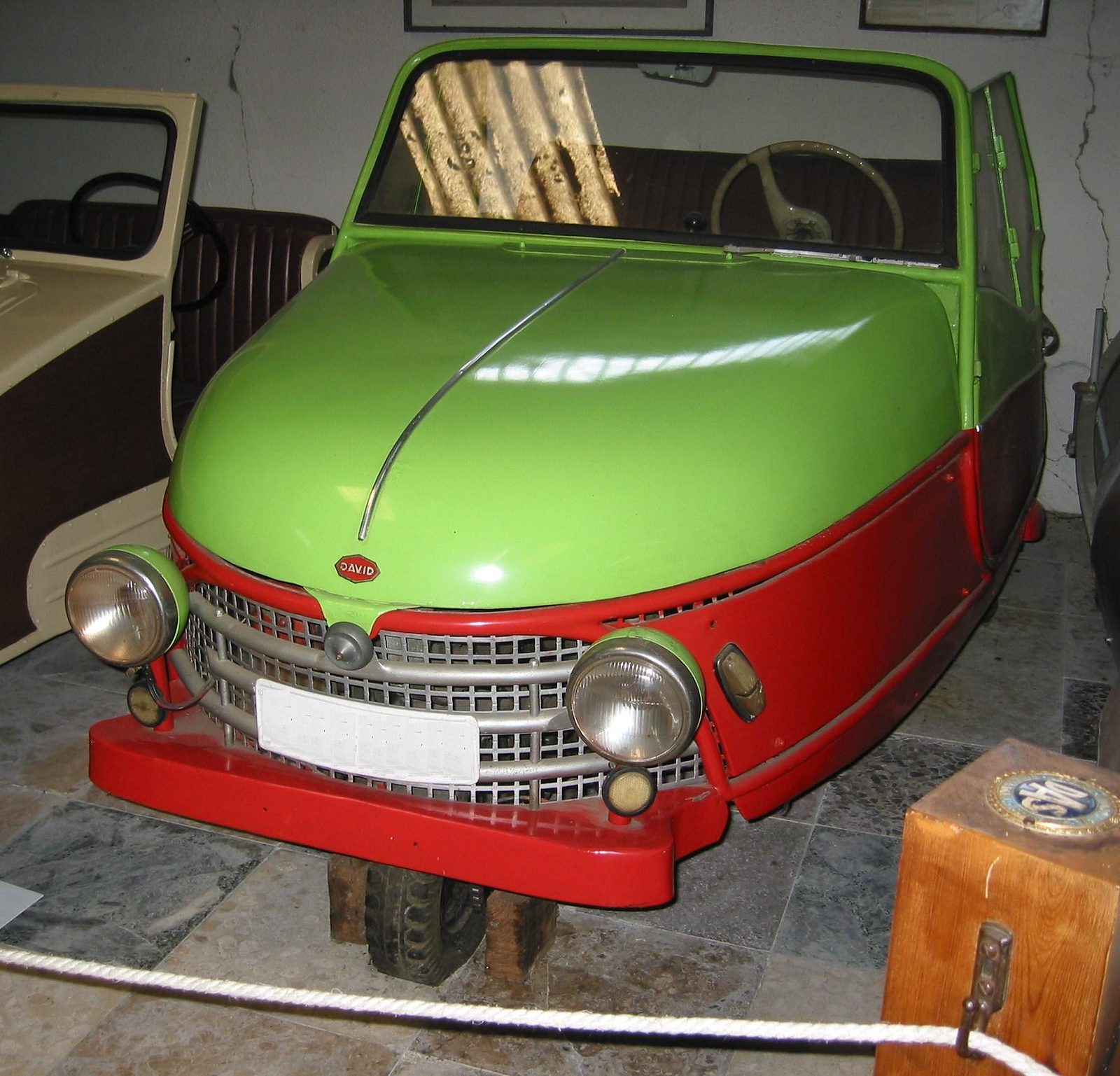
Few survive, the Weiner museum says.source 4 A 1955 David from the Claudi Roca collection was shown at the Barcelona history museum’s microcar exhibition in 2012–⁠13, and grupo7 shows another at the Museu de l’Automòbil Salvador Claret at Sils, one of the museums where Barcelona’s microcars can be seen.source 2source 3 The Weiner museum’s own 1957 car was restored in Spain, though, the museum noted, a Spanish expert says it should have doors.source 4 It was sold with the museum’s collection in 2013, for a price that has not been found. The pictures here were taken at Barcelona in 2013 and 2014, at Alcobendas and at Sils.

Sources

Numbered as in the text

Most of the technical detail comes from one enthusiast text, Toni Solans’s on grupo7.com, which Spanish Wikipedia reproduces; the Weiner museum, the MUHBA booklet and David’s own history stand apart from it. No period road test or price has been found. Sources are given as plain text; the links are on the Credits page.

  1. David, S.A., “Historia del Edificio David y sus Autos”, company history, read through a summary of the page.
  2. Albert Cubeles and Joan Roca, L’enginy de postguerra. Microcotxes de Barcelona, Museu d’Història de Barcelona (MUHBA), 2012, pp. 14 and 17. Read in full, in Catalan.
  3. Toni Solans, “David”, La web de los microcoches (grupo7.com), read in full.
  4. Bruce Weiner Microcar Museum, “1957 David”, tour page, read in full from the archived copy.
  5. Spanish Wikipedia, David (automóvil), read in full; its text reproduces grupo7.com.