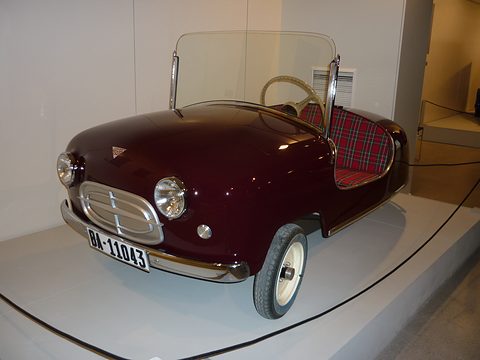
microcarfan
  • Microcar
  • Spain
  • Three and four wheels
  • Many models

Kapi

Also known as Kapiscooter, Kapi Jip, Kapi Chiqui, “Platillo Volante”, Pinguy

An infantry captain built himself a motor industry and named it after his rank: capi, short for capitán, spelt with a K. Its range ran from three-wheelers to a jeep, a “flying saucer” and a one-cylinder copy of the Mercedes-Benz 190 SL.

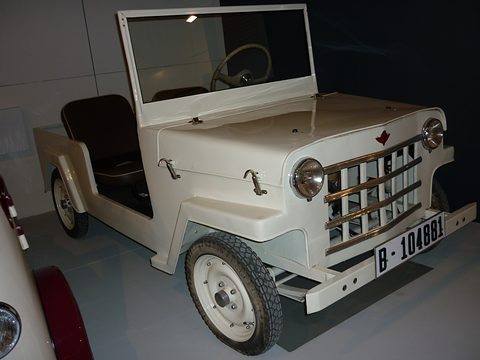
White open jeep-like microcar with a chrome bar grille, round headlamps and a folding windscreen.
A white 1955 Kapi Jip 2CV, Kapi’s jeep-style microcar, in Barcelona, 2013.Photo: Peprovira, CC BY-SA 3.0, via Wikimedia Commons

At a glance

The spec plate

Kapi

Kapiscooter, Jip and others · Barcelona

Built
1950–⁠1956Closed in 1956; the MUHBA has it making vehicles until 1957; stock sold as Pinguy in 1958–⁠59
Country
SpainBarcelona; the project began in Burgos
Maker
Automóviles y Autoscooter Kapi, BarcelonaFounded by the infantry captain Federico Saldaña Ramos
Engine
125 to 197 cc singles; a 350 cc twinMontesa, Hispano-Villiers, Fita-AMC and IRESA engines
Power
8.5 hpThe 1955 Jip; 16 CV for the 1952 open 350
Length
2,560 mm1,140 mm wide
Seats
2Four in the 7TR and the Kapi 2CV, by the advertising
Wheels
Three or four, by model
Price new
21,900 to almost 50,000 pesetasFrom the Jip of 1955 to the open 350 of 1952
Production
between 70 and almost 300Two unnamed sources, quoted in one enthusiast text
Survives
YesAbout three Jips, by the Weiner museum’s estimate of 2002
Top speed
60km/h60 km/h94 km/h claimed for the open 350 of 1952

Not yet recordedweight.

How big is it?

True proportion

2.56 m

It is 410 mm shorter than a Fiat 500, about 1.5 adults laid end to end.

  • 1.14 m wide
  • Three or four wheels, by model
  • Length and width of the 1955 Jip
Drawn at true proportion. The track is 3.6 metres long; the adult stands at the same scale. The Peel P50 is the smallest production car, on every page for comparison.

The story

History

Federico Saldaña Ramos was an infantry captain posted to Burgos, and there he developed a small vehicle of his own. He showed it to the Captain General of the VI Military Region and to the Civil Governor of Burgos, who were, by grupo7’s account, pleasantly surprised, and he registered it under patent no. 194,762.source 1source 2 He always thought Barcelona the right place for an industrial project, the city history museum’s booklet says, and that is where Kapi was built.source 3 The Weiner museum puts the first prototypes in Bilbao in 1950, but grupo7 and the museum booklet say Burgos.source 4source 1source 3

The first Barcelona car, of 1950 by grupo7’s dating, was a four-wheeled coupé with a 125 cc Montesa engine and a top speed of 50 km/h (31 mph); a Hispano-Villiers later replaced the Montesa, and a version with a 250 cc Montesa was announced but probably never built.source 1 The museum booklet dates the first public showing of a Kapi to December 1951, in the Carrer Pelai.source 3 The firm, Automóviles y Autoscooter Kapi, moved from Calle Valencia 550 to Calle Robreño 86, with offices on the Rambla de Cataluña.source 1source 4

The Kapiscooter

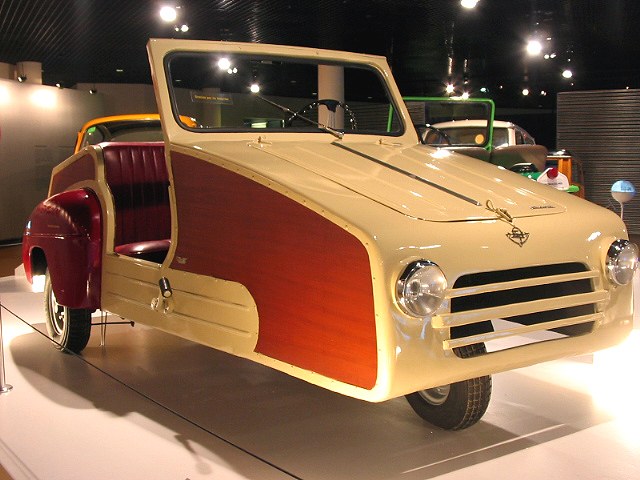
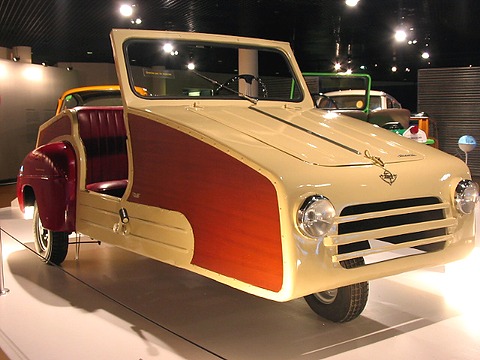
Kapi’s best-known model was a three-wheeler, the Kapiscooter of 1951, sold for passengers and as a delivery tricycle.source 1source 4 The 125 F had a 125 cc Hispano-Villiers two-stroke and the 175 F4T a 175 cc Fita-AMC four-stroke, both mounted at the back and driving one wheel by chain.source 1 The Weiner museum describes it with two wheels in front, a V-shaped two-tone front and a 125 cc Montesa, while grupo7’s rear engine driving one rear wheel implies a single wheel at the front; the photograph of the Kapiscooter at Sils on this page shows one wheel in front.source 4source 1 In 1952 it cost 24,000 pesetas, and in 1953 a 197 cc Hispano-Villiers became an option; in 1954 the 125 was renamed the FV3, at 24,900 pesetas, and the 175 the F4T, at 28,900.source 1

Beside it came a stream of others. In 1952 there was a doorless convertible with a 350 cc twin of 16 CV, claimed to reach 94 km/h (58 mph) and built in small numbers at almost 50,000 pesetas, and a 250 cc model called the Topolino was announced; the Weiner museum describes a Topolino as a three-wheeler with one wheel in front and a 197 cc engine.source 1source 4 Kapi took a stand at the Barcelona trade fair that year, and at the 1953 fair it showed two sporting models, one open and one closed.source 3source 1

1955

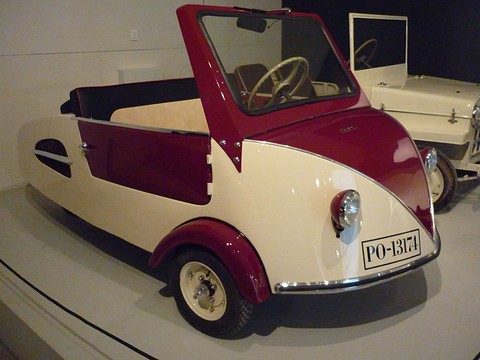
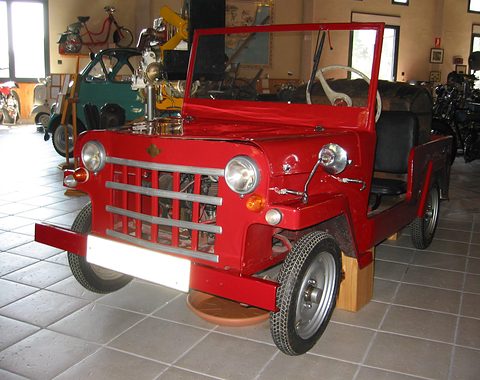
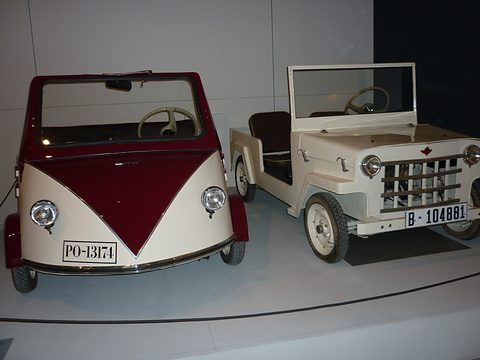
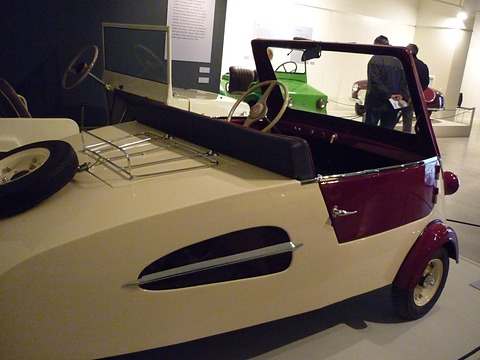
1955 brought a burst of new models.source 1 The Chiqui, at 26,000 pesetas, looks like a three-wheeler in photographs but has four wheels, the rear pair set very close together. The 7TR had four seats and two doors, and its Lujo version, at 32,500 pesetas, reminded the Weiner museum of a Fiat 600. The Kapi 2CV was a convertible advertised with four seats or two, at the same price.source 1source 4 The Platillo Volante, the flying saucer, was a Kapiscooter with doors, a hardtop and more modern lines, and the Jip 2CV was an open utility inspired by the Jeep, at 21,900 pesetas.source 1source 4 The Jip made the supplement of the Anuario Automovilista de España in May–June 1955, and grupo7 wonders how the one in a period photograph managed to tow a caravan.source 3source 1 There was also the M190, a brazen scaled-down copy of the Mercedes-Benz 190 SL with a one-cylinder engine, which probably never went into production. Kapi badges also went on motorcycles and three-wheeled trucks built in Arcadio Dunjó’s workshops.source 1source 4

No other Spanish microcar maker produced so many models and versions, the museum booklet says, with engines from Montesa, Hispano-Villiers, Fita-AMC and IRESA; it also judges the mechanicals unreliable.source 3 grupo7 compares Kapi to a computer assembler of the 1990s, putting parts from everywhere together without order or method.source 1

Pinguy

After serious difficulties the firm closed in 1956, by grupo7’s and the Weiner museum’s dates; the museum booklet has it making vehicles until 1957.source 1source 4source 3 What stock was left was sold off in 1958–⁠59 under another name, Pinguy.source 1source 2source 5 One more claim has a single origin in grupo7’s text, repeated by Spanish Wikipedia: that Kapi’s manufacturing licence went to Munguía Industrial, which used it to build the Spanish Goggomobil.source 1source 2 Kapi’s smaller neighbours are on the page of Spanish microcars.
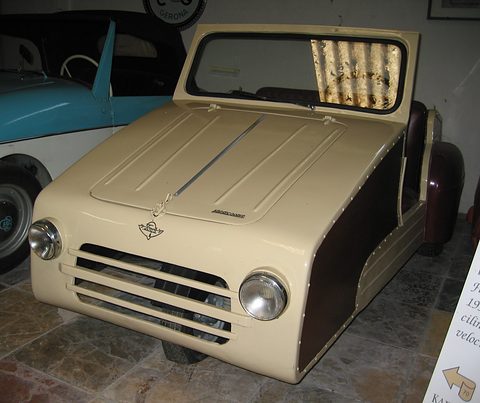
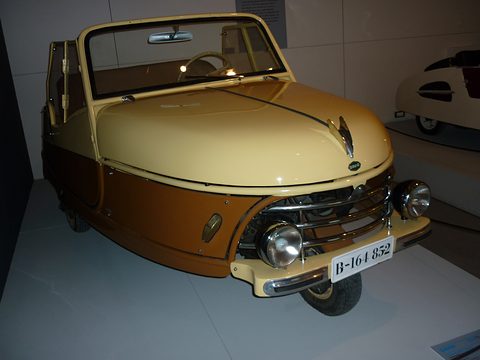
Cream three-wheeler with dark side panels, a slatted grille and two round headlamps, in a museum.
A 1954 Kapiscooter in the Salvador Claret collection at Sils, its single front wheel visible behind the grille.Photo: Buch-t, Public domain, via Wikimedia Commons
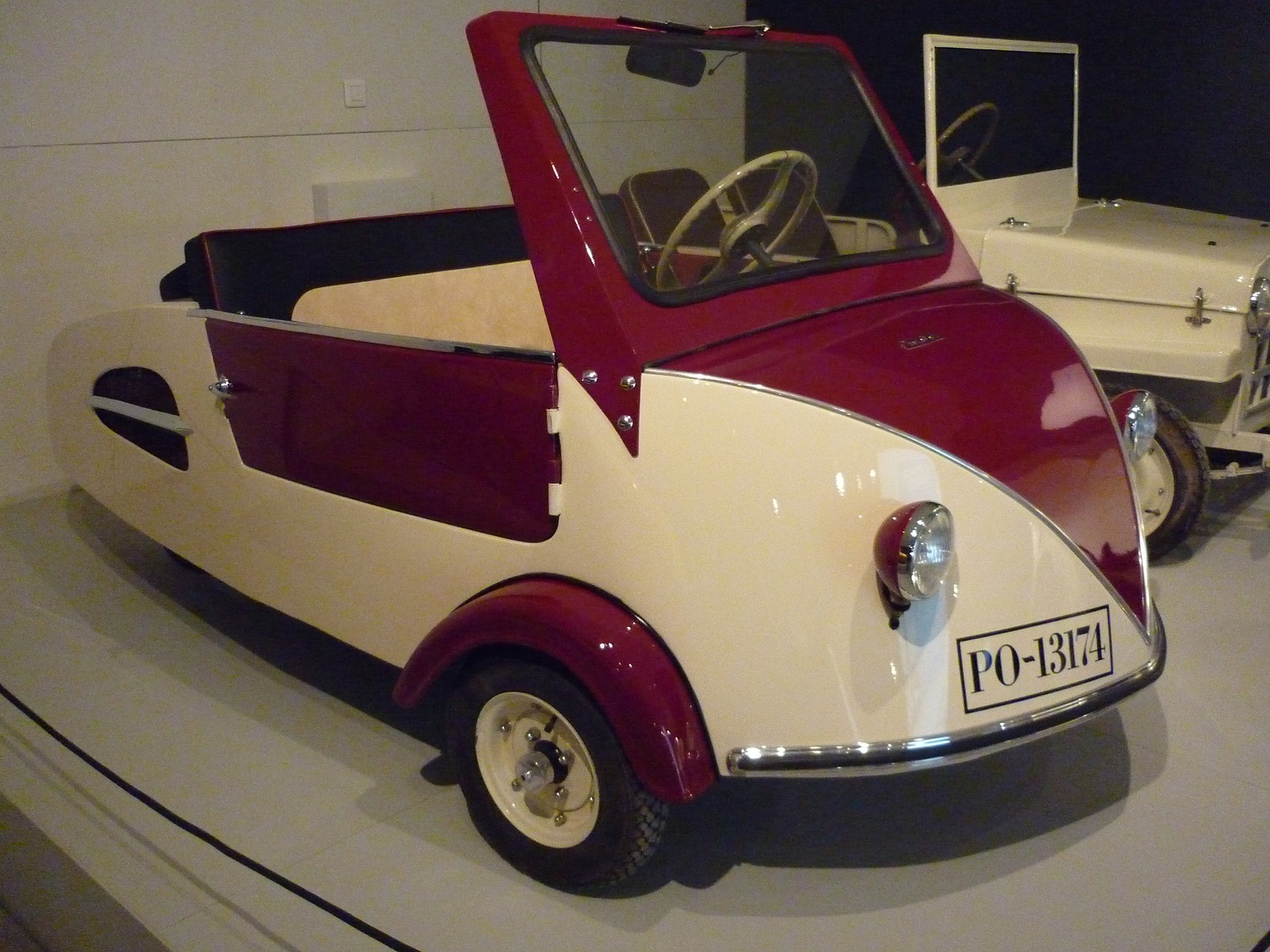
Cream boat-shaped open body with a maroon nose, a long scalloped side recess and a chrome rack on the tail.
A Kapi Chiqui, dated 1956, at the Microcotxes de Barcelona exhibition in 2013, with a luggage rack and spare wheel on its tail.Photo: Peprovira, CC BY-SA 3.0, via Wikimedia Commons

Pictures

More photographs, old and new

Variants

A model for every year

The Kapi range
VariantYearsWhat differsHow many
First coupé1950Four wheels; Montesa 125 cc, later Hispano-Villiers; 50 km/hFew
Kapiscooter 125 F / FV31951–⁠55Three wheels, engine at the back, chain to one wheel; passenger and goods versions; Hispano-Villiers 125 cc, 197 cc from 1953Most of Kapi’s output
Kapiscooter 175 F4T1951–⁠55The same, with a Fita-AMC 175 cc four-strokeNot known
Open 3501952Doorless convertible; 350 cc twin of 16 CV, 94 km/hA small run
“Topolino”1952Announced as a 250 cc model; the Weiner museum describes a three-wheeler with one wheel in front and a 197 cc engineNot known
Sports, open and closed1953Two models with sporting lines, shown at the Feria de MuestrasNot known
Chiqui1955Four wheels, the rear pair set close togetherNot known
7TR and Lujo1955Four seats and two doorsNot known
Kapi 2CV1955Convertible, with two or four seatsNot known
Platillo Volante1955A Kapiscooter with doors, a hardtop and newer linesNot known
Jip 2CV1955–⁠56Open utility in the style of a jeepVery few
M1901955A one-cylinder copy of the Mercedes-Benz 190 SLProbably none, or one

Specification

The 1955 Jip, the only Kapi with a full data sheet, by the Weiner museum unless noted

Engine and drive

Engine and drive
EngineSingle-cylinder two-stroke, 175 ccsource 4The museum’s own text says a 197 cc Hispano-Villiers
Power8.5 hpsource 4
GearboxThree speedssource 4
StarterPulled by handsource 4
Electrics12 Vsource 4

Body and chassis

Body and chassis
BodySteel, on a steel chassissource 4
SuspensionLeaf springs front and rearsource 4
SteeringWormsource 4
BrakesCable-operatedsource 4
Wheels4.00 × 8source 4

Dimensions

Dimensions
Length2,560 mmsource 4
Width1,140 mmsource 4

Performance and running

Performance and running
Top speed60 km/h (37 mph)source 4
Price new21,900 pesetas, 1955source 1

How many were built?

Every figure, with its source

Between 70 and almost 300No reliable figure has been found. grupo7 gives both ends of the range, each from unnamed “sources”, and Spanish Wikipedia repeats them; the Weiner museum says only that very few Jips were made.

  1. almost 300Kapi vehicles in allUnconfirmed

    “other sources”, unnamed, quoted by grupo7 and copied by Spanish Wikipediasource 1source 2

  2. 70Kapi vehicles in allUnconfirmed

    “some sources”, unnamed, in the same textsource 1source 2

  • Two sources agreetwo good sources give the figure
  • One sourcea good source, alone
  • Unconfirmeda lead only, not yet checked

Famous for

Three points

  1. Named for a rank

    Kapi comes from capi, short for capitán: the founder was an infantry captain.

  2. A one-cylinder Mercedes

    The M190 copied the Mercedes-Benz 190 SL at a reduced scale, with a single-cylinder engine.

  3. Four that look like three

    The Chiqui’s rear wheels sit so close together that photographs make it look like a three-wheeler.

Survivors and collecting

Today

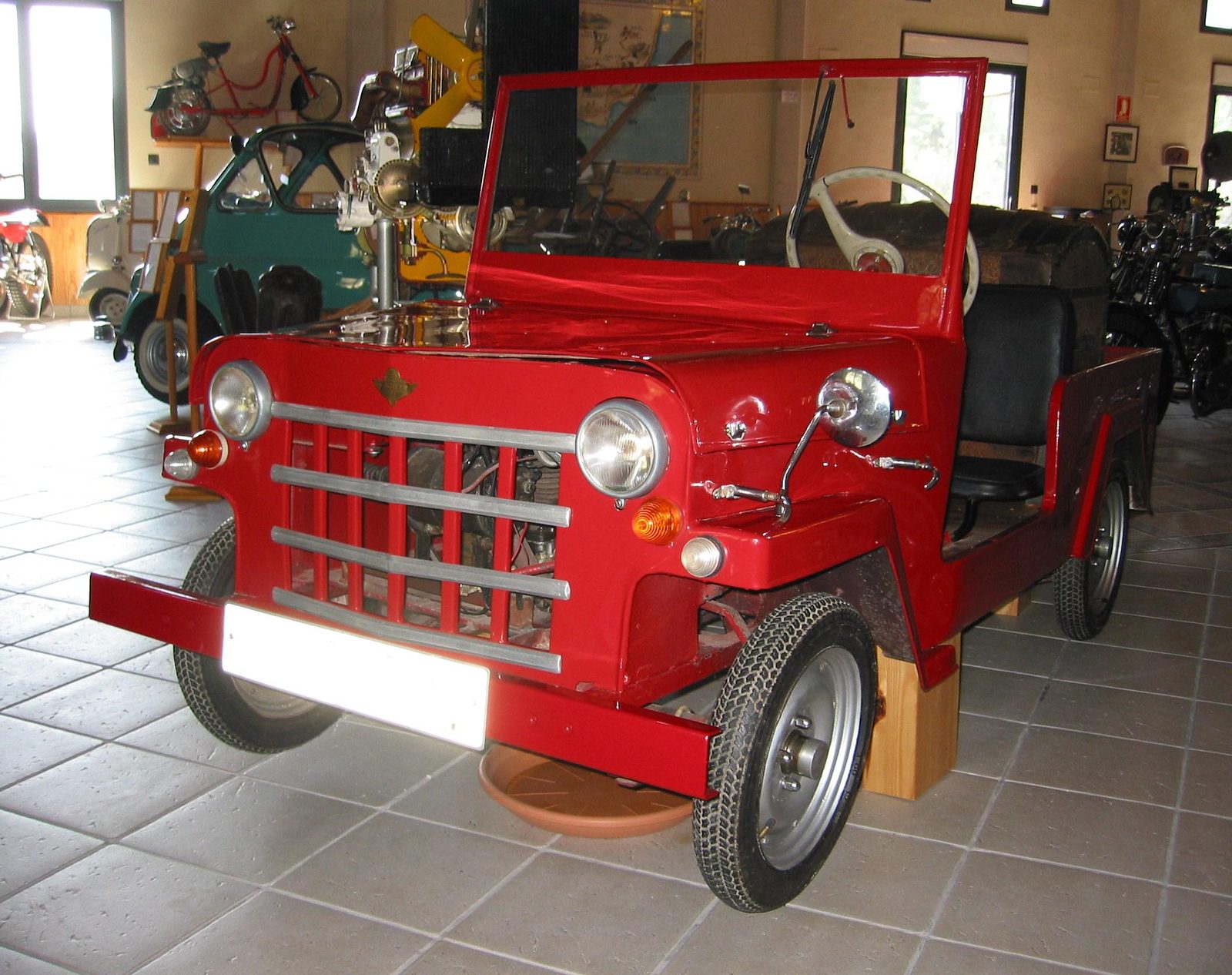
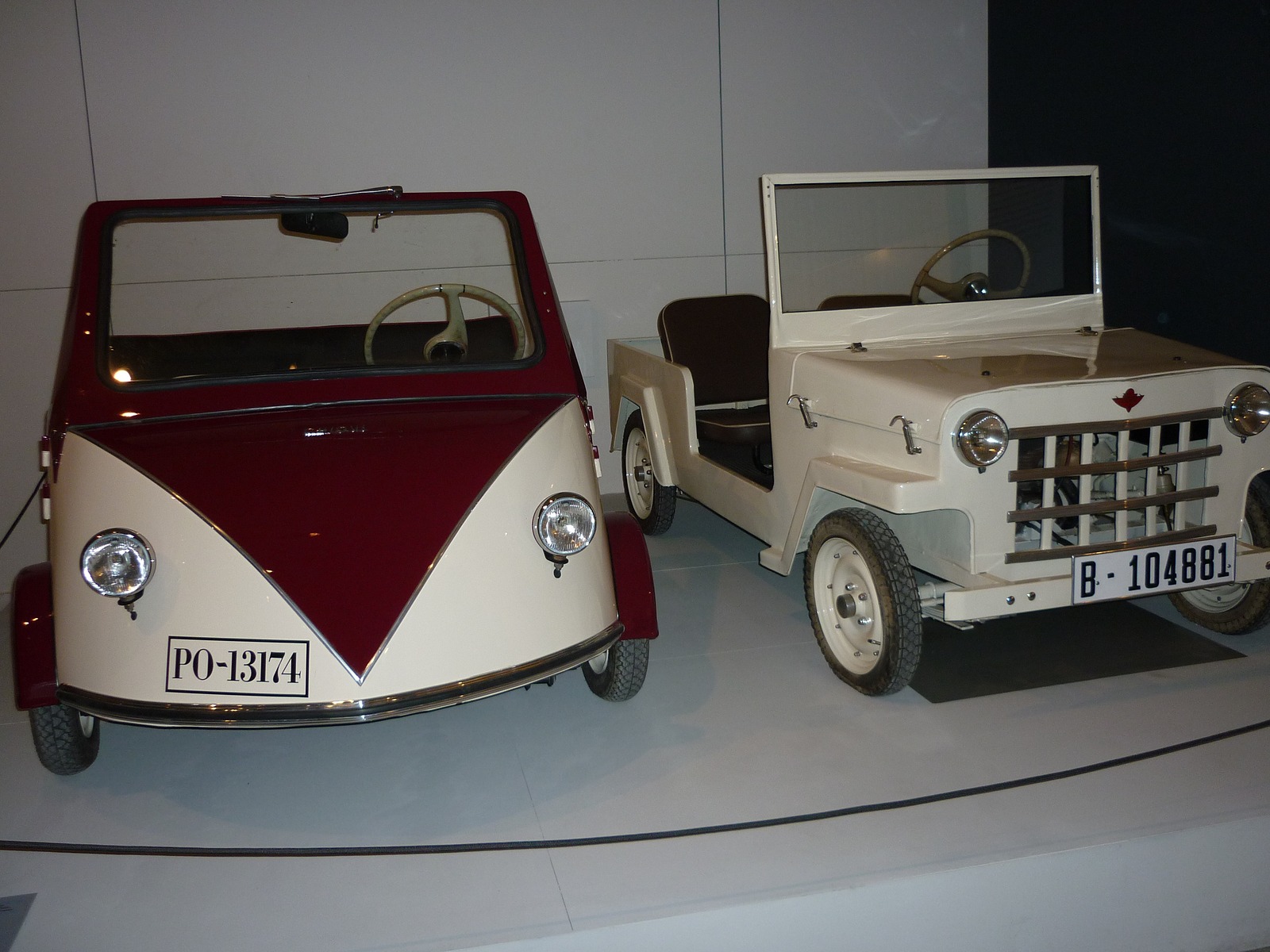
In 2002 the Weiner museum estimated that about three Jips survive, and called its own 1955 Jip the oldest and one of the rarest Spanish cars it owned.source 4 It went when the museum’s collection was sold in 2013, and what it fetched has not been found. Another Jip, still under restoration, was shown at the Mollerussa fair in 2000.source 1 No Kapi club or register has been found. Among the pictures here are a Chiqui and a Jip at the Barcelona exhibition of 2013, a red Jip at Vall de Guadalest, a Kapiscooter at Sils and another in a museum in 2004.

Sources

Numbered as in the text

Most of Kapi’s story rests on one enthusiast text, Toni Solans’s on grupo7.com, which Spanish Wikipedia reproduces; only the MUHBA booklet and the Weiner museum stand apart from it. No catalogue, patent text or registration figure has been seen. Sources are given as plain text; the links are on the Credits page.

  1. Toni Solans, “Kapi”, La web de los microcoches (grupo7.com), read in full.
  2. Spanish Wikipedia, Kapi, read in full; its text is drawn from grupo7.com.
  3. Albert Cubeles and Joan Roca, L’enginy de postguerra. Microcotxes de Barcelona, Museu d’Història de Barcelona (MUHBA), 2012, p. 18. Read in full, in Catalan.
  4. Bruce Weiner Microcar Museum, “1955 Kapi JIP”, tour page, read in full from the archived copy.
  5. Spanish Wikipedia, Microcoches de España, the Pinguy entry, read in full.