The story
History
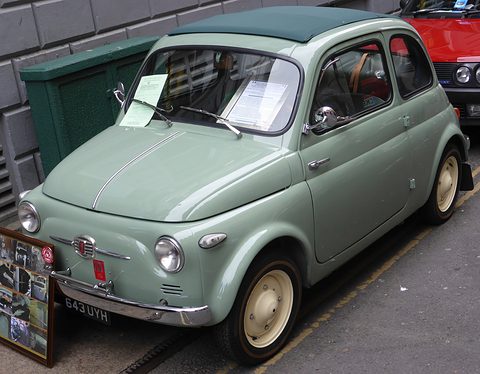
Carrozzeria Ghia had tried the idea before, on a Renault 4CV “Beach Car” prototype of 1954.source 1 When Fiat’s new 500 arrived in July 1957, a Jolly version was ready for the Turin show that autumn, and series cars followed in 1958.source 1source 2 It was one of the first designs of Sergio Sartorelli, newly in charge of Ghia’s technical office after Giovanni Savonuzzi left.source 3 The idea itself is credited to Gianni Agnelli, then Fiat’s vice-president and later its chairman.source 2source 4 One RM Sotheby’s catalogue says he wanted a small car that could be carried on his 82-foot ketch Agneta and swung over the side in Mediterranean ports; another says only that Jolly owners “perhaps” took the yacht-tender idea from him.source 4source 5 The story rests on auction catalogues and one general-interest article.source 1
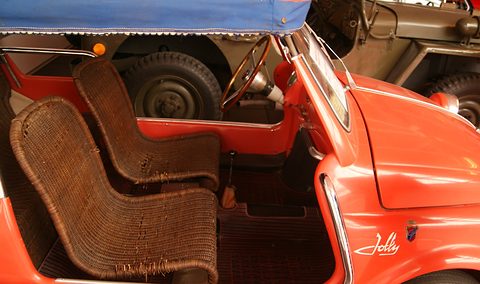
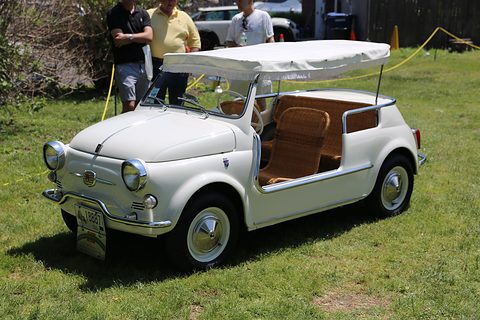
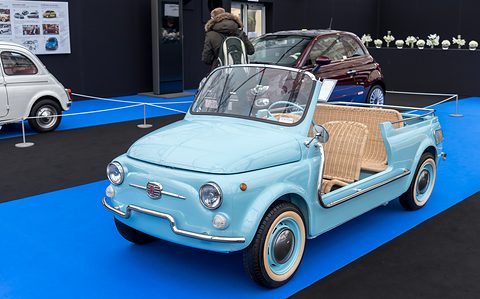
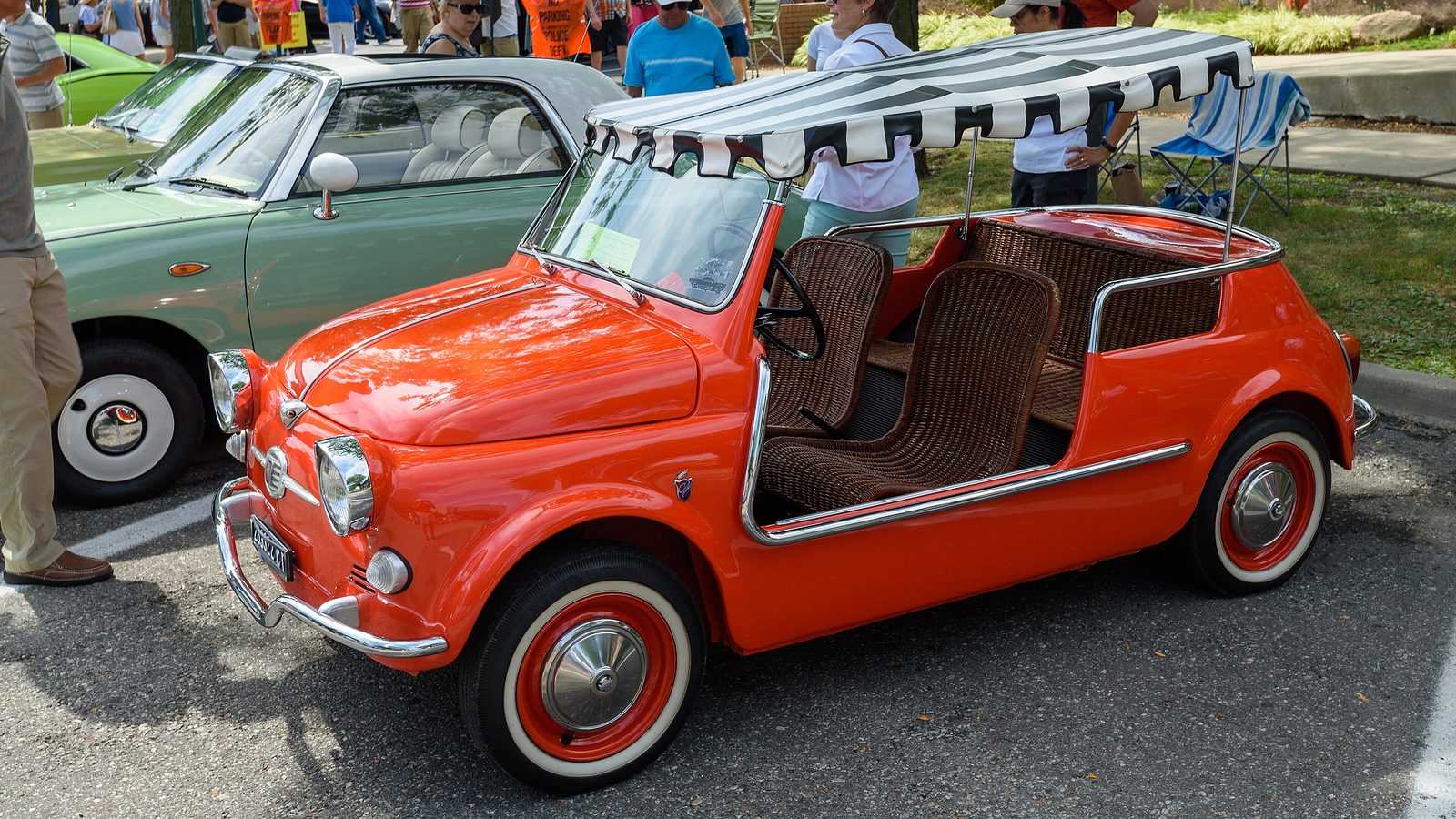
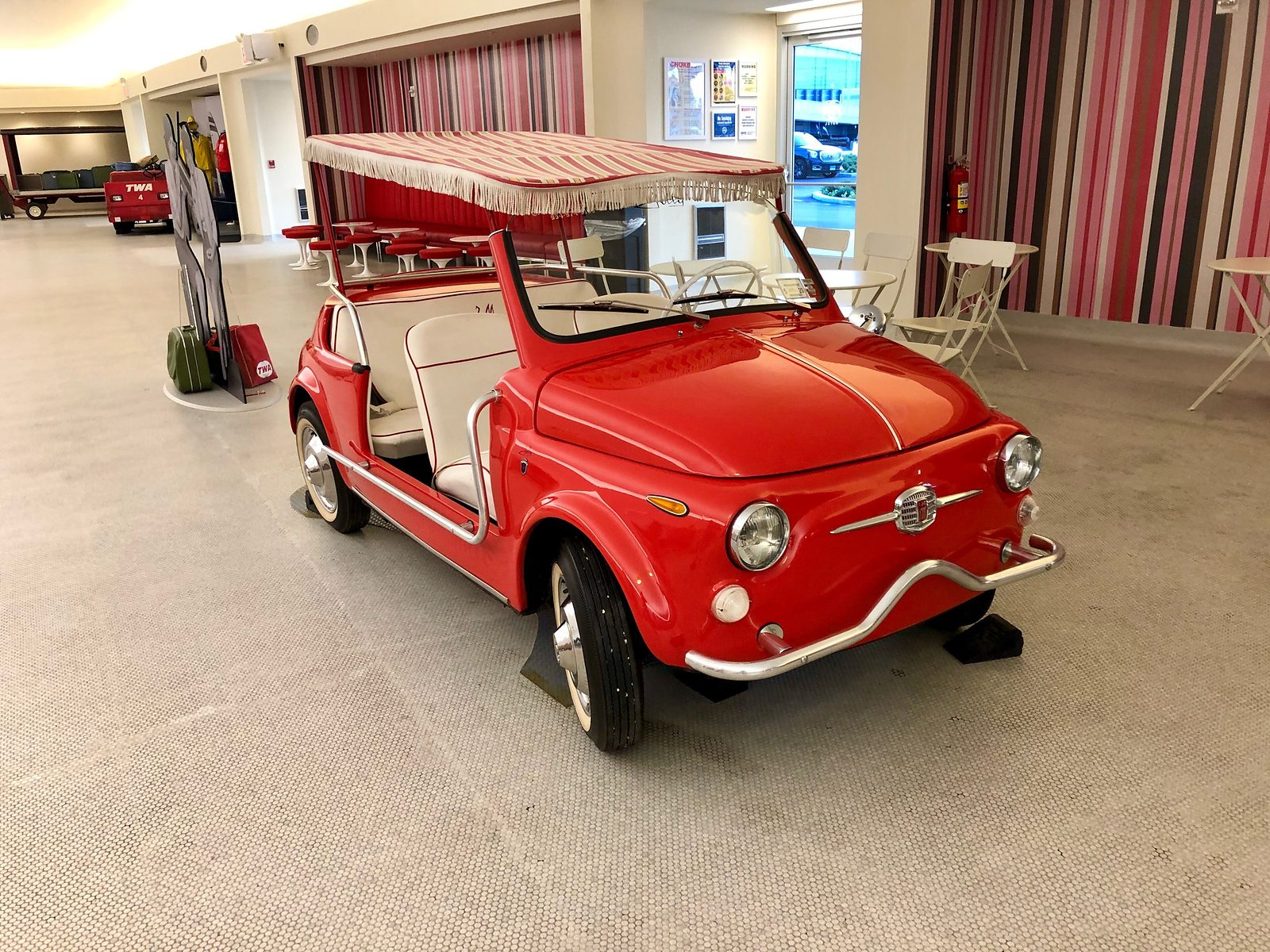
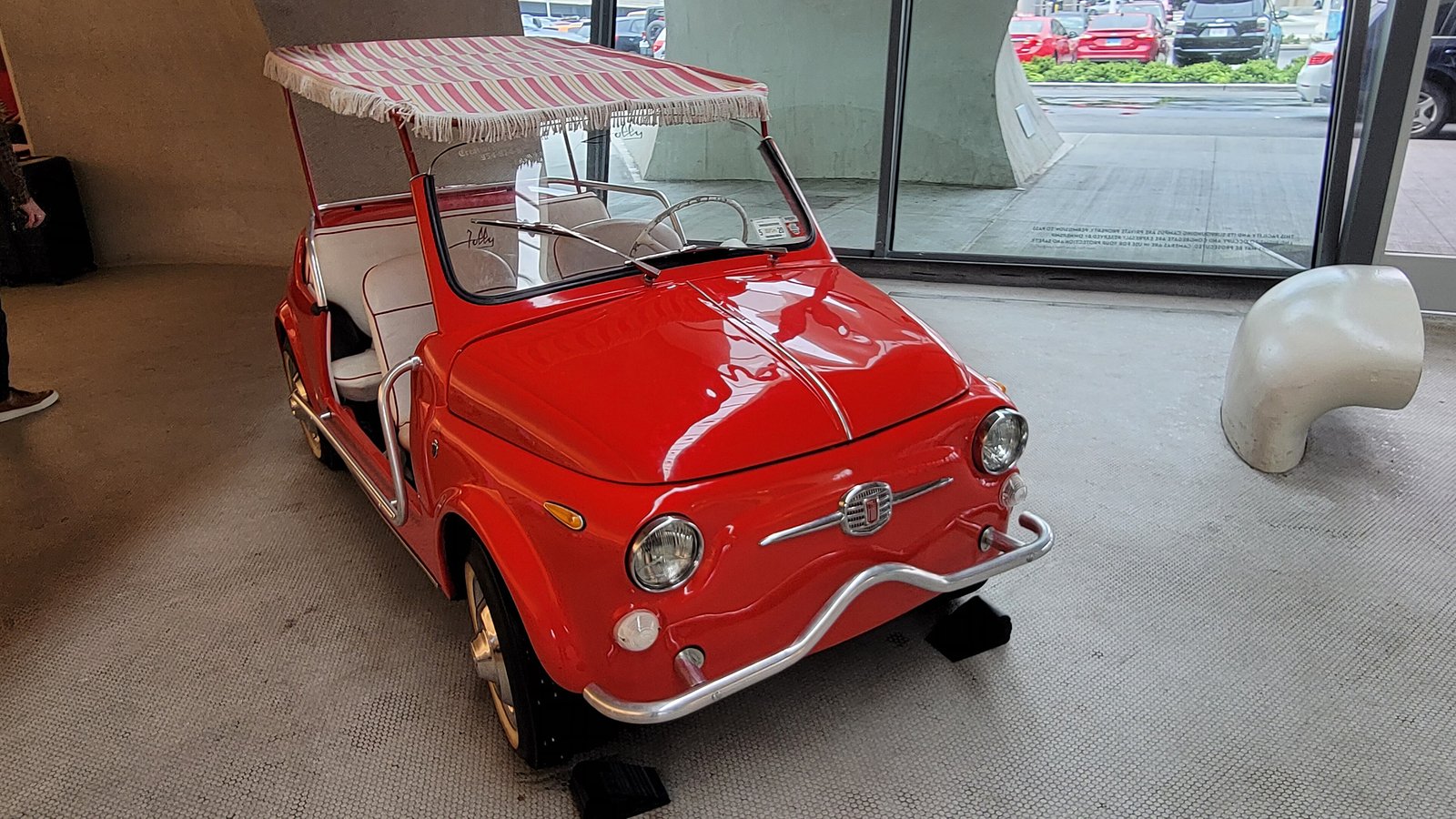
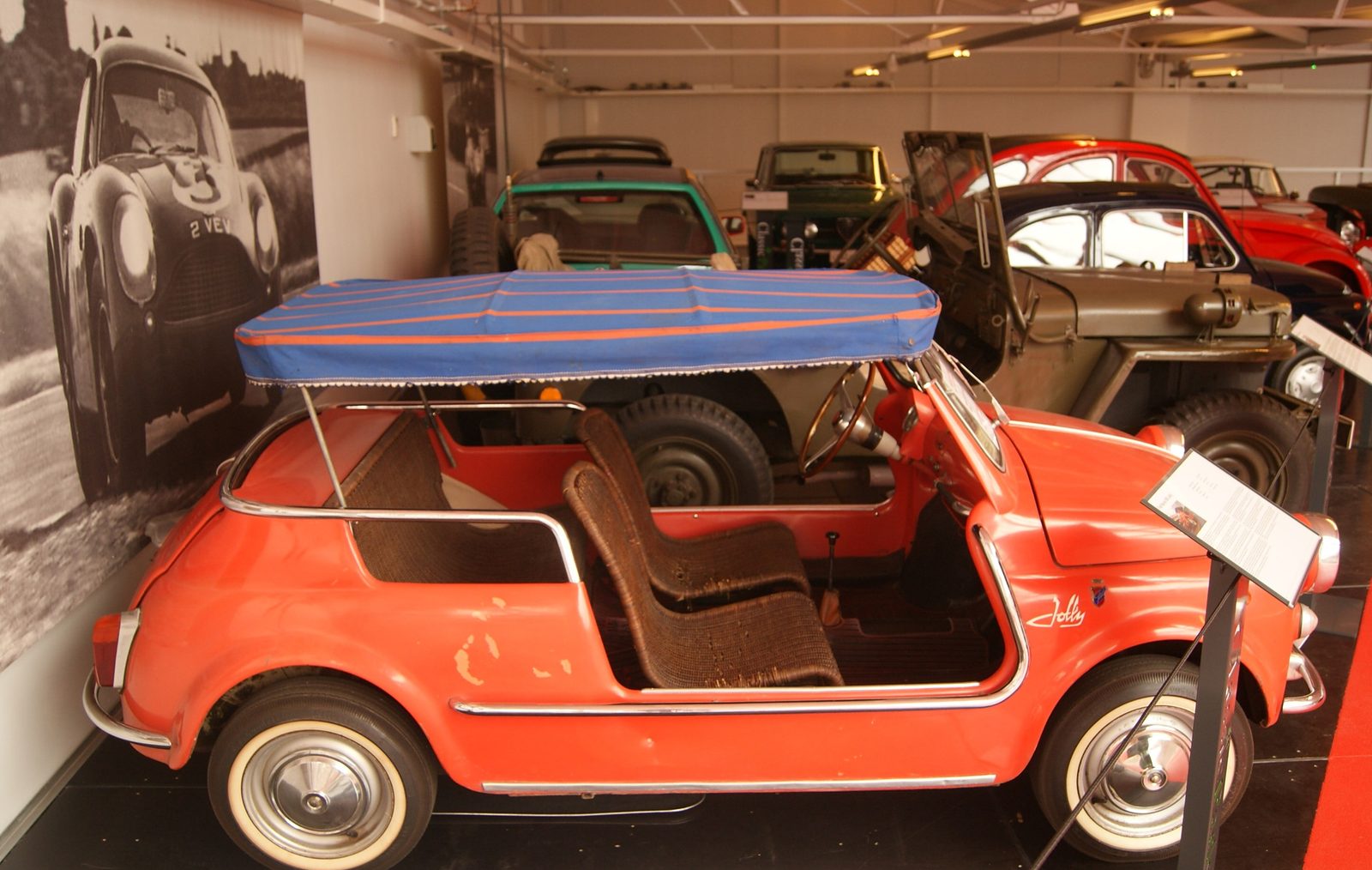
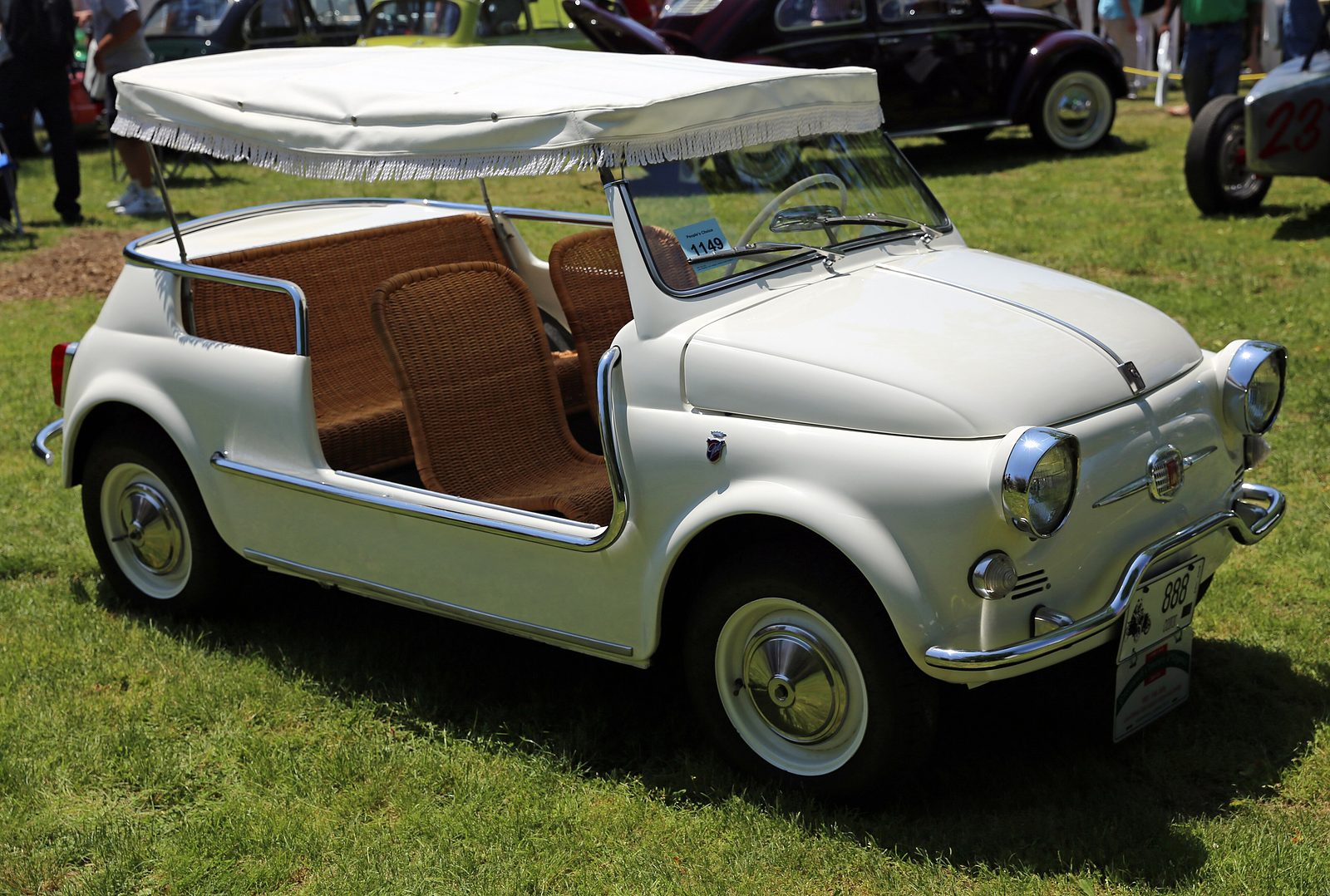
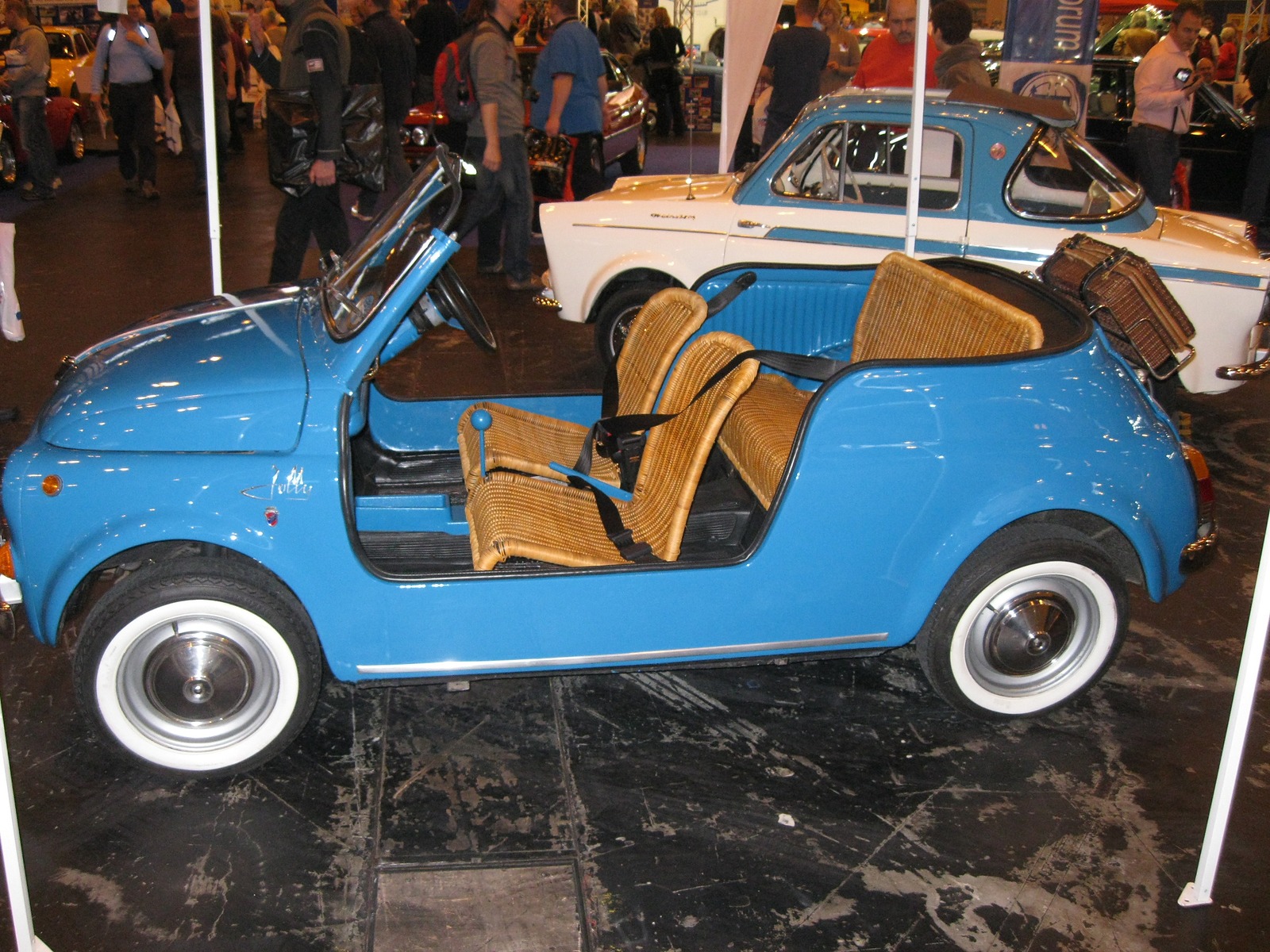
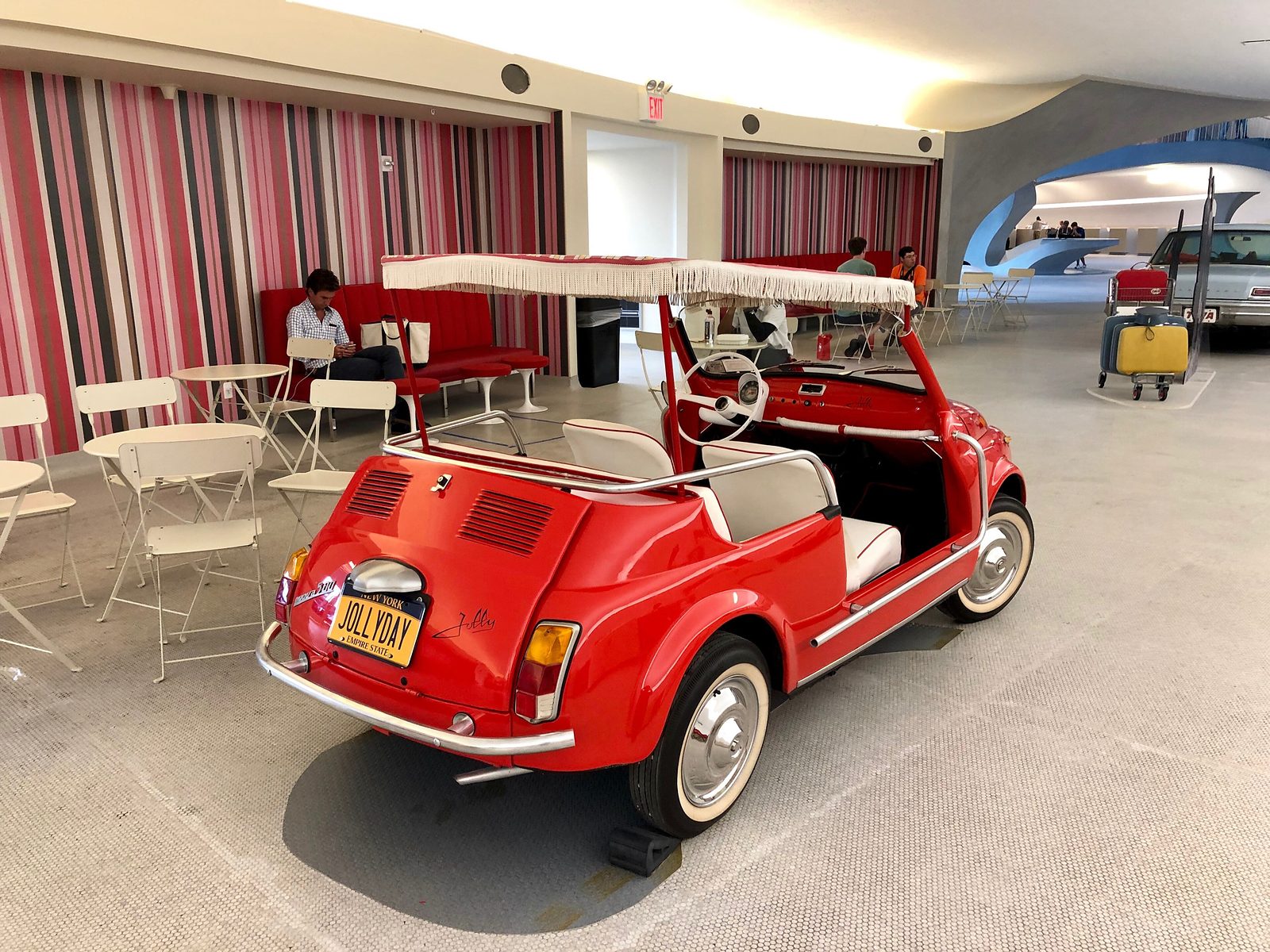
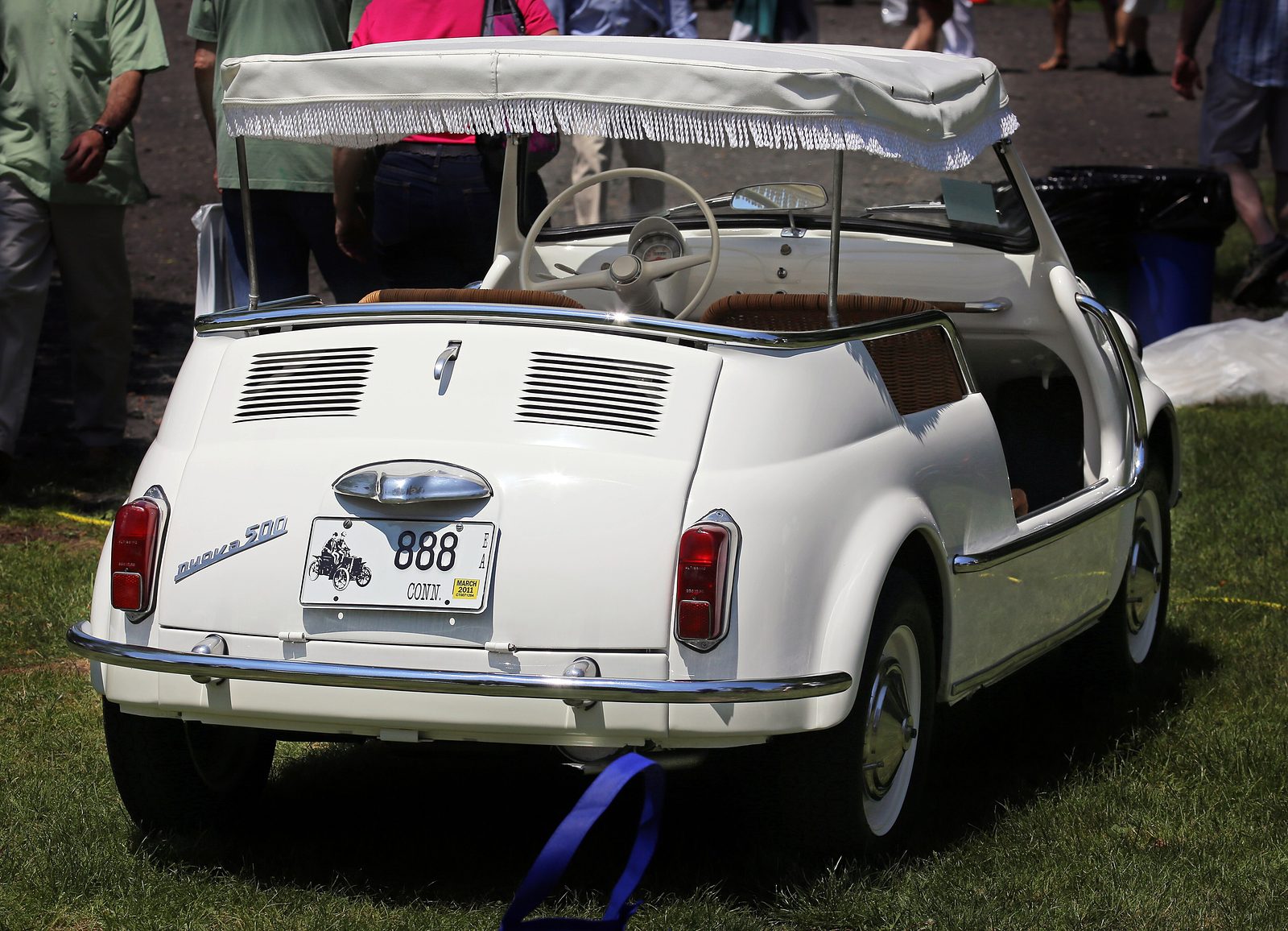
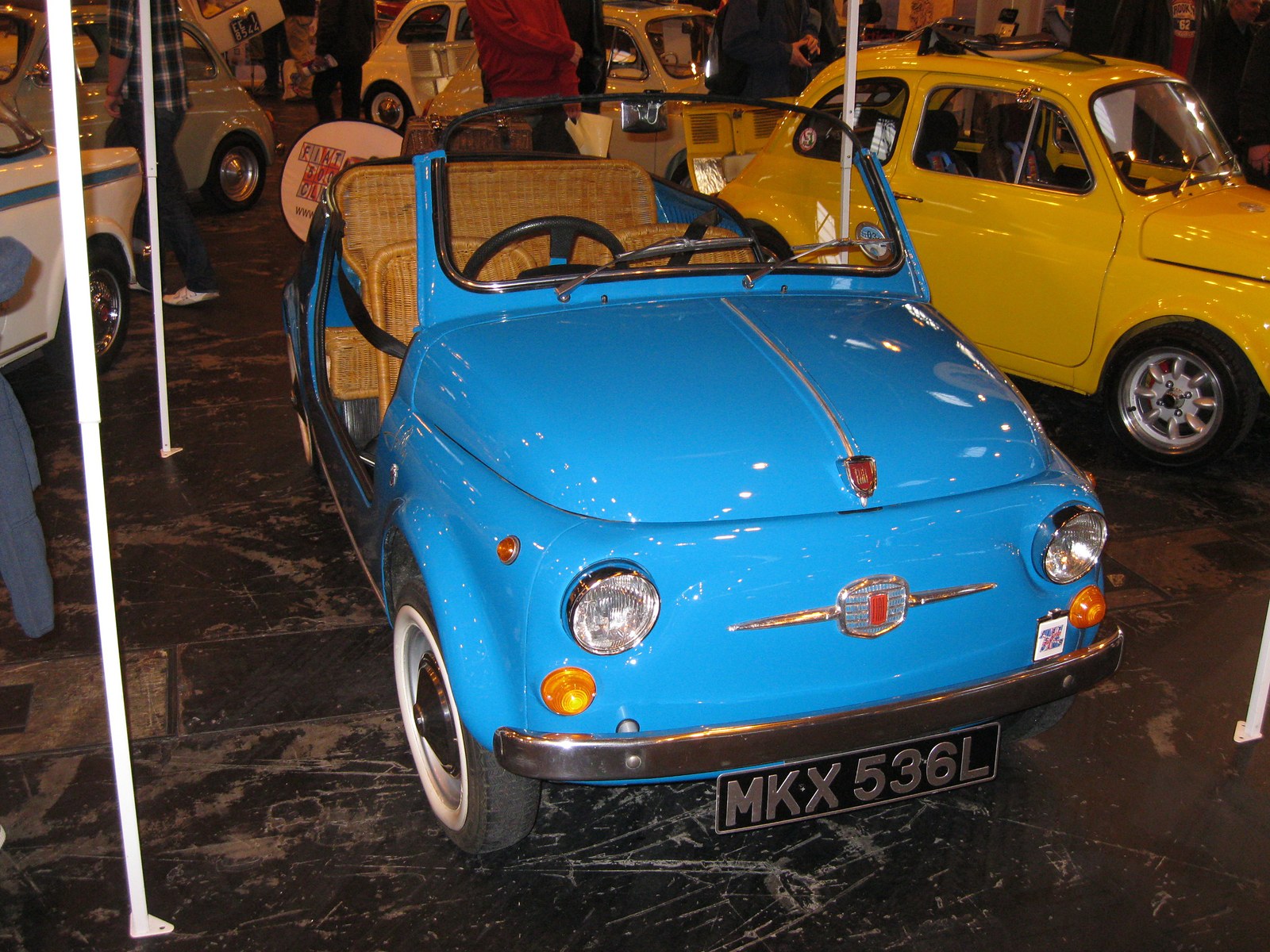
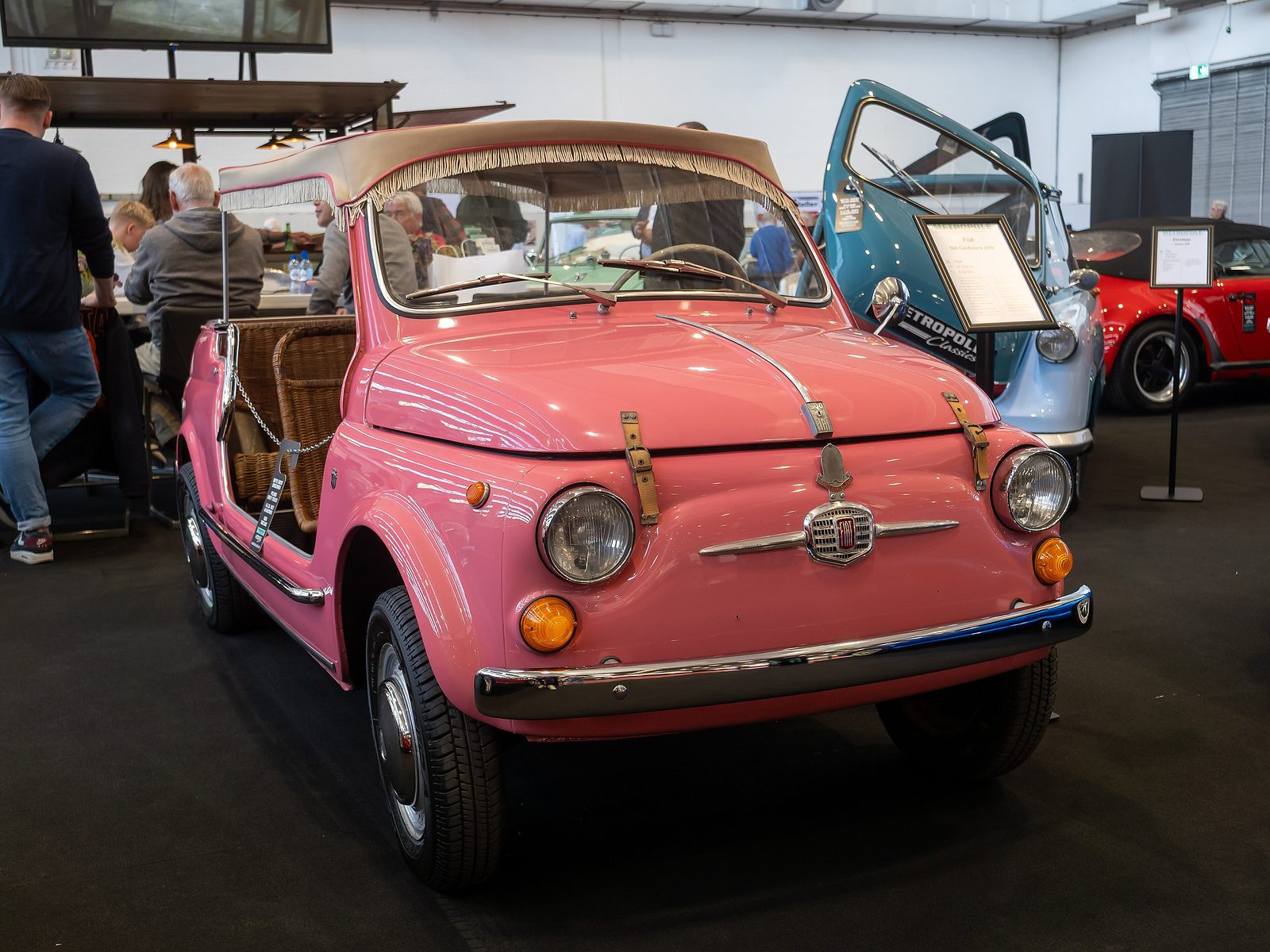
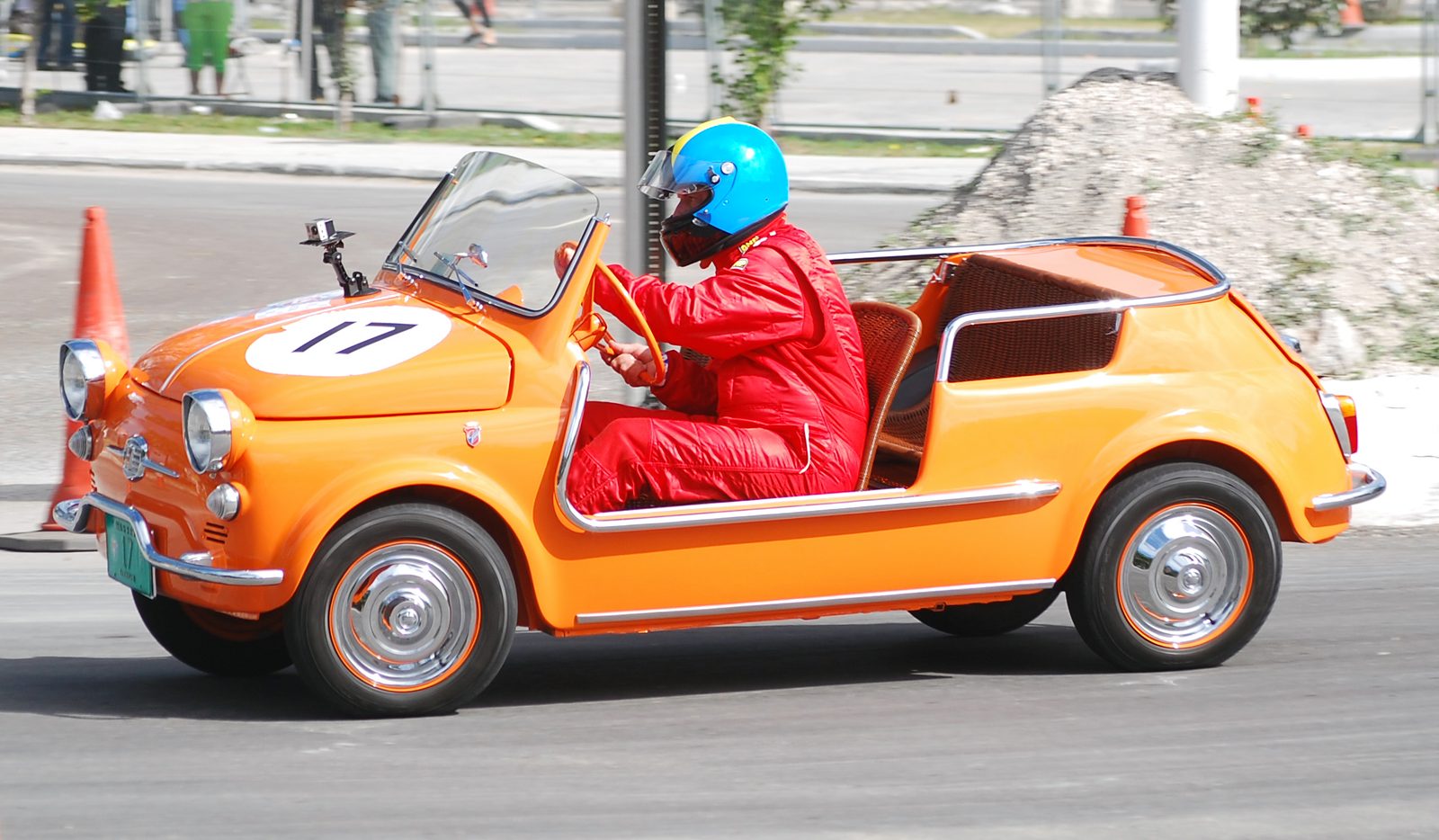
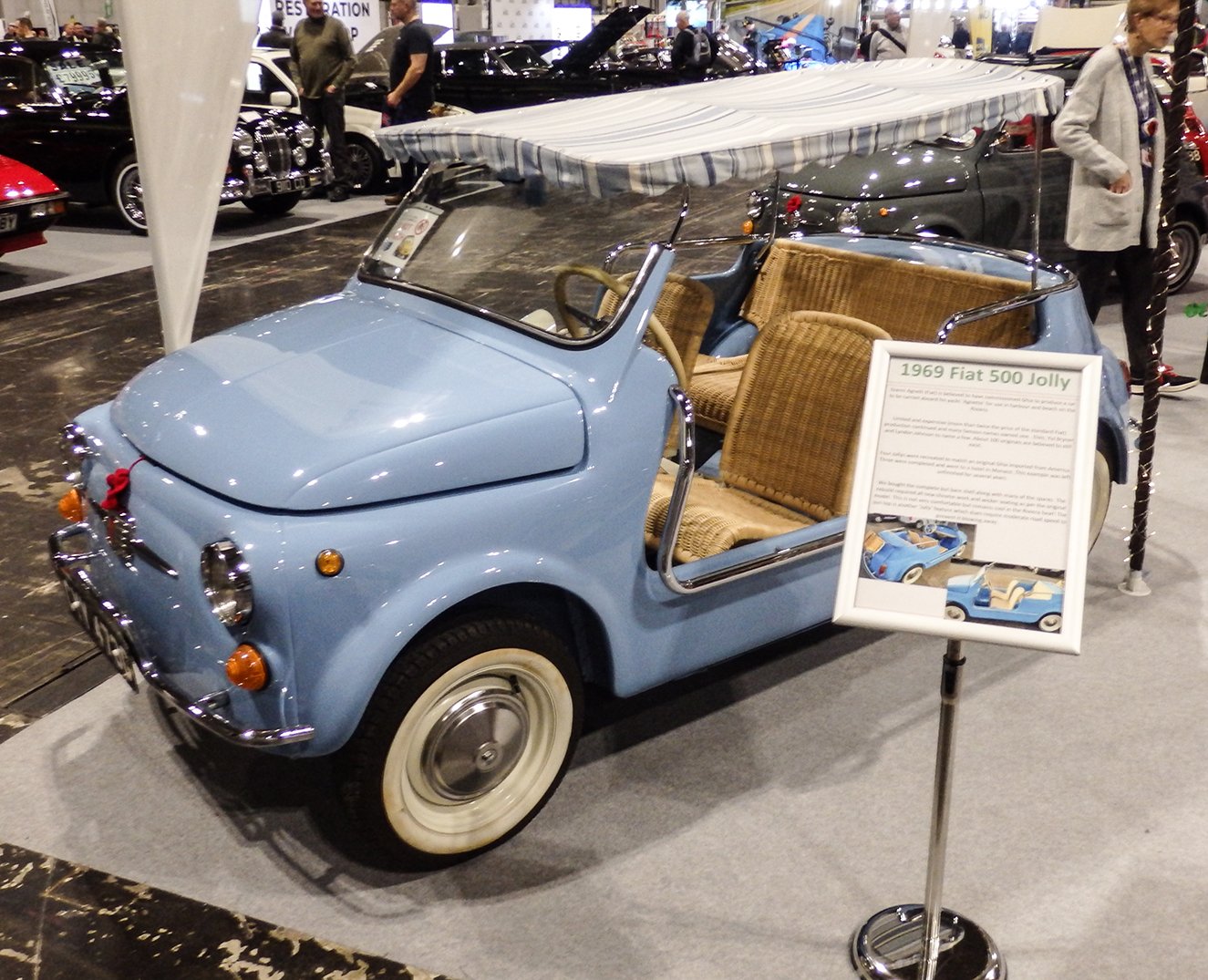
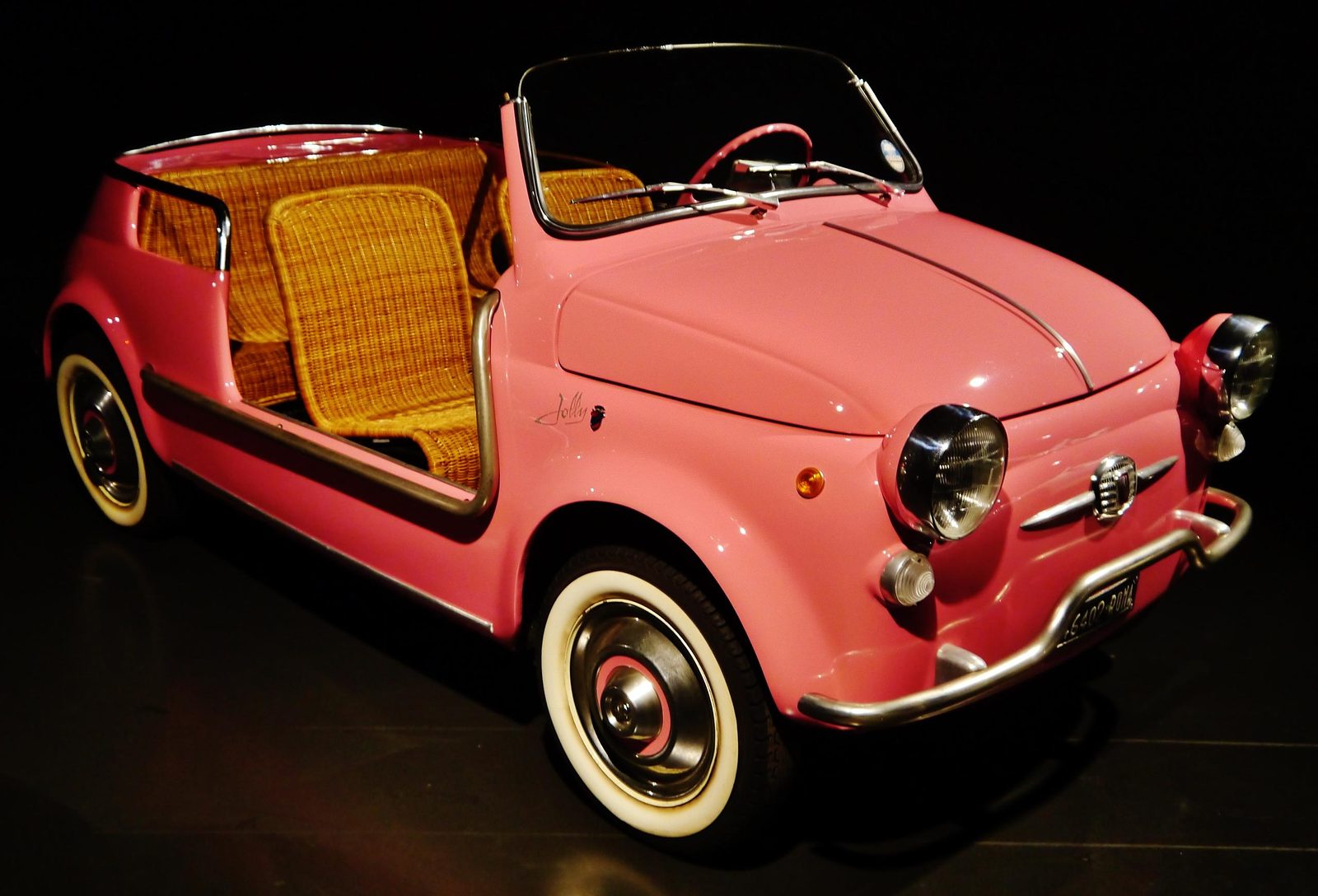
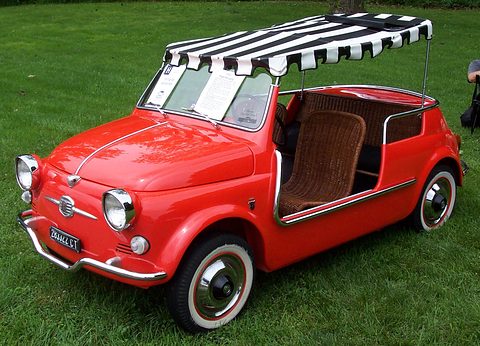
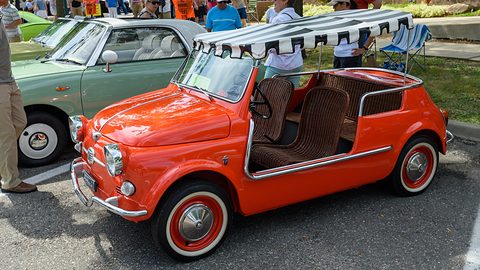
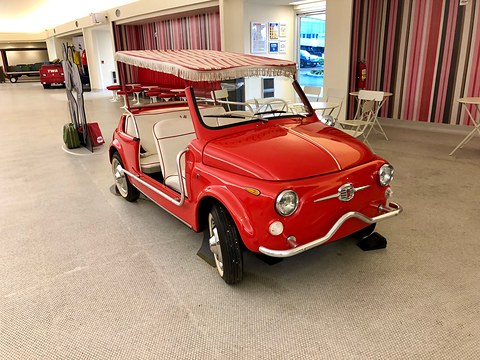
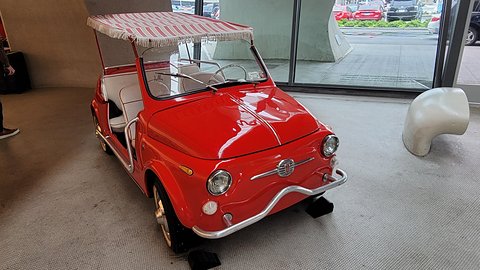
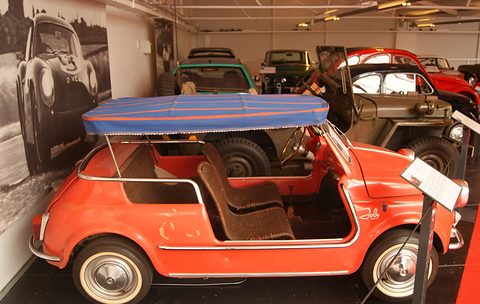
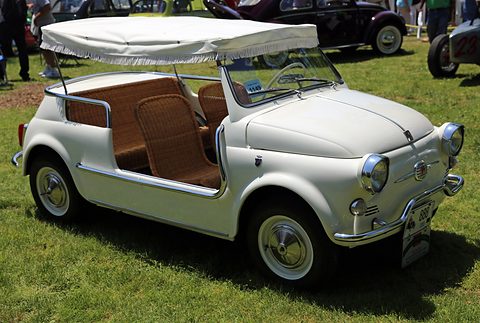
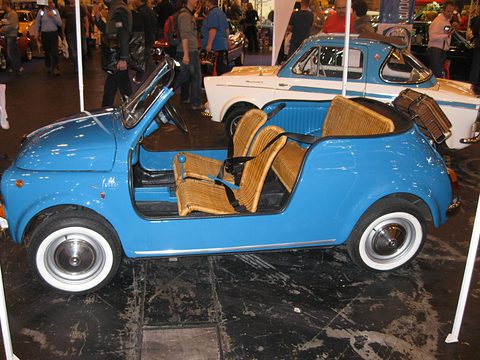
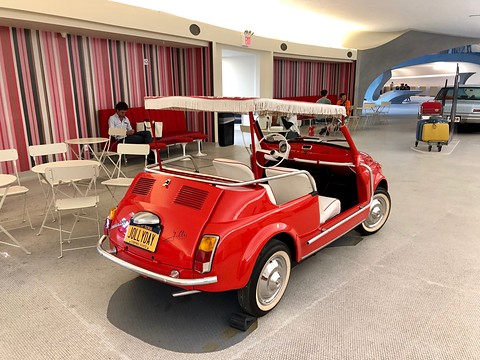
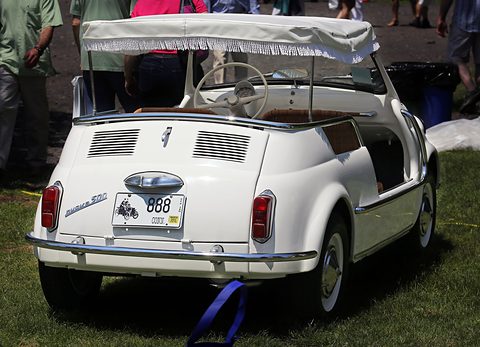
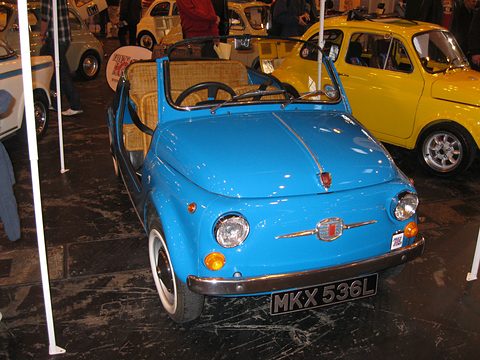
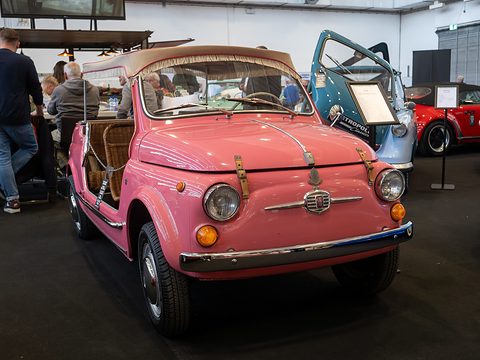
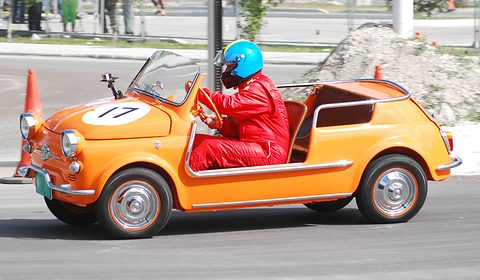
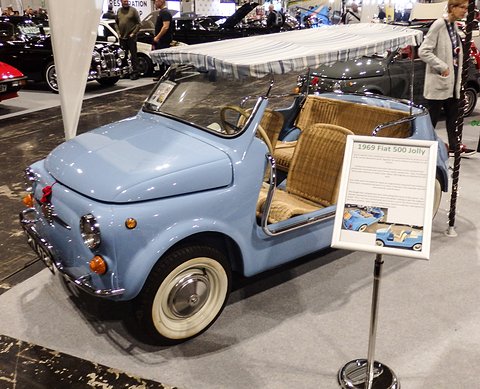
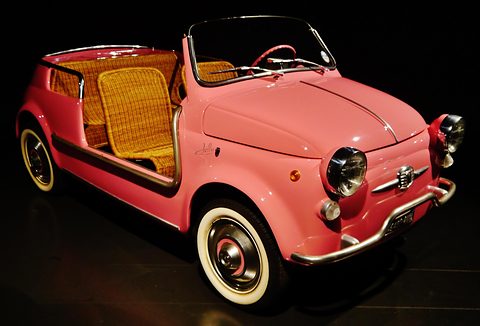
Ghia took off the roof and the doors, cut down the sides and the windscreen, and fitted four wicker seats, chrome tube rails and a striped canvas top with a fringe, on more chrome tubing, like an American surrey. Holes in the floor let the water out, and there were grab rails of the kind found on boats.source 6source 1source 7 The first colours were pink, coral, white, pale yellow and sky blue.source 6source 1source 3 The mechanicals were standard Fiat: the 479 cc engine in the early cars, and the 500 D’s 499.5 cc from 1960, which the Weiner museum rates at 22 hp and good for 105 km/h (65 mph).source 6source 3source 5 At 2,969 mm (9 ft 9 in) the Jolly is as long as the Fiat itself, the length this site takes as the limit of a microcar.source 6
Twice the price of a 500
In the United States a Jolly cost US$1,760 when a 500 cost US$998, by the Weiner museum’s figures, and nearly US$2,000 in 1959 by another account.source 6source 1 It was sold there from 1958 until 1961 or 1962, with the big American headlamps, and 7-Up used it in advertising. Some went to South Africa between 1958 and 1960, but none was sold in Britain.source 6source 1source 3 The buyers were the rich, who used them as yacht tenders, golf carts and runabouts on their estates.source 6source 3 Three sources name Aristotle Onassis and Yul Brynner among them.source 6source 1source 3 Lancaster adds Henry Ford II, Princess Grace of Monaco, Elvis Presley, John Wayne and Lyndon B. Johnson, who is said to have used his as a golf buggy, but no other source read confirms those names.source 1
The 600, the Multipla and the Fiat 500 Giardiniera got the same treatment.source 6source 1 Late in the run, from 1964 or 1965, a cheaper Jolly dropped the chrome tubes for ordinary bumpers and the wicker for plastic: moulded seats with a wicker pattern by the Weiner museum’s account, or tubular frames wound with plastic cord by Italian Wikipedia’s. The 1965 car had chains across the door openings, a reminder that it was meant for the beach rather than the road.source 6source 3 Ghia ended production in 1966; Italian Wikipedia says other firms went on building Jollys until 1974.source 1source 3 How many were made nobody knows, because Ghia’s registers were lost as the company changed hands, ending with Ford.source 3 Lancaster and English Wikipedia see in it the forerunner of the Mini Moke, the Citroën Méhari and other beach cars.source 1source 8