The story
History
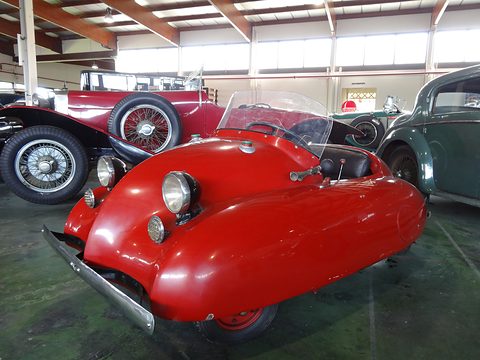
Giovanni Moretti, born in 1904, founded his firm in 1925 in the Borgata Lesna district of Turin; it also had a works in Via Monginevro.source 2source 3source 4 By Italian Wikipedia it made its first motorcycle in 1926, then motocarri, three-wheeled lorries, and light motorcycles, some with frames of pressed steel; English Wikipedia dates its arrival among the motorcycle makers to 1934.source 3source 4 The first car came in the 1930s, the Moretti 500, a three-seat torpedo with a 500 cc twin at the front driving the rear wheels.source 3 In the war, with fuel scarce, Moretti turned to electricity: the Elettrocarro, a lorry for 3 tonnes, and the Elettrovettura, a minibus for up to seven. Both were made in small numbers, and neither is known to survive.source 3
The Cita
Moretti’s first car after the war was the Cita. The prototype of 1946 had an air-cooled flat twin of 250 cc.source 3source 1 For the production car of 1947–49 the engine grew to 350 cc and changed to water cooling, and the styling was altered; Driven to Write says both engines were Moretti’s own designs, the 350 with overhead valves.source 1source 2 Italian Wikipedia gives it 14 CV at 4,500 rpm, four gears and rear-wheel drive, a frame of square-section steel tube and 90 km/h (56 mph). It was 3,000 mm (118 in) long and weighed 460 kg (1,014 lb).source 1
It came as a two-door saloon, a cabriolet and a giardinetta, an estate with wooden body parts.source 1 That range was typical of the firm, whose small cars were known for their fine finish and their many body styles: saloon, coupé, spider and estate.source 3 A photograph in Italian Wikipedia shows Giovanni Moretti at the wheel of a 1948 Cita; another shows a Cita at the head of a line of cars at a rally at Saint-Vincent in 1949.source 3source 1 How many Citas were sold has not been established.
Growing out of the class
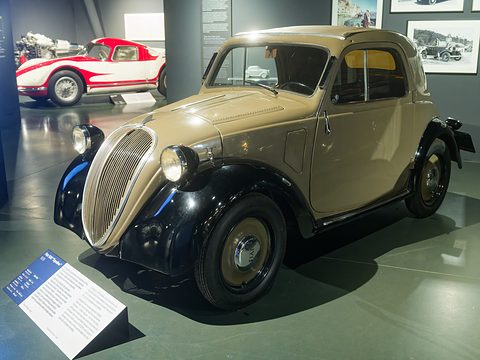
In 1949 the Moretti 600 replaced the Cita. Driven to Write sums it up as the Cita with two more cylinders and about 40 cm (16 in) more body.source 5source 2 Its 592 cc water-cooled four gave 102 km/h (63 mph), it was 3,400 mm (134 in) long, and it was shown at the Turin show in May 1950.source 5source 3 The 720B of late 1952 and the 750 of 1953 followed in many versions, racing cars among them, and they had some success in competition.source 3source 4
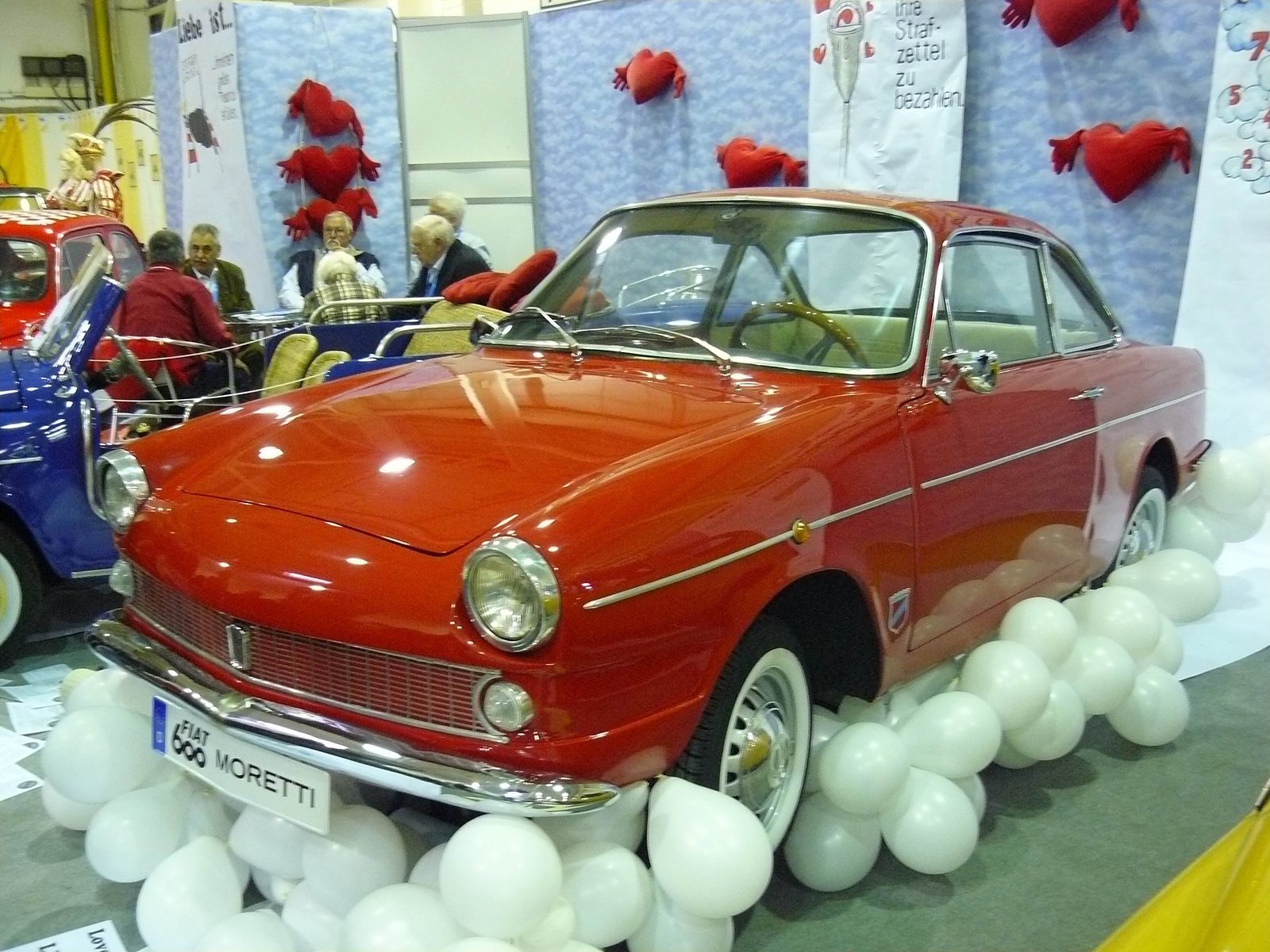
Then the Fiat 600 arrived at almost half the price of a Moretti, and by the late 1950s the firm had stopped building complete cars of its own.source 3source 4 By late 1961 its range was coupés and spiders on Fiat mechanicals.source 4 Giovanni Michelotti designed many of them, about 30 Moretti models in all, and Giovanni Moretti’s friendship with Gianni Agnelli is said to have won him good terms for Fiat chassis.source 3source 4
The 500 Coupé
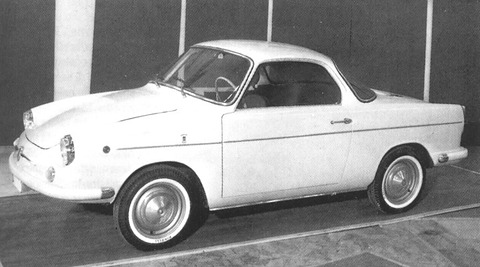
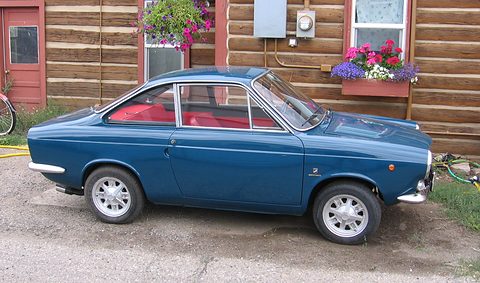
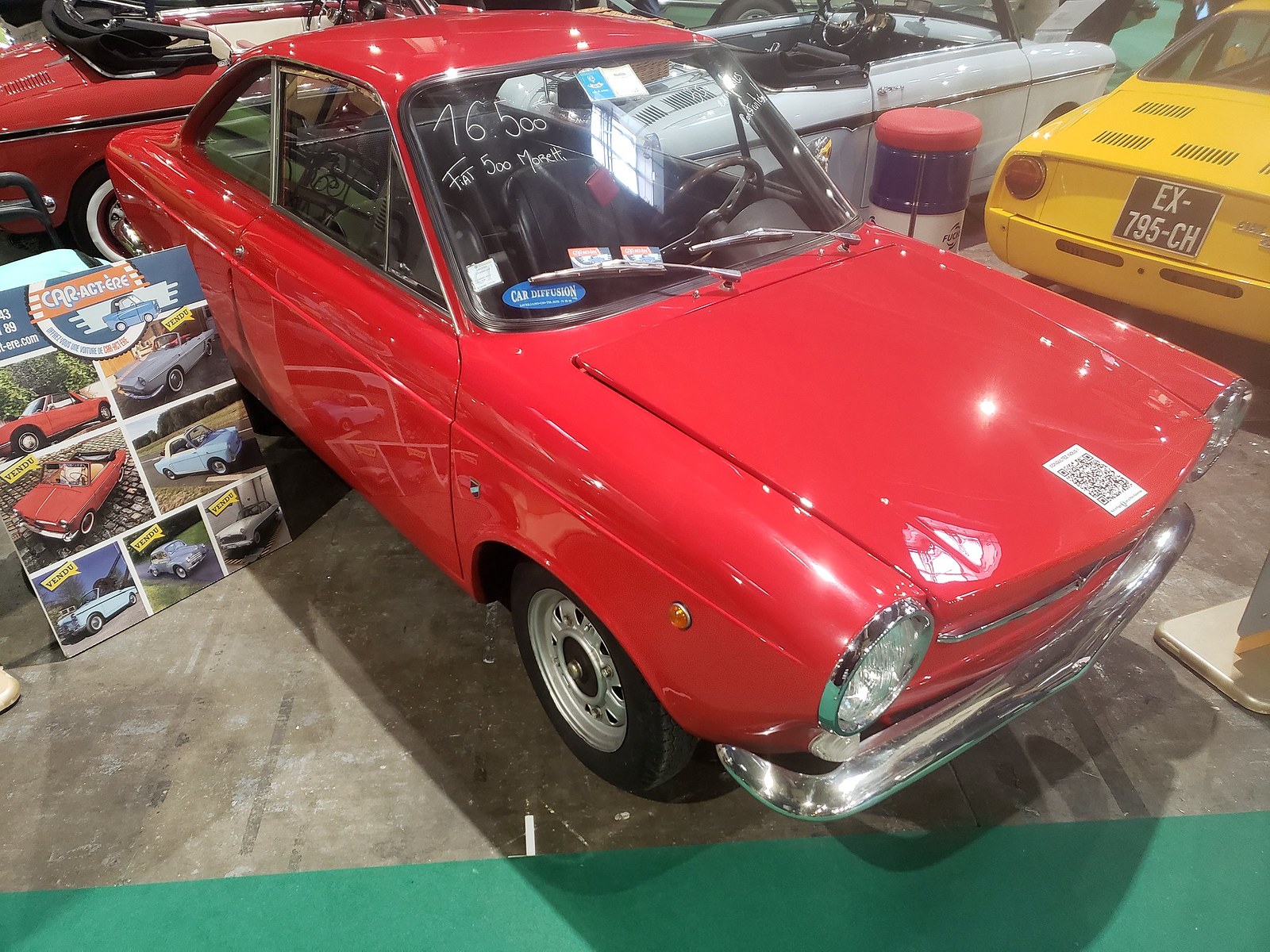
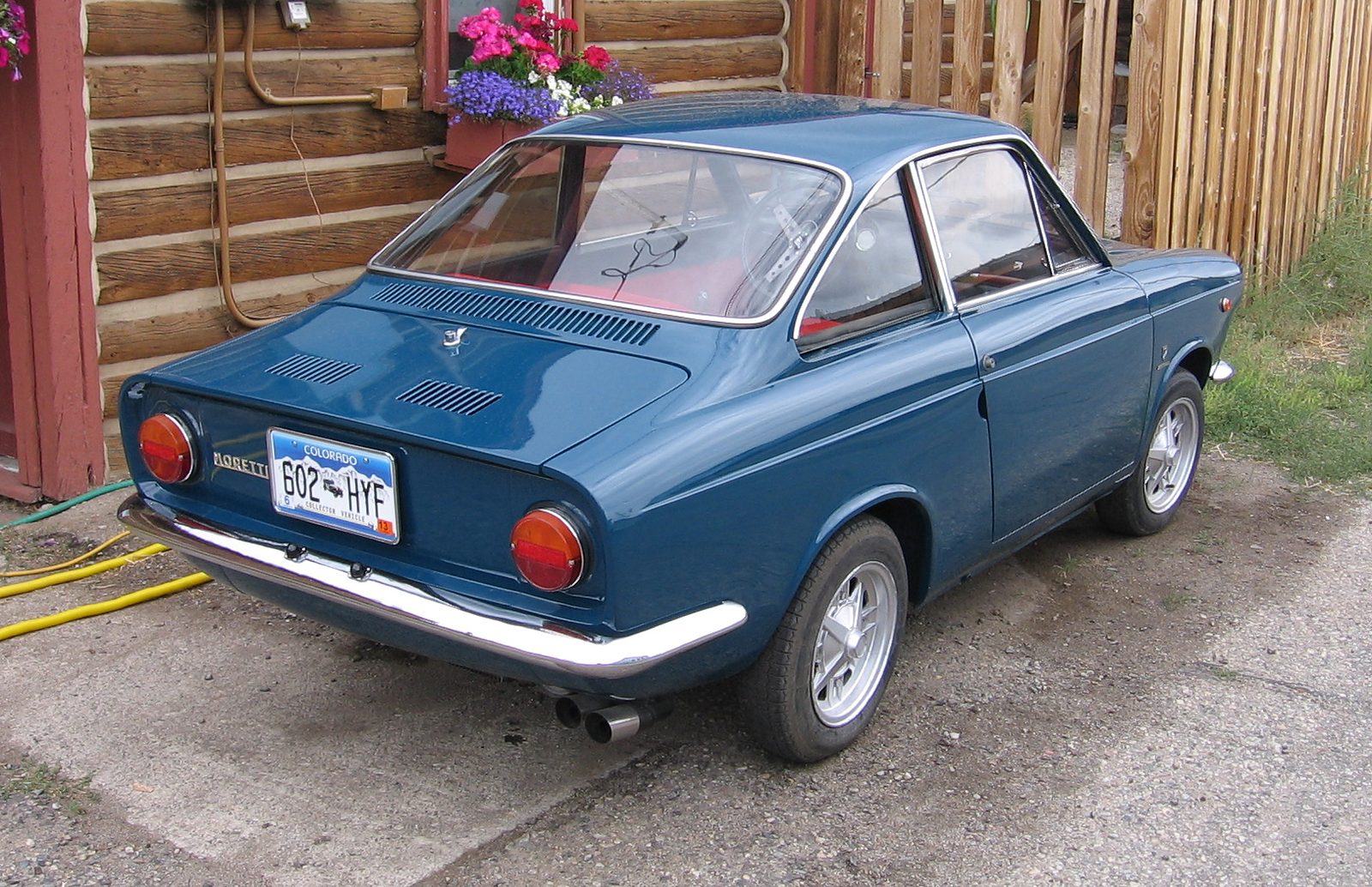
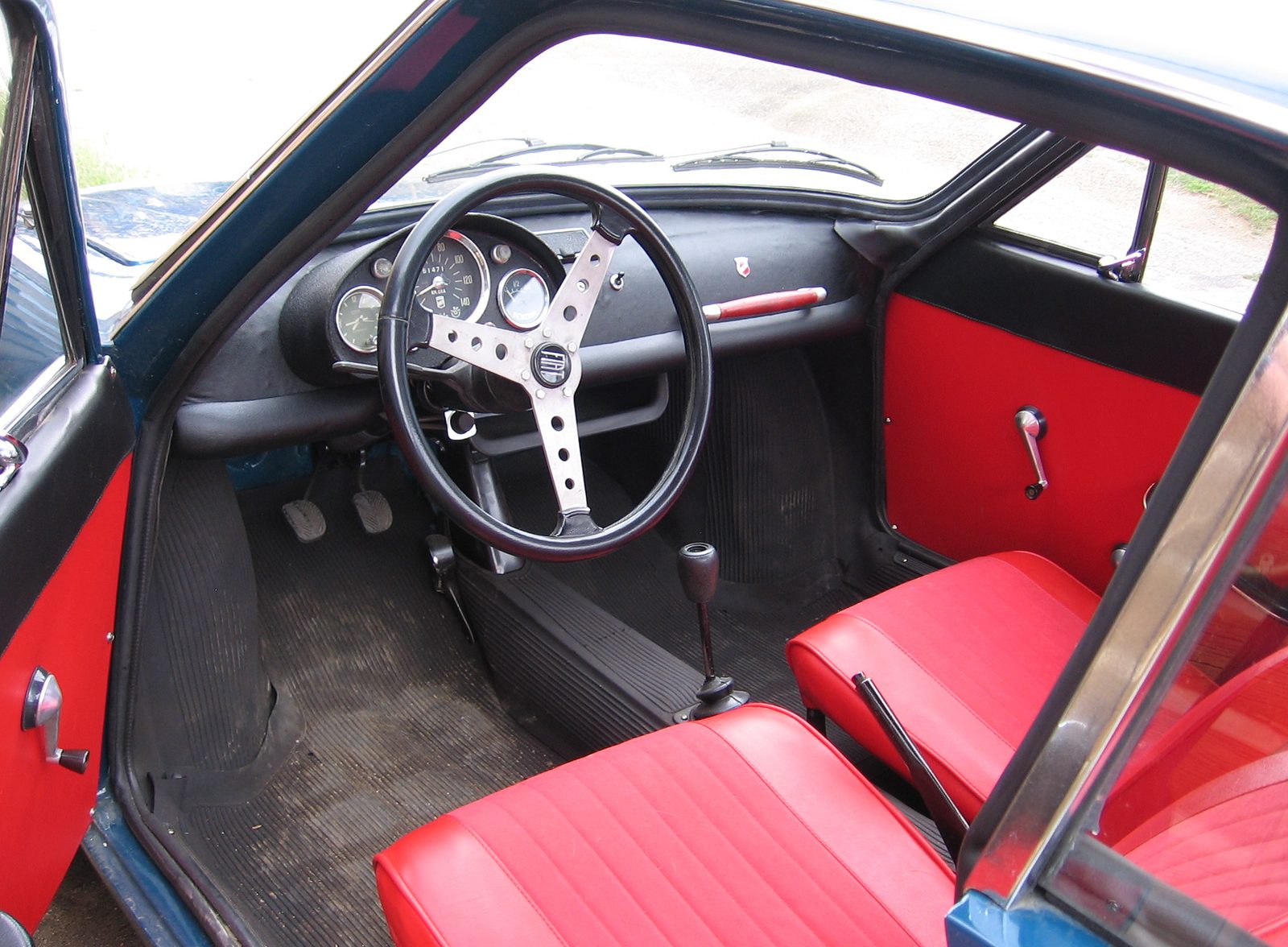
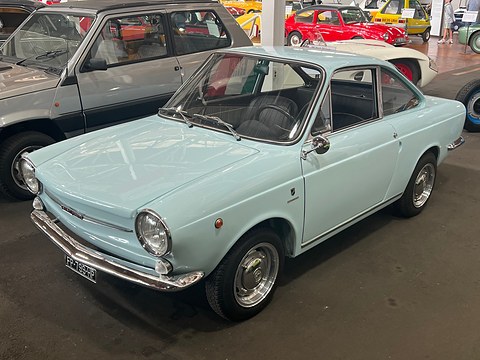
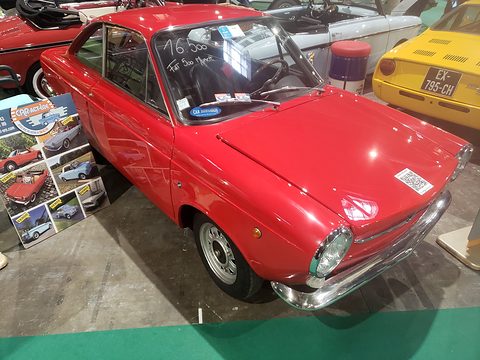
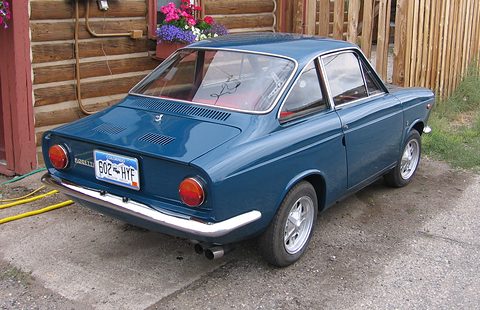
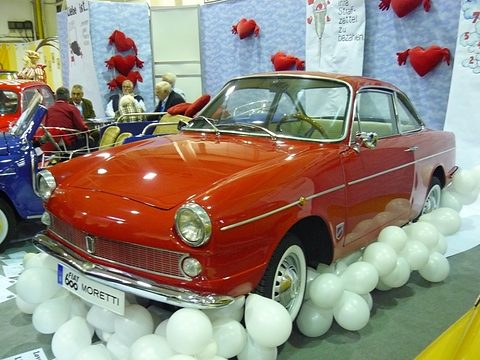
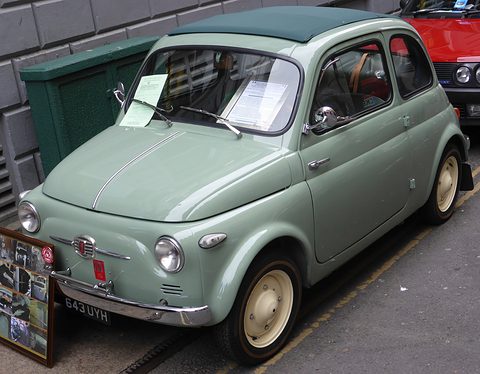
The coupé on the Nuova 500 took three attempts. An American-styled prototype on the 500 N went to the Turin show of 1957 and did not go into production. A new Coupé and a Spider on the 500 D, inspired by the Alpine A108, went to Turin in 1960 and were built in small series. The final Coupé arrived in 1964, on the 500 D and then the 500 F, and was made until 1969.source 6 Michelotti softened the lines of 1960: the bonnet was raised and fell away steeply, the bumper was solid rubber, the roof was strongly raked and the side windows were big, and there was more room inside than in a 500 D. Its 499.5 cc Fiat twin gave 22 CV, for 115 km/h (71 mph).source 6
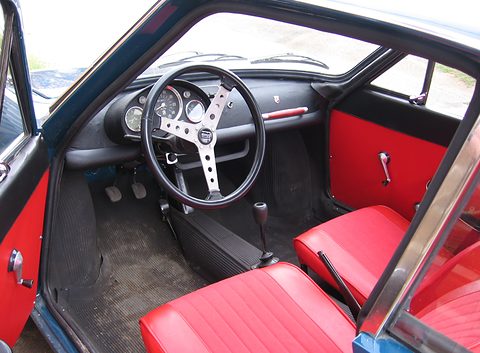
The 595 SS of 1966 had 28 CV, 130 km/h (81 mph), an oil-pressure gauge, a rev counter, a modified exhaust and ventilated wheels. In 1967 the Coupé cost 745,000 lire ex-works, and the 595 SS 150,000 lire more.source 6 Italian Wikipedia says buyers of special-bodied cars liked it very much, women in particular, and Driven to Write calls it especially popular with female buyers.source 6source 2 In 1964 Moretti S.p.A. had enlarged its works to 9,000 m² (97,000 sq ft), with 145 staff, 120 of them on the shop floor, and was making about 1,500 cars a year. It made 2,600 in 1967 and 3,292 in 1973, then 1,071 in 1974.source 3source 2source 4
Beach cars
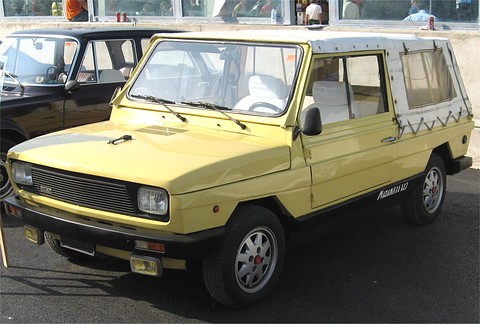
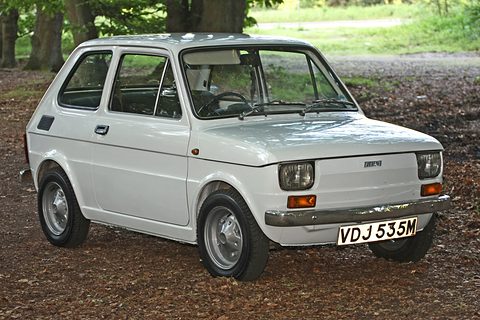
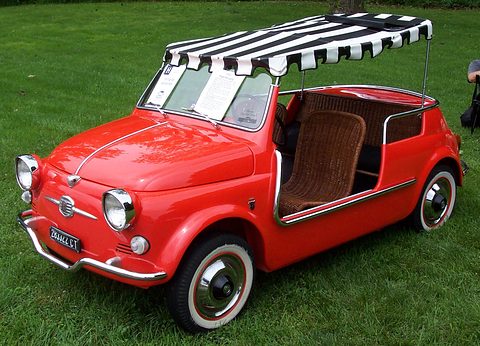
In the 1970s Moretti cut its range, became Moretti S.a.s. and built special versions of Fiat’s everyday cars.source 3 Among them were spiaggine, open beach cars. The Minimaxi first appeared in 1970, on the Fiat 500, and was later adapted to the 126; the larger Midimaxi, on the 127, followed in 1971.source 4 Driven to Write likens them to Citroën’s Méhari, aimed at a different clientele.source 2 The 126 was launched only in 1972, so its Minimaxi came after the 500’s. No specification or production figure for the Minimaxi has been found.
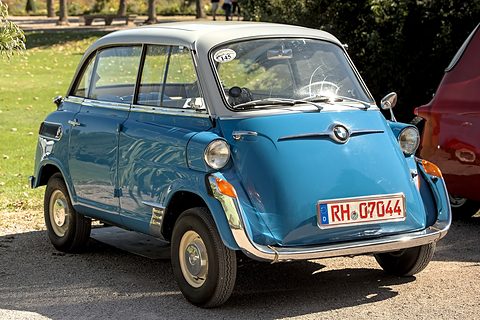
There had been an earlier special. Moretti took a BMW-built Isetta 600, the four-seat BMW 600, and turned it into an open beach car: the front door went, entry was from the side, and a removable canvas top sat on metal hoops. Artcurial dated it to 1958 and called it probably unique; it was restored in Italy in 2012.source 7
Later work ran to the Paguro pick-up and van on the 127 in 1977, the Sporting on Fiat’s Campagnola in 1979, the Panda Rock and an Uno cabriolet in 1983, and the Ital Uno Turbo for the United States in 1989.source 4 That December, Moretti closed.source 3source 4source 2