microcarfan
  • Microcar
  • Several countries
  • 4 makers

Scandinavian microcars

Sweden built a German microcar under licence, which reversed by running its engine backwards, and then a one-seat three-wheeler with handlebars that the law counted as a moped: no driving licence and no tax. Norway managed five plastic coupés, and Finland one prototype.

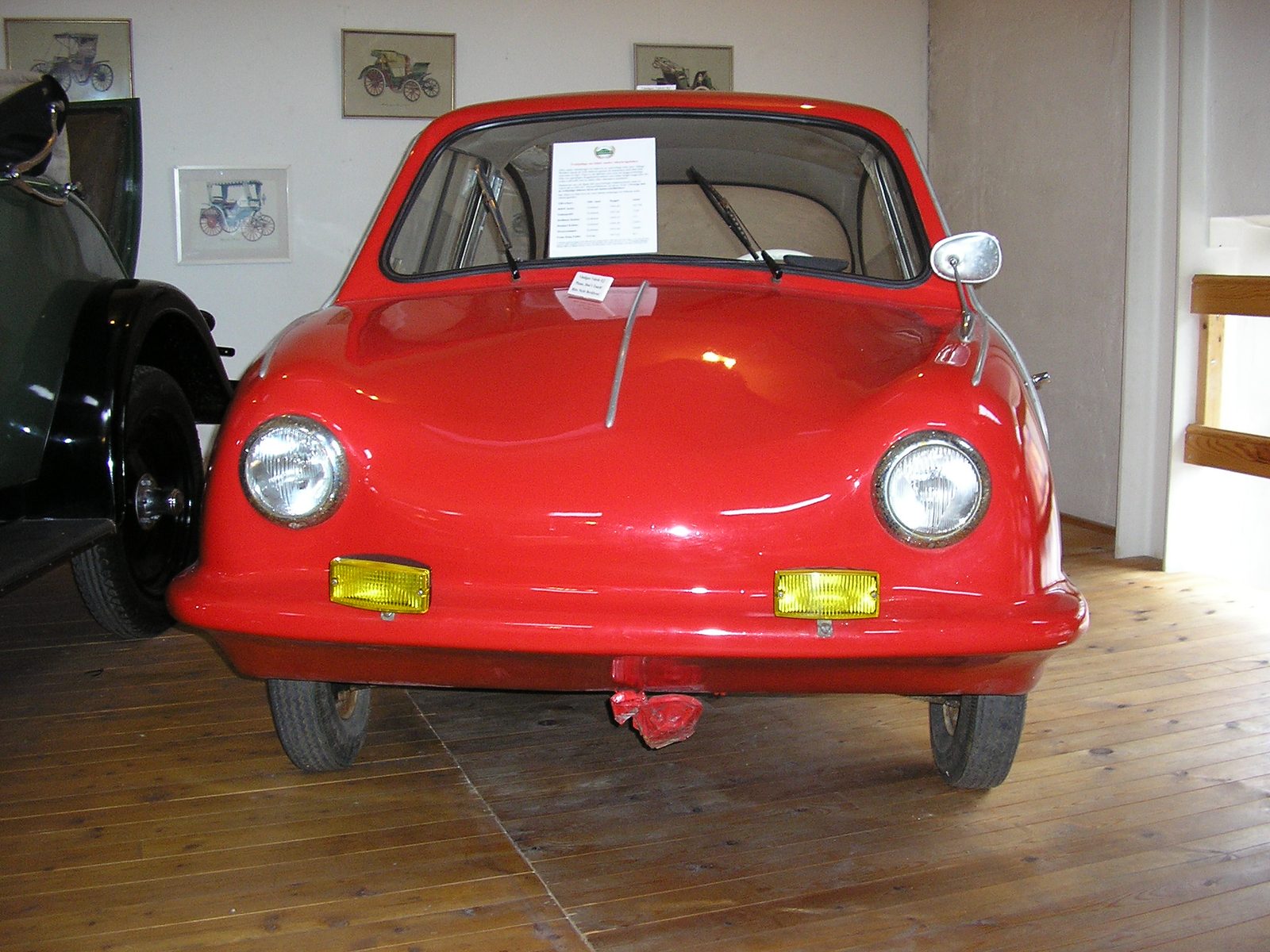
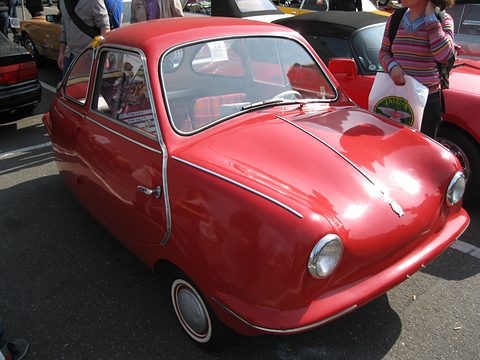
Red rounded small car with chrome door trim in an outdoor car park, a visitor with a carrier bag beside it.
A red Fram-King-Fulda at Techno-Classica, Essen, in 2012.Photo: Andrew Bone, CC BY 2.0, via Wikimedia Commons

At a glance

The spec plate

Scandinavian microcars

Four makers · Sweden, Finland, Norway

Built
1956–⁠1994The Troll from 1956; the last Norsjö Shoppers in 1994
Country
Several countriesSweden, Finland and Norway; King bodies moulded in Denmark
Engine
47 cc to 296 cc, where knownA Sachs moped engine in the late Shopper, the Sachs 191 cc in the King, a Goggomobil twin in the Wiima
Power
1 hp to 15 PSThe first Partner’s Husqvarna to the Wiima’s Goggomobil twin
Seats
1 or 2One in the Shopper; two in the Wiima and the Troll
Wheels
3Three on the King and the Shopper; four on the Troll; the Wiima on a shortened Goggomobil chassis
Production
416 counted411 Kings and five Trolls; no total is known for the Shopper
Top speed
95km/h95 km/hThe Finnish prototype; 60 km/h for the Shopper by one source; none recorded for the King or the Troll

The story

History

The Nordic countries built few microcars of their own. Most of their bubble cars were imported, and Sweden, for one, became an important market for the Heinkel bubble cars made in Ireland.source 1 Four makers did try, in Norway, Sweden and Finland, and Denmark had a hand in one of them, moulding bodies for the Swedish King. The Danish and Norwegian cars of the electric age, the CityEl, the Kewet and the Think City, belong to another story and have their own pages (see electric microcars). The four are below in the order they began.

Norway: the Troll, 1956

The Troll was Norway’s first serious attempt at making cars in numbers. Troll Plastik- og Bilindustri of Lunde, in Telemark, grew from a project begun by the engineer Per Kohl-Larsen with Erling Fjugstad and Bruno Falch.source 2 Hans Trippel designed it: a two-seat glass-fibre coupé, sprung separately at each of its four wheels, with a two-cylinder Gutbrod two-stroke bought after Gutbrod’s collapse.source 3 The moulds came from Germany. Fifteen were planned, and five were built before the company went bankrupt.source 3source 2 Its length has not been found; as a two-seat coupé it may well be too big to count as a microcar, which is why it has no page of its own here.

Sweden: the Fram-King-Fulda, later the King

Sweden’s one series microcar of the bubble era was the German Fuldamobil, built under licence as the Fram-King-Fulda, or FKF. It was a production spread across two countries. The frames were welded at Fram’s works in Uppsala. The bodies, of vacuum-pressed reinforced polyester, were made first on the island of Ven, and after that plant burned down, in Roskilde, Denmark. Assembly was in Helsingborg, and 411 cars were built between 1957 and 1962.source 4source 5

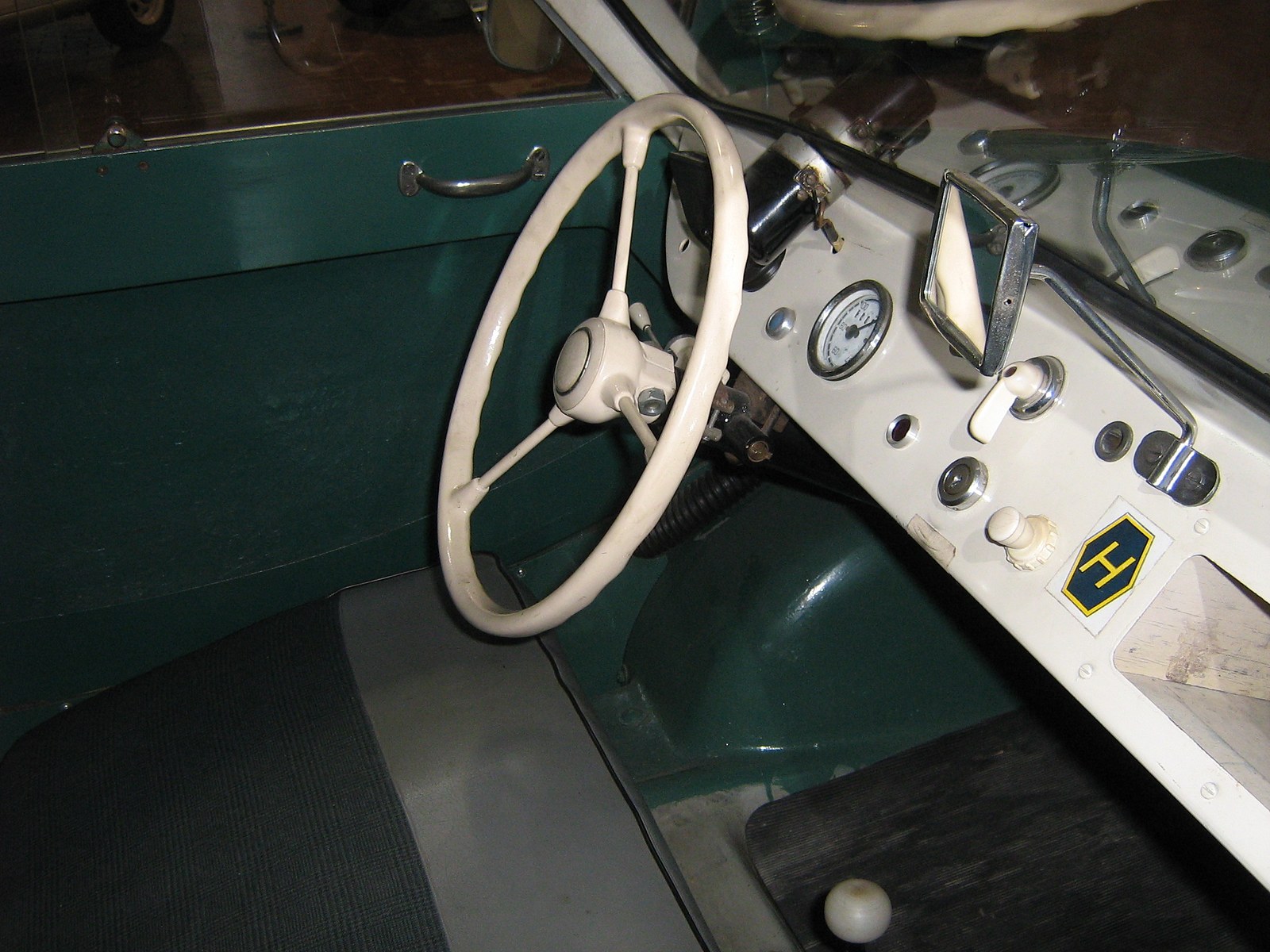
Swedish Wikipedia describes a three-wheeler with the 191 cc Sachs two-stroke of 10 hp from the Messerschmitt KR200, geared lower; the car was fairly large as microcars go, so its performance was modest.source 4 It had no reverse gear, and did not need one. The driver pushed the ignition key in and turned it, and the Dynastart started the engine backwards; extra contact-breaker points kept the timing right, so every gear worked in reverse at the same speed as forwards.source 4

In 1959 the ball-bearing maker SKF objected that FKF was too like its own initials, and threatened to sue. The car became the King.source 4source 5
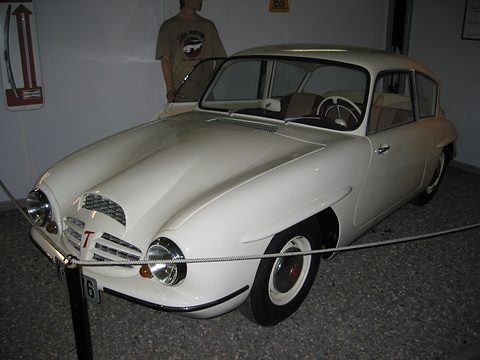
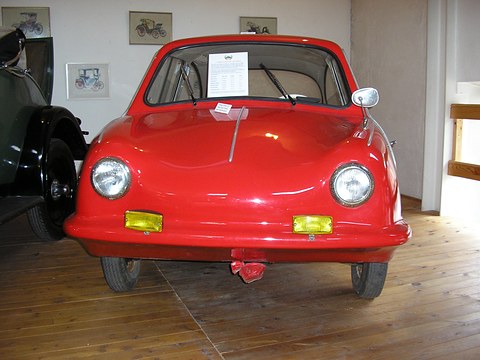
White rounded two-door coupé behind a rope barrier on a grey floor, a visitor standing behind.
A white 1956 Troll, Norway’s Trippel-designed glass-fibre coupé, in a museum in 2007.Photo: Buch-t, Public domain, via Wikimedia Commons

Wiima

1957–⁠1958 · a record on this page

The Wiima was a bus-body builder’s idea of a small car. Oy Uusi Autokoriteollisuus of Helsinki, later Oy Wiima AB, put a two-seat body on a shortened Goggomobil chassis, with the Goggomobil’s 296 cc twin of 15 PS in the rear; Antti Wihuri designed it.source 6 It was 2,610 mm (103 in) long and 1,320 mm wide, weighed 282 kg (622 lb) and is credited with 95 km/h (59 mph).source 6

It was shown at an industrial fair in Helsinki in November 1957. There was too little demand, and no series followed.source 6 Everything here comes from one encyclopaedia article, which cites the reference books of Linz and Schrader, Georgano and Zeichner, and no photograph of the car has been found.

Norsjö Shopper

years not recorded · a record on this page

Norsjö Mekaniska Verkstads AB was founded in 1951 at Norsjö, near Skellefteå, by its director Manasse Larsson. Its first product was a three-wheeled “summer kick-sled” for the elderly; delivery mopeds followed in 1953, and in 1955, short of workers, the firm moved south to Forshaga, near Karlstad.source 7 That is why the car is also called the Forshaga Shopper.source 8source 9

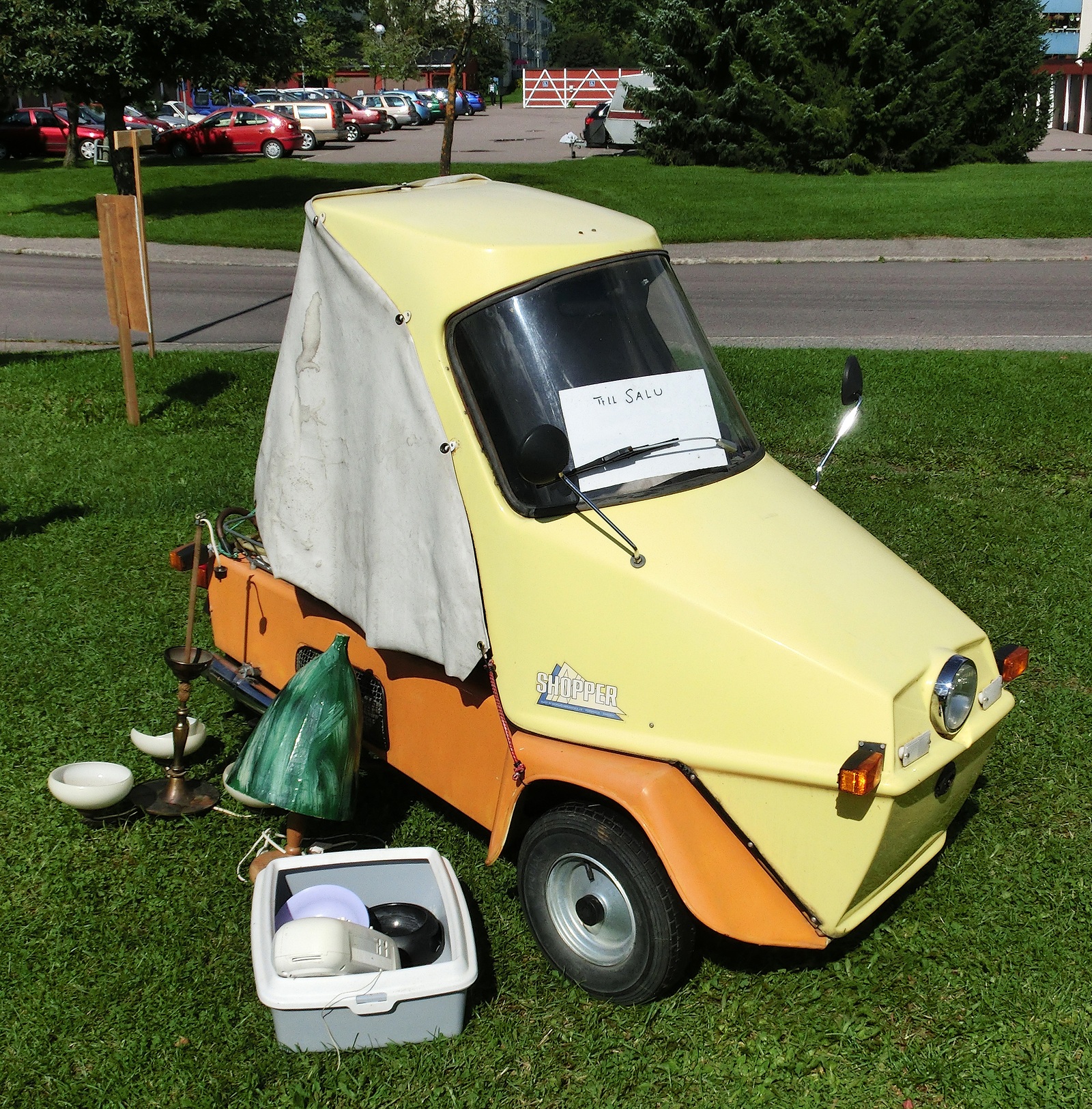
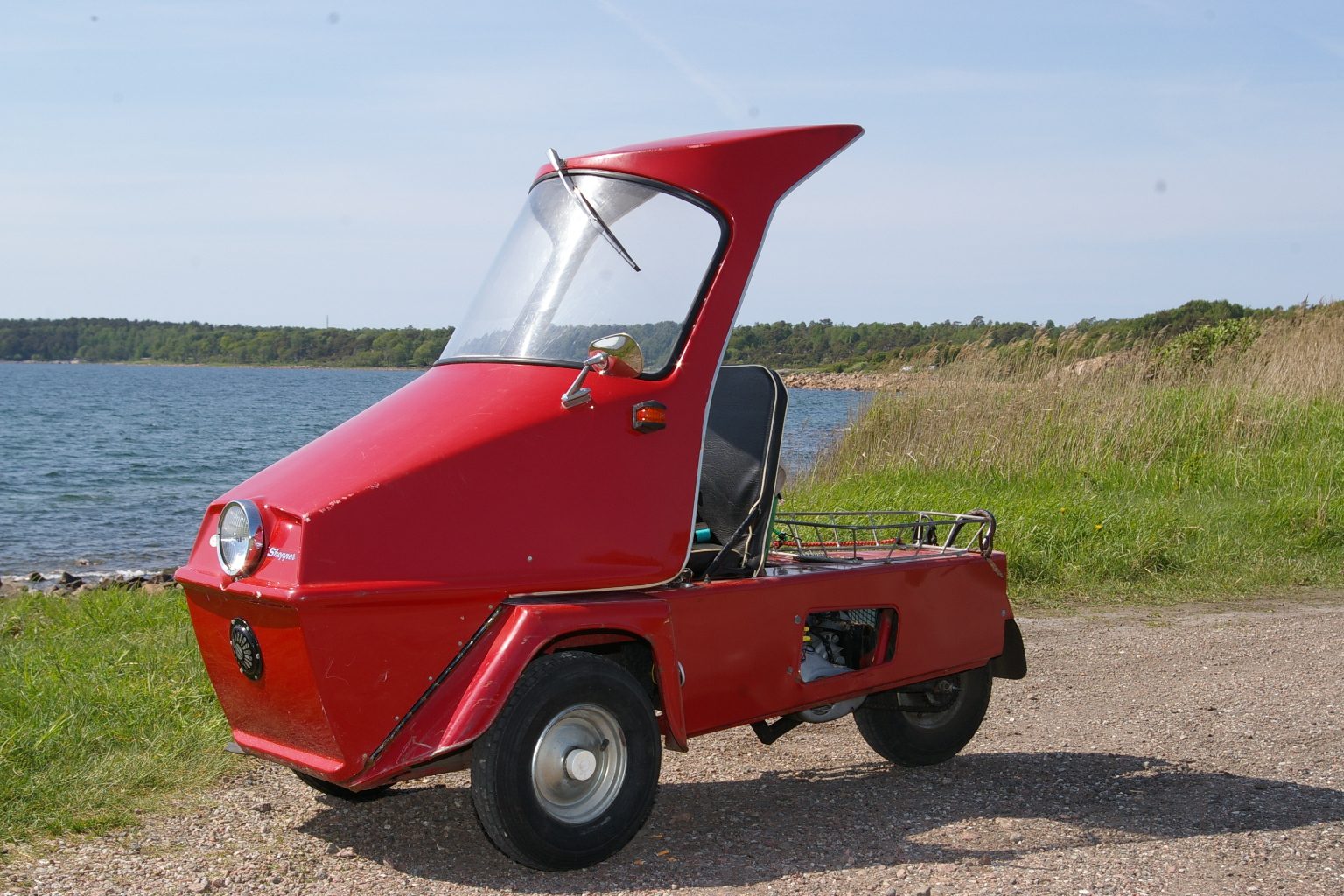
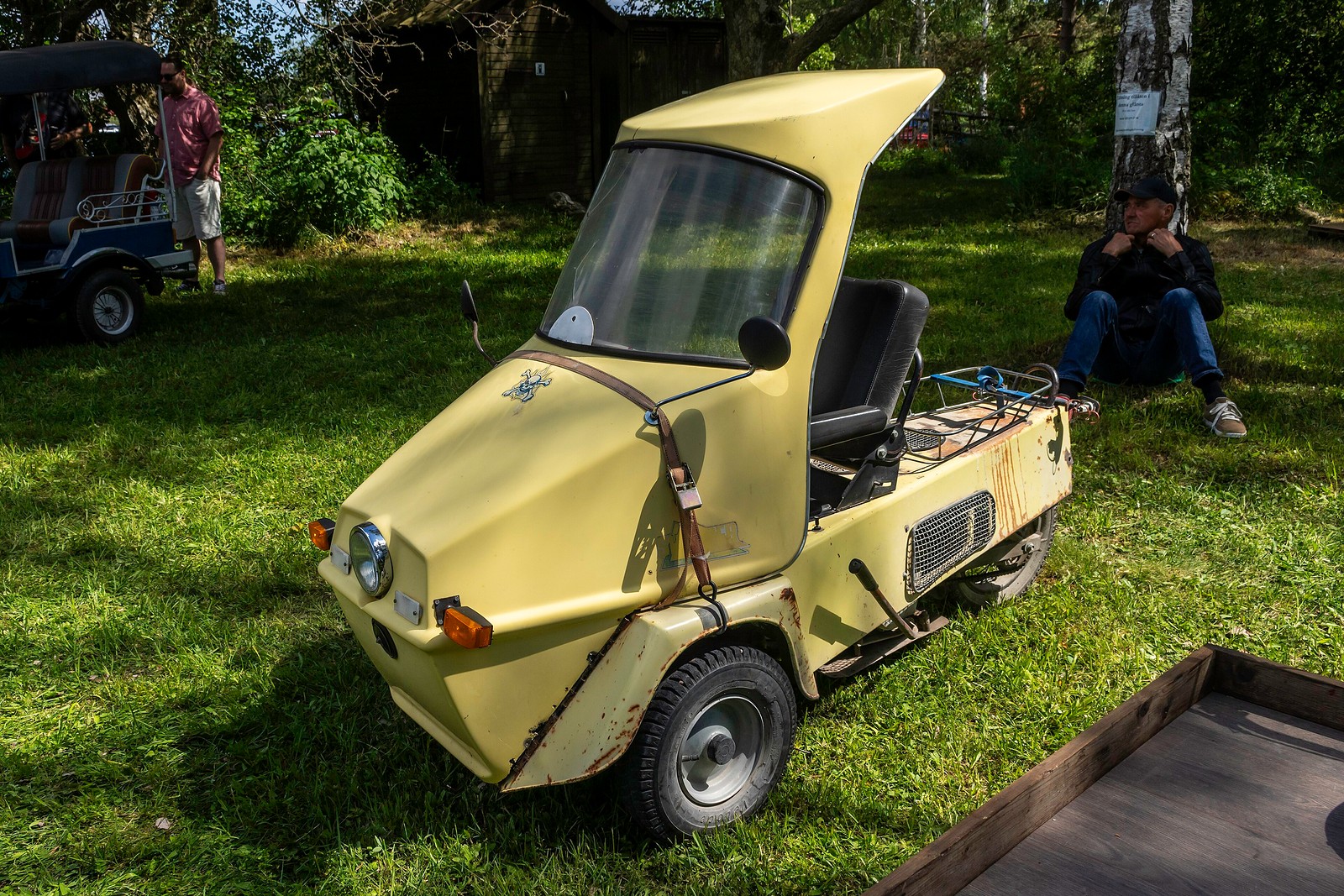
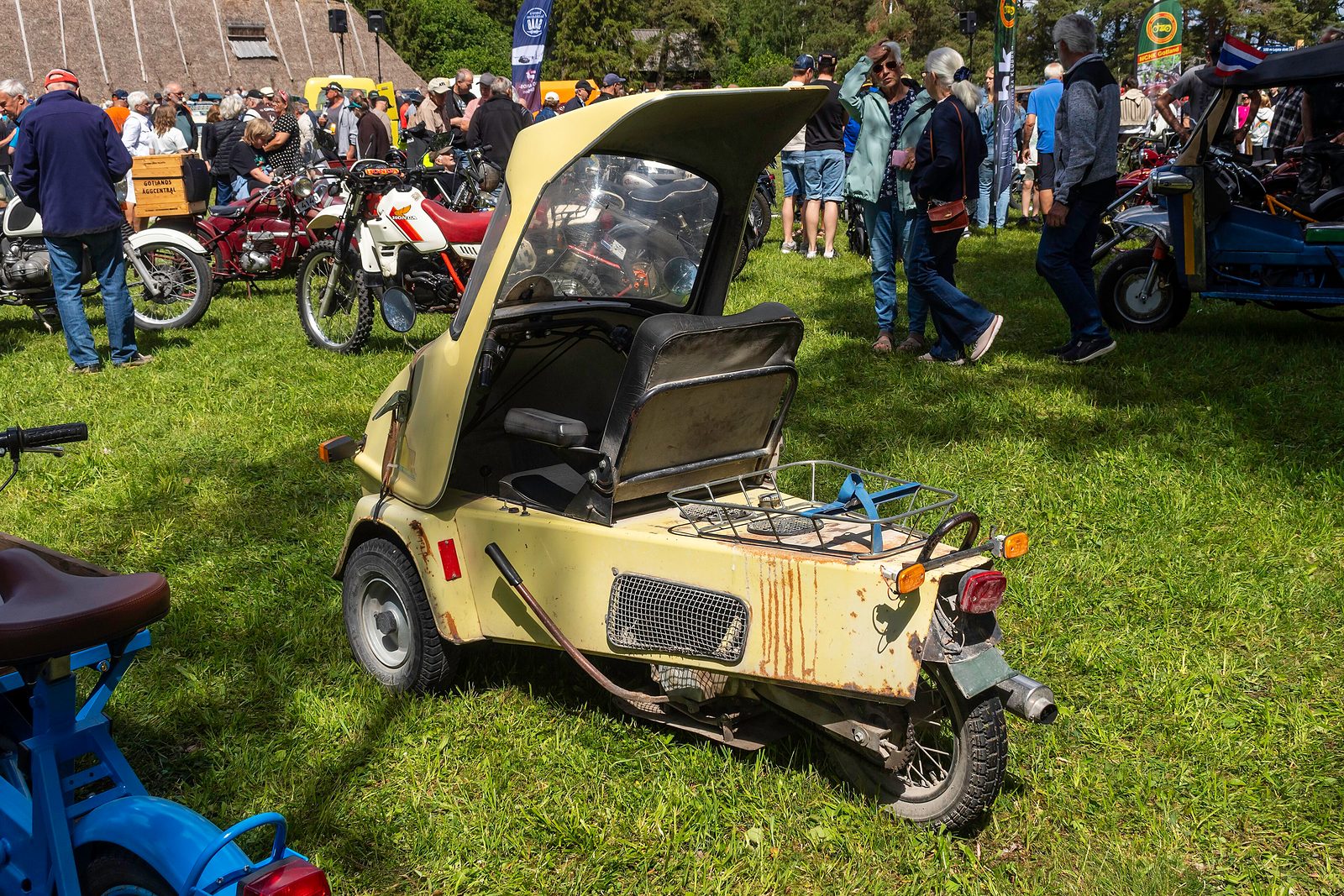
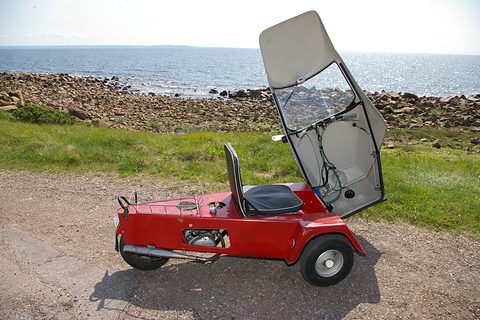
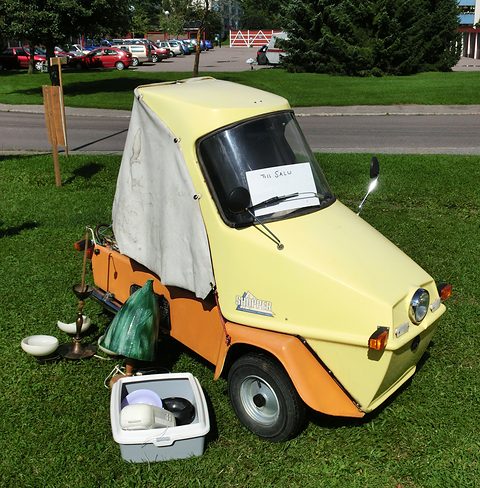
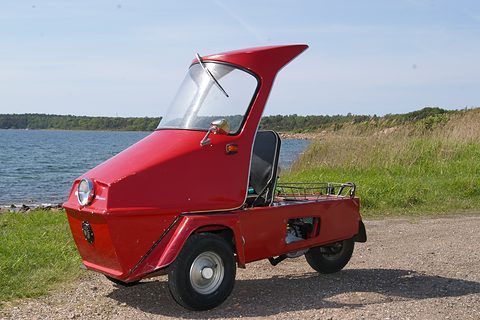
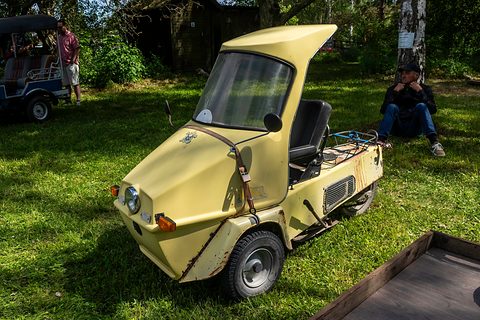
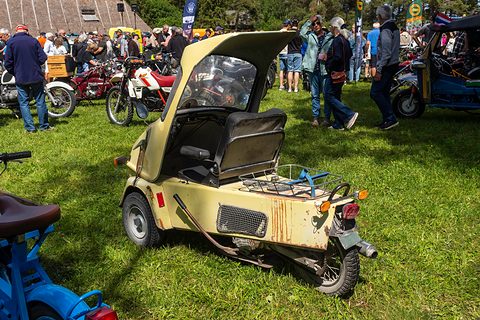
In 1961 it brought out a delivery moped, the Packi, and a covered one, the Partner.source 8source 7 The brochure called the Partner Sweden’s only series-built covered moped, free of licence and of tax, which made it a licence-free car.source 10 It had a single seat, three wheels, two in front and one behind, and handlebar steering worked by cable, like a small boat steered from a console. The whole canopy swung aside to let the driver in, and a big shopping basket rode behind.source 8source 10source 9 The first cars had a steel-plate tub braced with steel tube, light-alloy panels above, a curved one-piece windscreen and a leathercloth roof, with rubber suspension and a disc brake on each of the three 8 in wheels.source 10 The engine was a fan-cooled 1 hp Husqvarna with two speeds and a foot clutch, started from the seat by a hand lever.source 8source 10 The brochure also offered the controls moved from hand to foot or from left to right, with arm and leg rests, and said this made it useful for people with reduced mobility.source 10

Teknik för Alla presented it in its eighth issue of 1961, under the headline “Drive a car without a licence!”, after test drives in Karlstad. Its coral-red car nipped through the lunchtime traffic round the square through gaps too narrow for ordinary cars; an elderly man on the pavement said he had never seen the like; and the young woman driving parked it by lifting its tail in to the kerb with one hand.source 10

Den accelerationsvilliga motorn gör vagnen snabb som en vessla.

Teknik för Alla no. 8, 1961, testing the Partner in Karlstad. In English: “The eager engine makes the little car quick as a weasel.”source 10

The Shopper

The updated car of 1964 was named the Shopper. That year the firm had 35 employees and could build 50 Shoppers a week; Larsson died suddenly, and Bengt Hägglund succeeded him.source 7 The Shopper was advertised as a runabout for the housewife, a slängbil, and was driven mostly by the elderly, though some teenagers took to it too.source 8source 9 Later cars had a glass-fibre canopy on a tubular frame and a 1.5 hp Sachs Saxonette with automatic transmission, with electric starting as an option.source 8source 9 A special dispensation allowed the stronger engine and, later, driving without a helmet if a seat belt was fitted.source 8 The Bruce Weiner Microcar Museum gives the Shopper 60 km/h, a speed that looks high for a legal moped.source 9

The Shopper and the Partner went out of production in 1994; the next year the bicycle business went to Monark and the mopeds to Norsjö Mekaniska AB.source 8source 7 No production total has been found. The Weiner museum dated the prototype to 1962, but the company and Swedish Wikipedia give 1961, the year the magazine drove it.source 9source 8source 7

The mopedbil today

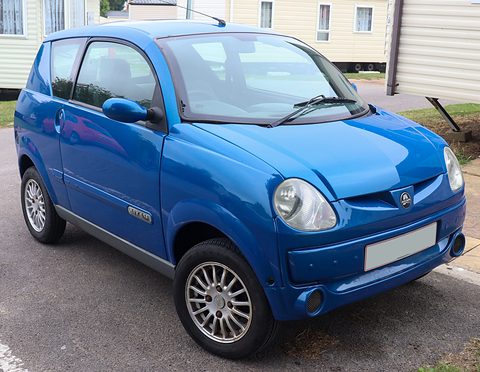
The Shopper’s legal class lives on. A Swedish mopedbil, “moped car”, is a three- or four-wheeler that counts as a class 1 moped: no more than 425 kg, 260 kg of load, 6.2 kW and 45 km/h, driven from the age of 15 on an AM licence, with no inspection and no vehicle tax. About 16,000 were registered in Sweden in 2022, and modern ones come from the makers of French licence-free cars, such as Aixam, Chatenet, Ligier and JDM.source 11

Red three-wheeler with its whole canopy tipped forward, showing a single seat and rear rack, by the sea.
A red Norsjö Shopper with its whole canopy tipped forward, showing the single seat and the rack behind, in 2011.Photo: Fb35523, CC BY 3.0, via Wikimedia Commons

Pictures

More photographs, old and new

Variants

Four makers, in date order

The Nordic countries’ own microcars
VariantYearsWhat differsHow many
Troll1956–⁠58Norway: a two-seat glass-fibre coupé designed by Hans Trippel; Gutbrod twin two-stroke5
Fram-King-Fulda (FKF)1957–⁠59Sweden: the Fuldamobil built under licence; Sachs 191 cc, 10 hpPart of 411
King1959–⁠62The same car, renamed after SKF objectedPart of 411
Wiima1957–⁠58Finland: a two-seat coupé on a shortened Goggomobil; 296 cc, 15 PSPrototype only
Norsjö Partner1961–⁠94Sweden: a one-seat covered moped on three wheels; Husqvarna 1 hpNot known
Norsjö Shopper1964–⁠94The updated Partner; later a 1.5 hp Sachs Saxonette with automatic transmissionNot known; up to 50 a week in 1964

Specification

What is known, maker by maker

Fram-King-Fulda and King

Fram-King-Fulda and King
EngineSachs two-stroke single, 191 cc, 10 hpsource 4The Messerschmitt KR200’s engine, with lower gearing
ReverseBy starting the Dynastart backwards, so every gear works in reversesource 4
BodyVacuum-pressed reinforced polyester, moulded on Ven, then at Roskildesource 4source 5
FrameWelded at Fram’s works in Uppsalasource 4source 5
Wheels3, by Swedish Wikipediasource 4

Norsjö Partner and Shopper

Norsjö Partner and Shopper
EngineHusqvarna (Cornette), 1 hp, two speeds, fan-cooledsource 8source 10Later a 47 cc Sachs Saxonette of 1.5 hp, with automatic transmission
SteeringHandlebar, by cablesource 8source 10source 9
BrakesDiscs on all three 8 in wheelssource 8source 10
Size2,160 mm long, 930 mm widesource 9
Weight74 kgsource 8source 10
Top speed60 km/h, by the Weiner museumsource 9High for a legal moped; treat with caution

Wiima

Wiima
EngineGoggomobil twin, 296 cc, 15 PS, in the rearsource 6
ChassisA shortened Goggomobilsource 6
Size2,610 mm long, 1,320 mm widesource 6
Weight282 kgsource 6
Top speed95 km/hsource 6

How many were built?

Maker by maker

416 counted; the Shopper never totalled411 Kings and five Trolls, both figures agreed by two sources, and one Finnish prototype. No total has been found for the Norsjö Partner and Shopper, built for 33 years; in 1964 the works could make 50 a week at most.

  1. 411Fram-King-Fulda and King, 1957–⁠62Two sources agree

    Swedish Wikipedia and Lennart Carlsson’s owner’s pagesource 4source 5

  2. 5Trolls, of 15 plannedTwo sources agree

    Swedish Wikipedia and a Norwegian enthusiasts’ sitesource 3source 2

  3. prototype onlyWiima, shown in 1957One source

    German Wikipediasource 6

  • Two sources agreetwo good sources give the figure
  • One sourcea good source, alone
  • Unconfirmeda lead only, not yet checked

Famous for

Three points

  1. Reverse by key

    Pushing the King’s key in and turning it ran the engine backwards: every gear became a reverse.

  2. No licence, no tax

    The Norsjö Partner and Shopper counted as mopeds, and were built for 33 years.

  3. FKF to King

    The ball-bearing maker SKF objected to the initials, so the Swedish Fuldamobil changed its name.

Survivors and collecting

Today

The Swedish motorcycle-car club, Svenska MC-bilklubben, had about 50 Kings on its register by an owner’s count archived around 2015, and one is in the Lane Motor Museum in Nashville, Tennessee (see museums and meets).source 5 Shoppers were a common sight in Sweden in the 1960s and 70s, but by 2002 the Weiner museum, which had a 1972 car, called them few and rarely seen on the streets.source 9 Neither car has turned up in a major auction house’s results.

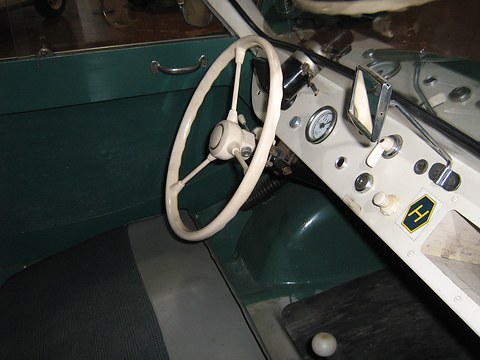
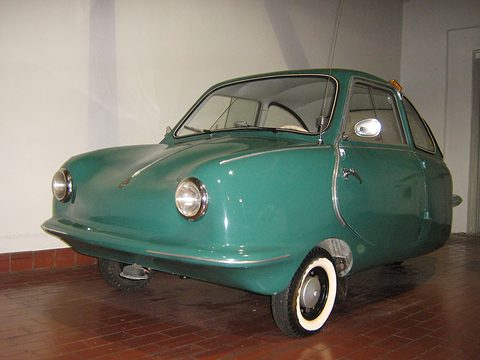
Dark green rounded three-wheeler with whitewall tyres and a chrome mirror on a brick-red floor.
A green 1959 Fram-King-Fulda at the Lane Motor Museum, Nashville, in 2009.Photo: dave_7, CC BY 2.0, via Wikimedia Commons

Sources

Numbered as in the text

Each maker rests on one or two sources: the Wiima on German Wikipedia alone, the Troll on Swedish Wikipedia and one enthusiasts’ site, the King on Swedish Wikipedia and an owner’s page. The Shopper has the most, including the 1961 magazine test. Sources are given as plain text; the links are on the Credits page.

  1. Heinkel Trojan Club, “Cabin Cruisers”, a model and production history from Trojan’s records, archived 2015, read in full.
  2. “Troll-bilen”, a Norwegian enthusiasts’ site (2002, archived 2005), front page read.
  3. Swedish Wikipedia, Troll (bil), read; it cites Svenskt billexikon 1885–⁠1969, p. 568.
  4. Swedish Wikipedia, Fram-King-Fulda, read in full.
  5. Lennart Carlsson, “FKF-KING S7”, an owner’s page, archived about 2015, read in full.
  6. German Wikipedia, Wiima, read in full. Used as a lead; it cites Linz and Schrader, Georgano’s Beaulieu Encyclopedia (vol. 3, p. 1740) and Zeichner, Kleinwagen International (1999).
  7. Norsjö Moped AB, “Historik”, the company’s history, archived 13 May 2021, read in full.
  8. Swedish Wikipedia, Norsjö Shopper, read in full; it cites the company’s history and Teknik för Alla 8/1961.
  9. Bruce Weiner Microcar Museum, “1972 Norsjo Shopper”, tour page (2002), archived, read in full.
  10. mo-ped.se, “Norsjö Shopper”, with transcriptions of the 1961 NMV Partner brochure and of “Kör bil utan körkort!”, Teknik för Alla no. 8, 1961; read in part.
  11. Swedish Wikipedia, Mopedbil, read in full; it cites the Swedish law of 2001 (2001:559) and Statistics Sweden for 2022.