microcarfan
  • Licence-free car
  • France
  • Four wheels
  • Two seats

Chatenet

Also known as Automobiles Chatenet

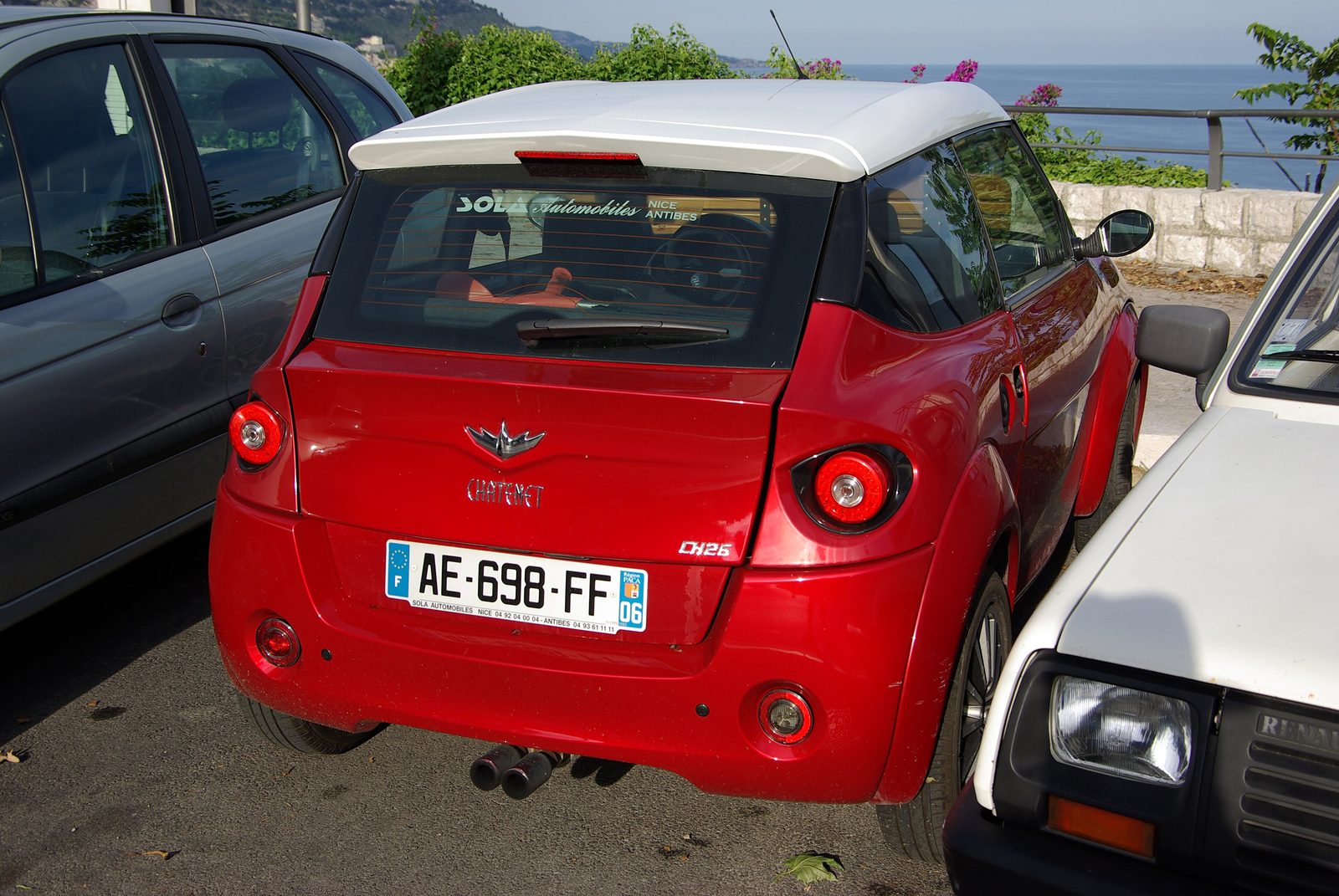
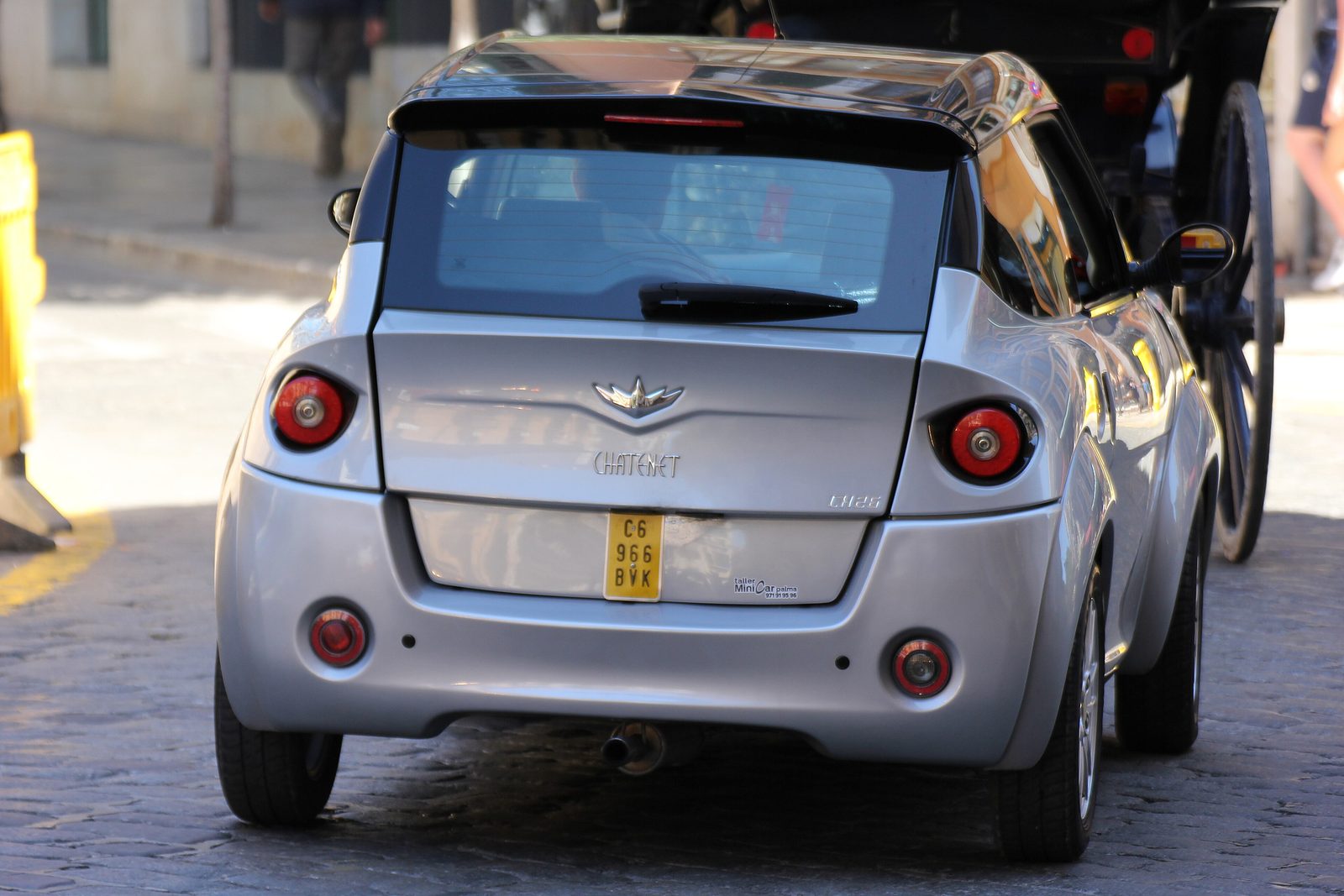
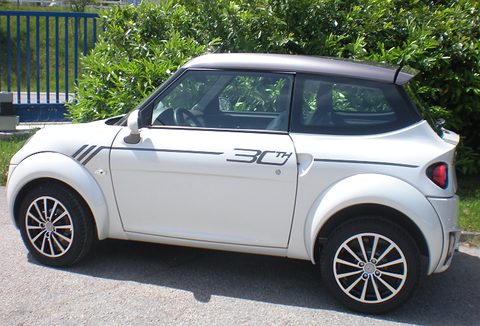
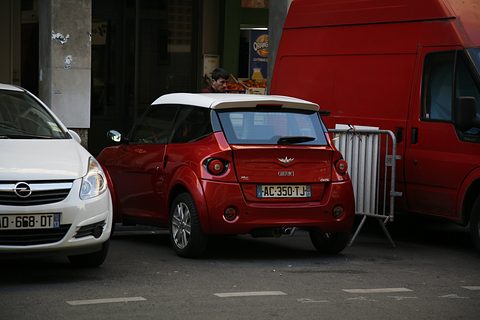
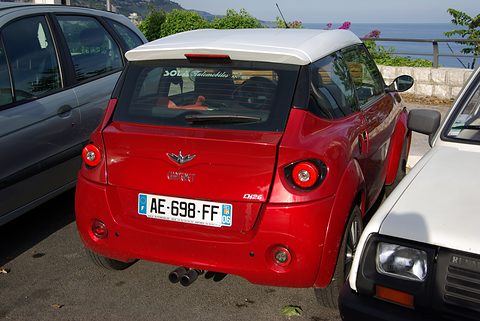
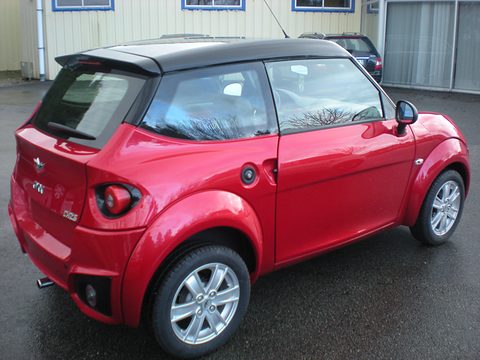
A two-seater that looked like a Mini, with a cabin trimmed like a proper car’s, priced close to two discounted Clios and limited by law to 45 km/h (28 mph). Le Figaro’s test car had a folding electric roof; under its bonnet was a diesel from an earth-mover.

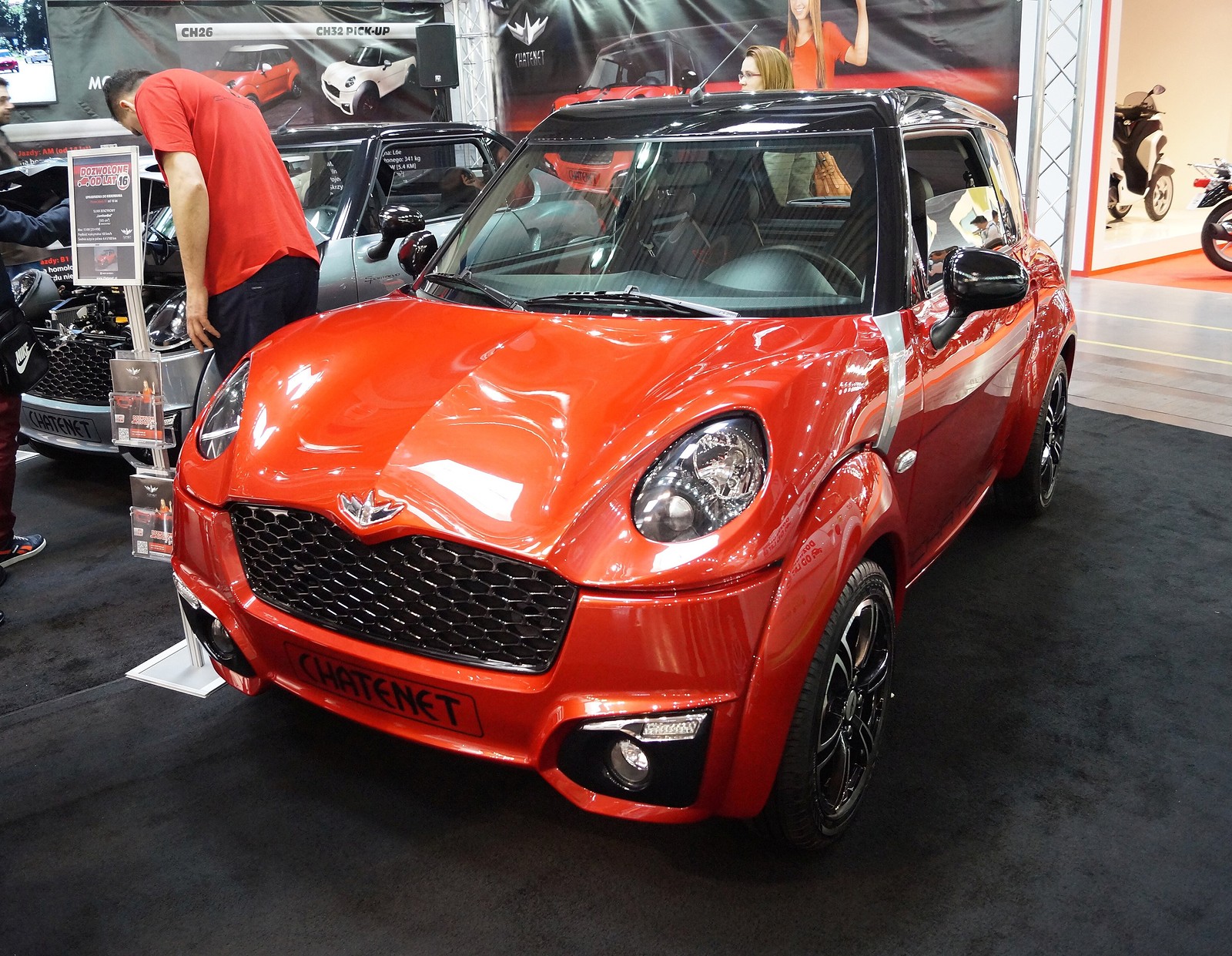
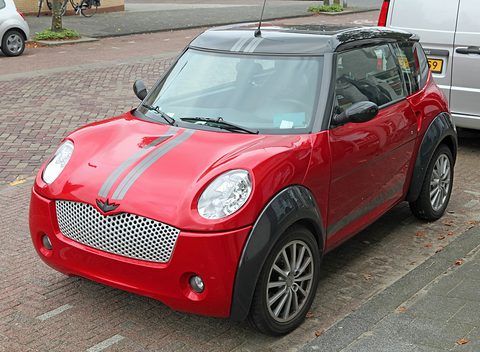
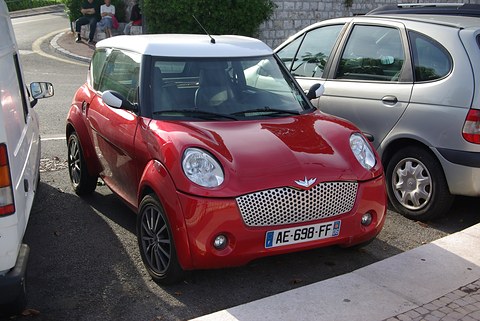
Glossy red small car with round headlamps, a perforated chrome grille and grey stripes, on brick paving.
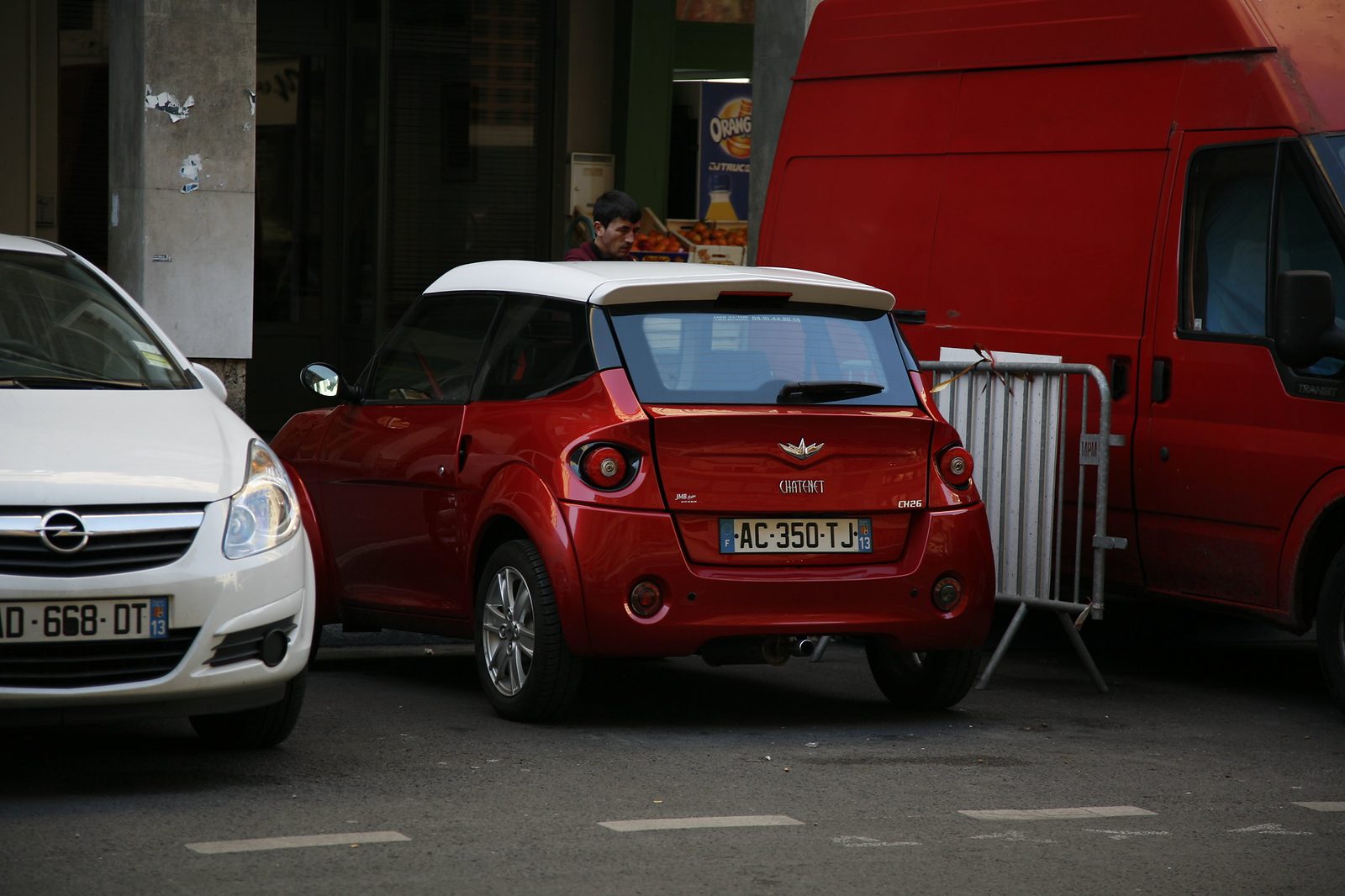
A red Chatenet CH26 with grey bonnet stripes and a black roof, parked in a street in 2013.Photo: free photos & art, CC BY 2.0, via Wikimedia Commons

At a glance

The spec plate

Chatenet

CH26 · Pierre-Buffière

Built
1984–Founded in 1984; still building cars
Country
FrancePierre-Buffière, Haute-Vienne, in the Limousin
Maker
Automobiles Chatenet, Pierre-BuffièreFounded by Louis-Georges Chatenet; run by David Chatenet since 2009
Engine
Two-cylinder diesel, Yanmar or LombardiniThe Lombardini as the EVO 500 or the DCI; the CH46e of today is electric
Power
4 kWThe German Wikipedia’s figure, for a licence-free model it does not name
Length
3,060 mm
Weight
350 kgThe CH26, at the category’s limit
Seats
2
Wheels
4Front engine, continuously variable transmission
Price new
€13,600 in 2009Nearly €15,000 by 2011; rivals cost about €10,000 in 2009
Production
Nearly 3,000 a yearEuropean buyers in 2011; no total has been found
Top speed
45km/h45 km/hLe Figaro’s test car showed 55 km/h on its speedometer, barely 50 km/h true

How big is it?

True proportion

3.06 m

It is 90 mm longer than a Fiat 500, about 1.7 adults laid end to end.

  • 350 kg: about five adults
  • Six centimetres over the 3 m limit that ended it in 2018
  • A 600-litre boot
Drawn at true proportion. The track is 3.6 metres long; the adult stands at the same scale. The Peel P50 is the smallest production car, on every page for comparison.

The story

History

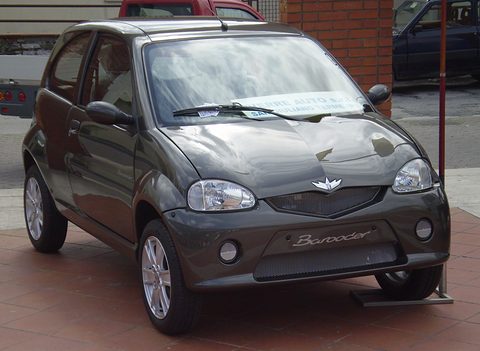
Louis-Georges Chatenet founded Automobiles Chatenet in 1984 at Pierre-Buffière, in the Haute-Vienne, near Limoges.source 1source 2source 3 It has built licence-free cars there ever since, assembled, says Le Figaro, by hand.source 4 Its early models were the Stella and the Média, the Speedino convertible and the Barooder; when each appeared has not been found.source 1source 2

The firm aims high. The French Wikipedia describes the marque as setting out to be the top of the range among licence-free cars.source 1 It also looked abroad: in 2005 Les Échos reported that Chatenet sold about 70 per cent of its production outside France and called it Europe’s fourth maker of licence-free cars.source 5 It sells in a dozen European countries and in New Caledonia.source 1 It is a family business, and since 2009 it has been run by David Chatenet.source 1source 6

The CH26

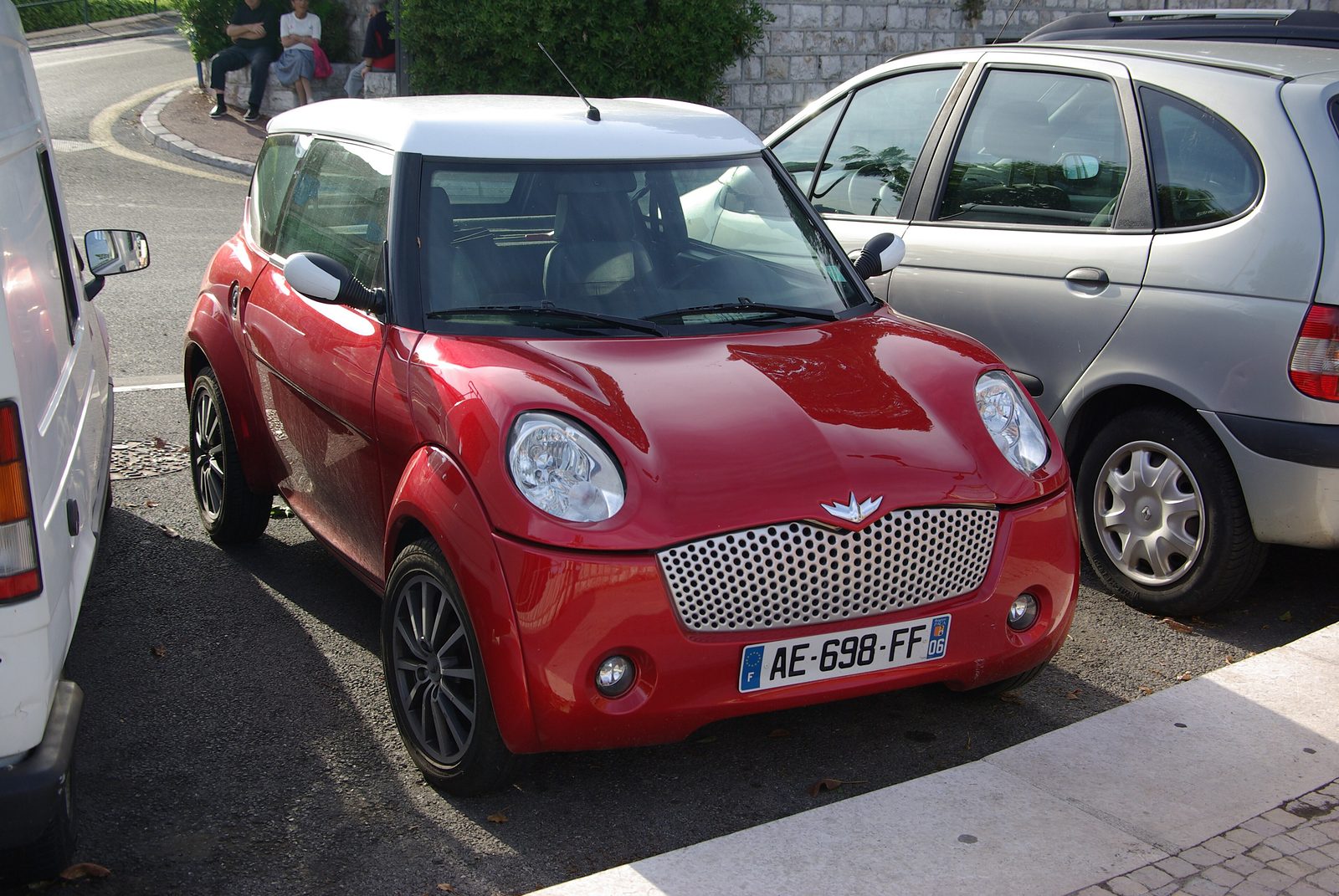
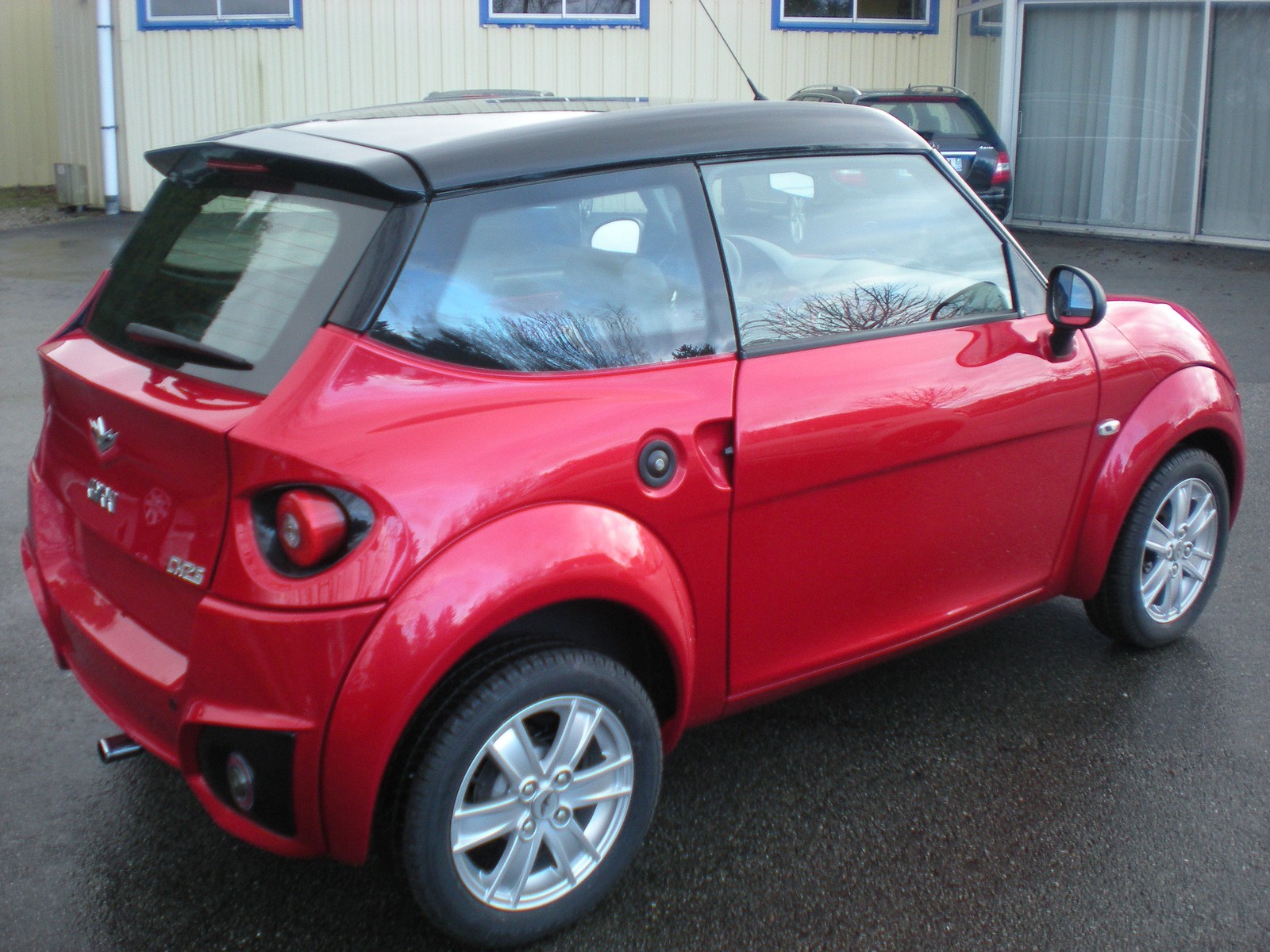
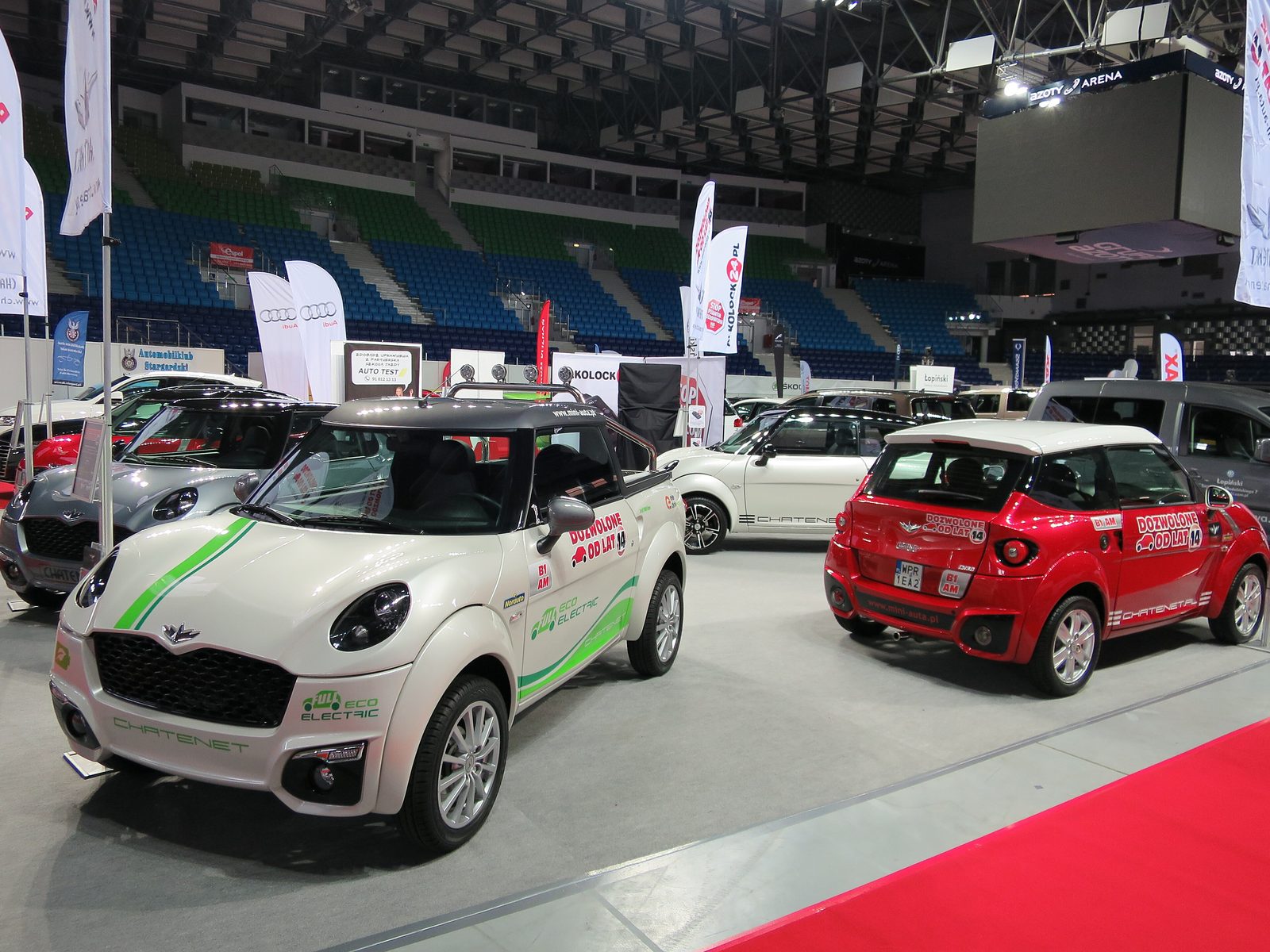
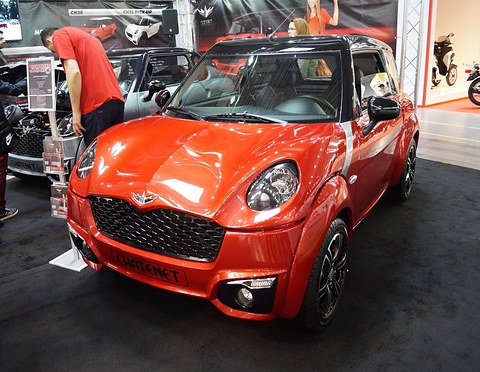
The CH26 of 2009 was the first Chatenet designed in 3D. Its stylist, Christian Polo, was in David Chatenet’s words a designer known for his work with a BMW converter, and the car’s face recalled the Mini Cooper.source 6source 1source 4 Underneath, the steel chassis of earlier Chatenets gave way to a welded aluminium cage.source 6source 4 It came with electric windows, twin wipers, 14-inch alloy wheels, reversing radar and an MP3 radio, and it cost €13,600, against about €10,000 for its rivals.source 6 The engines were Yanmar or Lombardini two-cylinder diesels.source 1source 4

Le premier produit que nous avons conçu en la pensant d’emblée « automobile » et non voiture sans permis.

David Chatenet, head of Automobiles Chatenet, interviewed by Joseph Gicquel, L’argus, 4 June 2009. In English: “The first product we designed thinking of it from the start as a ‘car’ and not as a licence-free car.”source 6

He launched it into a downturn. The French market was steady at about 13,000 licence-free registrations a year, but Chatenet’s Spanish market had fallen by 70 per cent, and Italy by 15 to 20 per cent; in each country it had been selling about 70 to 80 cars a month.source 6 In 2009 it sold 1,823 cars across Europe.source 7 Electric cars, he told L’argus, were no answer yet.

Tant que la technologie de l’électrique n’a pas trouvé de solution fiable, la voiture sans permis n’a pas plus d’avenir dans ce secteur que les voitures conventionnelles.

David Chatenet, L’argus, 4 June 2009. In English: “Until electric technology has found a reliable solution, the licence-free car has no more future in that area than conventional cars.”source 6

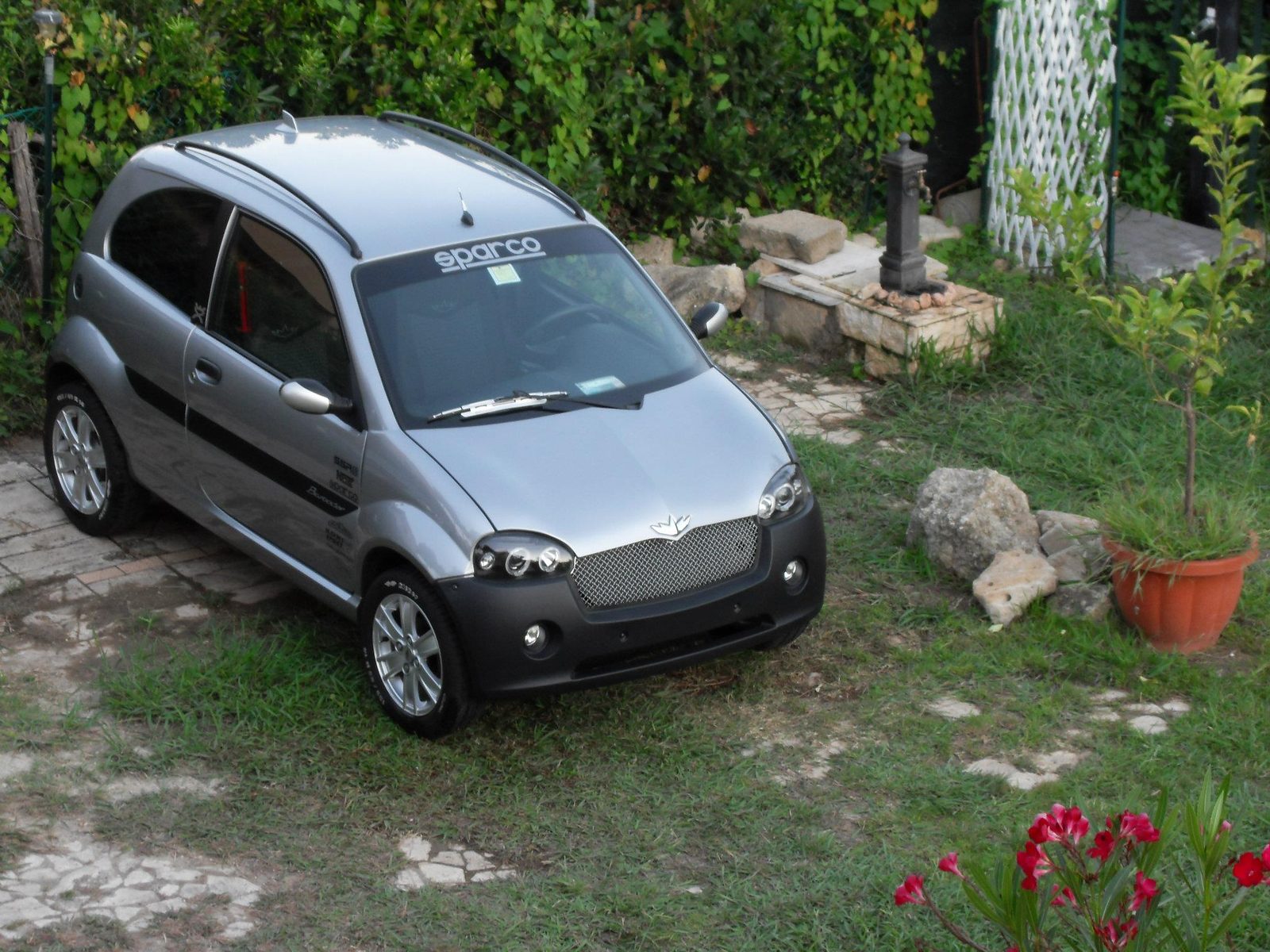
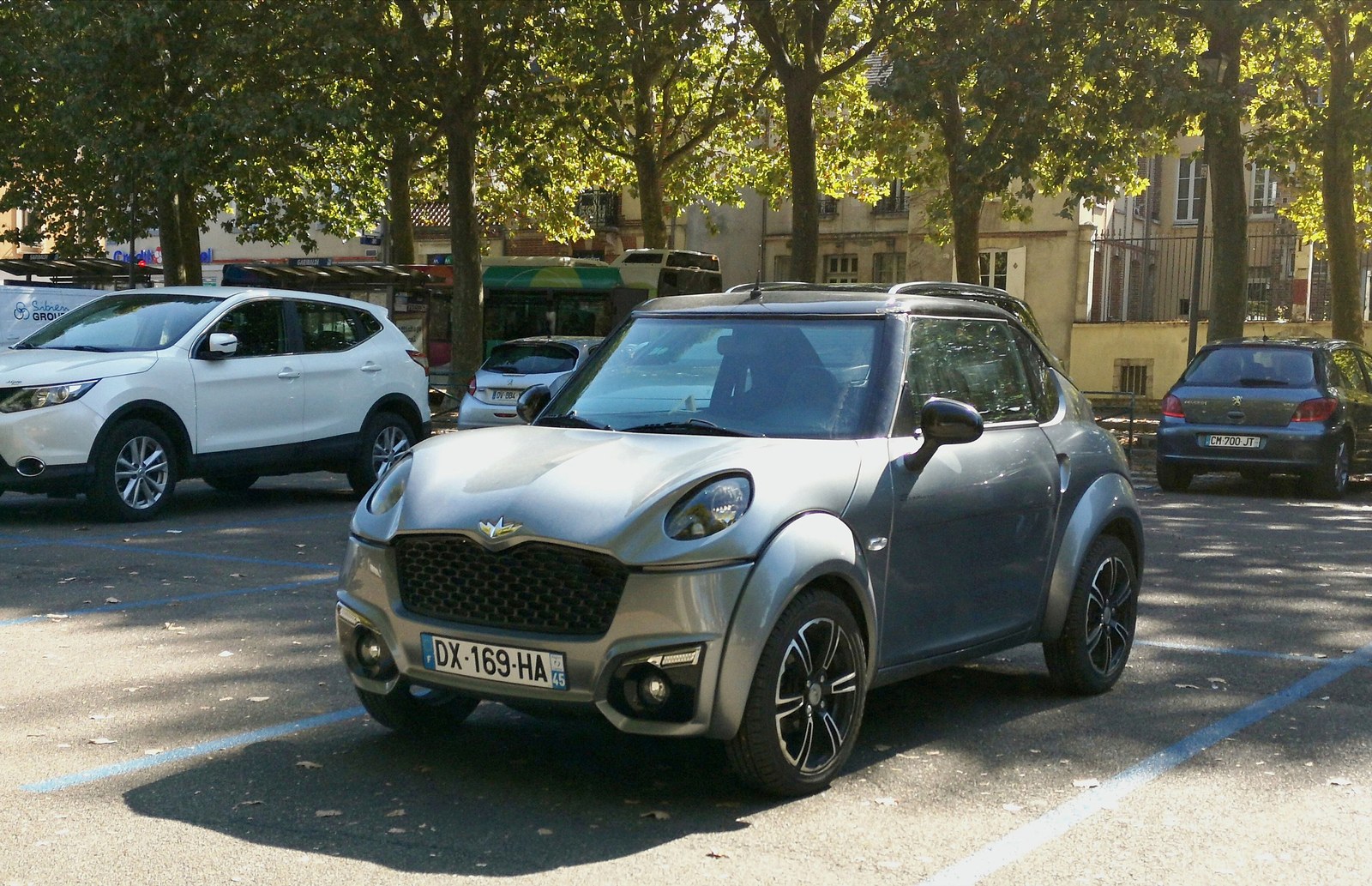
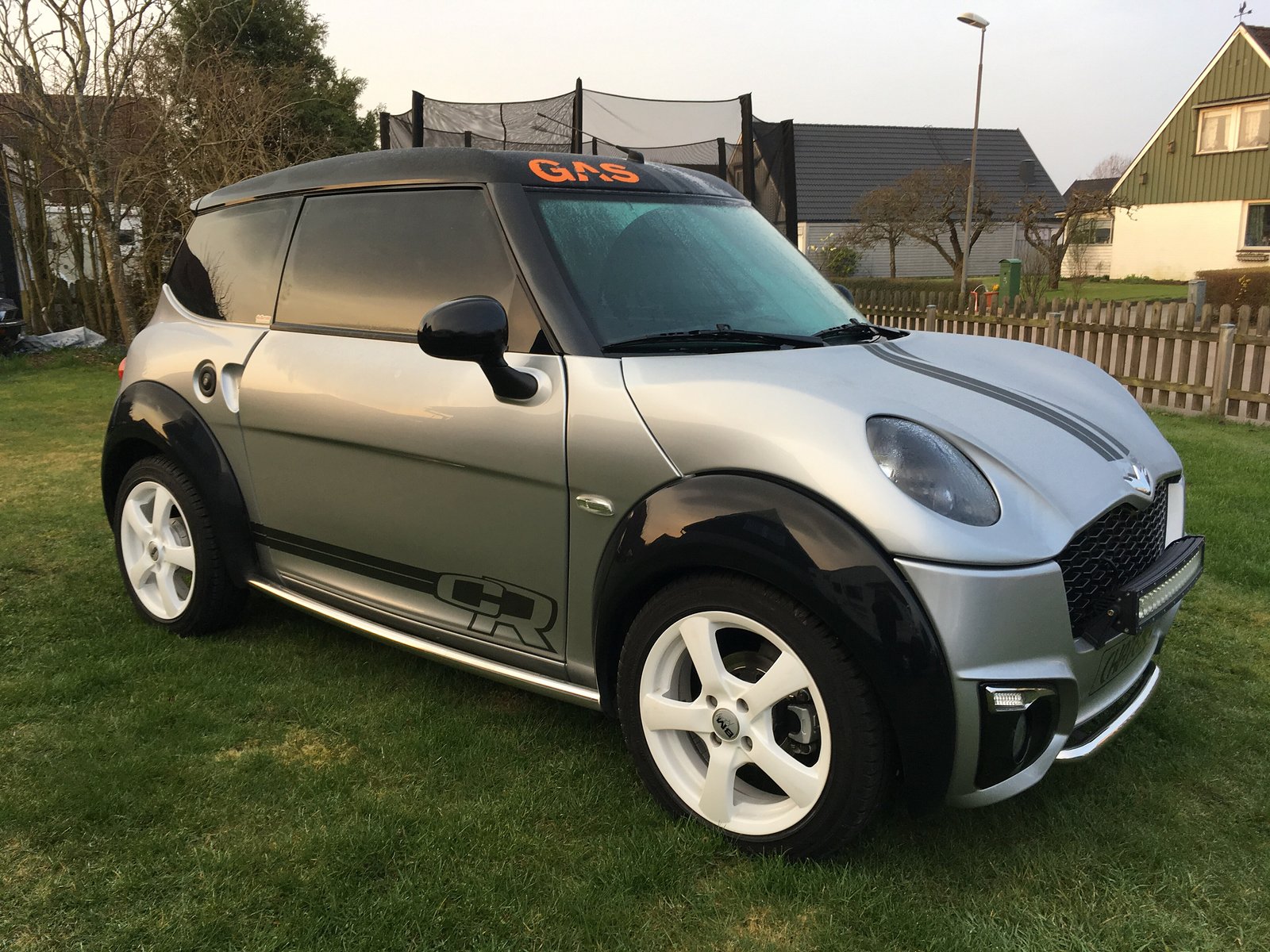
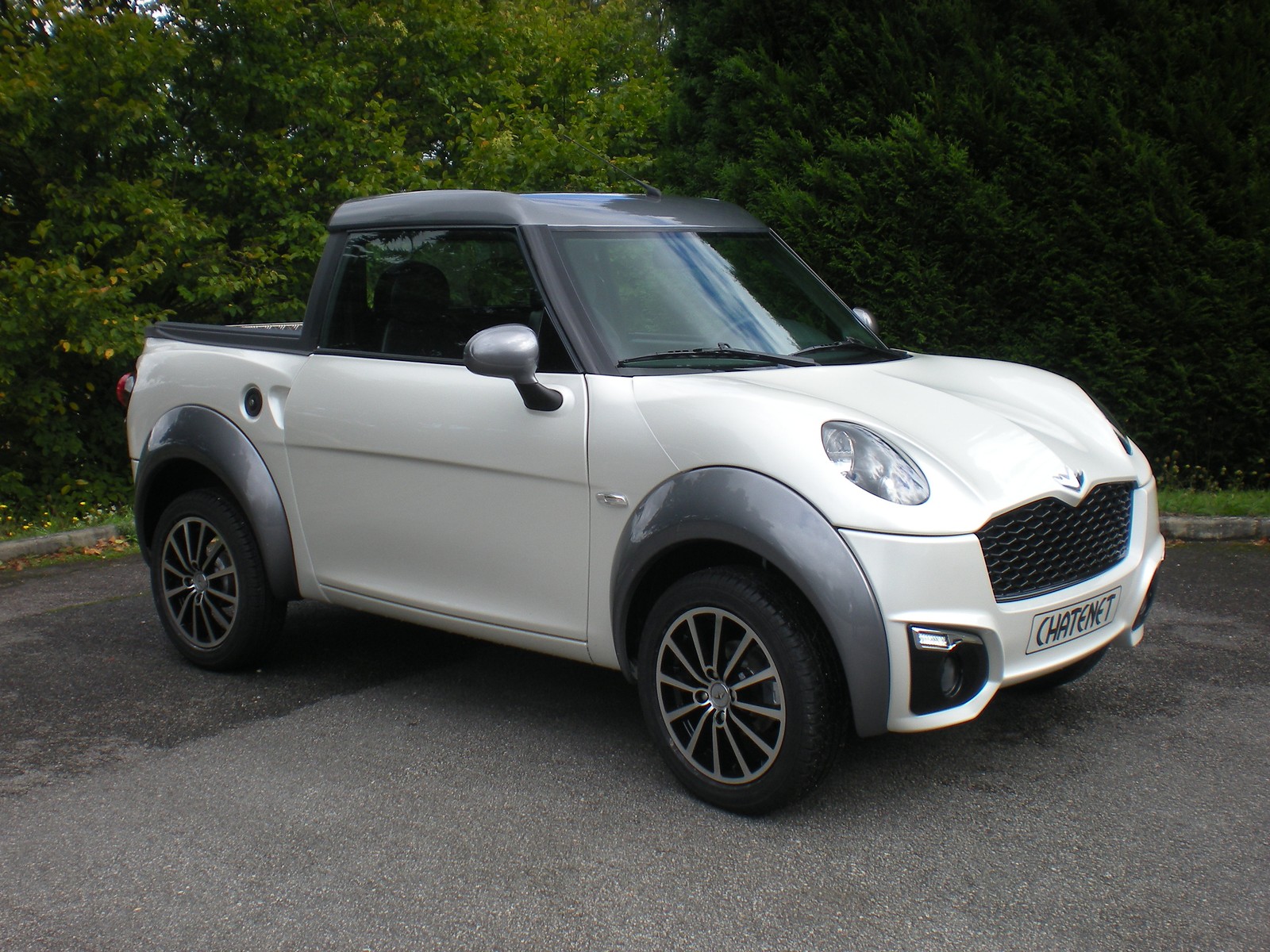
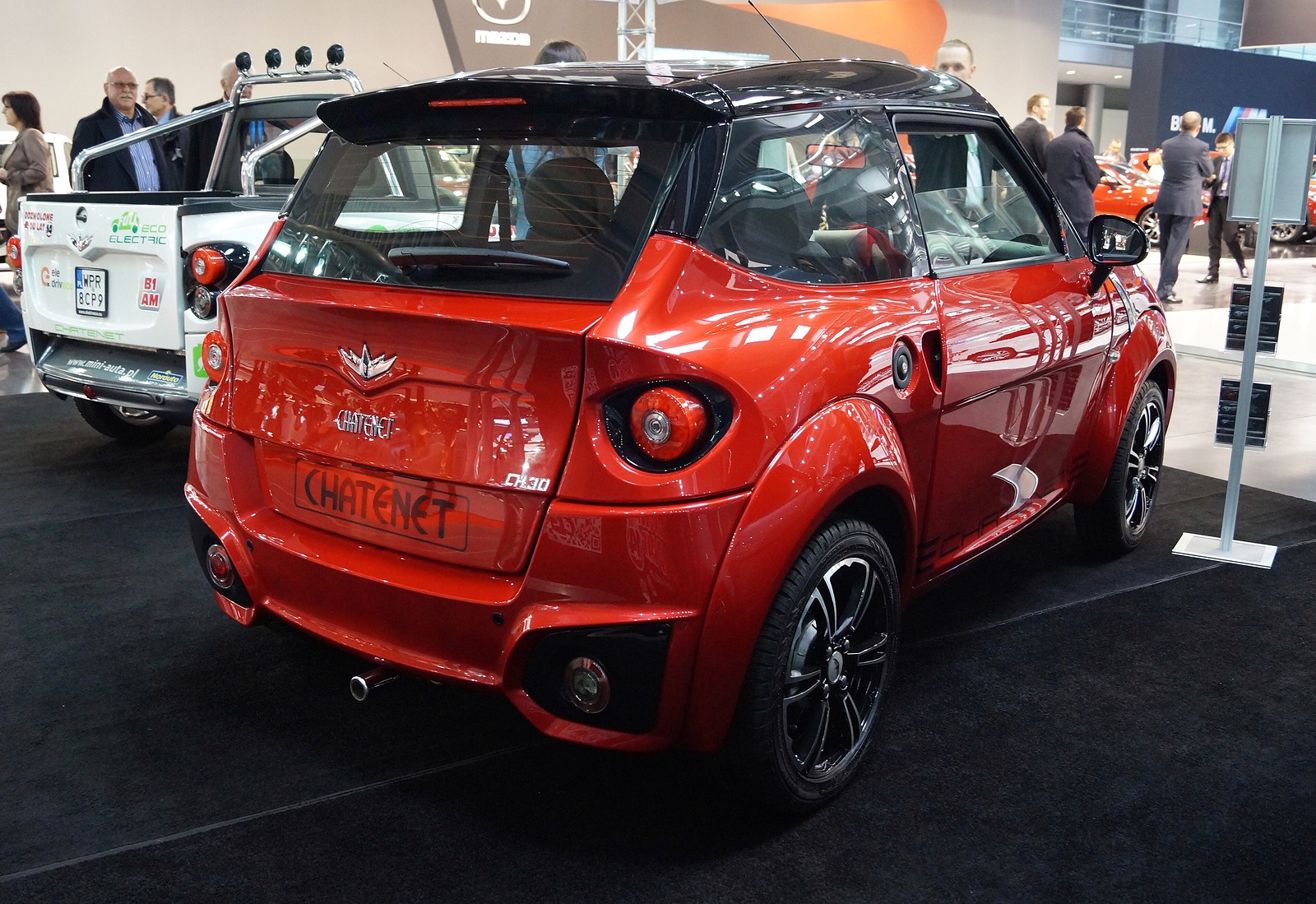
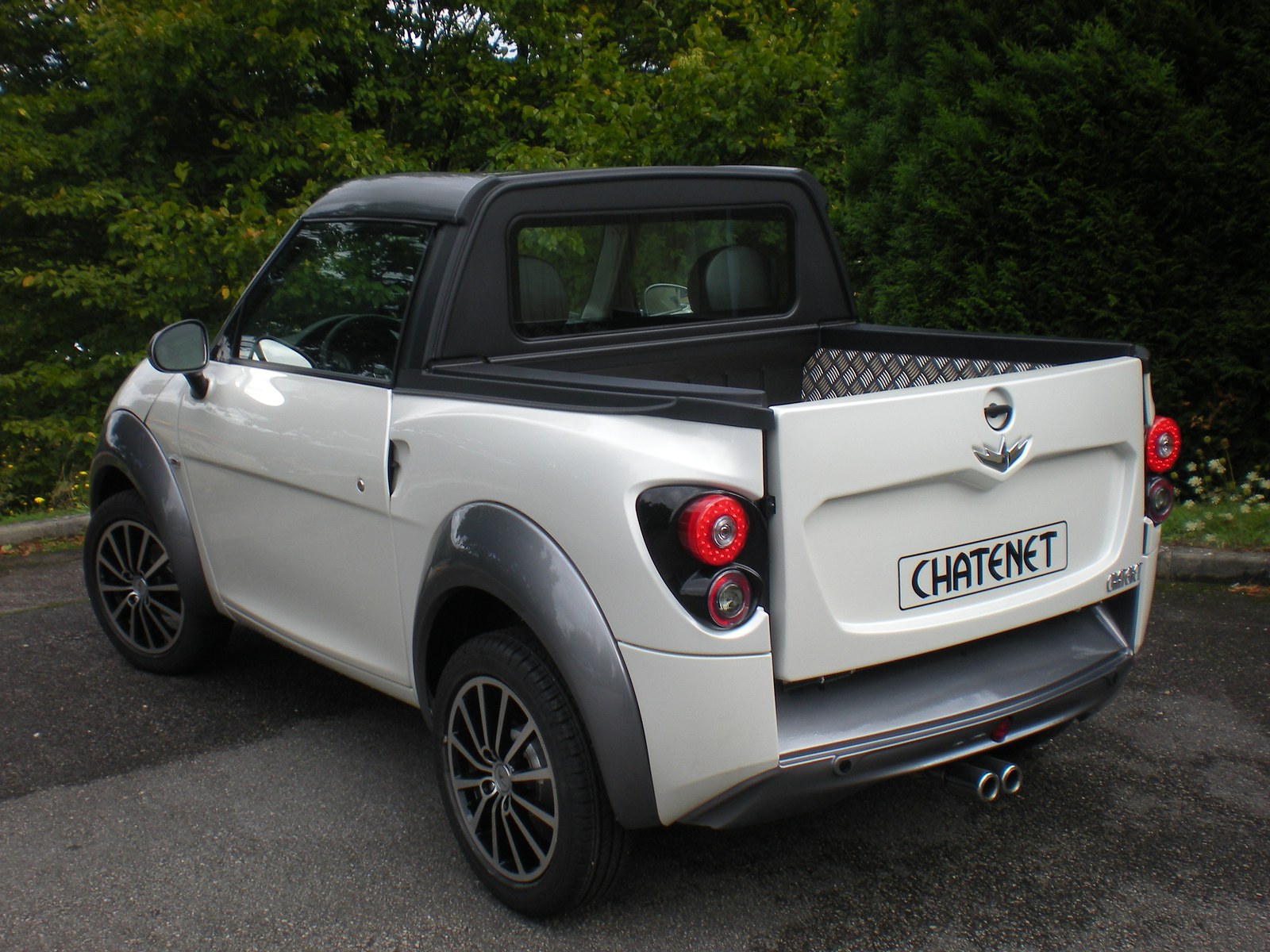
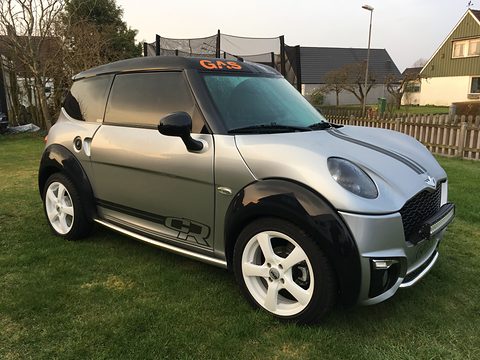
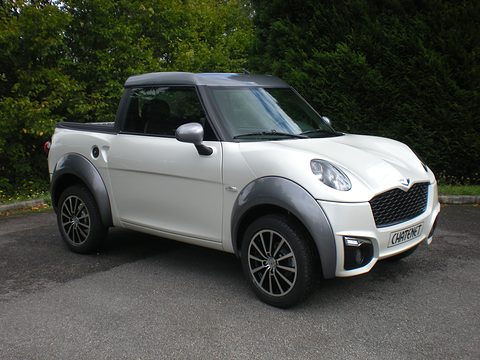
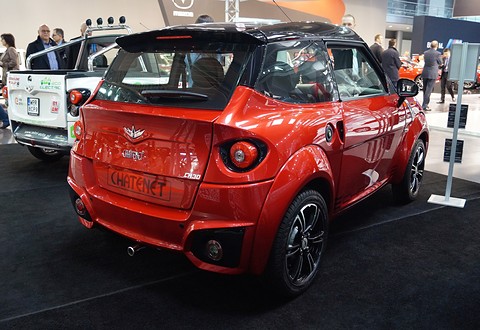
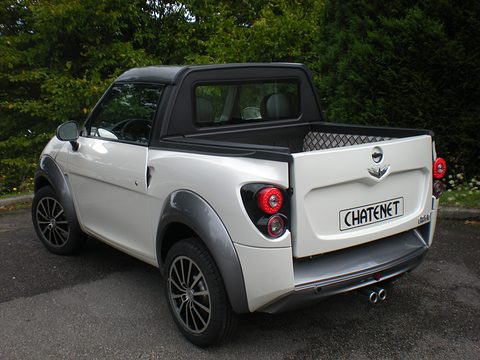
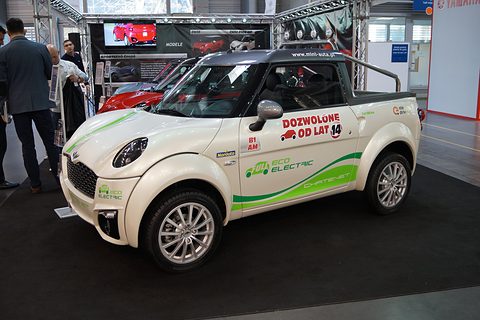
From the CH26 came a family: the Découvrable with a Webasto canvas roof, a CH32 Break and a pick-up, the Sporteevo coupé, and cars listed as the CH28 and CH30.source 1source 2 The German Wikipedia also records a faster licensed model, the “523”, with a 15 kW two-cylinder petrol engine, 98 km/h (61 mph) and a car licence required.source 3

Le Figaro drives it

In June 2011 Philippe Doucet tested a CH26 for Le Figaro. He found its buyers among well-off parents in the Paris region and on the Côte d’Azur, buying it for a teenager instead of a scooter; among elderly country drivers who had never taken a test; and among drivers who had lost their licence. The styling, he wrote, recalled the Mini furiously. The cabin had good materials and a splendid electric folding roof, and its light plastics were the price of the 350 kg (772 lb) weight limit.source 4

Le diesel bicylindre Yanmar disposé sous le capot pétarade comme le propulseur d’un engin de terrassement. C’est normal, il en provient.

Philippe Doucet, road test of the CH26, Le Figaro, 29 June 2011. In English: “The Yanmar twin diesel under the bonnet bangs away like the engine of an earth-mover. Naturally, since that is where it comes from.”source 4

It was quieter at top speed, which on his car was 55 km/h (34 mph) on the speedometer and barely 50 km/h true. In town it had to be driven flat out, lifting off only for red lights, and the brakes were unassisted. It rode well, on good seats. By then it cost nearly €15,000, close to the price of two discounted Clios, and Chatenet was finding nearly 3,000 buyers a year across Europe. Its boot held 600 litres (21 cu ft).source 4

Three metres

The CH26 was 3,060 mm (120 in) long.source 4 From 1 January 2018 new rules held licence-free cars to 3 m (118 in) long and 1.50 m (59 in) wide, and so the CH26 was dropped that year.source 8source 1 The CH40, launched late in 2017 with a Lombardini engine, measured 2.98 by 1.49 m (117 × 59 in), and Génération Sans Permis judged that it had not caught on enough.source 8source 1 In March 2019 the CH46 kept the CH40’s base but took a rear restyled to recall the CH26. It came with the Lombardini DCI, which Génération Sans Permis calls the Kohler HDI, or the EVO 500, and in Junior, Spring, Barooder, Sportline and Sportive R trims, the Barooder raised and fitted with roof bars.source 8 Today Chatenet sells the CH46 with a diesel and as the electric CH46e, the kind of car its head had doubted in 2009.source 9
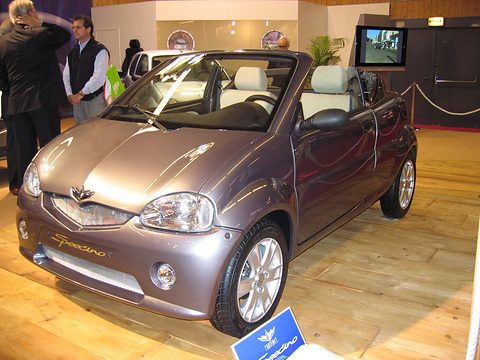
Purple-grey small open two-seater with cream seats and Speedino script on its bumper, on a wooden floor.
A Chatenet Speedino convertible on a show stand in 2004.Photo: Cars en travel, CC BY-SA 3.0, via Wikimedia Commons
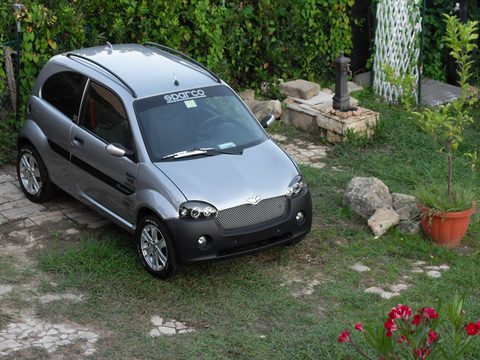
Dark grey small hatchback with a mesh grille, winged badge and a sign on its windscreen, on red tiled paving.
A grey Chatenet Barooder on display in 2007.Photo: Lucarelli, Public domain, via Wikimedia Commons
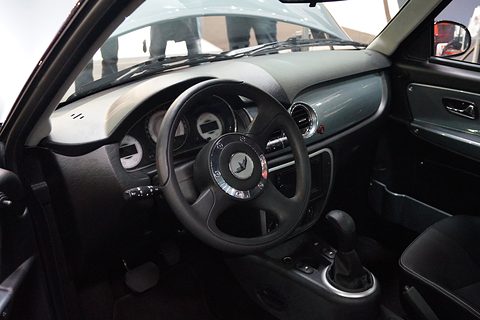
Black and grey dashboard with a three-spoke steering wheel, round dials and a gear selector, seen through the open door.
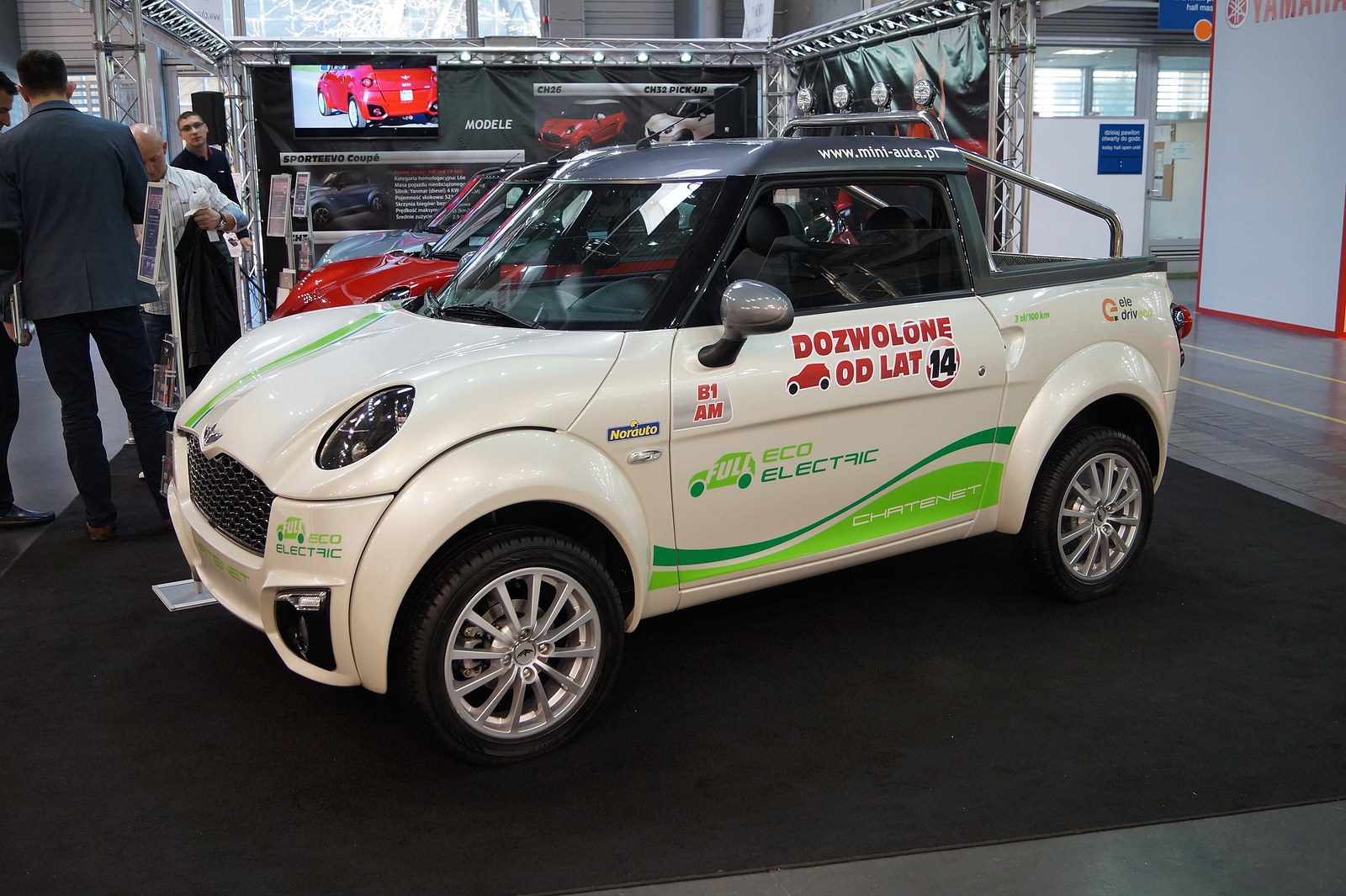
The cabin of the Chatenet CH30 at the Poznań Motor Show in 2015.Photo: Jakub “Flyz1” Maciejewski, CC BY-SA 3.0, via Wikimedia Commons

Pictures

More photographs, old and new

Variants

From the Stella to the CH46

Chatenet’s models
VariantYearsWhat differsHow many
Stella and MédiaNot knownEarly modelsNot known
SpeedinoNot knownA convertibleNot known
BarooderNot knownAn early model; later a raised CH46 trim with roof barsNot known
CH262009–⁠18Christian Polo’s Mini-like design on an aluminium cage; 3.06 mNot known
CH26 Découvrable2010sA Webasto canvas roofNot known
CH28, CH30, CH32, Sporteevo2010sDerivatives: the CH32 a Break and a pick-up, the Sporteevo a coupéNot known
CH402017–2.98 m long, Lombardini engineNot known
CH46 and CH46e2019–The CH40 base with a rear recalling the CH26; diesel or electricNot known
“523”Not knownA licensed model: two-cylinder petrol of 15 kW, 98 km/hNot known

Specification

The CH26, from Le Figaro and L’argus unless noted

Engine and drive

Engine and drive
EngineTwo-cylinder diesel, Yanmar or Lombardinisource 1source 4
Power4 kWsource 3For a licence-free model the German Wikipedia does not name
GearboxContinuously variablesource 3The German Wikipedia’s data, for a model it does not name
FuelAbout 11 litres, for a range of about 130 km (81 miles)source 3The German Wikipedia’s data, for a model it does not name
Consumption3.5 litres per 100 kmsource 3The German Wikipedia’s figure, for a model it does not name; the maker gives 3.15 for its current model

Body and chassis

Body and chassis
ChassisA welded aluminium cagesource 6source 4Earlier Chatenets had steel chassis
BrakesUnassistedsource 4
Wheels14 in alloyssource 6
Standard equipmentElectric windows, twin wipers, reversing radar, an MP3 radio

Dimensions

Dimensions
Length3,060 mmsource 4
Boot600 litres
Weight350 kg, the category limitsource 3source 4
CH40 and CH462,980 × 1,490 mmsource 8

Performance and running

Performance and running
Top speed45 km/h (28 mph), the legal limit55 km/h on the speedometer in Le Figaro’s test, barely 50 true
Price new€13,600 in 2009source 6Nearly €15,000 in 2011

How many were built?

Every figure, with its source

Nearly 3,000 a year, about 2011No total and no figure for any one model has been found. In 2011 Le Figaro put Chatenet’s European buyers at nearly 3,000 a year; in 2005 Les Échos reported that about 70 per cent of production went abroad.source 5

  1. nearly 3,000European buyers a year, 2011One source

    Le Figarosource 4

  2. 1,823sold in Europe in 2009One source

    French Wikipedia, Voiturettesource 7

  • Two sources agreetwo good sources give the figure
  • One sourcea good source, alone
  • Unconfirmeda lead only, not yet checked

Famous for

Three points

  1. The luxury licence-free car

    Chatenet set out to build the top of the range, with alloys, reversing radar and an MP3 radio.

  2. A Mini at 45 km/h

    Christian Polo’s CH26 of 2009 wore a face that recalled the Mini Cooper.

  3. Six centimetres too long

    At 3.06 m the CH26 was ruled out by the 3 m limit of 2018.

Survivors and collecting

Today

Nothing has been found of a museum car, an auction record or a club.

Sources

Numbered as in the text

No production totals were found, and the early models have names but no dates. Sources are given as plain text; the links are on the Credits page.

  1. French Wikipedia, Automobiles Chatenet.
  2. English Wikipedia, Automobiles Chatenet.
  3. German Wikipedia, Automobiles Chatenet, technical data for an unnamed model.
  4. Philippe Doucet, “Chatenet CH 26, le luxe sans permis”, Le Figaro, 29 June 2011, read via the Internet Archive.
  5. Olivier Constant, “Automobiles Chatenet place 70 % de sa production à l’étranger”, Les Échos, 13 October 2005; only the headline and opening were read.
  6. Joseph Gicquel, “David Chatenet PDG d’Automobiles Chatenet, constructeur de voitures sans permis”, L’argus, 4 June 2009, read via the Internet Archive.
  7. French Wikipedia, Voiturette.
  8. Nicolas Meunier, “Chatenet CH46 : une CH26 remixée”, Génération Sans Permis, March 2019, read via the Internet Archive.
  9. Automobiles Chatenet, the maker’s website.