microcarfan
  • City car
  • Romania
  • 2 + 2 seats
  • Glass fibre, then steel

Dacia 500 Lăstun

Also known as Dacia 500, Lăstun

Its makers were told it should cost as much as a television set, weigh 500 kg, use 3 litres per 100 km and stay under 3 metres. Romania’s only series-built microcar met the last of those, weighed 590 kg, could use three times the fuel, and in March 1990 was banned from sale.

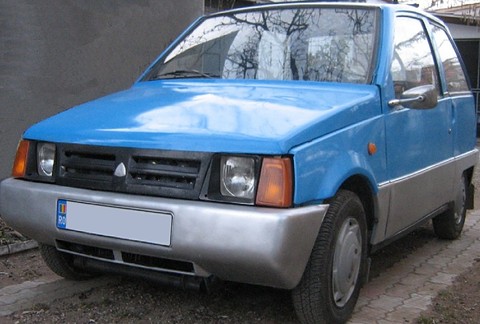
Small blue three-door hatchback with grey plastic bumpers and orange indicators, parked on a brick drive.
A blue Dacia 500 Lăstun in Romania, 2018.Photo: Simiprof, CC BY-SA 4.0, via Wikimedia Commons

At a glance

The spec plate

Dacia 500 Lăstun

Dacia 500 · Timișoara

Built
1988–⁠1991On sale from 1988 or January 1989; built until 1991
Country
RomaniaÎntreprinderea de Autoturisme Timișoara; designed at INMT, Bucharest
Maker
Întreprinderea de Autoturisme Timișoara (IAT)The former Tehnometal works; Dacia lent only the name
Engine
499 cc air-cooled in-line twinHalf the Oltcit Club’s flat-four, with a shorter stroke
Power
22.5 PS17 kW at 5,500 rpm
Length
2,950 mm1,410 mm wide, 1,352 mm high
Weight
590 kg
Seats
2 + 2Two adults and two children
Wheels
4Front engine, mounted across, driving the front wheels
Price new
47,000 lei1988; 50,000 lei by another account
Production
about 4,000–6,500Often given as 6,532; no factory figure has been found
Top speed
106km/h106 km/h66 mph; the first concept aimed at 70 km/h

How big is it?

True proportion

2.95 m

It is 20 mm shorter than a Fiat 500, about 1.7 adults laid end to end.

Drawn at true proportion. The track is 3.6 metres long; the adult stands at the same scale. The Peel P50 is the smallest production car, on every page for comparison.

The story

History

Plans for a very small car began in Romania in the late 1970s, and some sources say the idea was Nicolae Ceaușescu’s own: a car cheaper than the Dacia 1300 and the coming Oltcit.source 1 Adrian Marian, one of its designers, was in no doubt.

„Era o idee a lui Ceauşescu. Am avut peste 20 de vizite de la el până să-l aprobe. … Dacia 500 trebuia să fie un vehicul pentru tineret.“

Adrian Marian, designer on the Lăstun, interviewed in Adevărul, 8 June 2009. In English: “It was Ceaușescu’s idea. We had over 20 visits from him before he approved it. … The Dacia 500 was meant to be a vehicle for young people.”source 2

Three projects competed, among them a shortened Dacia 1300 estate and a vehicle with two moped engines. The winner came from the National Institute of Heat Engines, INMT, in Bucharest, where a team of engineers led by Valentin Cosoroabă began work in April 1980.source 1 Working prototypes, the Egreta and the Șoim, were tried in all weathers and on all kinds of ground. In March 1982 a public poll chose the name Lăstun, the Romanian for the house martin; a 1:5 model reached a drag coefficient of 0.25 in the wind tunnel; and after crash tests to European rules the car was homologated on 25 September 1985.source 1source 3

The design was a three-door hatchback 2,950 mm (116 in) long, with room for two adults and two children.source 3source 4 Its body was glass-reinforced polyester over a steel monocoque. The engine, mounted across the front and driving the front wheels, was half the Oltcit Club’s air-cooled flat-four, made into a 499 cc in-line twin of 22.5 PS (17 kW) with a shorter stroke, the first Romanian car with a transverse engine. The four-speed gearbox was a copy of the Trabant’s, column change and all.source 1source 3 The engineer Paul Pascu counted about 207 parts from Dacia and 200 from the Oltcit, and said the car had to cost half a Dacia, though a 12-inch wheel did not cost half as much as a 13-inch one. It came out at 37,000 lei to build, against a target of about 35,000.source 1

Timișoara

The factory chosen was Tehnometal Timișoara, which made livestock shelters and assembled tractors for export. Its director opposed the car, angered Ceaușescu and was replaced; the works was re-equipped as the Întreprinderea de Autoturisme Timișoara.source 1 Dacia lent only its name, one the public already knew.source 1 Marian said the plant built two or three cars a day, when about 10,000 a year were needed to break even.source 2

The body caused the next crisis. At a meeting in Timișoara with Nicolae and Elena Ceaușescu, Pascu recalls, the minister of the chemical industry admitted that he could not supply the hardener the polyester needed. Elena Ceaușescu demanded a steel car, and her husband ordered one within a month. The steel panels took two more years, and the first steel-bodied cars came out shortly before the revolution of December 1989; the tailgate stayed glass fibre to the end.source 1 Romanian Wikipedia sorts the cars into three series: all glass fibre and barely trimmed, then steel doors with mixed panels, then all-steel panels with big tail lamps.source 3

On sale, and banned

The Dacia 500 went on sale without advance publicity, at 47,000 lei by one account; Adevărul says the first car was put on sale on 26 January 1988, Ceaușescu’s birthday, for 50,000 lei, 25,000 less than a Dacia 1310.source 1source 5 Romanian Wikipedia, citing the magazine Autoturism, puts the first batch in January 1989, so the sale of 1988 was perhaps a token one.source 3 A stretched four-seat prototype was shown at the Bucharest International Fair in 1989.source 3source 4

The quality was notorious. Pascu blamed glass fibre from a polymer that did not meet the specification and warped after moulding, so that the cars looked home-made; cars broke down often on their very first trip, and within two years the Dacia service shops were full of them. A gear expert who examined the copied gearbox said it could not work. The electromagnetic fuel pump, made at Scornicești, was noisy and unreliable, and fuel use that was meant to be 3 litres per 100 km reached about 9.source 1source 5source 4 After the revolution owners formed an association and demanded compensation, and in March 1990 the national commission for standards and quality banned the car’s production and sale. Adevărul calls it the only car banned by Romania’s consumer protection.source 5 Production nonetheless went on into 1991; whether the ban was lifted or simply ignored is not known.source 1source 3source 4 Some cars stood in stock until 1993, sometimes repainted to hide the rust, and in 1992 the government closed the Timișoara works.source 1source 3

„… multe dintre reperele realizate în industria orizontală erau rebuturi, iar construit din ele, micul Lăstun nu avut șansa de a deveni altceva decât un alt rebut.“

Paul Pascu, INMT engineer, interviewed in Autocritica, 26 April 2021. In English: “many of the parts made by the supplier industry were rejects, and built from them, the little Lăstun had no chance of becoming anything other than another reject.”source 1

He still defends the prototypes, which he says he drove for more than 800,000 km. In 2022 the German magazine Oldtimer Markt called the Lăstun probably the worst car in the world.source 1source 6
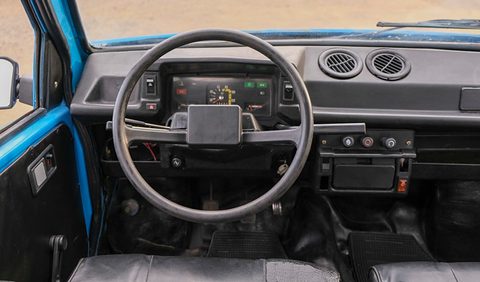
Two-spoke steering wheel before a black plastic dashboard with a small instrument binnacle and two round air vents.
The Lăstun’s dashboard, with its two-spoke wheel; the gear lever, copied from the Trabant, was on the steering column.Photo: Simiprof, CC0, via Wikimedia Commons

Variants

Prototypes and three series

The Lăstun, from prototype to steel
VariantYearsWhat differsHow many
Egreta, Șoim, Student1980–⁠83Working prototypes; the Egreta had a separate chassisPrototypes
Concept prototypes1983–⁠84Three cars, crash-tested, then three more to settle the body materials6
Series 11988–⁠89Glass-fibre panels and doors, vinyl seats, no interior trim, small tail lampsNot recorded
Series 2c. 1989Steel doors, mixed steel and glass-fibre panels, trimmedNot recorded
Series 31989–⁠91All-steel panels but a glass-fibre tailgate; big tail lamps with fog and reversing lightsNot recorded
Stretched four-seater1989A longer body with luggage space, shown at the Bucharest fairPrototype

Specification

From Romanian Wikipedia, citing the magazine Autoturism, unless noted

Engine and drive

Engine and drive
EngineAir-cooled two-cylinder in-line four-stroke, across the front; half the Oltcit Club flat-four with a shorter strokesource 1source 3Whether it is pushrod or overhead-cam is unconfirmed
Capacity499 ccsource 3source 6
Power22.5 PS (17 kW) at 5,500 rpmsource 1source 3source 4
Fuel pumpAn electromagnetic pulser on a Dacia diaphragm pump, made at Scorniceștisource 1Noisy and unreliable
GearboxFour speeds, copied from the Trabant, with its column changesource 1source 3
DriveFront wheels

Body and chassis

Body and chassis
BodyThree-door hatchback: glass-reinforced polyester on a steel monocoque, later part and then all steelsource 1source 3The tailgate was always glass fibre
BrakesDrums all roundsource 3
Tyres125 SR 12source 3
Drag coefficient0.25, on a 1:5 wind-tunnel modelsource 1

Dimensions

Dimensions
Length2,950 mmsource 3source 4
Width1,410 mm
Height1,352 mm1,340 mm in German Wikipedia
Wheelbase1,915 mm
Weight590 kgsource 5source 3525 kg in German Wikipedia

Performance and running

Performance and running
Top speed106 km/hsource 3source 6
Consumption3.3 litres per 100 km steady, 4.5 in town, claimedUp to about 9 litres in use
Price new47,000 lei (1988)source 150,000 lei by another account; it cost 37,000 lei to make

How many were built?

Every figure, with its source

About 4,000 to 6,500 builtSomewhere between about 4,000 and 6,500, often given as 6,532. None of the figures is documented from factory records, and none by year has been found.

  1. 6,532all LăstunsOne source

    English Wikipedia, citing Autogreen.ro, 2009source 4

  2. 6,500all LăstunsOne source

    Adevărul, 2013source 5

  3. about 5,400all LăstunsOne source

    the designer Adrian Marian, in Adevărul, 2009source 2

  4. almost 4,000all LăstunsOne source

    Autocritica, 2021, from the engineers and Autoturismsource 1

  • Two sources agreetwo good sources give the figure
  • One sourcea good source, alone
  • Unconfirmeda lead only, not yet checked

Famous for

Three points

  1. Ceaușescu’s car

    Romania’s only microcar, approved after more than 20 visits from the head of state.

  2. Fibre to steel

    A glass-fibre body that became steel on Elena Ceaușescu’s order.

  3. Banned

    Its production and sale were banned by the quality authorities in March 1990.

Survivors and collecting

Today

Few survive; many were abandoned in the 1990s.source 3 Marian scrapped his own collection car when the city hall ordered it off the public road under threat of a fine.source 2 Some went to Poland, where an advert for at least one registered Lăstun was archived in 2025.source 3 No Lăstun has been found in a museum, an owners’ club or a major auction.

Sources

Numbered as in the text

Much of the story comes from one engineer’s recollections, published in 2021. The magazine Autoturism and the 1987 East German road test were not read. Sources are given as plain text; the links are on the Credits page.

  1. Alin-Alexandru Ionescu, “Dacia Lăstun. Ideea. Rebutul.”, Autocritica, 26 April 2021, from interviews with the INMT engineer Paul Pascu and from Autoturism.
  2. Ștefan Both, interview with Adrian Marian, “Omul care a lucrat la proiectarea Lăstunului”, Adevărul, 8 June 2009.
  3. Romanian Wikipedia, Dacia 500 Lăstun, read in full. Used as a lead; it cites Autoturism (February and April 1989) and Jurnalul Național (2004).
  4. English Wikipedia, Dacia Lăstun, read in full. Used as a lead only; it cites Autogreen.ro (2009) for 6,532.
  5. Cristian Delcea, “Povestea Lăstunului, singurul autoturism interzis de Protecția Consumatorilor”, Adevărul, 30 March 2013.
  6. German Wikipedia, Dacia 500, read in full. Used as a lead; its literature includes Wolfgang Blaube in Oldtimer Markt 3/2022.