The story
History
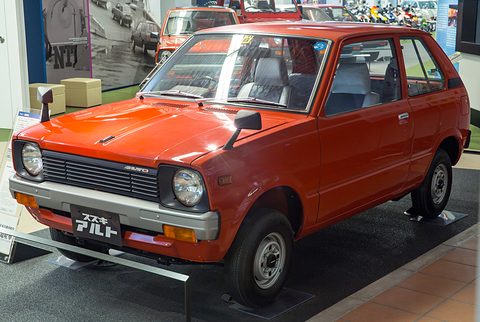
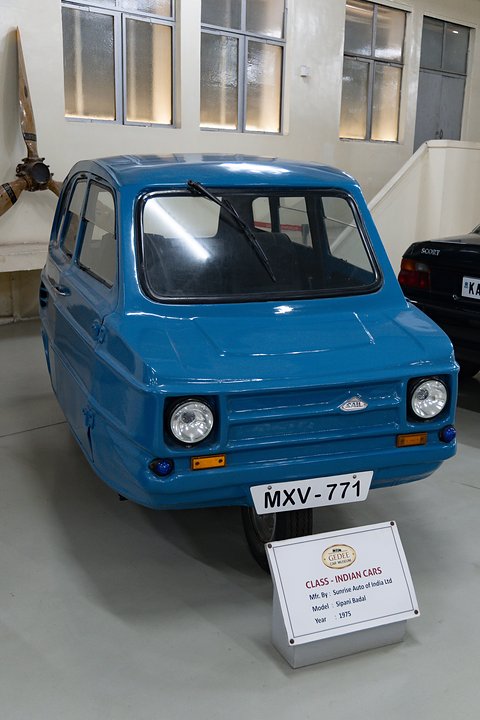
The Badal came from Sunrise Automotive Industries, SAIL, of Bangalore, founded in 1973 by English Wikipedia’s account or 1974 by three others.source 1source 3source 4source 5 In 1973 SAIL was one of three firms given a licence to build cars under rules that barred foreign collaboration, consultancy and imported capital goods. Another went to Sanjay Gandhi, whose Maruti project stalled until the rules changed.source 1 (What came of it, the Maruti 800, is told with the Suzuki Alto.) The firm was renamed Sipani Automobiles in 1978, so “Sipani Badal” is a later name for the early cars.source 1source 5
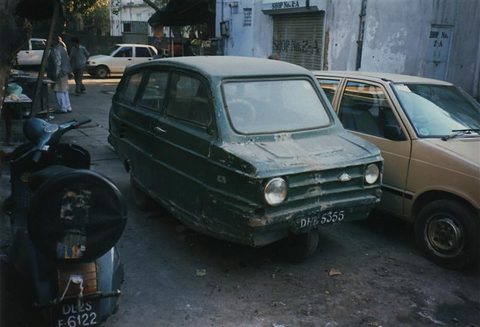
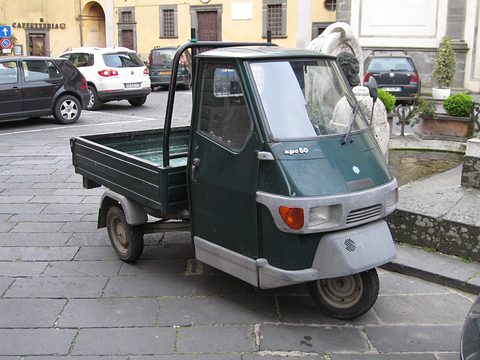
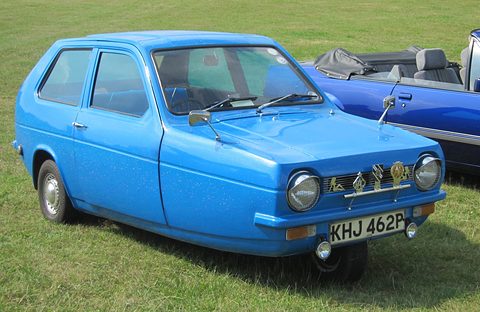
Introduced in 1975 and built from 1976, the Badal put a glass-fibre body on a steel Y-frame, with a single-cylinder two-stroke of 198 cc and 10 PS (7.4 kW) behind the seats, driving the rear wheels through a four-speed constant-mesh gearbox.source 1source 6source 2 The engine was Italian; Carole Nash names its maker as Innocenti.source 1source 5 Its one-box shape recalls Fiat’s 600 Multipla.source 4source 5 There were two doors on the left, the kerb side, and one on the right for the driver, and, with the engine at the back, no tailgate.source 1source 2 Jalopnik counts the lopsided doors among its charms.source 4
This was a clever, well-designed little microcar that helped bring cheap transportation to people, and it should get recognition like Isettas and Reliant Robins and other microcars do.
It flopped.source 1source 4 Mint says the company ran into trouble with the regulators, because three-wheelers in India were traditionally classed as auto-rickshaw taxis.source 3 The Auto Katalog figures that English Wikipedia cites show 331 built in 1978 and 31 in 1981.source 1 Carole Nash says a Badal appears in the Bollywood film Ram Balram.source 5
Reliant, or not?
Mint, Jalopnik and Carole Nash all say SAIL was set up with help from Britain’s Reliant.source 3source 4source 5 English Wikipedia calls the link “tenuous at best”, and says Reliant became involved only after the Badal had failed.source 1 The licence’s ban on foreign collaboration sits better with the second account, but the record does not settle it.source 1
In 1981 the Badal gave way to the Badal 4, also called the Sail, with four wheels, its engine in front and a squarer body; it may never have reached real production.source 1source 6 Then came the Sipani Dolphin, the Reliant Kitten built under licence with Reliant’s 848 cc engine, in 1982 by the better-supported date (Mint says 1978).source 1source 6source 3 Sipani went on to the Montana and the D‑1, assembled Rover Montegos, and was finally wound up by order of India’s Board for Industrial and Financial Reconstruction.source 3