The story
History
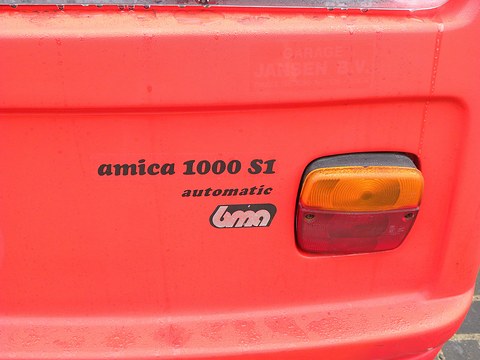
BMA, of Alfonsine near Ravenna, began making small vehicles in 1971; the German Wikipedia says it specialised in little utility vehicles.source 1source 2 What the initials stood for is not known. The original microcarfan.com, in its page on Willam, says a Monsieur Baldi founded both BMA and the firm that made the Baldi Frog, but nothing else confirms it, and Baldi was at Sanremo in Liguria while BMA was in Romagna.source 3
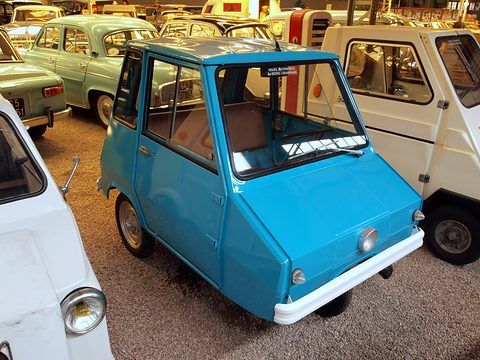
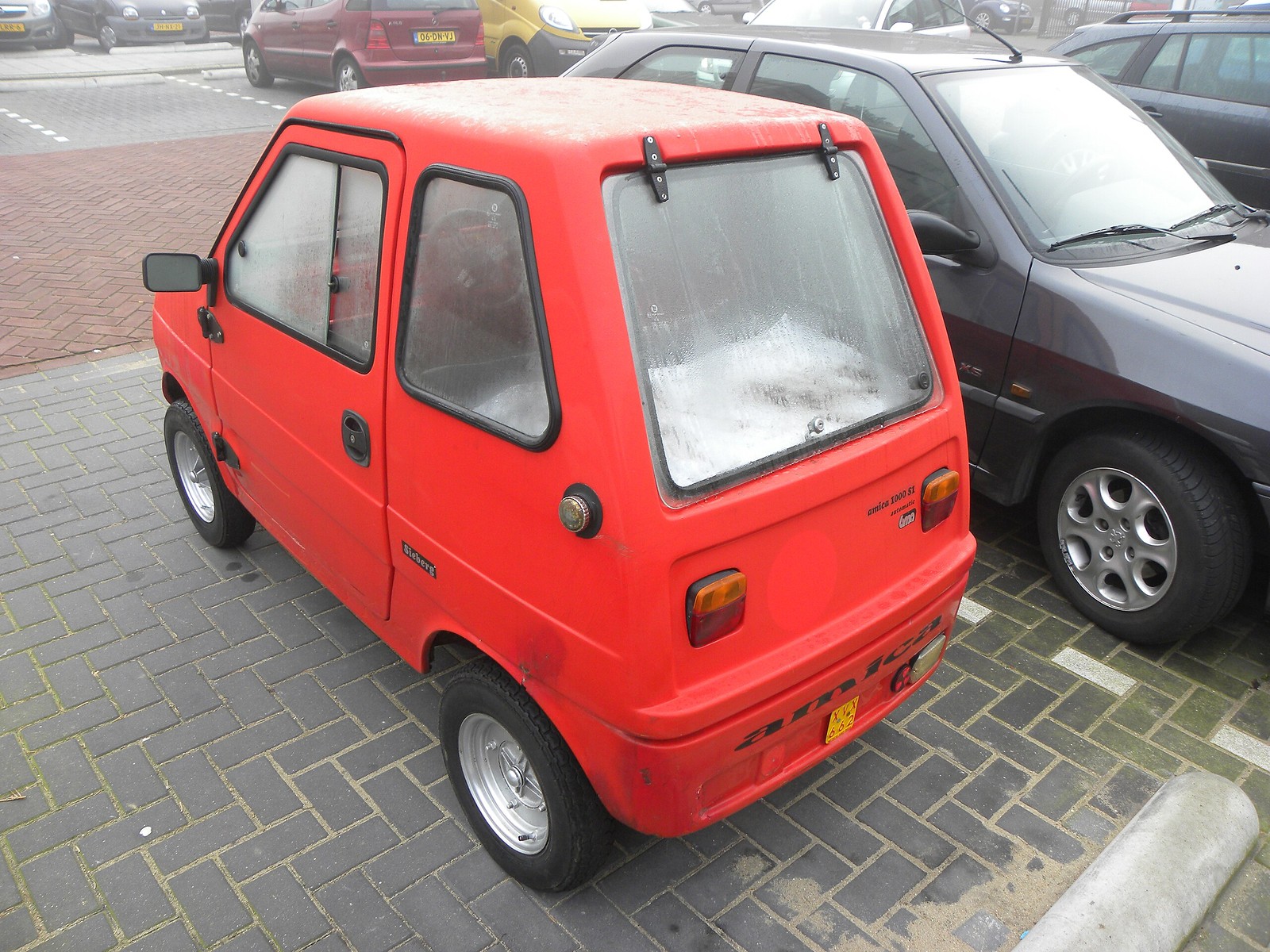
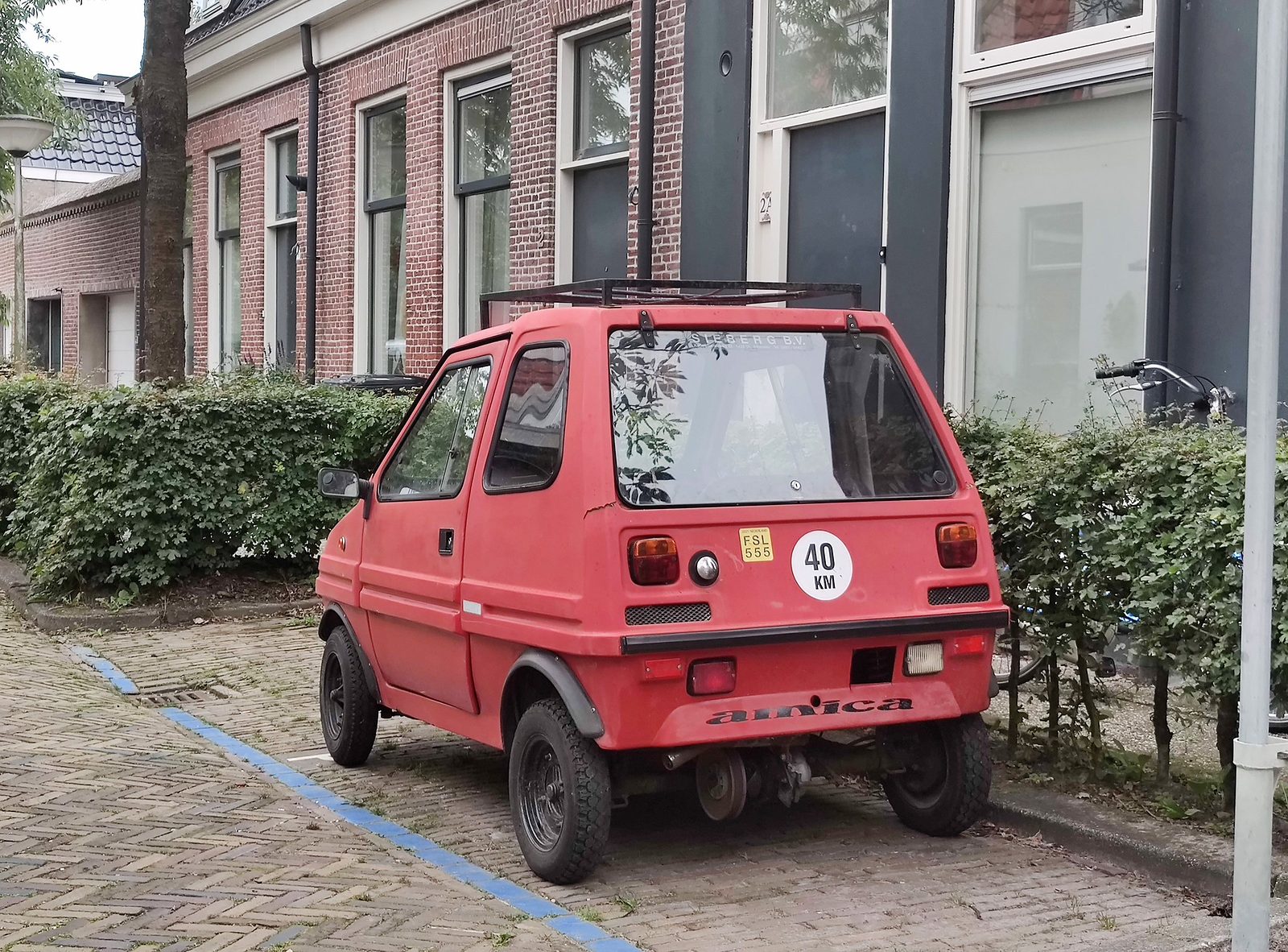
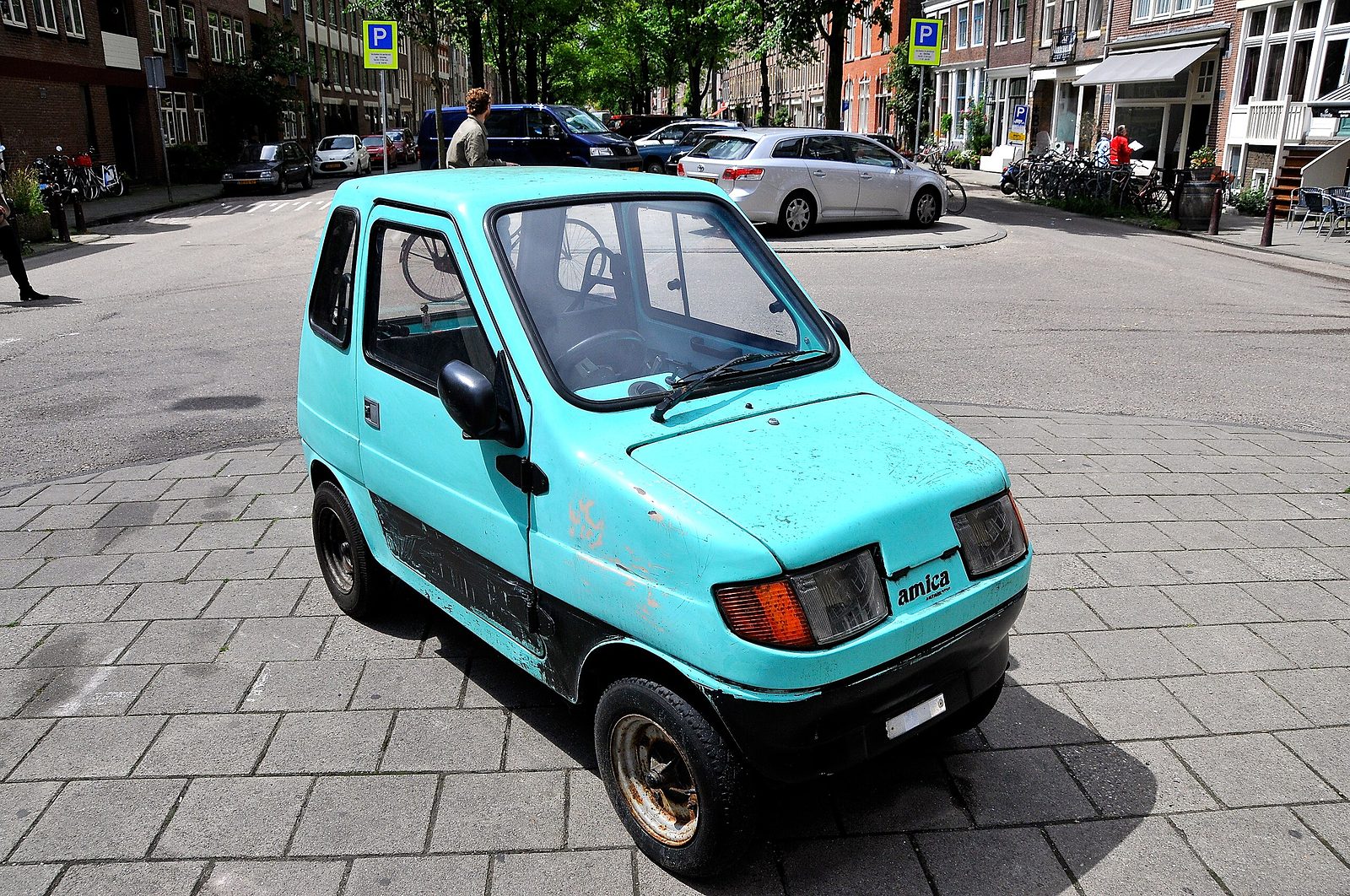
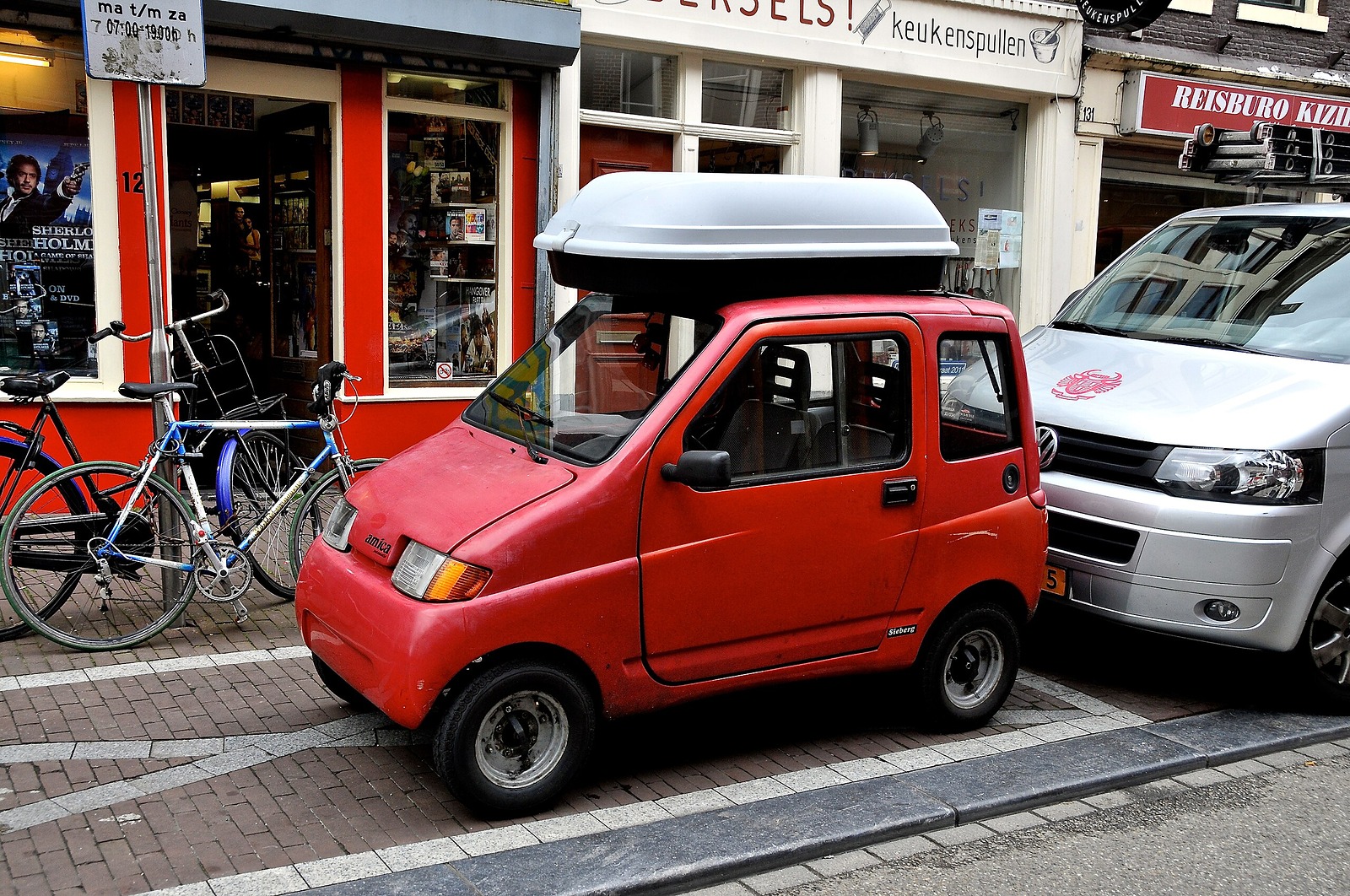
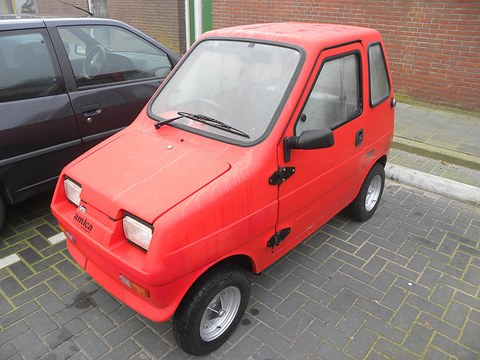
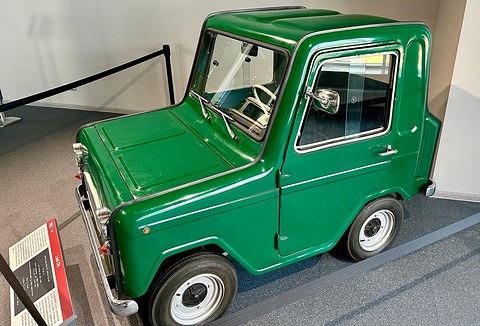
Its first car, the Amica, was a three-wheeler with a plastic body and gullwing doors.source 1source 2 Underneath was a sturdy tubular chassis; the body was ABS, and the two gullwing doors were canvas. Take them off and the Amica became an open car. A broad rubber rubbing strip ran right round the body.source 1 At 2.13 m (7 ft) long and 1.41 m (4 ft 8 in) wide, and 285 kg (628 lb), it was roomy enough for two adults side by side, and the old site’s author found it pleasant.source 1
Comment ne pas penser à une auto tamponneuse !
In Italy the Amica had engines of up to 223 cc. The version sold in France as a licence-free car made do with a 125 cc of 5.6 hp and a variator.source 1 From 1976 it was imported by Willam, the French importer that also sold the Willam City and several other Italian small cars.source 1source 4
The Brio, driven on one wheel
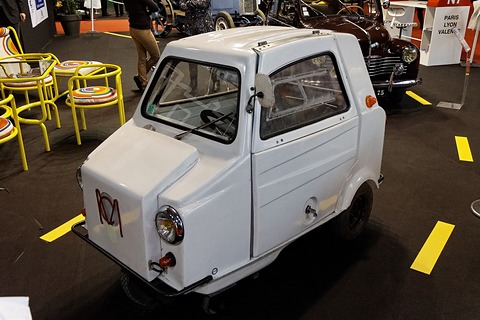
The Brio of 1978 was a single-seater on three wheels. Under the rear bench sat the familiar 47 cc Sachs Saxonette with its two-speed automatic box, and its chain drove only the right rear wheel.source 1source 2 It had no ventilation at all: on a hot day the only cure was to take the doors off or remove the top. Willam imported it for a few years.source 1 It was built until 1984 by the old site’s account, or 1986 by the German Wikipedia’s.source 1source 2
The Nuova Amica
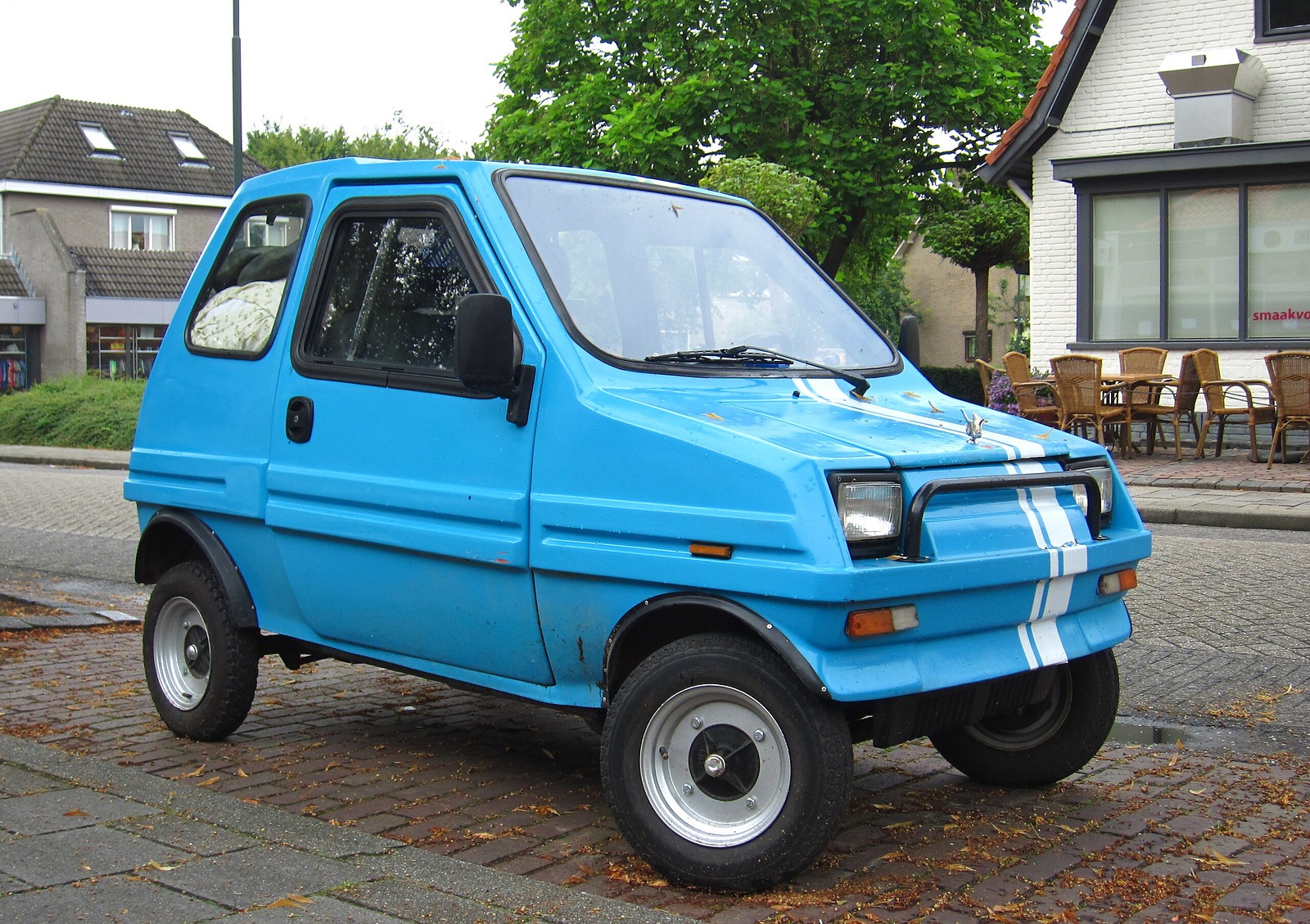
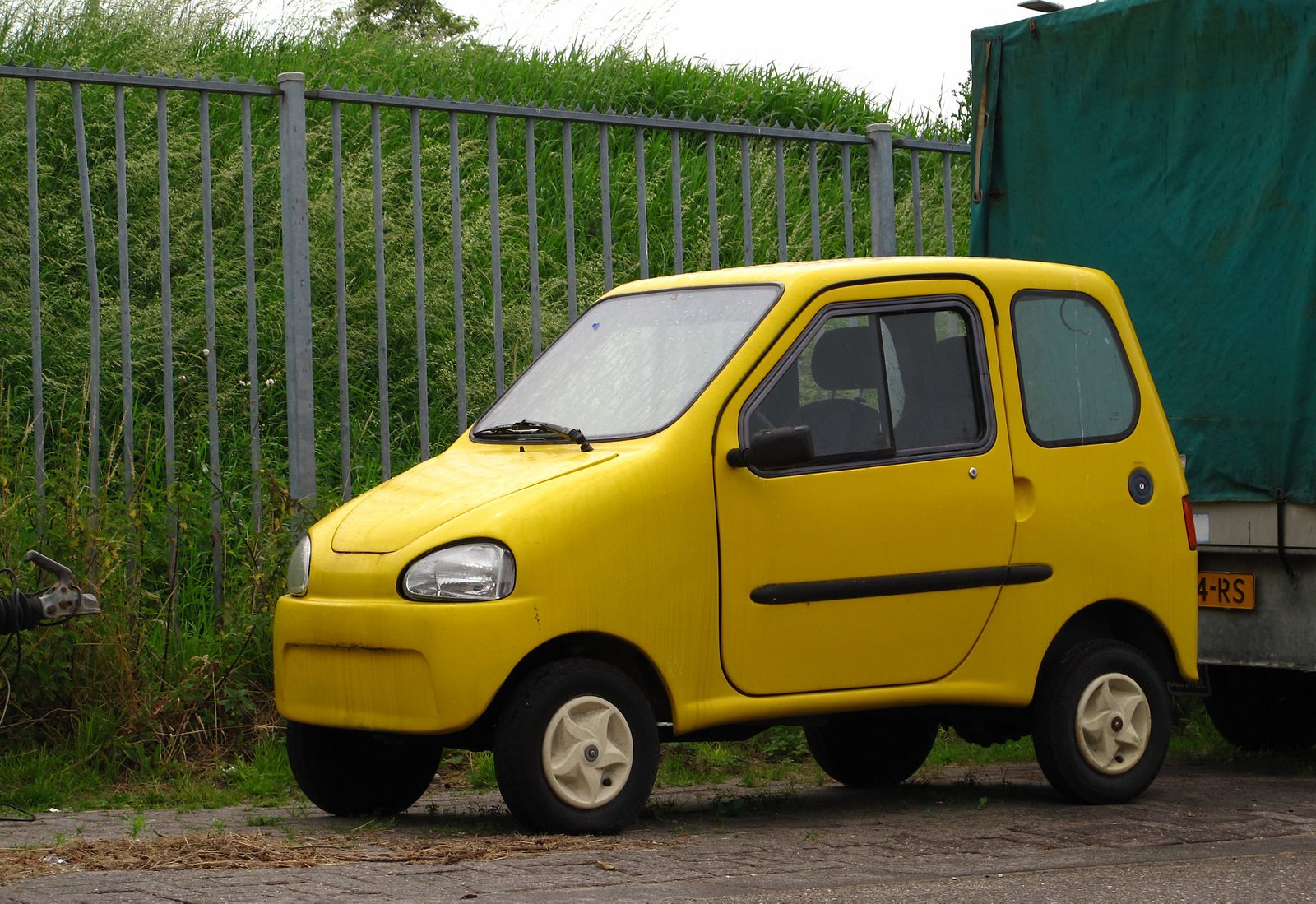
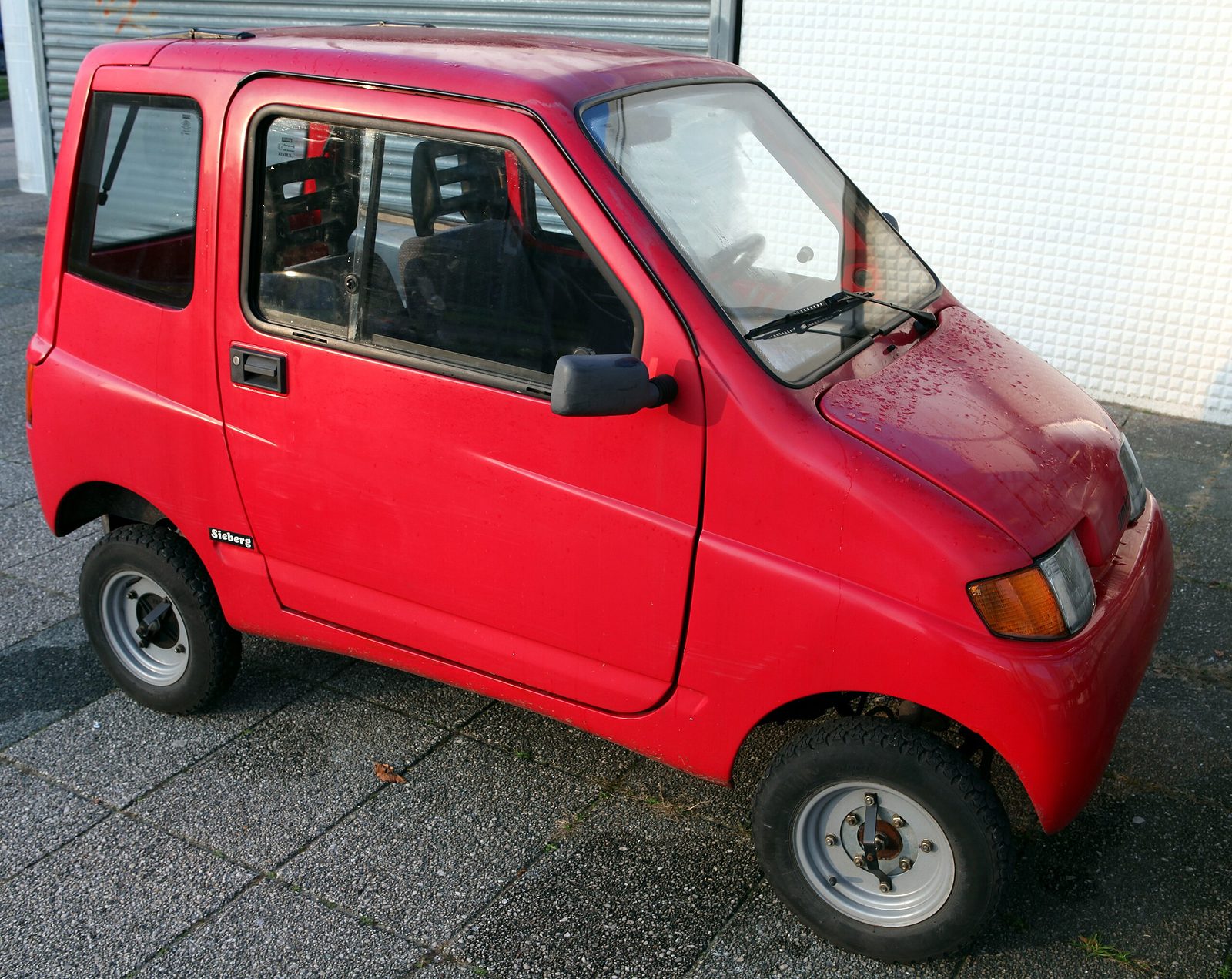
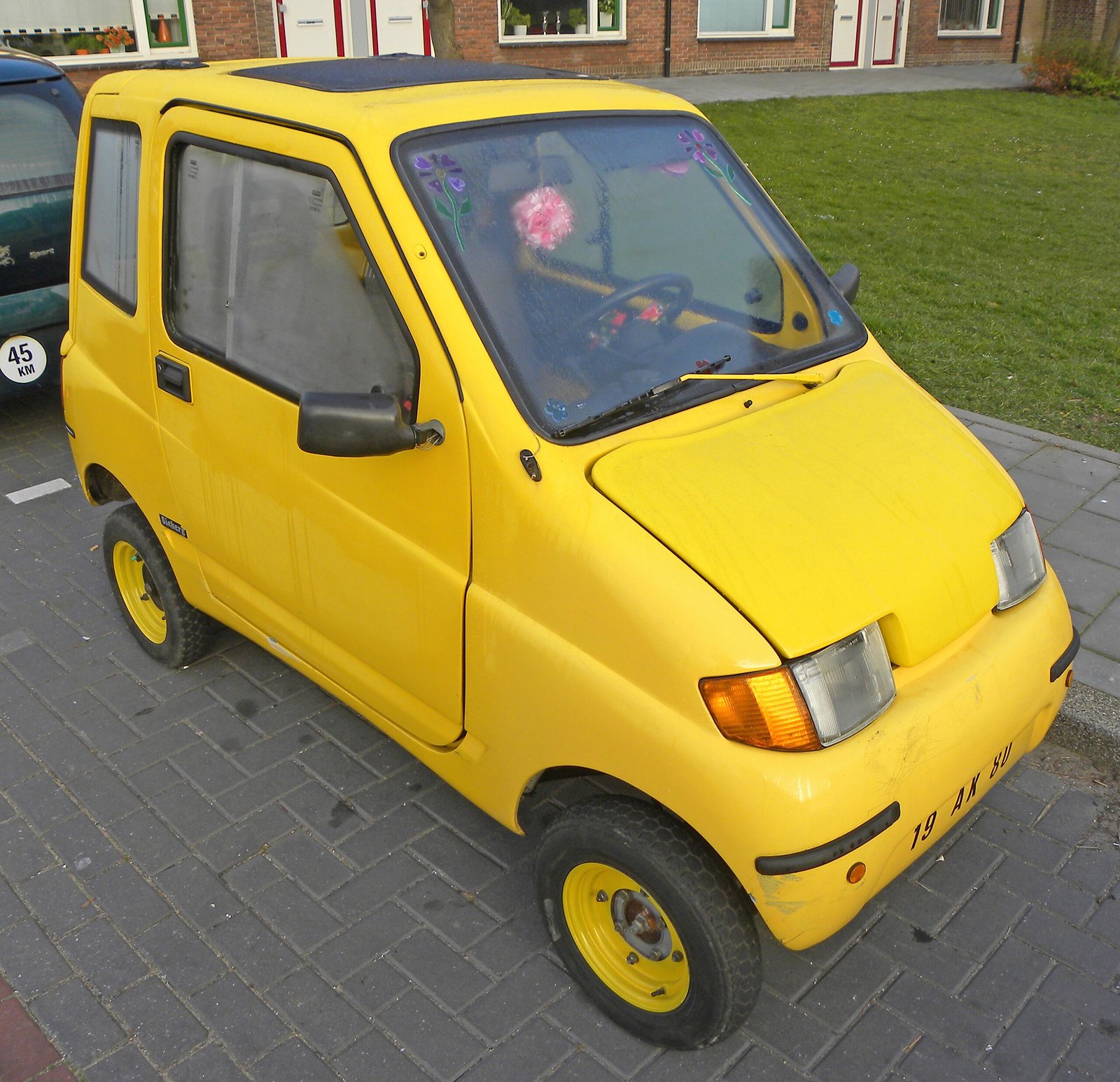
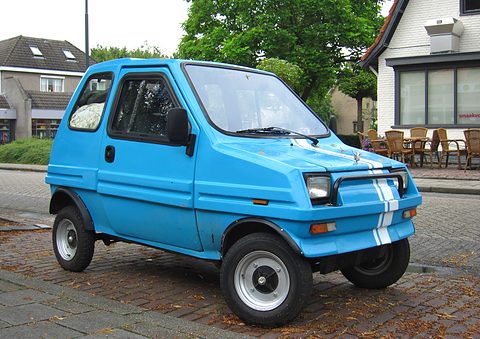
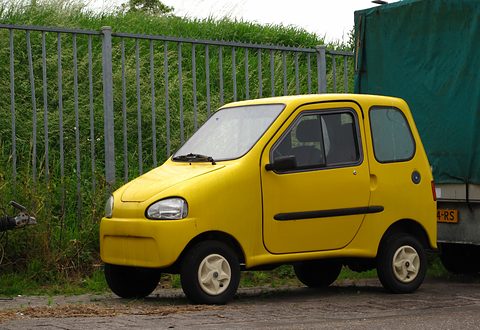
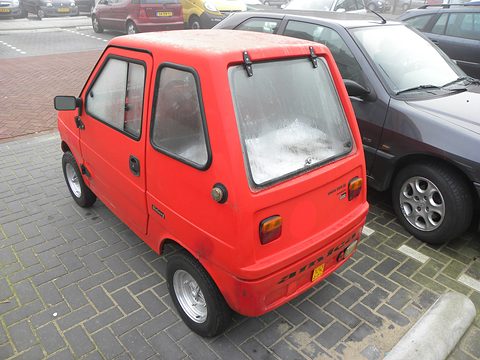
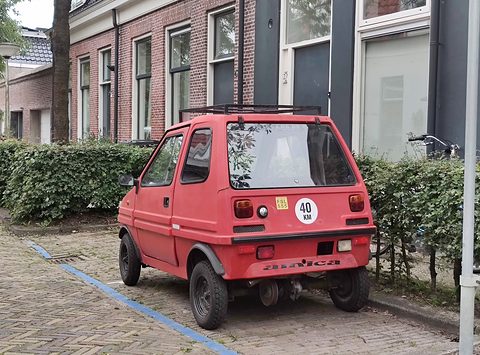
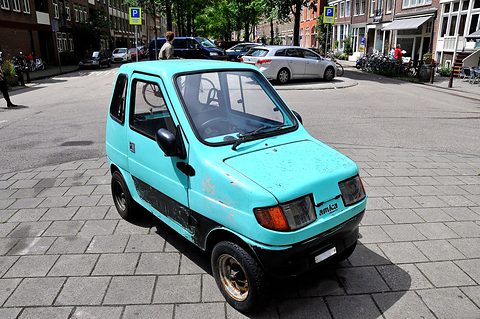
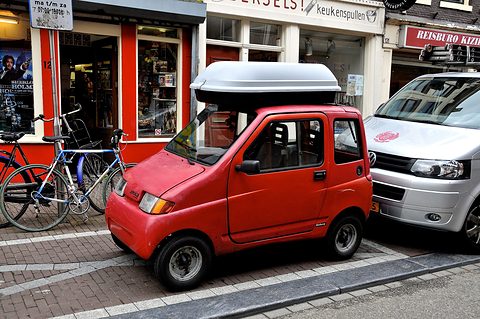
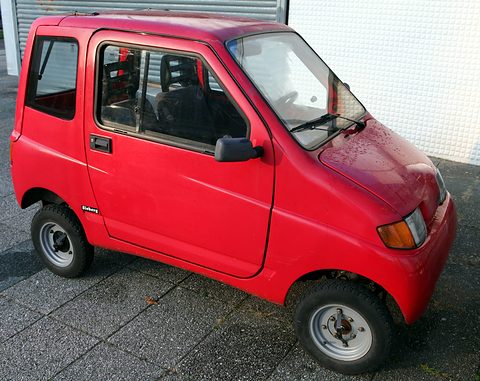
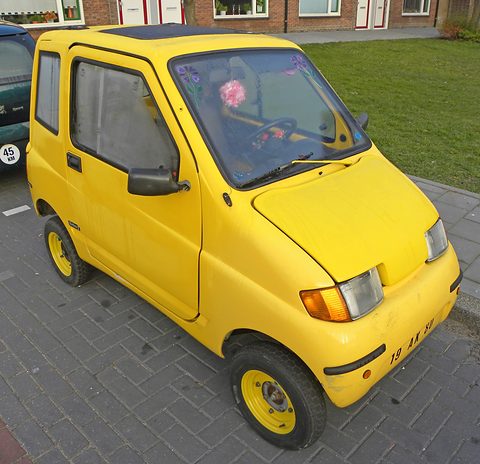
The Nuova Amica replaced the Amica in 1980, and later came with four wheels as well as three, the four-wheeler sold alongside the three-wheeler rather than instead of it.source 1source 2 The old site lists 50, 125 and 250 cc two-strokes and then a 360 cc diesel; the German Wikipedia gives 360 cc petrol and diesel engines. Only the 125 seems to have reached France, and only for a short time.source 1source 2 In the early 1990s, the old site says, the company changed its name; Grecav took it over in 1991 or 1994.source 1source 5source 2