microcarfan
  • Microcar
  • Germany
  • Four wheels
  • Backbone chassis

Standard Superior

Also known as Standard 400, Standard 500

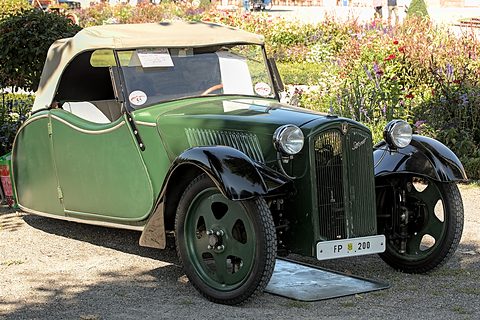
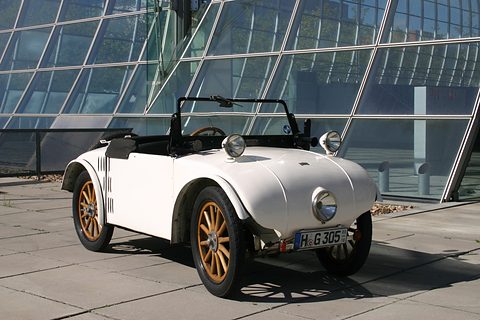
In 1933 a small German car with a backbone chassis, swing axles and its engine at the back was advertised as a Volkswagen. Its designer, Josef Ganz, was arrested that May and had left Germany a year later, in the month that Ferdinand Porsche was asked to design a Volkswagen of his own.

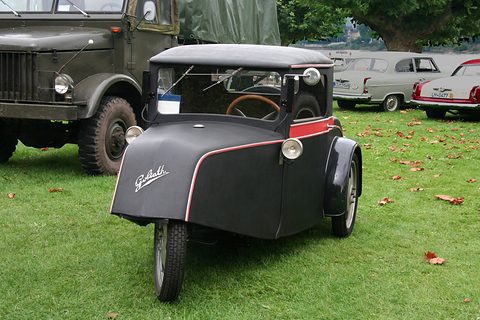
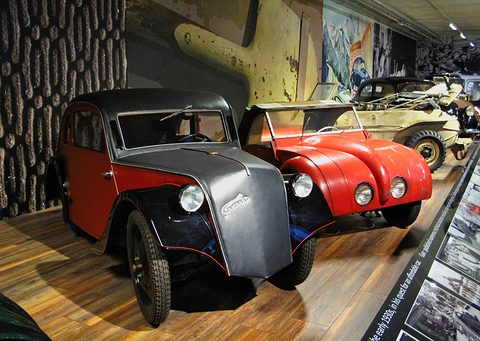
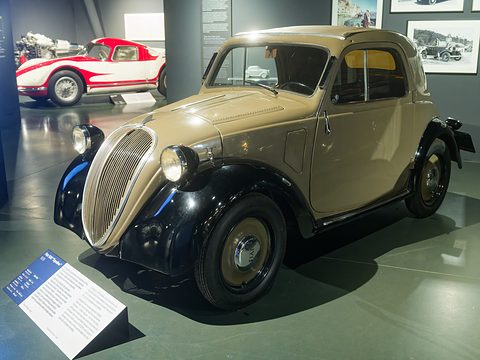
Small black and red fastback saloon with a sloping bonnet bearing the Standard script, a red open car parked beside it.
A black and red Standard Superior at the Louwman Museum, The Hague, in December 2019.Photo: Rutger van der Maar, CC BY 2.0, via Flickr

At a glance

The spec plate

Standard Superior

Models 400 and 500 · Ludwigsburg

Built
1933–⁠1935April 1933 to May 1935; shown in Berlin in February 1933
Country
GermanyLudwigsburg, Württemberg
Maker
Standard FahrzeugfabrikWilhelm Gutbrod’s motorcycle firm, building to Josef Ganz’s patents
Engine
396 cc water-cooled two-stroke twinMounted across the car ahead of the rear axle; the 500 had 494 cc
Power
12 PS8.8 kW at 3,600 rpm; the 500 16 PS (11.8 kW)
Length
3,300 mm1,400 mm wide, 1,450 mm high
Weight
490 kgKerb weight, by German Wikipedia
Seats
2With a small seat behind for children from late 1933
Wheels
4Engine across the car ahead of the rear axle, driving the rear wheels with no differential
Price new
RM 1,5901933
Production
a few hundred381 registered in Germany before the war
Top speed
70km/h70 km/hThe 500: 80 km/h

How big is it?

True proportion

3.30 m

It is 330 mm longer than a Fiat 500, about 1.9 adults laid end to end.

  • 1.40 m wide
  • 490 kg: about seven adults
  • Two seats, and a child seat behind from late 1933
Drawn at true proportion. The track is 3.6 metres long; the adult stands at the same scale. The Peel P50 is the smallest production car, on every page for comparison.

The story

History

Josef Ganz was born in Budapest on 1 July 1898, the son of the journalist Hugo Markus Ganz. He moved to Frankfurt in 1916, served in the German navy in the First World War, and studied mechanical engineering in Vienna and Darmstadt, finishing in 1927.source 1source 2 His first sketches of a small car date from 1923: an engine in the middle, independent suspension with swing axles, and a streamlined body after Rumpler’s Tropfenwagen.source 1source 2 In 1927 he became editor of Klein-Motor-Sport, which he renamed Motor-Kritik in January 1929. He used it to attack heavy, unsafe cars and to call for a German “Volkswagen”, a people’s car, and the industry answered with lawsuits and an advertising boycott.source 1source 2

Josef Ganz in Motor-Kritik attacked the old and well-established auto companies with biting irony and with the ardent conviction of a missionary.

Heinrich Nordhoff, director of Volkswagen, in LIFE International, 24 October 1960, as quoted by English Wikipedia.source 1

He built prototypes for other makers: the Ardie-Ganz at Nuremberg in the summer of 1930, and in May 1931, at Adler in Frankfurt, the Maikäfer, the May Beetle.source 1source 2 By Schilperoord’s research, as the Ganz archive gives it, Ferdinand Porsche, his son Ferry and Adolf Rosenberger tried the Maikäfer before Porsche began work on the Zündapp Type 12.source 2 Ganz also advised Daimler-Benz and BMW.source 1source 2

Gutbrod takes a licence

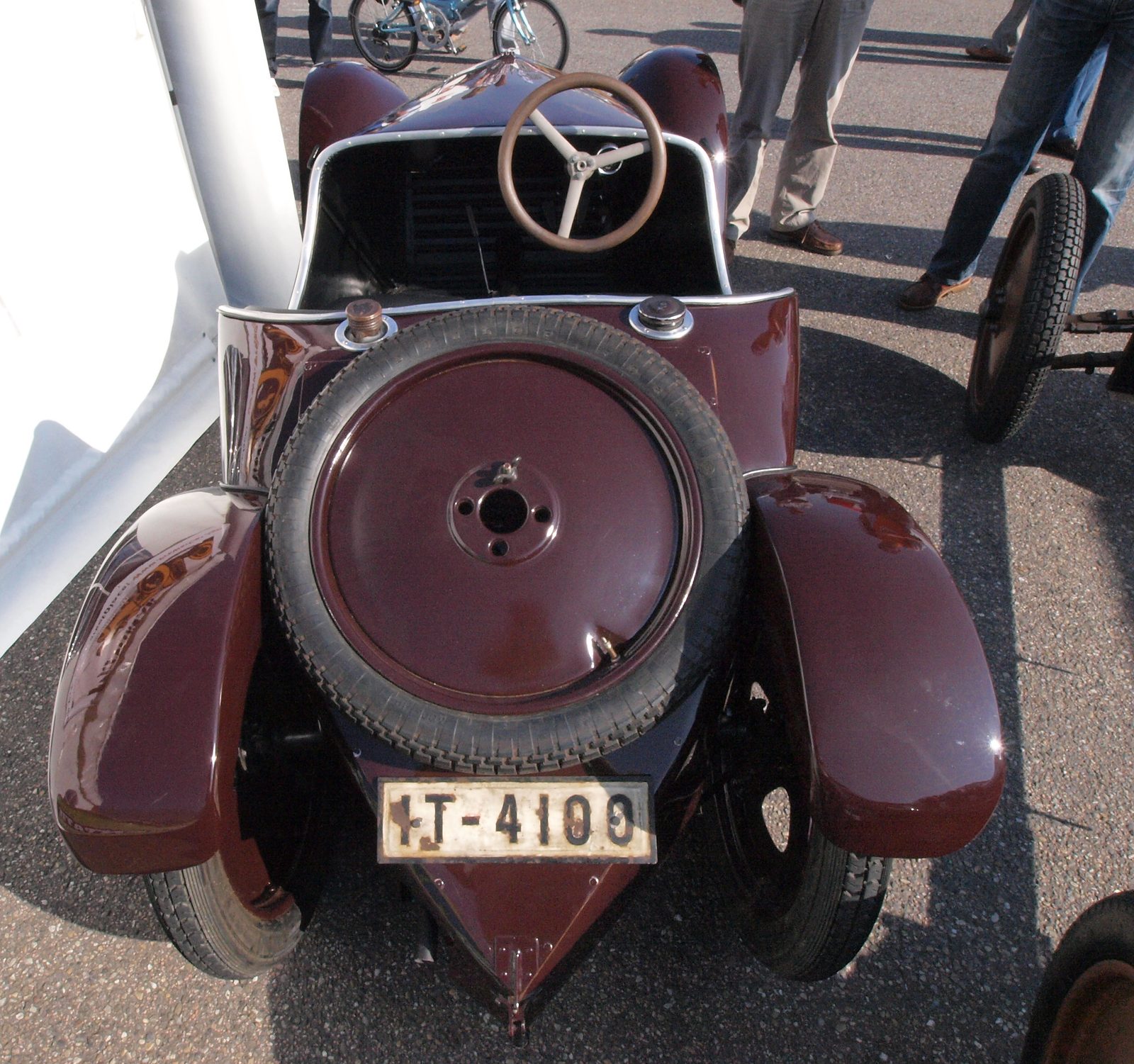
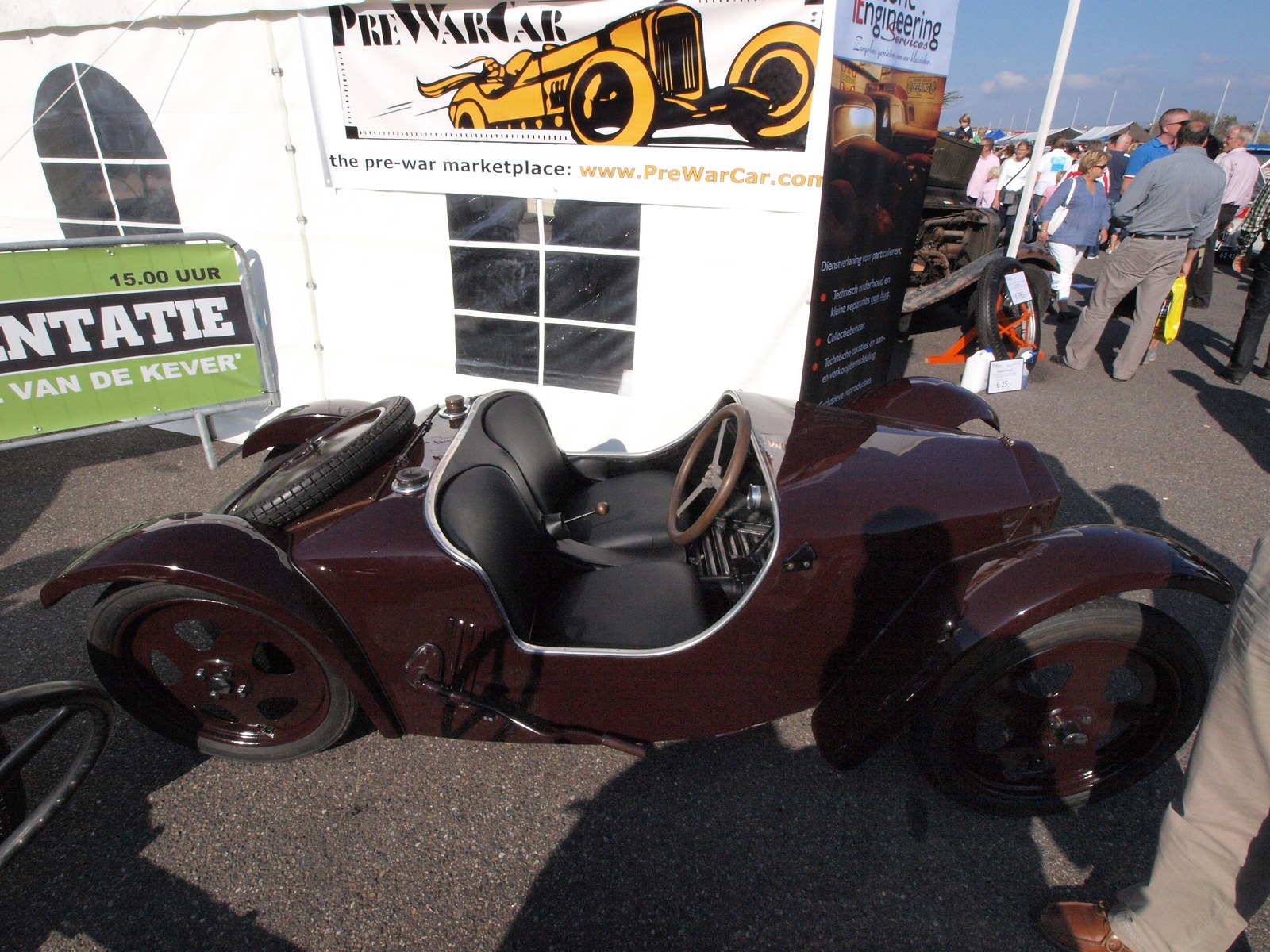
Wilhelm Gutbrod had founded Standard Fahrzeugfabrik at Ludwigsburg in 1926 to make motorcycles.source 3source 4source 2 In 1932 he met Ganz and watched the Maikäfer demonstrated, and Standard bought a licence to Ganz’s patents; a prototype was built and tested that autumn.source 3source 2 The patent layout put a horizontal two-cylinder two-stroke on one side of a central tube, ahead of the swinging half-axles, and the gearbox on the other side, engine, clutch and gearbox making one unit on the backbone.source 2 In the car, the 396 cc water-cooled twin lay across the frame in front of the rear axle and turned the rear wheels with no differential; the rear track was only 950 mm (37 in).source 3source 4

The pre-production Superior was shown at the motor show in Berlin, the IAMA, in February 1933. Hitler, Chancellor for two weeks, opened the show, and by Schilperoord’s account he took an interest in the car and in its price, RM 1,590.source 1source 2 The chassis was praised for its revolutionary design.source 2 The body, a simple beetle-like shell of wood and artificial leather, was not, and among those who called it impractical in Motor-Kritik was Ganz himself.source 3source 2 The car paid no motor vehicle tax.source 4 A slightly altered production model followed in April 1933.source 3source 2

A Volkswagen before the Volkswagen

In May 1933 the Gestapo arrested Ganz on falsified charges of blackmailing the motor industry. He was released, but his career was systematically destroyed.source 1source 2 The car went on. A new model for 1934, the Type 2, came in September 1933 by the archive’s date or November by English Wikipedia’s, with a longer wheelbase, an extra side window each side and a larger seat behind for a child.source 3source 2 From 1934 it also had a more raked windscreen and smoother wings and door openings.source 4 Standard advertised it as the fastest and cheapest German Volkswagen; one of its guarantee certificates, dated 22 December 1933, survives.source 3source 2source 5 A larger engine, the 500, had 494 cc and 16 PS (11.8 kW), and was good for 80 km/h (50 mph) against the 400’s 70 km/h (43 mph).source 4

The Superior was 3,300 mm (10 ft 10 in) long, beyond the Fiat Nuova 500, the length against which this site measures what a microcar is, and it is here for its part in the Volkswagen story.source 4 It was odd in more ways than its layout: the doors were hinged at the back, there was no differential, and only the rear wheels had brakes.source 4source 2

In June 1934 Ganz left Germany, for Liechtenstein and then Switzerland. That same month Hitler commissioned Porsche to design a Volkswagen to sell for RM 1,000, and Standard and the rest were then forbidden to call their cars Volkswagens.source 1source 2 In September 1934 Standard added the Merkur, a light truck on a longer, stronger Superior chassis with a differential and pump cooling, as a pick-up, a van and an ambulance.source 2

Tatra’s lawsuits

In December 1933 Tatra had complained that Ganz’s patent, DRP 587409, infringed one of its own. The Berlin Patent Office rejected the complaint at the end of March 1934, and the appeal in May; a second complaint, over an engine at the front of a backbone tube, dragged on.source 2 In May 1935 Gutbrod stopped building the Superior for fear of an unfavourable verdict, and Standard’s car making ended with it; the Merkur followed in 1936.source 2 German Wikipedia adds that the car sold poorly because it cost little less than bigger cars.source 4 In 1941 a Berlin court found for Ganz and ordered Tatra to pay him more than RM 4,000.source 2 Gutbrod came back to cars after the war, in 1950, with a new Superior.source 3

Well, sometimes Ledwinka looked over my shoulder and sometimes I looked over his.

Ferdinand Porsche, on Tatra’s Hans Ledwinka, as quoted by English Wikipedia.source 6

Ganz afterwards

In Switzerland Ganz worked on a Swiss Volkswagen, with prototypes in 1937–⁠38 (see Rapid, below). He moved to France in 1949 or 1950, then in 1951 to Australia, where he worked for General Motors-Holden, and he died in Melbourne on 26 July 1967.source 1source 2 Two years before, West Germany had proposed him for the Officer’s Cross of its Order of Merit; Australia’s rules blocked the award.source 1source 2

It is in his capacity as editor of the magazine ‘Motor-Kritik’ between 1928–⁠1934 that Mr. Ganz took a keen interest in the development of a German ‘Volkswagen’ and, together with other engineers like Professor Porsche, has greatly contributed to realizing this project.
The Embassy of the Federal Republic of Germany in Australia, 18 October 1965, as quoted by the Ganz archive from the National Archives of Australia.source 2
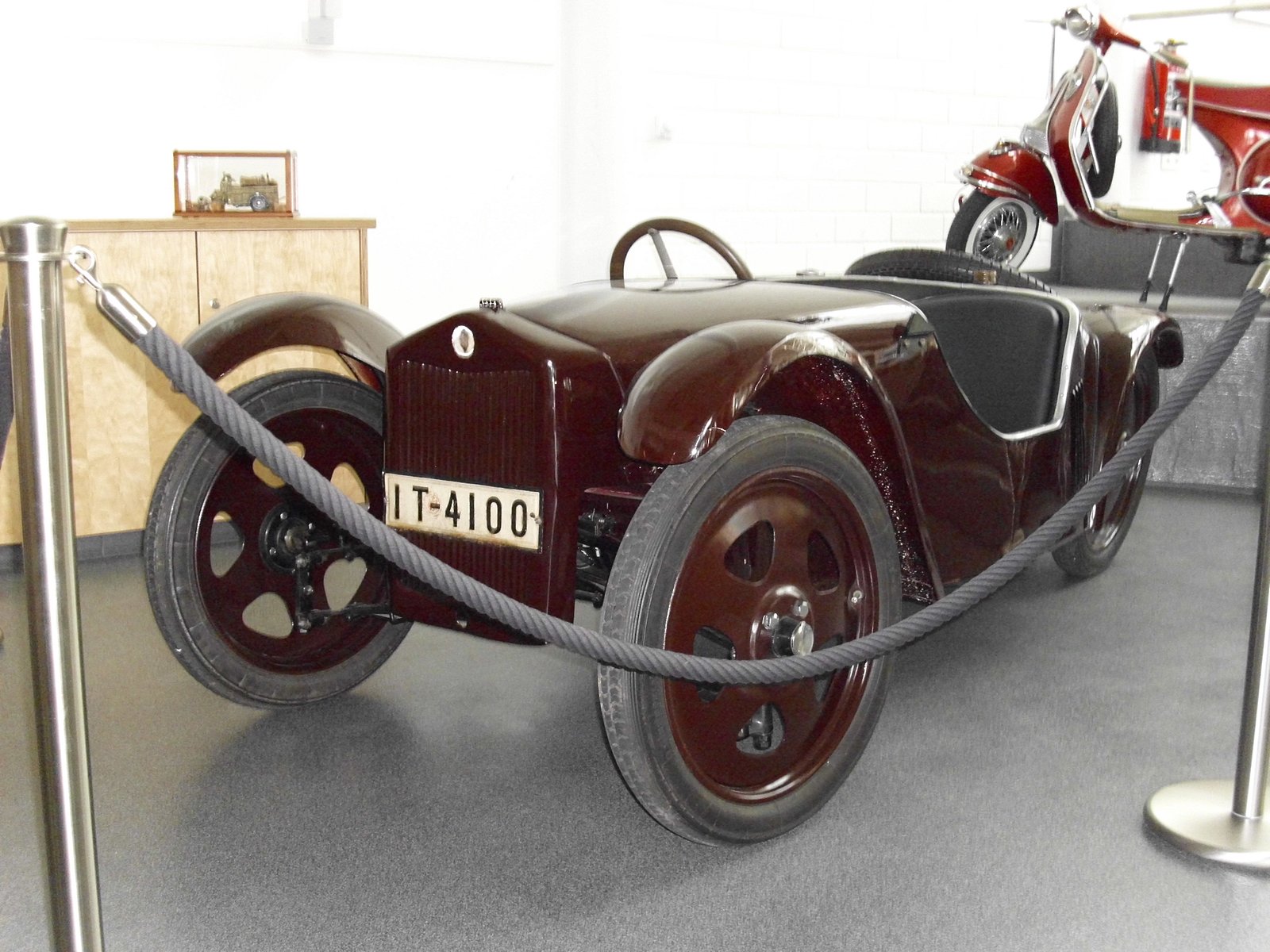
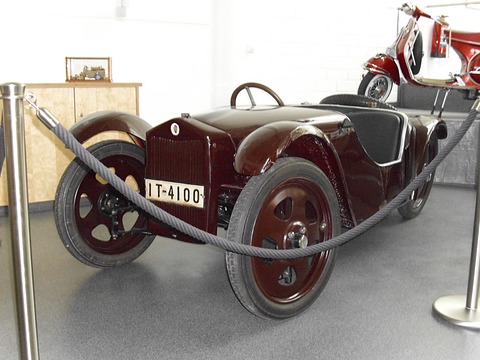
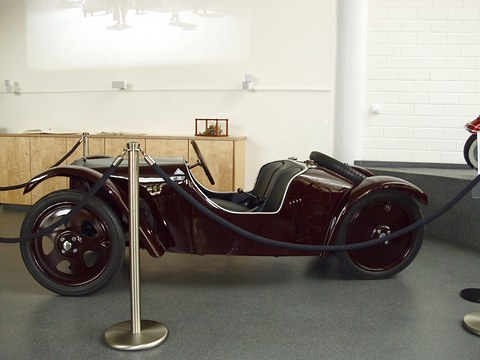
Low maroon open two-seater with disc wheels and swept wings, seen from the left side behind a rope barrier.
Ganz’s Adler Maikäfer of 1931, the prototype Gutbrod saw before he took a licence, at Bad Homburg in 2010.Photo: Buch-t, Public domain, via Wikimedia Commons

Rapid

1946–⁠1947 · a record on this page

Ganz’s Swiss Volkswagen got as far as prototypes in 1937–⁠38, and a few were built after the war by Rapid.source 1source 2 The Louwman Museum in The Hague shows its Standard Superior beside a Rapid, the “Swiss VW”.source 2 The red open car next to the Superior in our hero photograph is very likely that Rapid, but this is our inference from the photograph and the museum’s arrangement.

Beyond that, the sources read are silent: who Rapid were, the car’s engine and how many were built are still to be found.

Pictures

More photographs, old and new

Variants

Two types, two engines

The Superior and its relations
VariantYearsWhat differsHow many
Ardie-Ganz and Adler Maikäfer1930 and 1931Ganz’s prototypes for other makersOne of each
PrototypeAutumn 1932The first Standard chassis, with the 396 cc twin1
Type 1Feb/Apr–Sep 1933Upright windscreen; a body of wood and artificial leather; model 400About 150–200, by the Ganz archive’s estimate
Type 2, the 1934 modelSep/Nov 1933–May 1935From September 1933 by the archive, November by English Wikipedia: longer wheelbase, an extra side window each side, a child seat; from 1934 a raked screen and smoother wingsAbout 250–300, by the same estimate
Model 5001934–⁠35, probably494 cc and 16 PSNot known
Standard MerkurSep 1934–⁠1936A light truck on a longer, stronger chassis, with a differential and pump coolingNot known

Specification

The models 400 and 500, from German Wikipedia unless noted

Engine and drive

Engine and drive
EngineTwo-cylinder two-stroke, water-cooled, across the car ahead of the rear axlesource 3source 4
Capacity400: 396 cc (60 × 70 mm); 500: 494 cc (67 × 70 mm)source 3source 4
Power400: 12 PS (8.8 kW) at 3,600 rpm; 500: 16 PS (11.8 kW) at 3,600 rpmsource 4
Clutch and gearboxMulti-plate dry clutch; four speedssource 4
Final driveTo the rear wheels, with no differentialsource 4

Body and chassis

Body and chassis
ChassisA central tube, engine, clutch and gearbox carried on it as one unitsource 3source 4source 2
Front suspensionIndependent, two transverse leaf springs, one above the othersource 4
Rear suspensionSwing axles with a transverse leaf springsource 3source 4
SteeringRack and pinion, with a centre take-offsource 4
BrakesOn the rear wheels onlysource 4
BodyTwo-door fastback saloon, doors hinged at the back; the first bodies wood covered in artificial leathersource 4source 2

Dimensions

Dimensions
Length3,300 mmsource 4
Width1,400 mmsource 4
Height1,450 mmsource 4
Wheelbase2,000 mmsource 4The Type 2 had a longer wheelbase than the Type 1; which one this is is not stated
Rear track950 mmsource 4
Weight490 kg, kerbsource 4

Performance and running

Performance and running
Top speed400: 70 km/h (43 mph); 500: 80 km/h (50 mph)source 4
Consumption400: 7 litres of two-stroke mixture per 100 km; 500: 8 litressource 4
TaxExempt from motor vehicle taxsource 4
Price newRM 1,590 (1933)source 4source 1source 2

How many were built?

Every figure, with its source

A few hundredThe surest figure is 381 Superiors registered in Germany before the Second World War, a count from the registration records. The total built was probably a few hundred; that is our reading, since no factory figure has been found.

  1. about 400–500all Superiors, adding up the archive’s estimates for the two typesUnconfirmed

    The Josef Ganz archive, an estimatesource 2

  2. 381Superiors registered in Germany before the warOne source

    Jaus and Kaiser, Neben den Großen 1: Standard Gutbrod (1984), as cited by the Ganz archivesource 2

  3. 360sold in 1933, with hardly more in each of the next two yearsOne source

    German Wikipedia, citing Werner Oswaldsource 4

  4. about 250–300Type 2 carsUnconfirmed

    The Josef Ganz archive, an estimatesource 2

  5. about 150–200Type 1 carsUnconfirmed

    The Josef Ganz archive, an estimatesource 2

  • Two sources agreetwo good sources give the figure
  • One sourcea good source, alone
  • Unconfirmeda lead only, not yet checked

Famous for

Three points

  1. A Volkswagen in 1933

    Standard sold it as the fastest and cheapest German Volkswagen, before Porsche was asked for his.source 3source 2

  2. The backbone and the rear engine

    A central tube, swing axles and an engine ahead of the rear axle, to Ganz’s patents.source 3source 2

  3. A forgotten engineer

    Josef Ganz, a Jewish engineer driven out of Germany, was brought back to notice by Paul Schilperoord’s biography of 2011.source 3source 1

Survivors and collecting

Today

Seven cars or chassis are known, by the Ganz archive’s list, and no auction result has been found.source 2 Paul Schilperoord’s The Extraordinary Life of Josef Ganz: The Jewish Engineer Behind Hitler’s Volkswagen (2011) has Dutch, German and Portuguese editions, and Schilperoord himself owns two of the Type 1s.source 1source 2 One partly restored chassis is part of Rémy Markowitsch’s installation The Inner Beauty at the Kunstmuseum Wolfsburg.source 2

A Type 2 of 1933, chassis 50331, was fully restored in Romania and Switzerland and registered in Switzerland in 2020. Its owner, Lorenz Schmid, is Ganz’s great-grandnephew, and it has been shown at the Swiss Museum of Transport in Lucerne.source 2 Suzanne Raes directed a documentary about Ganz that follows Schilperoord and Schmid’s restoration, and in May 2022 the Bern Symphony Orchestra gave a concert in Ganz’s honour at the Casino Bern.source 5 In 2025 Ganz’s papers went to the Archiv für Zeitgeschichte at ETH Zurich.source 2source 5

The seven known, by the Ganz archive
CarStateWhere
Type 1, 1933, chassis 50123Unrestored chassisPaul Schilperoord, Netherlands
Type 1, 1933, chassis 50174Partly restored chassisKunstmuseum Wolfsburg
Type 1, 1933, chassis 50183Complete; body rebuilt by crowdfundingPaul Schilperoord
Type 2, 1933, chassis 50331Complete, fully restoredLorenz Schmid, Switzerland
Type 2, 1933Complete, restoredLouwman Museum, The Hague
Type 2, 1933Chassis with body partsPrivate, Germany
Type 2, 1935, chassis 50298Unrestored; a radiator in front, perhaps a factory prototypePrivate, Germanysource 2

Sources

Numbered as in the text

No period road test was read. Much of the detail comes from the Josef Ganz archive, which rests on Paul Schilperoord’s research; Schilperoord argues Ganz’s case and owns two of the surviving cars. Sources are given as plain text; the links are on the Credits page.

  1. English Wikipedia, Josef Ganz, read in full. Used as a lead; it cites Schilperoord (2011), the National Archives of Australia and LIFE International (1960).
  2. The Josef Ganz archive, josefganz.org, “Biography” and “Standard Superior”, based on Paul Schilperoord’s research, read in full.
  3. English Wikipedia, Standard Superior, read in full. Used as a lead; it cites Karl Ludvigsen, Battle for the Beetle (2000).
  4. German Wikipedia, Standard Superior, read in full with its infobox. Used as a lead; it cites Werner Oswald, Deutsche Autos 1920–⁠1945 (1996), and ADAC Motorwelt 29, 21 July 1933.
  5. superior.josefganz.org, the site of the Standard Superior Type 2 restoration, read in full.
  6. English Wikipedia, Tatra 97, the relevant section read. Used as a lead; it cites Margolius and Henry, Tatra: The Legacy of Hans Ledwinka (2015).