Its French sellers
French licence-free car makers of the 1970s and 1980s
1970–1994 · France · 14 makers
Also known as Autozodiaco Charly, Charly
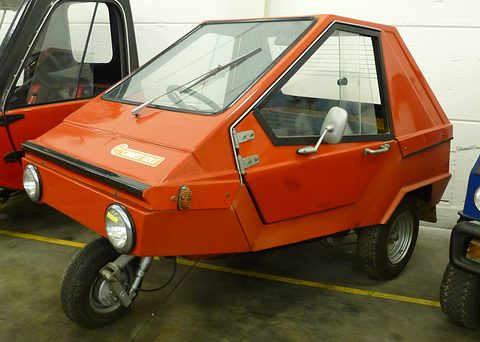
A two-seat plastic three-wheeler from a maker of beach buggies, which could be ordered on fat beach tyres and put its clutch pedal on one side of the steering wheel and everything else on the other.
The spec plate
All Cars Snuggy
Charly · Pianoro
Not yet recordedtop speed and weight.
True proportion
2.10 m
It is 870 mm shorter than a Fiat 500, about 1.2 adults laid end to end, and one and a half times the length of a Peel P50.
History
Mario Zodiaco founded Autozodiaco at Pianoro, near Bologna, in 1969, and began building in 1971: beach buggies on Volkswagen Beetle chassis, among them the Damaca, designed by Tom Tjaarda.source 1source 2 The firm also made a beach motorcycle, the Moto Zodiaco Tuareg 223-2, with an ILO-Rockwell two-stroke and a belt-driven continuously variable transmission.source 1
In 1974 came the Charly, a two-seat three-wheeler with a plastic body.source 1source 3 The German Wikipedia gives it a 49 cc Minarelli two-stroke; the old microcarfan.com, the only detailed account, gives a 50 cc Morini of 4.5 hp with a four-speed manual gearbox, and the German article on All Cars also mentions a Morini at first, so both may have been used at different times.source 1source 3source 2 At 2.10 m by 1.27 m the old site found it a respectable size. It ran on 145/10 rear tyres, or could be delivered in beach form on big low-pressure lug tyres.source 3
It went on sale in France in 1976 as a licence-free car, sold first by a firm called Marland and then, from 1976, by Vitrex, and it was All Cars that named it the Snuggy, the old site says.source 3 The German Wikipedia adds that SECAM, maker of the Addax, offered the Charly from 1977, and Vitrex bought SECAM in 1978, so the two accounts may describe one chain of sellers at different dates.source 4source 5 In 1978 All Cars, also of Pianoro, took Autozodiaco over.source 2source 1
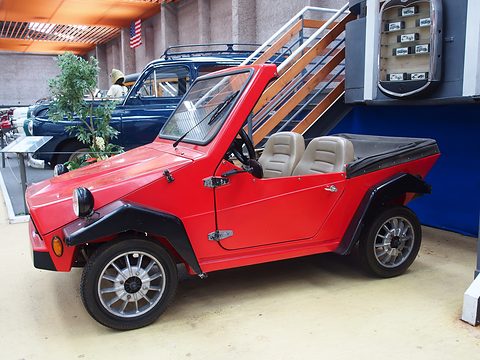
The driving position was, in the old site’s words, very special: the clutch pedal was to the left of the steering wheel, and the brake, the accelerator and the wheel itself were on the right. A later road car photographed on the old site, which dates it 1986, has the wheel moved to the usual place on the left.source 3 The Charly 4 put the Snuggy body on four wheels, in road and beach forms, licence-free in France and with 125 cc or 250 cc engines in Italy. The open Tobrouk of 1978 was green, with its spare wheel mounted outside in the manner of a four-by-four.source 3 All Cars moved on to Motobécane engines, sold the cars in Germany as well, and stopped building them in 1985.source 2 No production figures have been found, and no museum car or auction result is recorded. Some survive all the same: the cars pictured here include a Charly on German plates and a Charly 4 parked in Berlin, in the country where All Cars also sold them.
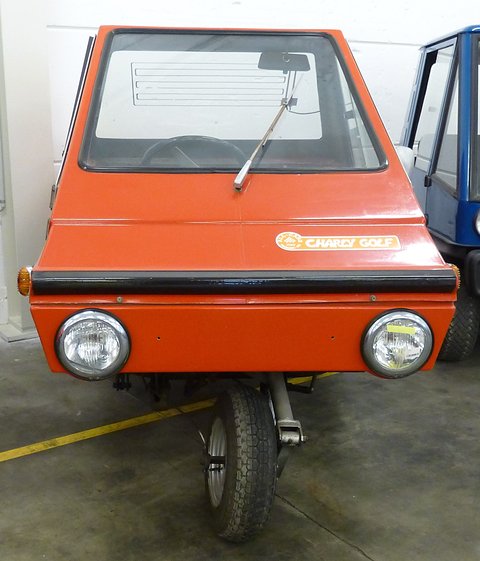
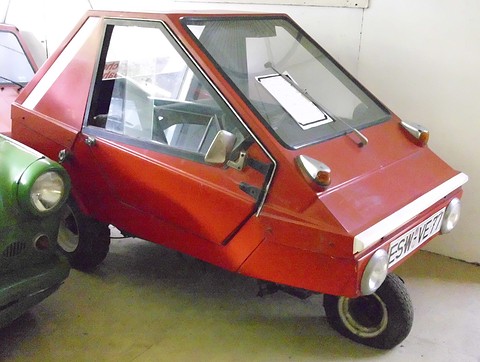
More photographs, old and new
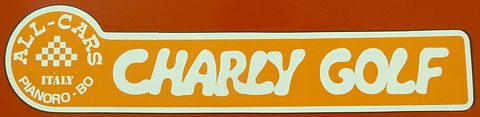
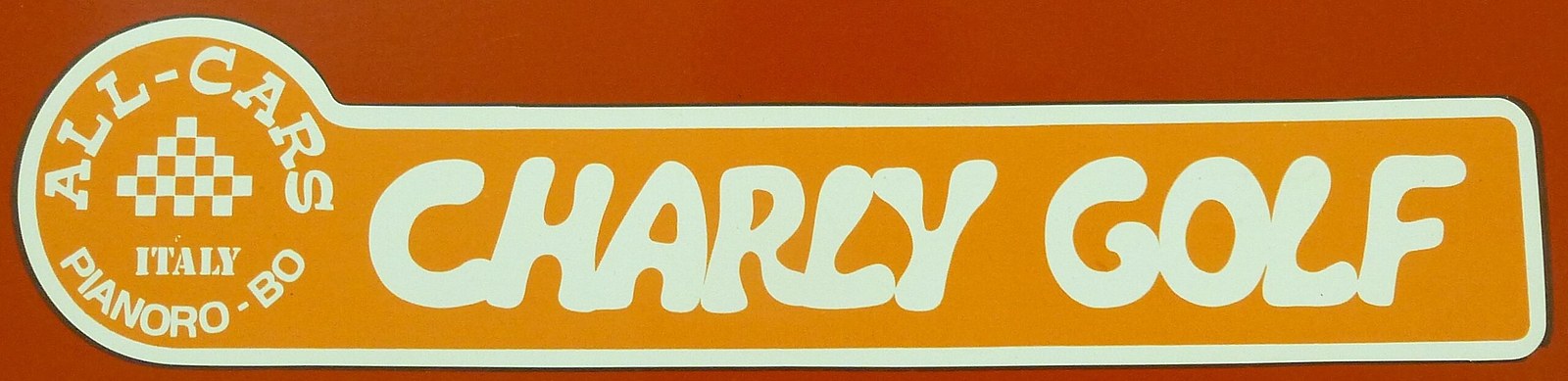
1 The maker’s decal on an All-Cars Charly Golf in 2018, naming All-Cars of Pianoro, near Bologna, and the model.
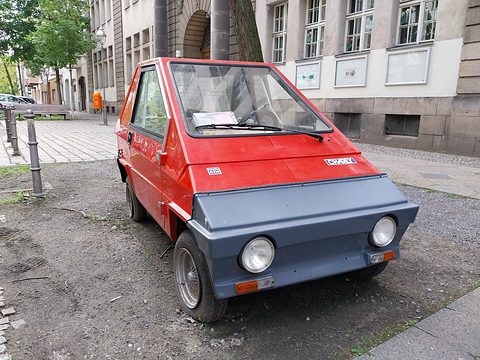
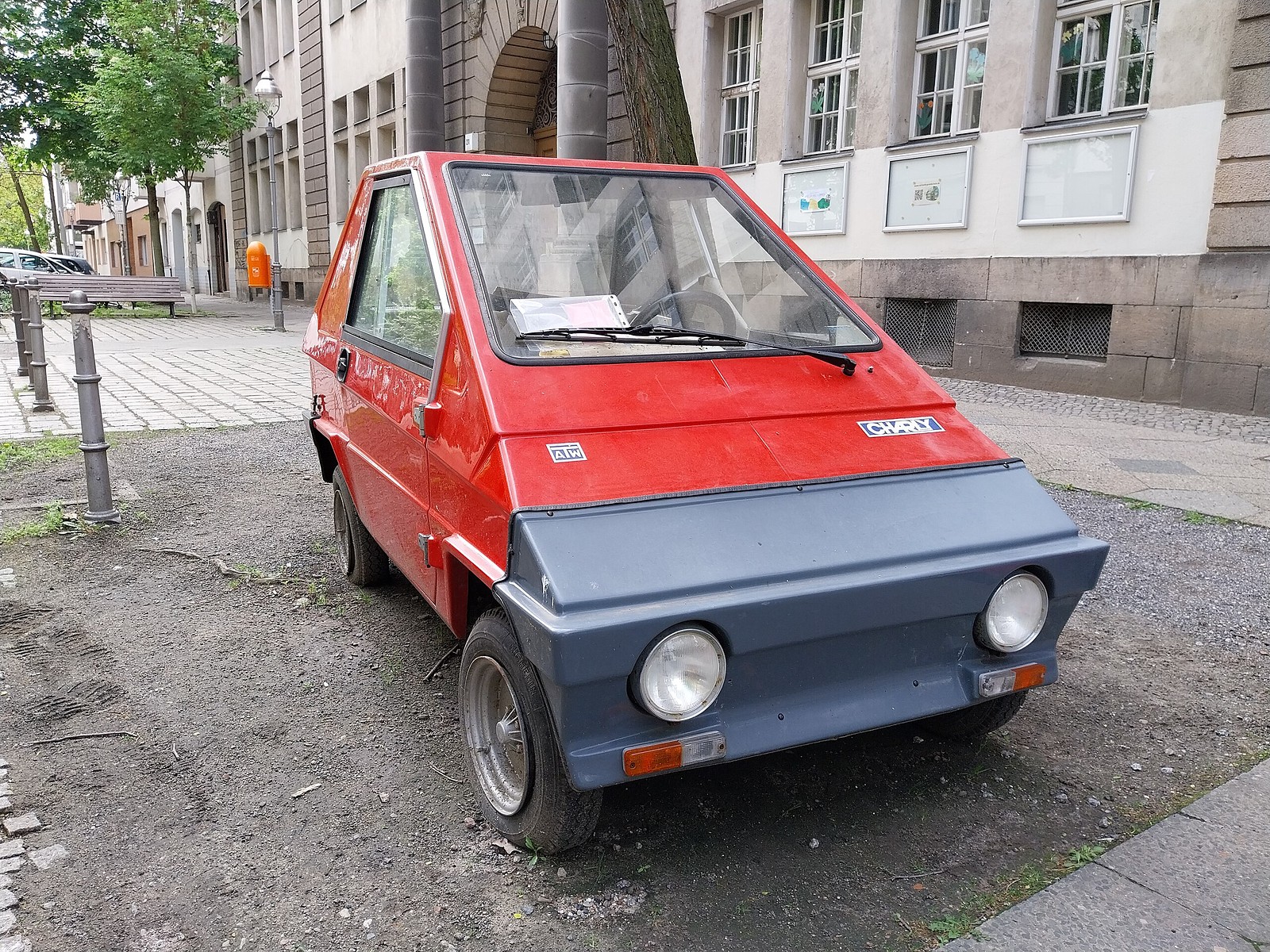
2 A red and grey All Cars Charly 4, the four-wheeled version, parked in Berlin in 2026.
Road, beach and four wheels
| Variant | Years | What differs | How many |
|---|---|---|---|
| Autozodiaco Charly | 1974– | The original Italian three-wheeler | Not known |
| Snuggy | 1976– | The French name; road form, or beach form on low-pressure lug tyres | Not known |
| Snuggy Tobrouk | 1978– | Open, green, with the spare wheel outside | Not known |
| Charly 4 | late 1970s–1980s | Four wheels, road and beach; 125 or 250 cc in Italy | Not known |
The French Snuggy, from the old site
| Engine | Morini 50 cc, 4.5 hpA 49 cc Minarelli two-stroke in the German Wikipedia; later Motobécane engines |
|---|---|
| Gearbox | Four-speed manual |
| Length | 2,100 mm |
|---|---|
| Width | 1,270 mm |
| Weight | Not found |
Three points
A licence-free car from a maker of Beetle-based buggies.
The clutch pedal on one side of the wheel, everything else on the other.
A beach version on big low-pressure lug tyres.
Italian and French neighbours
Its French sellers
1970–1994 · France · 14 makers
Numbered as in the text
The old microcarfan.com is the only detailed source; the German Wikipedia gives the companies’ outlines. No production figures, prices, weights or speeds were found. Sources are given as plain text; the links are on the Credits page.