microcarfan
  • City car
  • Japan
  • Four wheels
  • 3 + 1 seats

Toyota iQ

Also known as Scion iQ, Toyota eQ, Scion iQ EV

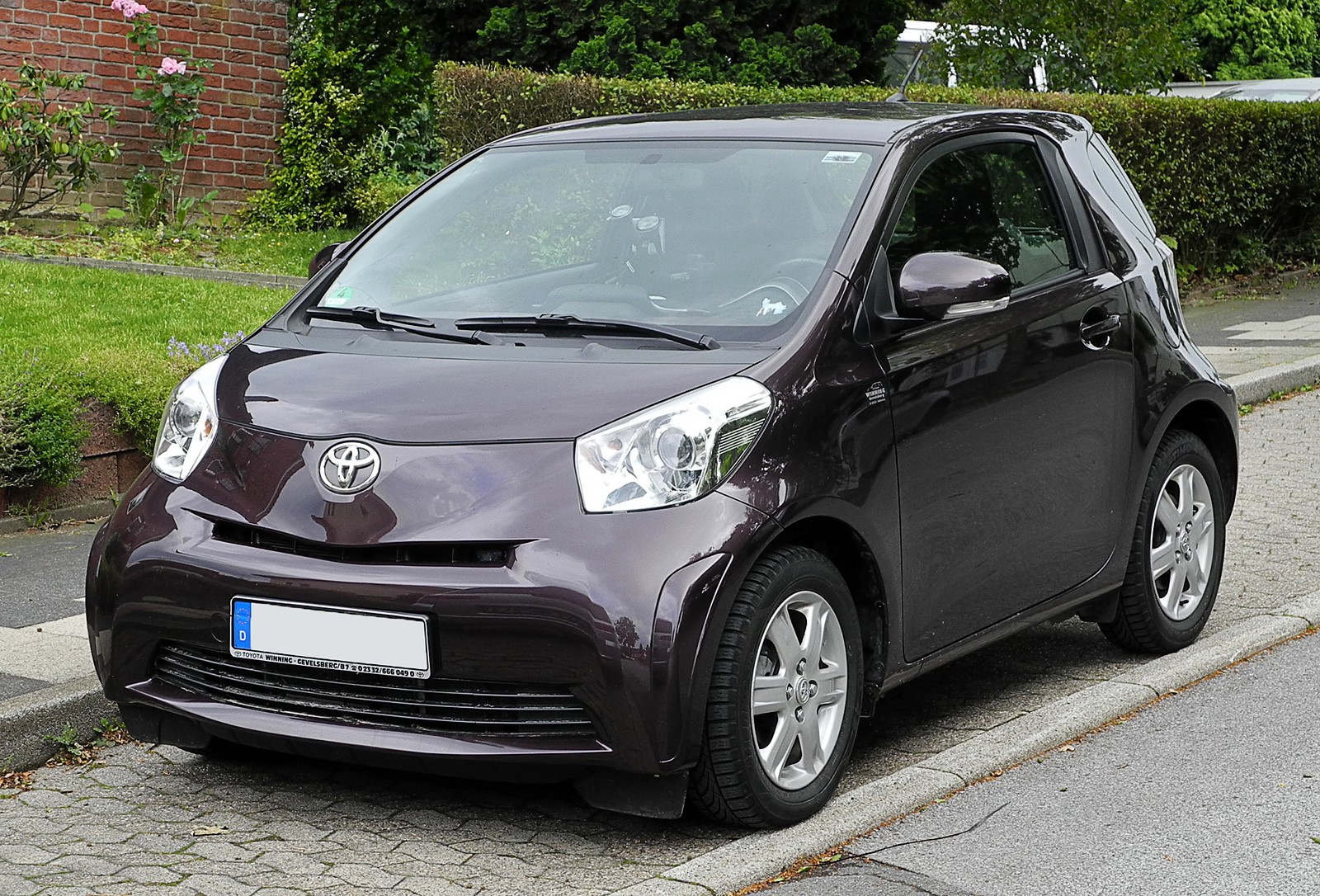
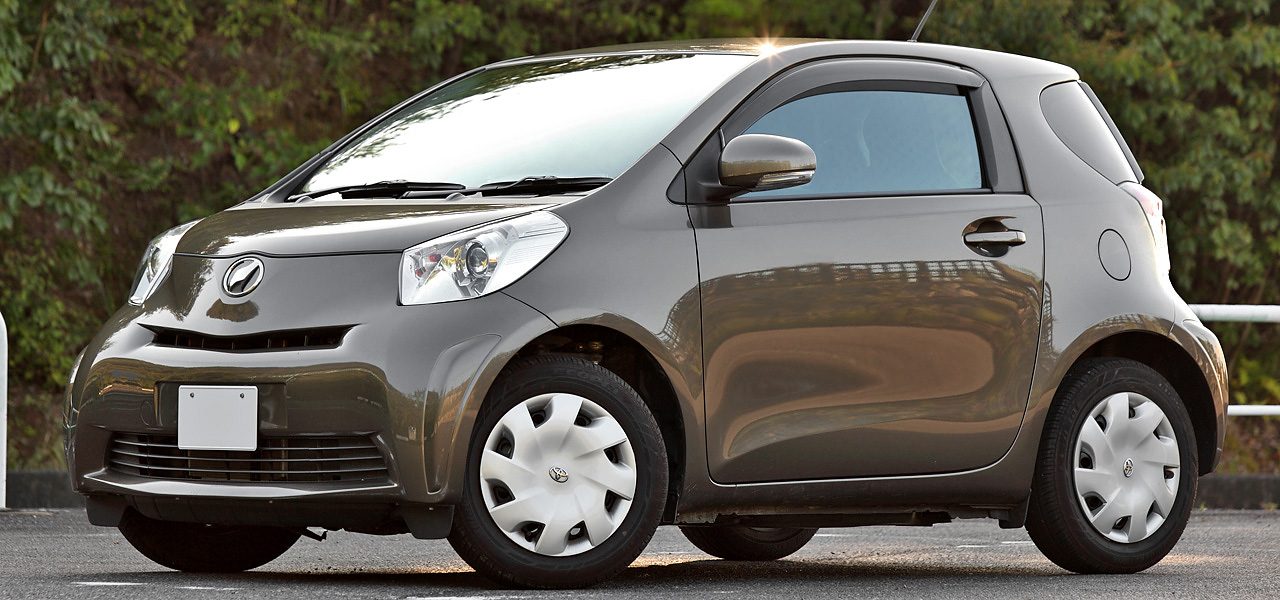
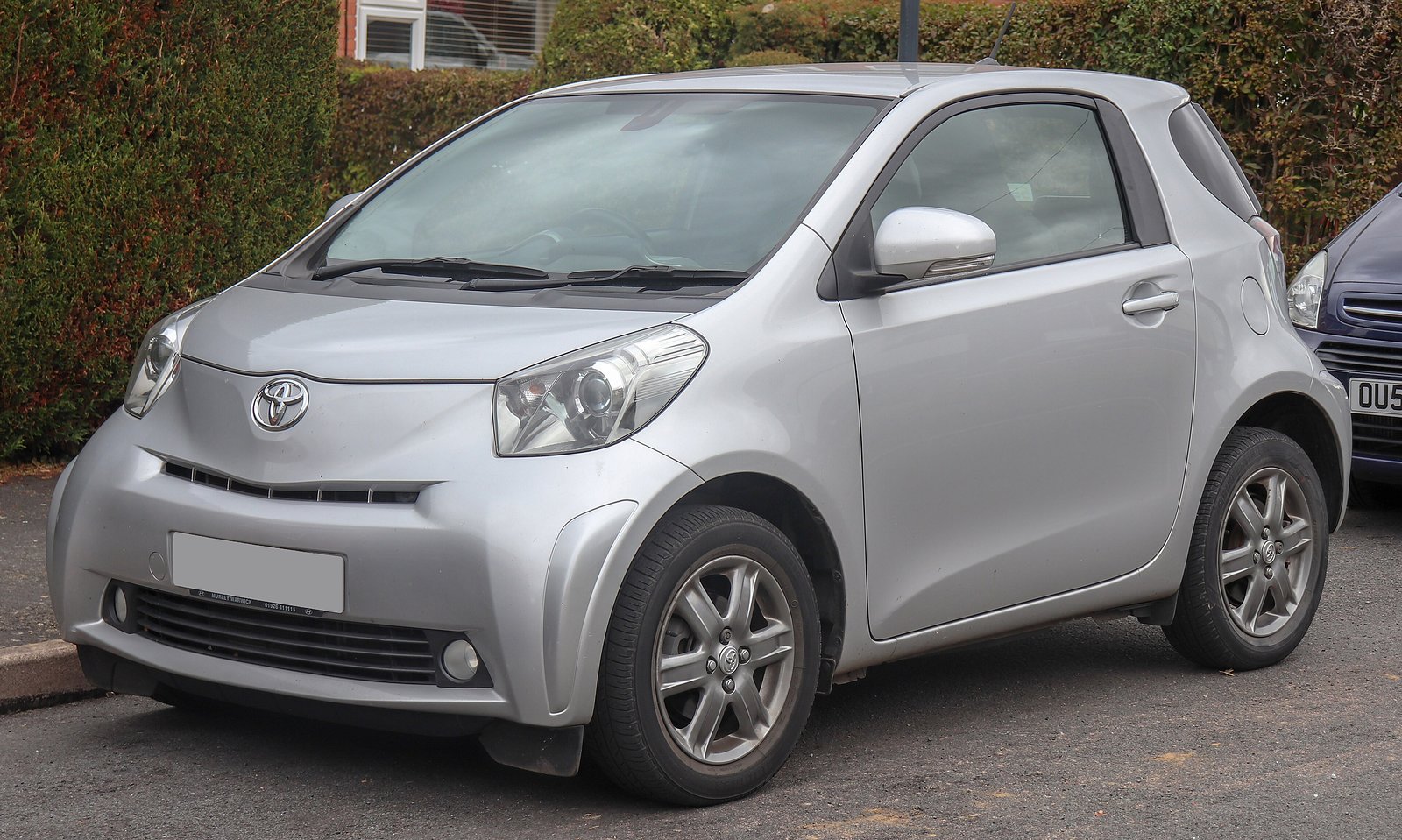
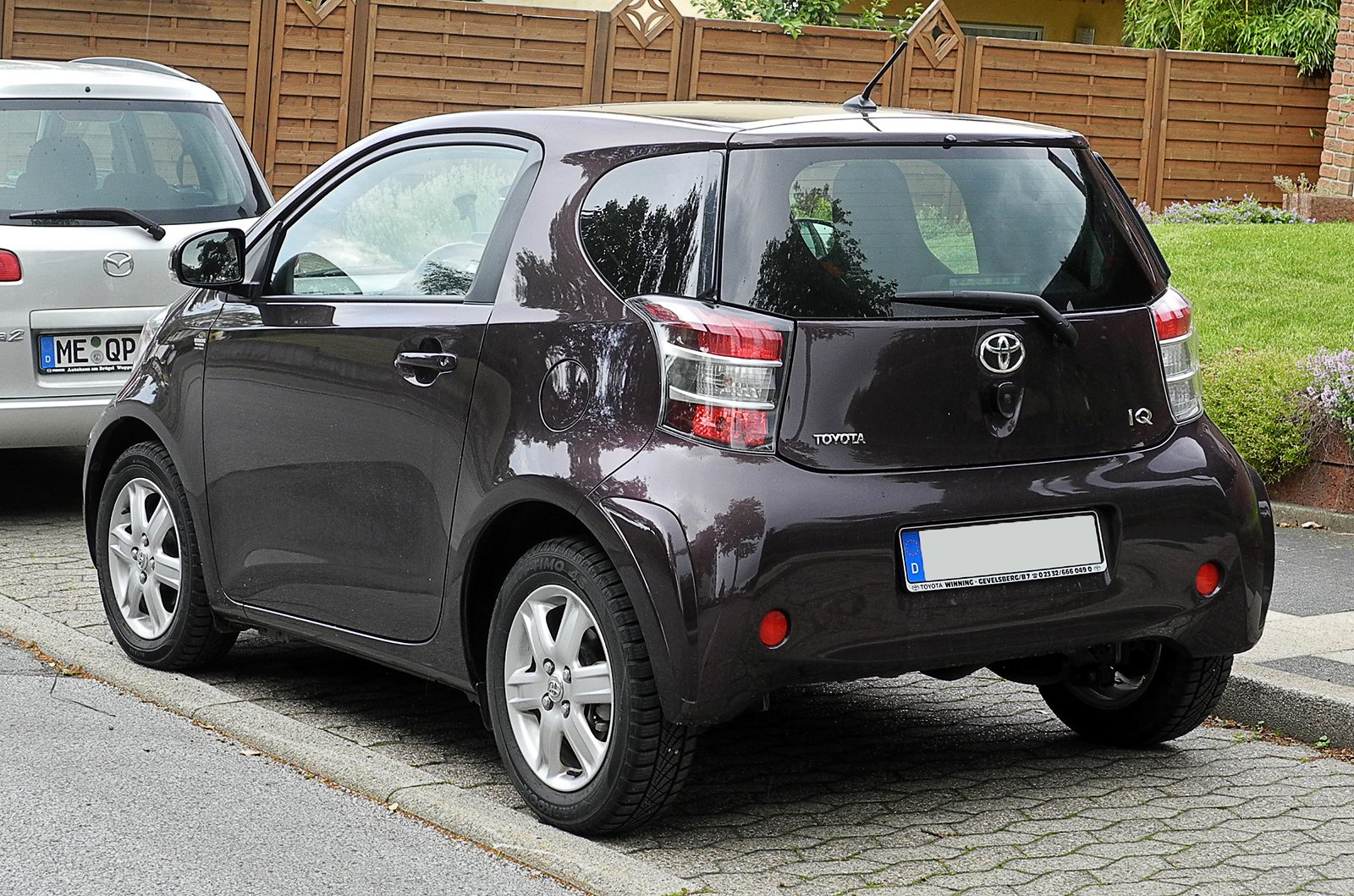
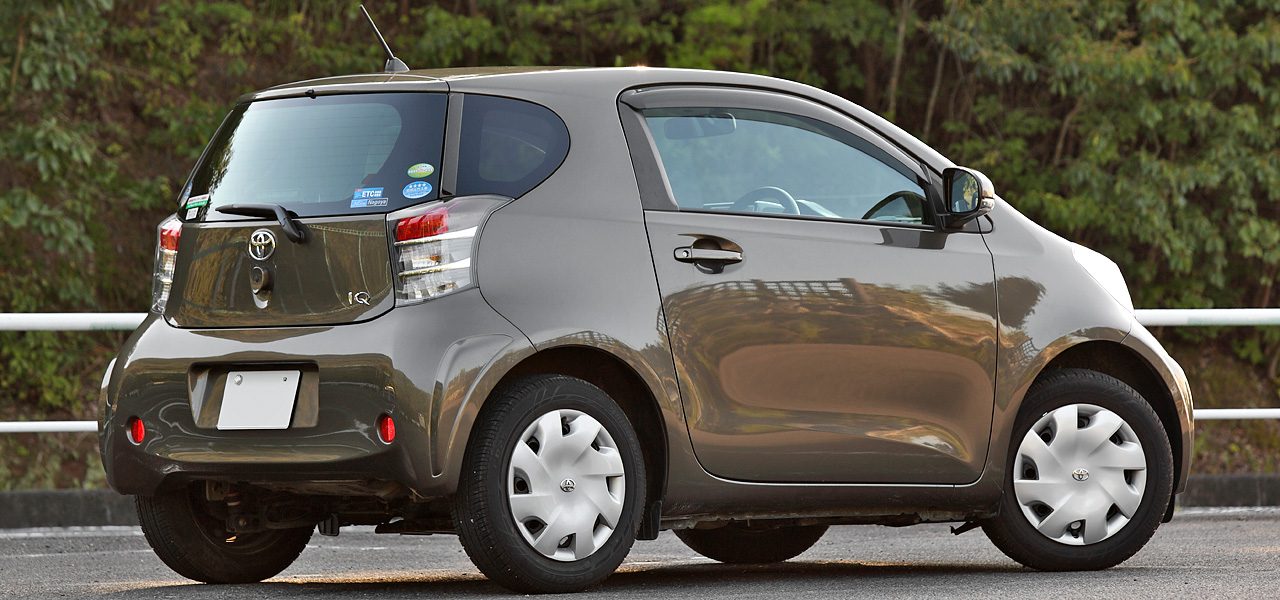
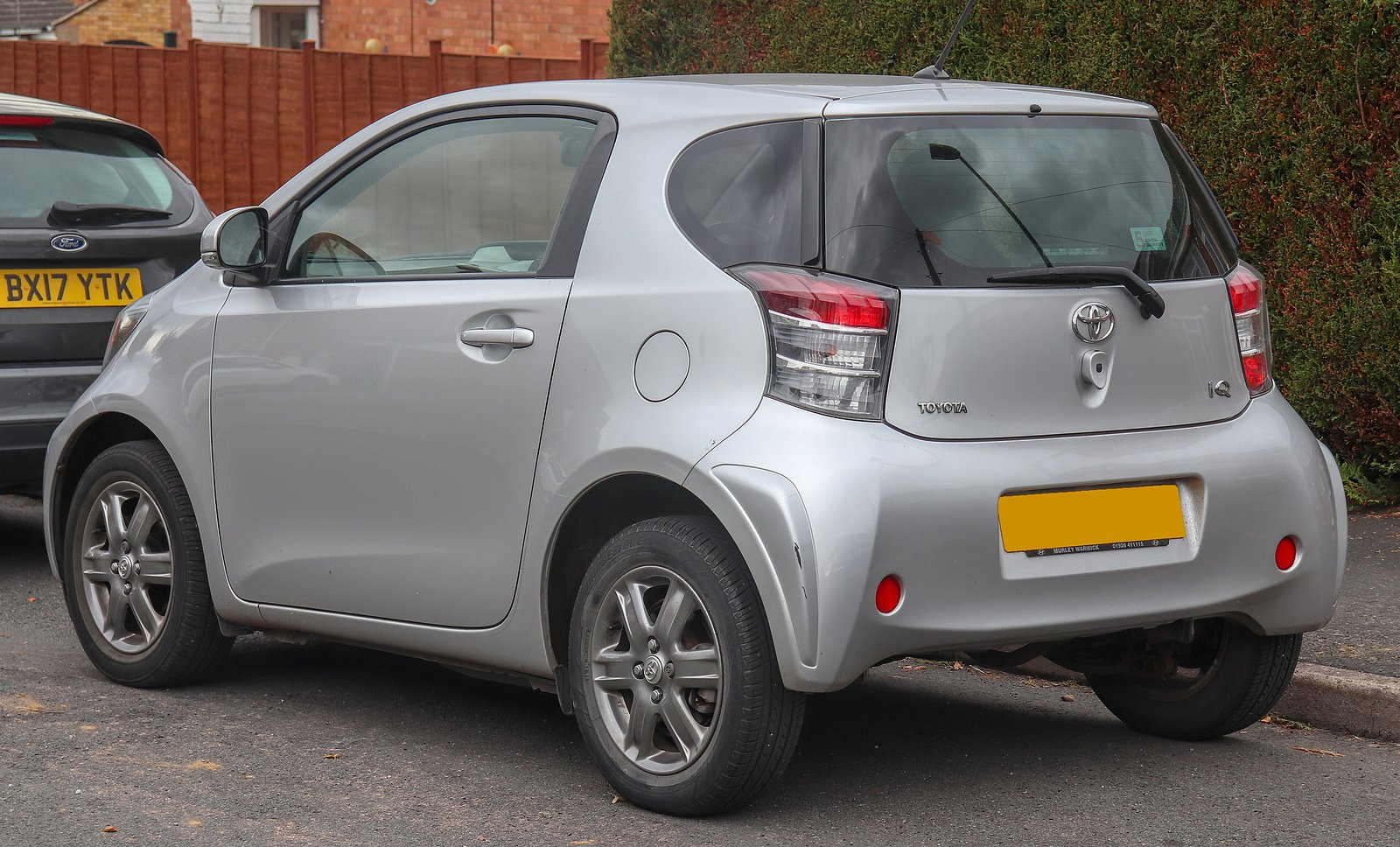
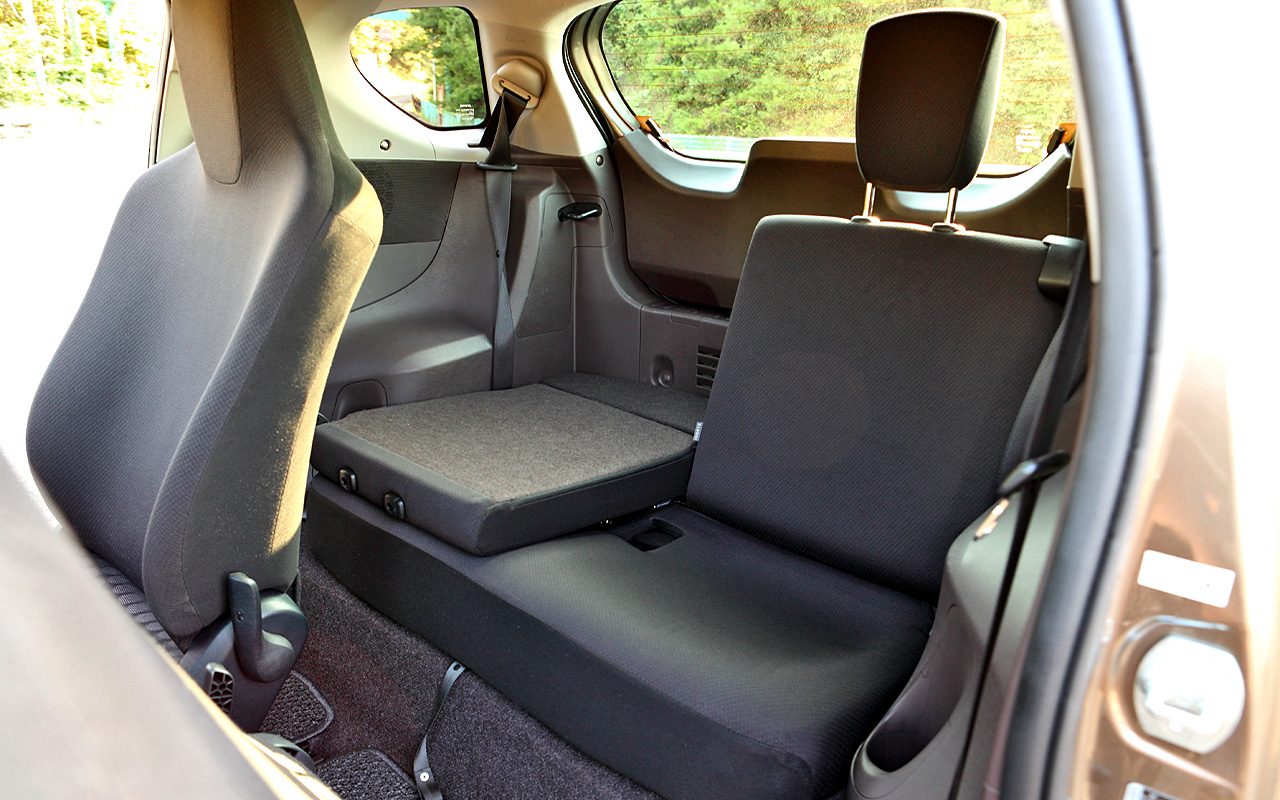
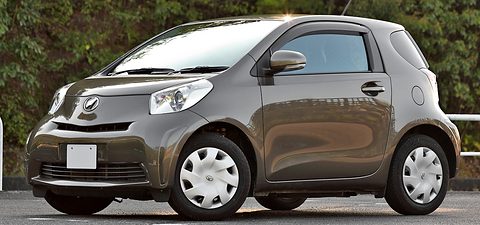
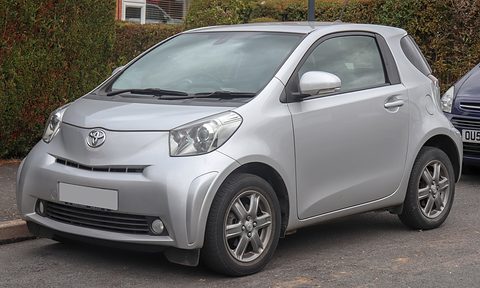
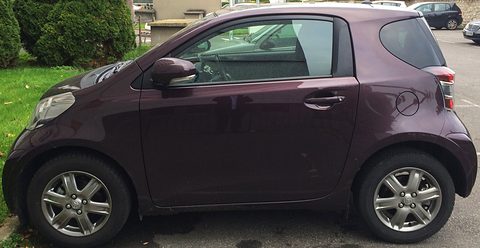
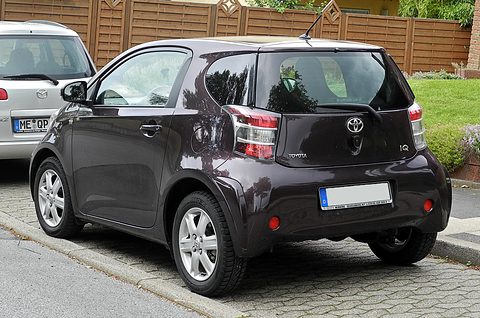
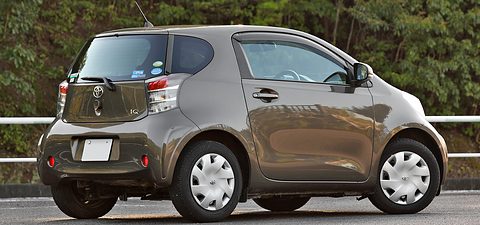
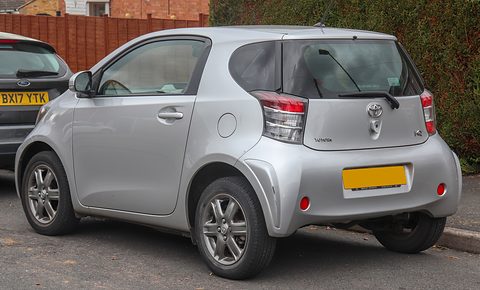
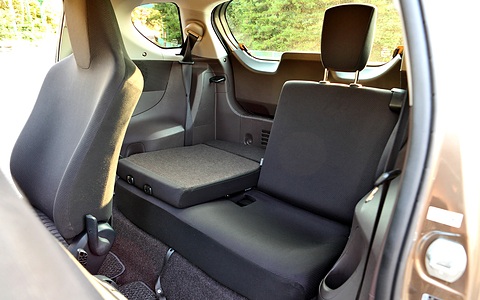
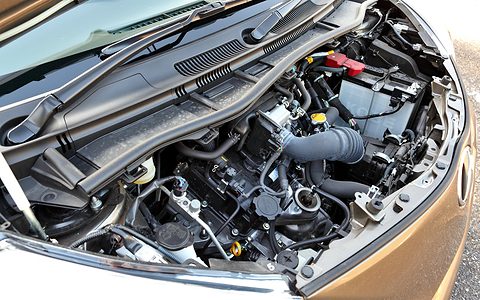
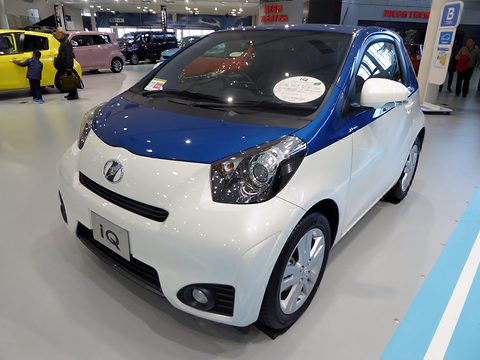
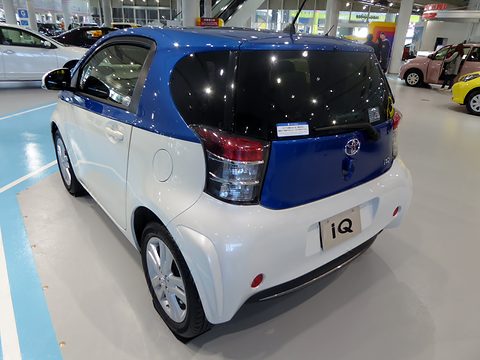
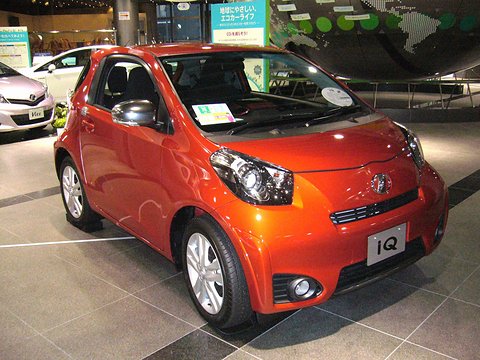
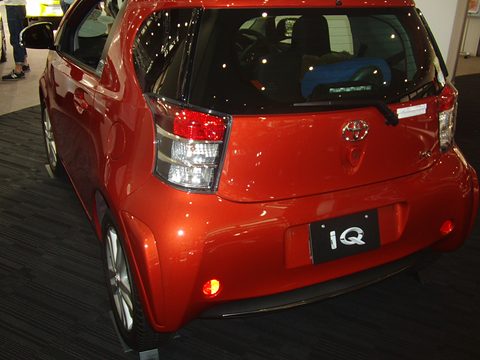
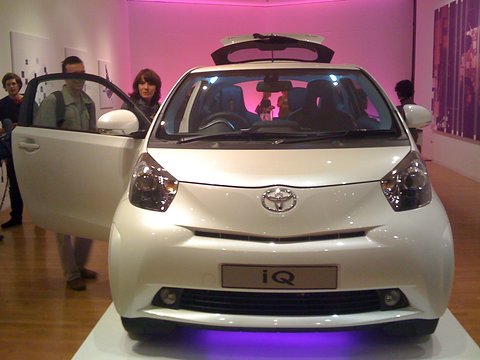
Three adults and a child in a car 2,985 mm (118 in) long. Toyota managed it by moving the differential ahead of the engine, lifting the steering rack out of the way and setting the front passenger’s seat further forward than the driver’s.

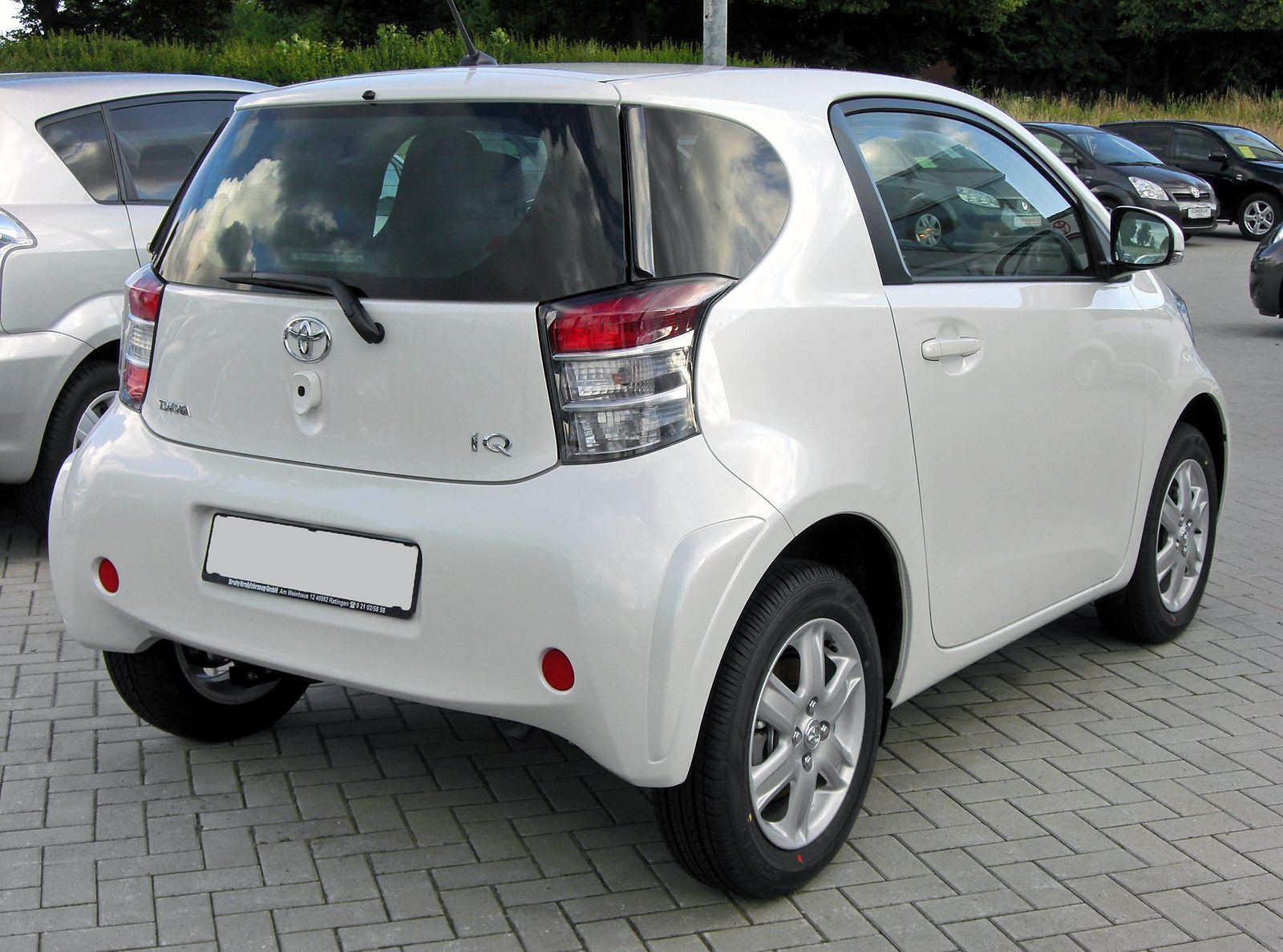
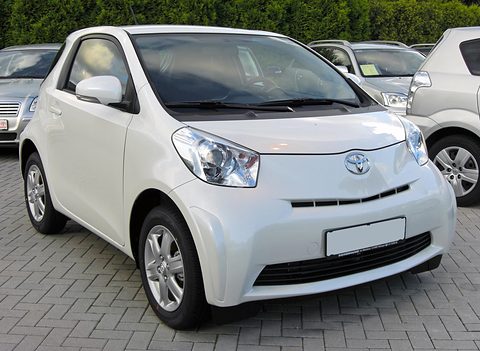
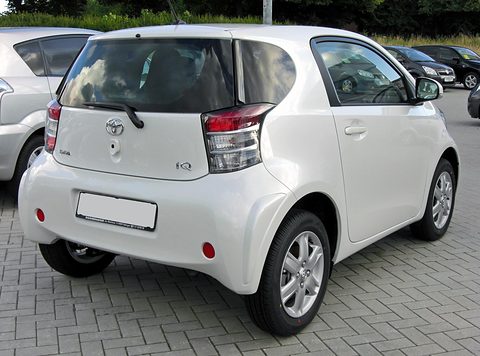
White short city car with silver wheels parked on block paving among other cars.
A white Toyota iQ in a car park in Germany in June 2009.Photo: M 93, Attribution (Wikimedia Commons), via Wikimedia Commons

At a glance

The spec plate

Toyota iQ

AJ10 · Takaoka, Toyota City

Built
2008–⁠2016On sale in Japan from 20 November 2008; built until December 2015 or March 2016, by source
Country
JapanTakaoka plant, Toyota City, Aichi; designed at ED² in Nice
Maker
Toyota Motor CorporationDesigned at Toyota’s European studio, ED², in Nice
Engine
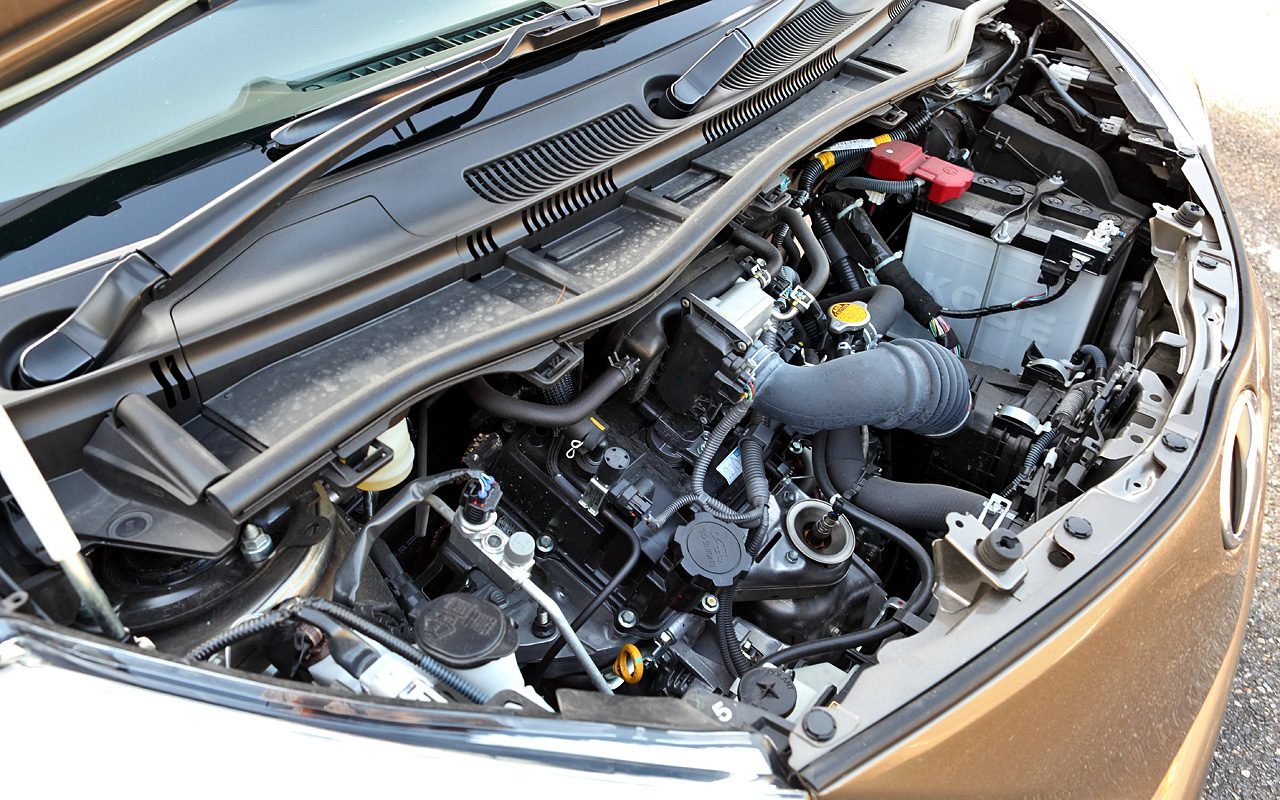
998 cc three-cylinder (1KR-FE)Also a 1,329 cc four (1NR-FE) and, in Europe, a 1,364 cc turbodiesel (1ND-TV)
Power
68 PS50 kW, the 1.0; 98 PS the European 1.33, 90 PS the diesel
Length
2,985 mm1,680 mm wide, 1,500 mm high
Weight
845 kgThe lightest European 1.0; 845–975 kg across the range
Seats
3 + 1Three adults and a child; a two-seater in Japan from 2009
Wheels
4Engine at the front, driving the front wheels
Price new
about £10,000In Britain, more than the larger Aygo
Production
no total foundAbout 99,000 sold in Europe and 15,700 in the US, by yearly sales
Top speed
155km/h155 km/h170 km/h for the 1.33

How big is it?

True proportion

2.98 m

It is 15 mm longer than a Fiat 500, about 1.7 adults laid end to end.

  • 1.68 m wide
  • 845 kg: about 11 adults
  • A 2,000 mm wheelbase in a 2,985 mm body: the wheels at the corners
  • Short enough for a kei car, but too wide and too big-engined to be one
Drawn at true proportion. The track is 3.6 metres long; the adult stands at the same scale. The Peel P50 is the smallest production car, on every page for comparison.

The story

History

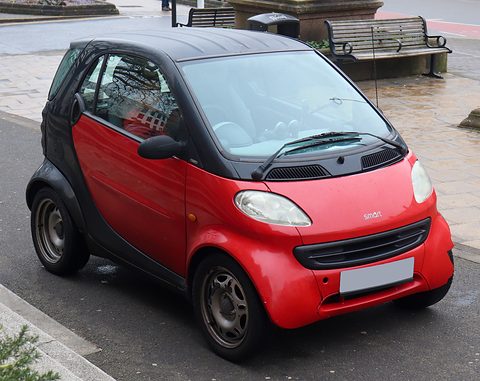
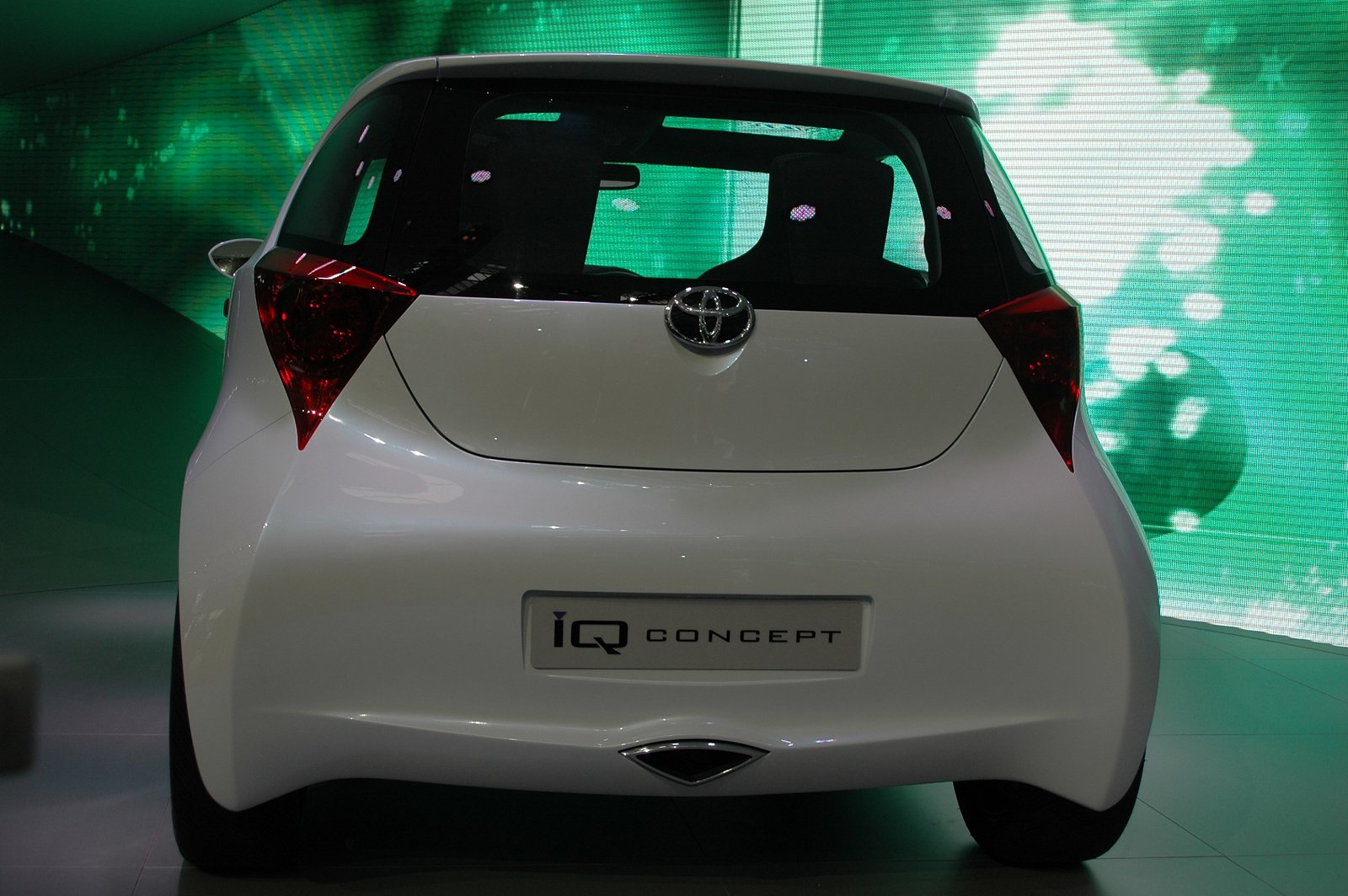
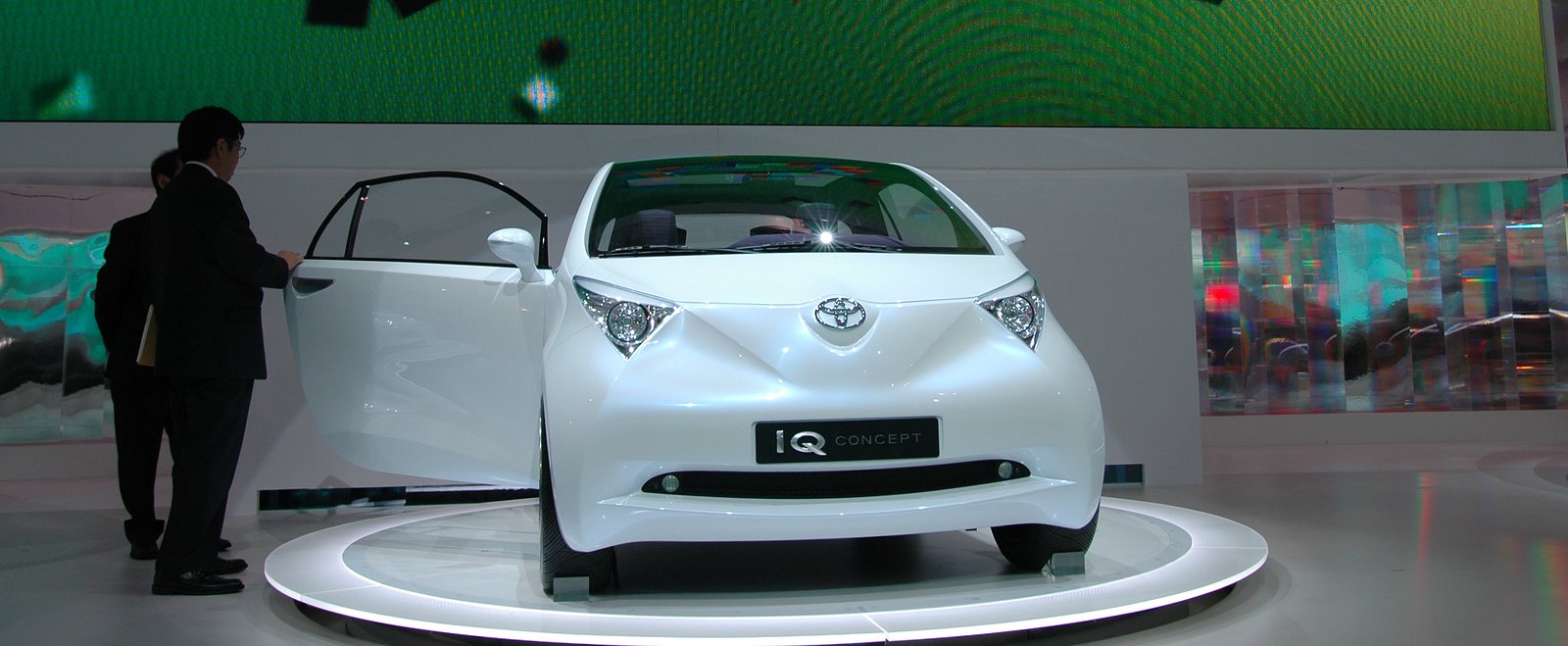
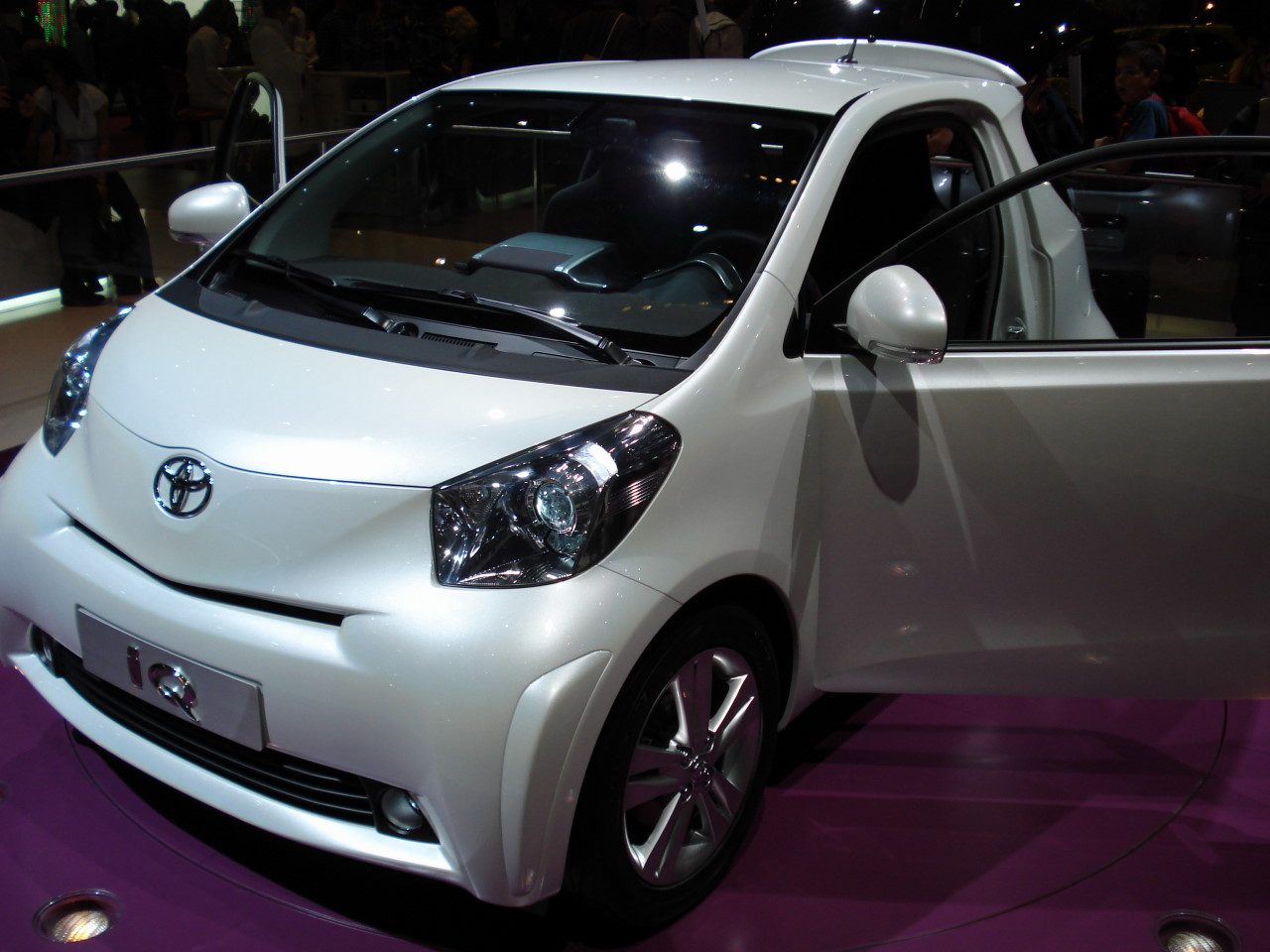
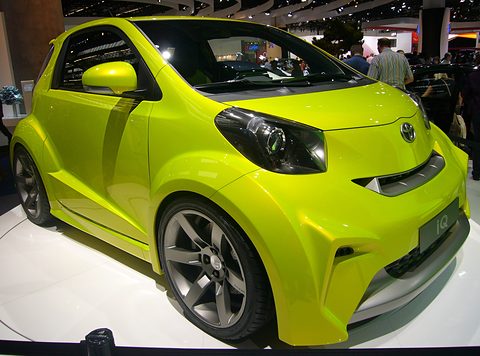
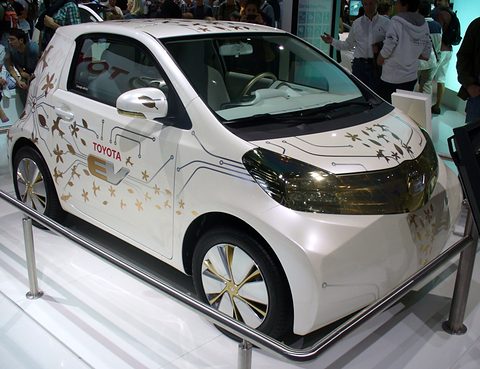
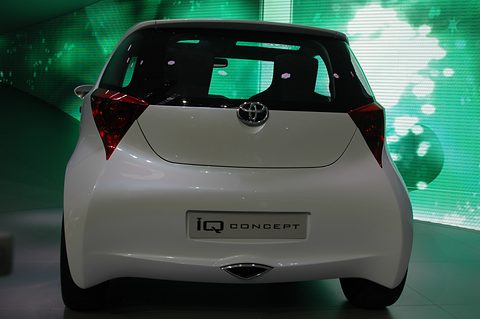
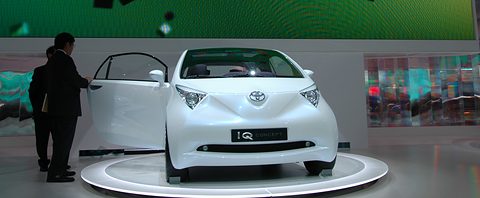
The iQ was drawn in France. Toyota’s European design studio, ED² in Nice, shaped the iQ Concept that appeared at the Frankfurt Motor Show in September 2007 and then in Tokyo.source 1source 2 Japanese Wikipedia says its forms were worked out from mathematical models of spiral shells and ripples, and that the centre console and door trims took the manta ray as their motif.source 2 The name stood for intelligence quotient; Toyota added that the “i” meant individuality, innovation and intelligence, and the “Q” quality, the car’s cubic shape and a cue towards new ways of living.source 1source 2 Japanese Wikipedia names its forerunner plainly: the Smart Fortwo, the earlier car of a similar idea.source 2

Compact, not compromised.

Toyota’s slogan for the iQ, 2008, as quoted by Japanese Wikipedia.source 2

Room by rearrangement

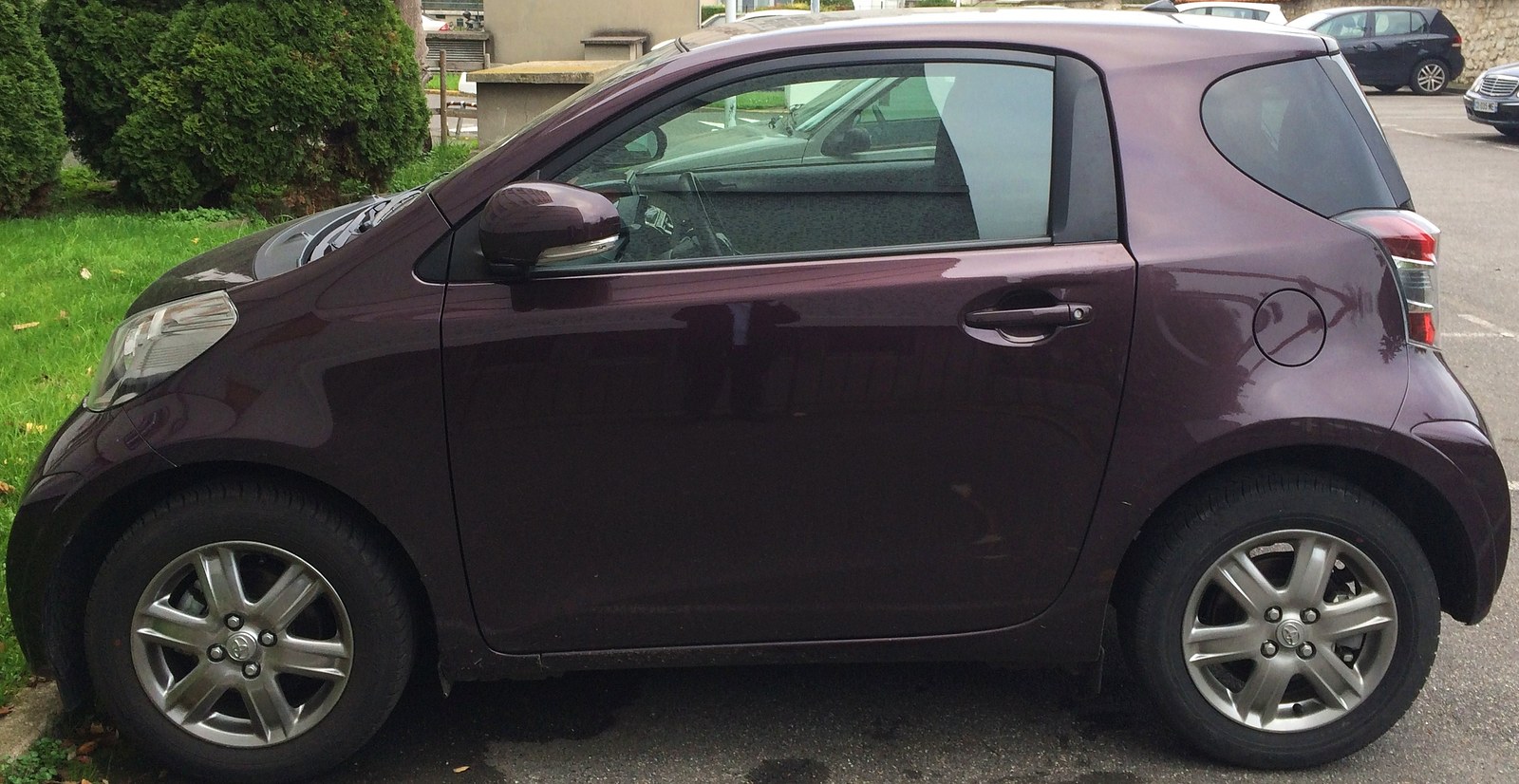
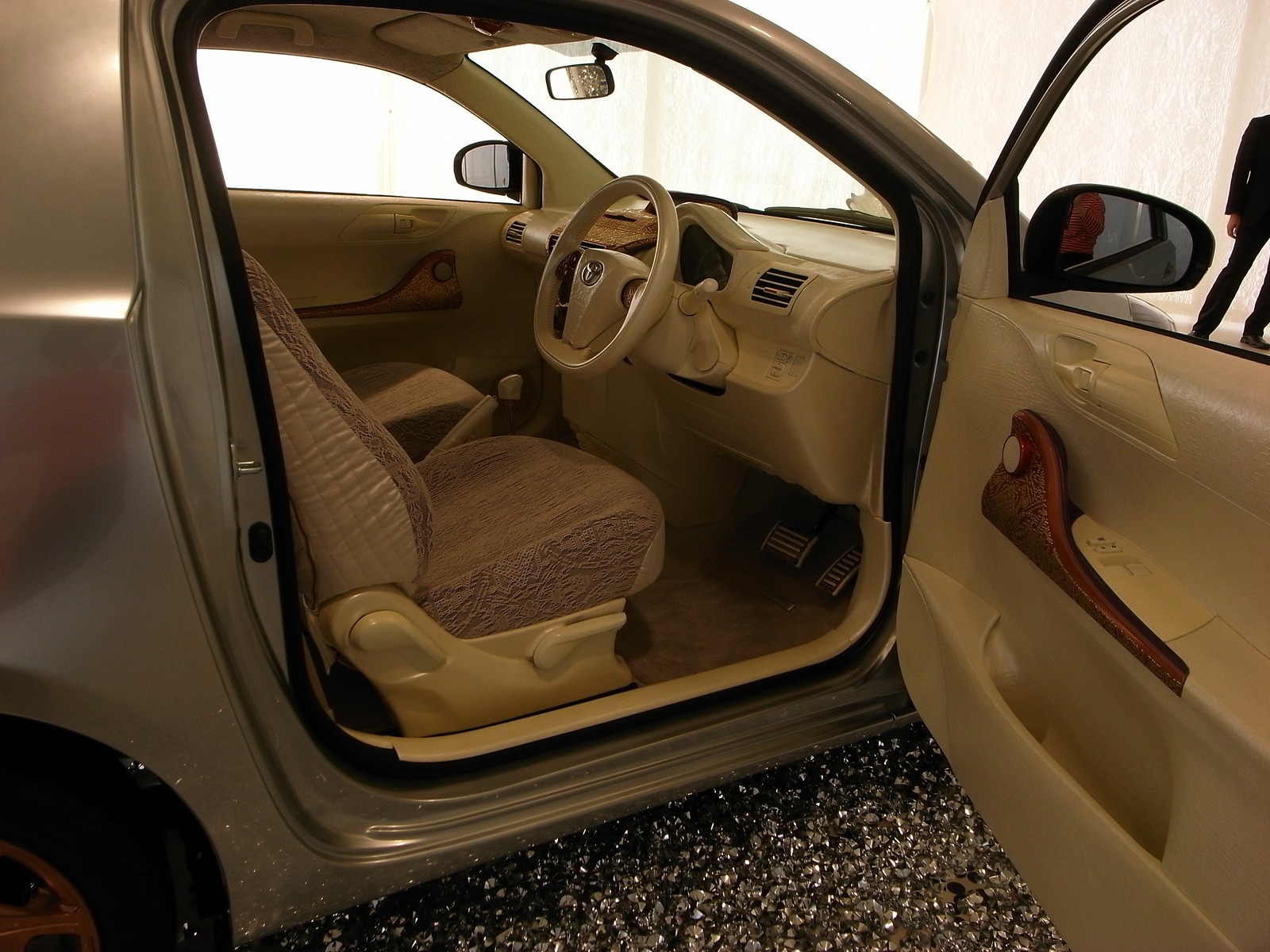
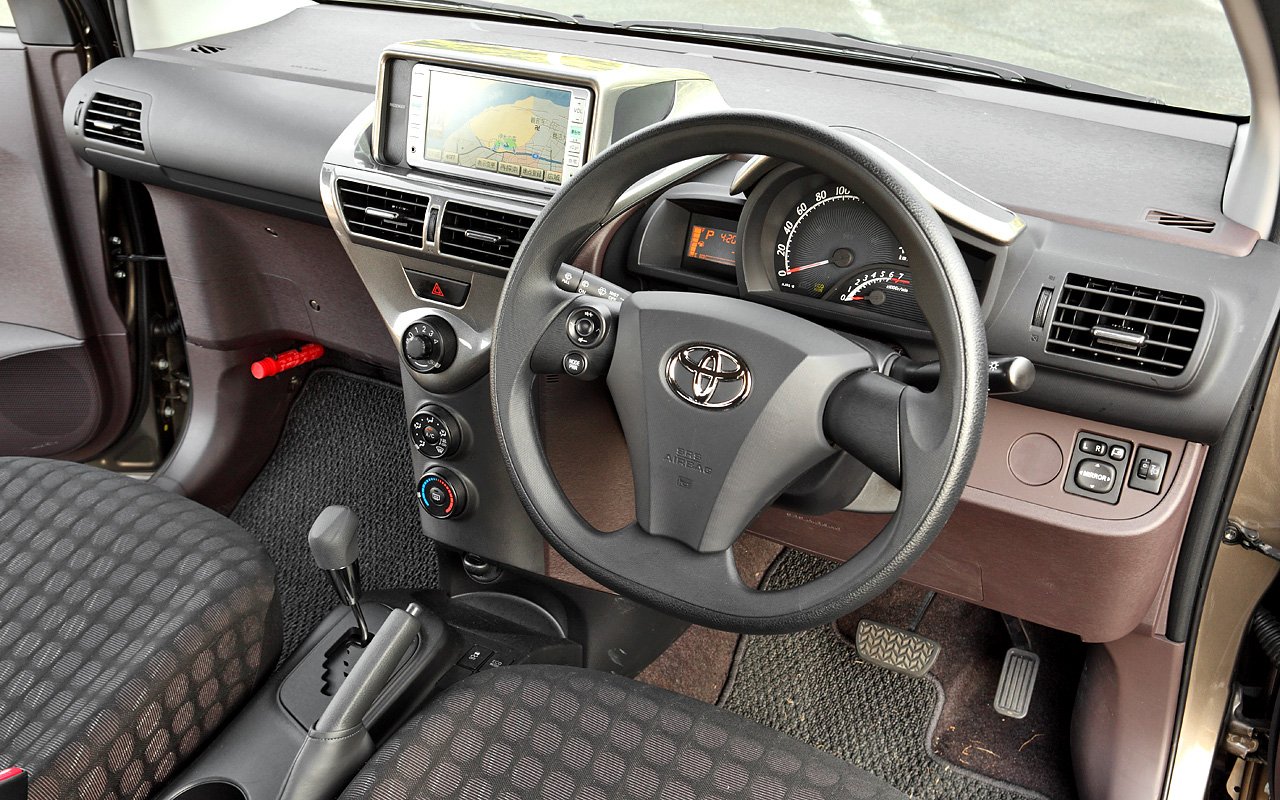
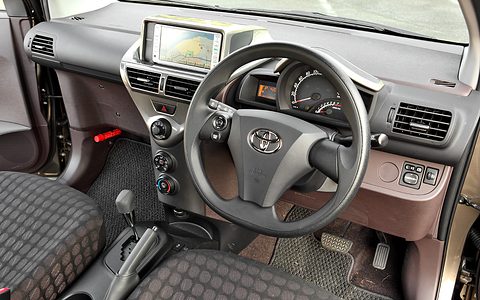
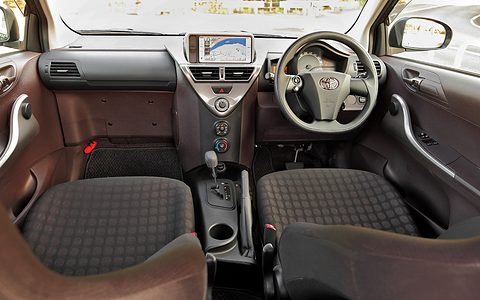
The Smart has two seats; the iQ set out to carry four. Toyota found the space by moving things rather than by stretching the car. A newly developed differential went ahead of the engine, the steering rack was mounted high with a central take-off, the fuel tank was flattened under the floor, the rear dampers were angled back, and a compact air-conditioning unit sat in the middle, behind an asymmetric dashboard. The seats were slim.source 1source 2 Because the dashboard is cut away on the passenger’s side, the front passenger sits further forward than the driver, and an adult can sit behind; the seat behind the driver is for a child or for bags, hence “3+1”.source 1source 2 The wheels went to the corners, 2,000 mm (79 in) apart in a body 2,985 mm long.source 1source 2

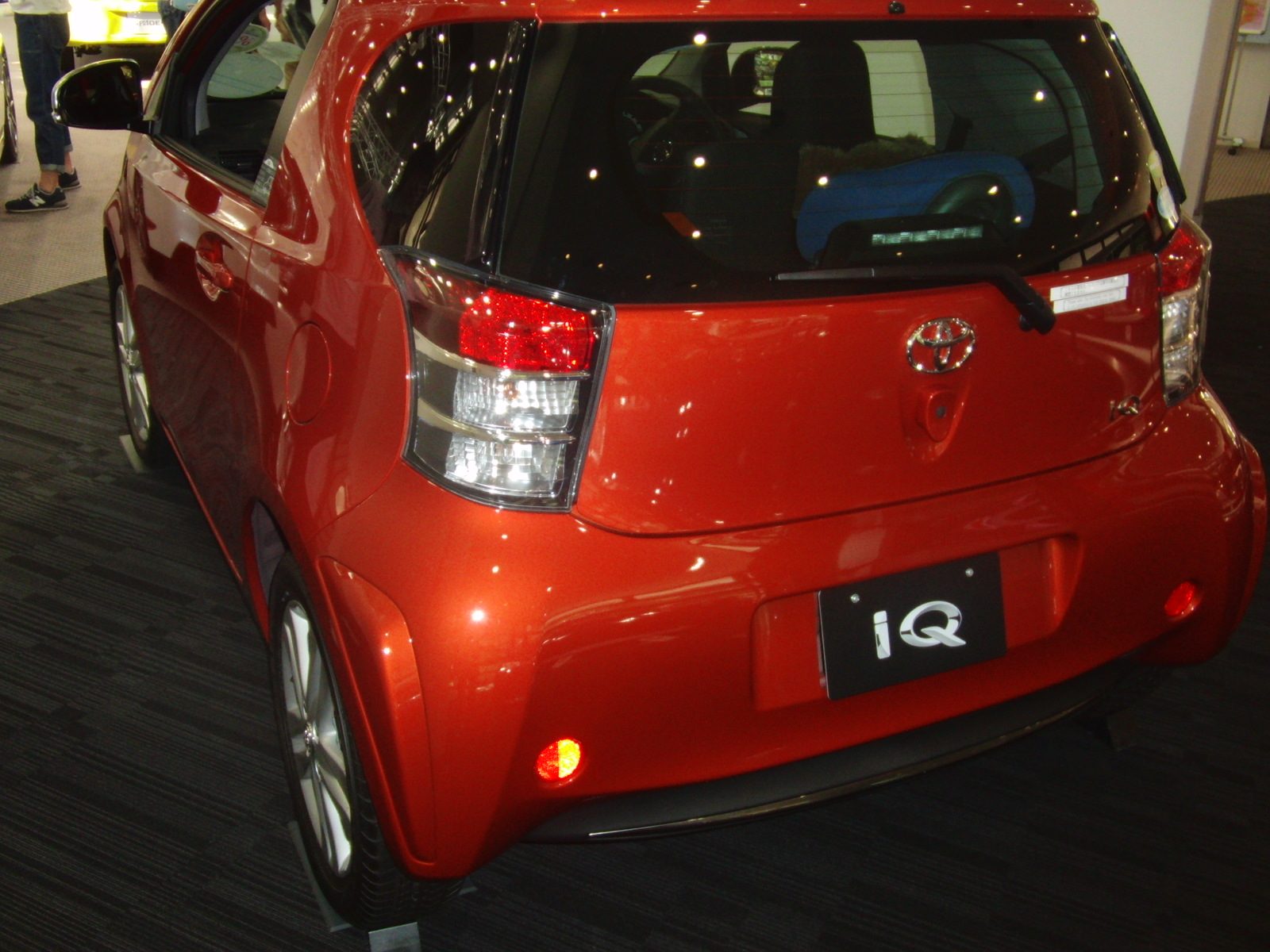
Its length was within the limit for a Japanese kei car, but at 1,680 mm (66 in) it was far wider than the kei limit of 1,480 mm, and its engines were too large, so in Japan it was registered as an ordinary small car.source 1source 2 It is also 15 mm longer than the Fiat Nuova 500, the yardstick of a microcar on this site, and is included all the same, as a defining small car of its time. It came with nine airbags as standard, one of them, by English Wikipedia’s account, the world’s first curtain airbag for the rear window, to protect the heads of rear passengers if the car was hit from behind.source 1

A prize before a sale

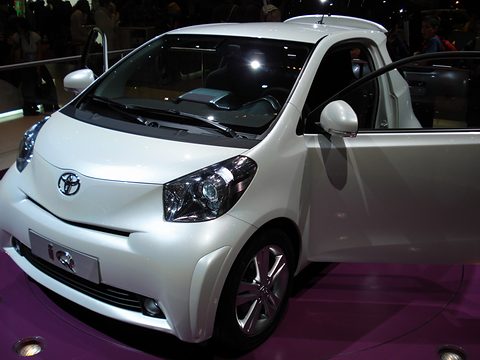
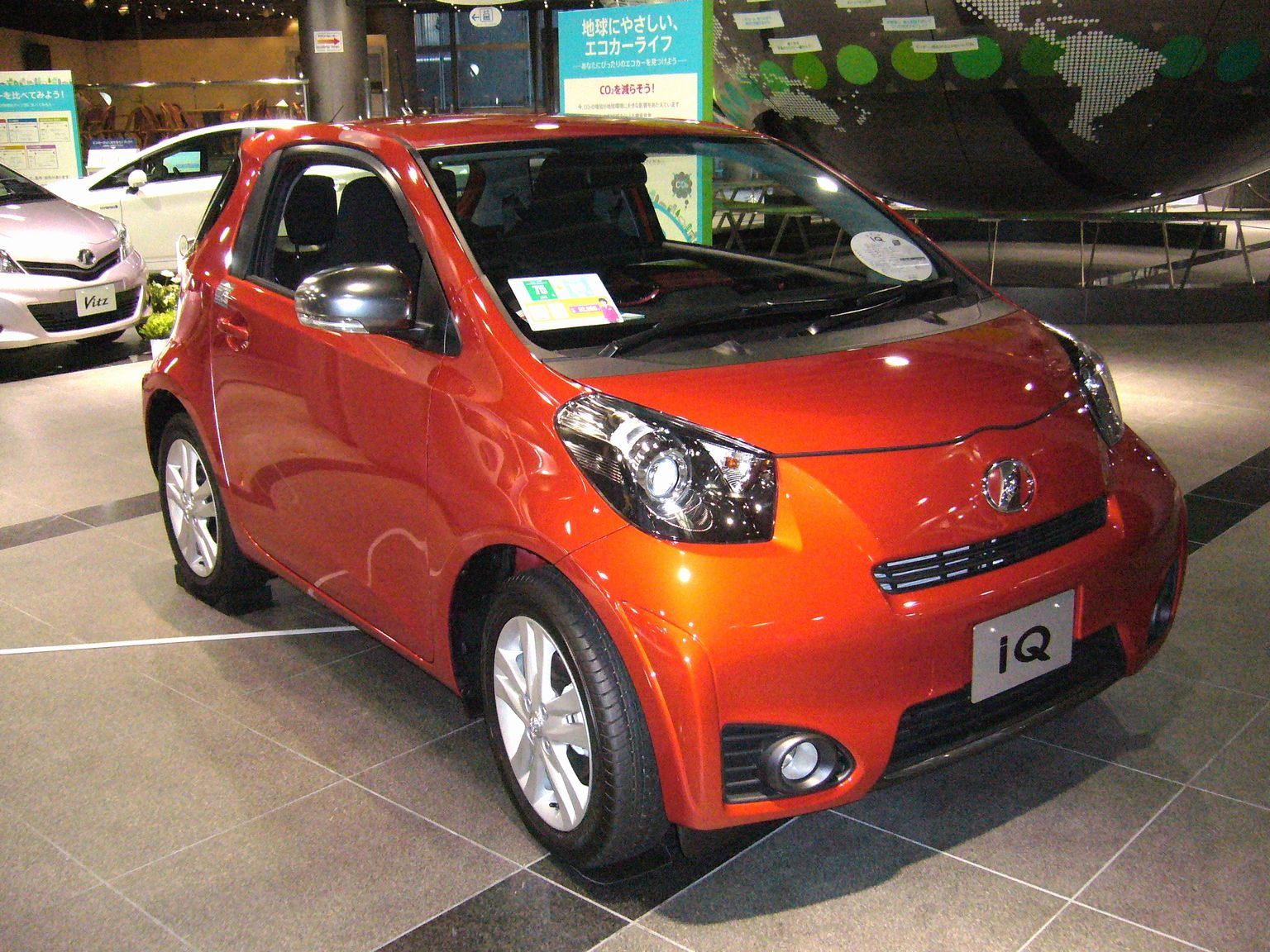
A production-specification prototype was shown at Geneva in March 2008, and the finished car at the Paris show that October.source 1source 2 In Japan the honours came before the customers. On 6 November 2008 the iQ won the Good Design Grand Award, the Prime Minister’s prize, the second Toyota to do so after the Prius in 2003, and on 11 November it was named Japan Car of the Year for 2008–⁠2009, nine days before it went on sale.source 2source 3 From 20 November it was sold only through Toyota’s Netz dealers, and in Japan it wore the Netz emblem rather than Toyota’s. The first Japanese cars all had the 1.0-litre three-cylinder and a CVT, and Toyota hoped to sell 2,500 a month.source 2

Europe had it from January 2009, with the 1.0 and a five-speed manual or CVT; the 1.33-litre four followed at Geneva in March, with a six-speed manual and Stop & Start, and a 1.4-litre diesel of 90 PS joined the range.source 1source 2 It was not cheap. In Britain it cost about £10,000, more than the larger Aygo, and in Japan its price beside kei cars and the Vitz was blamed when sales fell short of the target in 2009.source 1source 2

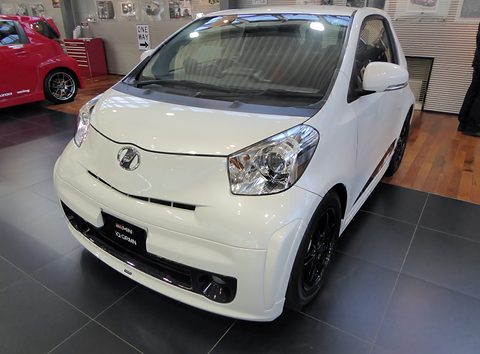
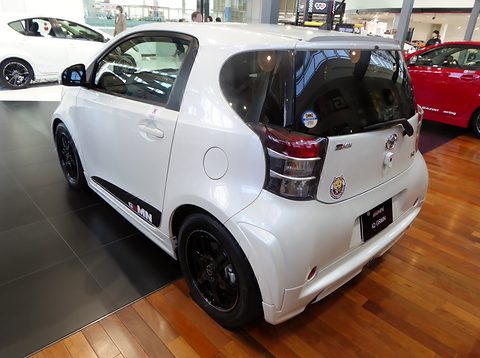
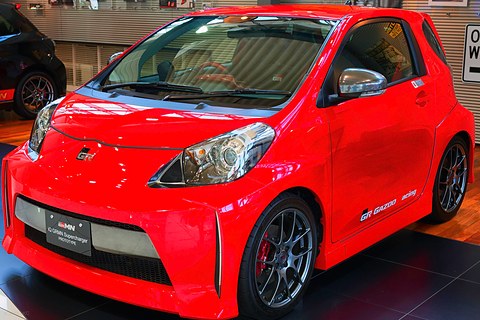
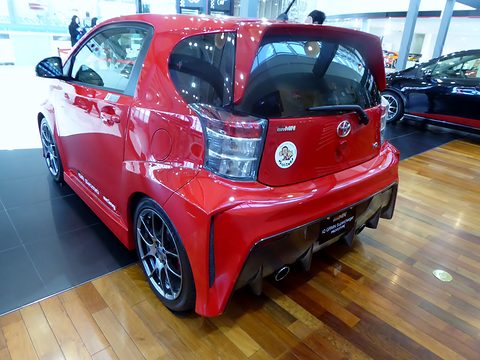
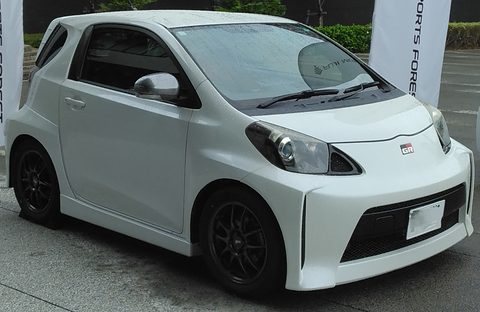
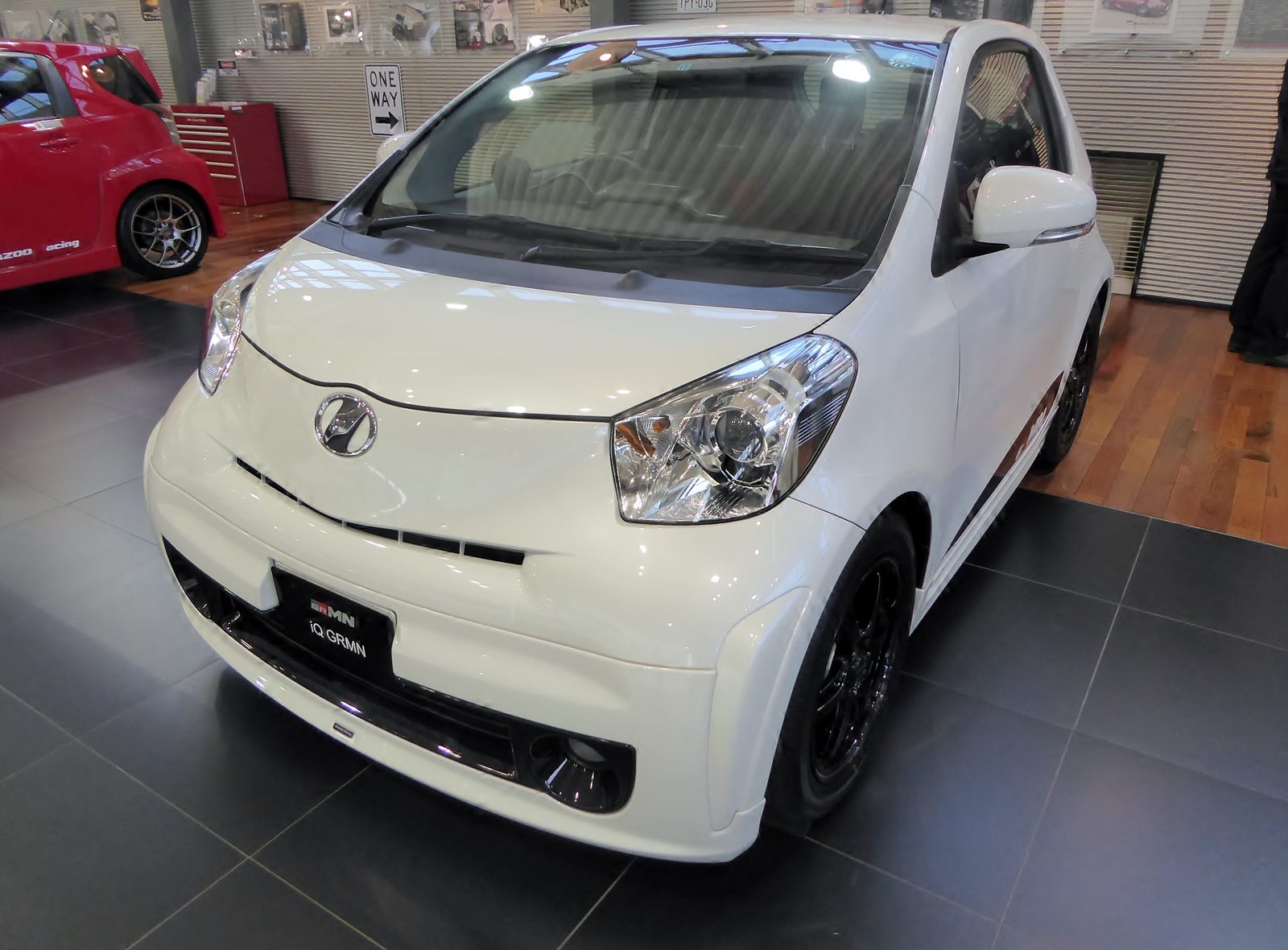
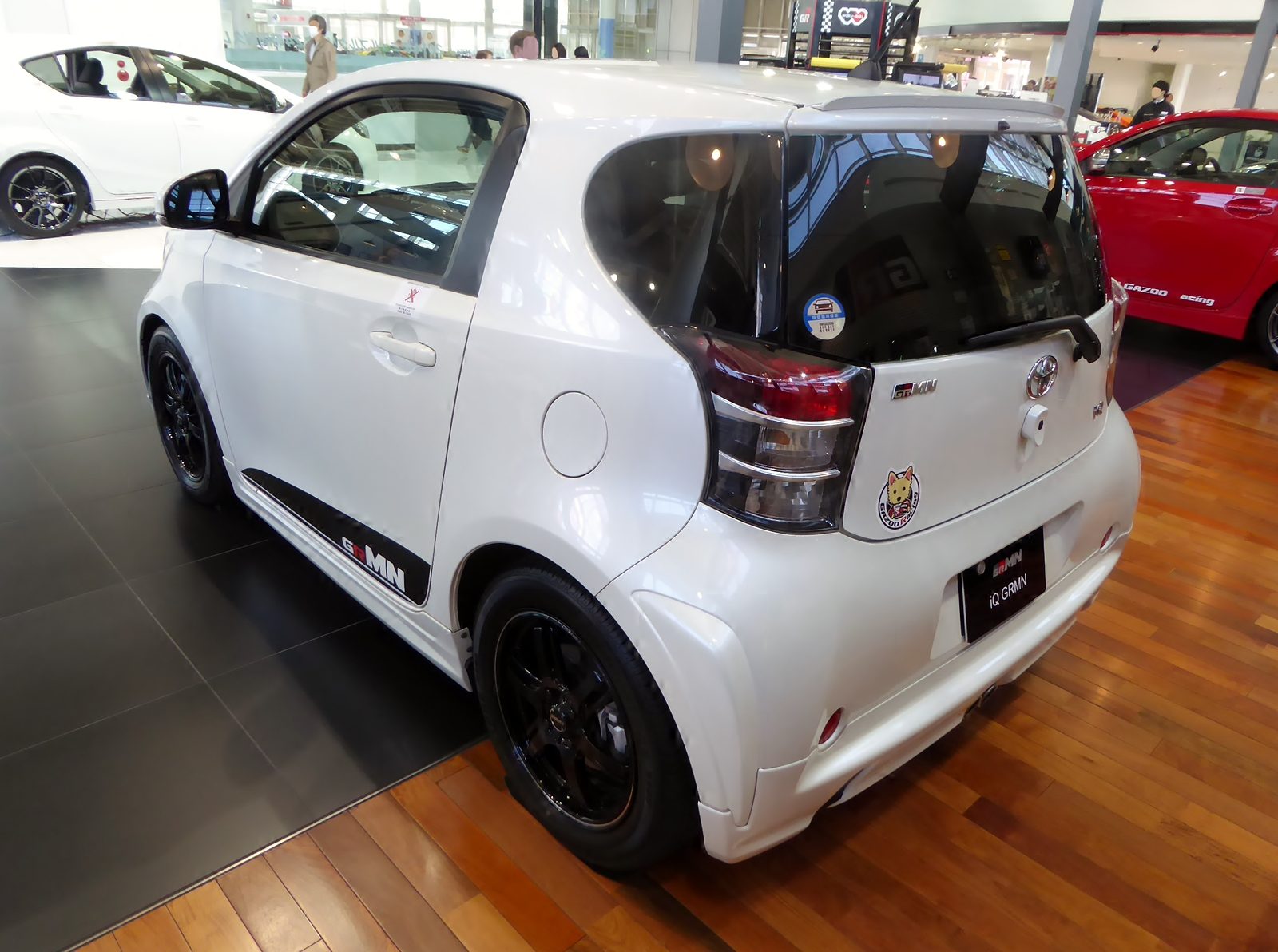
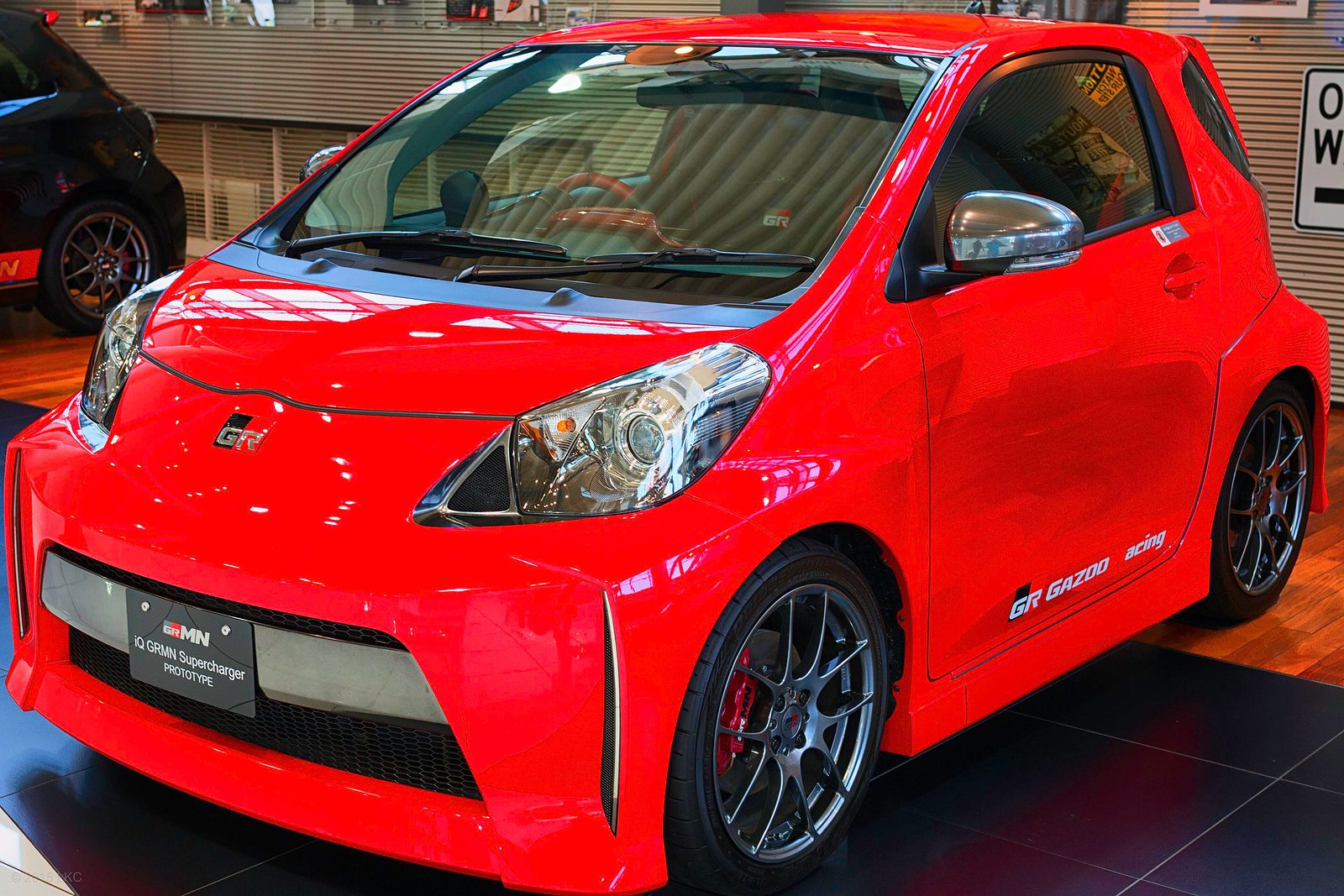
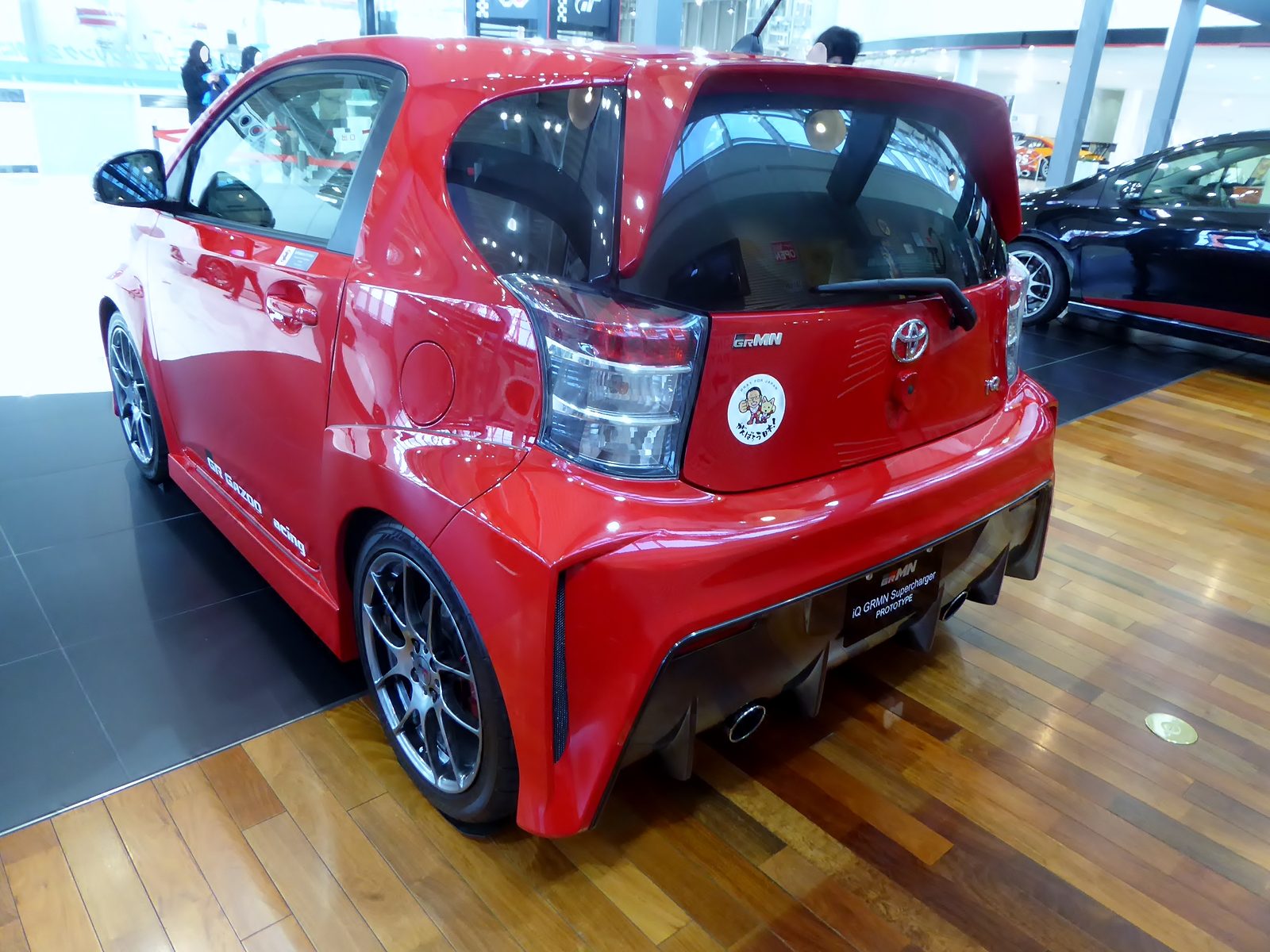
Toyota kept adding versions in Japan. In August 2009 came the 1.3-litre 130G; the 100X 2 Seater, with luggage space in place of the rear seats and its suspension retuned for the new balance; and the GAZOO Racing tuned by MN, or GRMN: 100 cars, sold out in about a week.source 2 In July 2012 the GRMN Supercharger followed, with more than 30 per cent more power and torque and a close-ratio gearbox; its 100 were gone by September.source 1source 2

Scion, Aston Martin and the eQ

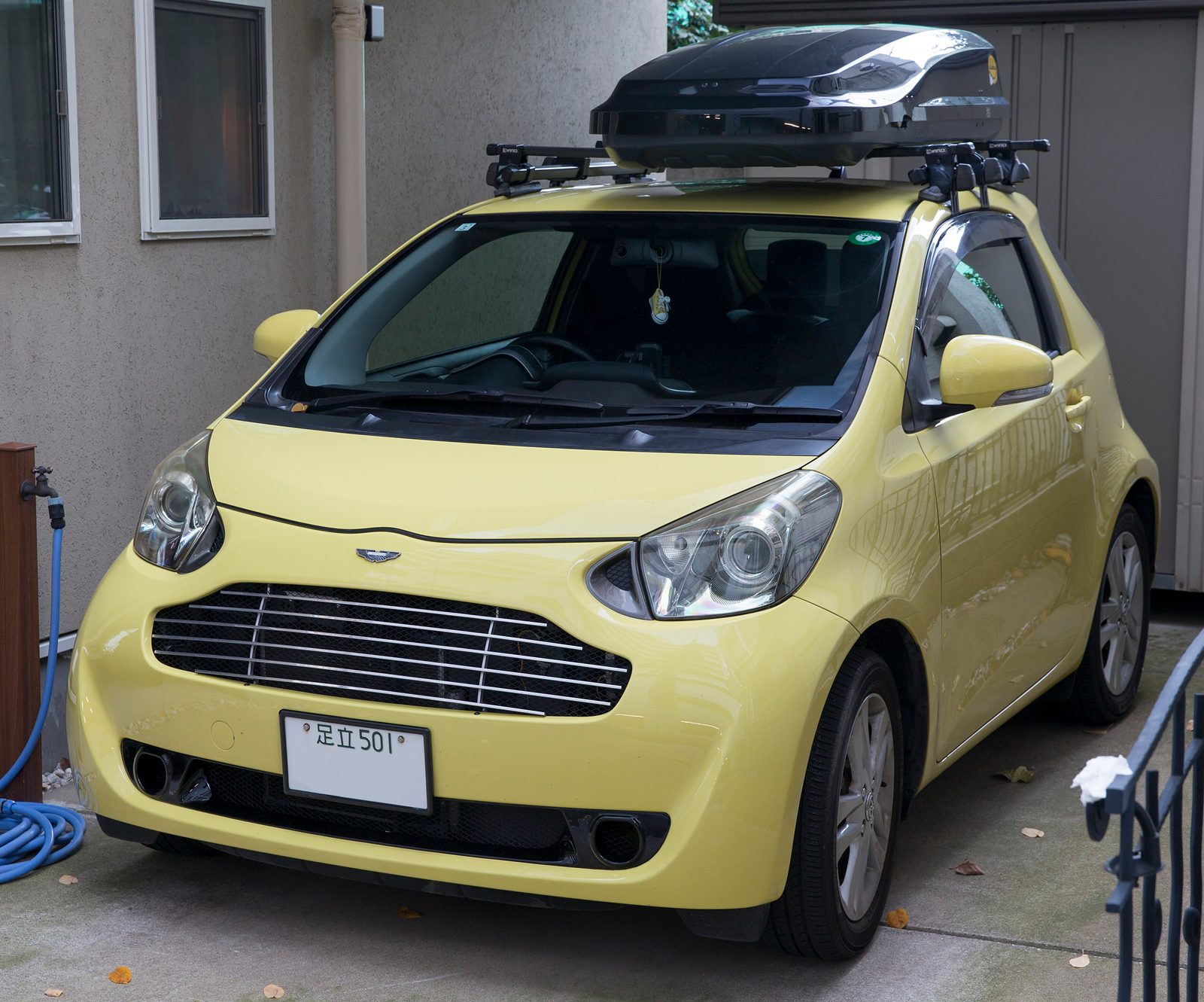
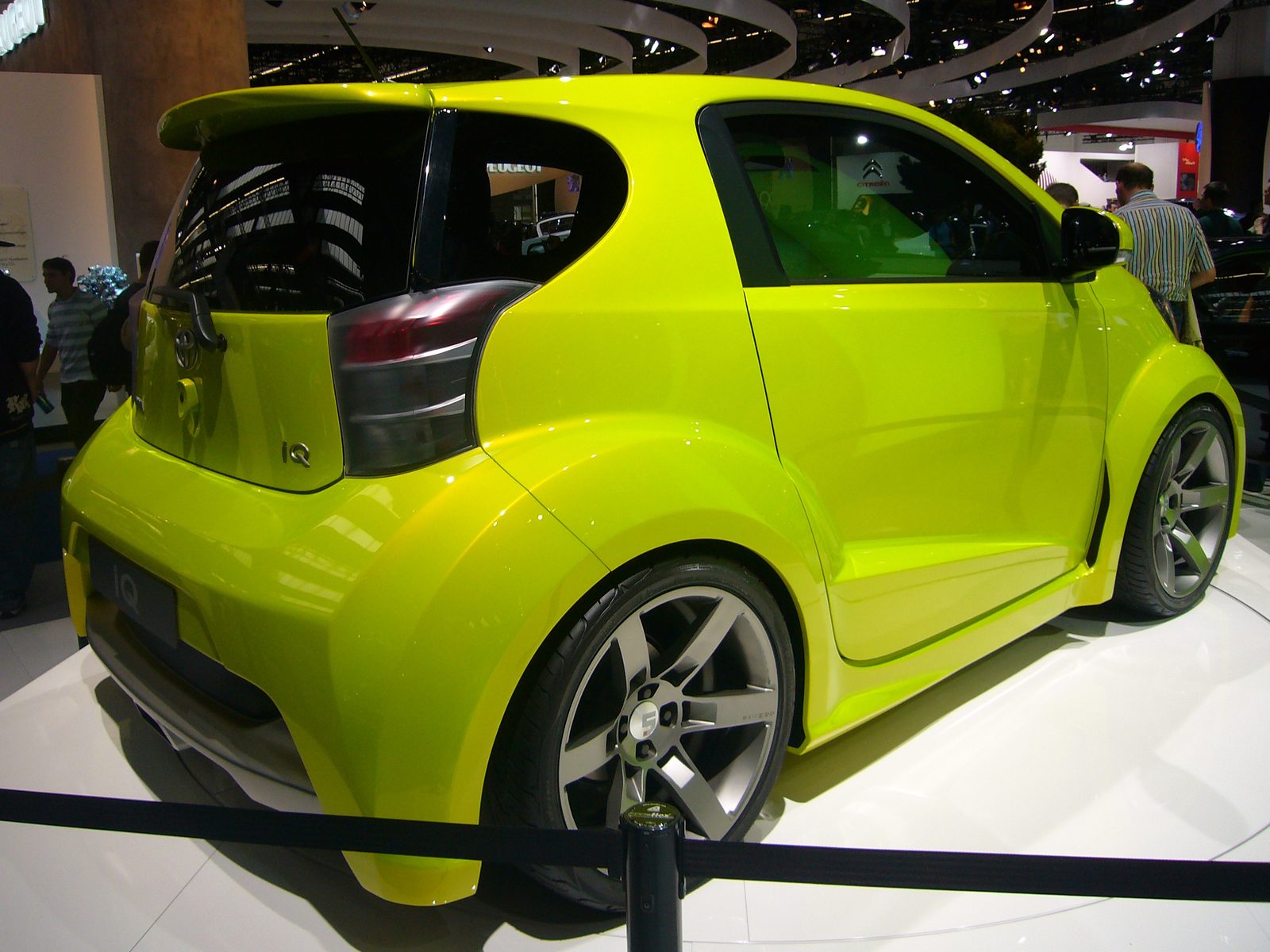
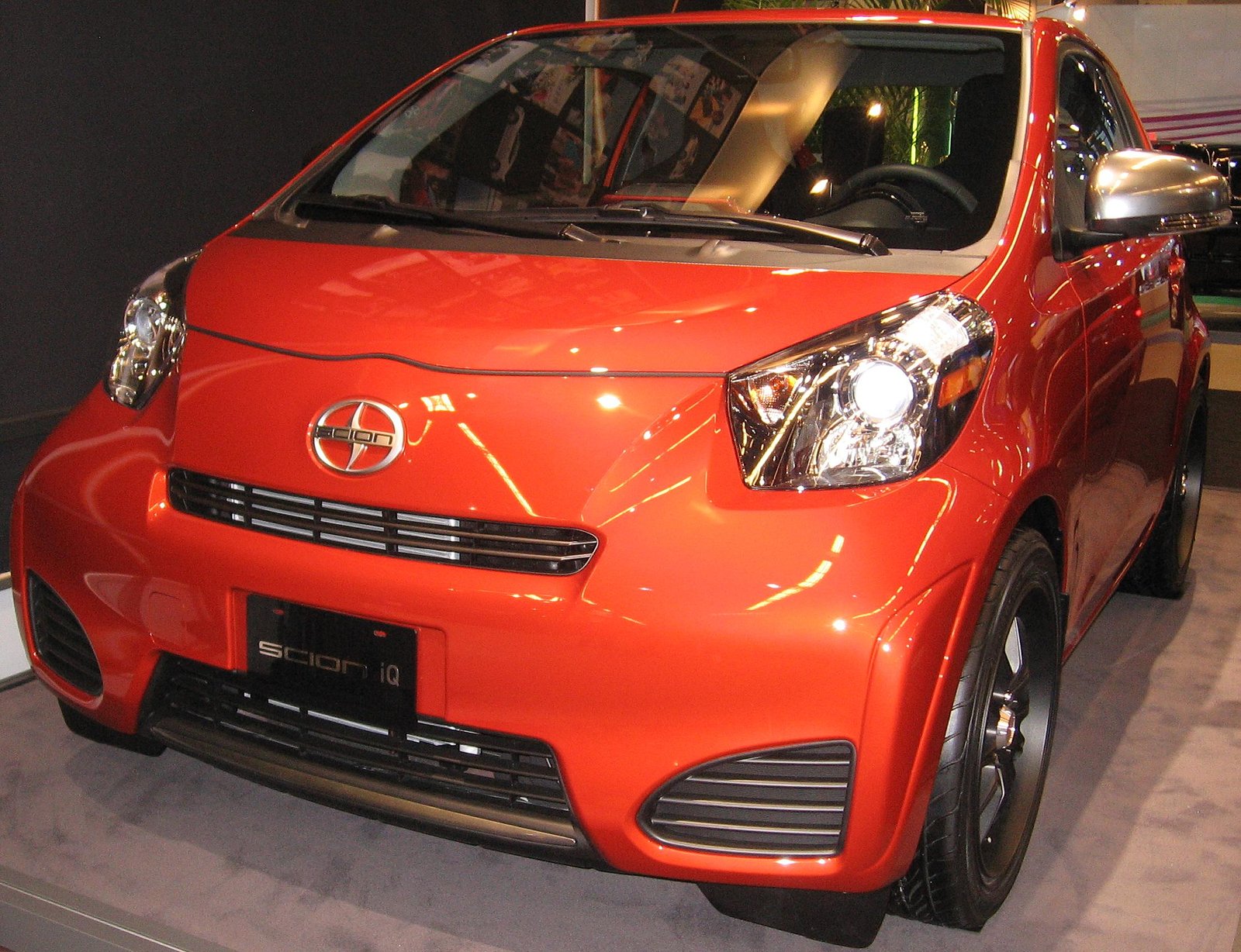
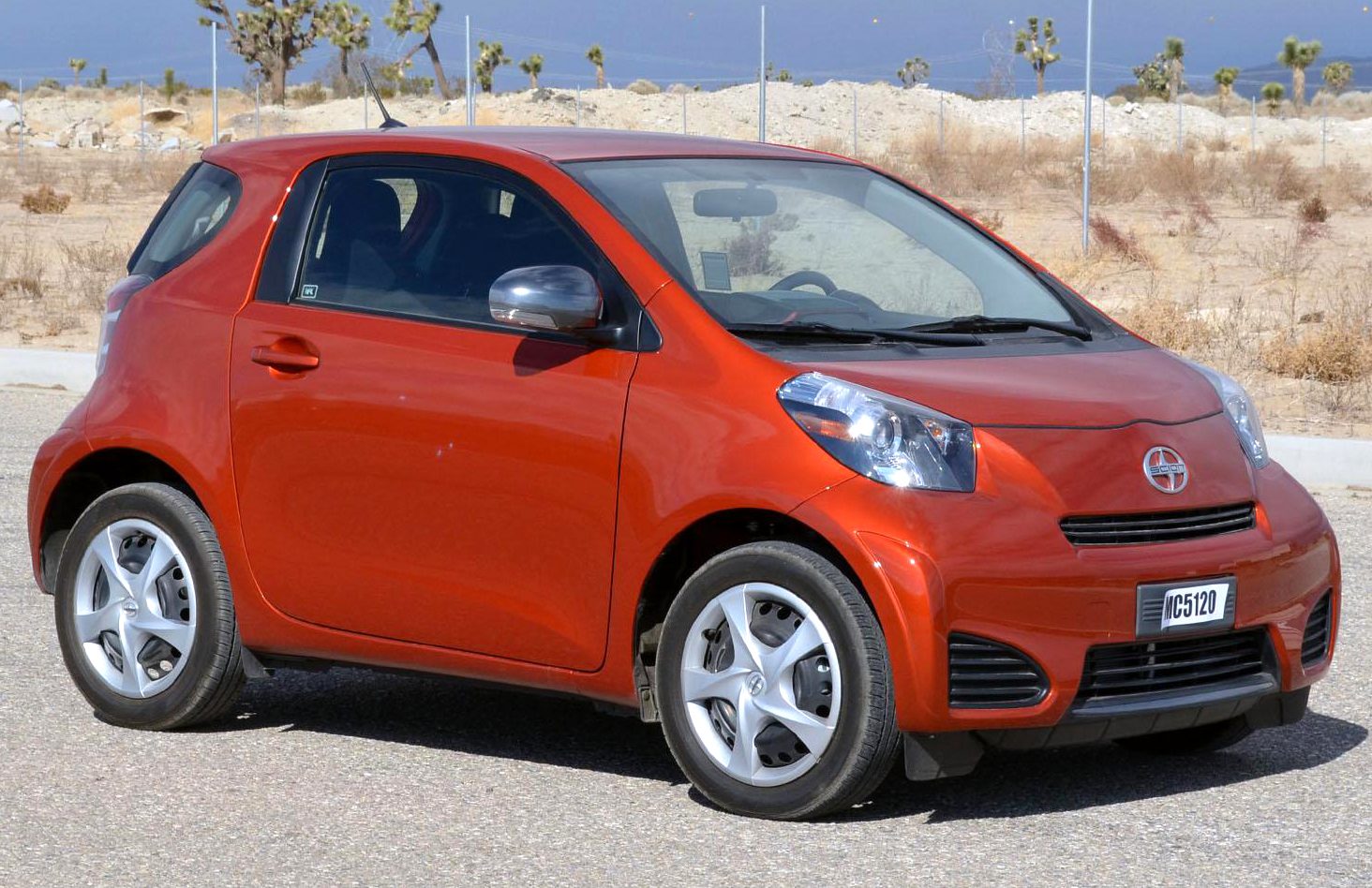
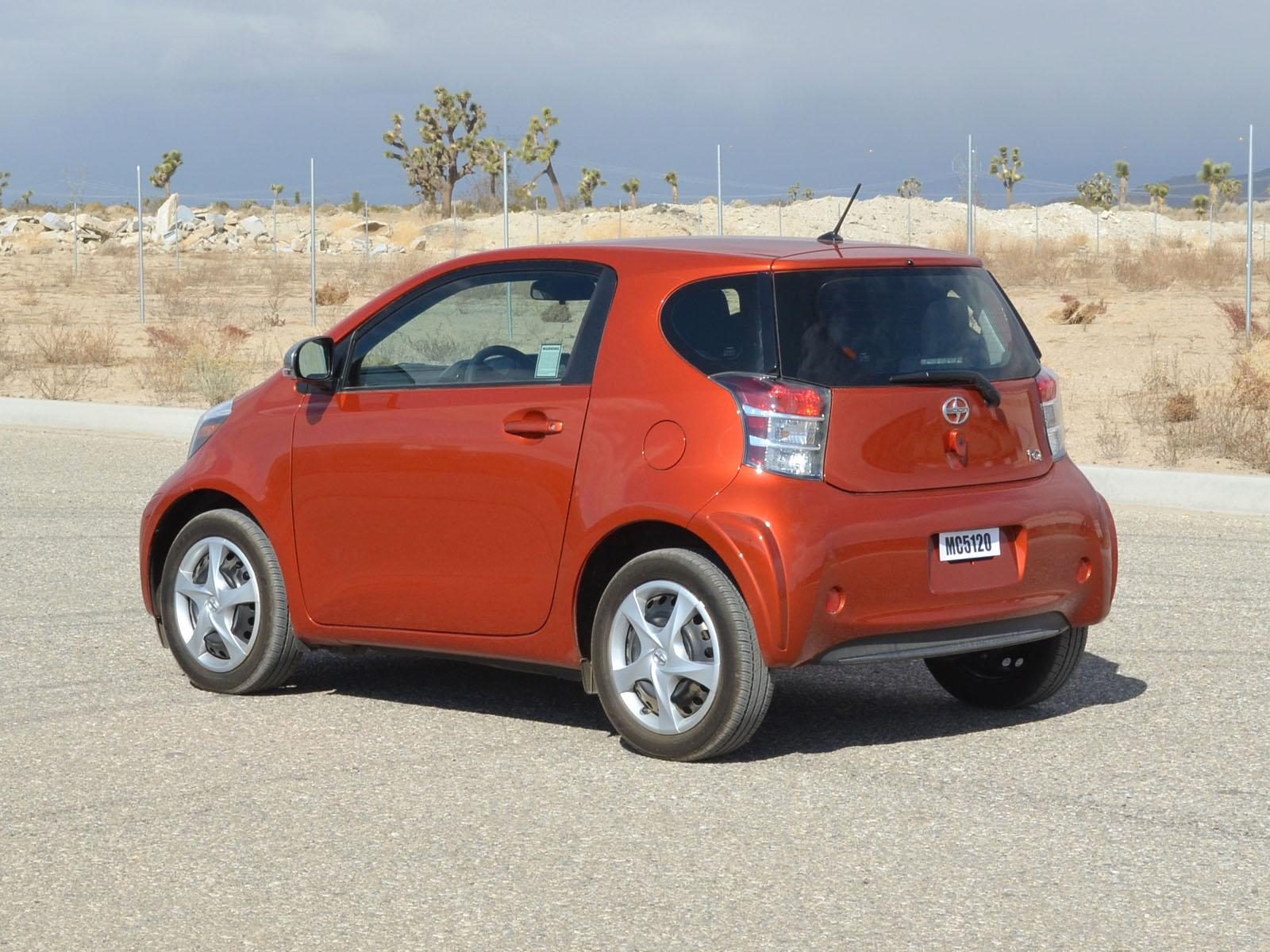
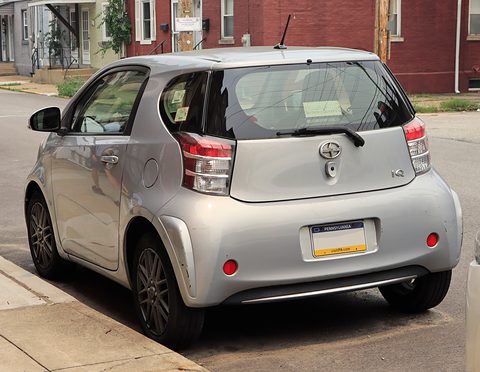
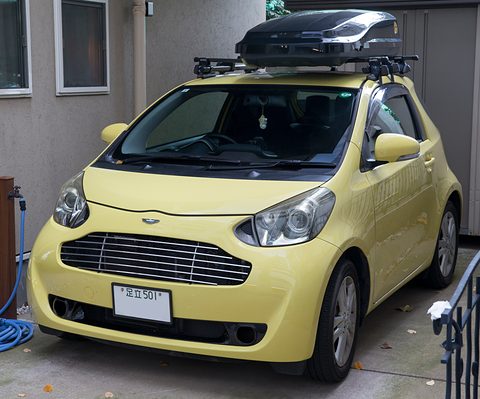
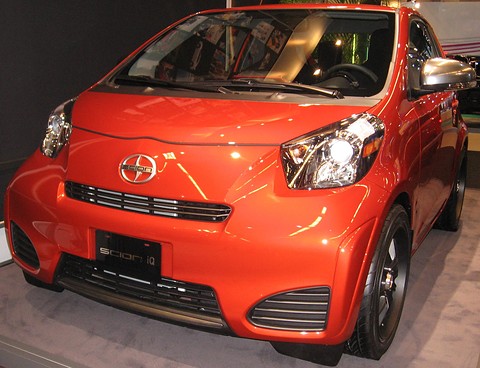
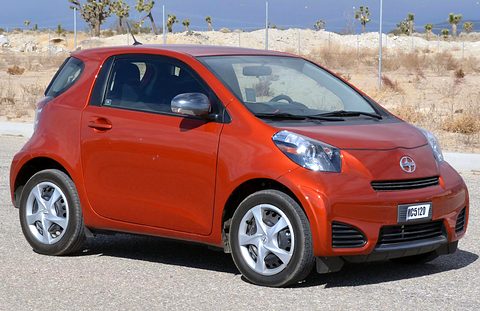
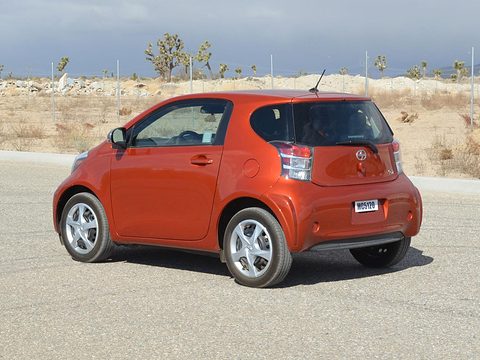
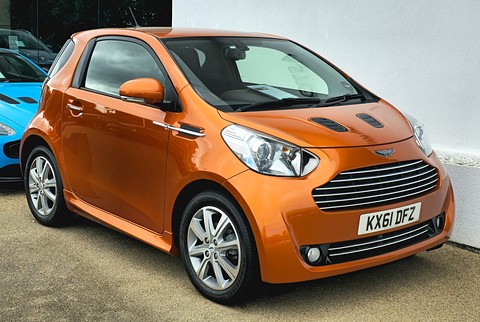
North America had the car as the Scion iQ, on sale from October 2011 as a 2012 model, with only the 1.3 and the CVT, and 3,051 mm long.source 1source 2 In Britain it became, improbably, an Aston Martin. To lower the average carbon-dioxide figure of its range, Aston Martin shipped iQs from Takaoka to Gaydon and retrimmed them inside and out as the Aston Martin Cygnet, sold from 2011 until September 2013.source 1source 2

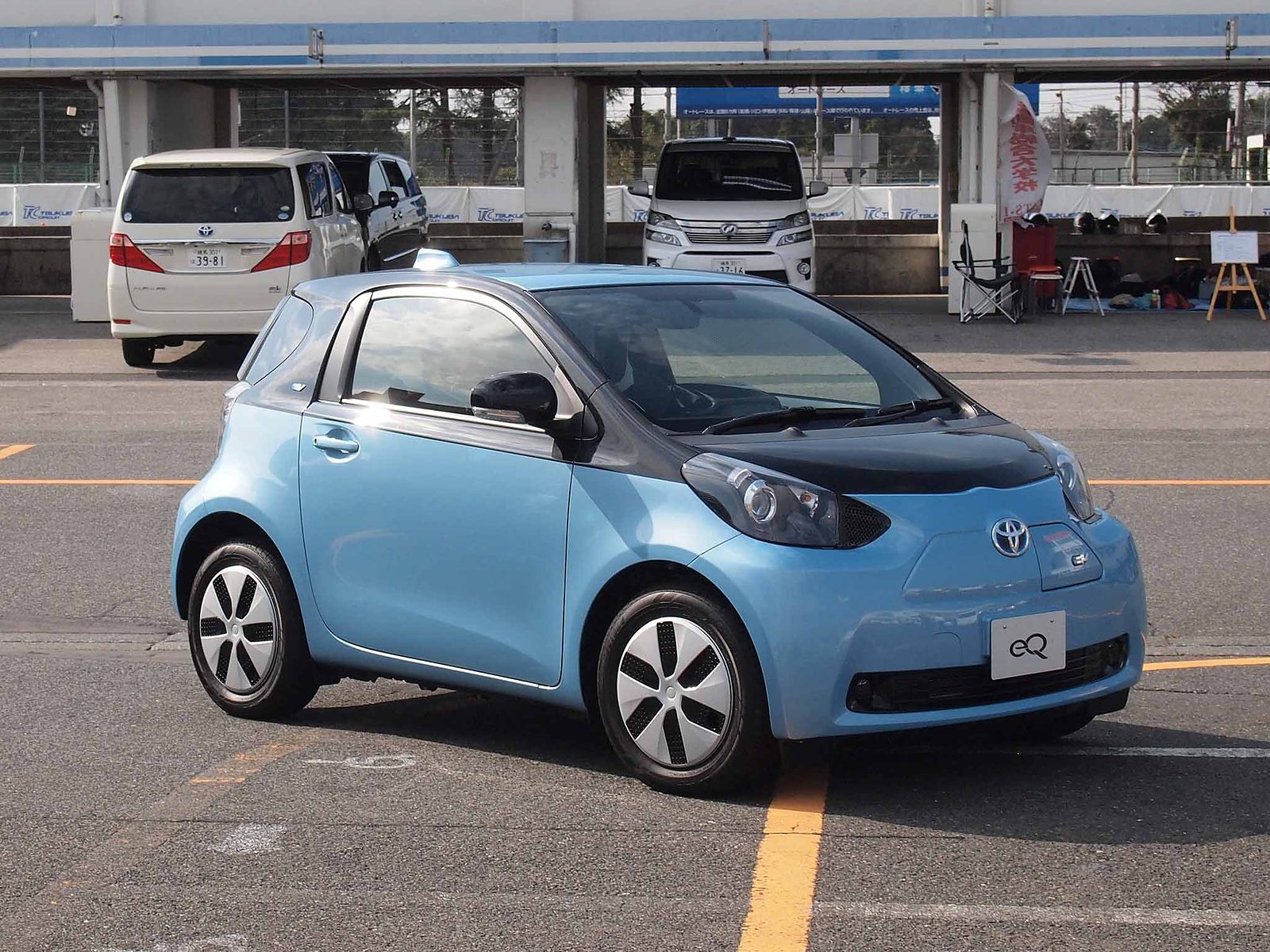
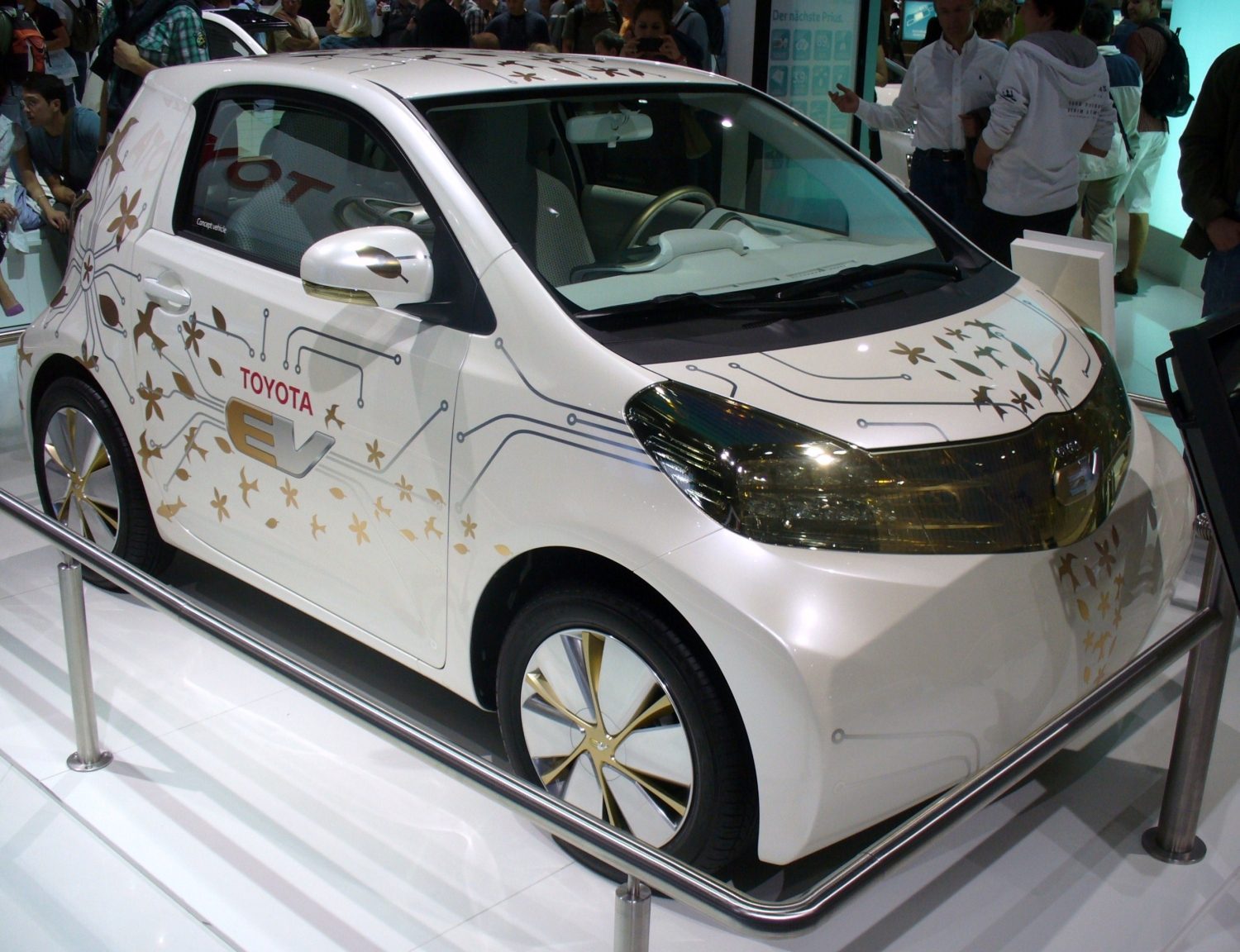
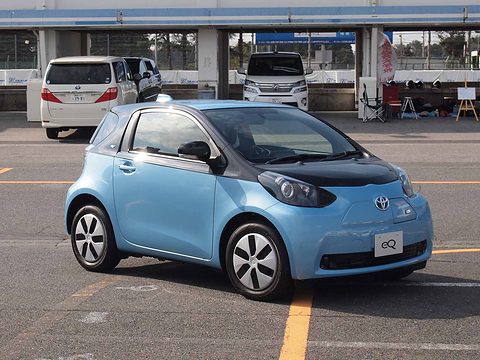
An electric version was meant to be more. In September 2012 Toyota cut its plan from 600 cars to about 100, citing customers’ worries over range and charging time, and from December the eQ, with a 47 kW motor and a 12 kWh battery under the floor, went to Japanese local authorities and companies at ¥3.6 million.source 1source 2 The first 30 of the American version went in March 2013 to the University of California, Irvine, for its car-sharing fleet.source 1 That year Britain’s Vehicle and Operator Services Agency named the iQ the three-year-old car most likely to pass its first MOT test.source 1

The end

European sales peaked at 44,282 in 2009 and had fallen below 1,000 by 2015, when the Scion iQ also ended.source 1 English Wikipedia ends production in December 2015, without a source; Japanese Wikipedia gives 25 March 2016, and says Japanese sales ended on 4 April 2016, with the last stock gone by the end of that month.source 1source 2 There was no direct successor. In 2019 Toyota licensed the eQ to the Chinese start-up Singulato, which showed it as the iC3, but it was never mass-produced, and Singulato went bankrupt in 2023.source 1source 2 That same year Toyota and Daihatsu disclosed irregularities in safety-test procedures that affected iQs for Japan and Europe, while stating that the cars still met the legal standards.source 1
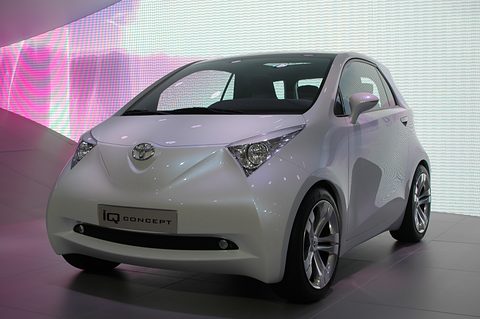
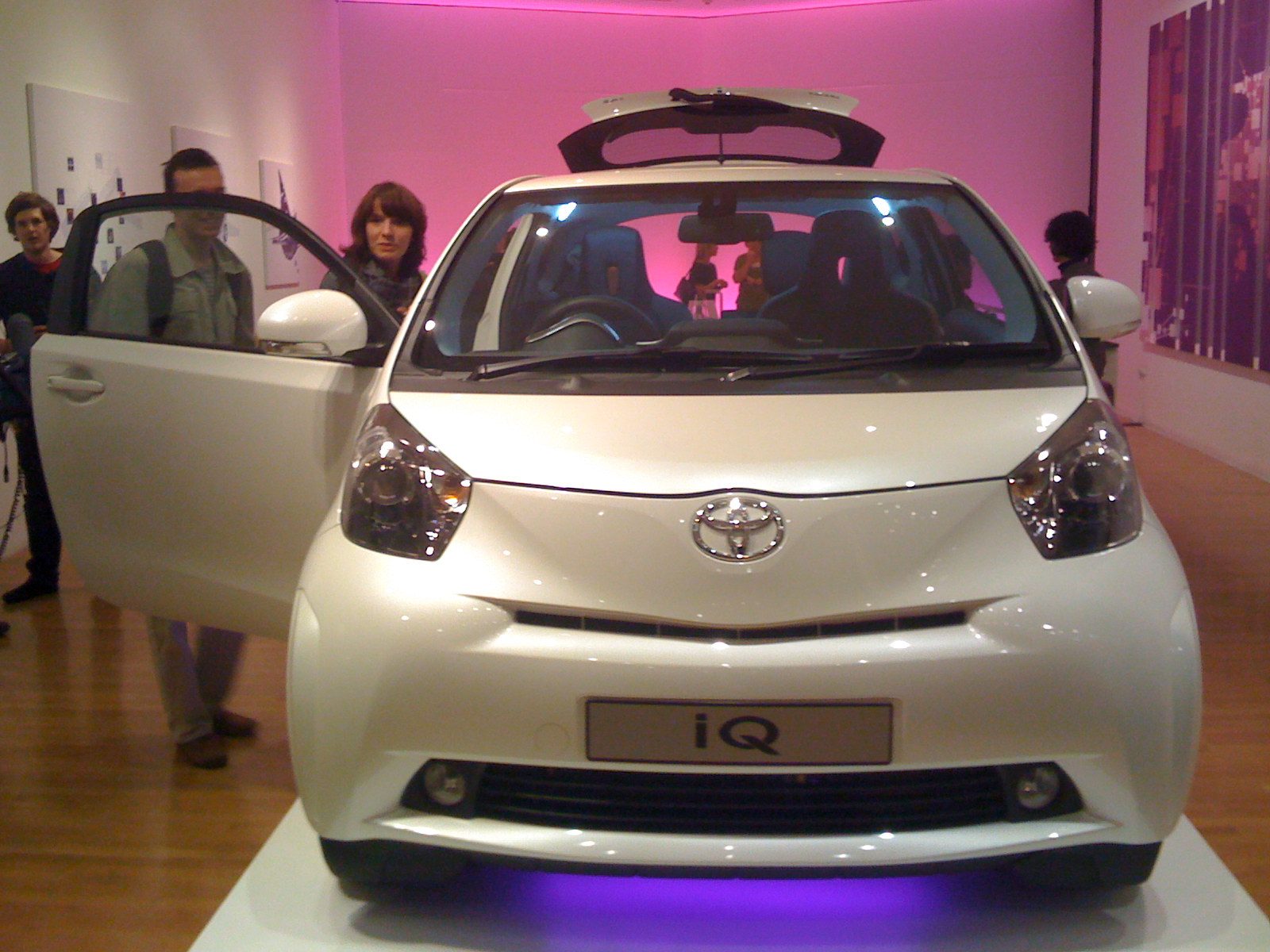
Pearl-white small hatchback concept with sharp headlamps and an iQ Concept plate, in front of a glowing pink and white LED wall.
Plate I · 2007 The Toyota iQ Concept on the Toyota stand at the 2007 Frankfurt Motor Show, Germany.Photo: Axel Schwenke, CC BY-SA 2.0, via Wikimedia Commons
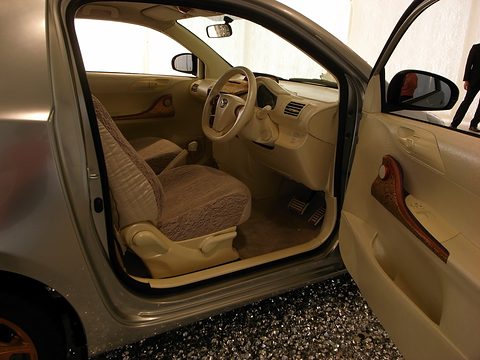
Two checked front seats, a steering wheel on the right and a dashboard that sweeps back on the passenger side to a navigation screen.
The cabin of a right-hand-drive Toyota iQ from the rear seats in Japan in August 2009, the dashboard cut back on the passenger’s side.Photo: Tennen-Gas, CC BY-SA 3.0, via Wikimedia Commons
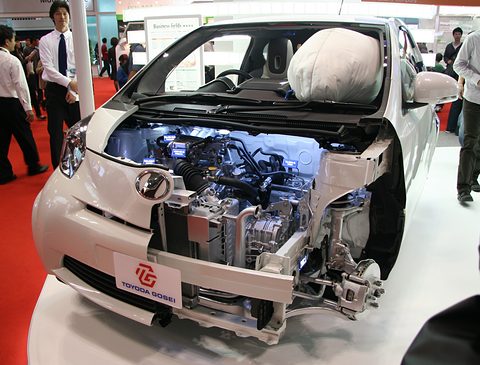
White cutaway hatchback on a red floor with its front opened to show the engine, suspension and an inflated airbag.
A sectioned Toyota iQ on the Toyoda Gosei stand at the Tokyo Motor Show, Japan, in 2009, its engine packed into the short nose.Photo: TTTNIS, CC BY 2.0, via Wikimedia Commons

Pictures

More photographs, old and new

Variants

Ten ways to have one

The iQ family
VariantYearsWhat differsHow many
iQ Concept2007The Frankfurt and Tokyo show carOne
iQ 1.02008–⁠16Five-speed manual or CVT in Europe; CVT only in JapanNot split
iQ 1.33 and 130G2009–⁠16Six-speed manual with Stop & Start, or CVT; 94 PS on regular fuel in JapanNot split
iQ 1.4 D‑4D2009–c. 2013Turbodiesel, Europe only, six-speed manualNot split
100X 2 Seater2009–Japan: luggage space in place of the rear seats, retuned suspensionNot split
GRMN2009European 1.33 manual base, lowered 30 mm, rear discs, 16 in wheels100
GRMN Supercharger2012Supercharged, more than 30 per cent more power, close-ratio gearbox100
Scion iQ2011–⁠15North America; 1.3 and CVT only; 3,051 mm longAbout 15,700 sold
Toyota eQ / Scion iQ EV2012–c. 2014Electric, 47 kW, 12 kWh; 3,120 mm long; for fleetsAbout 100
Aston Martin Cygnet2011–⁠13Retrimmed inside and out at GaydonSee its own page

Specification

The European iQ, 2009–⁠15

Engine and drive

Engine and drive
Engines998 cc three-cylinder; 1,329 cc four; 1,364 cc four-cylinder turbodieselsource 1source 2
Power68 PS (50 kW), 98 PS (72 kW) and 90 PS (66 kW)source 1
Torque98 Nm, 123 Nm and 190 Nmsource 1
GearboxesFive-speed manual or CVT (1.0); six-speed manual or CVT (1.33); six-speed manual (diesel)source 1source 2
DriveFront wheels; the differential sits ahead of the enginesource 1source 2

Body and chassis

Body and chassis
BodyThree-door hatchbacksource 1
Seats3 + 1: the passenger sits ahead of the driver, leaving room for an adult behindsource 1source 2
Fuel tankFlat, under the floorsource 1source 2
SafetyNine airbags, among them a rear-window curtain airbag and a seat-cushion airbag for the front passengersource 1
Dimensions

Dimensions
Length2,985 mm (118 in)source 1source 2Scion iQ 3,051 mm; eQ 3,120 mm
Width1,680 mm (66 in)source 1source 2
Height1,500 mm (59 in)source 1source 2
Wheelbase2,000 mm (79 in)source 1source 2
Kerb weight845–885 kg (1.0); 930–955 kg (1.33); 935–975 kg (diesel)source 1
Performance and running

Performance and running
Top speed155 km/h (1.0); 170 km/h (1.33)source 1
0–100 km/h14.7 s (1.0); 11.8 s (1.33); 10.7 s (diesel)source 1
Consumption4.3, 4.8 and 4.0 litres per 100 kmsource 1
CO2From 99 g/km (1.0 manual)source 1

How many were built?

Sales, with their source

No total foundNo Toyota production total and no Japanese sales total have been found. Yearly sales figures from carsalesbase, which English Wikipedia tabulates, add up to about 99,360 in Europe and about 15,700 Scion iQs in the United States; the sums are ours.

  1. about 99,360sold in Europe, 2008–⁠18: our sum of the yearly figuresOne source

    English Wikipedia’s table, citing carsalesbase.comsource 1

  2. 44,282sold in Europe in 2009, the best yearOne source

    English Wikipedia’s table, citing carsalesbase.comsource 1

  3. about 15,700Scion iQs sold in the US, 2011–⁠15: our sumOne source

    English Wikipedia’s table, citing carsalesbase.comsource 1

  4. about 100electric eQs and Scion iQ EVsTwo sources agree

    English and Japanese Wikipediasource 1source 2

  • Two sources agreetwo good sources give the figure
  • One sourcea good source, alone
  • Unconfirmeda lead only, not yet checked

Famous for

Three points

  1. Three plus one

    Three adults and a child in 2,985 mm, thanks to a forward differential and an asymmetric dashboard.

  2. Car of the Year first

    Japan Car of the Year 2008–⁠2009, nine days before it went on sale.

  3. The Aston Martin

    Retrimmed at Gaydon and sold as the Aston Martin Cygnet from 2011 to 2013.

Survivors and collecting

Today

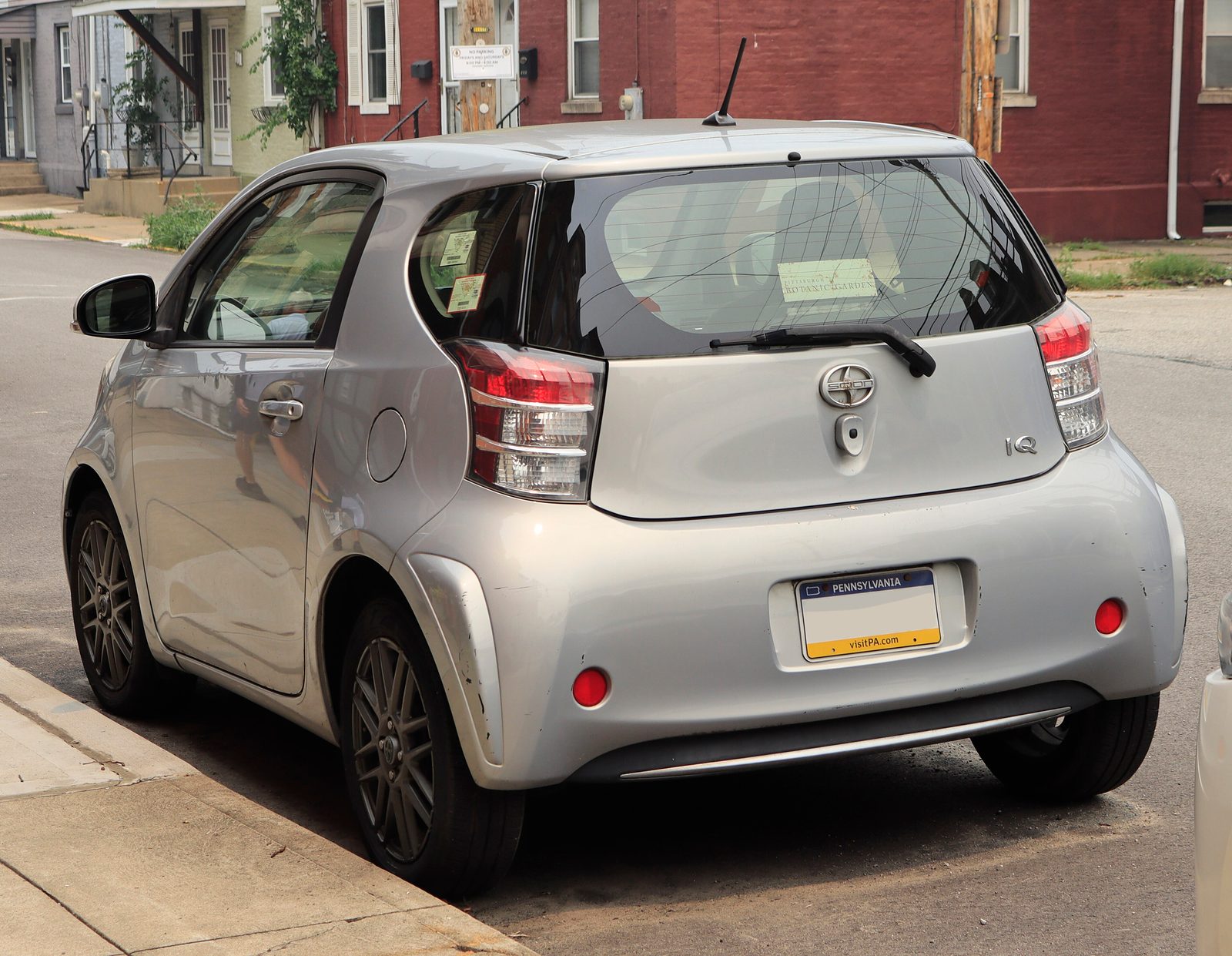
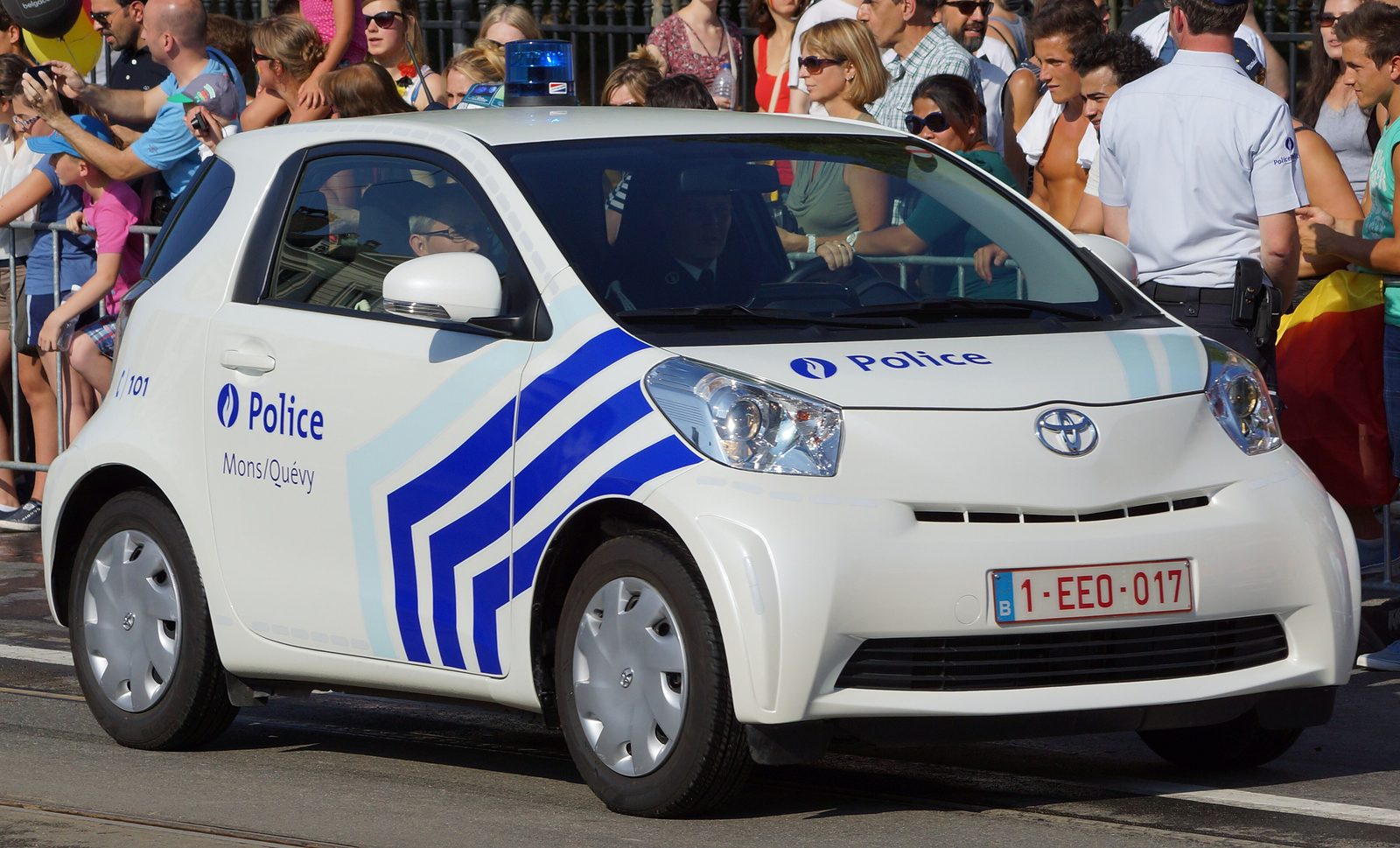
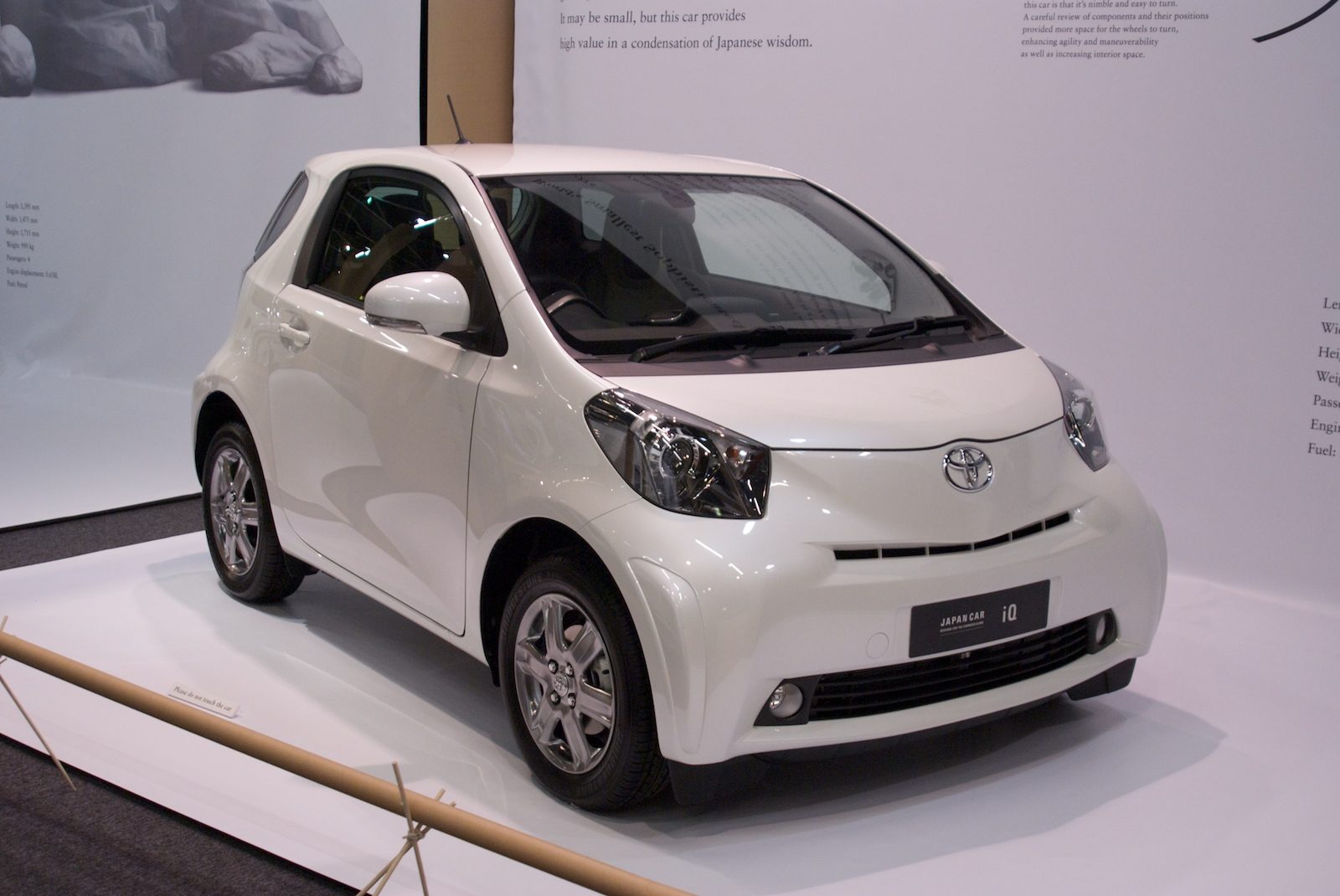
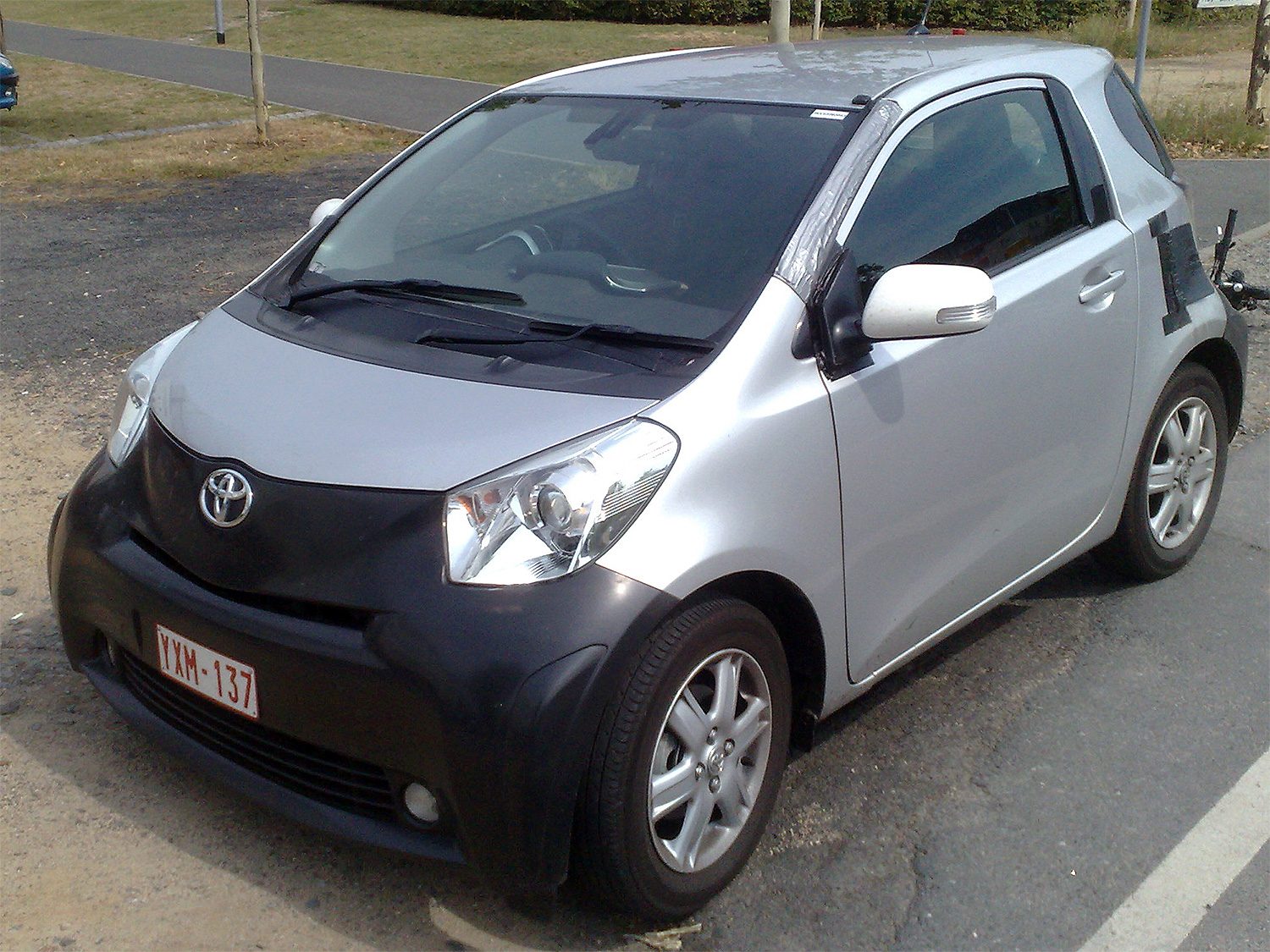
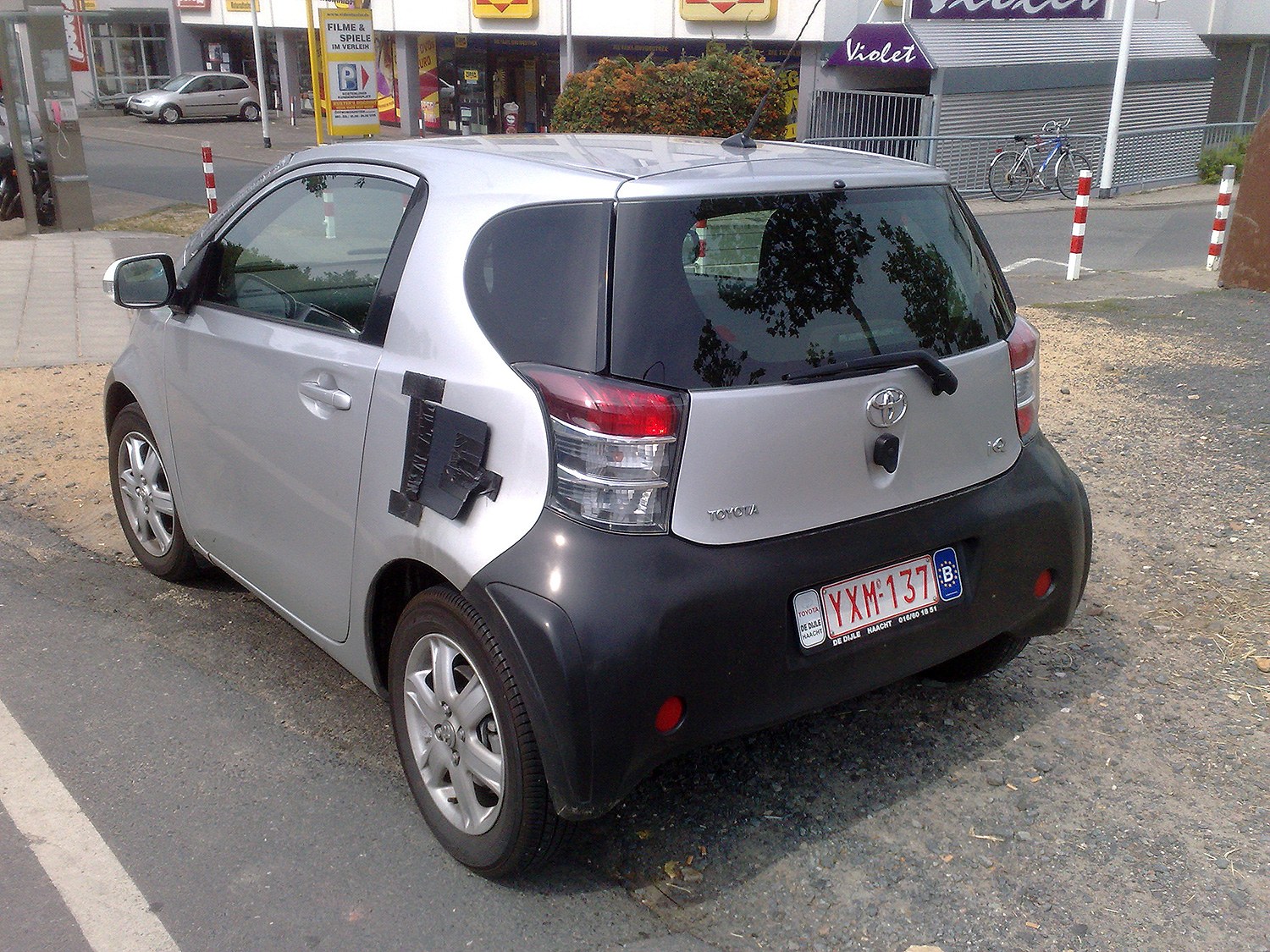
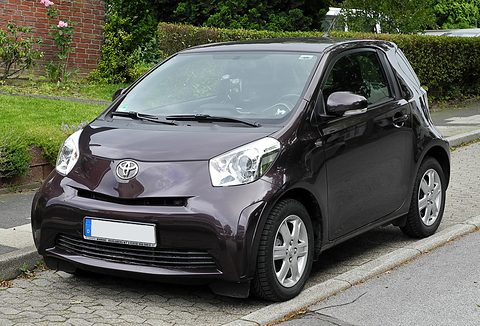
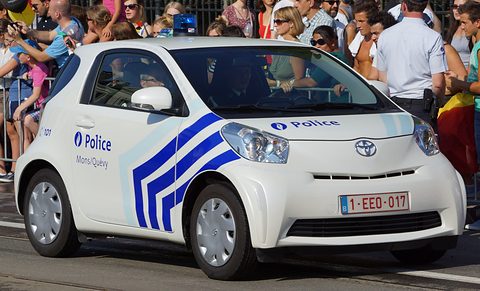
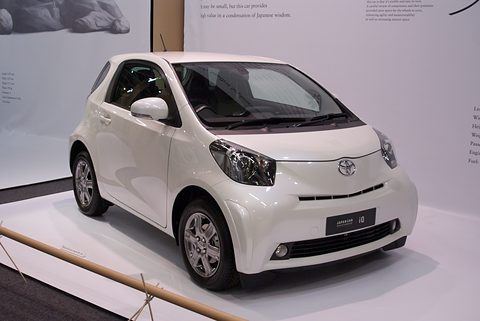
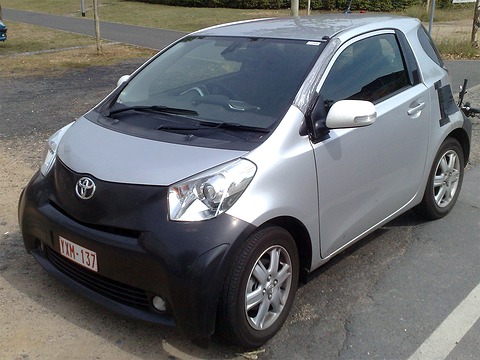
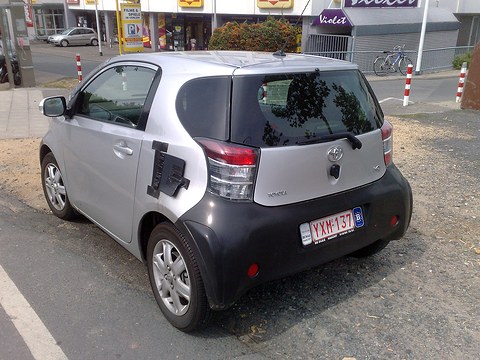
Many iQs are still in everyday use, but no survivor count has been found, and no notable auction result for the Toyota itself. The collectable ones are the rare ones: the two GRMN editions of 100 cars each, sold only in Japan, and the hundred or so electric eQs and Scion iQ EVs, most of them built for fleets.source 1source 2 The photographs on this page show one on display in the Science Museum in London in December 2008, and another in service with a Belgian local police force.

White city car with a deep body-kit bumper and black wheels parked on wet tarmac, banners behind.
A white 2012 Toyota iQ GRMN Supercharger, one of 100, in Japan.Photo: らっそ, CC BY-SA 4.0, via Wikimedia Commons

Sources

Numbered as in the text

No road test and no Toyota press kit were read; the history rests on the English and Japanese Wikipedia articles and the Japan Car of the Year record. Sources are given as plain text; the links are on the Credits page.

  1. English Wikipedia, Toyota iQ, read in full with its specification, model-code and sales tables. Used as a lead; the sales table cites Demandt, “Toyota iQ European sales figures”, carsalesbase.com, 31 January 2014.
  2. Japanese Wikipedia, 「トヨタ・iQ」 (Toyota iQ), read in full. Used as a lead.
  3. Japan Car of the Year, official record of winners: the 29th award, 2008–⁠2009.