microcarfan
  • City car
  • Britain
  • Three seats and one more
  • A rebadged Toyota

Aston Martin Cygnet

Also known as P298 (the factory code)

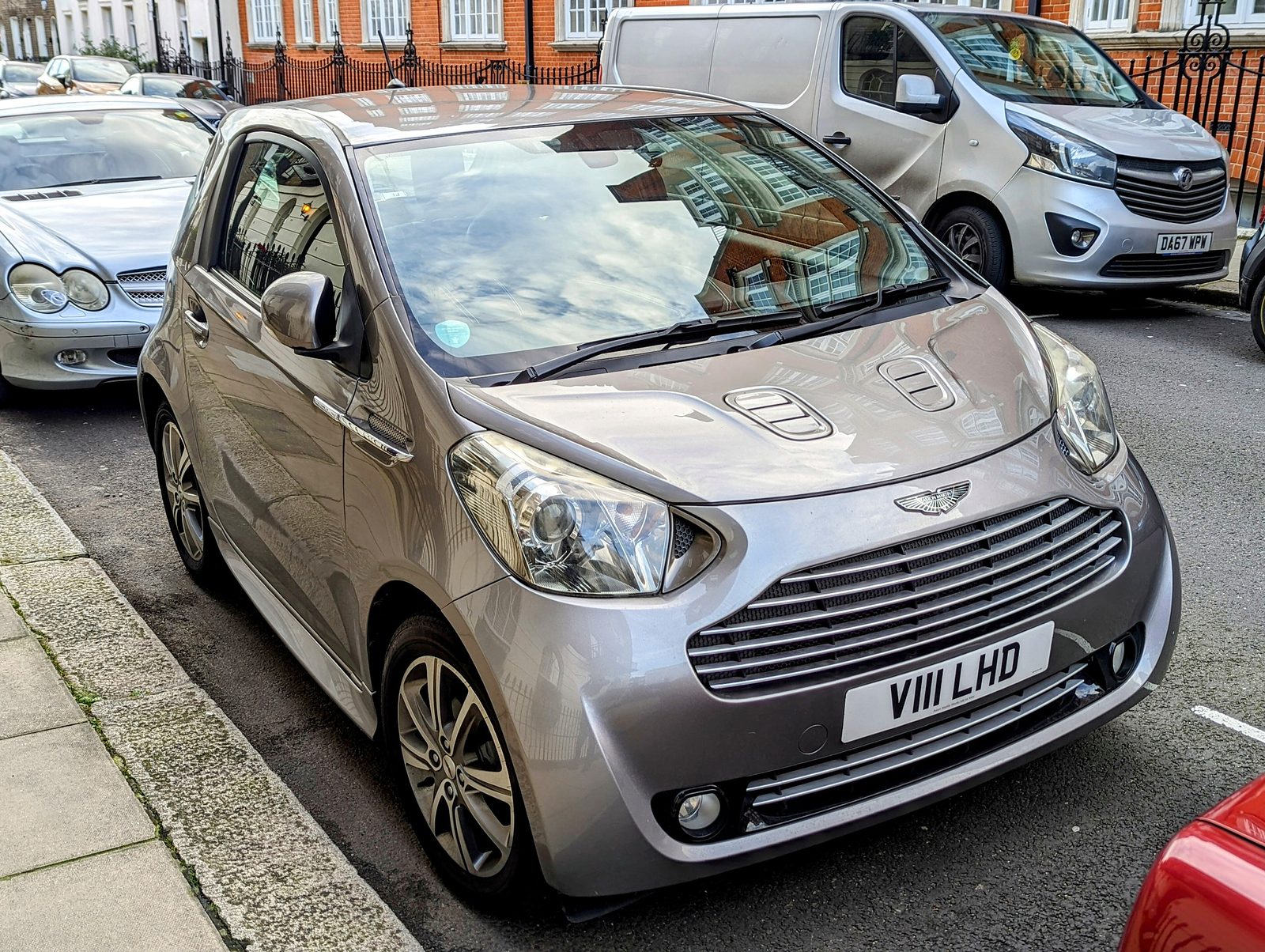
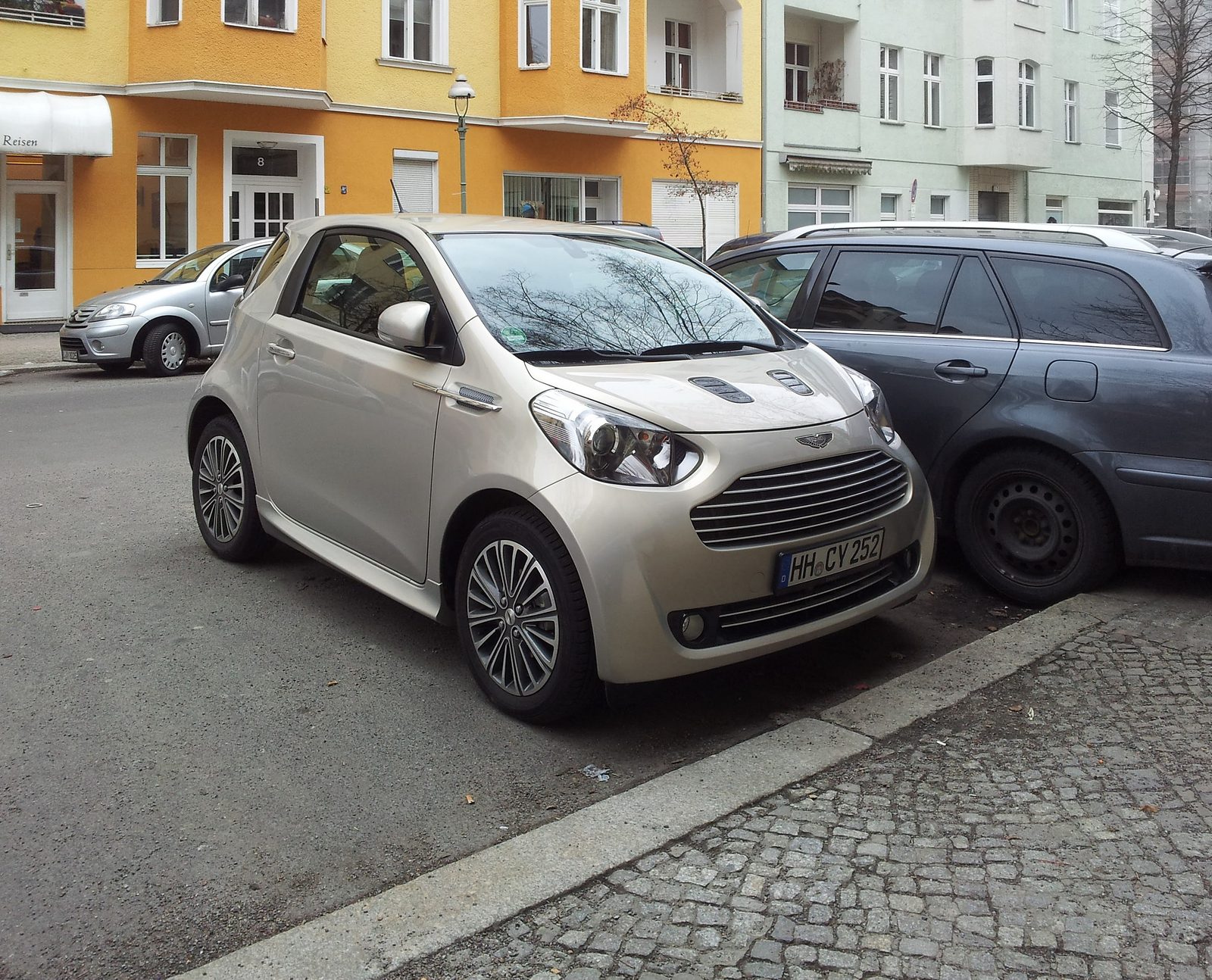
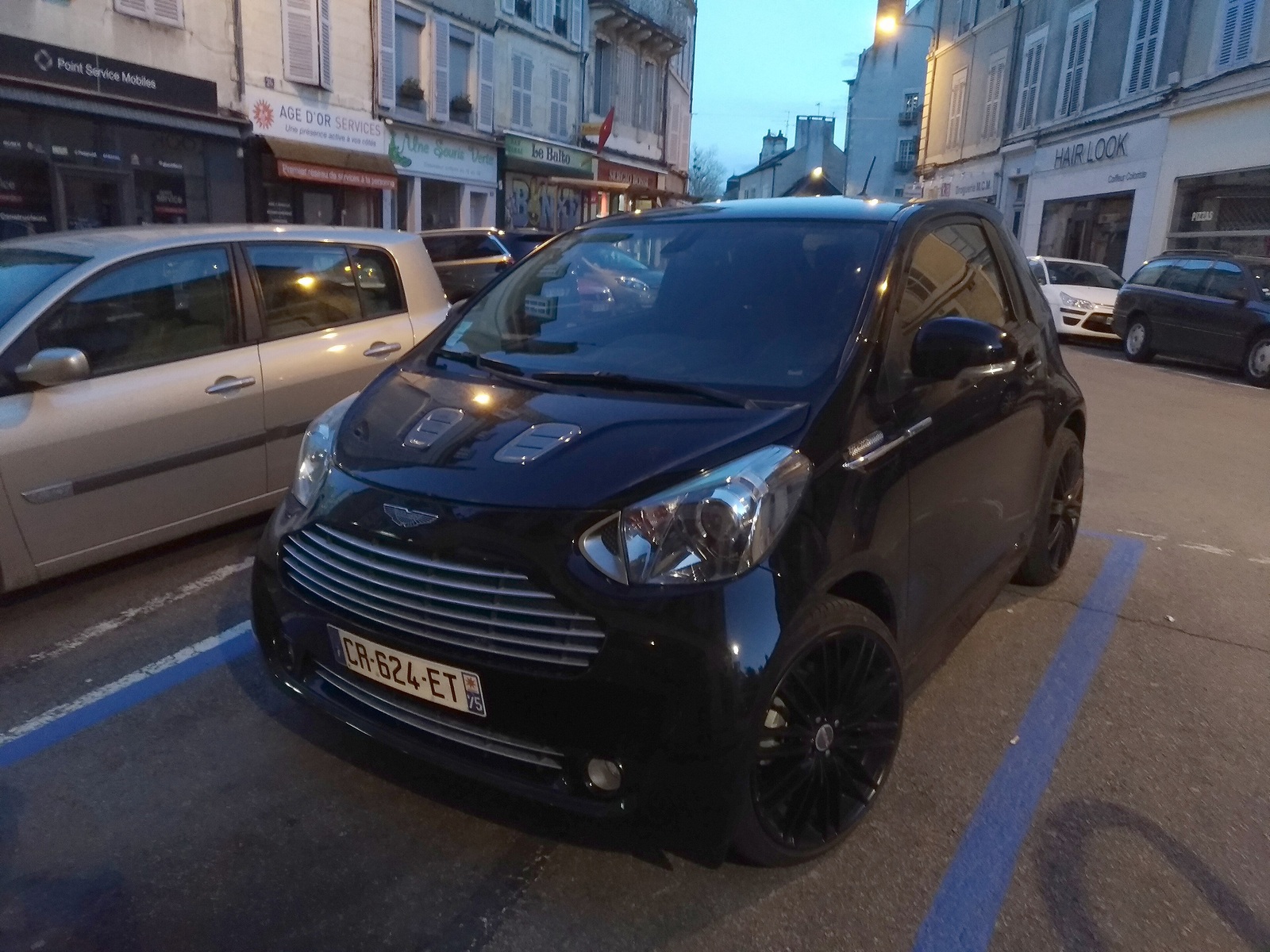
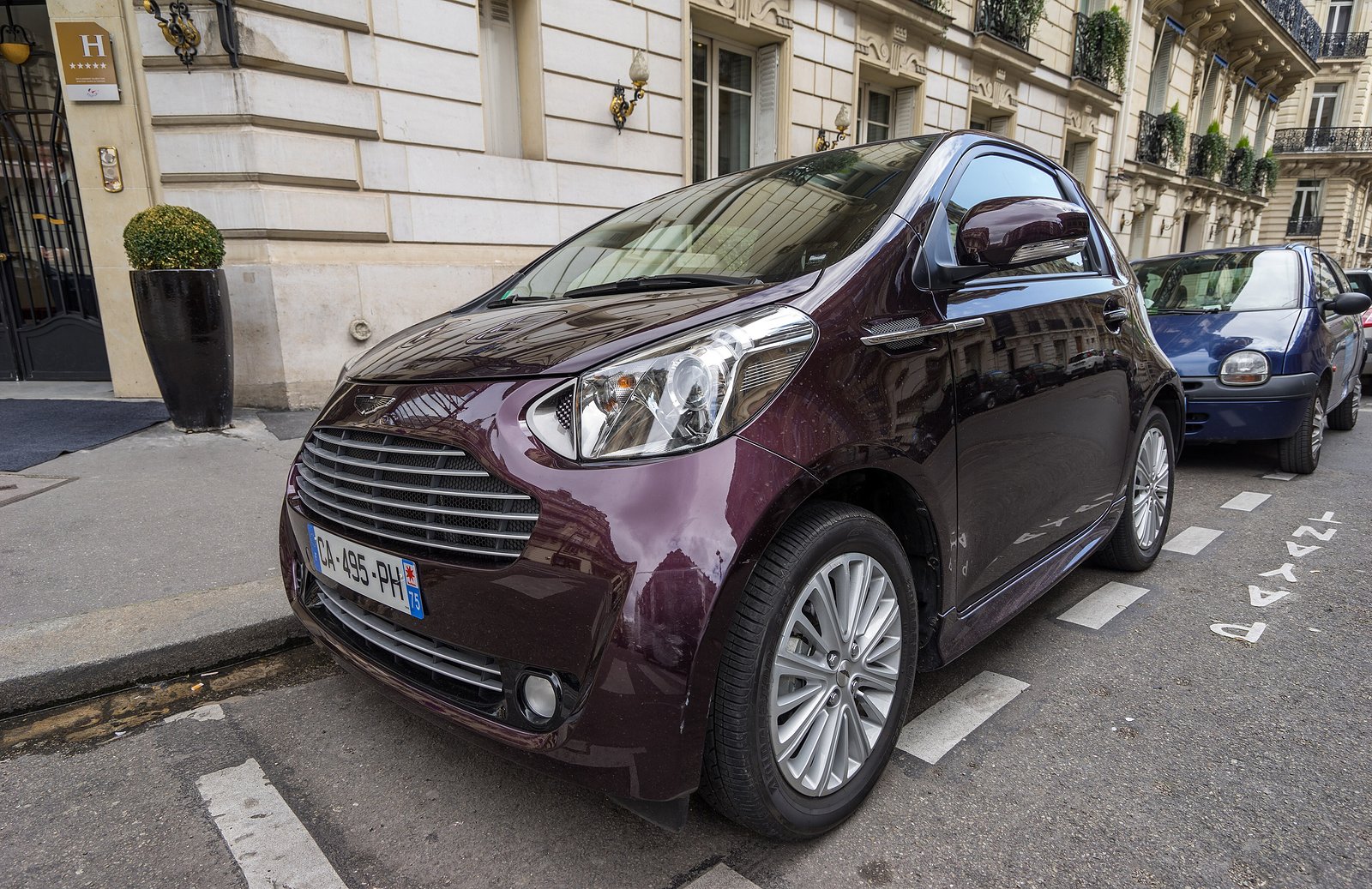
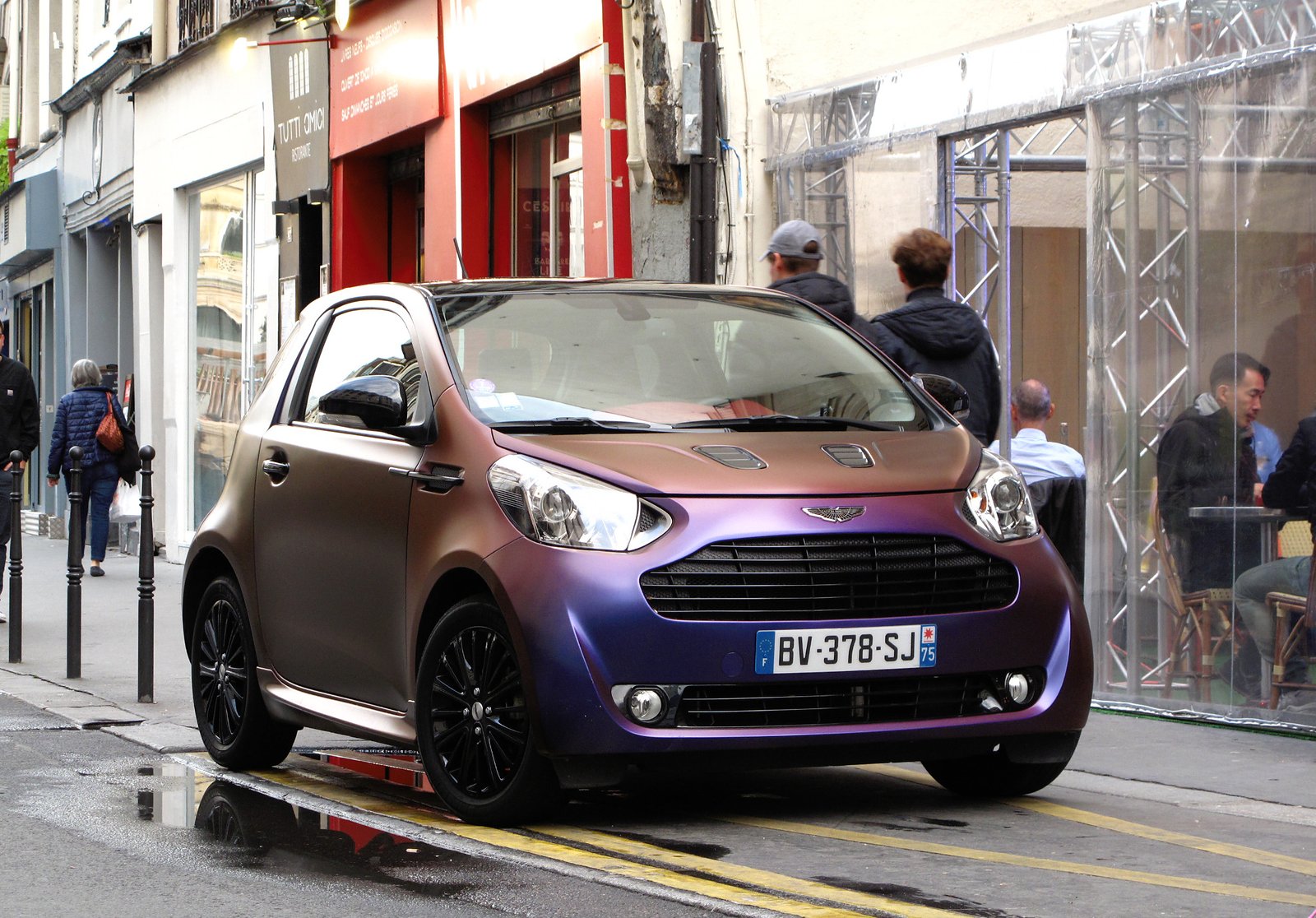
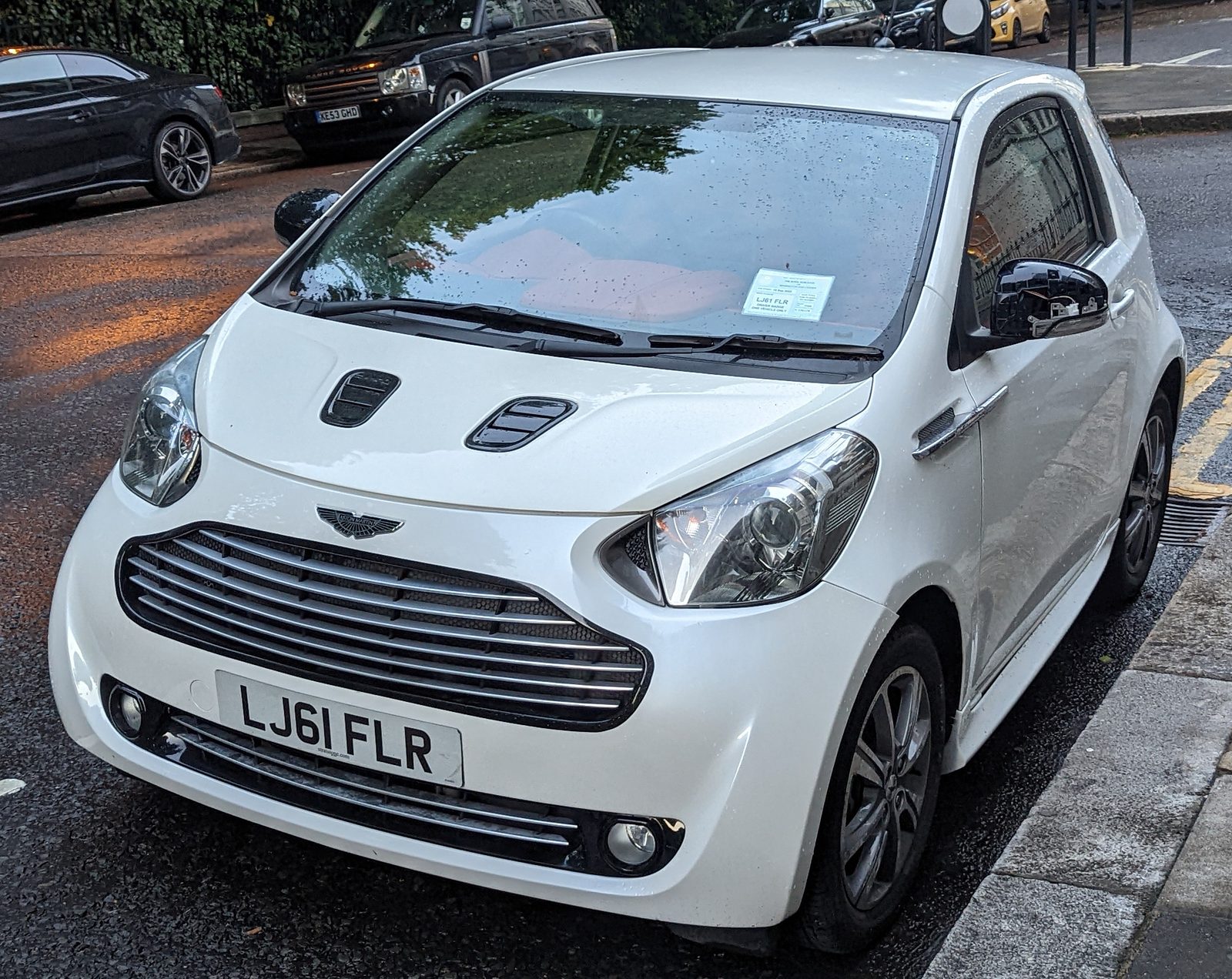
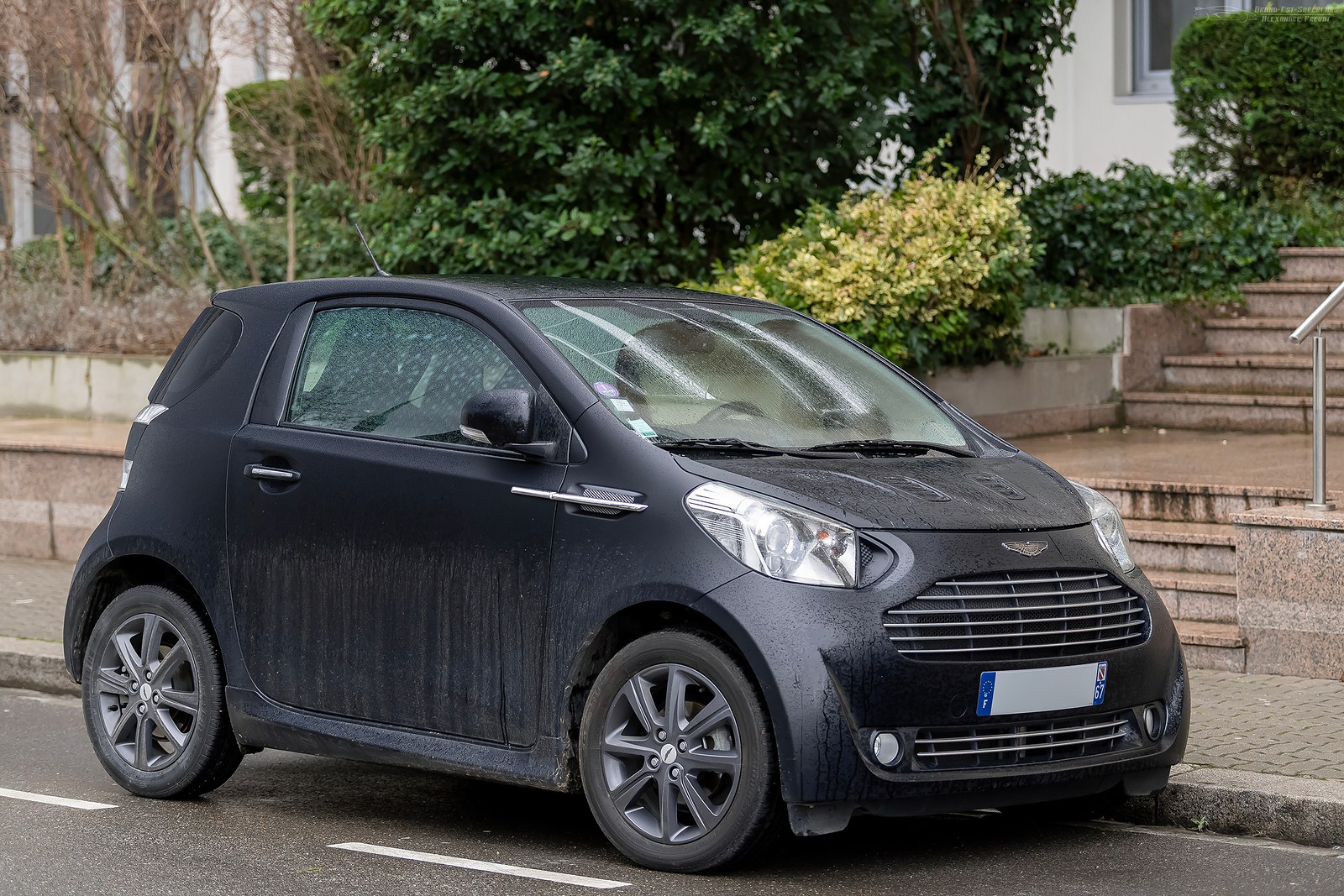
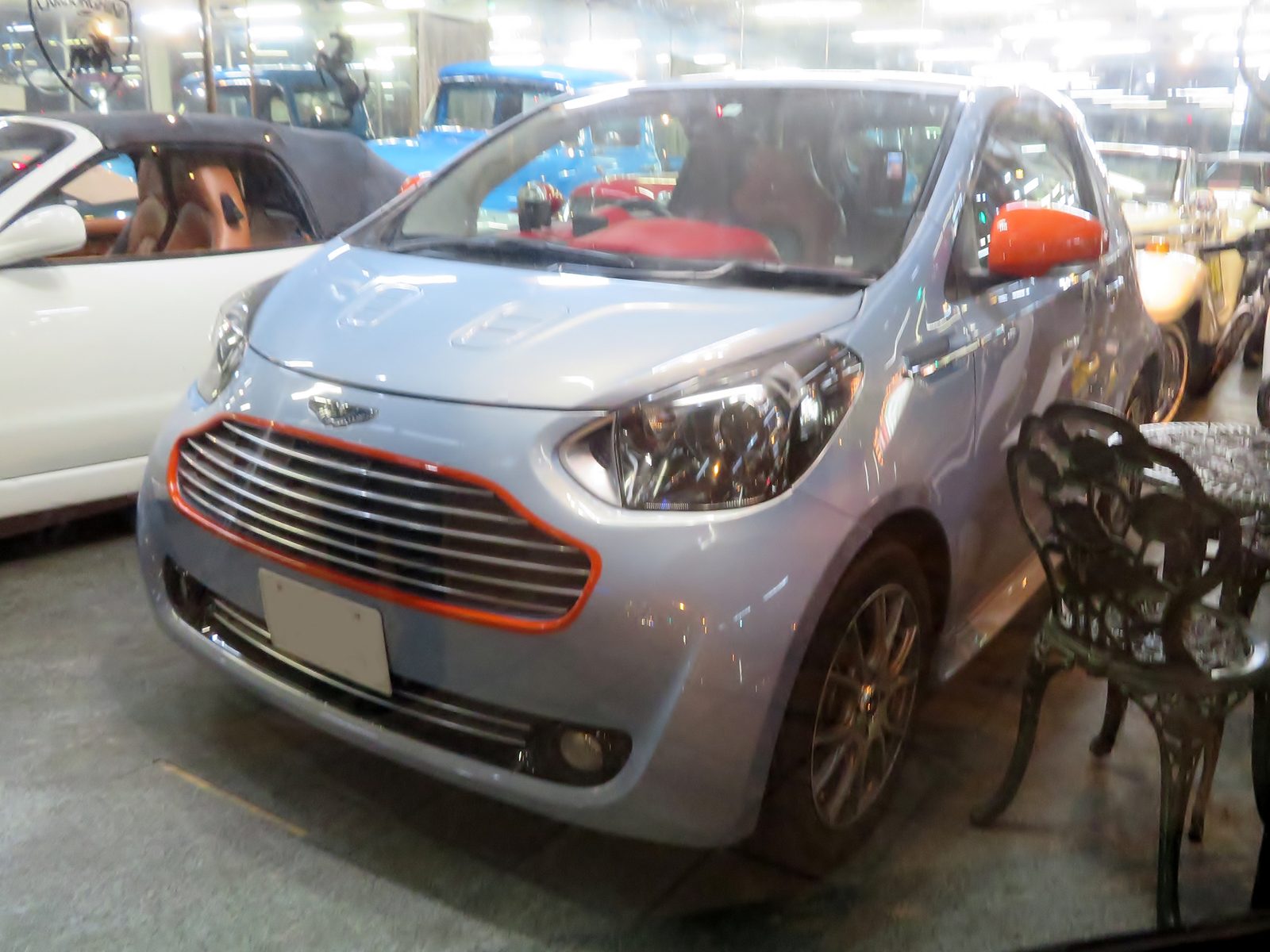
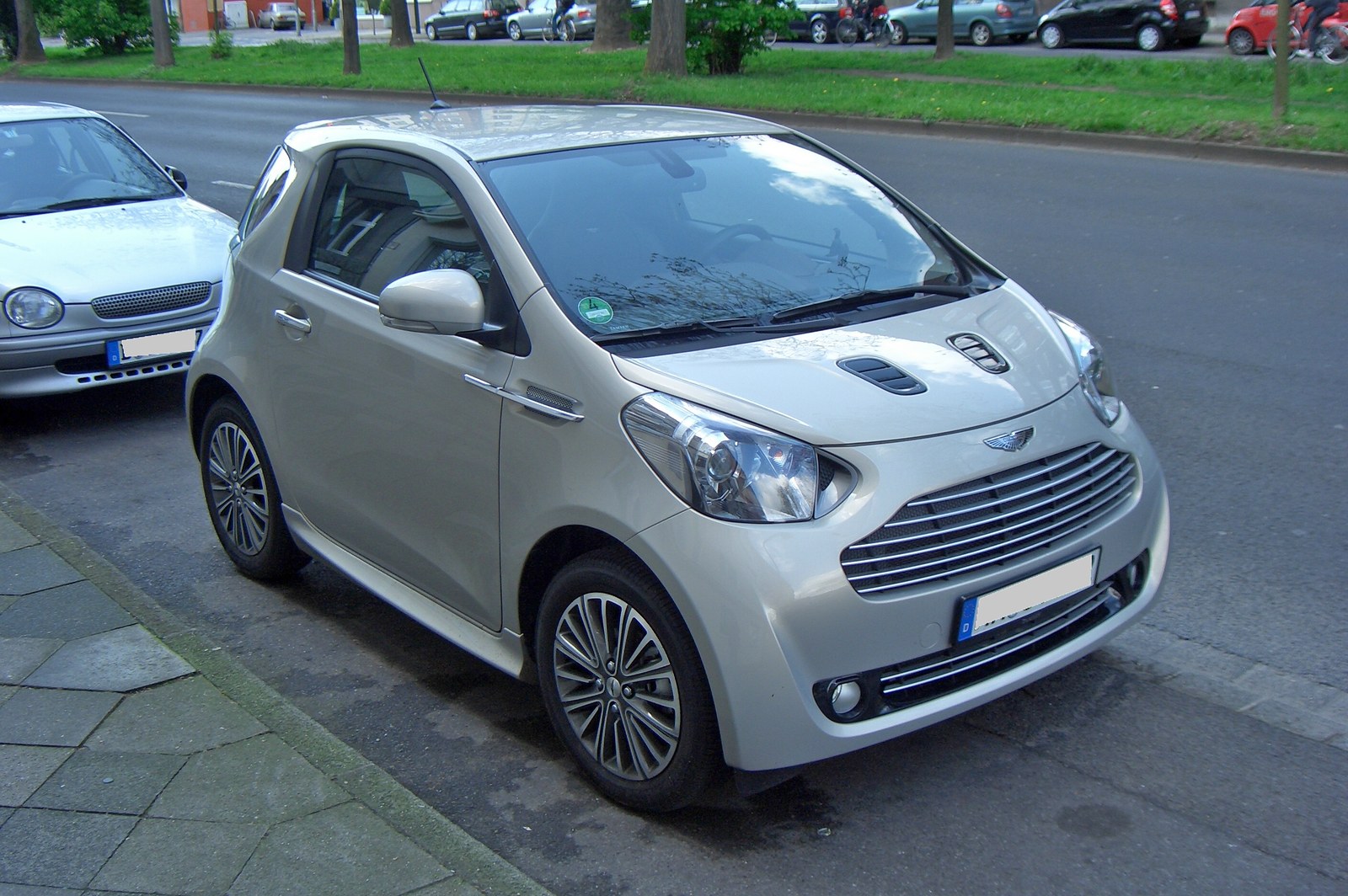
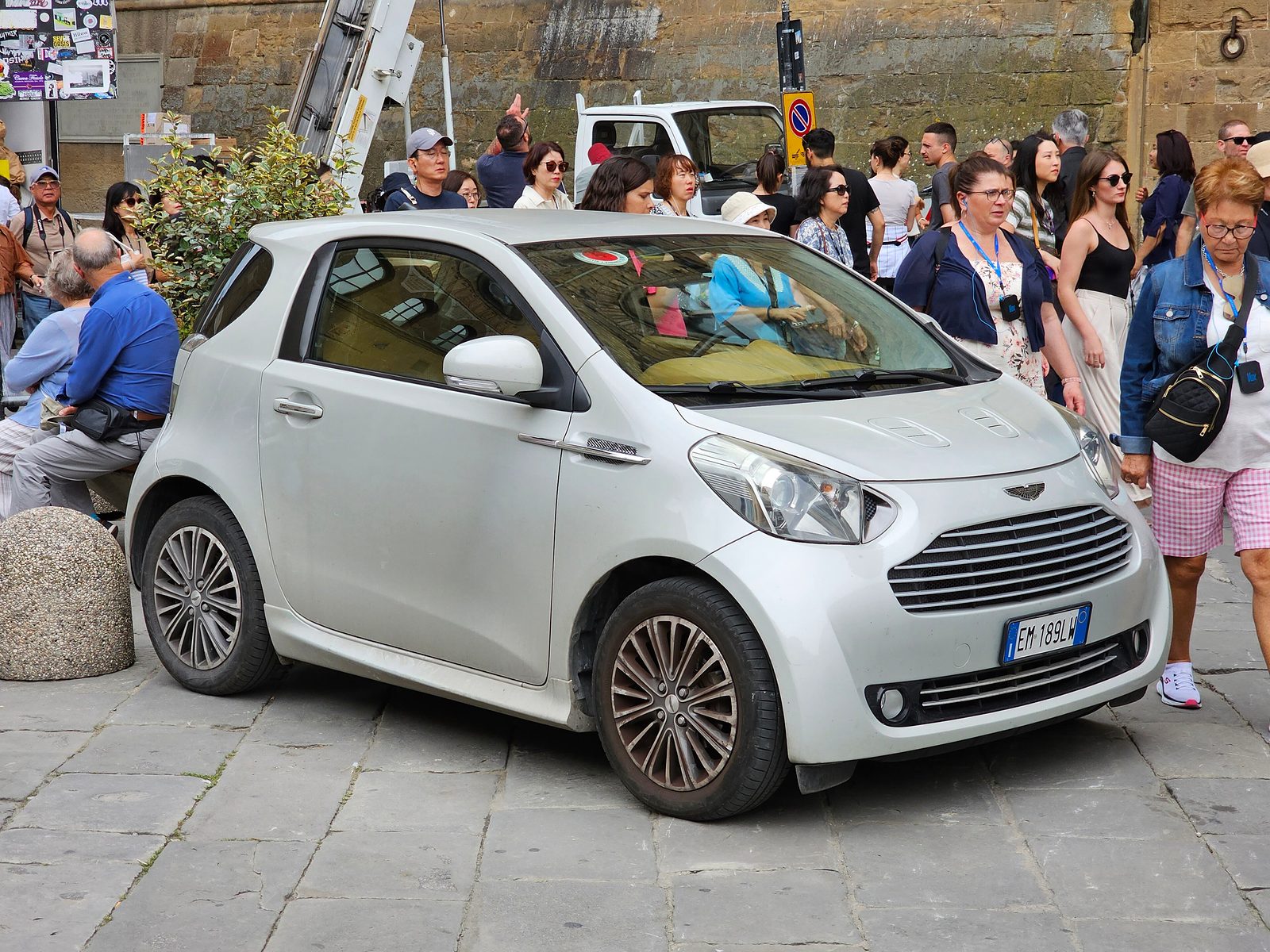
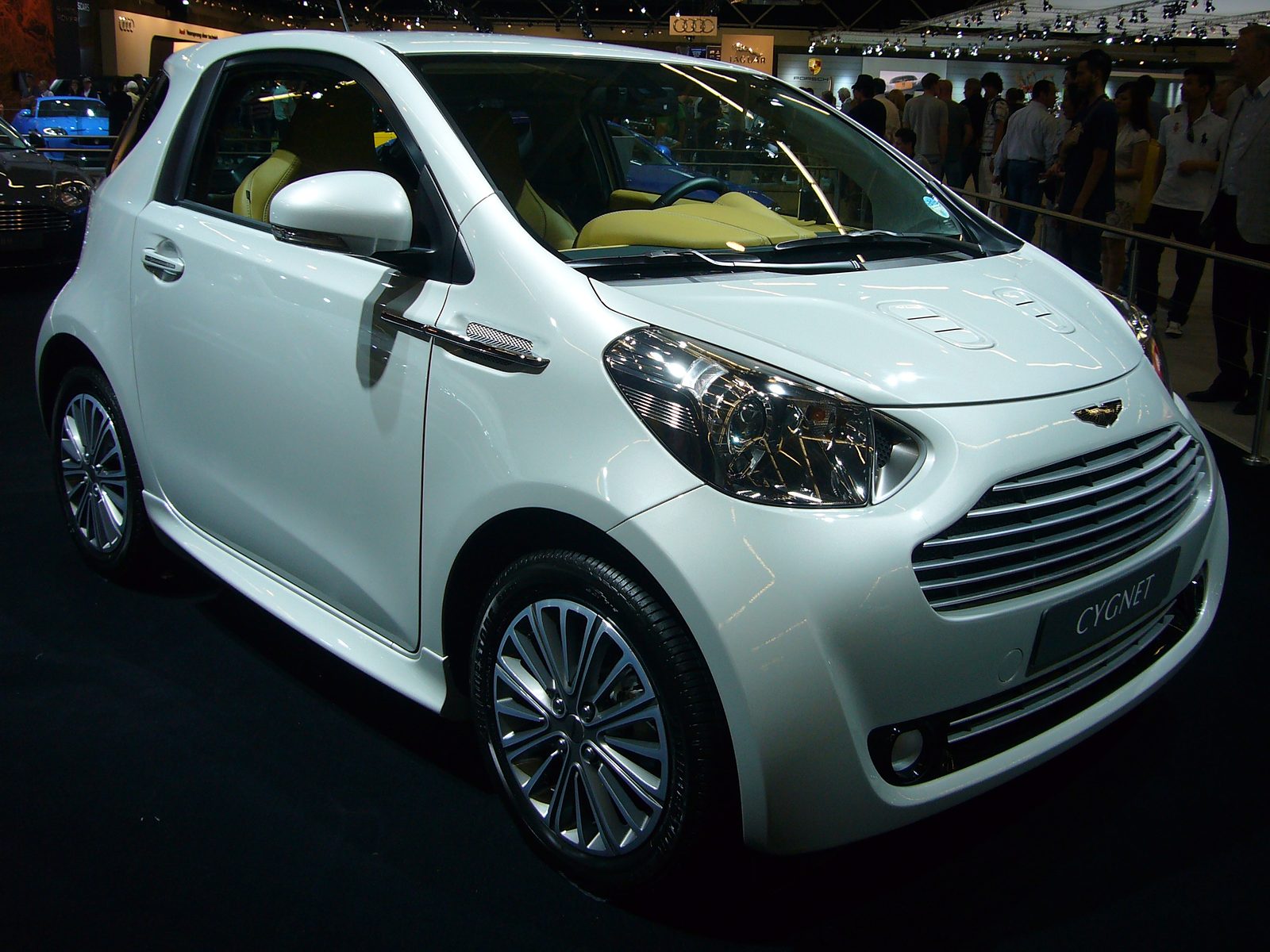
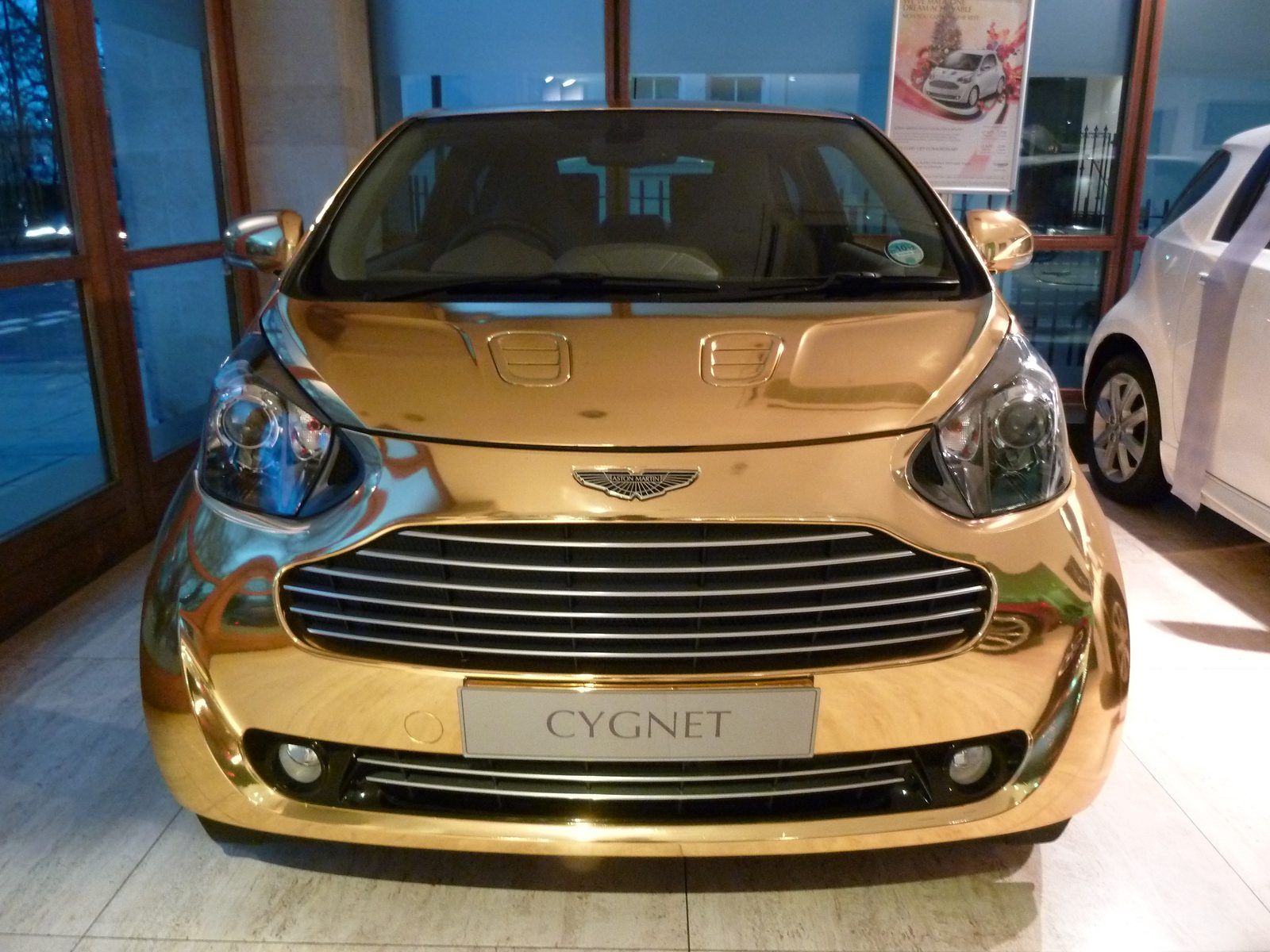
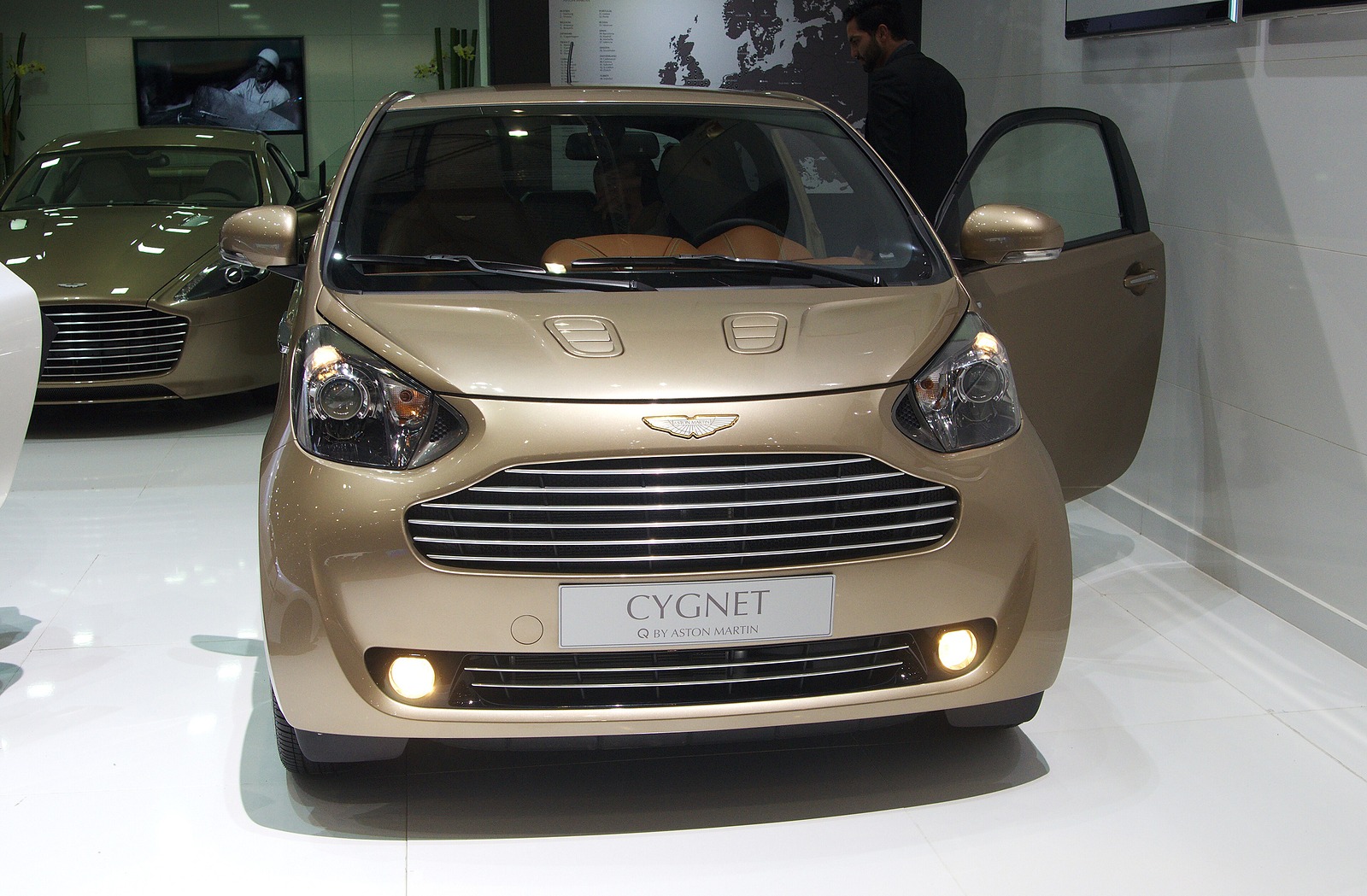
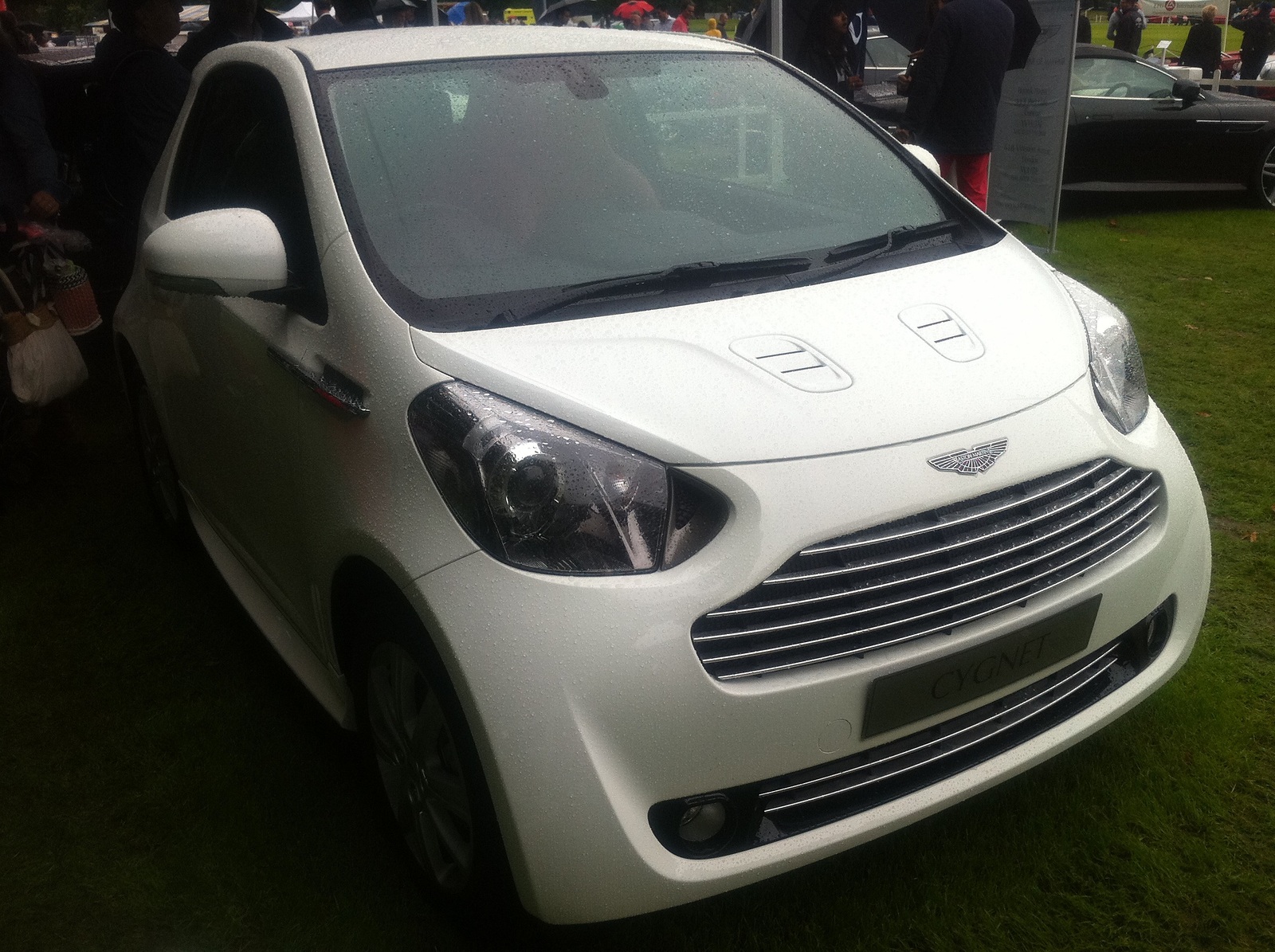
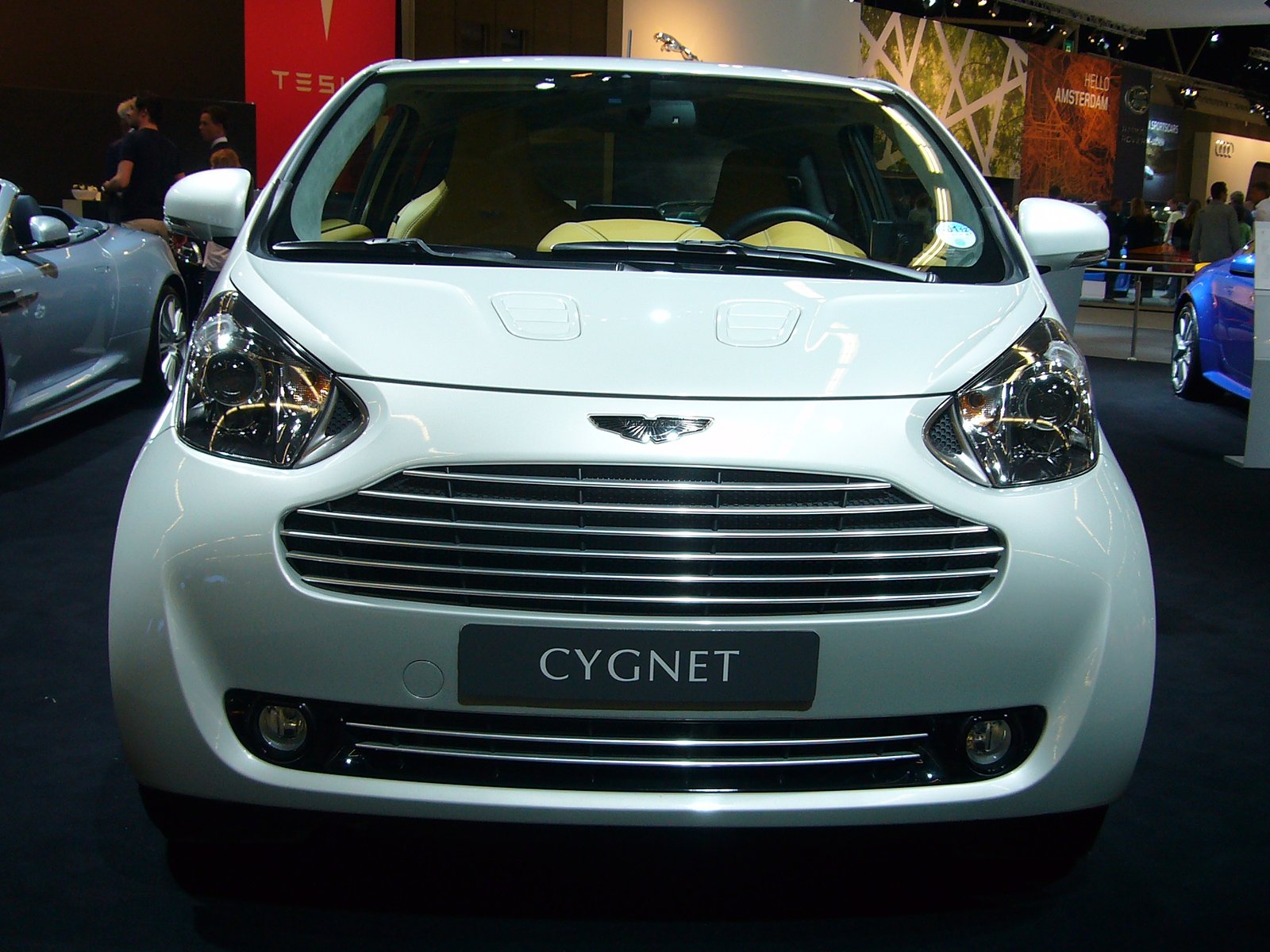
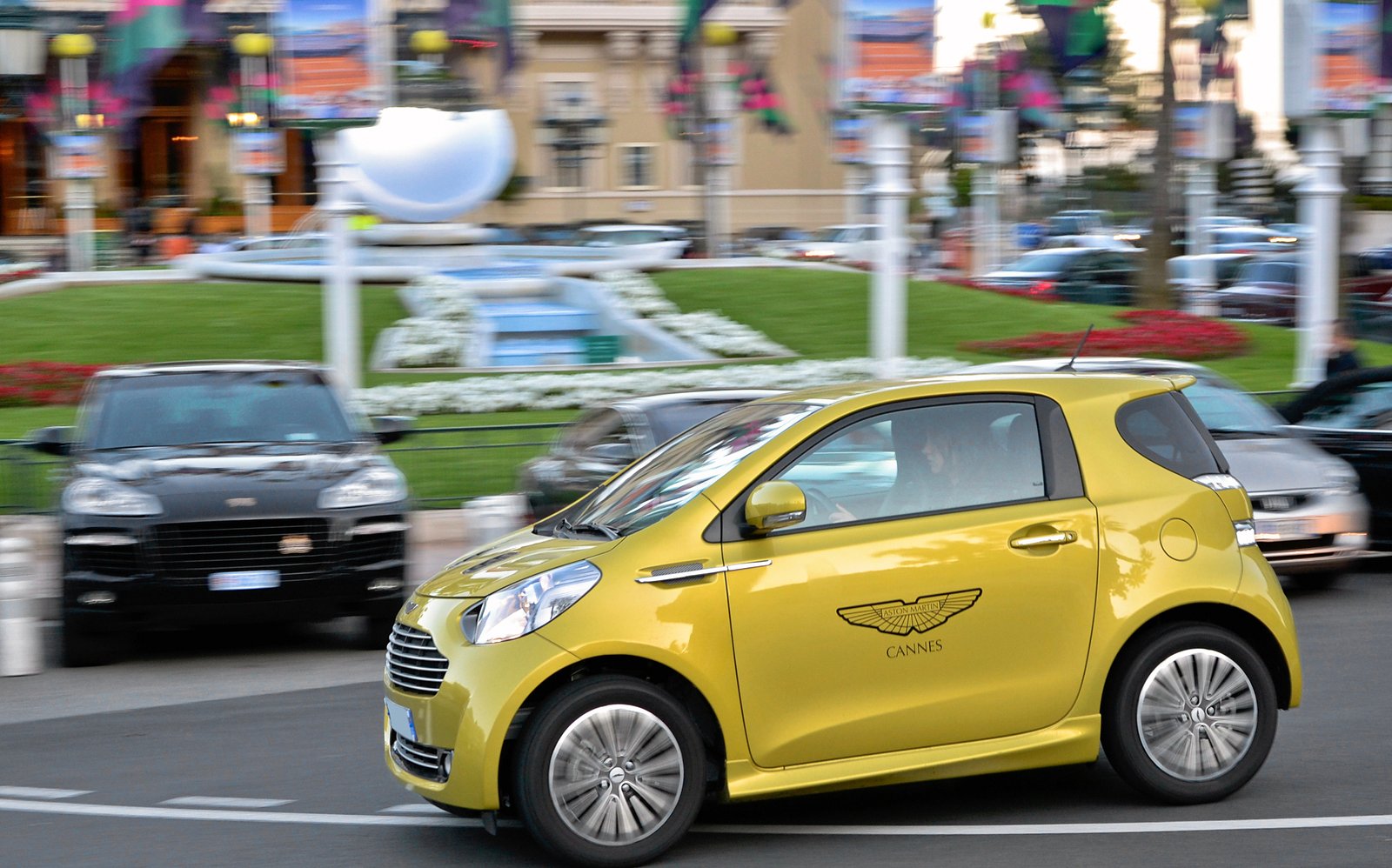
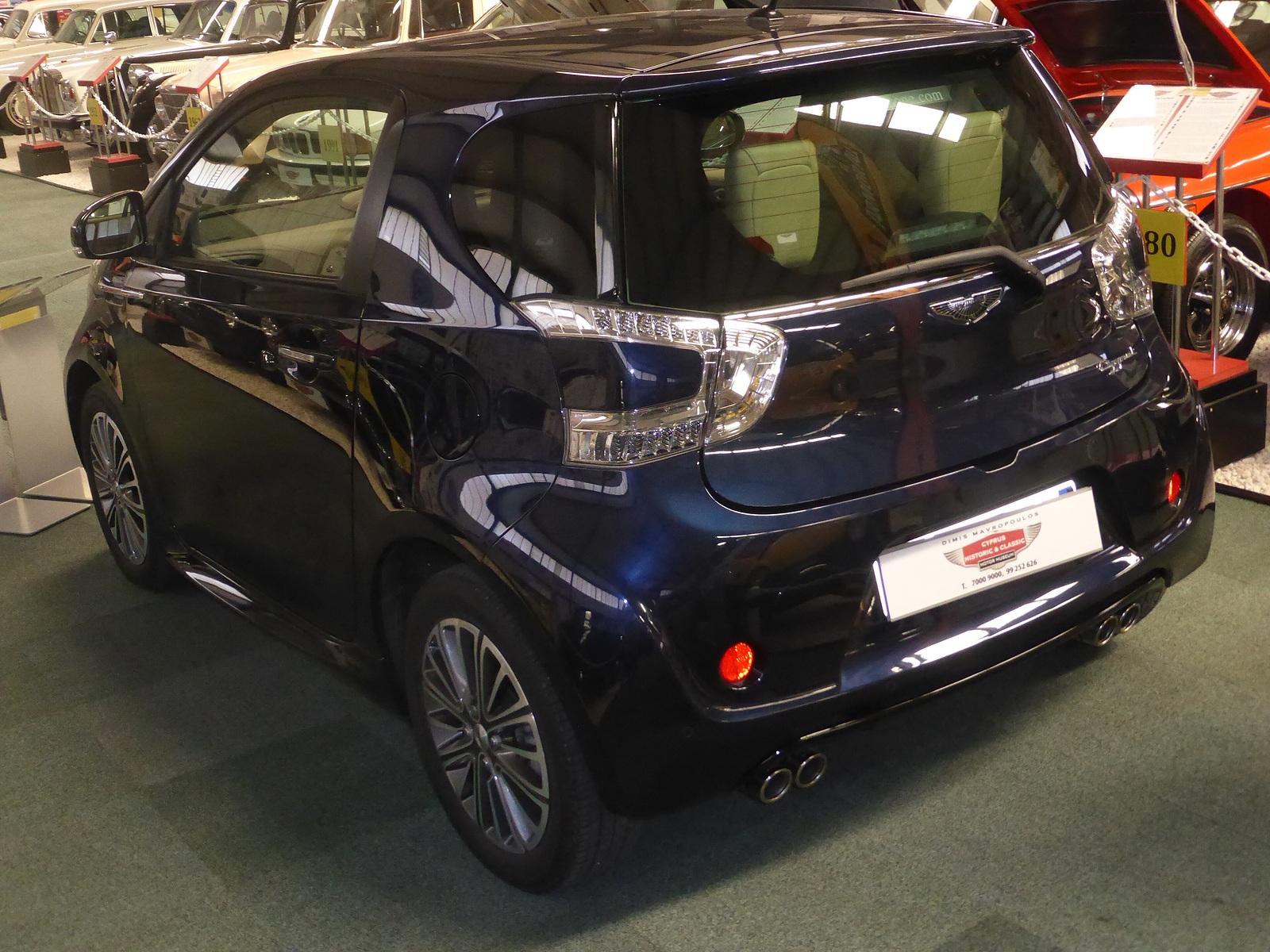
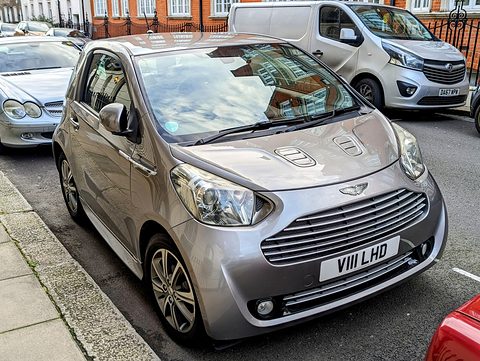
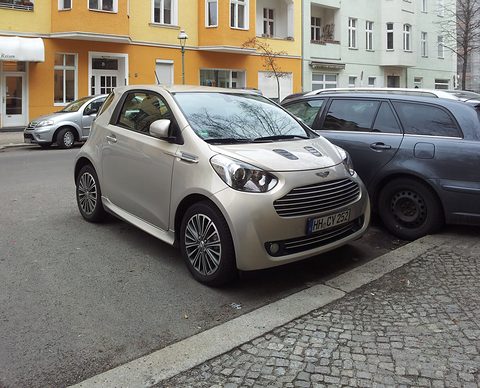
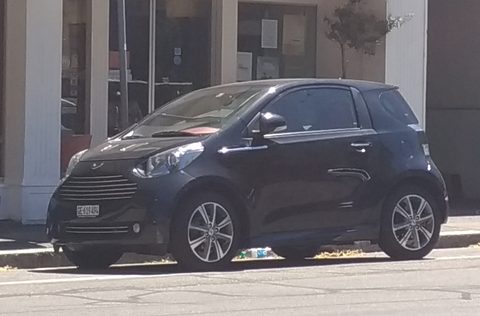
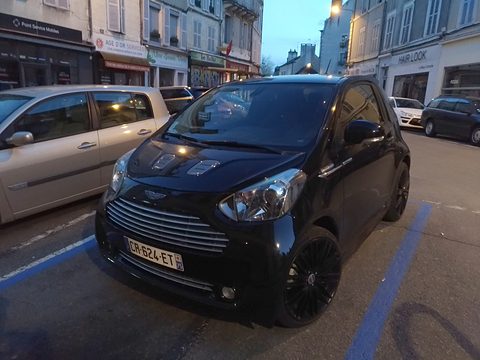
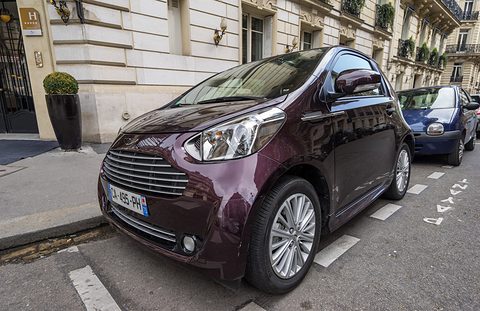
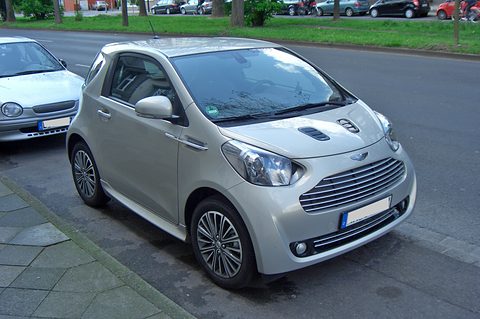
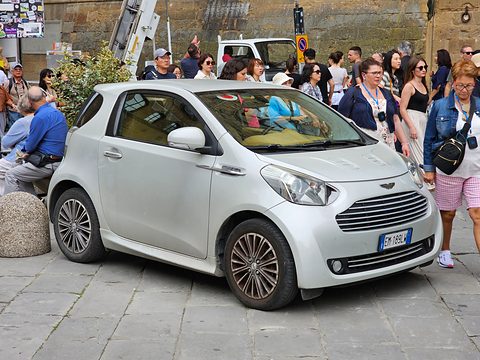
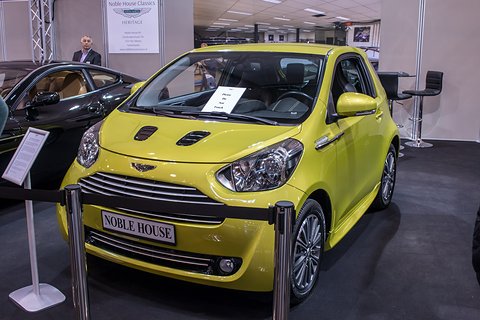
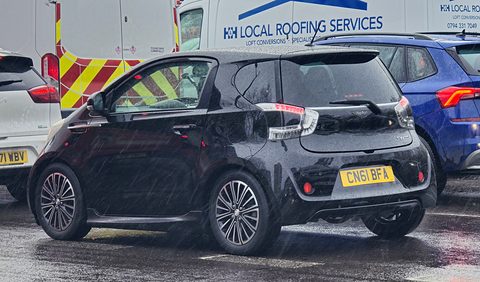
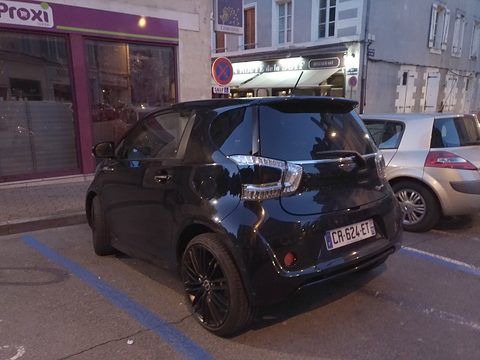
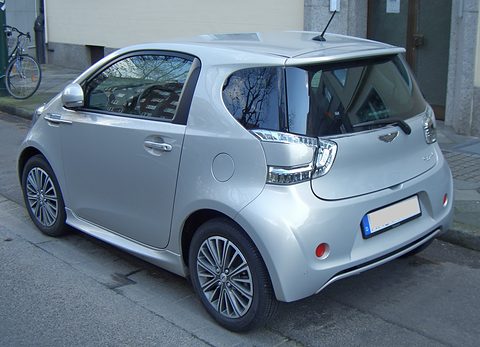
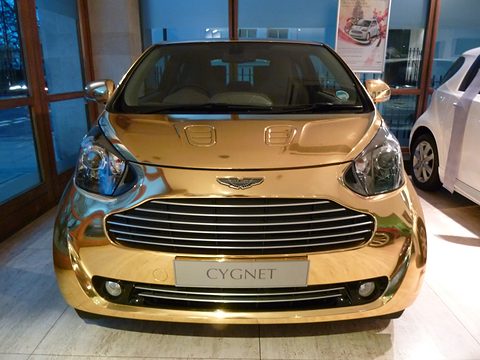
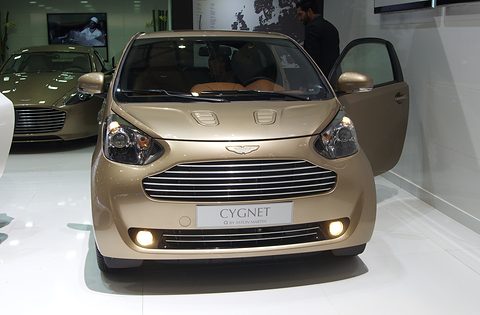
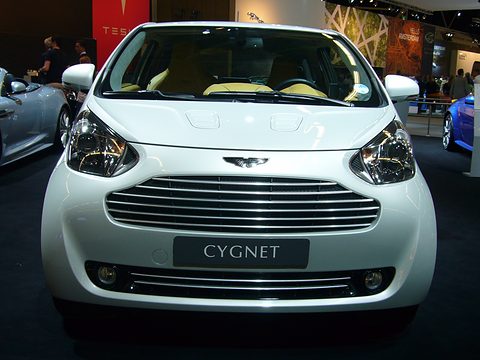
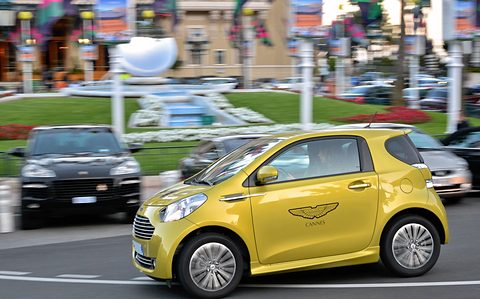
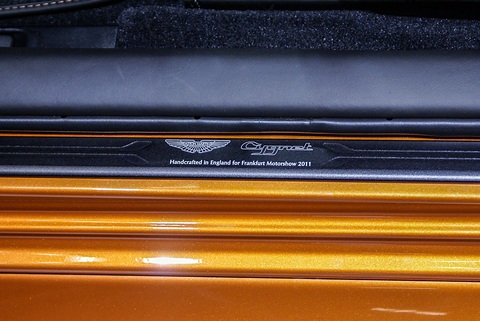
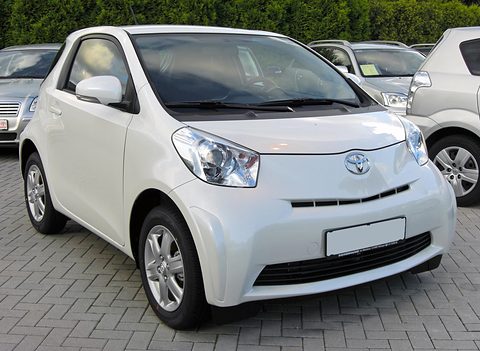
An Aston Martin barely 3.1 metres long began as a Toyota, shipped whole from Japan. Aston Martin needed it for the emissions sums, priced it at three times the Toyota’s price, and dropped it after just over two years.

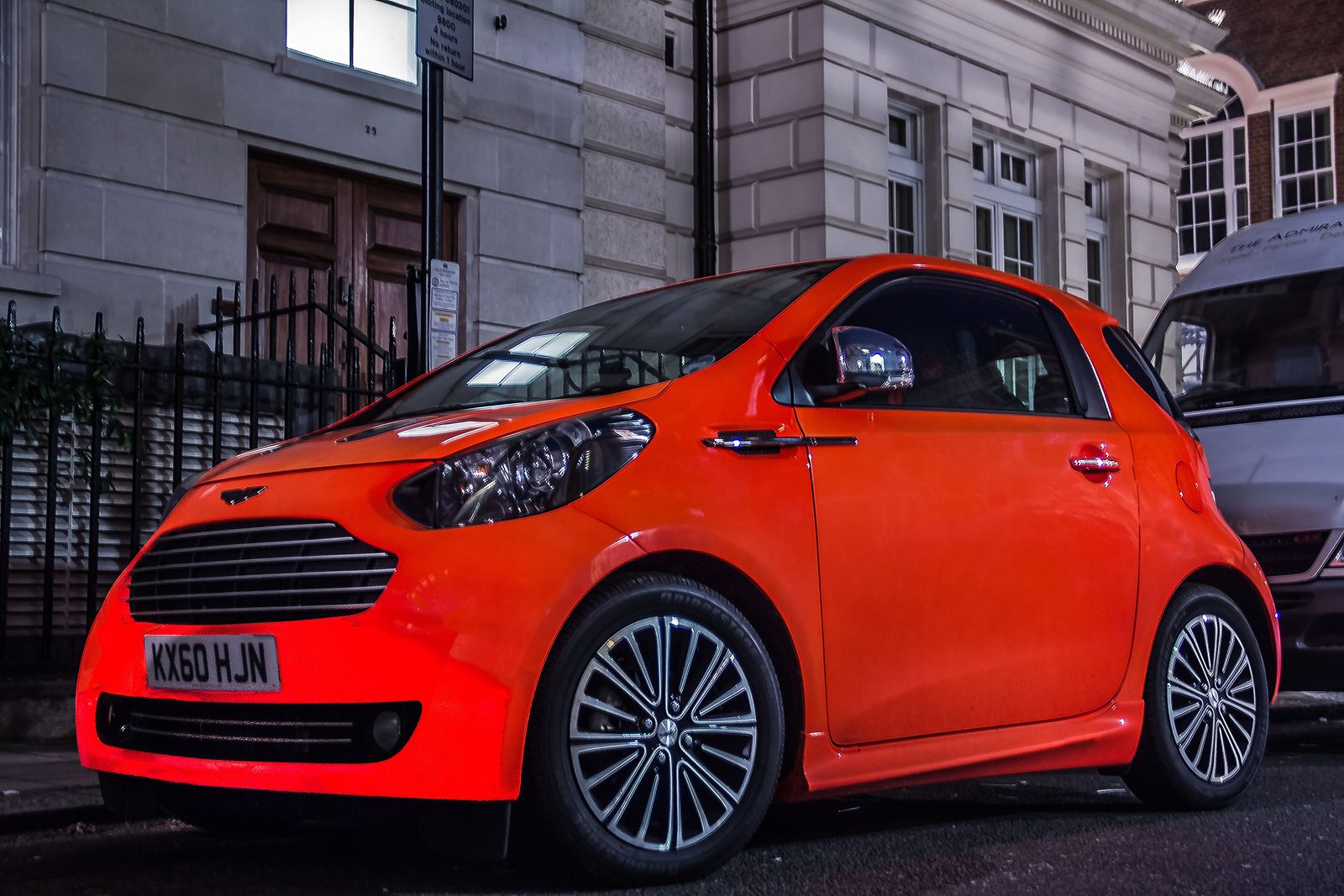
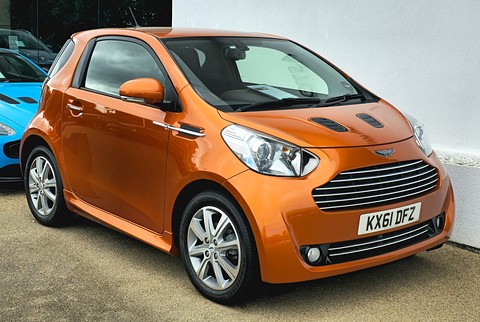
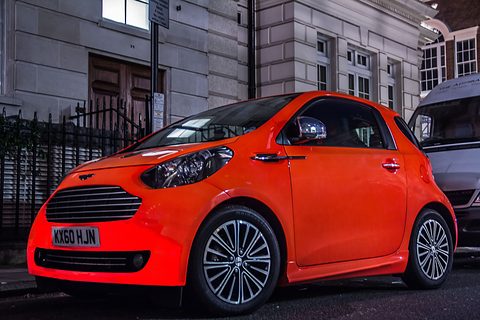
Metallic orange city car with a slatted Aston Martin grille and bonnet vents, parked by a white wall.
A copper-orange Aston Martin Cygnet, KX61 DFZ, in 2024.Photo: Calreyn88, CC0, via Wikimedia Commons

At a glance

The spec plate

Aston Martin Cygnet

Cygnet · Gaydon

Built
2011–⁠2013On sale from January 2011; dropped in September 2013
Country
BritainGaydon, Warwickshire, from Toyota iQs built at Takaoka, Japan
Maker
Aston Martin LagondaRefinished and retrimmed from complete Toyota iQs
Engine
1,329 cc Toyota four-cylinder petrolSix-speed manual or CVT
Power
97 bhp72 kW at 6,000 rpm
Length
3,078 mm1,680 mm wide, 1,500 mm high
Weight
988 kgKerb weight
Seats
3 + 1An offset dashboard makes room for one usable rear seat
Wheels
4Front engine, front-wheel drive
Price new
about £30,000£30,995 for the introductory manual car
Production
about 800786 in dealer listings, not yet traced to a primary source
Top speed
170km/h170 km/h106 mph

How big is it?

True proportion

3.08 m

It is 108 mm longer than a Fiat 500, about 1.8 adults laid end to end.

  • 1.68 m wide
  • 988 kg: about 13 adults
  • 93 mm longer than the Toyota iQ underneath
Drawn at true proportion. The track is 3.6 metres long; the adult stands at the same scale. The Peel P50 is the smallest production car, on every page for comparison.

The story

History

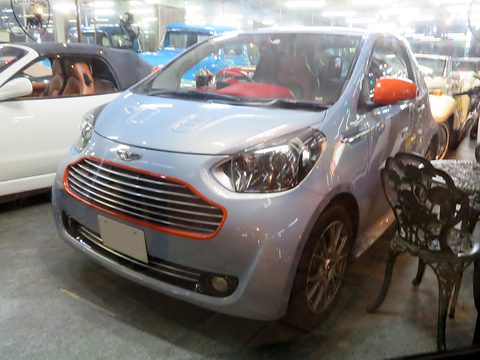
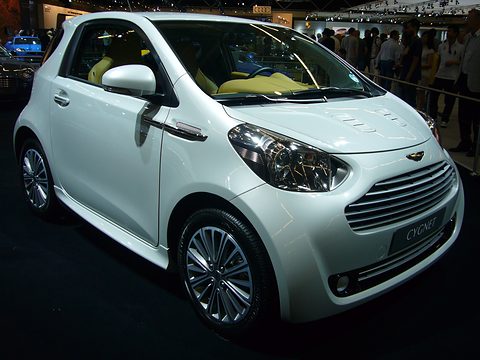
The Cygnet came out of a problem of arithmetic. The credit crunch of 2008 hit sales of expensive cars, and the European Union’s rules for 2012 judged each maker on the average CO2 of all the cars it sold, a threat to a firm that made only cars with big engines.source 1source 2source 3 A small, frugal car with Aston Martin’s badge would bring the average down. In June 2009 pictures of a full-size clay model appeared online, and the Aston Martin Owners Club’s forum, in the words of AstonMartins.com, “went ballistic”.source 2 The concept appeared at the Geneva Motor Show in March 2010, and that October Aston Martin confirmed that it would build the car at Gaydon.source 2source 1 Its chief executive, Dr Ulrich Bez, said that it showed the company’s “commitment to innovation and integrity” while respecting the need to “satisfy demands of emissions and space”.source 1

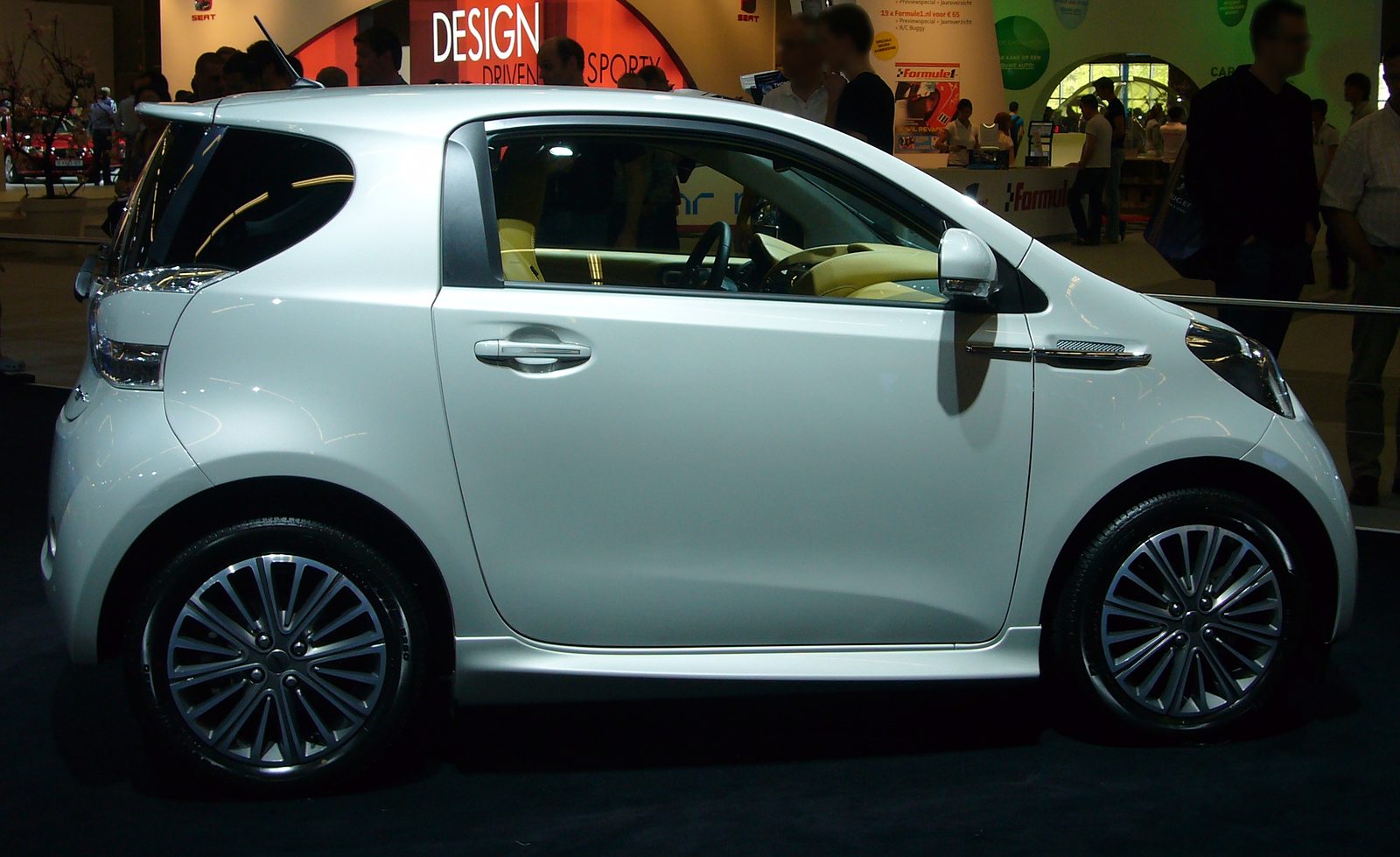
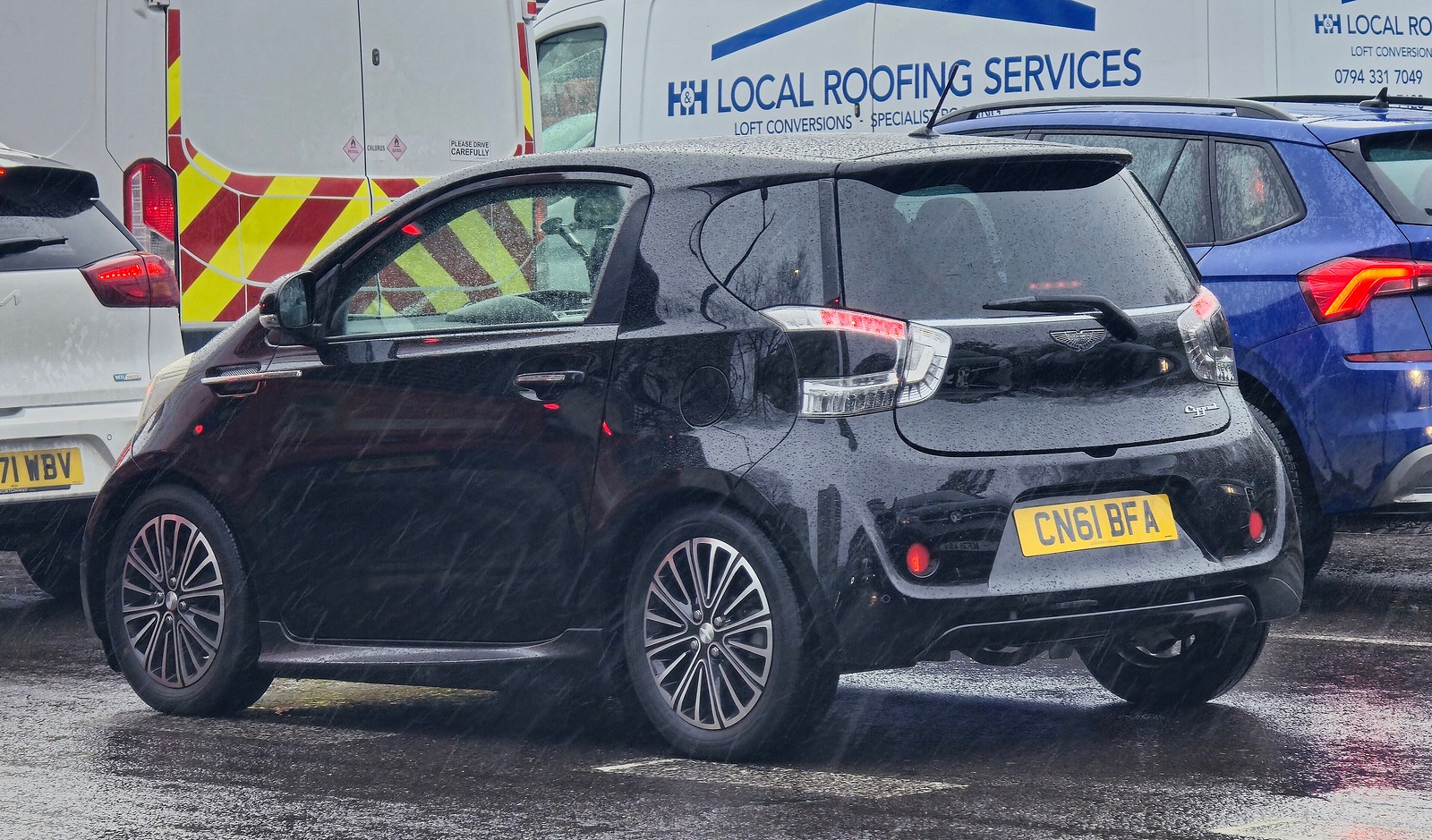
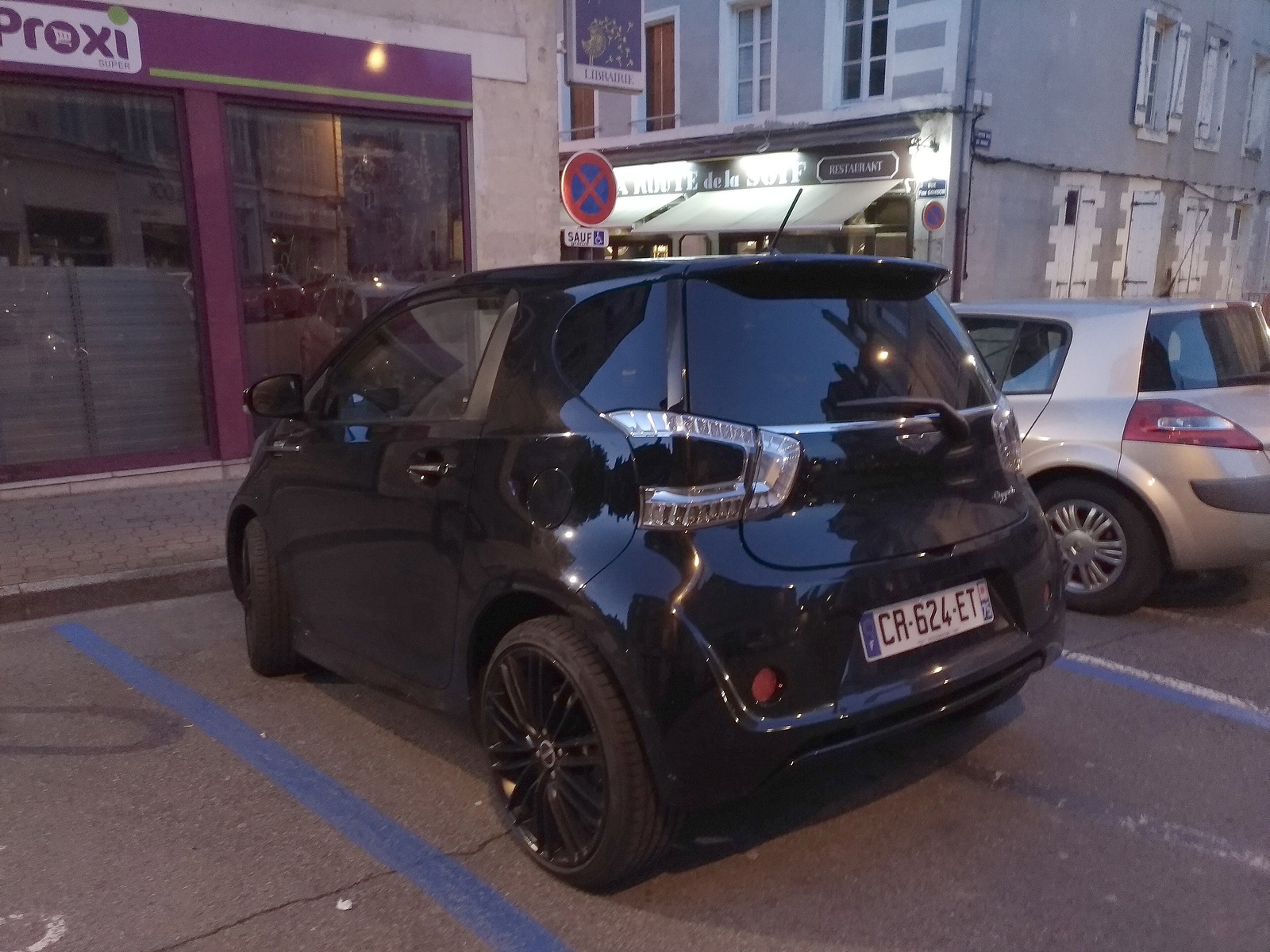
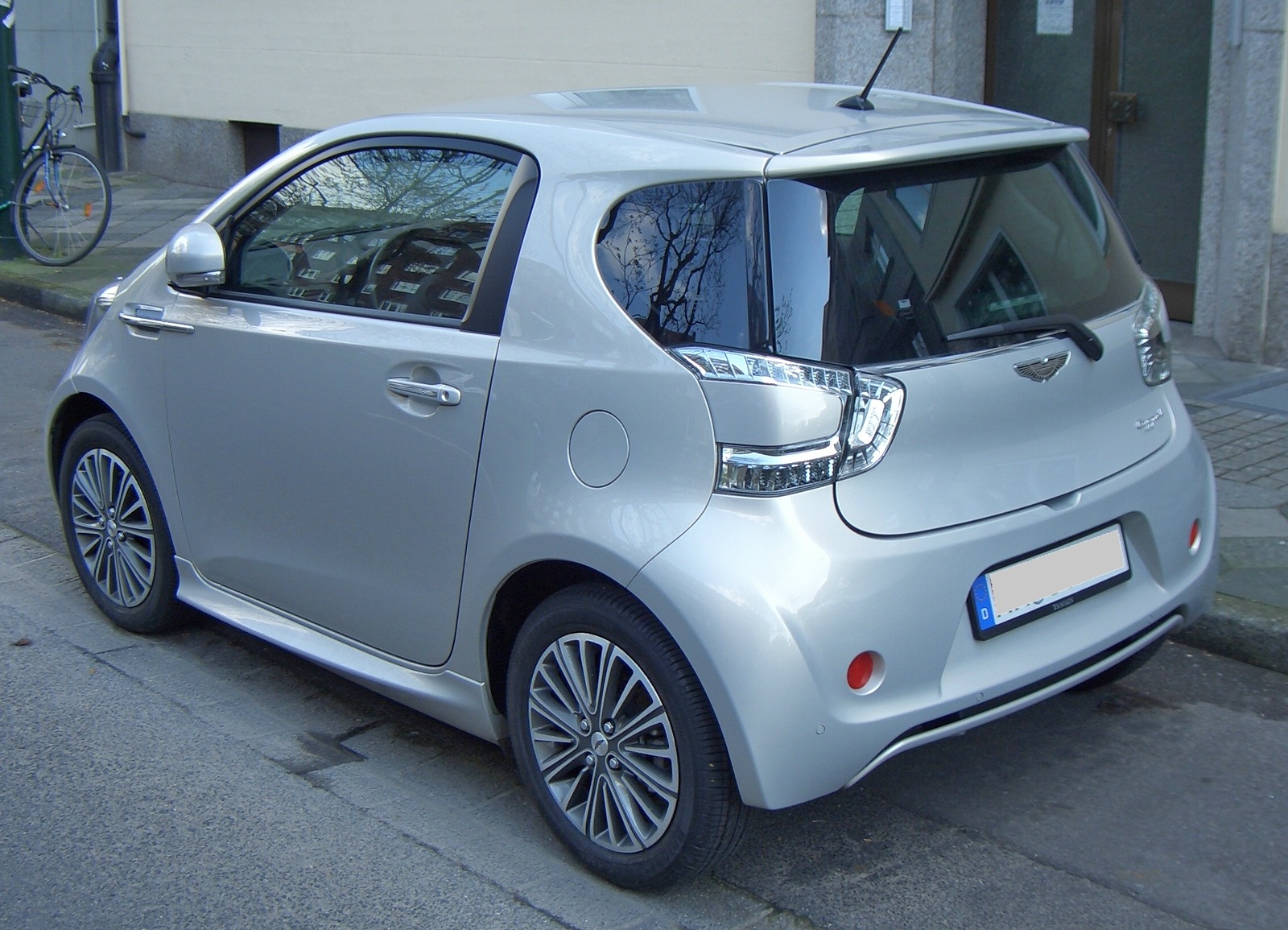
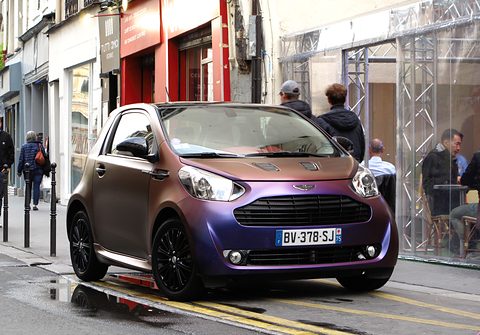
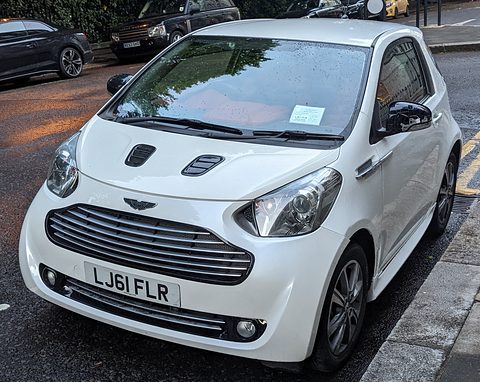
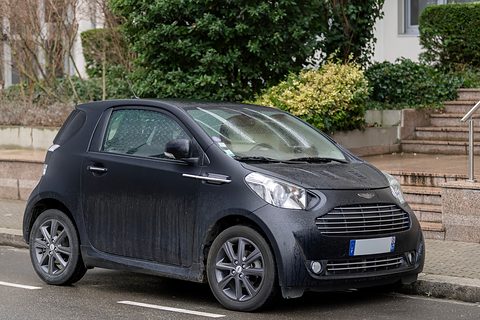
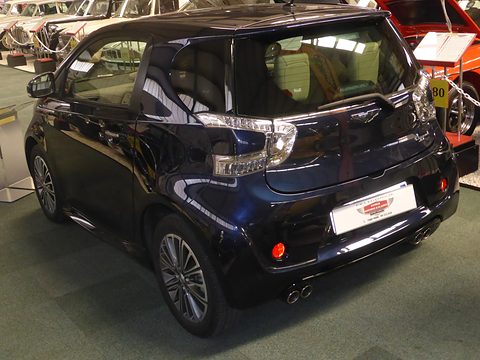
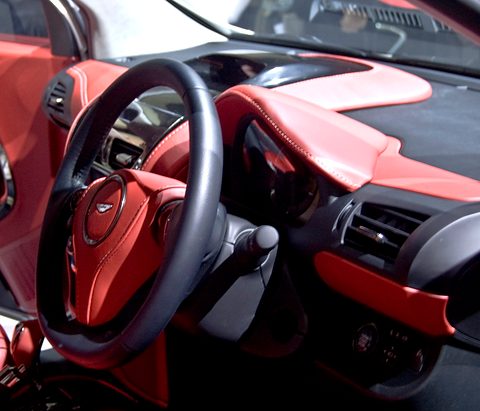
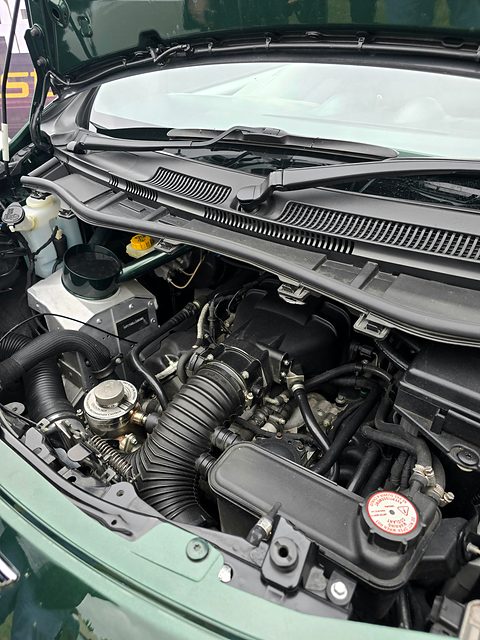
Underneath was the Toyota iQ, a car designed at Toyota’s European studio in Nice. Its clever packaging included an offset dashboard that let the front passenger sit ahead of the driver, leaving room for one usable seat behind: three seats, and one more.source 1source 4 Complete iQs in black, white or silver were shipped from Toyota’s Takaoka plant in Japan to Gaydon, where Aston Martin refinished and retrimmed them.source 4 They kept the iQ 1.33’s 1,329 cc four-cylinder engine of 97 bhp, with a six-speed manual gearbox or a CVT, and drove the front wheels.source 1source 4source 3 The Cygnet was 3,078 mm (121 in) long, 93 mm more than the iQ, and 108 mm longer than the 2,970 mm Fiat Nuova 500, the yardstick for every car on these pages; it is here as a famous oddity (see what is a microcar).source 1 Buyers could have the full Aston Martin personalisation programme: any colour, any trim.source 4

Three times the price

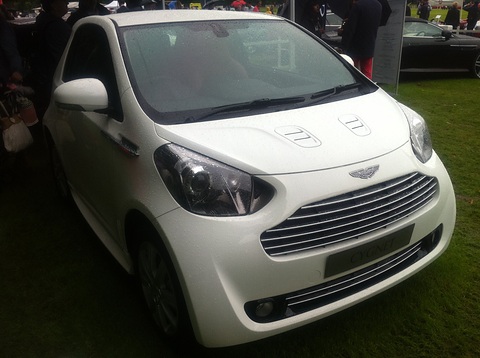
Sales in Britain began in January 2011, with Launch Editions in white and in black, by English Wikipedia’s account; AstonMartins.com has the first customer cars following the production car’s showing at Geneva that March.source 1source 2 At about £30,000, or £30,995 for the introductory manual car, the Cygnet cost roughly three times as much as an iQ.source 1source 4source 3 Bez forecast about 4,000 a year, with existing Aston Martin owners given priority.source 1 Plans to sell it in the United States were dropped.source 2 There was also a Cygnet & colette, made with the Paris store, though its details are not recorded.source 2

The buyers did not come. About 150 Cygnets were sold in Britain and fewer than 600 in Europe; European registrations were 261 in 2011, 172 in 2012 and 131 in 2013.source 1source 3 Production ended in September 2013 after a little over two years, the second-shortest run of any Aston Martin after the Virage of 2012.source 1source 2source 3 About 800 are believed to have been built.source 2

The V8

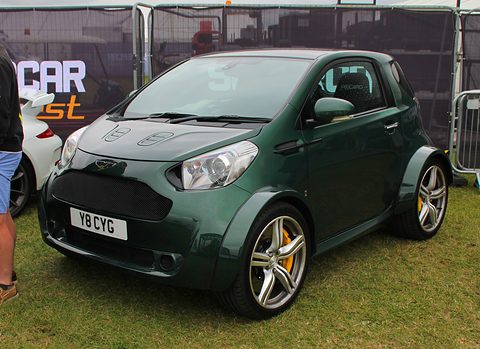
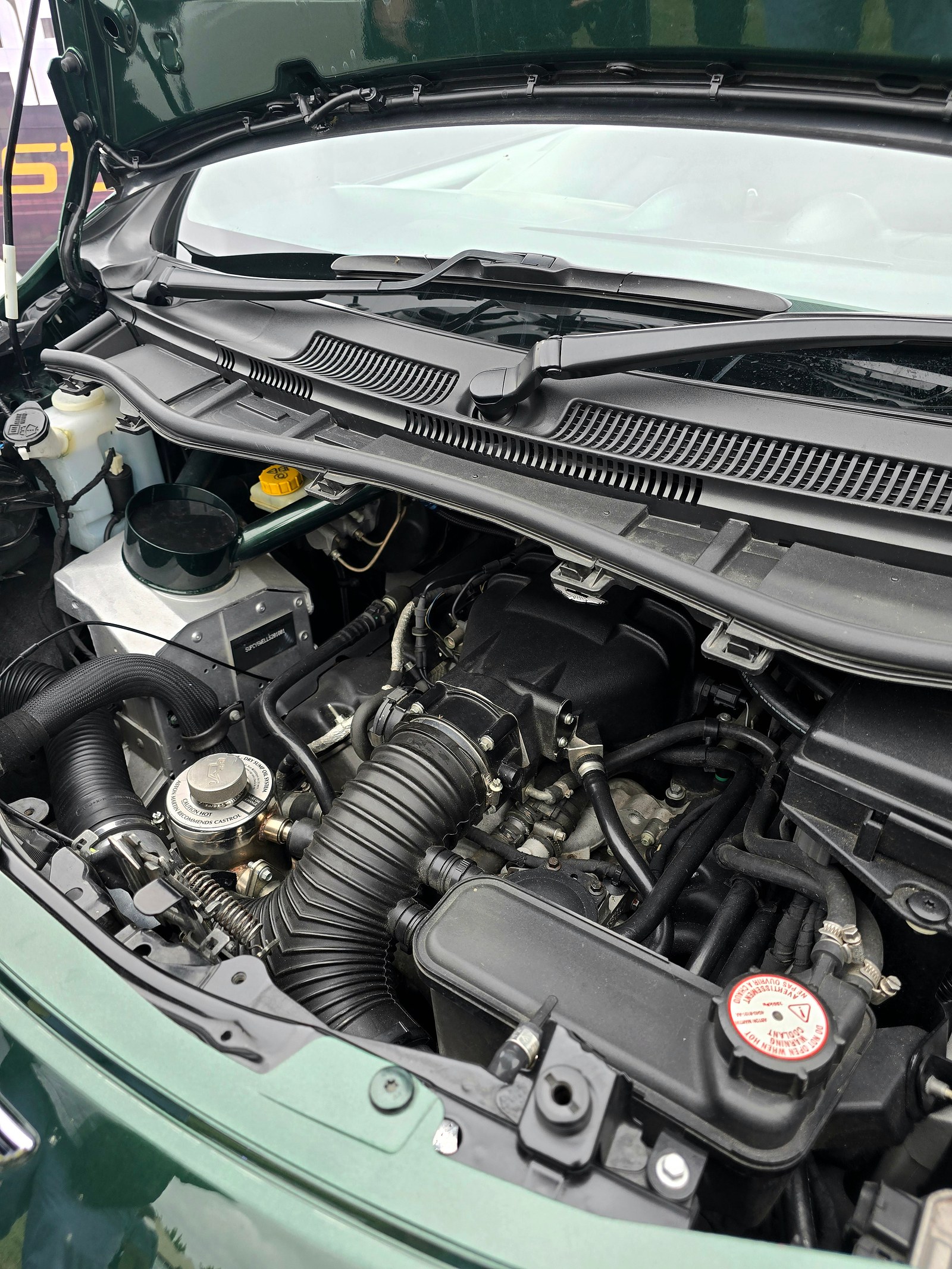
In 2018 Aston Martin’s personalisation department, Q by Aston Martin, built a Cygnet for one customer with the 4.7-litre V8 of the previous Vantage S, 430 bhp, driving the rear wheels through a six-speed automated manual gearbox. It took the Vantage S’s subframes, suspension and brakes, 19-inch wheels under carbon-fibre arch extensions, a new bulkhead and transmission tunnel, a roll cage and bucket seats, and an exhaust that ran under the fuel tank, and it was road-legal.source 1source 3 English Wikipedia gives it 0–100 km/h in 4.2 seconds and 274 km/h (170 mph).source 1 It was shown at the Goodwood Festival of Speed that July.source 3
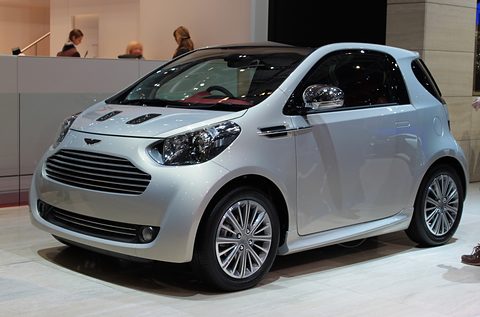
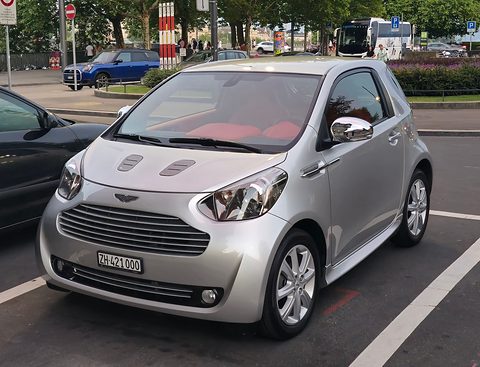
Silver city car with chrome wheels on a show stand, staff at a counter behind.
The silver Cygnet concept at its debut, the Geneva Motor Show, in March 2010.Photo: El monty, Public domain, via Wikimedia Commons
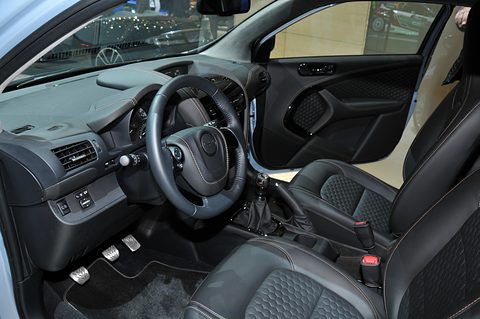
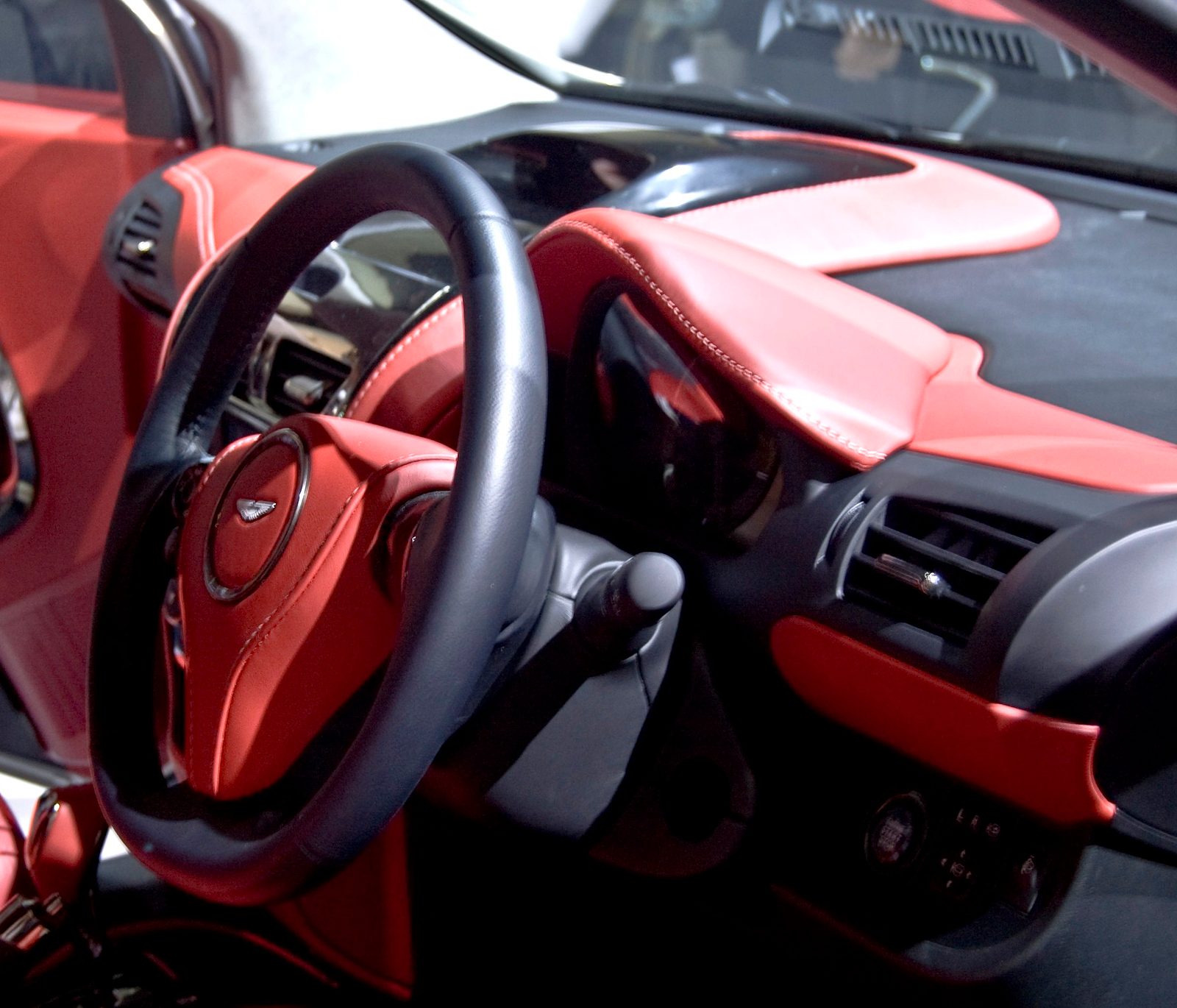
Black quilted leather seat, steering wheel and dashboard with orange stitching, seen through the open door.
The driver’s seat and dashboard of a white Cygnet Launch Edition at the Geneva Motor Show in 2011.Photo: Autoviva, CC BY 2.0, via Wikimedia Commons
Dark green city car with wide wheel-arch extensions and large alloy wheels on grass.
The one-off 2018 Cygnet V8, Y8 CYG, with its flared arches at Supercar Fest in 2025.Photo: Calreyn88, CC BY-SA 4.0, via Wikimedia Commons

Pictures

More photographs, old and new

Variants

From concept to V8

The Cygnet family
VariantYearsWhat differsHow many
Cygnet concept2010The show car at GenevaOne
Launch Edition2011White or black colour and trim packsNot recorded
Cygnet2011–⁠2013Manual or CVT; any colour and trim through Aston Martin’s personalisation programmeAbout 800
Cygnet & coletteAbout 2011–⁠12A collaboration with the Paris storeNot recorded
Cygnet V820184.7-litre V8 of 430 bhp from the Vantage S, rear-wheel drive, a roll cageOne

Specification

The production Cygnet of 2011–⁠13

Engine and drive

Engine and drive
EngineToyota 1NR-FE four-cylinder, 1,329 cc, mounted across the frontsource 1
Power97 bhp (72 kW; 98 PS) at 6,000 rpmsource 1source 4source 3
Torque123 N m (91 lb ft) at 4,400 rpmsource 1source 3
GearboxSix-speed manual or CVTsource 3
DriveFront wheelssource 1source 3
Body and chassis

Body and chassis
BodyThree-door hatchback, refinished and retrimmed at Gaydonsource 4
Seats3 + 1: the front passenger sits ahead of the driver, leaving one usable rear seatsource 1source 4
Wheels16 insource 3

Dimensions

Dimensions
Length3,078 mm (121 in)source 1The Toyota iQ is 2,985 mm
Width1,680 mm (66 in)source 1
Height1,500 mm (59 in)source 1
Wheelbase2,000 mm (79 in)source 1
Kerb weight988 kg (2,178 lb)source 1

Performance and running

Performance and running
Top speed170 km/h (106 mph)source 1
0–100 km/h11.8 ssource 1
Consumption4.0 litres per 100 km (70.7 mpg)source 1
CO2110 g/kmsource 1116 g/km in the same source’s table
Price newAbout £30,000; £30,995 for the introductory manualsource 1source 4source 3

How many were built?

Every figure, with its source

About 800 builtAbout 800, the figure AstonMartins.com gives as believed. Dealer listings give an exact 786, which has not been traced to Aston Martin’s own records. The sales figures are lower, and no source reconciles them with the build figures.

  1. about 800built, 2011–⁠13One source

    AstonMartins.com, “it is believed”source 2

  2. 786built: 272 right-hand drive and 514 left-hand drive; 170 manual and 616 CVTUnconfirmed

    dealer listings, known only from search summariessource 5

  3. fewer than 600sold in EuropeTwo sources agree

    English Wikipedia and The Drivesource 1source 3

  4. 564registered in Europe: 261 in 2011, 172 in 2012, 131 in 2013One source

    English Wikipedia, citing carsalesbase.comsource 1

  5. about 300sold worldwideOne source

    The Drivesource 3

  6. about 150sold in BritainTwo sources agree

    English Wikipedia and The Drivesource 1source 3

  • Two sources agreetwo good sources give the figure
  • One sourcea good source, alone
  • Unconfirmeda lead only, not yet checked

Famous for

Three points

  1. An Aston from a Toyota

    Complete Toyota iQs, shipped from Japan and refinished at Gaydon.

  2. For the emissions sums

    Built to lower Aston Martin’s average CO2 under the European Union’s rules for 2012.

  3. The one-off V8

    A 430 bhp Vantage S engine in the little car, for one customer, in 2018.

Survivors and collecting

Today

Most of the Cygnets built are presumably still on the road, but no count has been found. AstonMartins.com reports that “once franchised dealers were struggling to sell them, now they are becoming harder to find and prices have crept up”, and tips the car as a collectable oddity.source 2 Cygnets turn up regularly in dealers’ listings, but no result from a major auction house was found.source 5 The Aston Martin Owners Club covers them.source 2

Sources

Numbered as in the text

No road test and none of Aston Martin’s own press releases were read, so the history rests on English Wikipedia’s Toyota iQ article and an enthusiasts’ site. Sources are given as plain text; the links are on the Credits page.

  1. English Wikipedia, Toyota iQ, the infobox, the “Aston Martin Cygnet” section and the specification and sales tables, read in full. Used as a lead; it cites BBC News, Top Gear, evo, Autocar and carsalesbase.com.
  2. Tim Cottingham, AstonMartins.com, “Cygnet (2009–⁠2013)”, read in full.
  3. The Drive, “Aston Martin is debuting a radical V‑8-powered Cygnet at Goodwood”, July 2018, read in full.
  4. AstonMartins.com, “Cygnet (High Line) (2011–⁠2013)”, the history and specification paragraphs.
  5. Dealer listings on Car & Classic and PistonHeads claiming 786 built, known from search summaries; the figure was not found in the fetched pages.