microcarfan
  • Microcar
  • France
  • Fewer than ten built

Arié Hopi

Also known as Automobiles Arié

Announced as a car you could drive without a licence, and named after the Hopi people of Arizona, it arrived with a 125 cc engine and a top speed of 75 km/h (47 mph), and so you could not.

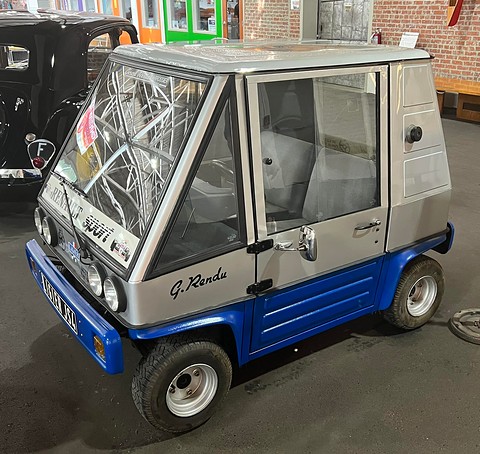
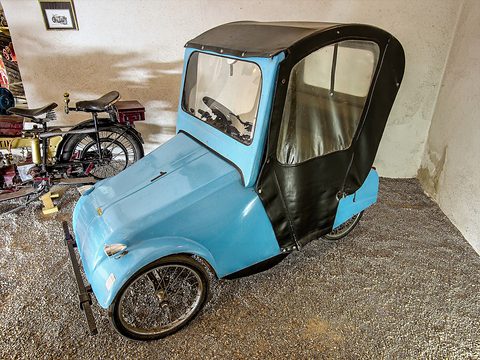
No photograph yet. So few were built that no usable picture of a Hopi has been found. Nothing is drawn in its place.

At a glance

The spec plate

Arié Hopi

Hopi · Annecy-le-Vieux

Built
1983–⁠1985Announced in 1982 and on sale in 1983; the end came in 1984 or 1985
Country
FranceAnnecy-le-Vieux, Haute-Savoie
Maker
Automobiles Arié, Jean-Claude Arié’s firmTaken over by Société Ad-Hoc, says the German Wikipedia
Engine
125 cc Fichtel & Sachs, at the back
Length
2,320 mm
Weight
240 kg175–240 kg in the German Wikipedia
Price new
29,800 FNew, by the German Wikipedia
Production
fewer than 10By the old site’s count
Top speed
75km/h75 km/hAbout 47 mph: too fast to be licence-free

Not yet recordedpower, seats and wheels and layout.

How big is it?

True proportion

2.32 m

It is 650 mm shorter than a Fiat 500, about 1.3 adults laid end to end.

  • 240 kg: about three adults
Drawn at true proportion. The track is 3.6 metres long; the adult stands at the same scale. The Peel P50 is the smallest production car, on every page for comparison.

The story

History

Jean-Claude Arié came to it from replicas. Two years earlier, the old microcarfan.com says, he had set up the manufacture of the Suncar, a replica built on the Renault 5 TS; the German Wikipedia says only that he had worked at Suncar.source 1source 2 In 1982 he founded Automobiles Arié at Annecy-le-Vieux, in Haute-Savoie, and announced a voiture sans permis, a licence-free car, called the Hopi, after the Hopi people of Arizona.source 2source 1

It did not appear until 1983, and when it did it was not licence-free at all. It had a 125 cc Fichtel & Sachs engine at the back and could reach 75 km/h, so its driver needed a licence.source 1source 2 It was an open leisure car, 2.32 m (7 ft 7 in) long, with a hard top and doors planned as options.source 1 The old site gives its weight as 240 kg (529 lb); the German Wikipedia gives 175 to 240 kg, perhaps the open car and the car with its options.source 1source 2 It cost 29,800 francs new.source 2

Fewer than ten Hopis were assembled before the marque stopped.source 1 When is disputed. The old site says the following year, 1984; the German Wikipedia says production ended in 1985, and that a company called Société Ad-Hoc took the business over.source 1source 2

What we do not know

How many wheels and seats the Hopi had, its width and height, what Société Ad-Hoc did with it and how the Suncar fits in are not in either source. The German Wikipedia leans on the old site for most of its figures, so the two accounts are not independent, and no French period source has been found.source 2
Variants

One model

The Arié range
VariantYearsWhat differsHow many
Hopi1983–⁠1984 or 1985An open leisure car; a hard top and doors were planned as optionsFewer than 10

Specification

From the old microcarfan.com, which the German Wikipedia follows

Engine and drive

Engine and drive
EngineFichtel & Sachs 125 cc, petrol, at the backsource 1source 2
LicenceNeeded, for the 125 cc engine and 75 km/hsource 1

Body and chassis

Body and chassis
BodyOpen; a hard top and doors planned as optionssource 1
Wheels and seatsNot stated in the sources found

Dimensions

Dimensions
Length2,320 mmsource 1source 2
Weight240 kgsource 1175–240 kg in the German Wikipedia, perhaps open and with the options

Performance and running

Performance and running
Top speed75 km/h (47 mph)source 1source 2
Price new29,800 Fsource 2

Famous for

Three points

  1. Named for the Hopi

    Jean-Claude Arié named his car after the Hopi people of Arizona.

  2. Licence-free, then not

    Announced as a licence-free car, it arrived with a 125 cc engine that needed a licence.

  3. Single figures

    By the old site’s count, the Hopi never reached double figures.

Sources

Two sources so far

The Hopi rests on the original microcarfan.com and on the German Wikipedia, which cites it. No French period source has been found. Sources are given as plain text; the links are on the Credits page.

  1. The original microcarfan.com (2006–⁠2016), marque page “ARIE”, read in full from the archived copy.
  2. German Wikipedia, Automobiles Arié, read in full; it cites the old microcarfan.com, Georgano and René Bellu’s Automobilia.