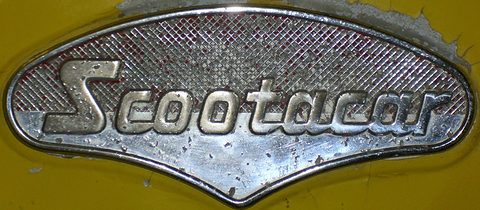
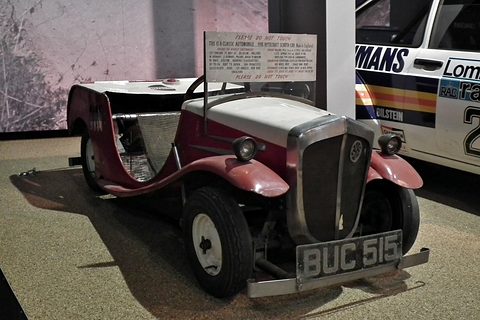
microcarfan
  • Bubble car
  • Britain
  • Three wheels
  • Handlebar steering

Scootacar

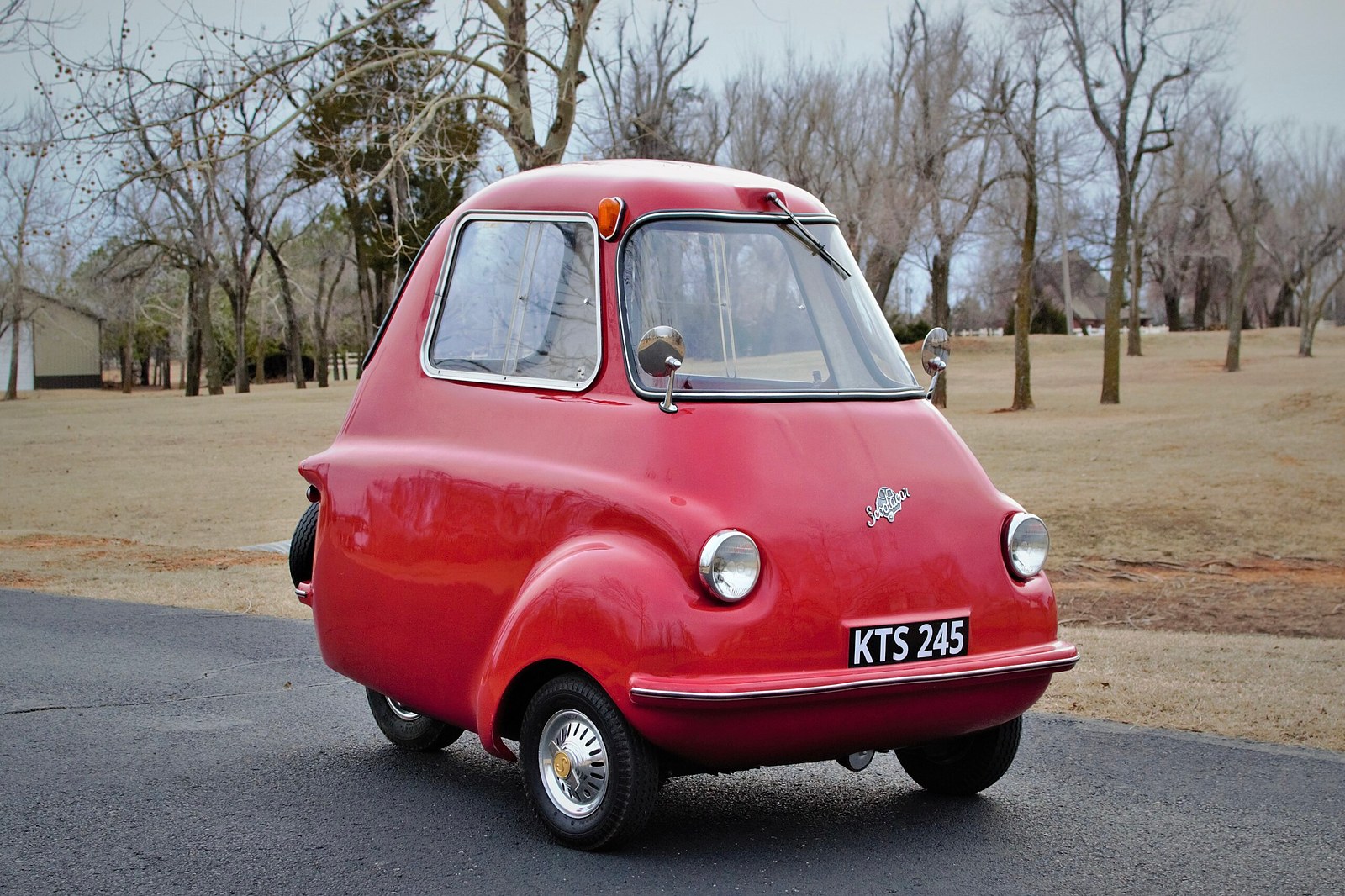
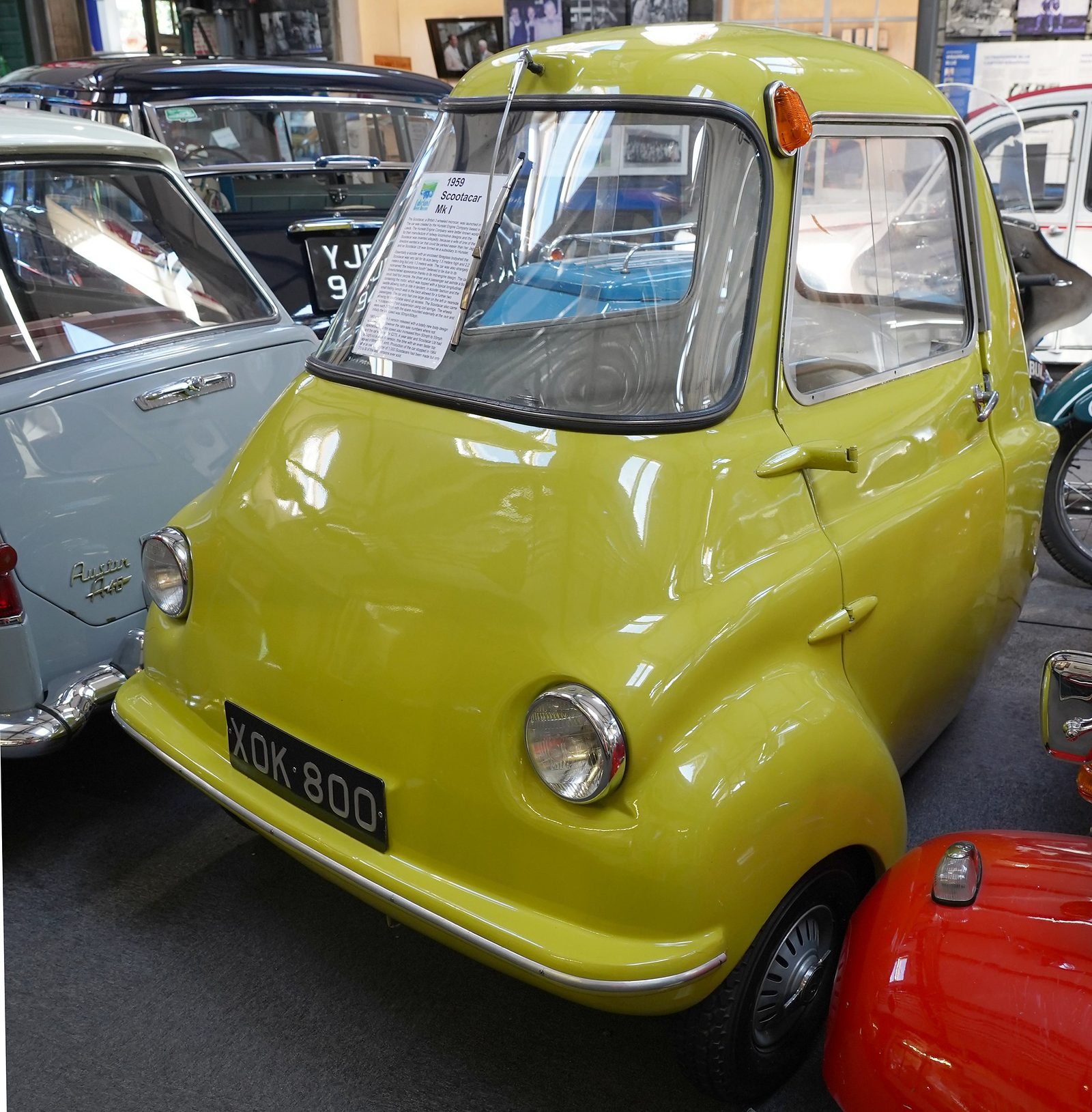
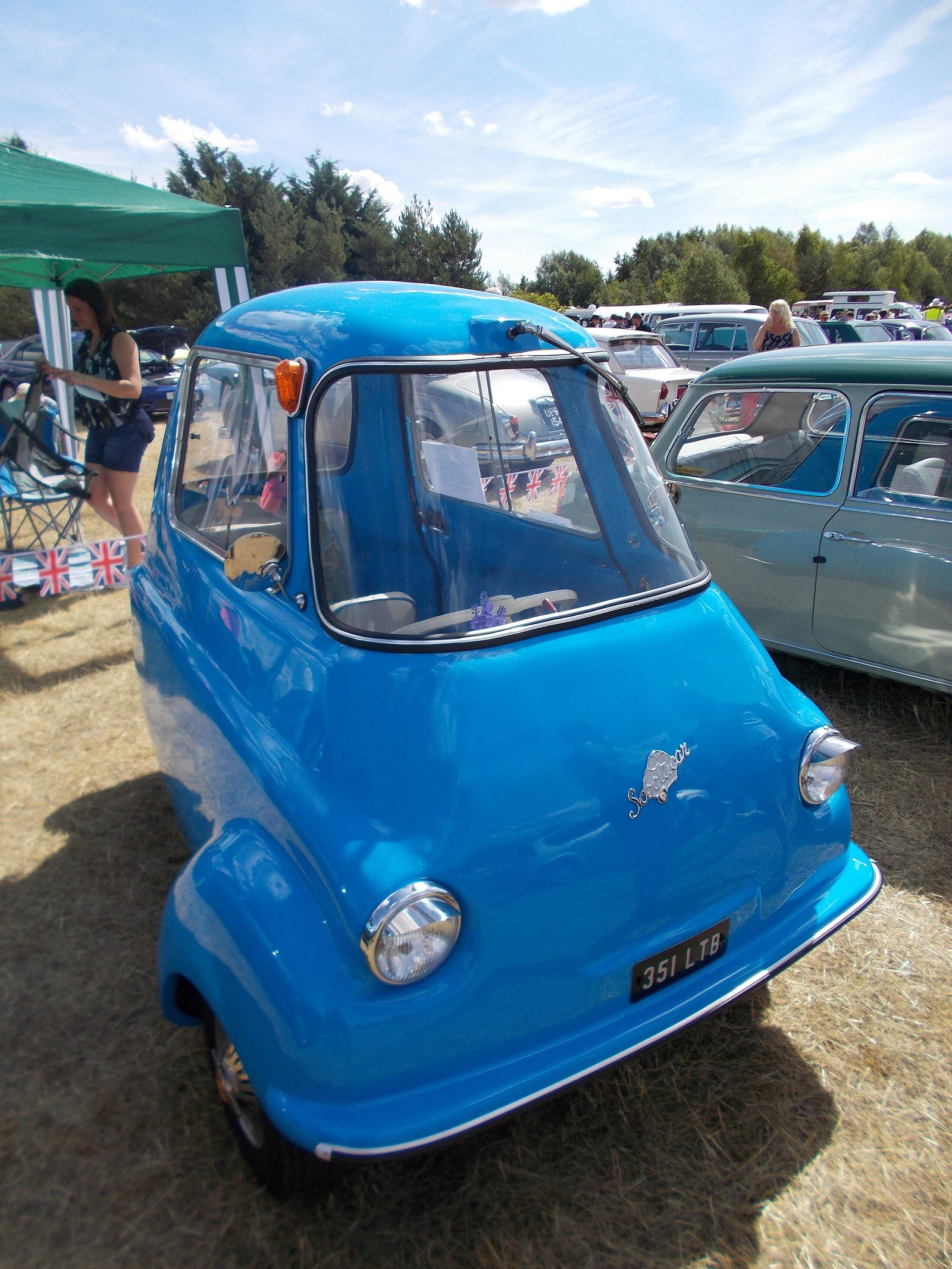
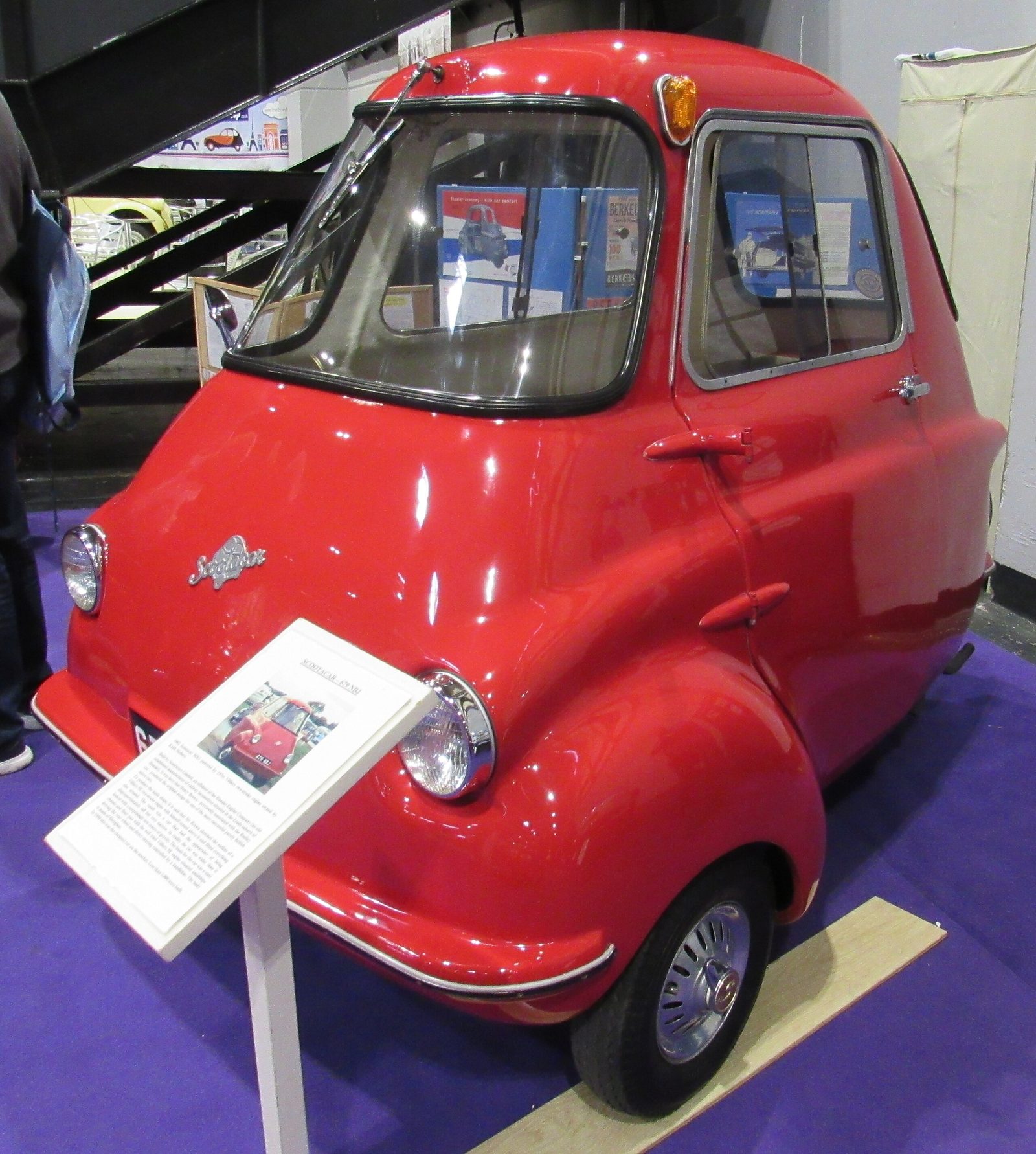
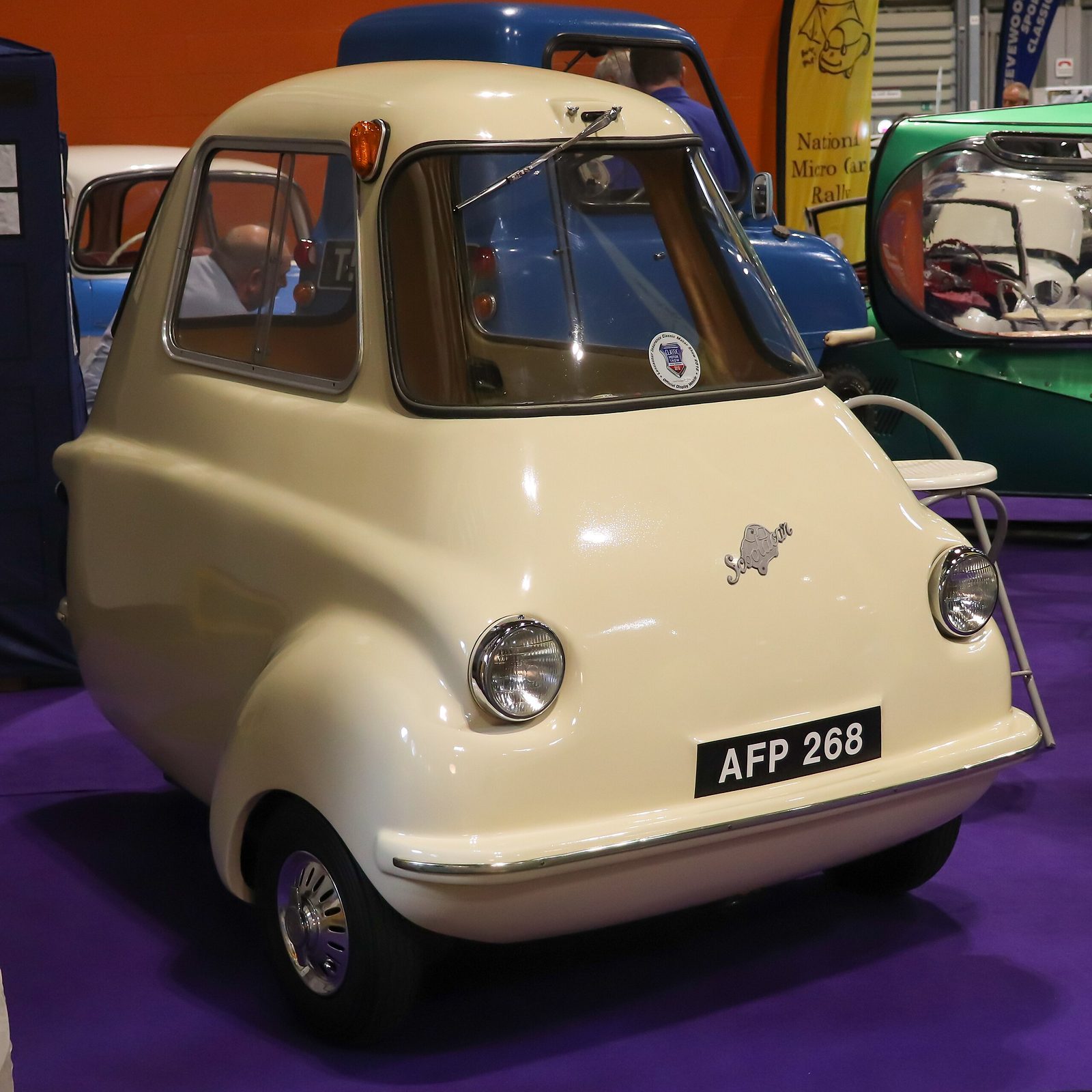
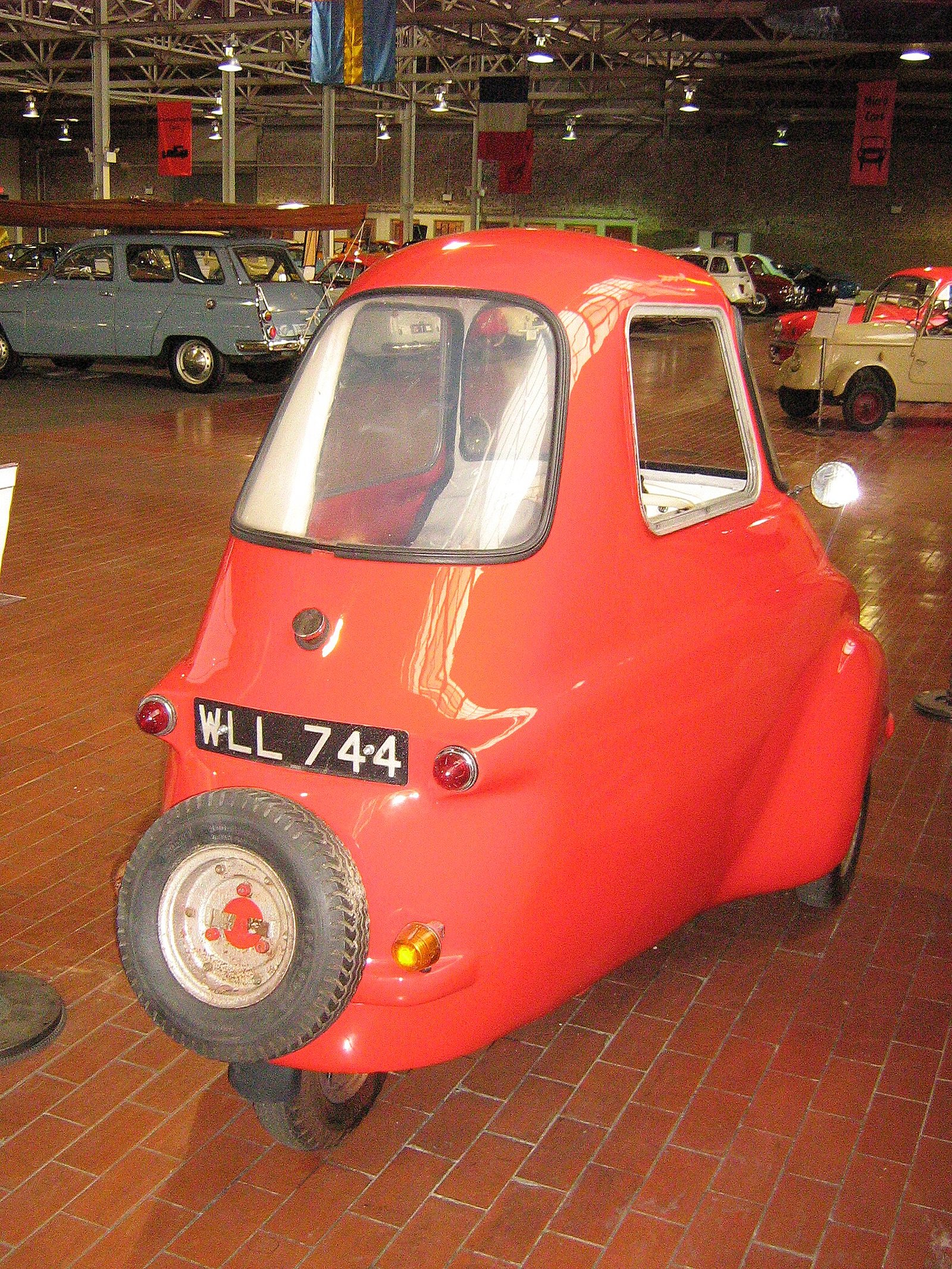
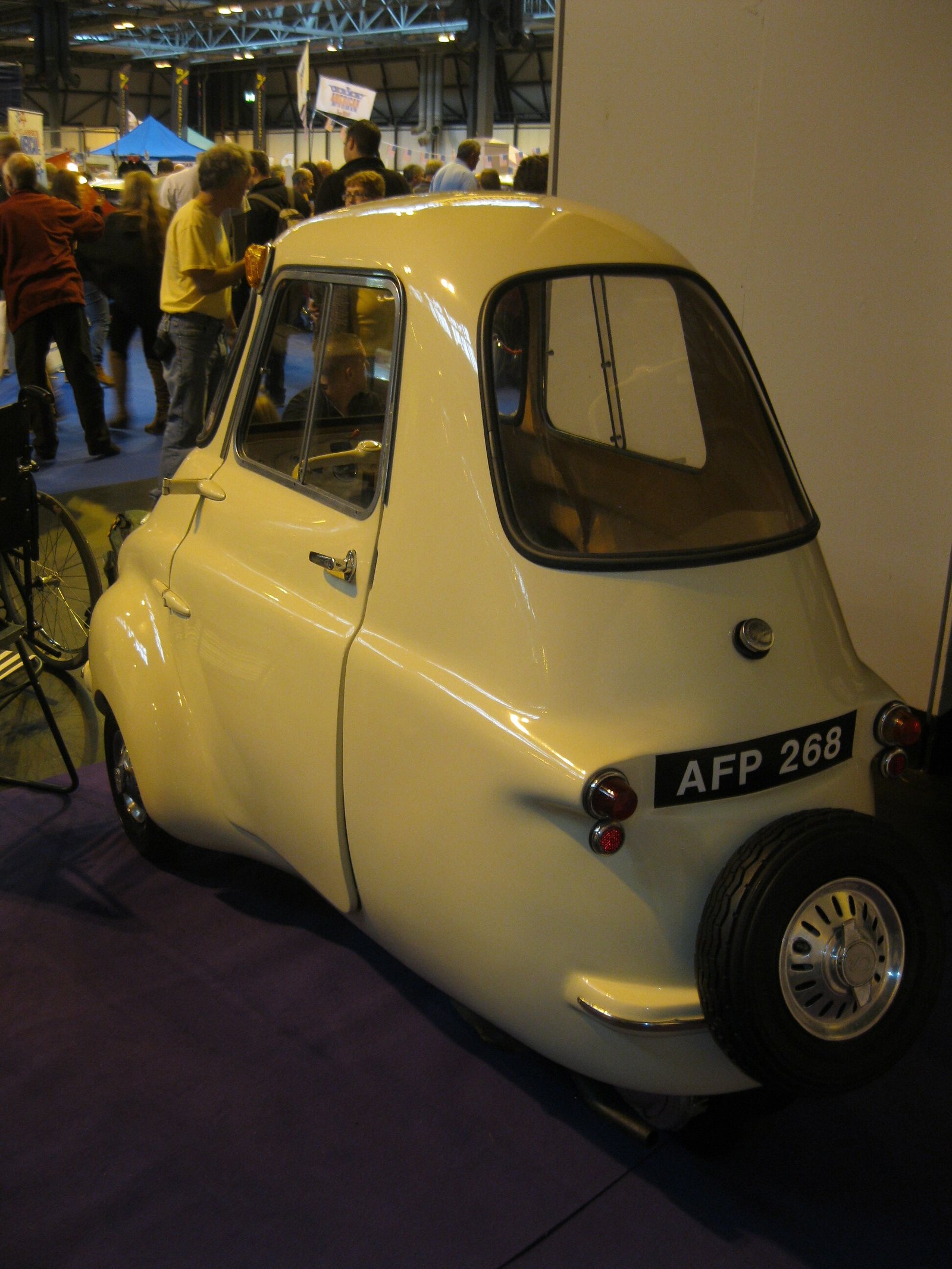
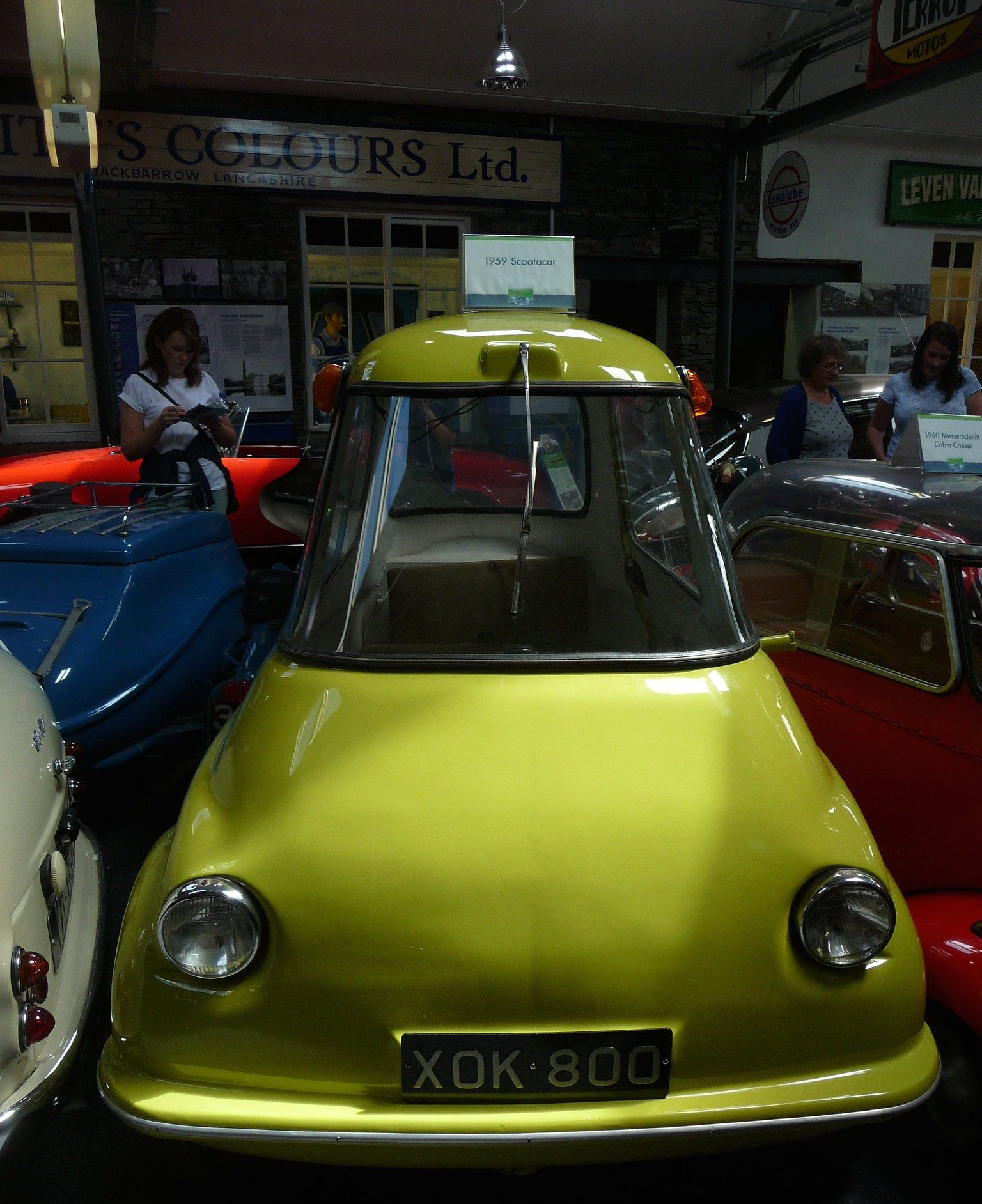
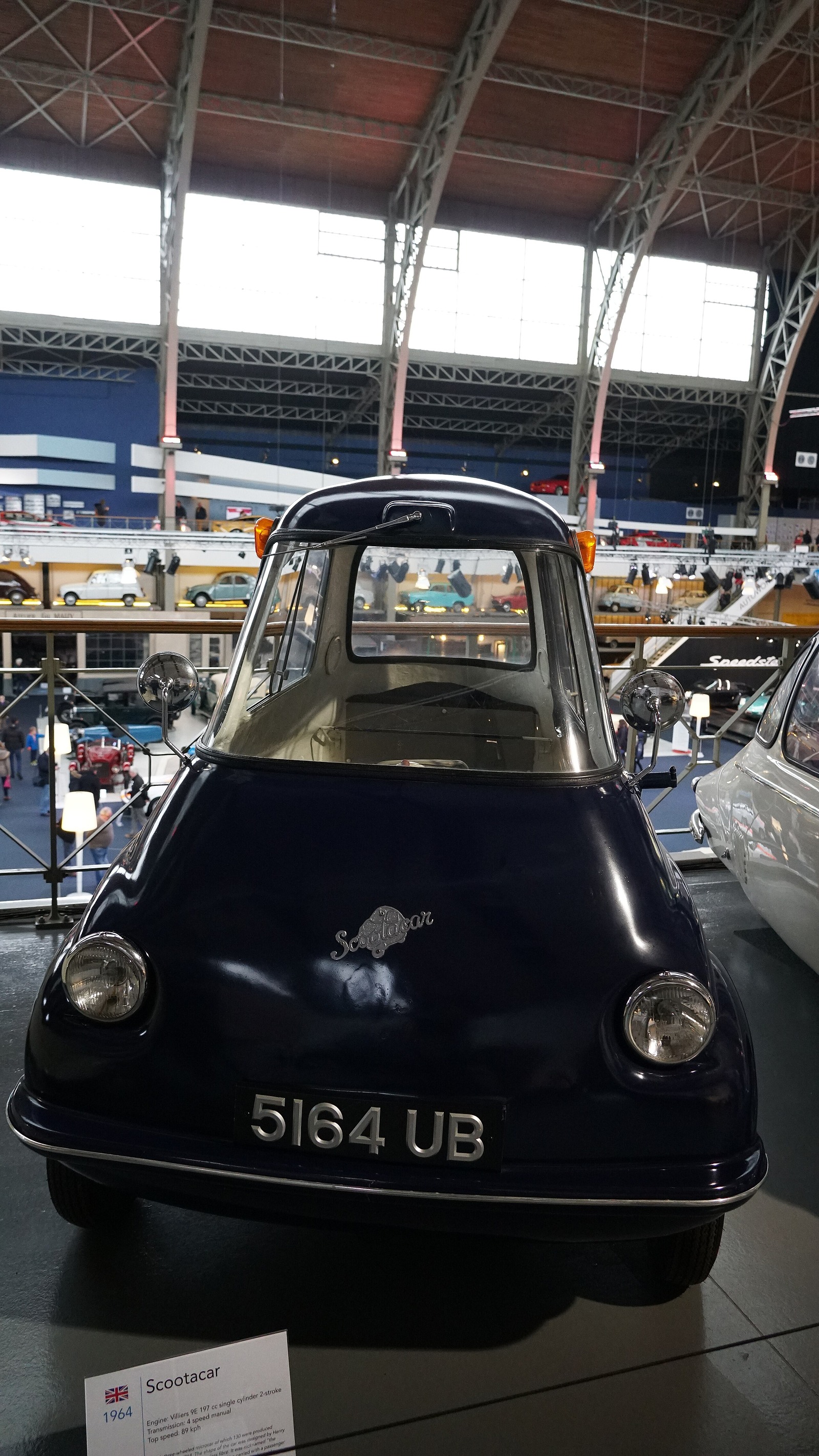
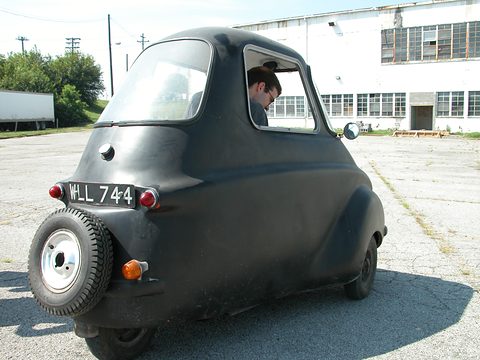
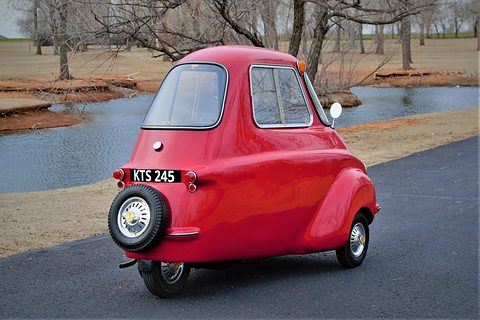
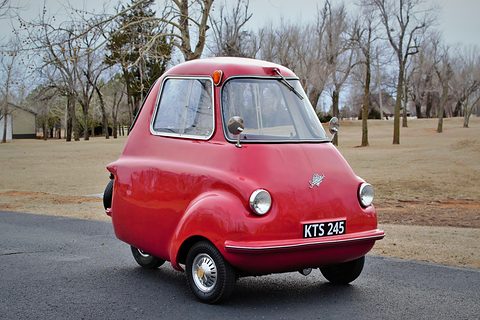
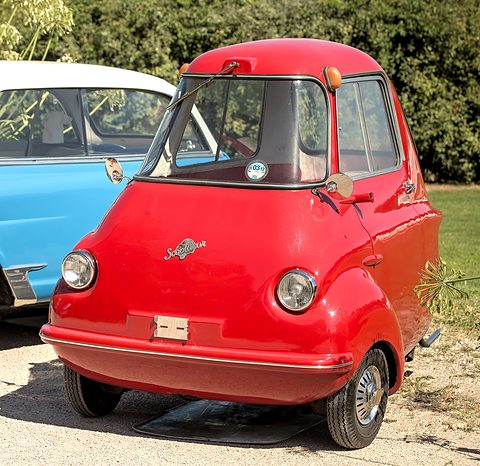
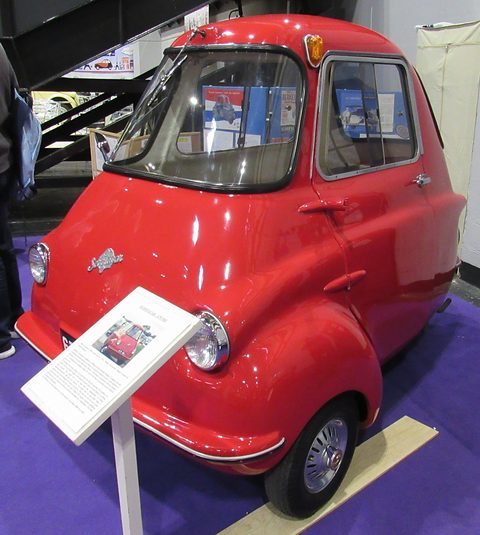
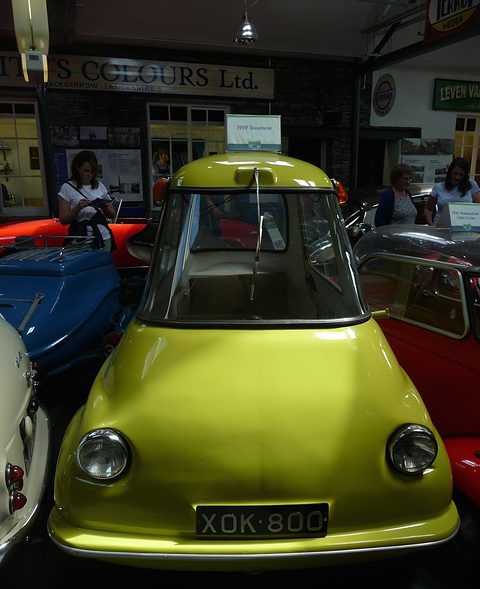
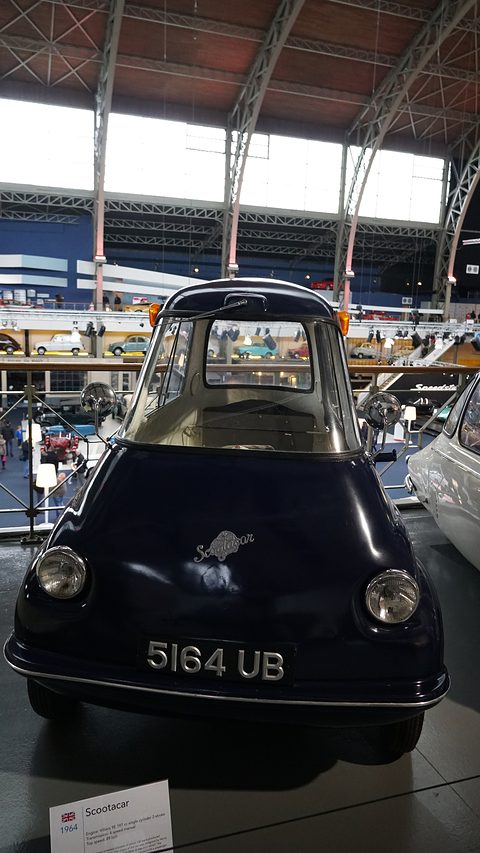
A locomotive works in Leeds built it, and its designer found its shape by sitting astride a Villiers engine while an assistant chalked an outline round him. The result was 1.5 metres tall and steered with handlebars, and people called it the telephone box.

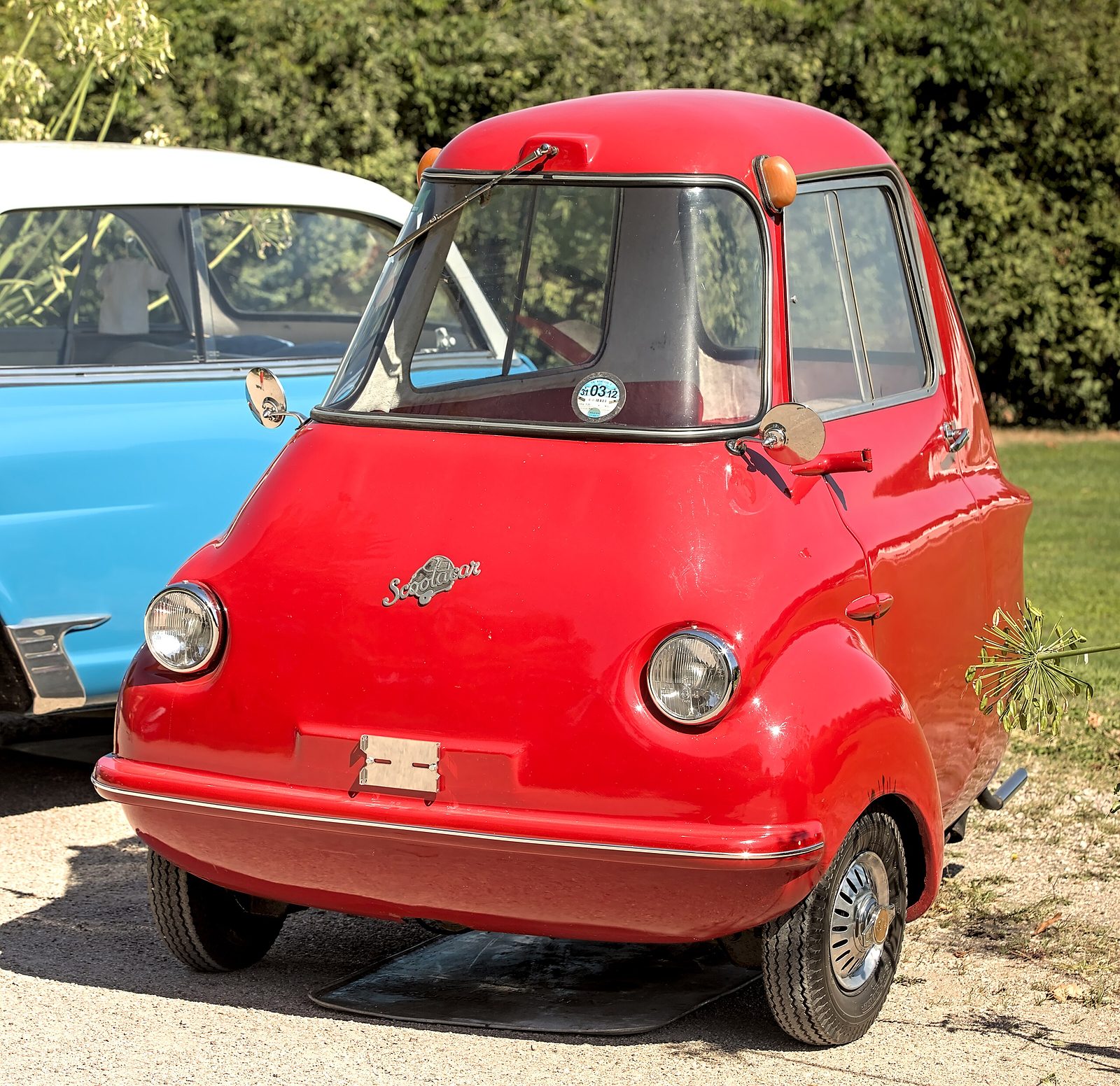
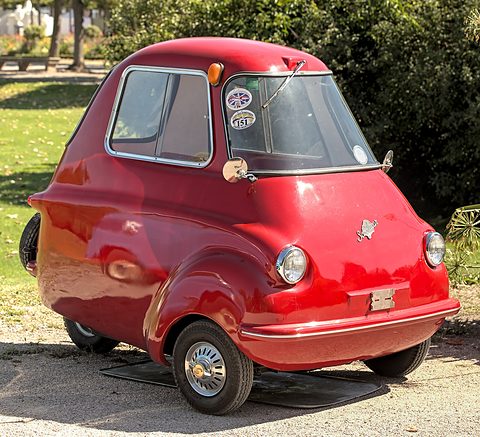
Red three-wheeler on gravel under trees, seen from the front left
A red 1959 Scootacar at the Classic Gala in Schwetzingen in 2022.Photo: Alexander Migl, CC BY-SA 4.0, via Wikimedia Commons

At a glance

The spec plate

Scootacar

Mk1 · Hunslet, Leeds

Built
1957–⁠1964To 1964 by most sources; 1965 by the register’s history
Country
BritainScootacars Ltd, a division of the Hunslet Engine Company, Leeds
Maker
Scootacars LtdA division of the Hunslet Engine Company, locomotive builders
Engine
197 cc Villiers 9E two-stroke singleUnder the seat in the Mk1; the Mk3 had a 324 cc Villiers 3T twin
Power
8.5 hpAbout 6.3 kW
Length
2,210 mm1,321 mm wide, 1,524 mm high
Weight
263 kgThe Weiner museum’s figure
Seats
2One behind the other on a straddle bench
Wheels
3Two at the front, one at the back, driven by chain
Production
about 970By the Scootacar Register; 1,500 by the Weiner museum
Survives
about 120Of the 150 cars the register has recorded
Top speed
80km/h80 km/h50 mph; about 109 km/h (68 mph) for the Mk3 Twin

How big is it?

True proportion

2.21 m

It is 760 mm shorter than a Fiat 500, about 1.3 adults laid end to end.

  • 1.32 m wide
  • 263 kg: about four adults
  • About 1.52 m high: taller than it is wide
Drawn at true proportion. The track is 3.6 metres long; the adult stands at the same scale. The Peel P50 is the smallest production car, on every page for comparison.

The story

History

The Hunslet Engine Company of Leeds built railway locomotives. Why it built a bubble car is told as a story, and only a story: a director’s wife is said to have wanted something easier to park than her Jaguar.source 1source 2source 3 The man who made it was Henry Brown, who had already designed the Rodley and joined Hunslet as its new-products manager. Within a year he had a four-wheeled prototype, but its Anzani engine overheated badly.source 1source 4

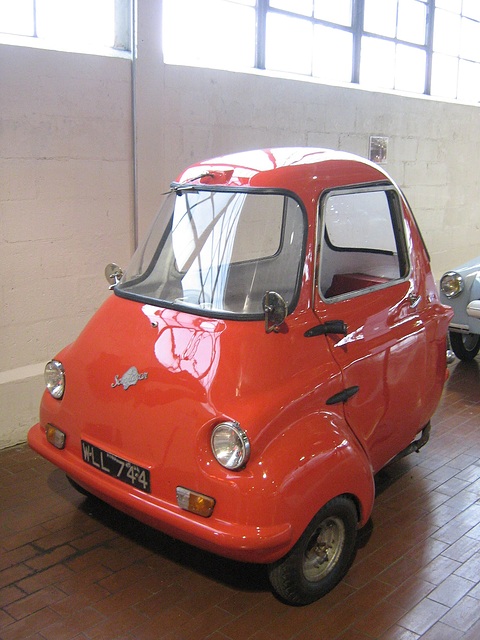
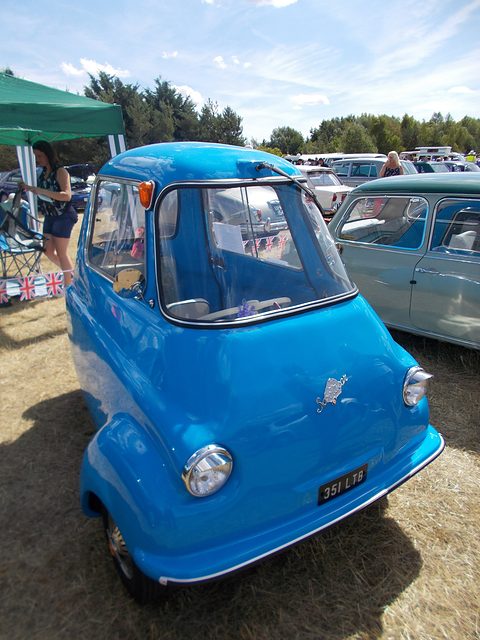
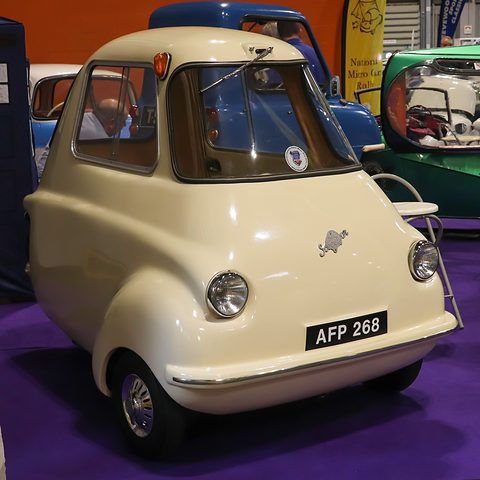
What followed was drawn round the driver. Brown sat on a Villiers engine and an assistant chalked an outline around him, and that became the body.source 1source 2source 5 It was about 1.52 m (60 in) high, 2.21 m (87 in) long and 1.32 m (52 in) wide, taller than it was broad, and for that height, and the red paint of many, it was nicknamed the telephone box.source 1source 3 The Weiner museum saw an angelfish in its outline.source 2

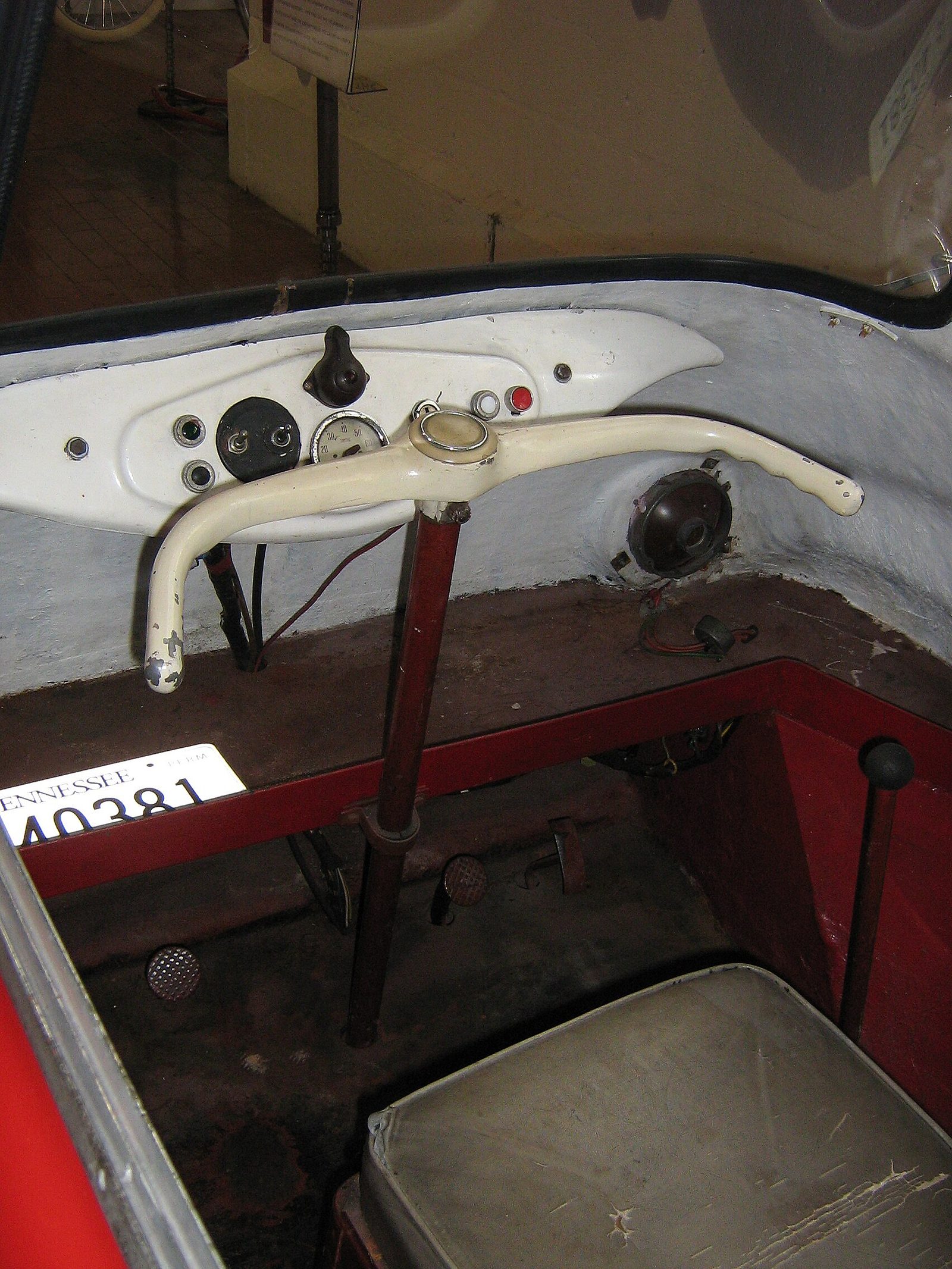
Astride, behind the handlebars

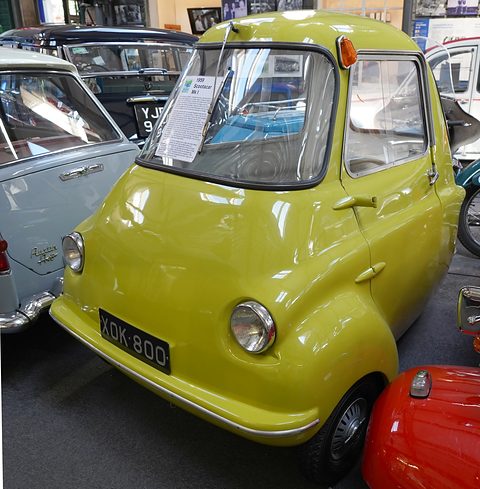
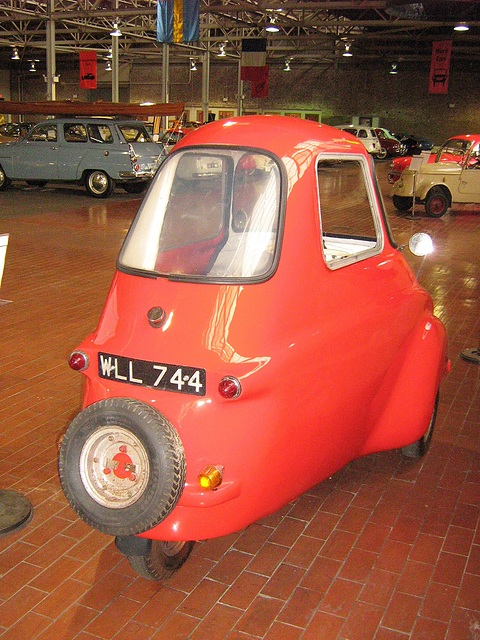
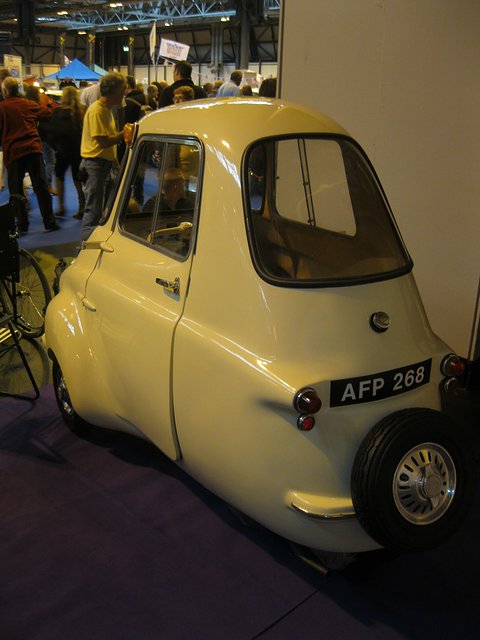
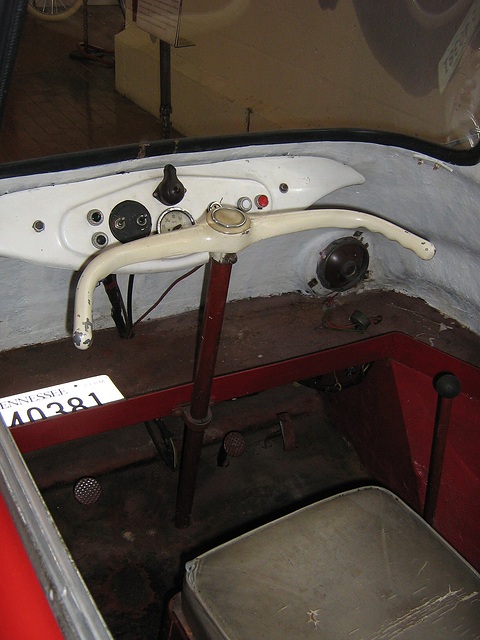
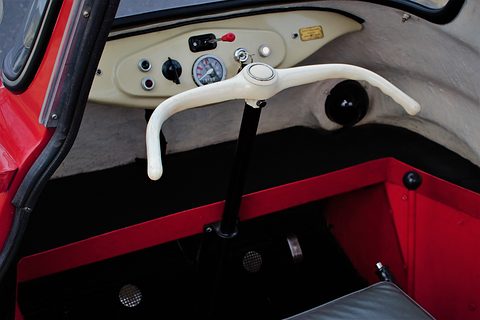
The Mk1 went into production in 1957 as a three-wheeler: two front wheels, and a single rear wheel driven by chain from a 197 cc Villiers 9E two-stroke under the seat.source 1source 4 The glass-fibre body was moulded in two halves joined down the middle and sat on a steel platform with a steel floor, with one big door on the left.source 4source 2source 6 Inside, it was laid out like a scooter. The driver steered with handlebars and sat astride a bench, and the passenger sat behind or squeezed in alongside.source 1source 2source 3 The gear lever was on the right: first was forward, second to fourth back.source 7 The whole seat lifted to reach the engine and battery.source 7

For £10 more you could have a reversible engine, started backwards by its Dynastart, which gave as many gears in reverse as forwards; it later became standard.source 7source 8 A spare wheel cost £4 15s.source 8 The tail lamps were special LEP units with a clear window for the number plate, fitted to no other production vehicle, and the wiper motor was LEP’s too: the Peel P50 used a 6 V version of the same motor.source 1 In 1958 Grace’s Guide listed Scootacars simply as a maker of glass-fibre light cars.source 5 The car was well built, with a sturdy chassis under the plastic, and qualified for the low band of road tax, and it reached about 80 km/h (50 mph).source 4source 1source 3 Despite its five-foot height, says the Weiner museum, it handled extremely well, and it had one of the largest parcel shelves of any microcar.source 2

Bonnet, cab and boot

In 1960 came the Mk2 De Luxe, redesigned from stem to stern. It had a bonnet, a cab and a boot, the engine under a plush, angled rear bench and the driver on a chair that tipped forward, with seats for three.source 1source 2source 9 It was priced at £365 to fight the Mini, launched at £496 on 26 August 1959, and Mk1 prices were cut at the same time; English Wikipedia gives the Mk2 £275.source 8source 1 It reached 89 km/h (55 mph) and appeared too late to sell in numbers.source 1source 2

The Mk3 De Luxe Twin was announced in 1961 and priced at £377 in 1962. It looked like the Mk2 except for two air intakes under the rear bumper, and its 324 cc Villiers twin took it to about 109 km/h (68 mph), among the fastest of the small three-wheelers. Lane says it was offered in blue or silver-grey, with a red interior.source 10source 8 Motor Cycling tested it on 7 December 1961 and Small Car in January 1963, both using the same car, 3573 UM, and both testers enjoyed it; Brown himself told the registrar more than once that it was over-powered and could be dangerous to drive.source 8 Only about 20 were made.source 10source 8 The Weiner museum says instead that a 250 cc twin went into about 50 cars, but the register and both Wikipedias give the 324 cc twin.source 2source 8source 1source 6

Prices fell again in 1963, and production ended in 1964, or 1965 by the register’s history page. The Mini and the other economy cars had won.source 1source 3source 8 By the late 1960s a Scootacar was worth about £50, and the register’s founder bought his Mk1 in 1979 for £70.source 8 One went much farther than the shops: Nel and Peter Motte drove theirs to Istanbul and wrote a book about it, Balkan Roads to Istanbul.source 9
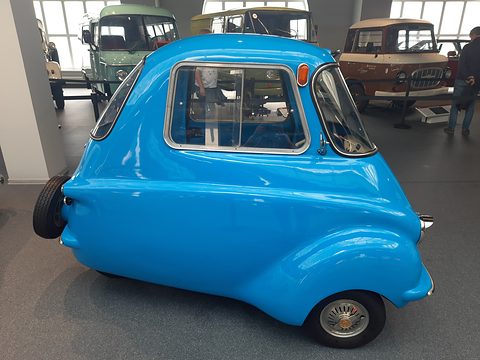
Bright blue three-wheeler in side view on a grey museum floor, vans behind
A Mk1 in side view: short, narrow and as tall as a person, at a museum in Russia.Photo: MBH, CC BY 4.0, via Wikimedia Commons
Cream handlebar on a column in front of a cream dashboard with a speedometer and switches
The handlebar steering and dashboard of a 1959 Scootacar Mk1 in the Williams Microcars collection, USA, in 2023.Photo: Guards951, CC BY 4.0, via Wikimedia Commons
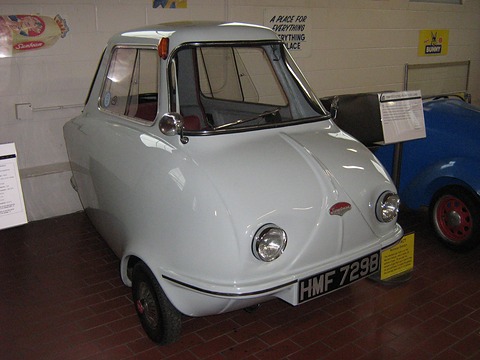
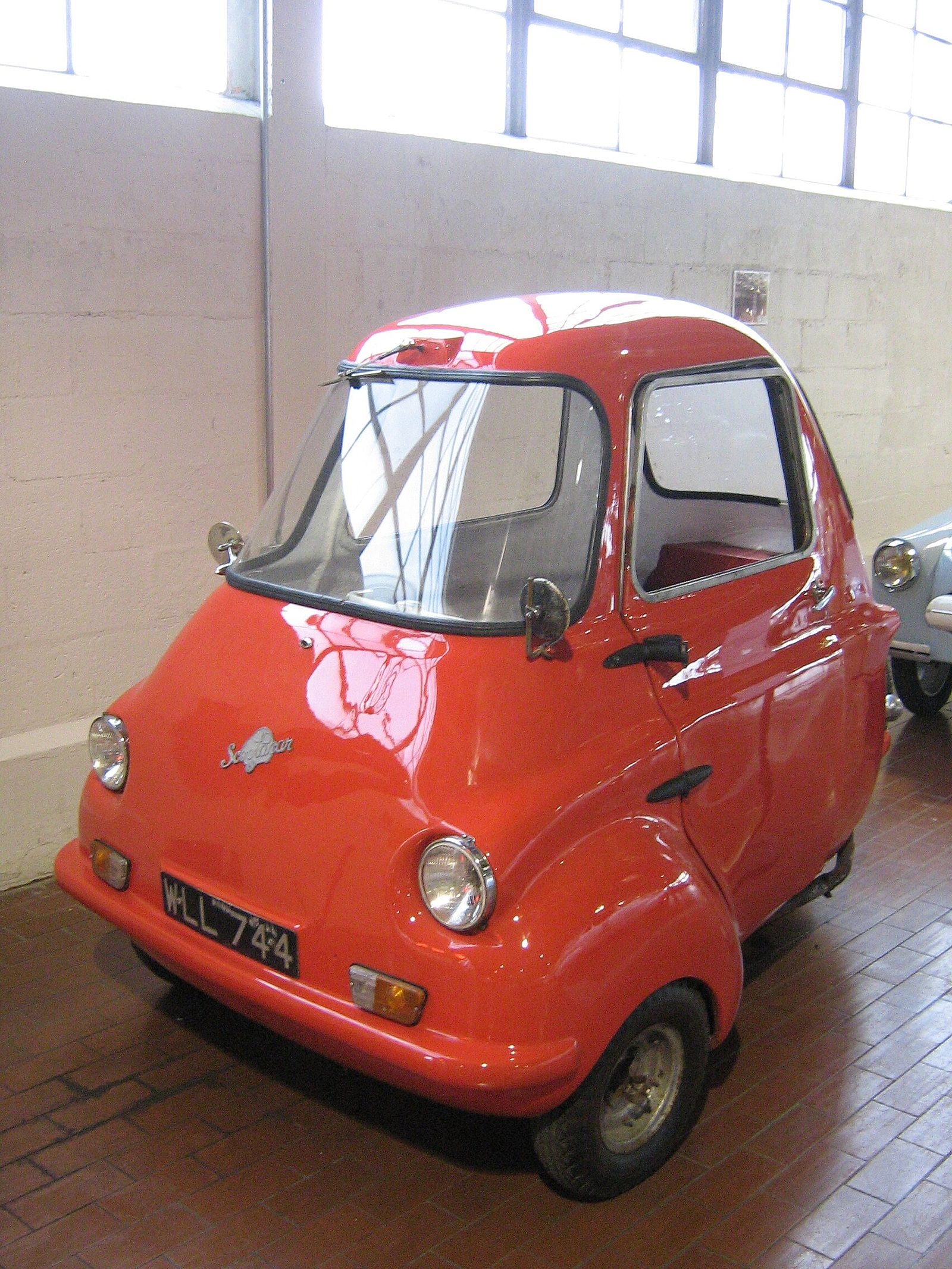
Pale grey three-wheeler with a separate bonnet and twin headlamps on a brick floor
A grey 1964 Scootacar Mk2 De Luxe at the Lane Motor Museum, with its restyled bonnet.Photo: dave_7, CC BY 2.0, via Wikimedia Commons
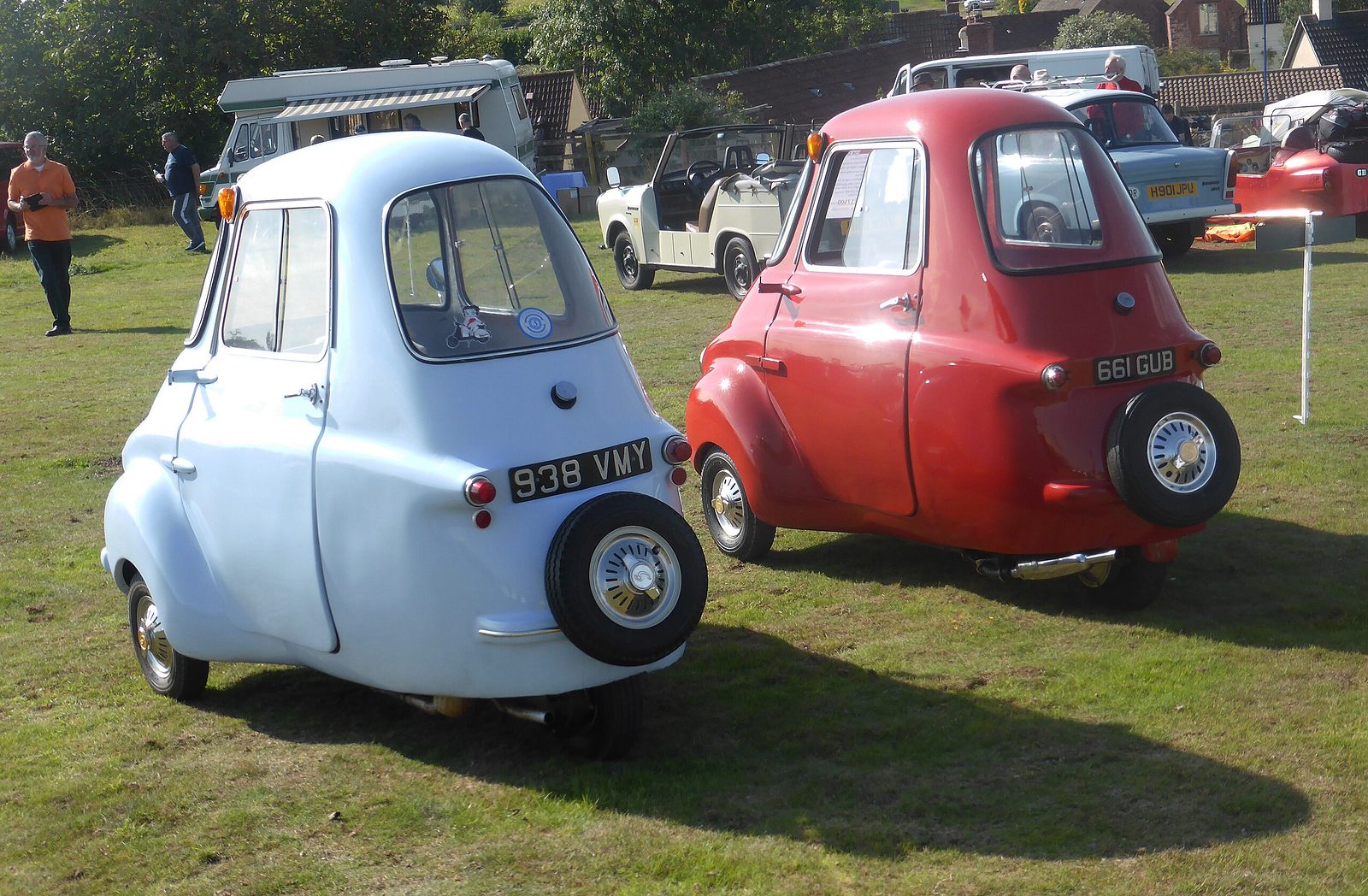
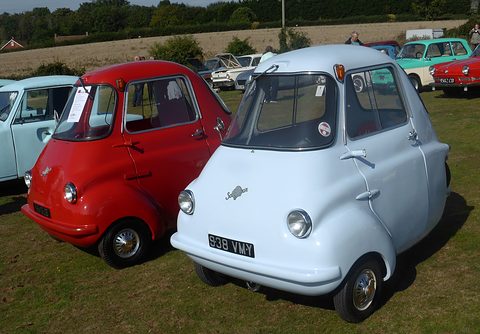
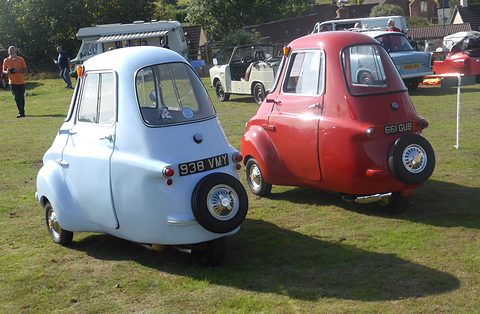
Red and pale blue three-wheelers side by side on grass, other classics behind
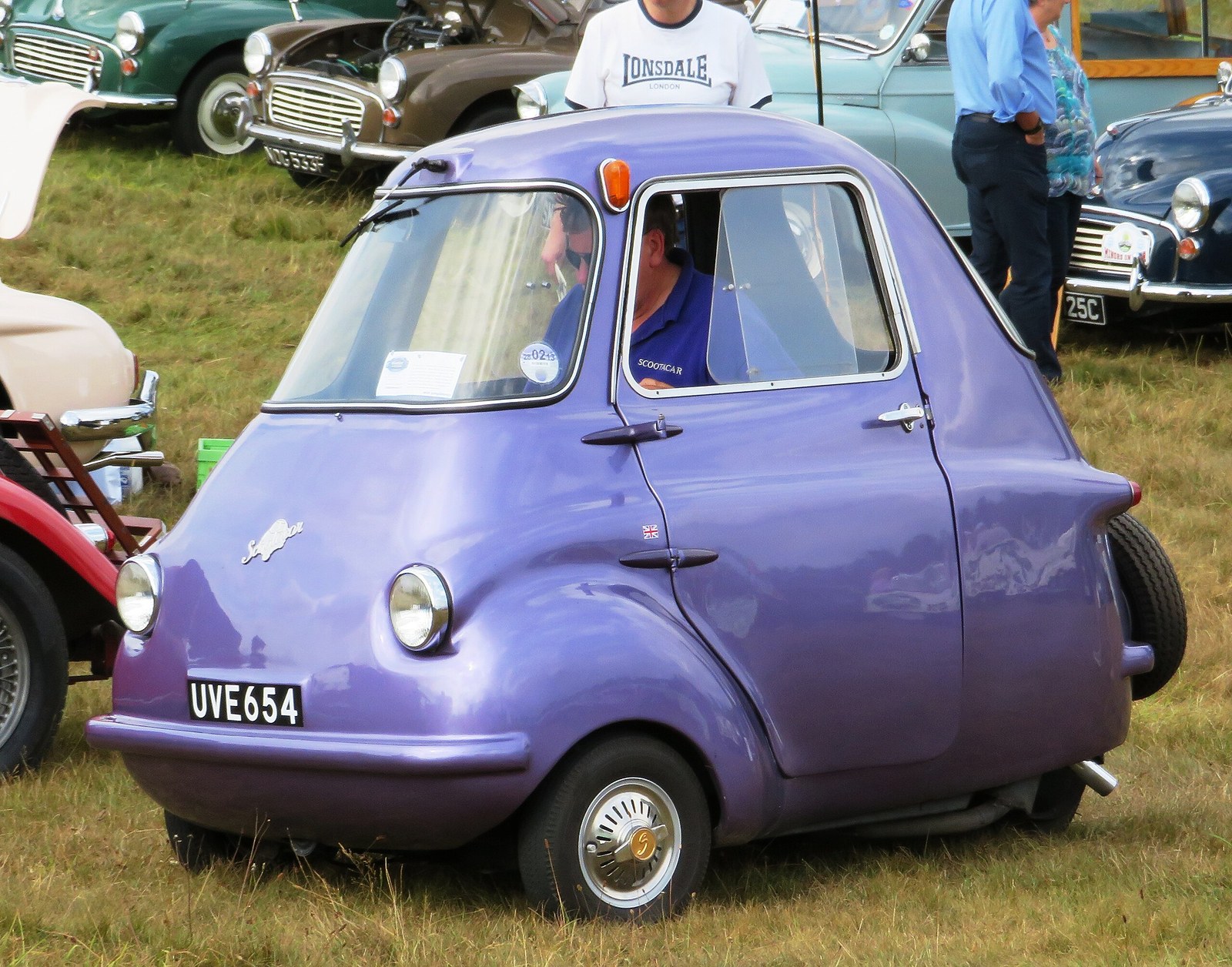
Two Scootacars side by side on the grass at a show in 2019.Photo: Andrew Bone from Weymouth, England, CC BY 2.0, via Wikimedia Commons

Rodley 750

1954–⁠1955 · a record on this page

Henry Brown, a Horsforth engineer and former RAF man, designed the Rodley first.source 11source 12 The Rodley Automobile Co. Ltd was registered in January 1954, and the prototype was developed at the canal-side works at Rodley, near Leeds, of the Castra Electric Washing Machine Company, in which Brown was a partner.source 12 It was nothing like the Scootacar: a steel two-door saloon on a welded box-section chassis, 2,775 mm (9 ft 1¼ in) long, with a fabric roof panel that rolled forward, advertised as a four-seater though the rear seats were cramped.source 11source 12source 13 A 750 cc air-cooled side-valve JAP twin, cooled by a directly driven impeller, drove the rear wheels by chain through a friction differential, and the steering worked by chain too.source 11source 13 English Wikipedia and Grace’s Guide put the engine at the back; German Wikipedia puts it at the front.source 11source 12source 14

The brochure claimed 89 km/h (55 mph), and at £210 before purchase tax it was the cheapest four-wheeled car on the British market. It was meant to be built at 50 a week.source 11source 12source 13 Instead it became known for overheating, sometimes until it caught fire.source 11source 12source 15 In July 1955 talks for a southern company to take the firm over fell through, and by August it was in liquidation, which makes the 1956 end date sometimes given unlikely.source 12 By the usual count 65 were built, or about 50 by another, and one is believed to survive.source 11source 15 Describing Brown’s first prototype for Hunslet, the Weiner museum says it had none of the obvious disadvantages of his first attempt.source 4

Pictures

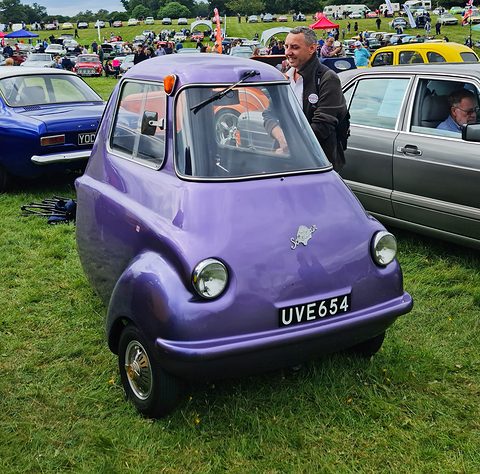
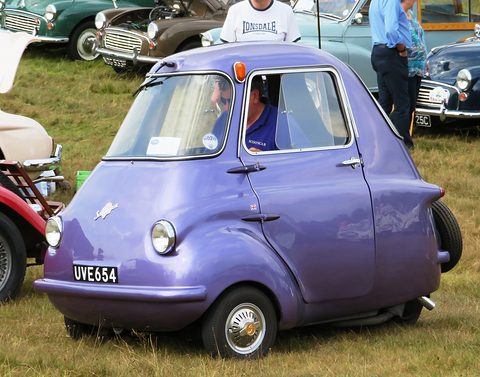
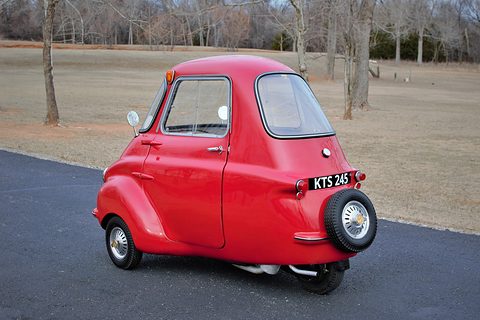
More photographs, old and new

Variants

Three marks

The Scootacar family
VariantYearsWhat differsHow many
Prototypec.1956–⁠1957Four wheels and an Anzani engine, which overheated badly1
Mk11957–⁠1960Sold on beside the later marks; body in two halves joined down the middle; straddle bench; handlebars; 197 cc Villiers 9EAbout 750
Mk2 De Luxe1960–⁠1964New body with a bonnet, cab and boot; a tip-forward driver’s chair and a rear benchAbout 200; 130 or about 50 by other sources
Mk3 De Luxe Twin1961/62–1964Mk2 body with two air intakes under the rear bumper; 324 cc Villiers 3T twinAbout 20, probably fewer

Specification

The Mk1 unless noted

Engine and drive

Engine and drive
EngineVilliers 9E single-cylinder two-stroke, 197 cc, under the seatsource 1source 4source 3Mk3: Villiers 3T twin, 324 cc (57 × 63.5 mm), 13 PS
Power8.5 hpsource 4source 2
GearboxFour speeds, motorcycle type; lever on the right, first forwardsource 1source 7The Weiner museum says three speeds and reverse
ReverseA reversible engine, started backwards by the Dynastart: £10 extra, later standardsource 7source 8
Final driveChain to the single rear wheelsource 1source 3

Body and chassis

Body and chassis
BodyGlass fibre in two halves joined down the centre, one door on the leftsource 2source 6
ChassisSteel platform with a steel floorsource 4source 2
SteeringHandlebarssource 1source 3The Weiner museum says rack
SuspensionIndependent coil springs at the front; a swinging arm at the backsource 1source 4
BrakesHydraulicsource 4
Wheels8 in, tyres 4.00 × 8source 1source 4
Electrics12 V, Dynastartsource 4

Dimensions

Dimensions
Length2,210 mm (87 in) with the spare wheelsource 1source 32,060 mm by the Weiner museum; Mk2 and Mk3 2,413 mm (95 in)
Width1,321 mm (52 in)source 1source 3
Height1,511–1,524 mm (59½–60 in)source 1source 3
Weight263 kgsource 4

Performance and running

Performance and running
Top speed80 km/h (50 mph)source 1source 3source 5Mk2 89 km/h (55 mph); Mk3 about 109 km/h (68 mph)
Consumption96 mpg claimed, for the Mk3source 10
Price newMk2 £365 (1960); Mk3 £377 (1962)source 8£275 for the Mk2 in English Wikipedia

How many were built?

Every figure, with its source

About 970 builtAbout 970: about 750 Mk1s, 200 Mk2s and 20 Mk3s, by the Scootacar Register’s count. The register is the specialist source; the museum’s 1,500 is never explained.

  1. 1,500Scootacars of all marksOne source

    The Weiner museum, repeated in RM’s sale cataloguesource 4source 9

  2. about 970all marks: about 750 Mk1, 200 Mk2, 20 Mk3One source

    The Scootacar Register, via English Wikipediasource 1

  3. 130Mk2sUnconfirmed

    The Weiner museumsource 2

  4. about 50Mk2sUnconfirmed

    RM’s sale cataloguesource 9

  5. about 20Mk3 De Luxe Twins, probably fewerTwo sources agree

    Lane Motor Museum and the registersource 10source 8

  • Two sources agreetwo good sources give the figure
  • One sourcea good source, alone
  • Unconfirmeda lead only, not yet checked

Famous for

Three points

  1. A locomotive works’ car

    Scootacars Ltd was a division of the Hunslet Engine Company of Leeds.

  2. Chalked round a man

    The body was drawn round Henry Brown sitting on a Villiers engine.

  3. The telephone box

    Tall, narrow, often red, and steered with handlebars.

Survivors and collecting

Today

The Scootacar Register has been run since the 1980s. It has about 75 members around the world and records of 150 cars, of which 120 are still known; it publishes a newsletter, Scootabout, and supplies parts; its website even has pages on a Scootacar toy and on Scootacars at weddings.source 16 Thirteen Mk3s are known.source 10source 8 For the Mk2 the counts disagree widely: 43 survivors by the Weiner museum’s reckoning, about 12 by RM’s catalogue, and neither says how it counted.source 2source 9 The registrar values all three marks at about the same: buyers prefer the Mk1’s shape, but parts for the Mk2 and Mk3 are scarcer.source 8 A 1964 Mk3 De Luxe Twin and a Mk2 are in the Lane collection at Nashville, and the Lakeland Motor Museum shows a 1959 car.source 1source 10source 5 The Weiner museum had a Mk1 and a Mk2, and its 1960 Mk2 De Luxe sold for US$50,600 at its sale in February 2013.source 9

Sources

Numbered as in the text

The period road tests of 1961 and 1963 were not read. Sources are given as plain text; the links are on the Credits page.

  1. English Wikipedia, Scootacar, read in full. Used as a lead; it cites the Scootacar Register; Sedgwick and Gillies, A–Z of Cars 1945–⁠1970 (1993); and Robson, A–Z British Cars.
  2. Bruce Weiner Microcar Museum, “1962 Scootacar Mk II”, tour page (2002), read in full.
  3. Scootacar Register, “Scootacar history”, read in full.
  4. Bruce Weiner Microcar Museum, “1959 Scootacar Mk I”, tour page (2002), read in full.
  5. Grace’s Guide, “Scootacars”, read in full.
  6. German Wikipedia, Scootacar, read in full; it cites Linz and Schrader, and Culshaw and Horrobin.
  7. Scootacar Register, “MK1 Scootacar”, read in full.
  8. Scootacar Register, “Mk3 Scootacar” and “Scootacar Values”, read in full.
  9. RM Auctions, the Bruce Weiner Microcar Museum sale, Madison, Georgia, February 2013, lot 323, “1960 Scootacar Deluxe Mk II”.
  10. Lane Motor Museum, “Scootacar MkIII De-luxe Twin – 1964”, archived 19 December 2014.
  11. English Wikipedia, Rodley (car), read in full. Used as a lead; it cites Sedgwick and Gillies, A–Z of Cars 1945–⁠1970.
  12. Grace’s Guide, “Rodley Automobile Co”, read in full, with its quotations from the Yorkshire Evening Post (28 January 1954), the Yorkshire Post (9 July 1955) and the London Gazette (9 August 1955).
  13. Microcar & Minicar Club, “The RODLEY!”, the maker’s 1954 brochure transcribed by David Suarez, April 1997.
  14. German Wikipedia, Rodley Automobile, read in full; it cites Culshaw and Horrobin.
  15. Leeds Engine, “Were there any cars made in Leeds?” (the Rodley).
  16. Scootacar Register, home page (2009), read in full.